Showing posts with label George Friedman. Show all posts

Friday, February 20, 2015

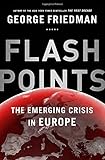
Book Review - Flashpoints: The Emerging Crisis in Europe

An interesting article from http://www.ucg.org/ about the book Flashpoints from Stratfor. This follows this post about Islam. For a free magazine subscription or to get the books recommended for free click HERE! or call 1-888-886- 8632.
I am leaving TWITTER SOON. Please continue to follow me here.


Book Review - Flashpoints: The Emerging Crisis in Europe


Printer-friendly version

Want to understand why Europe matters in today's world? This book should be your first stop.

Book Information

Author
George Friedman

Publisher
Doubleday

Publication Date
2015-01-27

ISBN
038553633X


Hardcover, 288 pages

Find it on Amazon
Stratfor CEO George Friedman's latest book, "Flashpoints: The Emerging Crisis in Europe"  focuses on the critical areas making headlines in today's Europe. I consider this a must read for anyone wanting a balanced analysis of the financial crisis in the EU, the emergence of Germany in the leading role on the continent and why Ukraine and the Russian incursion across soveriegn boarders matters. In fact it is a must read to understand the larger question of why Europe really matters in today’s world.
Friedman is a geographer and this approach shapes much of the books view and conclusions–as it should. Reading Friedman is always a primer on how the placement of nations and peoples on this earth impact history. The little understood key of just where people have settled and is a little understood part of global politics.
Europe has always mattered in both ancient and modern world history. Friedman's focus is on the period from the age of exploration begun by Portugal and Spain that inaugurated European expansion from the fifteenth century forward. This part of the book I found the most fascinating and appropriately titled, "Europe's Assault on the World". If one section can summarize why Europe matters it is this along with this clear statement.
"No one is certain how many died through the direct impact of European imperialism, from military action, starvation, disease, and other causes. Some experts estimate 100 million dead over the course of four centuries of empire building, but no one really knows. The dead were drawn from a world population much smaller than exists today, making the price even more staggering. But so was the wealth extracted, accumulated, and put to work in Europe. When I walk the streets of London or Paris, the almost magical uses of the wealth Europe extracted from its empire can be seen in each building–or in a single street lamp. The price the world paid was enormous, but so were the possibilities created" (page 27).
Could this be said of any other period or empire in history?
Europe has given the world the heights of civilization and depths of barbarity. It is a paradox both mysterious and rational. But I think Friedman puts his finger on both the geopolitical and spiritual map when he says his story is "...about the European obsession with the world, and its hunger to own it" (page 42). Friedman says his purpose is to deal with "the European obsession with possessing everything and where it comes from and where it leads to..." (page 42). In some ways it is Part One of this work that is most helpful to a student of Bible history and prophecy. Without intending, nor likely even believing, Friedman lays out a compelling case to show how Europe in its history and purposes form a narrative for the background for the Babylon of the Book of Revelation
Understanding the current European state is critically important in today's world. One cannot understand where this world is heading without an historical background to Europe both politically and spiritually. I tell my students they must understand why Europe matters in the modern world. Friedman explains the role of German resurgence and why it is the "indispensable nation" in Europe's present and future. He concludes his book with a chilling observation that Europe could easily return to it's historical ways. He says it is a fantasy to think that Europe has moved beyond using armed conflict to settle its problems.
"The Europeans are still human, and they will still encounter terrible choices like those that others face and that they have faced in the past. They will have to choose between war and peace, and as in the past, they will at times choose war" (page 258).
Flashpoints should be considered a basic primer to understanding much about what is transpiring today in Europe. Europe continues to be a fascinating area to watch and understand.


Nobody has commented yet. Be the first to kick off the discussion!
Login/Register to post comments

Friday, December 27, 2013

Re-Examining the Arab Spring

A timely post about from www.stratfor.com about the Arab Spring. This follows this post about sending a letter of protest on behalf of Duck Dynasty.  This follows this post about beheadings in Brazil in the run-up to the World Cup.  In the meantime, you can get more involved if you like here and read an interesting book HERE.


Re-Examining the Arab Spring

Stratfor
By George Friedman
On Dec. 17, 2010, Mohammed Bouazizi, a Tunisian street vendor, set himself on fire in a show of public protest. The self-immolation triggered unrest in Tunisia and ultimately the resignation of President Zine El Abidine Ben Ali. This was followed by unrest in a number of Arab countries that the global press dubbed the "Arab Spring." The standard analysis of the situation was that oppressive regimes had been sitting on a volcano of liberal democratic discontent. The belief was that the Arab Spring was a political uprising by masses demanding liberal democratic reform and that this uprising, supported by Western democracies, would generate sweeping political change across the Arab world.
It is now more than six months since the beginning of the Arab Spring, and it is important to take stock of what has happened and what has not happened. The reasons for the widespread unrest go beyond the Arab world, although, obviously, the dynamics within that world are important in and of themselves. However, the belief in an Arab Spring helped shape European and American policies in the region and the world. If the assumptions of this past January and February prove insufficient or even wrong, then there will be regional and global consequences.
It is important to begin with the fact that, to this point, no regime has fallen in the Arab world. Individuals such as Tunisia's Ben Ali and Egyptian President Hosni Mubarak have been replaced, but the regimes themselves, which represent the manner of governing, have not changed. Some regimes have come under massive attack but have not fallen, as in Libya, Syria and Yemen. And in many countries, such as Jordan, the unrest never amounted to a real threat to the regime. The kind of rapid and complete collapse that we saw in Eastern Europe in 1989 with the fall of communism has not happened in the Arab world. More important, what regime changes that might come of the civil wars in Libya and Syria are not going to be clearly victorious, those that are victorious are not going to be clearly democratic and those that are democratic are obviously not going to be liberal. The myth that beneath every Libyan is a French republican yearning to breathe free is dubious in the extreme.
Consider the case of Mubarak, who was forced from office and put on trial, although the regime -- a mode of governing in which the military remains the main arbiter of the state -- remains intact. Egypt is now governed by a committee of military commanders, all of whom had been part of Mubarak's regime. Elections are coming, but the opposition is deeply divided between Islamists and secularists, and personalities and ideological divisions in turn divide these factions. The probability of a powerful democratic president emerging who controls the sprawling ministries in Cairo and the country's security and military apparatus is slim, and the Egyptian military junta is already acting to suppress elements that are too radical and too unpredictable.
The important question is why these regimes have been able to survive. In a genuine revolution, the regime loses power. The anti-communist forces overwhelmed the Polish Communist government in 1989 regardless of the divisions within the opposition. The sitting regimes were not in a position to determine their own futures, let alone the futures of their countries. There was a transition, but they were not in control of it. Similarly, in 1979, when the Shah of Iran was overthrown, his military and security people were not the ones managing the transition after the shah left the country. They were the ones on trial. There was unrest in Egypt in January and February 2011, but the idea that it amounted to a revolution flew in the face of the reality of Egypt and of what revolutions actually look like.

Shaping the Western Narrative

There were three principles shaping the Western narrative on the Arab Spring. The first was that these regimes were overwhelmingly unpopular. The second was that the opposition represented the overwhelming will of the people. The third was that once the unrest began it was unstoppable. Add to all that the notion that social media facilitated the organization of the revolution and the belief that the region was in the midst of a radical transformation can be easily understood.
It was in Libya that these propositions created the most serious problems. Tunisia and Egypt were not subject to very much outside influence. Libya became the focus of a significant Western intervention. Moammar Gadhafi had ruled Libya for nearly 42 years. He could not have ruled for that long without substantial support. That didn't mean he had majority support (or that he didn't). It simply meant that the survival of his regime did not interest only a handful of people, but that a large network of Libyans benefitted from Gadhafi's rule and stood to lose a great deal if he fell. They were prepared to fight for his regime.
The opposition to him was real, but its claim to represent the overwhelming majority of Libyan people was dubious. Many of the leaders had been part of the Gadhafi regime, and it is doubtful they were selected for their government posts because of their personal popularity. Others were members of tribes that were opposed to the regime but not particularly friendly to each other. Under the mythology of the Arab Spring, the eastern coalition represented the united rage of the Libyan people against Gadhafi's oppression. Gadhafi was weak and isolated, wielding an army that was still loyal and could inflict terrible vengeance on the Libyan people. But if the West would demonstrate its ability to prevent slaughter in Benghazi, the military would realize its own isolation and defect to the rebels.
It didn't happen that way. First, Gadhafi's regime was more than simply a handful of people terrorizing the population. It was certainly a brutal regime, but it hadn't survived for 42 years on that alone. It had substantial support in the military and among key tribes. Whether this was a majority is as unclear as whether the eastern coalition was a majority. But it was certainly a substantial group with much to fight for and a great deal to lose if the regime fell. So, contrary to expectations in the West, the regime has continued to fight and to retain the loyalty of a substantial number of people. Meanwhile, the eastern alliance has continued to survive under the protection of NATO but has been unable to form a united government or topple Gadhafi. Most important, it has always been a dubious assertion that what would emerge if the rebels did defeat Gadhafi would be a democratic regime, let alone a liberal democracy, and this has become increasingly obvious as the war has worn on. Whoever would replace Gadhafi would not clearly be superior to him, which is saying quite a lot.
A very similar process is taking place in Syria. There, the minority Alawite government of the al Assad family, which has ruled Syria for 41 years, is facing an uprising led by the majority Sunnis, or at least some segment of them. Again, the assumption was that the regime was illegitimate and therefore weak and would crumble in the face of concerted resistance. That assumption proved wrong. The al Assad regime may be running a minority government, but it has substantial support from a military of mostly Alawite officers leading a largely Sunni conscript force. The military has benefited tremendously from the Assad regime -- indeed, it brought it to power. The one thing the al Assads were careful to do was to make it beneficial to the military and security services to remain loyal to the regime. So far, they largely have. The danger for the regime looking forward is if the growing strain on the Alawite-dominated army divisions leads to fissures within the Alawite community and in the army itself, raising the potential for a military coup.
In part, these Arab leaders have nowhere to go. The senior leadership of the military could be tried in The Hague, and the lower ranks are subject to rebel retribution. There is a rule in war, which is that you should always give your enemy room to retreat. The al Assad supporters, like the Gadhafi supporters and the supporters of Yemen's Ali Abdullah Saleh, have no room to retreat. So they have fought on for months, and it is not clear they will capitulate anytime soon.
Foreign governments, from the United States to Turkey, have expressed their exasperation with the Syrians, but none has seriously contemplated an intervention. There are two reasons for this: First, following the Libya intervention, everyone became more wary of assuming the weakness of Arab regimes, and no one wants a showdown on the ground with a desperate Syrian military. Second, observers have become cautious in asserting that widespread unrest constitutes a popular revolution or that the revolutionaries necessarily want to create a liberal democracy. The Sunnis in Syria might well want a democracy, but they might well be interested in creating a Sunni "Islamic" state. Knowing that it is important to be careful what you wish for, everyone seems to be issuing stern warnings to Damascus without doing very much.
Syria is an interesting case because it is, perhaps, the only current issue that Iran and Israel agree on. Iran is deeply invested in the al Assad regime and wary of increased Sunni power in Syria. Israel is just as deeply concerned that the al Assad regime -- a known and manageable devil from the Israeli point of view -- could collapse and be replaced by a Sunni Islamist regime with close ties to Hamas and what is left of al Qaeda in the Levant. These are fears, not certainties, but the fears make for interesting bedfellows.

Geopolitical Significance

Since late 2010, we have seen three kinds of uprisings in the Arab world. The first are those that merely brushed by the regime. The second are those that created a change in leaders but not in the way the country was run. The third are those that turned into civil wars, such as Libya and Yemen. There is also the interesting case of Bahrain, where the regime was saved by the intervention of Saudi Arabia, but while the rising there conformed to the basic model of the Arab Spring -- failed hopes -- it lies in a different class, caught between Saudi and Iranian power.
The three examples do not mean that there is not discontent in the Arab world or a desire for change. They do not mean that change will not happen, or that discontent will not assume sufficient force to overthrow regimes. They also do not mean that whatever emerges will be liberal democratic states pleasing to Americans and Europeans.
This becomes the geopolitically significant part of the story. Among Europeans and within the U.S. State Department and the Obama administration is an ideology of human rights -- the idea that one of the major commitments of Western countries should be supporting the creation of regimes resembling their own. This assumes all the things that we have discussed: that there is powerful discontent in oppressive states, that the discontent is powerful enough to overthrow regimes, and that what follows would be the sort of regime that the West would be able to work with.
The issue isn't whether human rights are important but whether supporting unrest in repressive states automatically strengthens human rights. An important example was Iran in 1979, when opposition to the oppression of the shah's government was perceived as a movement toward liberal democracy. What followed might have been democratic but it was hardly liberal. Indeed, many of the myths of the Arab Spring had their roots both in the 1979 Iranian Revolution and later in Iran's 2009 Green Movement, when a narrow uprising readily crushed by the regime was widely viewed as massive opposition and widespread support for liberalization.
The world is more complicated and more varied than that. As we saw in the Arab Spring, oppressive regimes are not always faced with massed risings, and unrest does not necessarily mean mass support. Nor are the alternatives necessarily more palatable than what went before or the displeasure of the West nearly as fearsome as Westerners like to think. Libya is a case study on the consequences of starting a war with insufficient force. Syria makes a strong case on the limits of soft power. Egypt and Tunisia represent a textbook lesson on the importance of not deluding yourself.
The pursuit of human rights requires ruthless clarity as to whom you are supporting and what their chances are. It is important to remember that it is not Western supporters of human rights who suffer the consequences of failed risings, civil wars or revolutionary regimes that are committed to causes other than liberal democracy.
The misreading of the situation can also create unnecessary geopolitical problems. The fall of the Egyptian regime, unlikely as it is at this point, would be just as likely to generate an Islamist regime as a liberal democracy. The survival of the al Assad regime could lead to more slaughter than we have seen and a much firmer base for Iran. No regimes have fallen since the Arab Spring, but when they do it will be important to remember 1979 and the conviction that nothing could be worse than the shah's Iran, morally or geopolitically. Neither was quite the case.
This doesn't mean that there aren't people in the Arab world who want liberal democracy. It simply means that they are not powerful enough to topple regimes or maintain control of new regimes even if they did succeed. The Arab Spring is, above all, a primer on wishful thinking in the face of the real world.
 2670  321 googleplus1  8443  555


Read more: Re-Examining the Arab Spring | Stratfor
Follow us: @stratfor on Twitter | Stratfor on Facebook

Tuesday, December 17, 2013

World News and Trends- India and China: the diplomatic conflict

An interesting article from http://www.ucg.org/ about the rivalry between India and China. This follows this post about the Christmas tree. For a free magazine subscription or to get the book shown for free click HERE! or call 1-888-886- 8632.


World News and Trends- India and China: the diplomatic conflict

Printer-friendly version


What may help America in countering Chinese ambitions, at least temporarily, is the current diplomatic conflict between China and India.

What may help America in countering Chinese ambitions, at least temporarily, is the current diplomatic conflict between China and India. David Blair, covering Chinese affairs for London's Daily Telegraph, recently wrote, "India, revitalized and self-confident, sees itself as a barrier to the vaulting ambition of its age-old rival [China]" ( The Sunday Telegraph, Sept. 14, 2008).
Advantageous for New Delhi is that " India sits like an ancient aircraft carrier across Chinese shipping lanes." According to The Telegraph, "The two giant powers are long-standing rivals who share a disputed 2,100-mile border and are waging a diplomatic struggle for influence in Asia . They fought a border war in 1962, which ended in victory for China and left Beijing in control of 16,500 square miles of territory claimed by India" (Sept. 16, 2008).
China has a potential Achilles' heel in the Strait of Malacca, the shipping lanes that may be the site for a future military conflict between India and the Chinese republic. In contrast, India worries that Chinese courting of Pakistan and Myanmar will lead to the encirclement of the subcontinent nation. The United States is cooperating with and supporting India, as the two countries have obvious mutual interests in countering and containing Chinese ambitions.
David Blair concluded in another of his Telegraph articles that "China and India, which together comprise almost 40% of the world's population, harbour a longstanding rivalry which could shake the world in future decades" (Sept. 16, 2008). (Sources: The Sunday Telegraph [London], Telegraph.co.uk.)

Monday, December 2, 2013

Editorial: The Iran Deal. Good or Bad? And Why?

Editorial

Is the deal with Iran a good one or a bad one? The best case I have heard about it has been from www.Stratfor.com, with VDare's Pat Buchanan also coming out in favor of it. There are many sites that point out that it was a bad deal some of them are these, but there are many more that I've glanced at, but not thoroughly researched. These include www.DebbieSchlusel.com, www.jihadwatch.org, www.hughhewitt.com, and www.redstate.com.

It does seem that it COULD have been a great deal, but the appeasement of the U.S. president kept it from being so.

Tuesday, November 26, 2013

Israelis, Saudis and the Iranian Agreement

A very interesting post from www.Stratfor.com about the U.S. and its allies Israel and Saudi Arabia. This follows this post about the U.S. talks with Iran. This follows this article about American energy independence and preventing money from going to hostile countries such as Iran. For more about what you can do to get more involved click here and you can read two very interesting books HERE.


Israelis, Saudis and the Iranian Agreement

Geopolitical Weekly


Stratfor By George Friedman


A deal between Iran and the P-5+1 (the five permanent members of the U.N. Security Council plus Germany) was reached Saturday night. The Iranians agreed to certain limitations on their nuclear program while the P-5+1 agreed to remove certain economic sanctions. The next negotiation, scheduled for six months from now depending on both sides' adherence to the current agreement, will seek a more permanent resolution. The key players in this were the United States and Iran. The mere fact that the U.S. secretary of state would meet openly with the Iranian foreign minister would have been difficult to imagine a few months ago, and unthinkable at the beginning of the Islamic republic.


The U.S. goal is to eliminate Iran's nuclear weapons before they are built, without the United States having to take military action to eliminate them. While it is commonly assumed that the United States could eliminate the Iranian nuclear program at will with airstrikes, as with most military actions, doing so would be more difficult and riskier than it might appear at first glance. The United States in effect has now traded a risky and unpredictable air campaign for some controls over the Iranian nuclear program.


The Iranians' primary goal is regime preservation. While Tehran managed the Green Revolution in 2009 because the protesters lacked broad public support, Western sanctions have dramatically increased the economic pressure on Iran and have affected a wide swath of the Iranian public. It isn't clear that public unhappiness has reached a breaking point, but were the public to be facing years of economic dysfunction, the future would be unpredictable. The election of President Hassan Rouhani to replace Mahmoud Ahmadinejad after the latter's two terms was a sign of unhappiness. Supreme Leader Ali Khamenei clearly noted this, displaying a willingness to trade a nuclear program that had not yet produced a weapon for the elimination of some sanctions.


The logic here suggests a process leading to the elimination of all sanctions in exchange for the supervision of Iran's nuclear activities to prevent it from developing a weapon. Unless this is an Iranian trick to somehow buy time to complete a weapon and test it, I would think that the deal could be done in six months. An Iranian ploy to create cover for building a weapon would also demand a reliable missile and a launch pad invisible to surveillance satellites and the CIA, National Security Agency, Mossad, MI6 and other intelligence agencies. The Iranians would likely fail at this, triggering airstrikes however risky they might be and putting Iran back where it started economically. While this is a possibility, the scenario is not likely when analyzed closely.


While the unfolding deal involves the United States, Britain, France, China, Russia and Germany, two countries intensely oppose it: Israel and Saudi Arabia. Though not powers on the order of the P-5+1, they are still significant. There is a bit of irony in Israel and Saudi Arabia being allied on this issue, but only on the surface. Both have been intense enemies of Iran, and close allies of the United States; each sees this act as a betrayal of its relationship with Washington.


The View from Saudi Arabia

In a way, this marks a deeper shift in relations with Saudi Arabia than with Israel. Saudi Arabia has been under British and later American protection since its creation after World War I. Under the leadership of the Sauds, it became a critical player in the global system for a single reason: It was a massive producer of oil. It was also the protector of Mecca and Medina, two Muslim holy cities, giving the Saudis an added influence in the Islamic world on top of their extraordinary wealth.


It was in British and American interests to protect Saudi Arabia from its enemies, most of which were part of the Muslim world. The United States protected the Saudis from radical Arab socialists who threatened to overthrow the monarchies of the Arabian Peninsula. It later protected Saudi Arabia from Saddam Hussein after he invaded Kuwait. But it also protected Saudi Arabia from Iran.


Absent the United States in the Persian Gulf, Iran would have been the most powerful regional military power. In addition, the Saudis have a substantial Shiite minority concentrated in the country's oil-rich east. The Iranians, also Shia, had a potential affinity with them, and thereby the power to cause unrest in Saudi Arabia.


Until this agreement with Iran, the United States had an unhedged commitment to protect Saudi Arabia from the Iranians. Given the recent deal, and potential follow-on deals, this commitment becomes increasingly hedged. The problem from the Saudi point of view is that while there was a wide ideological gulf between the United States and Iran, there was little in the way of substantial issues separating Washington from Tehran. The United States did not want Iran to develop nuclear weapons. The Iranians didn't want the United States hindering Iran's economic development. The fact was that getting a nuclear weapon was not a fundamental Iranian interest, and crippling Iran's economy was not a fundamental interest to the United States absent an Iranian nuclear program.


If the United States and Iran can agree on this quid pro quo, the basic issues are settled. And there is something drawing them together. The Iranians want investment in their oil sector and other parts of their economy. American oil companies would love to invest in Iran, as would other U.S. businesses. As the core issue separating the two countries dissolves, and economic relations open up -- a step that almost by definition will form part of a final agreement -- mutual interests will appear.


There are other significant political issues that can't be publicly addressed. The United States wants Iran to temper its support for Hezbollah's militancy, and guarantee it will not support terrorism. The Iranians want guarantees that Iraq will not develop an anti-Iranian government, and that the United States will work to prevent this. (Iran's memories of its war with Iraq run deep.) The Iranians will also want American guarantees that Washington will not support anti-Iranian forces based in Iraq.


From the Saudi point of view, Iranian demands regarding Iraq will be of greatest concern. Agreements or not, it does not want a pro-Iranian Shiite state on its northern border. Riyadh has been funding Sunni fighters throughout the region against Shiite fighters in a proxy war with Iran. Any agreement by the Americans to respect Iranian interests in Iraq would represent a threat to Saudi Arabia.


The View from Israel

From the Israeli point of view, there are two threats from Iran. One is the nuclear program. The other is Iranian support not only for Hezbollah but also for Hamas and other groups in the region. Iran is far from Israel and poses no conventional military threat. The Israelis would be delighted if Iran gave up its nuclear program in some verifiable way, simply because they themselves have no reliable means to destroy that program militarily. What the Israelis don't want to see is the United States and Iran making deals on their side issues, especially the political ones that really matter to Israel.


The Israelis have more room to maneuver than the Saudis do. Israel can live with a pro-Iranian Iraq. The Saudis can't; from their point of view, it is only a matter of time before Iranian power starts to encroach on their sphere of influence. The Saudis can't live with an Iranian-supported Hezbollah. The Israelis can and have, but don't want to; the issue is less fundamental to the Israelis than Iraq is to the Saudis.


But in the end, this is not the problem that the Saudis and Israelis have. Their problem is that both depend on the United States for their national security. Neither country can permanently exist in a region filled with dangers without the United States as a guarantor. Israel needs access to American military equipment that it can't build itself, like fighter aircraft. Saudi Arabia needs to have American troops available as the ultimate guarantor of their security, as they were in 1990. Israel and Saudi Arabia have been the two countries with the greatest influence in Washington. As this agreement shows, that is no longer the case. Both together weren't strong enough to block this agreement. What frightens them the most about this agreement is that fact. If the foundation of their national security is the American commitment to them, then the inability to influence Washington is a threat to their national security.


There are no other guarantors available. Israeli Prime Minister Benjamin Netanyahu went to Moscow, clearly trying to get the Russians to block the agreement. He failed. But even if he had succeeded, he would have alienated the United States, and would have gotten instead a patron incapable of supplying the type of equipment Israel might need when Israel might need it. The fact is that neither the Saudis nor the Israelis have a potential patron other than the United States.


U.S. Regional Policy

The United States is not abandoning either Israel or Saudi Arabia. A regional policy based solely on the Iranians would be irrational. What the United States wants to do is retain its relationship with Israel and Saudi Arabia, but on modified terms. The modification is that U.S. support will come in the context of a balance of power, particularly between Iran and Saudi Arabia. While the United States is prepared to support the Saudis in that context, it will not simply support them absolutely. The Saudis and Israelis will have to live with things that they have not had to live with before -- namely, an American concern for a reasonably strong and stable Iran regardless of its ideology.


The American strategy is built on experience in Iraq and Afghanistan. Washington has learned that it has interests in the region, but that the direct use of American force cannot achieve those goals, partly because imposing solutions takes more force than the United States has and partly because the more force it uses, the more resistance it generates. Therefore, the United States needs a means of minimizing its interests, and pursuing those it has without direct force.


With its interests being limited, the United States' strategy is a balance of power. The most natural balance of power is Sunni versus Shia, the Arabs against the Iranians. The goal is not war, but sufficient force on each side to paralyze the other. In that sense, a stable Iran and a more self-reliant Saudi Arabia are needed. Saudi Arabia is not abandoned, but nor is it the sole interest of the United States.


In the same sense, the United States is committed to the survival of Israel. If Iranian nuclear weapons are prevented, the United States has fulfilled that commitment, since there are no current threats that could conceivably threaten Israeli survival. Israel's other interests, such as building settlements in the West Bank, do not require American support. If the United States determines that they do not serve American interests (for example, because they radicalize the region and threaten the survival of Jordan), then the United States will force Israel to abandon the settlements by threatening to change its relationship with Israel. If the settlements do not threaten American interests, then they are Israel's problem.


Israel has outgrown its dependence on the United States. It is not clear that Israel is comfortable with its own maturation, but the United States has entered a new period where what America wants is a mature Israel that can pursue its interests without recourse to the United States. And if Israel finds it cannot have what it wants without American support, Israel may not get that support, unless Israel's survival is at stake.


In the same sense, the perpetual Saudi inability to create an armed force capable of effectively defending itself has led the United States to send troops on occasion -- and contractors always -- to deal with the problem. Under the new strategy, the expectation is that Saudi soldiers will fight Saudi Arabia's wars -- with American assistance as needed, but not as an alternative force.


With this opening to Iran, the United States will no longer be bound by its Israeli and Saudi relationships. They will not be abandoned, but the United States has broader interests than those relationships, and at the same time few interests that rise to the level of prompting it to directly involve U.S. troops. The Saudis will have to exert themselves to balance the Iranians, and Israel will have to wend its way in a world where it has no strategic threats, but only strategic problems, like everyone else has. It is not a world in which Israeli or Saudi rigidity can sustain itself.


Send us your thoughts on this report.


Reprinting or republication of this report on websites is authorized by prominently displaying the following sentence, including the hyperlink to Stratfor, at the beginning or end of the report.

"Israelis, Saudis and the Iranian Agreement is republished with permission of Stratfor."


Read more: Israelis, Saudis and the Iranian Agreement
Stratfor

Follow us: @stratfor on Twitter
Stratfor on Facebook

Wednesday, November 20, 2013

The U.S.-Iran Talks: Ideology and Necessity

A very interesting post from www.Stratfor.com about the U.S. talks with Iran. This follows this post about U.S. citizens receiving “sensitivity training” over their views about the terrorists the U.S. is fighting. This follows this article about American energy independence and preventing money from going to hostile countries such as Iran. For more about what you can do to get more involved click here and you can read two very interesting books HERE.

The U.S.-Iran Talks: Ideology and Necessity


By George Friedman


The talks between Iran and the Western powers have ended but have not failed. They will reconvene next week. That in itself is a dramatic change from the past, when such talks invariably began in failure. In my book The Next Decade, I argued that the United States and Iran would move toward strategic alignment, and I think that is what we are seeing take shape. Of course, there is no guarantee that the talks will yield a settlement or that they will evolve into anything more meaningful. But the mere possibility requires us to consider three questions: Why is this happening now, what would a settlement look like, and how will it affect the region if it happens?


Precedents

It is important to recognize that despite all of the other actors on the stage, this negotiation is between the United States and Iran. It is also important to understand that while this phase of the discussion is entirely focused on Iran's nuclear development and sanctions, an eventual settlement would address U.S. and Iranian relations and how those relations affect the region. If the nuclear issue were resolved and the sanctions removed, then matters such as controlling Sunni extremists, investment in Iran and maintaining the regional balance of power would all be on the table. In solving these two outstanding problems, the prospect of a new U.S.-Iranian relationship would have to be taken seriously.


But first, there are great obstacles to overcome. One is ideology. Iran regards the United States as the Great Satan. The United States regards Iran as part of the Axis of Evil. For the Iranians, memories of a U.S.-sponsored coup in 1953 and Washington's support for the Shah are vivid. Americans above the age of 35 cannot forget the Iranian hostage crisis, when Iranians seized some 50 U.S. Embassy employees. Iran believes the United States has violated its sovereignty; the United States believes Iran has violated basic norms of international law. Each views the other as barbaric. Add to this that the ideology of radical Islamism regards the United States as corrupt and evil, and the ideology of the United States sees Iran as brutal and repressive, and it would seem that resolution is impossible.


From the American side, there is precedent for reconciling national differences: China. When the United States reached out to China in the 1970s, Beijing was supplying weapons to the North Vietnamese, who used them against American troops. China's rhetoric about U.S. imperialism, replete with "running dogs," portrayed the United States as monstrous. The United States saw China, a nuclear power, as a greater threat for nuclear war than the Soviet Union, since Mao had openly stated -- and seemed to mean it -- that communists ought to welcome nuclear war rather than fear it. Given the extremism and brutality of the Cultural Revolution, the ideological bar seemed insurmountable.


But the strategic interests of both countries superseded ideology. They did not recognize each other, but they did need each other. The relative power of the Soviet Union had risen. There had been heavy fighting between China and the Soviet Union along the Ussuri River in 1969, and Soviet troops were heavily deployed along China's border. The United States had begun to redeploy troops from Europe to Southeast Asia when it became clear it was losing the Vietnam War.


Each side was concerned that if the Soviet Union chose to attack China or NATO separately, it could defeat them. However, if China and the United States collaborated, no Soviet attack would be possible, lest Moscow start a two-front war it couldn't win. It was not necessary to sign a treaty of military alliance or even mention this possibility. Simply meeting, talking and establishing diplomatic relations with China would force the Soviet Union to consider the possibility that Washington and Beijing had a tacit understanding -- or that even without an understanding, an attack on one of them would trigger a response by the other. After all, if NATO or China were defeated, the Soviets would be able to overpower the other at its discretion. Therefore, by moving the relationship from total hostility to minimal accommodation, the strategic balance changed.


In looking at Iran, the most important thing to note is the difference between its rhetoric and its actions. If you listened to Iranian government officials in the past, you would think they were preparing for the global apocalypse. In truth, Iranian foreign policy has been extremely measured. Its one major war, which it fought against Iraq in the 1980s, was not initiated by Iran. It has supported third parties such as Hezbollah and Syria, sending supplies and advisers, but it has been extremely cautious in the use of its own overt power. In the early days of the Islamic republic, whenever Tehran was confronted with American interests, it would pull closer to the Soviet Union, an atheistic country making war in neighboring Afghanistan. It needed a counterweight to the United States and put ideology aside, even in its earliest, most radical days.


New Strategic Interests

Ideology is not trivial, but ultimately it is not the arbiter of foreign relations. Like all countries, the United States and Iran have strategic issues that influence their actions. Iran attempted to create an arc of influence from western Afghanistan to Beirut, the key to which was preserving and dominating the Syrian regime. The Iranians failed in Syria, where the regime exists but no longer governs much of the country. The blowback from this failure has been an upsurge in Sunni militant activity against the Shiite-dominated regime.


But the arc of influence was interrupted elsewhere, particularly Iraq, which has proved to be the major national security challenge facing Iran. Coupled with the failures in Syria, the degradation of Iraq has put Iran on the defensive when, just one year earlier, it was poised to change the balance of power in its favor.


At the same time, Iran found that its nuclear program had prompted a seriously detrimental sanctions regime. Stratfor has long argued that the Iranian nuclear program was primarily a bargaining chip to be traded for guarantees on its security and recognition of its regional power. It was meant to appear threatening, not to be threatening. This is why, for years, Iran was "only months" away from a weapon. The problem was that despite its growing power, Iran could no longer withstand the economic repercussions of the sanctions regime. In light of Syria and Iraq, the nuclear program was a serious miscalculation that produced an economic crisis. The failures in foreign policy and the subsequent economic crisis discredited the policies of former President Mahmoud Ahmadinejad, changed the thinking of the supreme leader and ultimately led to the electoral victory of President Hassan Rouhani. The ideology may not have changed, but the strategic reality had. Rouhani for years had been worried about the stability of the regime and was thus critical of Ahmadinejad's policies. He knew that Iran had to redefine its foreign policy.


The United States has also been changing its strategy. During the 2000s, it tried to deal with Sunni radicals through the direct use of force in Afghanistan and Iraq. The United States could not continue to commit its main force in the Islamic world when that very commitment gave other nations, such as Russia, the opportunity to maneuver without concern for U.S. military force. The United States did have a problem with al Qaeda, but it needed a new strategy for dealing with it. Syria provided a model. The United States declined to intervene unilaterally against the al Assad regime because it did not want to empower a radical Sunni government. It preferred to allow Syria's factions to counterbalance each other such that neither side was in control.


This balance-of-power approach was the alternative to direct military commitment. The United States was not the only country concerned about Sunni radicalism. Iran, a Shiite power ultimately hostile to Sunnis, was equally concerned about jihadists. Saudi Arabia, Iran's regional rival, at times opposed Islamist radicals (in Saudi Arabia) and supported them elsewhere (in Syria or Iraq). The American relationship with Saudi Arabia, resting heavily on oil, had changed. The United States had plenty of oil now and the Saudis' complex strategies simply no longer matched American interests. On the broadest level, a stronger Iran, aligned with the United States, would counter Sunni ambitions. It would not address the question of North Africa or other smaller issues, but it would force Saudi Arabia to reshape its policies.


The Arab Spring also was a consideration. A mainstay of Washington's Iran policy was that at some point there would be an uprising that would overthrow the regime. The 2009 uprising, never really a threat to the regime, was seen as a rehearsal. If there was likely to be an uprising, there was no need to deal with Iran. Then the Arab Spring occurred. Many in the Obama administration misread the Arab Spring, expecting it to yield more liberal regimes. That didn't happen. Egypt has not evolved, Syria has devolved into civil war, Bahrain has seen Saudi Arabia repress its uprising, and Libya has found itself on the brink of chaos. Not a single liberal democratic regime emerged. It became clear that there would be no uprising in Iran, and even if there were, the results would not likely benefit the United States.


A strategy of encouraging uprisings no longer worked. A strategy of large-scale intervention was unsustainable. The idea of attacking Iran was unpalatable. Even if the administration agreed with Israel and thought that the nuclear program was intended to produce a nuclear weapon, it was not clear that the program could be destroyed from the air.


Therefore, in the particular case of Iran's nuclear program, the United States could only employ sanctions. On the broader issue of managing American interests in the Middle East, the United States had to find more options. It could not rely entirely on Saudi Arabia, which has dramatically different regional interests. It could not rely entirely on Israel, which by itself could not solve the Iranian problem militarily. These realities forced the United States to recalibrate its relationship with Iran at a time when Iran had to recalibrate its relationship with the United States.


All Things Possible

The first U.S.-Iranian discussions would obviously be on the immediate issue -- the nuclear program and sanctions. There are many technical issues involved there, the most important of which is that both sides must show that they don't need a settlement. No one negotiating anything will simply accept the first offer, not when they expect the negotiations to move on to more serious issues. Walking away from the table for 10 days gives both sides some credibility.


The real negotiations will come after the nuclear and sanctions issues are addressed. They will pertain to U.S.-Iranian relations more broadly. Each side will use the other to its advantage. The Iranians will use the United States to repair its economy, and the Americans will use the Iranians to create a balance of power with Sunni states. This will create indirect benefits for both sides. Iran's financial woes will be an opportunity for American companies to invest. The Americans' need for a balance of power will give Iran weight against its own enemies, even after the collapse of its strategy.


The region will of course look different but not dramatically so. The balance of power idea does not mean a rupture with Saudi Arabia or Israel. The balance of power only works if the United States maintains strong relationships on all sides. The Saudis and Israelis will not like American rebalancing. Their choices in the matter are limited, but they can take comfort from the fact that a strictly pro-Iranian policy is impossible for the United States. The American strategy with China in the 1970s was to try to become the power that balanced the Soviet Union and China. After meeting with the Chinese, Henry Kissinger went to Moscow. Thus, in terms of bilateral relationships, U.S.-Saudi and U.S.-Israeli relations can stay the same. But it now creates another relationship and option for the United States. In the end, Iran is still a secondary power and the United States is the primary power. Iran will take advantage of the relationship, and the United States will manage it.


It is hard to imagine this evolution, considering what the United States and Iran have said about each other for the past 34 years. But relations among nations are not about sentiment; they are about interest. If Roosevelt could ally with Stalin, and Nixon with Mao, then it is clear that all things are possible in U.S. foreign policy. For their part, the Persians have endured for millennia, espousing many ideologies but doing what was necessary to survive and prosper. All of this may well fall apart, but there is a compelling logic to believe that it will not, and it will not be as modest a negotiation as it appears now.


Send us your thoughts on this report.


Reprinting or republication of this report on websites is authorized by prominently displaying the following sentence, including the hyperlink to Stratfor, at the beginning or end of the report.

"The U.S.-Iran Talks: Ideology and Necessity is republished with permission of Stratfor."

Wednesday, March 20, 2013

Turkey refuses U.S. request to mend relations with Israel

A very interesting post from www.jihadwatch.org  about Turkey's radicalization. This follows this post about Barack Obama possibly visiting the Temple Mount when he goes to Israel.  This follows this article about American energy independence and preventing money from going to hostile countries such as Iran . For more about what is happening in the nation now click here and you can read two very interesting books HERE.

Turkey refuses U.S. request to mend relations with Israel


Rapidly re-Islamizing Turkey doesn't want peace with Israel. "US asks Turkey for help with ME peace process," from the Jerusalem Post, March 16 (thanks to Joshua):


US Secretary of State John Kerry called his Turkish counterpart Ahmet Davutoglu this week, asking for Turkey's help in restarting the Israeli-Palestinian peace process, Turkish daily Hurriyet reported on Saturday.

Turkey turned down the request citing bad relations between Ankara and Jerusalem and saying the responsibility to fix the murky relations between the two countries falls on Israel.


Relations between Jerusalem and what was once its only Muslim ally crumbled after Israeli marines raided the Mavi Marmara ship in May 2010 to enforce a naval blockade of the Gaza Strip and killed nine Turks in clashes with activists on board.


The rift has continued despite US efforts to encourage a rapprochement between the two regional powers whose cooperation it needs to address changes sweeping the Middle East.


"Turkey is always ready to do whatever it needs for a fair two-state solution based on the 1967 borders,” Davutoglu said during a joint press conference with Kerry in Ankara on March 1.


"If Israel wants to hear positive statements from Turkey, it needs to review its attitude. It needs to review its attitude toward us, and it needs to review its attitude toward the people in the region and especially the West Bank settlements issue," the Turkish foreign minister said.


A Turkish official speaking to Hurriyet has accused Jerusalem of blocking attempts to restore relations with Ankara....


Projection alert!

Friday, March 1, 2013

Two books to read: Domestic Policy & Foreign Policy

These two books are two to read to help understand policy both at home and abroad.

The first is about internal problems the U.S. is having and you can read the review for it here.

The other is about dealing with foreign problems that are likely to be down the road and you can read this review here.

Tuesday, January 8, 2013

The Missing Dimension in American Education

An interesting article from http://www.ucg.org/ about the Amerian educational crisis. This follows this post about the "Age of Aquarius." For a free magazine subscription or to get this book for free click HERE! or call 1-888-886-8632.

The Missing Dimension in American Education


A commentary by Cecil Maranville


If America wants to understand this present world, succeed in globalized business and navigate the explosive configuration of 21st-century geopolitics, this is the wrong time to exclude God from the classroom.


The cost of education represents one of the largest budget outlays of every level of U.S. government, as politicians of every stripe claim a firm commitment to providing American children with the best education possible.


Curiously, America is simultaneously expunging from formal education any dogmatic reference to the Creator or His laws. If America wants to understand this present world, succeed in globalized business and navigate the explosive configuration of 21st-century geopolitics, this is the wrong time to exclude God from the classroom.


Pilgrims and Lincoln can't be separated from the Bible

America just celebrated one of its most accepted national customs, Thanksgiving Day. It stems from Pilgrims recreating an English harvest festival in acknowledgement and thanks to God for bringing the Plymouth colony through their first year.


Americans still champion the courage of these pioneers from whose tiny start would sprout the most powerful nation the world had ever known. Books were scarce among the first immigrants and education a challenge, but one book that all possessed was the Bible. It was guaranteed to be read—more than that, studied and learned by every child.


In 1863 President Abraham Lincoln proclaimed Thanksgiving Day in the soberest of times, the height of the bloody Civil War. In spite of tragedy, the president saw national benefits that could be explained only by supernatural intervention. In part, the proclamation reads:


"Population has steadily increased, notwithstanding the waste that has been made in the camp, the siege and the battle-field; and the country, rejoicing in the consciousness of augmented strength and vigor, is permitted to expect continuance of years with large increase of freedom.


"No human counsel hath devised nor hath any mortal hand worked out these great things. They are the gracious gifts of the Most High God, who, while dealing with us in anger for our sins, hath nevertheless remembered mercy. It has seemed to me fit and proper that they should be solemnly, reverently and gratefully acknowledged as with one heart and one voice by the whole American People. I do therefore invite my fellow citizens in every part of the United States, and also those who are at sea and those who are sojourning in foreign lands, to set apart and observe the last Thursday of November next, as a day of Thanksgiving and Praise to our beneficent Father who dwelleth in the Heavens."


A biblical compass in a complex world

Although Thanksgiving, the Pilgrims and Abraham Lincoln remain popular in American culture, strangely, the Bible does not. Formal education is painstakingly vacuumed of any reference to the Bible.


Yet those who control the curriculum fail to realize that this handicaps our children from success in navigating globalized business, as well as governing in a complex world.


This was graphically illustrated in a piece written by political scientist George Friedman, founder and chief intelligence officer of Stratfor, a private intelligence corporation. The internationally respected Friedman is currently traveling through critical areas of the world to refresh his perspective in a way you can only do face to face. This small anecdote is just the tip of the iceberg of how religion and knowledge of the Bible are still vitally important in today's world.


In his Nov. 23 update from Turkey, he wrote:


"We arrived in Istanbul during the festival of Eid al-Adha, which commemorates the willingness of Abraham to sacrifice his son Ishmael on God's command and praises the God who stayed his hand. It is a jarring holiday for me; I was taught that it was Isaac whom God saved. The distinction between Ishmael and Isaac is the difference between Hagar and Sarah, between Abraham and the Jews and Abraham and the Muslims. It ties Muslims, Jews and Christians together. It also tears them apart." (See full text here . You may be asked to sign in to read it, but it is free.)


Clearly, Friedman was educated in the Bible—and it aids him in understanding the world, as well as in advising presidents, prime ministers, business leaders—and anyone else with ears to hear.


Americans have lost sight of the value of a biblical education , without which they are hopelessly without a compass in a complex world.


Friedman continues:


"Muslims celebrate Eid with the sacrifice of animals (sheep and cattle). Istanbul is a modern commercial city, stunningly large. On this day, as we drove in from the airport, there were vacant lots with cattle lined up for those wishing to carry out the ritual. There were many cattle and people. The ritual sacrifice is widely practiced, even among the less religious . I was told that Turkey had to import cattle for the first time, bringing them in from Uruguay. Consider the juxtaposition of ancient ritual sacrifice so widely practiced that it requires global trade to sustain it" (emphasis added).


Religion defines, motivates, divides and—unless God steps in to stop it—will destroy the world. Don't spurn your roots, America! Learn, love and live the Bible!

.

Tuesday, September 11, 2012

America's Secret War: Inside the Hidden Worldwide Struggle Between America and Its Enemies

A very interesting post from www.Stratfor.com about fighting Saudi Arabia, al-Qaeda, Iraq, and other enemies. This follows this post about Saudis being the primary victims of a weak economy. This follows this post about terrorism from mosques in Saudi Arabia. This follows this article about American energy independence and preventing money from going to hostile countries such as Iran . For more that you can do to get involved click HERE and read a very interesting book HERE.

America's Secret War: Inside the Hidden Worldwide Struggle Between America and Its Enemies


George Friedman http://www.amazon.com/Americas-Secret-War-Worldwide-Struggle/dp/0767917855/ref=sr_1_1?ie=UTF8&qid=1347372193&sr=8-1&keywords=america%27s+secret+war
 The latest chapter in the 'Great Game'
By J. Dretler

Format:Hardcover
Amazon Verified PurchaseIn "America's Secret War", George Friedman, the chairman of Stratfor, a private intelligence and information service, guides us through the intricacies of the origins and consequences of what he calls the `Fourth Global War'.

He starts by comparing the war to a game of chess where, to the unknowledgeable, there are many possible opening moves, but to the initiated there are only a few. This is a book of current events and recent history. It is, by design, more informative than inspirational. Friedman has an opinion, not always expressed in his Stratfor reports, but it is not obvious. He claims, in the foreword that he is trying to be cold and objective, rather than passionate, and while he is successful in maintaining objectivity, his passion or intensity comes through.

He challenges conventional wisdom with his allegations that Desert Storm was not about Iraq, but about Iran and her challenge to Saudi Arabia over who will be the leader of the Moslem world. In the West, he says the war was seen as a perfect example of modern statecraft with proper objectives and an exit strategy'. It had something for everyone. It appealed to three different groups, and to each within their own geopolitical constructs. For the `cold-warrior' perception of global politics the war was the proper defense of a Cold-War ally. For those who have a more Kissingerian realpolitik interpretation of the world saw the war as the proper containment of Iraq and of Saddam in balance of power terms. Finally the `End of History' post-modernists viewed the war as an expression of the multi-lateral `new world' working together against a rogue state. All of these views combined to make this a popular war in the West. Friedman says that what was not appreciated in this view was that the perception in the Moslem world was wholly different. In his opinion, the Islamic world saw this intervention as anti-Islamic rather than anti-Saddam and by supporting this use of `infidel' troops to pursue war against other Moslems the Saudis pushed the anti-Saudi fundamentalist factions over-the-top. These factions recruited disaffected, newly trained, mujahedin empowered by their successful pursuit of the anti-Soviet Afghan war to create the anti-western Al Qaeda organization. Al Qaeda is a working intelligence organization that pursues the goals of toppling the current Islamic regimes that they see as illegitimate, creating an uprising in the Moslem world and reestablishing the Caliphate. Friedman says that in spite of the errors we have made in the war, Al Qaeda has still failed to meet any of these objectives.


According to Friedman, in the Clinton administration foreign policy was more about doing good things to help deserving people, than about pursuing America's national interests. As the worlds only superpower, war was now optional, to be pursued or declined at our option, since no enemy had the power, it was assumed, to force us into war. The attack on 9/11 showed otherwise. Although the earlier attacks; in 1993 on the World Trade Center, and on the US Embassy and Marine Barracks in Beirut, the Kobar Towers in Saudi Arabia, the Embassies in Kenya and Tanzania, and the USS Cole in Yemen were mostly declined by the Clinton Administration, the audience for the attacks was not the US, but the Moslem world. By failing to respond the US showed weakness and impotence while highlighting Al Qaeda's effectiveness. These attacks vanquished the hopelessness and powerless feeling in the `Arab street' and helped to create the current resurgence of aggressive militant Islam. Friedman compares this war to WWII. Although the traditional idea of war with a competing nation-state is diluted by the non-local or pan-Islamic nature of the Al Qaeda Islamo-fascism, it is still a war. The current conflict has many similarities to the ideological wars of national liberation against Marxism-Leninism, but the historical comparison and precedents in the Japanese attack on Pearl Harbor in 1941 are, to him, obvious. The legalistic interpretation that war is simply crime, and the perpetrators of war, criminals is, to Friedman at least with historical perspective, nonsense. He posits that this view would have led FDR on December 7, 1941, to declare that we would hunt down the Japanese pilots who participated in the attack and subject them to judicial proceedings to determine their proportionate guilt and subsequent punishment. This is, as he maintains, absurd. It was, however, the position supported by the Clinton administration in the 1993 World Trade Center bombing and the current view of Harold Koh, dean of the Yale Law School among others. This view helped to justify the separation between the US Justice Department and the US intelligence gathering organizations In the US, the FBI is a police organization entrusted with the prosecution of crime. Intelligence organizations are involved in the collection of information in anticipation of and to prevent future action. According to Friedman, these functions are not compatible and many of our intelligence failures are the result of this misalignment of resources.


In Friedman's opinion, the only response for a nation who has received a surprise attack is to quickly go on the offensive. Political considerations are, at that time, more important than military ones and more modest goals are to be eschewed in favor of more robust ones even if less than ideal conditions are present for this action. This view resulted in the attack on Afghanistan that caught Al Qaeda and the Taliban by surprise since they didn't think we could respond quickly with more than limited air attacks. This show of force was also necessary to gain the allegiance or at least the attention of the various Afghan warlords whom we had largely abandoned after the Soviet withdrawal in 1989 and who had now made accommodation with or had direct ties to the Taliban. Although the Afghan campaign worked well and has resulted in the installation of Hamid Karzai as Afghan President, who is now a US ally rather than a Pakistani surrogate, it has not been so great a defeat for Al Qaeda that they lost standing or credibility in the Islamic world. To do this, and to further erase our image of weakness, we needed a greater show of force and determination. This had to be the invasion of Iraq.

The need for invasion was not unrelated to nuclear proliferation. We were worried about the control of the Pakistani nuclear weapons program as well as those in Iran and Iraq. While the State Department favored supporting centralized state control in Pakistan and Iran, they were opposed by the Defense Department which said that nuclear weapons or facilities in control of governments in whom we had no confidence was an intolerable situation. Defense said that 9/11 had created a situation where compromise was unacceptable and a military response was necessary. State was focused on the limits of our capability, Defense was focused on the threat, Defense won.

Friedman says our putative allies were torn. They understood that the US had to wage war on Al Qaeda and they were willing to help us track down Al Qaeda operatives. They were not willing, however, to help us invade Iraq and thereby (at least in their minds) shift the global balance of power. They opposed the Iraq invasion for the same reason we wanted it: it would make the US the preeminent power in the Middle East. That, combined with our control of the seas, would give us a global empire that was not in the interests of the so-called `Great Powers'. These nations feared that with Saudi Arabia and Iran surrounded, America would have more influence on oil production denying Russia the oil pricing advantage she currently enjoyed. France had been pursuing an essentially anti-American foreign policy since WWII seeing America as a threat to her national interests and her attempts to dominate Europe through her collaboration with a psychologically subordinate and submissive Germany. Friedman says that France thought 2003 was the perfect time to create a unified European foreign policy under guidance from Paris and Berlin with the help of Moscow. What they underestimated was the historical collective memory of Eastern Europe who remembered past treatment by Moscow, Paris, and Berlin and welcomed Rumsfeld's categorization of `New Europe'. The result was an increased influence in Europe for the US and embarrassment for France that some may call a victory for the Bush Administration.

Friedman ends the book with a scorecard of gains and failures. He regards the lack of understanding of how completely Iran had built political and administrative control in the Shiite community and through the efforts of Ahmed Chalibi as major failures, as well as the underestimation of the depth and quality of planning in Saddam's guerrilla war. On the success side, he says there has been no `toppling of regimes', no rising of the `Arab street', and virtually all Islamic regimes have increased their support for anti-Al Qaeda activity and are using their own intelligence services to achieve US anti-terrorist goals. The war has also succeeded in the Machiavellian objective of making the US hated and feared in the Arab world instead of hated and held in contempt, which Friedman calls a positive. In summation he says that the American people understand and can endure war, it is the American elite that project their own timidity and self-doubts onto the national character. He says that this is indeed a war, and probably a war `to the finish'. Friedman's book adds some specific new information along with focus and clarity to the continuing debate. It also reads easily and with Steven Coll's "Ghost Wars" provides a continuous detailed history of the latest chapter in the conduct of the `Great Game'. .

 A tremendously good book
By americangadfly

Format:HardcoverI just finished reading this book when I saw the author on CNN this morning. Synchronicity. He was what I had expected: sharp, smart, to the point, and not self-evidently in the thrall of a particular political bias.


In fact, this is what drew me to the book. In the introduction he makes a point of saying, "This is not a passionate book. Passion is overrated." Instead, his book is a coldly (and very provocatively) analytical look at the strategic chess match between the U.S. and Al Qaeda since 9-11. There were quite a few things I hadn't seen reported before about the Afghan War (B-52's as sky writers -- who knew?). He sees the Iraq war as a strategic flanking move aimed at influencing Saudi Arabia. Deep strategic thinking underlies the U.S. strategy there, but of course it's too complex and ruthless to explain or sell to the American people, so we got WMD. But it makes good cold sense, and Friedman describes and analyzes this new angle quite convincingly.


He's a clean writer and an insightful thinker with access to a great deal of evidently fresh information. I like his lack of passion. The executives at MSNBC should take one of their screaming blowhards -- Joe Scarborough or Chris Matthews, take your pick -- and replace them with a real-deal analyst like Friedman. A voice of reason in an unreasoning time.


I had never heard of George Friedman before grabbing his book off the shelf and striking gold. This book is full of smart analysis delivered straight. And it may just make you optimistic about the long-term prospects for the war against Islamo-fascism.

 The Doctrine of Unintended Consequences
By William Holmes VINE™ VOICE

Format:HardcoverOnce you begin to read this book, you will find it difficult to put down. Friedman writes clearly and forcefully about the real reasons why America invaded Iraq and the role that the invasion plays in the War on Terror.


Friedman begins his narrative with the Soviet invasion of Afghanistan in 1979, a nightmare development that threatened to give the Soviets control of the Persian Gulf and to lead to America's expulsion from the Middle East. The Carter Administration recognized the strategic threat and began moving quickly to assemble an Islamist guerrilla force to bog down the Soviets in their own Vietnam. The US strategy was intensified by the Reagan Administration and ultimately proved successful, but it had the side effect of convincing the Islamists that they could, if they fought hard enough, topple a superpower. The presence of American troops in Saudi Arabia during the First Gulf War did much to enrage the Islamists, convincing them that their best chance of re-establishing an Islamic caliphate lay in provoking a war with the United States.


Friedman's book explores the Byzantine details of American and Islamist Realpolitik in a fairly balanced way. He argues that the invasion of Iraq was not about WMDs or connections to Al Qaeda or even about oil, but was intended to show the Islamic world (and particularly Saudi Arabia and Pakistan) that the United States meant business and that those who didn't get with the program were going to be dealt with very harshly. The fact that the United States has substantial ground and air forces within easy striking distance of Syria, Iran and Saudi Arabia, among others, has no doubt been noticed by the leaders of those countries, dampening their enthusiasm for tolerating Al Qaeda.


The details of this Realpolitik are not pretty. To facilitate the invasion of Afghanistan, the United States obtained Russia's permission to base troops in the Islamic states of the former Soviet Union--in exchange for which, America agreed to mute its criticism of Russia's excesses in Chechnya. After Islamist terrorists attacked the Indian parliament in New Delhi, America secured Pakistan's reluctant cooperation in the War on Terror by making it clear that the United States wouldn't mind very much if India launched a nuclear attack on Pakistan (if America didn't launch one first). The book contains numerous other examples of why America, Iran and other countries behave in ways that are portrayed in the newspapers as peculiar, but are actually quite understandable when taken in context.


Although I think it is fair to say that Friedman is sympathetic with the Bush Administration's approach, he is not an apologist. He documents numerous strategic, tactical and intelligence failures in Iraq, not the least of which was the Administration's failure to appreciate the control that Iran exercised over Iraq's Shi'ite population. He is properly critical of the separation between the American political leadership and the soldiers: "A ruling class that sends the children of others to fight, but not their own, cannot sustain its power for very long" (339). And he concludes that, although the United States has the upper hand in the War on Terror, "the war now hangs in the balance. It is not clear who will win the war. Neither side is defeated. Neither side can give up." This is a balanced and sobering book, a must-read for anyone interested in what is really going on in the War on Terror.