Showing posts with label Great Britain. Show all posts

Thursday, July 14, 2016

Theresa May Prime Minister: A Disaster for Brit­ain

A timely post about from www.jihadwatch.org about Theresa May as the Prime Minister of the U.K. This follows this post about the U.S. House of Representatives and terrorism. This follows this article about American energy independence and preventing money from going to hostile countries. For more, you can read two very interesting books HERE.You can follow me here.

Robert Spencer in Epic Times: Theresa May Prime Minister: A Disaster for Brit­ain

Over at Epic Times, I discuss the worst Prime Minister Great Britain could possibly have: its next one.
OPINION – The worst outcome of Britain’s unexpected vote to leave the European Union was the resignation of David Cameron as Prime Minister – not because he was a great leader (he wasn’t), but because his successor is Theresa May, who promises to surpass even her feckless predecessor and become the weakest, most appeasement-minded Prime Minister since Neville Chamberlain.
As I was banned by Theresa May from entering Britain for the crime of correctly noting that Islam has doctrines involving violence against unbelievers, I know firsthand her anxiousness to please forces that do not regard free speech and open debate as positives for society. But there is more. As head of the UK Home Office, May announced a review of Britain’s Sharia courts – then appointed Muslims to oversee it, drawing protests from human rights activists concerned that her review board would be too biased to note the courts’ violations of women’s rights.

Theresa May Has A History Of Oppression

May also disregarded warnings about security risks and scrapped an aerial surveillance program that had been designed to stop migrants from sneaking into Britain. With May heading the Home Office, the British government helped illegal immigrants quash convictions for fraud and other crimes, so that they could stay in the country.
May has claimed counterfactually that the Islamic State’s “actions have absolutely no basis in anything written in the Quran.” She asserted, in the teeth of abundant evidence (including a statement from ISIS saying that jihad attacks would continue in France “as long as they boast about their war against Islam”), that the November 2015 jihad massacre in Paris had “nothing to do with Islam.” This willful ignorance hamstrings intelligence and law enforcement officials’ ability to fight the jihadis: one cannot defeat an enemy while refusing to name or understand it.
But May is on the case. With the jihad threat higher than ever, May vowed to fight all forms of extremism, from “Islamist” to “neo-Nazi.” Does Britain have a big neo-Nazi problem? Did neo-Nazis set off bombs on a London bus and behead a British soldier in the street? Are goosesteppers strutting around in Trafalgar Square? No. By “neo-Nazis,” May means those people who dare to speak out against the immigration and national security policies she has pursued that have brought Britain to the brink of catastrophe.
As Prime Minister, she may get the chance to push Britain off the edge.
A lesson from Ontario, Canada for Sharia law advocate Theresa May
Radio Pakistan falsely claims UNESCO declared Islam the most peaceful religion
FacebookTwitterGoogle+LinkedInDiggBlogger PostDeliciousStumbleUponDiasporaEmailPrint

Friday, July 1, 2016

A Detailed Prophecy of Blessings and Curses

An interesting article from http://www.ucg.org/ about national blessings and curses. This follows this post about Benghazi, Libya. For a free magazine subscription or to get the books recommended for free click HERE! or call 1-888-886- 8632. 


Obedience to His law would bring national prominence, including victory when military conflict was inevitable: “The Lord will grant that the enemies who rise up against you will be defeated before you. They will come at you from one direction but flee from you in seven” (Deuteronomy 28:7, New International Version).
On the other hand, willful violation of His righteous law would result in defeat and lack of influence: “The Lord will cause you to be defeated before your enemies. You will come at them from one direction but flee from them in seven” (Deuteronomy 28:25, NIV).
Why did God make these promises of blessings and curses? Is there anywhere we can search in the Bible to see His purpose in offering the ancient Israelites—and their modern-day descendants—the chance for national greatness?
In an even earlier time, before He made His covenant with the Israelites, God began to work with their ancestor, Abraham. In the covenant with Abraham, God told him: “I will multiply your descendants as the stars of heaven and the sand which is on the seashore … In your seed all the nations of the earth shall be blessed, because you have obeyed My voice” (Genesis 22:17-18).
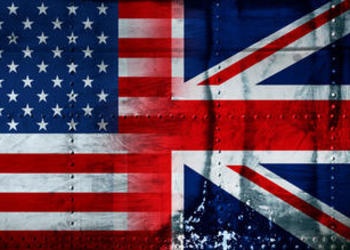
God had determined thousands of years before America and Great Britain ascended to world power status that these would be His model nations. Like “a city on a hill that is not hidden” (Matthew 4:14), God had ordained that Great Britain and the United States be shining examples to other nations.
But today we see just the opposite, as America has followed Britain into decline, retreating throughout the world. To understand the amazing story foretold in the pages of your Bible, read the free study aid booklet The United States and Britain in Bible Prophecy  .

You might also be interested in...

Thursday, June 23, 2016

First the End of an Empire - Now, the End of Britain?

An interesting article from http://www.ucg.org/ about Great Britain. This follows this post about London's Muslim terror. For a free magazine subscription or to get the books recommended for free click HERE! or call 1-888-886- 8632. 

I can still remember when the news came over the radio. It was a Sunday morning in late January 1965. Sir Winston Churchill had died.

His funeral was the following Saturday. He was only the second commoner in the history of Great Britain to be given a state funeral, normally reserved for royalty. The first had been for the duke of Wellington, the military genius who thwarted Napoleon’s plans for world conquest at the Battle of Waterloo in 1815, thereby ushering in a century of Pax Britannica. Sir Winston had defeated an even greater evil, Hitler’s Third Reich. He didn’t do it single-handedly, of course, but without him the outcome could have been entirely different.

I also well remember the silence after the funeral. It was the only time I can remember all the television and radio stations closing down for a period of silence in honor of the great old man to whom Britons owed so much.

People were truly thankful that Winston Churchill had led them to victory in World War II—at a time when everybody else seemed inclined to compromise with Nazi Germany.

Churchill rejected the honor of a dukedom and turned down the opportunity to be buried in Westminster Abbey along with many other famous Britons.

Churchill’s funeral was, for Britain, the end of an age.

Ironically, his death came at the end of a 20-year period that had seen the nation reject just about everything he stood for.

Postwar Britain

It had started 20 years earlier, shortly after VE Day. With the European war ended, Churchill called an election. Almost everyone thought his Conservative Party would win. People the world over were shocked when the results came in: The Labour (socialist) Party won by a landslide. Although grateful for Churchill’s role as a wartime leader, people had decided they wanted change; they longed for a different world. They didn’t want their young men fighting wars in far-off places they had never heard of, nor did they want them coming home to low-paying jobs or unemployment.

After being universally acclaimed as the British lion that roared in defiance of Hitler and the man who had led Great Britain to victory, Churchill appeared to be headed for victory. But, seemingly, it was time for Britain’s rapid decline to begin. The prophet Daniel reminds us that it is God who “removes kings and raises up kings” (Daniel 2:21). The same God who had given Britain its victory took away the empire He had given to them, the multitude of nations promised to Joseph’s son Ephraim (Genesis 48:19).
The next few years saw massive changes, including the nationalization of key industries (steel, railways, coal mines) and the institution of a government-run medical system. To concentrate on these radical reforms, the country turned its back on an empire that had been built up over the course of 400 years. Britain granted India and Pakistan independence in 1947. By the time of Churchill’s death, all the major colonies were gone. Britain had, to quote American statesman Adlai Stevenson, “lost an empire and not yet found a role.”

It might have been different if Churchill had won that pivotal election. He was an empire loyalist. His love of history taught him that Britain’s security lay with the multitude of nations it had built up gradually since the time of Queen Elizabeth I. Later, after he won the 1951 election as prime minister at the time of the accession of Queen Elizabeth II, he talked of a “new Elizabethan age” that might surpass the first in greatness. But it was not to be.

Britain had embarked on a new course that continues to this day. With the British Empire gone, it was Britain’s turn to be dismantled.

The abolition of Britain

A thought-provoking book on this subject by British writer Peter Hitchens, The Abolition of Britain, contrasts the country at the time of Churchill’s funeral with the nation 32 years later at the funeral of Princess Diana. By his own account, it is as if he is looking at two different countries.

Outside the British Isles many people get confused at exactly what constitutes Great Britain and where England, Scotland, Wales and Ireland fit into the equation. At one time all four nations were separate entities. Their eventual union came about over a long period.

England conquered Wales during the time of Edward I in the 13th century. Edward proclaimed his son the prince of Wales, emphasizing that Wales is a separate principality, but was to be administered as a part of England. For 700 years, the heirs to the British throne have been given the title “prince of Wales.”
Scotland and England (with Wales) united later. When Elizabeth I died in 1603, she left no heirs. Historically, Scotland had often allied itself with France against England. It was time for the two countries to unite so this would not happen again. Upon her death her cousin’s son, James VI of Scotland, became King James I of England. James gave the country its new name, Great Britain (and was instrumental in giving the world the King James Version of the Bible). The new flag was nicknamed the Union Jack after him.

The two kingdoms were still administered separately, but they had the same monarch. A century later (1707) they fully united under one parliament, giving Scots a share in the benefits of the growing empire. Another century later the Irish parliament was abolished, and the United Kingdom of Great Britain and Ireland formed (1801).

Reversal of direction

The dismantling of the kingdom actually began 80 years ago when most of Ireland was given its independence as the Irish Free State, theoretically still subject to the crown. In 1949 the Free State became the Irish Republic, severing its tie with the United Kingdom.

The six counties of Northern Ireland that have remained within the United Kingdom have been strife-torn for more than three decades. Although in recent years strenuous efforts have been made to negotiate a permanent peace, the problem remains virtually insoluble. At some point it is likely that another “reform” government in London will force a change on the province, as British governments since Churchill’s time have eventually given in to terrorists in every disputed territory.
With increasing support for Scottish and Welsh nationalists, the present British government, led by Prime Minister Tony Blair, came to power in 1997 promising “devolution.” The two ancient Celtic peoples would acquire their own parliaments and be responsible for their own internal affairs. London would still conduct foreign policy. Both Scotland and Wales now have their own assemblies with increased calls for full independence.

Some of the English, meanwhile, are resentful of the fact that they do not have their own parliament. Scots, Welsh and Northern Irish members still sit in the House of Commons in London and can vote on legislation that affects the English people, while the English people do not have a say in the internal affairs of the Celtic nations around them.
Meanwhile, the European Union (EU) has been fulfilling its dream of an ever-closer union. The Irish Republic has benefited from its membership in the EU, ironically partly subsidized through Brussels by U.K. taxpayers. This has reduced some fears of Irish unity in the North. The South had always been poor, the North far wealthier, so even Catholics had been somewhat apprehensive of unity with the South. Not any more.

Polls show the English to be increasingly weary of the EU. Scottish nationalists, however, see the EU as increasing the likelihood of Scottish independence. No longer would the five million people of an independent Scotland be unable to make it economically on their own. Within the EU they would prosper, just like Ireland and other small countries. Similar feelings are evident in Wales.

In coming years the English could find themselves outside of a politically unified EU, with the Scots, Welsh and Irish inside. Queen Elizabeth I’s worst nightmare would have come true, four centuries later, of an England surrounded by hostile nations in alliance with the continental powers.

Historians such as Norman Davies think that none of this matters. In his recent book The Isles he reminds readers that England at one time was physically a part of the European landmass. At other times it was a part of Europe. It was the westernmost province of the Roman Empire from A.D. 43 to 410, a span of almost four centuries. The English church was a part of the Roman church for almost 1,000 years. The Plantagenets in the Middle Ages ruled England as well as parts of France, spending most of their time in the bigger and warmer part of their territories.

But Paul Johnson, another British historian, sounded a warning in the pivotal year 1972 (between the British Parliament’s vote to join Europe and Britain’s accession the next January): “Disunity has always proved fatal to the offshore islanders.” (The Offshore Islanders was the title of his book dealing with Britain’s relationship with Europe throughout history.) In other words, the disuniting of the United Kingdom has always proved fatal, enabling hostile powers to invade the country. Why should it be different this time?

Biblical wisdom holds true: “Every kingdom divided against itself is brought to desolation, and every city or house divided against itself will not stand” (Matthew 12:25).

New generation, new outlook

A new generation is in power now.

Mr. Blair, British prime minister, prefers to identify with a new age. He is the first British prime minister who does not remember Winston Churchill. In a speech just before the election that brought him to power, he described himself this way: “I am a modern man. I am a part of the rock and roll generation—the Beatles, colour TV, that’s the generation I come from” (The Abolition of Britain, paperback edition, p. xix).
The current generation is a victim of revisionist history. It’s a history with an emphasis on multiculturalism, which downplays Britain’s role in frequently leading its empire into conflict against despotic European powers that wanted to conquer the world. At the same time, the revised version of history emphasizes the mistakes Britain made, negatively presenting the empire as a shameful era.

It’s also a generation that, as in the United States and other Western countries, has grown up with an emphasis on material values, with little concept of morality and often lacking any knowledge of God.

Writing of “the end of Britain” in Newsweek magazine (July 10, 2000), columnist George Will reminded readers of the late English writer George Orwell’s dismissive comment on English intellectuals: “England is perhaps the only great country whose intellectuals are ashamed of their nationality.” (Orwell died in 1950 before this disease spread to the United States.)

Mr. Will added, “Many Europhiles are English intellectuals of the sort George Orwell despised because they despised their nation.” It’s hard to understand the hatred so many people have for the old values Sir Winston Churchill symbolized. “God, king and country” have no place in the minds of many, including many English intellectuals.

Does this matter to Americans and the rest of the world?

Let George Will have the final say: “What is vanishing, and not slowly, is the nation to which the United States traces much of its political and cultural DNA. Unless this disappearance is resisted, and reversed, soon all that will linger… will be a mocking memory of the nationhood that was the political incarnation of a people who (as has been said), relative to their numbers, contributed more to civilization than any other people since the ancient Greeks and Romans” (ibid.).

Recommended reading

What’s behind the remarkably rapid dissolution of the British Empire? How—and why—did the world’s greatest empire disappear in only a few short decades? Does Bible prophecy give us any indication?

Strange as it may sound, this remarkable turnaround was written well before it happened—in the pages of the Bible almost 3,500 years ago.

The publishers of Virtual Christian Magazine have produced an astounding, eye-opening booklet, The United States and Britain in Bible Prophecy. You’ll be amazed to learn the truth about where these nations appear in Bible prophecy—and what Scripture says will happen to them in the end time.
 

You might also be interested in...

Wednesday, June 1, 2016

How One of Today's 'Bad Guys' Ended the Scourge of Slavery

An interesting article from http://www.ucg.org/ about how Great Britain ended slavery. This follows this post about Memorial Day. This follows this post about Facebook and Transgendered people. For a free magazine subscription or to get the books recommended for free click HERE! or call 1-888-886- 8632.

There is no doubt about it—the slave trade was abhorrent. Millions of people were transported across the Atlantic in the most horrific of conditions, taken against their will and sold like cattle. Indeed, cattle were treated better than the victims of this despicable trade.
March 25 was the 200th anniversary of the abolition of the slave trade throughout the British Empire—marked throughout the month with commemorative events. One such event was held in Elmina Castle, Ghana, a castle built by the Portuguese in the late 15th century and used for the holding of slaves before transit to the New World.
The following day a service of thanksgiving was held in London, attended by Queen Elizabeth and British Prime Minister Tony Blair. The service was interrupted at one point by a man of African descent demanding the British monarch apologize for slavery.
Today it's popular to bash the West, and the major English-speaking nations in particular, and to blame them for many of the world's problems. In line with this, demands for an apology for slavery and reparations have been increasing in recent years.
Such demands overlook a crucial point.
Before the British parliamentary vote to abolish the slave trade, slavery was a fairly universal practice, as it had been throughout history. What Great Britain did, at a time when the slave trade was highly lucrative for all participants, was a totally radical, progressive and bold step. We can be thankful for the foresight shown by men like William Wilberforce, the leader of the antislavery movement.
Wilberforce's fight to end slavery is portrayed in the recent movie Amazing Grace. His friend John Newton, a former slave trader, wrote the famous hymn of that name following his repentance. He devoted the remainder of his life to serving others in an attempt to atone for his contribution to the slave trade.
In reviewing the 2005 book Bury the Chains: Prophets and Rebels in the Fight to Free an Empire's Slaves by Adam Hochschild, African-American columnist Thomas Sowell wrote: “To me the most staggering thing about the long history of slavery—which encompassed the entire world and every race in it—is that nowhere before the 18th century was there any serious question raised about whether slavery was right or wrong. In the late 18th century, that question arose in Western civilization, but nowhere else.”
The book, Sowell notes, “traces the history of the world's first anti-slavery movement, which began with a meeting of 12 'deeply religious' men in London in 1787.”
It took 20 years for these men to achieve their goal of ending the slave trade. Sowell continues: “Even more remarkable, Britain [then] took it upon itself, as the leading naval power of the world, to police the ban on slave trading against other nations. Intercepting and boarding other countries' ships on the high seas to look for slaves, the British became and remained for more than a century the world's policeman when it came to stopping the slave trade” (“Today's 'Bad Guys' Ended Slavery,” Lansing State Journal, Feb. 12, 2006.)
Noted French historian Alexis de Tocqueville described the decision of the British parliament to end the slave trade as “absolutely without precedent . . . If you pore over the histories of all peoples, I doubt that you will find anything more extraordinary” (quoted by Hochschild, p. 1).
Freedom, “a peculiar institution”
With this historic perspective, we can be thankful that, at last, after thousands of years of human history, a nation had the moral conscience to do something about it—to end the trade in human beings.
What was the magnitude of Britain's undertaking? “At the end of the eighteenth century, well over three quarters of all people alive were in bondage of one kind or another, not the captivity of striped prison uniforms, but of various systems of slavery or serfdom. The age was a high point in the trade in which close to eighty thousand chained and shackled Africans were loaded onto slave ships and transported to the New World each year. In parts of the Americas, slaves far outnumbered free persons.
“The same was true in parts of Africa, and it was from these millions of indigenous slaves that African chiefs and slave dealers drew most of the men and women they sold to Europeans and Arabs sailing their ships along the continent's coasts.
“African slaves were spread throughout the Islamic world, and the Ottoman [Turkish] Empire enslaved other peoples as well. In India and other parts of Asia, tens of millions of farmworkers were in outright slavery, and others were peasants in debt bondage that tied them and their labor to a particular landlord as harshly as any slave was bound to a plan-tation owner in South Carolina or Georgia.
“Native Americans turned prisoners of war into slaves and sold them . . . In Russia, the majority of the population were serfs, often bought, sold, whipped, or sent to the army at the will of their owners. The era was one when, as the historian Seymour Drescher puts it, 'freedom, not slavery, was the peculiar institution'” (Hochschild, p. 2.)
Britain and the African slave trade
Slavery existed in Africa well before the arrival of the Europeans. “The Atlantic slave trade depended on the fact that most of the societies of Africa—chiefdoms and kingdoms large and small, even groups of nomads—had their own systems of slavery. People were enslaved as punishment for crimes, as payment for a debt, or, most commonly of all, as prisoners of war . . .
“Once European ships started cruising the African coast offering all kinds of tempting goods for slaves, kings and chiefs began selling their human property to African dealers who roamed far into the interior. Groups of captives, ranging from a few dozen to six or eight hundred, were force-marched to the coast, the prisoners' hands bound behind their backs, their necks connected by wooden yokes. Along the coast itself, a scattering of whites, blacks and mulattos worked as middlemen for the Atlantic trade” (Hochschild, p. 16).
And then William Wilberforce and his compatriots entered the picture. Driven by a resolute Christian morality, within a generation they persuaded the British government to outlaw slavery in 1807, when the slave trade was still enormously profitable. Playing a hugely important role, the British Royal Navy also served the cause, patrolling the coast of Africa for slave ships and freeing slaves wherever they encountered them. By the end of the century, slavery was outlawed nearly everywhere.
Britain's enthusiasm for ending the slave trade “led it to much greater involvement in African affairs. Additional colonies were acquired (Sierra Leone, 1808; Gambia, 1816; Gold Coast, 1821) to serve as bases for suppressing the slave trade and for stimulating substitute commerce.” This “contributed to the expansion of both its commercial and colonial empire” ( The Encyclopaedia Britannica, 15th edition, Macropedia, “Colonialism,” p. 892).
Certainly, many British people profited from the slave trade before its abolition, but the British Empire became much wealthier after the trade was ended. The abolition of the slave trade advanced the growth of the Empire as the British people, descendants of biblical Ephraim, were receiving the birthright promise of becoming “a multitude of nations” (Genesis 48:19; and see our free booklet The United States and Britain in Bible Prophecy ). Many of the peoples of the new colonies would later serve alongside Britain in both world wars.
After the abolition of the slave trade, it took another 26 years to end slavery itself throughout the British Empire. The end of the four-year transition period coincided with Queen Victoria's ascension to the throne, giving the new queen a prestigious boost at the beginning of her 64-year reign.
One runaway slave fleeing the United States settled just outside of Windsor, Ontario, and founded an institute for others who followed. Josiah Henson's headstone bears a replica of Victoria's crown, in appreciation of the freedom he found within the British Empire, whose head was Victoria, whom he later met while on a visit to London. His autobiography was the inspiration for Harriet Beecher Stowe's Uncle Tom's Cabin.
America follows Britain's lead
A quarter-century later, America would also overturn its history of slavery. Some 365,000 mostly white males of British descent died fighting for the Union side in the American Civil War, enabling peoples of African descent to be free. No other nation sacrificed so many people for such a noble cause.
The United States, descended from the biblical Manasseh (again, see our free booklet), was to follow Great Britain as the world's dominant power. A history of both nations, written by historian Angus Calder, is appropriately titled Revolutionary Empire. The two branches of the Anglo-Saxon “empire,” the British Empire and the United States, were a fulfillment of the promises made to the patriarch Joseph's sons, by his father Israel (Genesis 48:15-19). They were to be a blessing to the world, as promised to their ancestor Abraham (Genesis 12:1-3).
It wasn't only on the high seas that the British were stamping out slavery. Toward the end of the 19th century the British high commissioner for Northern Nigeria, Frederick (later Lord) Lugard, made it a priority when administering the 300,000 square miles of his territory.
“In the south were pagan tribes and in the north, historic Muslim city-states with large walled cities whose emirs raided the tribal territories to the south for slaves … His policy was to support the native states and chieftainships, their laws and their courts, forbidding slave raiding and cruel punishments . . .” Lugard was “following the explorer David Livingstone's lead in fighting Arab slave raiders in eastern Africa” ( Encyclopaedia Britannica, 15th edition, Macropedia, “Lord Lugard,” p. 176).
Slavery returns to Africa
Sadly the story doesn't end there. Once again, five decades after Britain gave its colonies independence, slavery is back in every single African nation, according to the United Nations Children's Fund (UNICEF).
“The trafficking of human beings is a problem in every African country, says UNICEF”, states an April 23, 2004, BBC News article. “The report, which covers 53 African nations, says children are the biggest victims in what is a very complex phenomenon. It describes how they are forced into slavery, recruited as child soldiers or sold into prostitution. In Africa, children are twice as likely to be trafficked as women.”
The report “found that 89% of the countries had trafficking to and from neighbouring countries, but 34% also had a human trade to Europe . . . Of the countries surveyed, 26% said trafficking was taking place to the Middle East.” Sadly, few voices are being raised in Africa calling for an end to this despicable trade.
The trade in human beings, which includes the sex trade, is now estimated to be the biggest business in the world, accounting for a full 10 percent of the world's total commerce. The biblical book of Revelation foretells an end-time trading system that includes trafficking in “the bodies and souls of men” (Revelation 18:13).
Clearly, the world is long overdue for another William Wilberforce and another nation to take the initiative in ending the modern-day slave trade as Great Britain did 200 years ago. GN

You might also be interested in...

Thursday, August 27, 2015

Will Israel Attack Iran?

An interesting article from http://www.ucg.org/ about Israel and Iran. This follows this post about Chinese weapons. This follows this post about recession. For a free magazine subscription or to get the books recommended for free click HERE! or call 1-888-886- 8632.
Please follow me here for continued posts.


Will Israel Attack Iran?

Login or Create an Account

With a UCG.org account you will be able to save items to read and study later!
Sign In | Sign Up
×
Can you hear the time bomb ticking in the Middle East? If you flinch under the weight of the escalating price and humiliating dependence on foreign oil, if you hear the threats from Iranian President Mahmoud Ahmadinejad against Israel and the West and if you hear Ahmadinejad's defiant rejection of the West's oft-repeated demands for Iran to cease and desist from enriching uranium, then you do indeed hear the Iranian bomb ticking in the Middle East. Could it go off in the not-too-distant future?
Israelis cannot just wait for the bomb to go off; they live next door. Will Israel attack Iran and if so, when? Recently, Israel conducted an obvious military exercise over the Mediterranean Sea near Greece. The idea of this military exercise was to show that Israel's planes would fly the distance necessary to mount a mission to knock out Iran's nuclear facilities. Israel's implied threat is simple and direct: If enrichment continues, we could strike!

Israeli military exercises over the Mediterranean

Putnam Media Managing Editor Rick Pedraza wrote an insightful article for Newsmax.com titled “Bolton: Israel Will Strike Iran if Obama Is Elected.” It addressed a recent Fox News interview of former U.S. ambassador to the United Nations, John Bolton. Pedraza commented on Israel's massive air force exercise over Greece, which the Greek, Israeli and U.S. forces later confirmed was a test run for a strike on Iran's main uranium enrichment plant.
The ordinary person may not have considered Israel's determined, strategic and geopolitical defense against Iran's covert and overt threats of nuclear warfare. Bolton has: “'I think if they are to do anything, the most likely period is after our elections and before the inauguration of the next President.' They'd have to make a judgment whether to [strike] during the remainder of President Bush's term in office or wait for his successor” (www.newsmax.com ).
Remarkably, and counterintuitive to what might be considered a public norm, “Bolton believes Arab countries will support an Israeli strike, effectively ending Iran's nuclear ambitions, while publicly denouncing it”(ibid., emphasis added).
Former Ambassador Bolton thinks that if Senator John McCain wins the presidential race, the Israelis might postpone the attack, offering, “McCain's stance on Iran 'is far more realistic than that of the Bush administration'” (ibid.). Mr. Bolton thinks that Iran would not respond immediately to a strike since they would fear an American reprisal.

Israel, a very tiny nation

With all the saber rattling, Israel has little recourse but to take a very strong military stand, no matter the threat. This small nation is surrounded by overwhelming numbers of Arab states. Israel occupies a pitiful pinch of real estate blanketed by its Arab neighbors, many within its own borders. Every inch of Israel's territory is seen as critical to its safety.
It's easy to discover why Israel is in such a precarious and highly dangerous geopolitical position, a tempting prize for its larger neighbors. Israel, with an area of about 8,000 square miles, is ½0th the size of California. Israel is 260 miles long with a 120-mile coastline and is 70 miles across at its widest point. Israel is surrounded by more than 20 Arab nations equal to more than 630 times its size, more than 50 times its population—and the surrounding nations currently hold all the oil.

U.S. presidential influence in the mix

With only a few months until the American presidential elections, Israel should and likely will give the Bush administration one more chance to stop Iran's rush to enter the atomic and nuclear age. If nothing concrete happens before January 2009, it's possible that Israel will wait no more.
Will or can the United States do more than offer veiled threats to Iran, considering the U.S. involvement in Iraq and Afghanistan? The surge is working in Iraq, but Iraqi police alone aren't yet able to keep the peace. Taliban fighters are attempting to regain a foothold in Afghanistan. There is speculation that the United States may transfer troops from Iraq to Afghanistan to quell the Taliban surge.
The perplexing entanglement in the Middle East brings to mind Winston Churchill's 1939 radio broadcast in which he referred to forecasting the reaction of Russia to German aggression: “It is a riddle, wrapped in a mystery, inside an enigma [i.e., a puzzle, difficult to solve]; but perhaps there is a key. That key is Russian national interest.”
Perhaps the key to the Iranian threat, counterintuitively, might just be the Arab nations' fear of Iranian hegemony right next door. Though they are overwhelmingly Muslim, the majority of Iranians are ethnically Persians rather than Arabs. The Iranians are also predominately Shiite Muslims (like the majority in Iraq), which makes the Sunni Muslims who control the rest of the Middle East's oil quite nervous.
If there's a military strike on Iran, either from Israel or the West, oil could spike to over $200 a barrel, further alienating the West from unsympathetic oil cartels. Gasoline could rise to $6 a gallon if not more.
It is clear that any U.S. intrusion into Iranian affairs would provoke a strong reaction from surrounding Arab countries, at least verbally. But would they do more? Consider that Iran's neighbors would not like Iran to have the bomb. Privately they would like a leveling of the playing field. An Iran with nuclear weapons would be a threat to the Arab nations, as well as to Israel. So don't assume that threatening rhetoric from nearby Arabic nations means that they are in league with Iran on this hot topic.
The U.S. presidential race is being weighed in the balance by both Iran and Israel. Both Iran and Israel will play out their hands based on how tough they think the next U.S. president will be on Middle Eastern geopolitics.

Will Israel survive?

Will Israel strike at Iranian nuclear facilities? If they conclude they need to, they probably will. It's a matter of self-preservation. With the recent announcement that Prime Minister Ehud Olmert will step down after September elections, that seems more likely. Olmert has generally been viewed as a weak and ineffective leader, particularly in military matters.
What will be the outcome of all this? It won't be what most people would expect. Ironically, the Bible shows the Middle East and Israel being invaded by a European-based power described by Daniel as the king of the North (Daniel 11:40-41 Daniel 11:40-41 40 And at the time of the end shall the king of the south push at him: and the king of the north shall come against him like a whirlwind, with chariots, and with horsemen, and with many ships; and he shall enter into the countries, and shall overflow and pass over. 41 He shall enter also into the glorious land, and many countries shall be overthrown: but these shall escape out of his hand, even Edom, and Moab, and the chief of the children of Ammon.
American King James Version×
). Zechariah describes a terrible attack on Jerusalem, with half the city going into captivity (Zechariah 14:1-3 Zechariah 14:1-3 1 Behold, the day of the LORD comes, and your spoil shall be divided in the middle of you. 2 For I will gather all nations against Jerusalem to battle; and the city shall be taken, and the houses rifled, and the women ravished; and half of the city shall go forth into captivity, and the residue of the people shall not be cut off from the city. 3 Then shall the LORD go forth, and fight against those nations, as when he fought in the day of battle.
American King James Version×
).
But after all this, the inhabitants of the Middle East—Jews, Arabs and Iranians alike—will not be thinking about bombs but plowshares (Isaiah 2:4 Isaiah 2:4And he shall judge among the nations, and shall rebuke many people: and they shall beat their swords into plowshares, and their spears into pruning hooks: nation shall not lift up sword against nation, neither shall they learn war any more.
American King James Version×
)!
To understand these prophetic events better, request or read online our free booklet The Middle East in Bible Prophecy . WNP

http://www.ucg.org/world-news-and-prophecy/will-israel-attack-iran

Thursday, August 6, 2015

Londonistan: How Britain Is Creating a Terror State Within

An interesting article from http://www.ucg.org/ about Islam in Britain. This follows this post about immigration and refugees. This follows this post about fetal development. For a free magazine subscription or to get the books recommended for free click HERE! or call 1-888-886- 8632.
Please follow me here for continued posts.


A Page on the World

Londonistan: How Britain Is Creating a Terror State Within


Login or Create an Account

With a UCG.org account you will be able to save items to read and study later!
Sign In | Sign Up
×

I would like to begin with the credentials of the author. Melanie Phillips is the leading political and current affairs columnist for the Daily Mail . Her insightful, common-sense assessments of modern political life in Britain are hard to equal in the world of British journalism because they are generally based upon the backdrop of the traditional values that built the United Kingdom.
Her latest book, Londonistan, points out that Britain has become the leading European gathering ground for recruitment and financing of Islamist terror groups. The sheer scale of these activities has earned the area the label “Londonistan” by antiterrorist specialists elsewhere in the world.
Mrs. Phillips addresses the overall problem from a number of different angles. For instance, she shows that radical Islamic demands are being appeased by multiculturalism and by a so-called replacement theology put forward by certain Christian theologians who seriously question the necessity for the state of Israel (Mrs. Phillips is Jewish).
Franklin Littell calls this replacement theology Christian anti-Semitism that “rings with the genocidal note. This is the myth that the mission of the Jewish people was finished with the coming of Jesus Christ, that 'the old Israel' was written off with the appearance of 'the new Israel.' To teach that a people's mission in God's providence is finished, that they have been relegated to the limbo of history, has murderous implications, which the murderers will in time spell out” ( The Crucifixion of the Jews, 1996).
The gravity of the problem
Although she allows that the majority of the Muslim community in Britain is law-abiding, Melanie Phillips does insist that “the evidence suggests that the numbers who do support either the aims or the tactics of the jihad are terrifying. According to British officials, up to sixteen thousand British Muslims either are actively engaged in or support terrorist activity, while up to three thousand are estimated to have passed through Al Qaeda training camps, with several hundred thought to be primed to attack the United Kingdom” (p. 9).
But why would Britain allow such reprehensible activities within its borders? Mrs. Phillips states the obvious when she notes that Britain is a country “where traditional morality has been systematically undermined and replaced by an 'anything goes' culture in which autonomous decisions about codes of behaviour have become unchallengeable rights” (p. 25).
This reminds one of the descriptions of ancient Israel in the days of the judges when “everyone did what was right in his own eyes” (Judges 17:6 Judges 17:6In those days there was no king in Israel, but every man did that which was right in his own eyes.
American King James Version×
; 21:25).
The author also takes pains to point out that the threat is not just from a few radical extremists who might rarely succeed like they did when suicide bombers wreaked havoc on the London Underground with the loss of many lives. She believes that the British establishment is in denial about how widespread the threat really is.
Too many erroneously pin the blame on the United States, Israel and even on Britain itself instead of the guilty culprit, which she identifies as radical Islamic ideology.
Melanie Phillips concludes that “the West is under threat from an enemy that has shrewdly observed the decadence and disarray in Europe where Western civilization first began” (p. 285). Those weaknesses are now being exploited on many fronts by those determined to bring down Western civilization as we know it and replace it with a worldwide “umma”—a global community of Islamic believers in submission to Allah.
She further points out that Britain has been the cradle of Western liberty, but urgently needs to squarely face this growing problem and counter it with policies based on “absolute consistency and moral integrity, which arise from the strength of belief in the values that are being defended” (p. 273).
This book review highlights a few crucial points, but cannot really do justice to the massive evidence proffered within its pages that identifies the causes of this disturbing trend threatening Britain's—and Western civilization's—stability and way of life.
The recent deadly train bombings in India, plus a fresh outbreak of violence by terrorist groups against Israel (involving Gaza and Lebanon) that prompted a response unprecedented in recent times, underscore the importance of her warnings and the peril our Western democracies face. WNP