Showing posts with label Azerbaijan. Show all posts

Thursday, November 19, 2015

Syria's Assad Threatens to Rain Missiles on Tel Aviv

An interesting article from http://www.ucg.org/ about Syria's Assad. This follows this post about the Paris attacks. For a free magazine subscription or to get the books recommended for free click HERE! or call 1-888-886- 8632.
Please follow me here for continued posts.


With the death of Muammar Gaddafi in Libya, things have gotten terribly uncomfortable for Syrian President Bashar al-Assad—and his worry has led to serious threats.
Gaddafi was the latest Middle East dictator to fall in the wave of the Arab Spring. Fighting against his own people helped to bring NATO forces in to support the revolutionaries. Assad, who has violently clamped down on his own nation, fears similar intervention in Syria.
In early October, the Syrian leader threatened to set fire to the Middle East by striking Israel, stating in a meeting with the foreign minister of Turkey, a NATO member, “If a crazy measure is taken against Damascus, I will need no more than six hours to transfer hundreds of rockets and missiles to the Golan Heights to fire them at Tel Aviv” (quoted in “Report: Assad Threatens to Attack Tel Aviv in Case of NATO Strike,” Ynet News, Oct. 4, 2011).
He further “stressed that Damascus will also call on Hezbollah in Lebanon to launch a fierce rocket and missile attack on Israel, one that Israeli intelligence could never imagine. ‘All these events will happen in three hours, but in the second three hours, Iran will attack US warships in the Persian Gulf as American and European interests will be targeted simultaneously,’ Assad reportedly said” (ibid.).
According to the intelligence and security news service DEBKA file: “Israel reacted with a warning of its own: If a single Syrian missile explodes in Tel Aviv, Damascus will be first to pay the price, and if the missile offensive persists, one Syrian town after another will be destroyed. The Israeli message to Assad cited the warnings Defense Minister Ehud Barak and other government members addressed in the past year to Hizballah, that if Tel Aviv comes under attack from its missiles, not only Beirut but all of Lebanon would go up in flames. Assad was given to understand that Syria would go the same way as Lebanon if it engaged in missile belligerence against Israel” (“Turkish Military Exercise on Syrian Border. Assad Threatens Tel Aviv if Attacked,” Oct. 4, 2011).
Some see the building tensions as leading up to the fulfillment of a prophecy in Isaiah 17:1: “Damascus will cease from being a city, and it will be a ruinous heap” (Isaiah 17:1). The fulfillment of this prophecy is clearly yet future, as Damascus, while it has been overthrown in the past, has never ceased from being a city. (In fact, it’s reputedly the oldest continually inhabited city in the world.)
But the timing and cause of this destruction are not clear. While it could conceivably result from an Israeli retaliatory strike, there are reasons from other prophecies to place the destruction of Damascus in the same context as the judgment on others of Israel’s neighbors during the period of the Day of the Lord, just prior to Christ’s return.
In any case, a massive attack on Tel Aviv would certainly set the Middle East on fire—a fire that could well devastate Damascus and the rest of Syria.
For a broader overview of events to come in the region, send for or download our free booklet The Middle East in Bible Prophecy (Sources: Ynet News, DEBKAfile.)

Wednesday, July 15, 2015

Greece, Germany and the Future of Europe

An interesting article from http://www.ucg.org/ about Greece and Germany. This follows this post about Mexico's effect on the U.S. For a free magazine subscription or to get the books recommended for free click HERE! or call 1-888-886- 8632.
Please follow me here for continued posts.


Greece, Germany and the Future of Europe

Login or Create an Account

With a UCG.org account you will be able to save items to read and study later!
Sign In | Sign Up
×
While citizens in Greece were voting July 5 on whether to accept stringent EU demands for economic reform, I decided to go to a Greek restaurant for dinner. I have not had gyros for some time. It was delicious, and it reminded me of my only real contact with Greek culture today.
A lot of attention has focused on the Greek financial meltdown and the drama it is creating within the European Union. Late on July 12 Greece agreed so a very stringent finalcial plan put upon it by the EU. Billions of Euros of Greece assets have been put under EU control to insure compliance with the terms. It amounts to a near takover of the Greek economy by the EU. It is unprecedented. The plan has yet to be accepted by the Greek Parliament. Fallout within Greece will certainly test the limits of the Greek state.
I have a few thoughts about Greece, its role in Europe and where this all might lead.
The EU is too big to fail. Much has been invested in the European Union, and its leading nations are not about to let it fail because of Greece’s profligate spending habits. Concerns that the EU will fail if Greece exits the union are unfounded. The treaty organization could be shaken but not to point of dissolution. The EU is the world’s largest economic trade bloc. It is not going anywhere.
The Euro as a currency is here to stay. Greece may leave the monetary union, reissue the drachma and go it alone, like other EU states. But too much has been invested in the Euro to see it go down the drain. For any nation state its currency represents something intangible about its presence and its reputation among the nations. For the EU to ditch the Euro at this stage would be unthinkable. Look for Germany and the core EU states to double down on their bet.
The EU has a leadership problem. Months of negotiations and talks with Greece have shown that no current European leader has the weight to lead the union through difficult phases like this current economic period. Add in Russia’s invasion of Ukraine exposing NATO’s impotence, and you have a threat to continental stability unseen since the end of the Cold War. No one in Western Europe has shown the will to stand toe to toe with the Kremlin thug known as Vladimir Putin.
Since Germany is the leading member in the EU, it has taken the lead in dealing with the Greece problem. Now is a good time to watch what Germany’s next move will be. Germany is the nation with the ability to chart the future for the EU.
Greece is not leaving Europe. With all its financial problems it occupies a strategic piece of real estate on Europe’s southern flank. North Africa, a decidedly Islamic region, is directly across the Mediterranean. The Middle East, a region in crisis, is to its east. The Balkans, traditionally the powder keg of Europe, is to the north. Europe’s political stability is vital to the EU. The blood of ancient Europe flows through Greece, and it is tied to the political fate of the peninsula by history, culture, religion and Bible prophecy. Europe cannot stand by to either see Greece dissolve into social chaos or tilt toward Russia in some new-found alliance. Greece defines key parts of Europe’s foundation, and it isn’t going anywhere.
Europe does have a problem beyond the immediate headlines with Greece. Its credibility as a world leader has been damaged. This cannot go on and will have to be addressed at some future point. Europe itself is too big and too important to be crippled by the economic deficiencies of a nation like Greece. Someday a large and very real crisis will erupt upon Europe that will threaten its future—perhaps a massive terror attack that takes out a significant landmark or segment of the population. Or it could be another economic meltdown from another world region. Something big will happen. When it does Europe will shake off its stupor and surprise the world.
But by then it will be a different world.

Wednesday, April 29, 2015

The Islamic Genocide of Christians: Past and Present

A very interesting post from www.jihadwatch.org about Islam's attack on Christianity. This follows this post about America's balance of power in the Middle East. This follows this article about American energy independence and preventing money from going to hostile countries. For more, you can read two very interesting books HERE.
Please follow me here.

Raymond Ibrahim: The Islamic Genocide of Christians: Past and Present

pakistan-christiansLast Friday, April 24, we remembered how exactly 100 years ago the last historic Muslim caliphate, the Ottoman Empire, tried to cleanse its empire of Christian minorities — Armenians, Assyrians, and Greeks — even as we stand by watching as the new caliphate, the Islamic State, resumes the genocide.
And in both cases, the atrocities were and are being committed in the name of Islam.
In November, 1914, during WWI, the Ottoman caliphate issued a fatwa, or Islamic decree, proclaiming it a “sacred duty” for all Muslims to “massacre” infidels — specifically naming the “Christian men” of the Triple Entente, “the enemies of Islam” — with promises of great rewards in the afterlife.
The same Koran verses that the Islamic State and other jihadi outfits regularly quote permeated the Ottoman fatwa, including: “Slay the idolaters wherever you find them — seize them, besiege them, and be ready to ambush them” (9:5) and “O you who have believed! do not take the Jews and the Christians for friends; they are but friends of each other; and whoever among you takes them for a friend, then surely he is one of them” (5:51) — and several other verses that form the Islamic doctrine of Loyalty and Enmity.
Many Muslims still invoke this doctrine; it commands Muslims to befriend and aid fellow Muslims, while having enmity for all non-Muslims (one Islamic cleric even teaches that Muslim husbands must hate their non-Muslim wives, while enjoying them sexually).
As happens to this very day, the Muslims of the Ottoman caliphate, not able to reach or defeat the stronger infidel — the “Christian men” of Britain, France, and Russia — satiated their bloodlust on their Christian subjects. And they justified the genocide by projecting the Islamic doctrine of Loyalty and Enmity onto Christians — saying that, because Armenians, Assyrians, and Greeks were Christian, they were naturally aiding the other “Christian men” of the West.
As happens to this day under the new caliphate — the Islamic State — the Ottoman caliphate crucified, beheaded, tortured, mutilated, raped, enslaved, and otherwise massacred countless “infidel” Christians. The official number of Armenians killed in the genocide is 1.5 million; hundreds of thousands of Greeks and Assyrians each were also systematically slaughtered (see this document for statistics).
(Although people often speak of the “Armenian Genocide,” often forgotten is that Assyrians and Greeks were also targeted for cleansing by the Ottoman caliphate. The only thing that distinguished Armenian, Assyrian, and Greek subjects of the caliphate from Turkish subjects was that the three former were Christian. As one Armenian studies professor asks, “If it [the Armenian Genocide] was a feud between Turks and Armenians, what explains the genocide carried out by Turkey against the Christian Assyrians at the same time?”)
Henry Morgenthau, the U.S. ambassador to the Ottoman Empire and personal witness of the atrocities, attested that “I am confident that the whole history of the human race contains no such horrible episode as this.” He added that what the Turks were doing was “a carefully planned scheme to thoroughly extinguish the Armenian race.” In 1918, Morgenthau wrote in Red Cross Magazine:
Will the outrageous terrorizing, the cruel torturing, the driving of women into the harems, the debauchery of innocent girls, the sale of many of them at eighty cents each [today the Islamic State sells enslaved Christians and Yazidis for as little as $43], the murdering of hundreds of thousands and the deportation to, and starvation in, the deserts of other hundreds of thousands, the destruction of hundreds of villages and cities, will the willful execution of this whole devilish scheme to annihilate the Armenian, Greek and Syrian [or Assyrian] Christians of Turkey – will all this go unpunished?
Because this genocide of Christians is usually articulated through a singularly secular paradigm — one that recognizes only those factors deemed intelligible from a modern Western point of view, one that never uses the words “Christian” and “Muslim” but rather “Armenian” and “Turk” — few are able to connect these events from a century ago to today… Keep reading

Wednesday, April 8, 2015

Alien v. Predator: HAMAS Vows Revenge After ISIS Beheads Its Leaders

A very interesting post from www.debbieschlussel.com about Hamas vs. ISIS. This follows this post about the Sunni and Shi'ite war in the Middle East. This follows this article about American energy independence and preventing money from going to hostile countries. For more, you can read two very interesting books HERE.
I am leaving TWITTER SOON. Please continue to follow me here.

Alien v. Predator: HAMAS Vows Revenge After ISIS Beheads Its Leaders


By Debbie Schlussel
Hey, it’s time for another edition of Alien Versus Predator. Like the Iran-Iraq War, it’s when you want the fight between both sides to go on forever . . . and both sides to lose. This time it’s ISIS v. HAMAS and HAMAS v. ISIS. Crocodile tears from me.
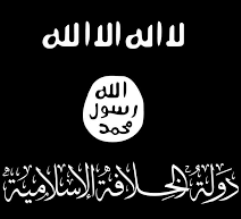
isislogohamaslogo.jpg

alienvpredator.jpg

Alien v. Predator: ISIS v. HAMAS & HAMAS v. ISIS


ISIS militants besieging a Palestinian refugee camp in Syria’s capital have savagely beheaded the leaders of a Hamas-linked group opposed to President Bashar Assad, it has been claimed. Having seized control of up to 90 per cent of the Yarmouk camp in south Damascus, the jihadis posted gruesome images showing the severed heads of two alleged members of Aknaf Beit al-Maqdis online.
Like ISIS, the Palestinian group has declared Israel its sworn enemy, although its presence in Yarmouk has until now been to defend the camp’s 18,000 residents from a crippling two year siege carried out by the Assad regime. ISIS’ decision to publicly execute the men – as well as reports of the deaths of dozens more Palestinians during clashes inside Yarmouk – has prompted outrage in Gaza, where hundreds of furious Hamas supporters swore bloody revenge on the terror group during a march yesterday.
Hundreds of residents of the Yarmouk camp fled yesterday amid shelling by government forces and clashes between ISIS fighters and Palestinian militants, activists said.
Awwwww. So sad, too bad. Oh, how my heart bleeds for these miserable cretins on both sides. Yet another set of photos to add to my Alien v. Predator Gallery, below . . .
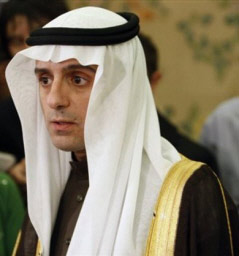
Alien v. Predator = Iran v. Adel Al-Jubeir . . .
adelaljubeirkefiyeh2.jpg

alienvpredator.jpg
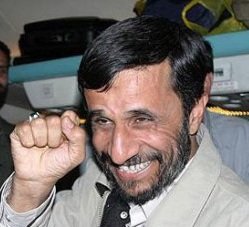
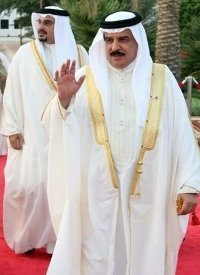
Bahrain’s Sunni Al-Khalifa Royals v. Iran-Backed Shi’ite Parliament . . .
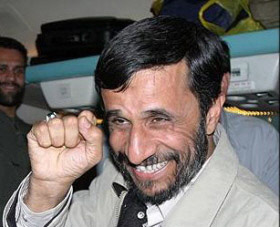
ahmadinejadsmile.jpg
Islamic Land Terrorists v. Islamic “Pirate” Terrorists . . .
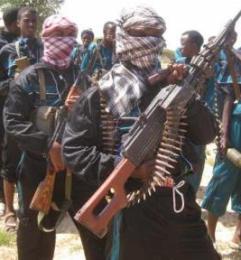
hizbulislam2somalipirates2
Somali Hizbul Islam Terrorists v. Somali Pirate Islamic Terrorists
Sean Vannity v. Glenn Beck . . .
glennbeckseanhannitylaughing2
Palestinian Authority/Fatah v. Al-Jazeera . . .
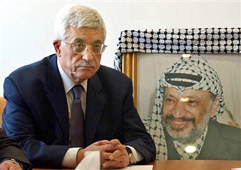
mahmoudabbassmaller.jpgaljazeera.jpg
Charles Barkley v. President Barack Hussein Obama Barry Soetoro Idi Amin Dada . . .
charlesbarkley.jpgbarackobama.jpg
charlesbarkleymugshotfull.jpg
William Shatner/”Capt. Kirk” v. George Takei/”Sulu” . . .
captainkirk.jpgsulu.jpg
Aretha Franklin v. Tina Turner . . .
arethafranklin.jpgtinaturner.jpg
Baba Wawa v. Star Jones . . .
barbarawalterskevorkian.jpgstarjonesswimsuitedition.jpg
Dr. Death, Baba Wawa & Star Jones Swimsuit Edition
HAMAS v. Fatah . . .
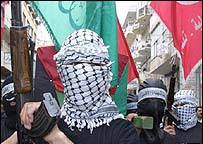
hamasterrorist.jpgfatahterrorists.jpg
Donald v. Rosie . . .
donaldtrump2.jpgrosieodonnell2.jpg
alienvpredator.jpg


Wednesday, October 1, 2014

Current Events & Trends: Is China the solution to Western economic Woes?

An interesting article from http://www.ucg.org/ about China. This follows this post about e-Readers. For a free magazine subscription or to get the books recommended for free click HERE! or call 1-888-886- 8632.
I am leaving TWITTER SOON. Please continue to follow me here.


Current Events & Trends: Is China the solution to Western economic Woes?


Printer-friendly version


In the text of a graphic titled "Stepping Up to Buy," The Wall Street Journal noted: "Chinese state-owned and private enterprises are pouring investment money into the U.S., into industries such as auto parts, real estate, and oil and gas.

The number of deals, and their overall value, has climbed steadily in recent years" (accompanies "In the Heart of the Rust Belt, Chinese Funds Provide the Grease," Feb. 11, 2012). Fairly recently, in Saginaw, Michigan, the Chinese rescued from ruin a substantial automotive company—that city's largest employer.
But America is far from the only target. The teaser for an article in Time magazine by Vivienne Walt titled "Feasting on Europe" stated, "As the euro-zone crisis deepens, China is angling for the union's most prized firms" (Dec. 19, 2011). The article explained that while China may currently be a small player in Europe, that is quickly changing.
Yet historians, journalists and academics remain somewhat skeptical about the viability of Chinese assistance long-term. Harvard professor and historian Niall Ferguson is only one. His London Sunday Times feature article of March 11 was titled "Get Ready to Be a Slave in China's World Order." The drophead starkly stated, "We think Chinese money is the answer to our problems, but the reason the country [China] is prospering is hard work—very hard work—and it will expect it from us too."
A review by Oxford economics professor Paul Collier of the 2012 book Why Nations Fail, by two U.S. academics, offered this advice in its title: "Don't Look to China for Economic Salvation" ( The Observer, March 10). (Sources: The Observer, The Sunday Times [London], Time, The Wall Street Journal. )

China, Hong Kong, and the Dalai Lama

A very interesting post from www.Stratfor.com about China, Hong Kong, and Tibet. This follows this post about the missing Afghan soldiers. This follows this post about one of the beheaded Americans. This follows this article about American energy independence and preventing money from going to hostile countries. For more about what you can do to get more involved click here and you can read two very interesting books HERE.
I am leaving TWITTER SOON. Please continue to follow me here.


Centripetal and Centrifugal Forces at Work in the Nation-State

By Zhixing Zhang
"Here begins our tale: The empire, long divided, must unite; long united, must divide. Thus it has ever been." This opening adage of Romance of the Three Kingdoms, China's classic novel of war and strategy, best captures the essential dynamism of Chinese geopolitics. At its heart is the millennia-long struggle by China's would-be rulers to unite and govern the all-but-ungovernable geographic mass of China. It is a story of centrifugal forces and of insurmountable divisions rooted in geography and history — but also, and perhaps more fundamentally, of centripetal forces toward eventual unity.
This dynamism is not limited to China. The Scottish referendum and waves of secession movements — from Spain's Catalonia to Turkey and Iraq's ethnic Kurds — are working in different directions. More than half a century after World War II triggered a wave of post-colonial nationalism that changed the map of the world, buried nationalism and ethnic identity movements of various forms are challenging the modern idea of the inviolable unity of the nation-state.
Yet even as these sentiments pull on the loose threads of nations, in China, one of the most intractable issues in the struggle for unity — the status of Tibet — is poised for a possible reversal, or at least a major adjustment. The long-running but frequently unnoticed negotiations have raised the possibility that the Dalai Lama, Tibet's spiritual leader, may be nearing a deal that would enable him to return to his Tibetan homeland. If it happens, it would end the Dalai Lama's exile in Dharamsala, India — an exile that began after the Tibetan uprising in 1959, nine years after the People's Republic of China annexed Tibet. More important, a settlement between Beijing and the Dalai Lama could be a major step in lessening the physical and psychological estrangement between the Chinese heartland and the Tibetan Plateau.

Tibet, the Dalai Lama and Self-Determination

The very existence of the Tibetan issue bespeaks several overlapping themes of Chinese geopolitics. Most fundamentally, it must be understood in the context of China's struggle to integrate and extend control over the often impassable but strategically significant borderlands militarily and demographically. These borderlands, stretching from northeast to the southwest — Manchuria, Mongolian Plateau, Xinjiang, Tibet and the Yunnan Plateau — form a shield, both containing and protecting a unified Han core from overland invasion. In attempting to integrate these regions, however, China confronts the very nature of geographic disintegration and the ethnic identities in these restive borderlands, which have sought to resist, separate or drift away from China at times when weak central power has diminished the coherence of China's interior.
Tibet in many ways represents the extreme edge of this pattern. Indeed, while the formidable geography of the Tibetan Plateau (its altitude averages 4.5 kilometers, or almost 2.8 miles, above sea level) largely inured it from most frontier threats to the Han core compared with the more accessible Manchuria, Mongolian Plateau or Xinjiang. Perhaps no borderland is as fraught with as much consequence as Tibet under China's contemporary geopolitical circumstances. The Tibetan Plateau and its environs constitute roughly one-quarter of the Chinese landmass and are a major source of freshwater for China, the Indian subcontinent and mainland Southeast Asia. The high mountains of the Himalayas make a natural buffer for the Chinese heartland and shape the complex geopolitical relationship between China and India.
Historically, China's engagement with the Tibetan Plateau has been lacking and not characterized by national unity. Starting in the 7th century, China made sporadic attempts to extend its reach into the Tibetan Plateau, but it wasn't until the Qing dynasty that the empire made a substantial effort to gain authority over Tibetan cultural and social structures through control of Tibetan Buddhist institutions. The weakening of China after the Qing dynasty led peripheral states, including Tibet, to slip from Chinese central rule.
Since the People's Republic of China began ruling over Tibet in 1950, the perennial struggle manifested as political, religious and psychological estrangement between political power in Beijing and the Dalai Lama, the charismatic political and spiritual symbol of the Tibetan self-determination movement, who consistently has resisted China's full domination over Tibet. Here, the nominally impersonal process of geopolitics confronts the rare individual who has a lasting impact. The Dalai Lama has concentrated the Tibetan cause into himself and his image. It is the Dalai Lama who represents the Tibetan identity in foreign capitals and holds a fractious Tibetan movement together, holding sway over both indigenous Tibetans in the homeland and the old and new generations of Tibetan exiles.

Perennial Struggle and Contemporary Moves

Under the People's Republic, China has some of the clearest physical control and central authority over one of the largest and most secure states in China's dynastic history. However, the ancient compulsion to secure the Chinese periphery did not go unaddressed by China's Communist leadership.
Over the years, the central government has pushed aggressively to bolster Han Chinese economic and demographic dominance over the borderland while attempting to overcome the physical barriers of distance through grandiose infrastructure projects, including road and rail links. And yet, the estrangement with the Dalai Lama has left Beijing dealing with the perception that its control over the Tibetan Plateau is partial and of questionable legitimacy. Meanwhile, the Dalai Lama's international prestige exposed the central power in Beijing to numerous international critics. Moreover, it offered New Delhi an opportunity to exploit Beijing's concerns by hosting the Dalai Lama and the Tibetan government-in-exile.
Beijing sees no space to allow the autonomy demanded by the Tibetan exile movement; it is a short path from robust autonomy to direct challenge. Beijing's strategy has been to try to undermine the Dalai Lama's international prestige, constrain interaction between the exile community and Tibetans at home and hope that when the spiritual leader dies, the absence of his strong personality will leave the Tibetan movement without a center and without someone who can draw the international attention the Dalai Lama does. Central to Beijing's calculation is interference in the succession process whereby Beijing claims the right to designate the Dalai Lama's religious successor and, in doing so, exploit sectarian and factional divisions within Tibetan Buddhism. Beijing insists the reincarnation process must follow the Tibetan religious tradition since the Qing dynasty, meaning that it must occur within Tibetan territory and with the central government's endorsement, a process that highlights Tibet's position as a part of China, not an independent entity.
Beijing's plan could work, but the cost would be high. Without recognition from the Dalai Lama, Beijing's appointed successor — and by extension, Beijing's authority in Tibet — can hardly be accepted by the wider Tibetan community. To resist Beijing's attempt at interference, the Dalai Lama has in recent years made various statements signaling that the ancient traditions of the succession process could break. In particular, the Dalai Lama has discussed the potential for succession through emanation rather than reincarnation. This would place his knowledge and authority in several individuals, each with a part of his spiritual legacy, but none as the single heir. Emanation can occur while the Dalai Lama is alive, thus giving him the ability to manage a transition. He has also mentioned the possibility that no successor will be named — that the reincarnation of the Dalai Lama will end, leaving his legacy as the lasting focus for Tibetans.
More concretely, the Dalai Lama has split the role of spiritual and political leadership of the Tibetan movement, nominally giving up the latter while retaining the former. In doing so, he is attempting to create a sense of continuity to the Tibetan movement even though his spiritual successor has not been identified. However, it also separates the Dalai Lama from any Tibetan political movement, theoretically making it easier for the spiritual leader and Beijing to come to an accord about his possible return as a spiritual — but not political — leader. But the maneuvering by the Dalai Lama reflects a deeper reality. The Tibetan movement is not homogenous. Tibetan Buddhism has several schools that remain in fragile coordination out of respect for the Dalai Lama. The Tibetan political movement is also fragmented, with the younger foreign-born Tibetans often more strongly pressing for independence for Tibet, while the older exiles take a more moderate tone and call for more autonomy. The peaceful path promoted by the Dalai Lama is respected, but not guaranteed forever, by the younger and more radical elements of the Tibetan movement, which have only temporarily renounced the use of violence to achieve their political goals.
The future of the Tibetan movement after the Dalai Lama's death is uncertain. At a minimum, the spiritual leader's fame means no successor will be able to exercise the same degree of influence or maintain internal coherence as he has done. Just as the Dalai Lama was concerned that an extremist wing of the new Tibetan generation would undermine his moderate ideology and dilute the movement's legitimacy, Beijing fears that the post-Dalai Lama era would enable multiple radical, separatist or even militant movements to proliferate, leaving Beijing in a much more difficult position and potentially facing a greater security threat.
Beijing and the Dalai Lama have shown a willingness to reach a political settlement in the past, but their attempts failed. As uncertainties loom for both sides amid concerns about the spiritual leader's age and the changing domestic dynamics facing China's new president, Xi Jinping, both sides could see a departure from previous hostilities as a reasonable step toward a low-cost settlement. In other words, both Beijing and the Dalai Lama — and by extension his mainstream followers — understand how little time they have and how, without a resolution, the uncertainties surrounding the Tibet issue could become permanent after the spiritual leader's death.

Optimism Now, but Caution Ahead

The report of the Dalai Lama's possible return to Tibet comes as Beijing has resumed talks with representatives of the spiritual leader. This round of negotiations comes after nine rounds of failed talks over the past decade and four years after the last attempt. Nonetheless, the mood appears at least somewhat optimistic on both sides. In recent weeks, the Dalai Lama has offered conciliatory comments about Xi and intimated that he could be open to returning to Tibet, a longstanding desire of the 79-year-old spiritual leader. For its part, Beijing has released some Tibetan political prisoners and reportedly allowed the Dalai Lama's image and words to be used in certain Tibetan regions after years of prohibition.
Of course, many uncertainties surround the return of the Dalai Lama; it is even uncertain whether it could happen at all. Indeed, overcoming 55 years of hostile relations takes enormous effort, and even if the Dalai Lama is allowed to return to Tibet, it is only one of several steps in much broader negotiations between Beijing and the Tibetan exile community over how to reach a resolution, including the possible resettlement of 200,000 Tibetans in exile, the status of the government-in-exile, the authority of the Dalai Lama and, ultimately, the succession process for the spiritual leader.
Over the years, the Dalai Lama repeatedly has expressed a strong desire to return to the Tibetan homeland, seeing it as an end goal in his longstanding efforts to gain Tibetan autonomy. Although Beijing had always left the option open, it repeatedly emphasized that any dialogue with the Dalai Lama would be confined to the scope of an arrangement for the spiritual leader and would carry no political implications. In other words, any agreement will be based on the premise that expanded Tibetan autonomy is not an option and that Beijing's authority over Tibetan regions — and by extension, the borderland in Xinjiang and Inner Mongolia — will remain intact. Similarly, the Dalai Lama will not accept a weakening of his spiritual authority among the Tibetan community or of his role in choosing successors. Nonetheless, with Beijing's concern over the proliferation of radical wings of the Tibetan movement abroad, allowing the Dalai Lama to return to Tibet could mitigate some of the tension and give Beijing a way to divide and weaken the Tibetan movement.
In moving toward an agreement, both sides would have to prepare for some political risk. For Beijing, the foremost concern would be managing the enormous religious influence of the Dalai Lama at home, where he is seen as a challenger to the Communist Party's political leadership. For the Dalai Lama, the main concerns would be managing the role of the Tibetan political leadership overseas and the potential repercussions within the exile movement from the developing settlement's contrast with their goal for Tibetan autonomy.
Perhaps more important, even if there were signs of a resolution developing, the succession issue is likely to be a roadblock. Beijing is unlikely to give any concession in its authority to appoint a reincarnated spiritual leader, and the Dalai Lama shows little intention of allowing Beijing's unilateral move.

Confronting a Geopolitical Curse

Despite various uncertainties, questions and risks, the potential ramifications of even the slim possibility of rapprochement illustrate China's ancient geopolitical dynamism at work.
Again illustrating how an individual can play a role in geopolitics, the potential for reconciliation between Beijing and the Dalai Lama could affect the balance between China and India. China has long viewed India's decision to host the Tibetan government-in-exile as a hostile gesture. However, India's ability to exploit China's concerns about Tibet has diminished along with the government-in-exile's influence and claim to represent Tibet as a legitimate entity. Already, New Delhi has shown waning enthusiasm for accepting Tibetan refugees and greater concern that the internal fragmentation of the Tibetan community will make hosting the exile community more of a liability than a benefit. However, a settlement would not eliminate the underlying geopolitical rivalry between India and China on other fronts — from their 4,000-kilometer land border to the maritime competitions in the Indian Ocean and South China Sea and their competition for energy and other resources.
Even if a settlement on the Tibet issue emerges in the distant future, it does not mean the end of the China-Tibet struggle. Indeed, since 2009 there have been many Tibetan self-immolations, and Beijing's economic developments in many parts of the ethnic borderlands widely are perceived as flawed or incomplete. Quite likely, a detente with the Dalai Lama will result in radicalized and more extremist elements emerging overseas, seeking self-determination and, like many of their counterparts around the world — from Scotland to the Kurds in the Middle East — challenging the centripetal forces of nation-states.
Historically, when Han China is strong, so is its control over these buffer regions. Control of the buffer regions, in turn, is a key precondition for a strong and secure Han China. This arrangement will become crucial as Beijing grapples with the potential challenges in the social, economic and political transformation in the Han core in the coming years. Therefore, despite the flux mentioned in the aphorism from Romance of the Three Kingdoms, for Beijing the ultimate goal is to confront an ancient geopolitical curse by cementing its control over its borderlands and uniting China permanently and irreversibly, however unrealistic this goal might be.
Editor's Note: Writing in George Friedman's stead this week is Stratfor Asia-Pacific Analyst Zhixing Zhang.


Read more: Centripetal and Centrifugal Forces at Work in the Nation-State | Stratfor
Follow us: @stratfor on Twitter | Stratfor on Facebook

Tuesday, September 23, 2014

World News and Trends: Watch the oil chessboard

An interesting article from http://www.ucg.org/ about the Oil Chessboard. This follows this post about the God Particle. This follows this post about the Feast of Trumpets. For a free magazine subscription or to get the books recommended for free click HERE! or call 1-888-886- 8632.
I am leaving TWITTER SOON. Please continue to follow me here.


World News and Trends: Watch the oil chessboard


Printer-friendly version


"Is there any man, is there any woman, let me say any child here that does not know that the seed of war in the modern world is industrial and commercial rivalry?" So asked Woodrow Wilson (1856-1924), U.S. president during World War I.

This presidential observation is probably more true of the squabbles over black gold than any other material substance in the modern world. Even the present conflagration in Afghanistan is no exception. According to an article in The Guardian, "Afghanistan is as indispensable to the regional control of oil in Central Asia as Egypt was in the Middle East."
Afghanistan's northern neighbors contain abundant oil reserves that may prove critical to world supplies. The American military presence in Afghanistan is not only a crucial strategic blow against terrorism but may have another major benefit: the opportunity to secure ready access to Central Asian oil reserves as a countervailing measure against too much dependency on Islamic nations in the volatile Middle East.
As an editorial in The Washington Times points out: "Americans depend on fossil fuels for much of their material prosperity, even though much of that fossil fuel comes from unfriendly Islamic states in the Middle East. Almost 60 percent of American oil is shipped from overseas-Americans annually pay Saddam Hussein nearly $4 billion for the 700,000 barrels of oil that he provides them."
Therefore, the recent Russian-American cooperation against terrorism may also work to America's long-term advantage in securing adequate oil reserves. Russia is not a member of OPEC and therefore has the option of dragging its feet in reply to requests for substantial cuts in oil production.
The Times recently reported: "Russia [is] where oil output is increasing in leaps and bounds. The world has forgotten the contribution of Russian oil to global energy supply." Of course the Russians are as concerned about oil reserves as the Americans. A Daily Telegraph feature article recently observed: "For all the talk of international alliances and the future of Afghanistan, the real concern for Moscow is cementing its control of the oil supply."
America wants to build one or more oil pipelines in Central Asia. It has already invested $30 billion in developing oil in Azerbaijan, Kazakhstan, Turkmenistan and Uzbekistan. Suddenly these faraway countries, difficult for most of us to spell and pronounce, take on an important role in our welfare. The Telegraph article continued: "Washington is now proposing a $3 billion pipeline from Azerbaijan, on the Caspian Sea, through Georgia to Turkey's Mediterranean Coast. U.S. companies could build a similar pipeline from Central Asia through Afghanistan to Karachi at half the cost, if the next Afghan government can guarantee its security."
Let's not forget China. The International Herald Tribune reported that in September "Prime Minister Zhu Rongji of China was in Moscow meeting with his Russian counterpart and signing off on a $1.7 billion feasibility study for a proposed 2,400-kilometer pipeline that by 2010 would deliver 30 million tons of oil to Chinese refineries each year." China's fast-growing economy of the past several years has created a voracious and expanding appetite for energy, and oil is one of the main sources.
Watch the oil chessboard as nations seek to secure their supplies and control world prices to their national advantage. Wars have been fought over oil, and the strivings over black gold may give us valuable clues as to how certain aspects of Bible prophecy may be fulfilled. (Sources: The Guardian, The Daily Telegraph, The Times [all London], The Washington Times, The International Herald Tribune .)
Nobody has commented yet. Be the first to kick off the discussion!
Login/Register to post comments

Thursday, September 11, 2014

Conflict Again in Iraq, Why It Matters

An interesting article from http://www.ucg.org/ about Iraq. This follows this post about the new Caliphate. This follows this post about the Feast of Trumpets. For a free magazine subscription or to get the books recommended for free click HERE! or call 1-888-886- 8632.
I am leaving TWITTER SOON. Please continue to follow me here.


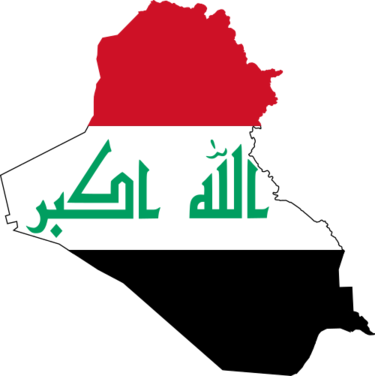
Conflict Again in Iraq, Why It Matters


Submitted June 12, 2014

Conflict Again in Iraq, Why It Matters
Source: Darwinek/Wikimedia Commons
It’s Sunni versus Shiite once again in Iraq and this time America is not around to keep the peace. How far will sectarian strife escalate during this round of fighting in this ancient region?
A group of Arab fighters calling themselves the Islamic State of Iraq (ISIS) have come back in force in northern Iraq and taken control of key cities of Tikrit and Mosul. Thought to have been weakened and out of the game, this group has had a resurgence of support in northern Iraq and eastern Syria. Coupled with the utter collapse of Iraqi forces in that region, their display of force over the past few days has created the largest threat to stability and security in Iraq since the American-led overthrow of Saddam Hussein’s government in 2003. Without American ground troops in the region, the fate of the country is uncertain. It appears that predictions of the Iraqi army's lack of preparedness, coupled with the political weakness of the country's leadership have come true. Tens of thousands of civilians fleeing their homes is the usual, and unfortunate, result of these conflicts.
This current conflict is on our mind: last week we recorded an episode of Beyond Today  to air close to the 100th anniversary of the beginning of World War I in August. We showed in the program how the current conflicts in the Middle East—and Iraq and Syria in particular—are a result of the decisions made in the aftermath of that war. The lines of the current Middle East nations were drawn during the Paris Peace Conference after the war. The lines dividing the countries did not always take into consideration the religious and ethnic differences. What we are seeing in today’s news out of the region is part of that story.
The problem is compounded today because of a vacuum of power created by America’s reluctance to police this failed region. America is going through a crisis of confidence in its role as the sole superpower in today’s world. The American-led invasion of Iraq in 2003 “broke” the fragile glue that held the nation together. Since having pulled out all troops, the country was left to police itself. Unfortunately, as this week’s events show, Iraq does not have a strong enough army and government to effectively maintain control.
Jesus Christ listed the rise of conflict among nations (nation shall rise agains nation) in Matthew:24:6 as one of the signs of the end of this present age. The word nation here is ethnos and more accurately refers to ethnic strife between the smaller grouping of peoples within larger nations. These intractable conflicts are what drag larger nations into war against one another.
Bible prophecy shows the Middle East will again drag larger nations into the region. What we are seeing in Iraq today shows us how this could be done in the future. That is why what is happening today in Iraq and Syria matters.