Showing posts with label Assad. Show all posts

Wednesday, October 5, 2016

Obama admits 12,587 Syrian refugees: 12,486 Muslims, 68 Christians, 24 Yazidis

A timely post about from www.jihadwatch.org about refugees. This follows this post about "Clock Boy." This follows this article about American energy independence and preventing money from going to hostile countries. For more, you can read two very interesting books HERE.You can follow me here.

Obama admits 12,587 Syrian refugees: 12,486 Muslims, 68 Christians, 24 Yazidis

This is social engineering, not a genuine response to a refugee crisis. Ten percent of Syria was Christian before the war, and the Christians have been particularly brutalized, often by Obama-backed jihad groups. The refugee population should thus be at least 10% Christian. Instead, Christians accounted for less than one percent of the refugees admitted into the U.S. Obama is clearly pursuing a strategy to increase the Muslim population of the U.S. He may be doing this out of the confidence that they will vote Democrat, or because he thinks an increased Muslim population in the U.S. will end “Islamophobia,” or for some other reason, even possibly including a generally positive view of Muslims and of the putative benefits of Islam for a society, coming from his upbringing.
Austria migrants
“12,587 Syrian Refugees Admitted in FY 2016: 12,486 Muslims, 68 Christians, 24 Yazidis,” by Patrick Goodenough, CNS News, October 3, 2016:
(CNSNews.com) – The administration admitted a total of 12,587 Syrian refugees during the just-ended fiscal year, exceeding the target President Obama declared last fall by 2,587 (20.5 percent).
Of the 12,587, the vast majority are Sunni Muslims – 12,363 (98.2 percent) – while another 103 are identified in State Department Refugee Processing Center data simply as Muslims and a further 20 as Shi’a Muslims.
Sixty-eight of the 12,587 Syrian refugees (0.5 percent) are Christians. They comprise 16 Catholics, eight Orthodox, five Protestants, four Jehovah’s Witnesses, one Greek Orthodox, and 34 refugees self-identified simply as Christians.
The remainder of the Syrian refugees resettled in the U.S. in FY 2016 are 24 Yazidis, eight refugees with religion given as “other,” and one with “no religion.”
The final month of the fiscal year followed the pattern of previous ones: 1,847 Syrian refugees were admitted, of whom 1,812 were Sunnis, 13 were other Muslims, 12 were Christians, seven were Yazidis, and three were “other” religion.
Throughout the year, the numbers of Christians and other religious minorities among the Syrians granted refugee status in the U.S. were dwarfed by those of Sunni Muslims.
Although the majority of Syrians are Sunnis, the number of Sunnis among the refugees was still disproportionately high, and the number of Christians disproportionately low, when compared to the overall population makeup.
When the conflict began in 2011, an estimated 10 percent of the Syrian population (1.5-1.7 million) was Christian and 74 percent was Sunni Muslim.
In contrast, Christians accounted for just half of one percent of the refugees resettled in the United States in FY 2016, while Sunnis accounted for 98.2 percent….
UK admits Muslim cleric who called for murder of gays for series of lectures in London
Iran: IRGC deputy commander says "We have a whole 'jungle' of missiles...We are able to threaten vital interests of any enemy"

Wednesday, March 9, 2016

“Moderate” Kasich Pledges To Restart Wars In the Middle East

A timely post about from http://www.vdare.com about Kasich and Middle Eastern Wars. This follows this post about Muslim immigration. This follows this article about American energy independence and preventing money from going to hostile countries. For more, you can read two very interesting books HERE.You can follow me here.

“Moderate” Kasich Pledges To Restart Wars In the Middle East


John Kasich is surging in most polls, with one even showing him leading in Michigan [Michigan, March 4-5, American Research Group]  Though this is most likely an outlier, with just about every other poll showing Trump in the lead, Kasich is unquestionably in the strongest position he’s been in throughout the entire campaign. And while every other candidate’s favorable ratings are plunging, Kasich’s are increasing as he tries to stay above the fray.
But while Kasich was interpreted as having a strong debate showing on Thursday, it’s hard to see how some his comments will help him in a general election, especially when it comes to foreign policy. Kasich not only came out for re-invading Iraq, but for interventions in Syria and Libya.
Kasich noted Gaddafi should not have been overthrown. But then he said:
Fortunately in Libya, there’s only a few cities on the coast, because most of Libya is a desert. The fact of the matter is, we absolutely have to be [involvled], and not just with special forces. I mean, that’s not going to work. Come on. You’ve got to go back to the invasion when we pushed Saddam Hussein out of Kuwait. We have to be there on the ground in significant numbers. We do have to include our Muslim Arab friends to work with us on that, and we have to be in the air, and we, it should be a broad coalition, made up of the kinds of people that were involved when we defeated Saddam. Now, you’ve got to be on the ground and in the air both in Syria and Iraq.
[The Fox News GOP debate transcript, annotated, Washington Post, March 3, 2016]
Who exactly are our “Muslim Arab friends?” Everywhere we go, they seem to stick around just long enough to accept aid and weapons and then turn on us.
In contrast, Trump has appointed Jeff Sessions to be his chief national security advisor advisor. And the first thing Sessions did is pour cold water on any new crusade to remake the Middle East.
“We need to understand the limits of our ability to intervene successfully in other nations,” Sessions said in a statement. “It is time for a healthy dose of foreign policy realism. In the Middle East, this means forming partnerships based on shared interests, not merely overthrowing regimes in the dangerous attempt to plant democracies.”
[Trump Taps Jeff Sessions As Chief National Security Advisor, by Jonah Shepp, New York, March 3, 2016]
In the current American political climate, vowing new wars and interventions that will kill thousands makes you a sensible “moderate,” supported by people of good will. In contrast, if you are a foreign policy realist and believe the best way to stop terrorism is by controlling immigration, you are a crazy lunatic.
Do GOP voters still believe this nonsense? We’ll find out!

Thursday, November 19, 2015

Syria's Assad Threatens to Rain Missiles on Tel Aviv

An interesting article from http://www.ucg.org/ about Syria's Assad. This follows this post about the Paris attacks. For a free magazine subscription or to get the books recommended for free click HERE! or call 1-888-886- 8632.
Please follow me here for continued posts.


With the death of Muammar Gaddafi in Libya, things have gotten terribly uncomfortable for Syrian President Bashar al-Assad—and his worry has led to serious threats.
Gaddafi was the latest Middle East dictator to fall in the wave of the Arab Spring. Fighting against his own people helped to bring NATO forces in to support the revolutionaries. Assad, who has violently clamped down on his own nation, fears similar intervention in Syria.
In early October, the Syrian leader threatened to set fire to the Middle East by striking Israel, stating in a meeting with the foreign minister of Turkey, a NATO member, “If a crazy measure is taken against Damascus, I will need no more than six hours to transfer hundreds of rockets and missiles to the Golan Heights to fire them at Tel Aviv” (quoted in “Report: Assad Threatens to Attack Tel Aviv in Case of NATO Strike,” Ynet News, Oct. 4, 2011).
He further “stressed that Damascus will also call on Hezbollah in Lebanon to launch a fierce rocket and missile attack on Israel, one that Israeli intelligence could never imagine. ‘All these events will happen in three hours, but in the second three hours, Iran will attack US warships in the Persian Gulf as American and European interests will be targeted simultaneously,’ Assad reportedly said” (ibid.).
According to the intelligence and security news service DEBKA file: “Israel reacted with a warning of its own: If a single Syrian missile explodes in Tel Aviv, Damascus will be first to pay the price, and if the missile offensive persists, one Syrian town after another will be destroyed. The Israeli message to Assad cited the warnings Defense Minister Ehud Barak and other government members addressed in the past year to Hizballah, that if Tel Aviv comes under attack from its missiles, not only Beirut but all of Lebanon would go up in flames. Assad was given to understand that Syria would go the same way as Lebanon if it engaged in missile belligerence against Israel” (“Turkish Military Exercise on Syrian Border. Assad Threatens Tel Aviv if Attacked,” Oct. 4, 2011).
Some see the building tensions as leading up to the fulfillment of a prophecy in Isaiah 17:1: “Damascus will cease from being a city, and it will be a ruinous heap” (Isaiah 17:1). The fulfillment of this prophecy is clearly yet future, as Damascus, while it has been overthrown in the past, has never ceased from being a city. (In fact, it’s reputedly the oldest continually inhabited city in the world.)
But the timing and cause of this destruction are not clear. While it could conceivably result from an Israeli retaliatory strike, there are reasons from other prophecies to place the destruction of Damascus in the same context as the judgment on others of Israel’s neighbors during the period of the Day of the Lord, just prior to Christ’s return.
In any case, a massive attack on Tel Aviv would certainly set the Middle East on fire—a fire that could well devastate Damascus and the rest of Syria.
For a broader overview of events to come in the region, send for or download our free booklet The Middle East in Bible Prophecy (Sources: Ynet News, DEBKAfile.)

Wednesday, April 8, 2015

Alien v. Predator: HAMAS Vows Revenge After ISIS Beheads Its Leaders

A very interesting post from www.debbieschlussel.com about Hamas vs. ISIS. This follows this post about the Sunni and Shi'ite war in the Middle East. This follows this article about American energy independence and preventing money from going to hostile countries. For more, you can read two very interesting books HERE.
I am leaving TWITTER SOON. Please continue to follow me here.

Alien v. Predator: HAMAS Vows Revenge After ISIS Beheads Its Leaders


By Debbie Schlussel
Hey, it’s time for another edition of Alien Versus Predator. Like the Iran-Iraq War, it’s when you want the fight between both sides to go on forever . . . and both sides to lose. This time it’s ISIS v. HAMAS and HAMAS v. ISIS. Crocodile tears from me.
isislogohamaslogo.jpg

alienvpredator.jpg

Alien v. Predator: ISIS v. HAMAS & HAMAS v. ISIS


ISIS militants besieging a Palestinian refugee camp in Syria’s capital have savagely beheaded the leaders of a Hamas-linked group opposed to President Bashar Assad, it has been claimed. Having seized control of up to 90 per cent of the Yarmouk camp in south Damascus, the jihadis posted gruesome images showing the severed heads of two alleged members of Aknaf Beit al-Maqdis online.
Like ISIS, the Palestinian group has declared Israel its sworn enemy, although its presence in Yarmouk has until now been to defend the camp’s 18,000 residents from a crippling two year siege carried out by the Assad regime. ISIS’ decision to publicly execute the men – as well as reports of the deaths of dozens more Palestinians during clashes inside Yarmouk – has prompted outrage in Gaza, where hundreds of furious Hamas supporters swore bloody revenge on the terror group during a march yesterday.
Hundreds of residents of the Yarmouk camp fled yesterday amid shelling by government forces and clashes between ISIS fighters and Palestinian militants, activists said.
Awwwww. So sad, too bad. Oh, how my heart bleeds for these miserable cretins on both sides. Yet another set of photos to add to my Alien v. Predator Gallery, below . . .
Alien v. Predator = Iran v. Adel Al-Jubeir . . .
adelaljubeirkefiyeh2.jpg

alienvpredator.jpg
Bahrain’s Sunni Al-Khalifa Royals v. Iran-Backed Shi’ite Parliament . . .
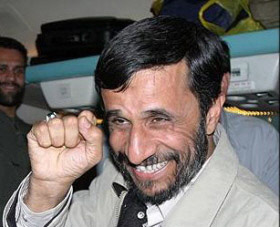
ahmadinejadsmile.jpg
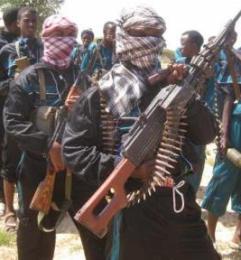
Islamic Land Terrorists v. Islamic “Pirate” Terrorists . . .
hizbulislam2somalipirates2
Somali Hizbul Islam Terrorists v. Somali Pirate Islamic Terrorists
Sean Vannity v. Glenn Beck . . .
glennbeckseanhannitylaughing2
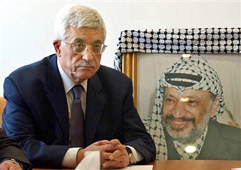
Palestinian Authority/Fatah v. Al-Jazeera . . .
mahmoudabbassmaller.jpgaljazeera.jpg
Charles Barkley v. President Barack Hussein Obama Barry Soetoro Idi Amin Dada . . .
charlesbarkley.jpgbarackobama.jpg
charlesbarkleymugshotfull.jpg
William Shatner/”Capt. Kirk” v. George Takei/”Sulu” . . .
captainkirk.jpgsulu.jpg
Aretha Franklin v. Tina Turner . . .
arethafranklin.jpgtinaturner.jpg
Baba Wawa v. Star Jones . . .
barbarawalterskevorkian.jpgstarjonesswimsuitedition.jpg
Dr. Death, Baba Wawa & Star Jones Swimsuit Edition
HAMAS v. Fatah . . .
hamasterrorist.jpgfatahterrorists.jpg
Donald v. Rosie . . .
donaldtrump2.jpgrosieodonnell2.jpg
alienvpredator.jpg


Tuesday, March 24, 2015

Saudi Arabia Faces Challenges in the New Year

A very interesting post from www.stratfor.com about Saudi Arabia's problems this year. This follows this post about Israel's elections. This follows this article about American energy independence and preventing money from going to hostile countries. For more, you can read two very interesting books HERE.
I am leaving TWITTER SOON. Please continue to follow me here.


Saudi Arabia Faces Challenges in the New Year
Text Size
By Michael Nayebi-Oskoui
The Middle East is one of the most volatile regions in the world — it is no stranger to upheaval. The 2009 uprisings in Iran and the brinksmanship of Mahmoud Ahmadinejad's government were followed by the chaos of the Arab Spring, the spillover of the Syrian conflict into Iraq and a potential realignment of the U.S.-Iranian relationship. Unlike recent years, however, 2015 is likely to see regional Sunni Arab interests realign toward a broader acceptance of moderate political Islam. The region is emerging from the uncertainty of the past half-decade, and the foundations of its future are taking shape. This process will not be neat or orderly, but changes are clearly taking place surrounding the Syrian and Libyan conflicts, as well as the region's anticipation of a strengthened Iran.
The Middle East enters 2015 facing several crises. Libyan instability remains a threat to North African security, and the Levant and Persian Gulf must figure out how to adjust course in the wake of the U.S.-Iranian negotiations, the Sunni-Shiite proxy war in Syria and Iraq, and the power vacuum created by a Turkish state bogged down by internal concerns that prevent it from assuming a larger role throughout the region. Further undermining the region is the sharp decline in global oil prices. While Saudi Arabia, Kuwait and the United Arab Emirates will be able to use considerable cash reserves to ride out the slump, the rest of the Middle East's oil-exporting economies face dire consequences.
For decades, long-ruling autocratic leaders in countries such as Algeria and Yemen helped keep militancy in check, loosely following the model of military-backed Arab nationalism championed by Gamal Abdel Nasser in Egypt. Arab monarchs were able to limit domestic dissent or calls for democracy through a combination of social spending and repression. The United States not only partnered with many of these nations to fight terrorism — especially after September 2001 — but also saw the Gulf states as a reliable bulwark against Iranian expansion and a dangerous Iraq led by Saddam Hussein. Levantine instability was largely contained to Lebanon and the Palestinian territories, while Israel's other neighbors largely abided by a tacit agreement to limit threats emanating from their territories.
Today, Saddam's iron grip on Iraq has been broken, replaced by a fractious democracy that is as threatened by the Islamic State as it is by its own political processes. Gone are the long-time leaders of states like Tunisia, Libya and Egypt. Meanwhile, Algeria, Saudi Arabia and Oman are facing uncertain transitions that could well take place by year's end. The United States' serious dialogue with Iran over the latter's nuclear program, once a nearly unthinkable scenario for many in the Gulf, has precipitated some of the biggest shifts in regional dynamics, especially as Saudi Arabia and its allies work to lessen their reliance on Washington's protection.

The Push for Sunni Hegemony

Riyadh begins this year under considerably more duress than it faced 12 months ago. Not only is King Abdullah gravely ill (a bout of pneumonia forced the 90-year-old ruler to ring in the new year in the hospital and on a ventilator), but the world's largest oil-producing country has also entered into a price war with American shale producers. Because Saudi Arabia and its principal regional allies, Kuwait and the United Arab Emirates, boast more than a trillion dollars in cash reserves between them, they will be able to keep production levels constant for the foreseeable future.
However, other OPEC producers have not been able to weather the storm as easily. The resulting 40 percent plunge in oil prices is placing greater financial pressure on Iran and the Shiite-dominated government in Iraq, Saudi Arabia's largest sectarian and energy rivals. Riyadh's careful planning and building of reserves means the Saudi kingdom's economic security is unlikely to come under threat in the next one to three years. The country will instead continue to focus on not only countering Iran but also rebuilding relationships with regional Sunni actors weakened in previous years.
Riyadh's regional strategy has traditionally been to support primarily Sunni Arab groups with a conservative, Salafist religious ideology. Salafist groups traditionally kept out of politics, and their conservative Sunni ideology was useful in Saudi Arabia's competition against Iran and its own Shiite proxies. Promoting Salafism also served as a tool to limit the reach of more ideologically moderate Sunni political Islamists like the Muslim Brotherhood and its affiliates, groups Riyadh sees as a threat because of their success in organizing grassroots support and fighting for democratic reforms.
With rise of external regional pressures, however, Gulf monarchies such as Saudi Arabia are re-evaluating their relationships with the Muslim Brotherhood. Internal threats posed by Salafist jihadists and a desire to limit future gains by regional opponents are pushing countries such as Saudi Arabia and the United Arab Emirates to try to forge a relationship with the Muslim Brotherhood to limit the risks posed by rival groups in the region.
Restoring relations with the Muslim Brotherhood will also have effects on diplomatic relations. Qatar has long been a supporter of the Muslim Brotherhood, a fact that has strained its relations with other countries — Saudi Arabia, Bahrain and the United Arab Emirates even went so far as to close their embassies in Qatar. However, the continuation of the United States' rapprochement with Iran and Riyadh's own discomfort with the rise of Salafist jihadist groups has made it reconsider its stance on political Islamism. Riyadh, Bahrain and Abu Dhabi's agreement to resume diplomatic ties with Doha, and the latter's consideration of changing its relationships with Egypt and Libya, points to a shift in how the bloc's engagement with the Muslim Brotherhood has the potential to streamline the Gulf Cooperation Council's (GCC) efforts in the region.
The Gulf monarchies' attempt at reconciling with political Islamists can potentially benefit the GCC. For its part, Qatar has engaged with the staunchly anti-Islamist Libyan government in Tobruk, and it appears tensions with President Abdel Fattah al-Sisi's government in Egypt have calmed. Both scenarios point to the likelihood of the GCC moving closer to adopting a more unified regional stance beginning in 2015, one more in line with Riyadh's wishes to preserve the framework of the council.
This improvement in relations comes at a critical moment. With the United States and Iran undergoing a rapprochement of their own, the Gulf monarchies will try to secure their own interests by becoming directly involved in Libya, Syria and potentially Yemen. This military action will also aim to project strength to Iran while also filling the strategic void left by the absence of Turkish leadership in the region, especially in the Levant.
However, Qatar has been opposed to this course of action in the past. Despite its small size, the country has used its wealth and domestic stability to back a wide array of Islamist groups, including the Muslim Brotherhood in Egypt, Ennahda in Tunisia and rebel groups in Syria. Tensions between Qatar and regional allies came to a head in 2014 in the aftermath of Saudi and Emirati support for the July 2013 uprising that ousted the Doha-backed Muslim Brotherhood government in Egypt. The tension threatened the stability of the GCC and caused rebel infighting in Syria. This disconnect in Gulf policy has had wide regional repercussions, including the success of Islamic State militants against Gulf-backed rebel groups in Syria and the Islamic States' expansion into Iraq.
Without foreign military intervention on behalf of the rebels, no faction participating in the Syrian civil war will be able to declare a decisive military victory. As the prospects of a clear-cut outcome become less realistic, Bashar al Assad's Russian and Iranian backers are increasing diplomatic efforts to negotiate a settlement in Syria, especially as both are eager to refocus on domestic woes exacerbated by the current drop in global energy prices. Kuwait's recent decision to allow the Syrian regime to reopen its embassy to assist Syrian expats living within its borders points to a likelihood that the Gulf states are coming to terms with the reality that al Assad is unlikely to be ousted by force, and Sunni Arab stakeholders in the Syrian conflict are gradually giving in to the prospect of a negotiated settlement. A resolution to the Syrian crisis will not come in 2015, but regional actors will continue looking for a solution to the crisis outside of the battlefield.
Any negotiated settlement will see the Sunni principals in the region — led by the GCC and Turkey — work to implement a competent Sunni political organization that limits the authority of a remnant Alawite government in Damascus and future inroads by traditional backers in Tehran. Muslim Brotherhood-style political Islam represents one of the potential Sunni solutions within this framework, and with Saudi opposition to the group potentially fading, it remains a possible alternative to the variety of Salafist options that could exist — to include jihadists. Such a solution ultimately relies on a broader democratic framework to be implemented, a scenario that will likely remain elusive in Syria for years to come.

North Africa's Long Road to Stability

North African affairs have traditionally followed a trajectory distinct from that of the Levant and Persian Gulf, a reality shaped as much by geography as by political differences between the Nasser-inspired secular governments and the monarchies of the Gulf. Egypt, Saudi Arabia's traditional rival for leadership of the Sunni Arab world, has become cripplingly dependent on the financial backing of its former Gulf rivals. The GCC was able to use its relative stability and oil wealth to take advantage of opportunities to secure its members' interests in North Africa following the Arab Spring. As a result, Cairo has become a launching pad for Gulf intentions, particularly UAE airstrikes against Islamist militants in Libya and joint Egyptian-Gulf backing of renegade Gen. Khalifa Hifter's Operation Dignity campaign.
Like Syria, Libya represents a battleground for competing regional Sunni ambitions. Qatar, and to a lesser extent Turkey, backed Libya's powerful Islamist political and militia groups led by the re-instated General National Congress in Tripoli after the international community recognized the arguably anti-Islamist House of Representatives in Tobruk. Islamist-aligned political and militia forces control Libya's three largest cities, and Egyptian- and Gulf-backed proxies are making little headway against opponents in battles to gain control of Tripoli and Benghazi, prompting more direct action by Cairo and Abu Dhabi.
Saudi Arabia, Egypt and the United Arab Emirates are primarily concerned with the possibility of Libya, an oil-rich state bordering Egypt, becoming a wealthy backer of political Islam. Coastal-based infighting has left much of Libya's vast desert territories available for regional jihadists as well as a host of smuggling and trafficking activities, posing a significant security risk not just for regional states but Western interests as well. Egyptian and Gulf attempts to shape outcomes on the ground in Libya have proved largely ineffective, and Western plans for reconciliation talks favor regional powers such as Algeria — a traditional rival to Egyptian and Gulf interests in North Africa — that are more comfortable working with political actors across a wide spectrum of political ideologies to include Muslim Brotherhood-style Islamism.
Libya will likely find itself as the proving ground for the quid pro quo happening between the participants of the intra-Sunni rift over political Islam. In exchange for Saudi Arabia and its partners reducing their pressure on Muslim Brotherhood-style groups in Egypt and Syria, Qatar and Turkey are likely to work more visibly with Tobruk in 2015 in addition to pushing Islamist proxies into a Western-backed national dialogue. Libya's overall security situation will not be settled through mediation, but Libyan Islamists are more likely to re-enter a coalition with the political rivals now that both sides' Gulf backers are working toward settling differences themselves.

Regional Impact

Dysfunction and infighting have marred attempts by the region's Sunni actors to formulate a cohesive strategy in Syria. This has enabled Iran to remain entrenched in the Levant — albeit while facing pressure — and to continue expending resources competing in arenas such as Libya and Egypt. The next year will likely see an evolving framework where Saudi Arabia and Qatar, and to a lesser extent Turkey, will reach a delicate understanding on the role of political Islam in the region. 2014 saw a serious reversal in the fortunes of Muslim Brotherhood-style groups, which inadvertently favored even more far-right and extremist groups such as the Islamic State as the Gulf's various Sunni proxies were focused on competing with one another.
Iran's slow but steady push toward a successful negotiation with the United States, as well as the threats posed by militant Islam throughout the Levant, Iraq and North Africa, is necessitating a realignment of relationships within the Middle East's diverse Sunni interests. Less divisive Sunni leadership will be instrumental in coordinating efforts to resolve the conflicts in both Libya and Syria, although resolution in both conflicts will remain out of reach in 2015 and some time beyond.
A more robust Sunni Arab position, especially in Syria and the Levant, will likely put more pressure on Iran to reach a negotiated settlement with the United States by the end of the year. While a settlement may seem harmful to Gulf interests, the GCC is shifting toward a pragmatic acceptance of an agreement, similar to Riyadh's begrudging accommodation of a future role for the Muslim Brotherhood in the Middle East. The GCC's new goal is to limit Tehran's opportunities for success rather than outright denying it. Part of this will be achieved through an ongoing, aggressive energy strategy. The rest will come from internal negotiations between Saudi Arabia, Egypt, Qatar and Turkey.
The next year will see the Sunni presence in Syria attempt to coalesce behind rebels acceptable to Western governments that are eager to see negotiations begin and greater local pushback against the Islamic State. More cohesive Gulf leadership will also present a more effective bulwark against Iranian and Alawite interests in the Levant. Most important, however, is the opportunity for regional Sunnis, led by Saudi Arabia, to present a more mature and capable response to mounting pressures. Whether through more assertive military moves in the region or by working with states such as Qatar to steer the Muslim Brotherhood rather than embolden the Islamist opposition, 2015 will likely see a shift in Sunni Arab strategies that have long shaped the region.

Tuesday, March 10, 2015

A King of Kings Above All Kings

An interesting article from http://www.ucg.org/ about the king of Jordan. This follows this post about perverted lifestyles in the U.S. For a free magazine subscription or to get the books recommended for free click HERE! or call 1-888-886- 8632.
I am leaving TWITTER SOON. Please continue to follow me here.


A King of Kings Above All Kings


Printer-friendly version

Source: Dustin Scarpitti/Unsplash
A while back, after ISIS executed a Jordanian pilot, I read that Jordan's King Abdullah II immediately dropped what he was doing to head back to his home in Jordan. He promised to deal swiftly with those who did such a horrendous thing to one of his men. He instilled confidence in his people by acting quickly and by showing compassion in comforting the family of the man who was killed.
The story made me reflect on what a leader should be like. Two qualities stand out in my mind from King Abdullah's example.
First, he prioritized caring for his people. A good king should be caring. Jordan has taken in more than 2 million refugees. This is in a country the size of Indiana. Jordan's economy is among the smallest in the Middle East, with insufficient supplies of water, oil, and other natural resources underlying the government’s heavy reliance on foreign assistance. I have been inspired by Jordan for having such open arms in helping the poor and those who are fleeing dangerous situations, while Jordan is impoverished itself.
The other thing I respected in King Abdullah is that he was willing to fight for his people. He did not hesitate to act swiftly against a brutal attack on one of his own. A good strong leader will fight for his people. He will represent them. He will work to protect them.
While King Abdullah inspired me with his strong and caring leadership for his people, he is no comparison to the King our world desperately needs.
There are no solutions and no quick fixes to the many problems in our world. Mankind cannot fix their problems! Even men like King Abdullah II, those with strong and caring leadership, cannot fix it! The real enemy of this world is Satan, a spiritual enemy who uses spiritual tactics. He's the one who stirs up evil thoughts and actions. He's the one truly behind the brutality we see in the headlines. The good news is that he will be dethroned by the true King appointed by God, Jesus Christ. He is a King who loves us so much that He gave His life so that we might live. Our King is coming, and He will deliver the oppressed and judge swiftly the spiritual oppressors of the world.
Christ will also remove the evil physical leaders who have oppressed the weak and thrown out His laws. He will come in great power! "On his robe and on his thigh he has this name written: king of kings and lord of lords" (Revelation:19:16). Our King will dwell among His people and wipe away all tears from their eyes. They will fear no more.
Soon Jesus Christ will return, and the world will be ruled by His laws. It will be ruled by a caring King who fights for His people. Even the best human leaders can't be compared to our King above all kings. Let's all hope for our King's swift return.


Blog posts do not undergo review by the doctrinal review team of the United Church of God. This post represents the personal opinion of the author and should not be considered the official stance of the United Church of God. If you have any questions or concerns please direct them to webmaster@ucg.org.
Nobody has commented yet. Be the first to kick off the discussion!
Login/Register to post comments

Tuesday, August 19, 2014

Turkey, a U.S. Ally, Threatens to Widen War in Iraq

An interesting article from http://www.ucg.org/ about Iraq, the country where ISIS is fighting. This follows this post about idolatrous worship.  For a free magazine subscription or to get the books recommended for free click HERE! or call 1-888-886- 8632.
I am leaving TWITTER SOON. Please continue to follow me here.


Turkey, a U.S. Ally, Threatens to Widen War in Iraq


Printer-friendly version


Kurdish rebels, seeking an autonomous Kurdistan, have been attacking Turkish troops from the sanctuary of northern Iraq. Turkey now threatens to send troops into the most peaceful region of Iraq. Complicating the problem was an attempt in the U.S. Congress to condemn Turkey for a massacre that took place almost a century ago.

The world seems unable to get away from the Ottoman Empire, almost a century after its demise.
Throughout the 19th century, the Ottoman Empire was "the sick man of Europe." Its decline brought independence to a number of nations in the Balkans and North Africa. One of the consequences of its dismemberment was World War I, triggered by a Serbian nationalist's assassination of an Austrian archduke. Serbia was one of those countries that came into existence as the Ottomans gradually fell back to their Turkish homeland.
In 1914 they allied themselves with Germany and Austria against Britain, France and Russia. After the war, the empire was carved up at the Treaty of Sèvres and a number of new nations entered the world scene, with complications and frictions that continue to this day:
• Saddam Hussein's claim on Kuwait, which led to the first Persian Gulf War, went back to the Ottoman Empire's regional divisions.
• Syria's incessant interference in Lebanon similarly goes back to that time.
• The pre-2003 Sunni domination of majority Shiite Iraq similarly went back to the Ottomans.
• The 30-year-old division of Cyprus owes its origin to the Ottomans, who settled on the island centuries ago.
• The demise of the Ottoman Empire set the stage for the current never-ending conflict between the Israelis and Palestinians.
• And now the Kurds are the center of attention as they push for a unified autonomous state of their own.
Even the U.S. Congress seems unable to get away from the Ottoman Empire, which was finally replaced by the Republic of Turkey in 1923. After almost a century, Congress seemed set to condemn Turkey for the 1915 massacre of Armenians, until it realized that Turkey is the main supply route for American troops in Iraq. Additionally, the United States is trying to restrain the Turks from attacking the Kurds in northern Iraq, hitherto the only peaceful area of the country. Congressmen are now hesitant about upsetting Turkey, an old U.S. ally, any further.
The Ottoman Empire had many faults, but it did bring peace to the Middle East for four centuries. One hundred years ago, nobody alive could have foreseen the volatility that is today's Middle East.
However, two millennia ago, somebody did.
What Christ foretold
In a major prophetic section of the Bible, Jesus Christ tells His followers to "watch" what is happening in the world (Mark:13:33). In Luke's parallel account, in Luke:21:20, Jesus showed that the Middle East would be the center of tension in the end time, immediately prior to His second coming.
In the other parallel chapter, Matthew 24, Jesus said: "For nation will rise against nation, and kingdom against kingdom" (verse 7). A kingdom is a political entity that may contain many ethnic groups. B ut the word nation here is from the Greek word ethnos, which refers to ethnic groups or tribes. One of the signs of the end time is a marked increase in conflict between ethnic groups.
The assassination that ultimately led to the fall of the Ottoman Empire was rooted in ethnicity. The Serbs had been under the rule of the Ottoman Turks for centuries when they finally achieved independence in 1817. Some Serbs, however, remained under Austrian rule. The desire for a greater Serbia inspired a Serbian nationalist to fire the shots that triggered World War I.
Since that pivotal turning point in world history on June 28, 1914, a trend throughout the world has been the desire of different ethnic groups or tribes for their own independent homeland. Ethnic conflict has increased as tribes want to break away from the dominant political entity.
The Kurds are one of these ethnic groups.
The struggle for Kurdistan
Numbering about 20 million people, the Kurds are a non-Arab tribe of predominantly Sunni Muslims, roughly half of whom live in Turkey. The other half are mainly in the Kurdish province of northern Iraq, the most peaceful area of that war-torn country. Others are scattered throughout neighboring countries, and there is a significant Kurdish diaspora in Europe and North America.
The dream of many throughout the last century was of a unitary Kurdistan, which would have meant both Turkey and Iraq losing territory.
Today the Kurdish nationalist movement, the Kurdistan Workers Party (PKK), has said it will settle for a Kurdish autonomous region. Now that this has effectively been achieved in Iraq, the PKK's primary efforts are directed against the Turkish government, with regular terrorist attacks in Turkey conducted from neighboring Iraq.
Turkey is threatening to send troops into Iraq, further exacerbating the conflict there. The United States and Britain are trying to restrain the Turks from taking this action.
A Turkish military invasion of northern Iraq with the intent of suppressing the Kurdish nationalist movement could provide Iran with the pretext to do the same in the south, annexing the Shiite area of Iraq, thereby dismembering the country.
It is important for people in the West to realize that many of the Middle Eastern borders are arbitrary. The boundaries often go back to old regional borders within the Ottoman Empire and have little to do with tribal loyalties. This means that many countries are unstable and there is little to hold them together, which is one reason why brute force is the norm in this region.
The majority of the people in Turkey, however, are ethnic Turks. The Kurds number about 20 percent of Turkey's population and are concentrated mostly in the east near the borders with Iran, Iraq and Armenia.
"Having been decimated by the Turks in the years between 1915 and 1918 and having struggled bitterly to free themselves from Ottoman rule, the Kurds were encouraged by the Turkish defeat in World War I and by U.S. President Woodrow Wilson's plea for self-determination for non-Turkish nationalities in the empire. The Kurds brought their claims for independence to the Paris Peace Conference in 1919.
"The Treaty of Sèvres (1920), which liquidated the Ottoman Empire, provided for the creation of an autonomous Kurdish state. Because of Turkey's military revival under Kemal Atatürk, however, the Treaty of Lausanne (1923), which superseded Sèvres, failed to mention the creation of a Kurdish nation" (The Columbia Encyclopedia, sixth edition, 2001-05, "Kurds," www.bartleby.com/65/ku/Kurds.html ).
Frustrated, the Kurds rebelled in 1925 and 1930, rebellions that were crushed by Turkish troops. "Later (1937-38) aerial bombardment, poison gas, and artillery shelling of Kurdish strongholds by the government resulted in the slaughter of many thousands of Turkey's Kurds. The Kurds in Iran also rebelled during the 1920s, and at the end of World War II a Soviet-backed Kurdish 'republic' existed briefly" (ibid.).
The overthrow of the Iraqi monarchy in 1958 gave the Kurds hope in Iraq, but it didn't last. It wasn't until the first Persian Gulf War in 1991 that they had any realistic hope of autonomy. This came briefly with the coalition victory that year over Saddam Hussein. But the Kurds were badly let down by the United States and its allies and were soon crushed again by Saddam.
The second Gulf war, which began in 2003, changed things. The Kurds were quite happy to be liberated by coalition forces and have enjoyed autonomy since that time. They have been the most peaceful, stable and prosperous region of Iraq. All of this would be lost if Turkey chooses to send troops into the region to track down Kurdish rebels from Turkey who take refuge among fellow Kurds in Iraq.
"As Turkey moves troops toward the Iraqi border and officials scramble to prevent an invasion, the Kurdish separatists at the center of the storm are again proving their ability to use a well-oiled international support network to confound decades-old Turkish efforts to defeat them," writes Philip Shishkin and Yochi J. Dreazen in the Wall Street Journal ("Turkey's Rebel Kurds Still Elusive," Oct. 23, 2007).
Under international pressure, Turkey is going to try diplomacy first. The article quotes the Turkish foreign minister: "We will continue these diplomatic efforts with all good intentions to solve this problem caused by a terrorist organization…But in the end, if we do not reach any results, there are other means we might have to use" (ibid.).
While America and Britain try to restrain the Turks from attacking Iraq, a resolution in the U.S. Congress condemning the Turkish massacre of Armenians in 1915 could provoke them into immediate military action.
"The Turks are a proud, prickly people, easily offended by criticism. That much is clear from the row over a resolution, passed by a Committee of the United States House of Representatives on October 10th, calling the slaughter of Armenians by Ottoman Turks in 1915 genocide. [The full House backed off from supporting the resolution.]
"But Turkey has reacted angrily, recalling its ambassador. It is talking of cutting military ties and even denying the Americans use of the Incirlik airbase that is vital for the supply of their troops in Iraq" ("A Resolution Too Far," The Economist, Oct. 20, 2007, p. 16).
It would be short-sighted to say that this problem must be resolved in the next few months. Whatever the outcome of these immediate concerns, the Kurdish issue is not going to go away at any time in the foreseeable future. The Turks are not likely to grant autonomy to the Kurds, so future conflict is certain.
The position the United States and its European allies take, however, could change things dramatically. Turkey, a modern secular Islamic country with democratic credentials, has long sought membership in the EU and remains the second biggest military force in NATO. It is these ties that are at stake every bit as much as the future of the Kurdish people. WNP

Wednesday, July 2, 2014

Islamic State: “If Allah wills, we will kill those who worship stones in Mecca and destroy the Kaaba”

A very interesting post from http://www.jihadwatch.org about the Islamic State's opinion of Mecca. This follows this post about Michigan bringing in Muslim refugees.  This follows this article about American energy independence and preventing money from going to hostile countries. For more about what you can do to get more involved click here and you can read two very interesting books HERE. You can follow me at blogspot here and at twitter here https://twitter.com/brianleesblog. Please consider following both in case one goes down!


http://www.jihadwatch.org/2014/06/islamic-state-if-allah-wills-we-will-kill-those-who-worship-stones-in-mecca-and-destroy-the-kaaba

Islamic State: “If Allah wills, we will kill those who worship stones in Mecca and destroy the Kaaba”

KaabaThis will not endear them to many Muslims. The Saudis themselves, who are no friends of The Islamic State, assiduously destroy religious artifacts in a bid to prevent “idolatry,” but since Muhammad himself is — according to Islamic tradition — supposed to have prayed in the Kaaba, they have not dared to touch it. Will an irresistible force here meet an immovable object? Muslims must reject and destroy all possible temptations to idolatry, and also must follow Muhammad’s example in all things. Can the Kaaba ipso facto not be an inducement to idolatry because Muhammad prayed there? Or must it be destroyed despite Muhammad’s example so as to prevent the worship of stones? Are Muslims to follow Muhammad in all things or are they to destroy all sources of idolatry? Can’t do both in this case! This will be interesting to watch.
“ISIS: We will ruin the Kaaba after capturing Saudi Arabia,” APA, June 30, 2014 (thanks to Tabitha):
Baku. Rashad Suleymanov – APA. Representatives of the Islamic State in Iraq and the Levant (ISIS) stated that they will ruin the Kaaba after capturing Saudi Arabia.
APA reports quoting Turkish media that ISIS wants to take control of Arar city of Saudi Arabia and start operations here.
ISIS member Abu Turab Al Mugaddasi said that they would destroy the Kaaba in Mecca: “If Allah wills, we will kill those who worship stones in Mecca and destroy the Kaaba. People go to Mecca to touch the stones, not for Allah.”

Friday, June 27, 2014

How POTUS and Hillary Opened The Door To The Return Of Al Qaeda To Iraq

An interesting article from www.hughhewitt.com about the President's failures in dealing with Iraq. This follows this post about a particular group in the recent flood of illegal immigrants. You can follow me at blogspot here and at twitter here https://twitter.com/brianleesblog. Please consider following both in case one goes down!


How POTUS and Hillary Opened The Door To The Return Of Al Qaeda To Iraq

 |  posted by Hugh Hewitt


My Monday Washington Examiner column is on the consequences of the failure of President Obama and then Secretary of State Hillary Clinton to secure a Status of Forces Agreement with Iraq in 2011.


The consequences are terrible for the people of Iraq, for its neighbors and eventually for us.  There is no rewriting the hard facts of history as both the president and Hillary attempted to do last week.  Bolting Iraq completely without leaving a residual force to provide the glue to keep Iraq’s army together and the resurgence of Al Qaeda in Iraq was a massive strategic error.  Team Obama didn’t see that then, but then again it sees nothing that isn’t obviously in its own political best interests.
The Washington Post notes the weekend’s developments:
The latest conquests give the radical Sunni Muslim insurgents unchecked control of hundreds of miles of territory spanning the Iraqi-Syrian border, erasing the line drawn between the two countries by colonial powers and advancing the extremists’ goal of establishing a pan-Islamic state.
This is the key Obama-Clinton legacy:  Undoing George W. Bush’s major achievement and allowing al Qaeda a base in which to grow and from which to metastasize.