Showing posts with label caliph. Show all posts

Wednesday, April 29, 2015

The Islamic Genocide of Christians: Past and Present

A very interesting post from www.jihadwatch.org about Islam's attack on Christianity. This follows this post about America's balance of power in the Middle East. This follows this article about American energy independence and preventing money from going to hostile countries. For more, you can read two very interesting books HERE.
Please follow me here.

Raymond Ibrahim: The Islamic Genocide of Christians: Past and Present

pakistan-christiansLast Friday, April 24, we remembered how exactly 100 years ago the last historic Muslim caliphate, the Ottoman Empire, tried to cleanse its empire of Christian minorities — Armenians, Assyrians, and Greeks — even as we stand by watching as the new caliphate, the Islamic State, resumes the genocide.
And in both cases, the atrocities were and are being committed in the name of Islam.
In November, 1914, during WWI, the Ottoman caliphate issued a fatwa, or Islamic decree, proclaiming it a “sacred duty” for all Muslims to “massacre” infidels — specifically naming the “Christian men” of the Triple Entente, “the enemies of Islam” — with promises of great rewards in the afterlife.
The same Koran verses that the Islamic State and other jihadi outfits regularly quote permeated the Ottoman fatwa, including: “Slay the idolaters wherever you find them — seize them, besiege them, and be ready to ambush them” (9:5) and “O you who have believed! do not take the Jews and the Christians for friends; they are but friends of each other; and whoever among you takes them for a friend, then surely he is one of them” (5:51) — and several other verses that form the Islamic doctrine of Loyalty and Enmity.
Many Muslims still invoke this doctrine; it commands Muslims to befriend and aid fellow Muslims, while having enmity for all non-Muslims (one Islamic cleric even teaches that Muslim husbands must hate their non-Muslim wives, while enjoying them sexually).
As happens to this very day, the Muslims of the Ottoman caliphate, not able to reach or defeat the stronger infidel — the “Christian men” of Britain, France, and Russia — satiated their bloodlust on their Christian subjects. And they justified the genocide by projecting the Islamic doctrine of Loyalty and Enmity onto Christians — saying that, because Armenians, Assyrians, and Greeks were Christian, they were naturally aiding the other “Christian men” of the West.
As happens to this day under the new caliphate — the Islamic State — the Ottoman caliphate crucified, beheaded, tortured, mutilated, raped, enslaved, and otherwise massacred countless “infidel” Christians. The official number of Armenians killed in the genocide is 1.5 million; hundreds of thousands of Greeks and Assyrians each were also systematically slaughtered (see this document for statistics).
(Although people often speak of the “Armenian Genocide,” often forgotten is that Assyrians and Greeks were also targeted for cleansing by the Ottoman caliphate. The only thing that distinguished Armenian, Assyrian, and Greek subjects of the caliphate from Turkish subjects was that the three former were Christian. As one Armenian studies professor asks, “If it [the Armenian Genocide] was a feud between Turks and Armenians, what explains the genocide carried out by Turkey against the Christian Assyrians at the same time?”)
Henry Morgenthau, the U.S. ambassador to the Ottoman Empire and personal witness of the atrocities, attested that “I am confident that the whole history of the human race contains no such horrible episode as this.” He added that what the Turks were doing was “a carefully planned scheme to thoroughly extinguish the Armenian race.” In 1918, Morgenthau wrote in Red Cross Magazine:
Will the outrageous terrorizing, the cruel torturing, the driving of women into the harems, the debauchery of innocent girls, the sale of many of them at eighty cents each [today the Islamic State sells enslaved Christians and Yazidis for as little as $43], the murdering of hundreds of thousands and the deportation to, and starvation in, the deserts of other hundreds of thousands, the destruction of hundreds of villages and cities, will the willful execution of this whole devilish scheme to annihilate the Armenian, Greek and Syrian [or Assyrian] Christians of Turkey – will all this go unpunished?
Because this genocide of Christians is usually articulated through a singularly secular paradigm — one that recognizes only those factors deemed intelligible from a modern Western point of view, one that never uses the words “Christian” and “Muslim” but rather “Armenian” and “Turk” — few are able to connect these events from a century ago to today… Keep reading

Wednesday, December 17, 2014

20-Year Plan for a Global Caliphate

An interesting article from http://www.ucg.org/ about the plans for a global caliphate. This follows this post about the birth of Jesus. This follows this post about the movie Exodus: Gods and Kings. For a free magazine subscription or to get the books recommended for free click HERE! or call 1-888-886- 8632.
I am leaving TWITTER SOON. Please continue to follow me here.


20-Year Plan for a Global Caliphate


It's remarkable to see what's been happening in the world in light of the al-Qaeda master plan from back in 2000 for establishing a world-dominating Islamic caliphate in seven steps over the course of 20 years.


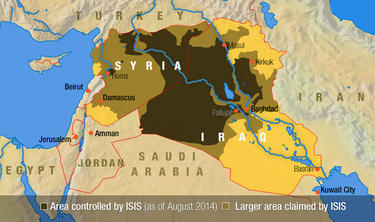
In a driving conquest ISIS has taken over sizable parts of Syria and Iraq, sweeping through in a brutal blitzkrieg.

Source: Shaun Venish
This plan was revealed to the world in 2005 by Jordanian journalist Fouad Hussein in his book Al-Zarqawi: al-Qaida's Second Generation. He had spent time in prison with Abu Musab al-Zarqawi (who went on to head up al-Qaeda in Iraq before his death in a U.S. bombing strike) and interviewed a wide range of al-Qaeda members.
The plan was questioned and belittled at the time, but the timeline has continued on track in various respects despite setbacks for al-Qaeda and other Islamists over the years.
Here are the steps as reported in a Der Spiegel article dated Aug. 12, 2005 (Yassin Musharbash, "The Future of Terrorism: What al-Qaida Really Wants"):
• "The First Phase . . . 'The awakening' . . . supposed to have lasted from 2000 to 2003, or more precisely from the terrorist attacks of September 11, 2001 . . . The aim of the attacks of 9/11 was to provoke the US into declaring war on the Islamic world and thereby 'awakening' Muslims . . . '. . . judged . . . as very successful . . . The Americans and their allies became a closer and easier target.'"
• "The Second Phase 'Opening Eyes' . . . [2003] until 2006 [the period this report came out] . . . [making the West] aware of the 'Islamic community' . . . [and] recruiting young men during this period. Iraq [was to then] become the center for all global operations, with an 'army' set up there and bases established in other Arabic states."
• "The Third Phase . . . 'Arising and Standing Up' . . . from 2007 to 2010 [which was yet future when this was written]. 'There will be a focus on Syria' . . . The fighting cadres are supposedly already prepared and some are in Iraq. Attacks on Turkey and . . . in Israel are predicted . . . Countries neighboring Iraq, such as Jordan, are also in danger." ( The focus on Syria should be noted, though it did not become a great rallying point until the Arab Spring came at the end of this period. )
• "The Fourth Phase Between 2010 and 2013 . . . al-Qaida will aim to bring about the collapse of the hated Arabic governments . . . '. . . lead[ing] to a steady growth in strength within al-Qaida' . . . [And] attacks will be carried out against oil suppliers and the US economy will be targeted using cyber terrorism." ( Consider that the Arab Spring uprisings against various despots occurred in 2011-2012 .)
• "The Fifth Phase This will be the point at which an Islamic state, or caliphate, can be declared. The plan is that by this time, between 2013 and 2016, Western influence in the Islamic world will be so reduced and Israel weakened so much, that resistance will not be feared. Al-Qaida hopes that by then the Islamic state will be able to bring about a new world order." ( This is when a caliphate was declared, in 2014. The al-Qaeda old guard sees this as premature but still has a window of a few years. )
• The Sixth Phase . . . From 2016 onwards there will [be] a period of 'total confrontation.' As soon as the caliphate has been declared, the 'Islamic army' . . . will instigate the 'fight between the believers and the non-believers.'"
• The Seventh Phase . . . ' Definitive victory' . . . The rest of the world will be so beaten down by the 'one-and-a-half billion Muslims,' the caliphate will undoubtedly succeed. This phase should be completed by 2020, although the war shouldn't last longer than two years."
Whether the fifth and sixth phases pan out remains to be seen, but the seventh can't happen, as Bible prophecy makes it clear that Islam will not come to dominate the world (though not for lack of trying).
In any event, more attention should have been paid to what Fouad Hussein wrote nearly a decade ago. It demonstrates that Islamists take the long view, realizing it will take decades to attain their goals. This thinking is foreign to Western leaders, who in their shortsightedness have grossly misjudged what's been happening over the past many years.
[ See the related article:  Islamic Caliphate Declared: What Does It Mean? ]

Tuesday, September 23, 2014

World News and Trends: Watch the oil chessboard

An interesting article from http://www.ucg.org/ about the Oil Chessboard. This follows this post about the God Particle. This follows this post about the Feast of Trumpets. For a free magazine subscription or to get the books recommended for free click HERE! or call 1-888-886- 8632.
I am leaving TWITTER SOON. Please continue to follow me here.


World News and Trends: Watch the oil chessboard


Printer-friendly version


"Is there any man, is there any woman, let me say any child here that does not know that the seed of war in the modern world is industrial and commercial rivalry?" So asked Woodrow Wilson (1856-1924), U.S. president during World War I.

This presidential observation is probably more true of the squabbles over black gold than any other material substance in the modern world. Even the present conflagration in Afghanistan is no exception. According to an article in The Guardian, "Afghanistan is as indispensable to the regional control of oil in Central Asia as Egypt was in the Middle East."
Afghanistan's northern neighbors contain abundant oil reserves that may prove critical to world supplies. The American military presence in Afghanistan is not only a crucial strategic blow against terrorism but may have another major benefit: the opportunity to secure ready access to Central Asian oil reserves as a countervailing measure against too much dependency on Islamic nations in the volatile Middle East.
As an editorial in The Washington Times points out: "Americans depend on fossil fuels for much of their material prosperity, even though much of that fossil fuel comes from unfriendly Islamic states in the Middle East. Almost 60 percent of American oil is shipped from overseas-Americans annually pay Saddam Hussein nearly $4 billion for the 700,000 barrels of oil that he provides them."
Therefore, the recent Russian-American cooperation against terrorism may also work to America's long-term advantage in securing adequate oil reserves. Russia is not a member of OPEC and therefore has the option of dragging its feet in reply to requests for substantial cuts in oil production.
The Times recently reported: "Russia [is] where oil output is increasing in leaps and bounds. The world has forgotten the contribution of Russian oil to global energy supply." Of course the Russians are as concerned about oil reserves as the Americans. A Daily Telegraph feature article recently observed: "For all the talk of international alliances and the future of Afghanistan, the real concern for Moscow is cementing its control of the oil supply."
America wants to build one or more oil pipelines in Central Asia. It has already invested $30 billion in developing oil in Azerbaijan, Kazakhstan, Turkmenistan and Uzbekistan. Suddenly these faraway countries, difficult for most of us to spell and pronounce, take on an important role in our welfare. The Telegraph article continued: "Washington is now proposing a $3 billion pipeline from Azerbaijan, on the Caspian Sea, through Georgia to Turkey's Mediterranean Coast. U.S. companies could build a similar pipeline from Central Asia through Afghanistan to Karachi at half the cost, if the next Afghan government can guarantee its security."
Let's not forget China. The International Herald Tribune reported that in September "Prime Minister Zhu Rongji of China was in Moscow meeting with his Russian counterpart and signing off on a $1.7 billion feasibility study for a proposed 2,400-kilometer pipeline that by 2010 would deliver 30 million tons of oil to Chinese refineries each year." China's fast-growing economy of the past several years has created a voracious and expanding appetite for energy, and oil is one of the main sources.
Watch the oil chessboard as nations seek to secure their supplies and control world prices to their national advantage. Wars have been fought over oil, and the strivings over black gold may give us valuable clues as to how certain aspects of Bible prophecy may be fulfilled. (Sources: The Guardian, The Daily Telegraph, The Times [all London], The Washington Times, The International Herald Tribune .)
Nobody has commented yet. Be the first to kick off the discussion!
Login/Register to post comments

Tuesday, September 9, 2014

Islamic Caliphate Declared: What Does It Mean?

An interesting article from http://www.ucg.org/ about the new Caliphate. This follows this post about the Feast of Trumpets. For a free magazine subscription or to get the books recommended for free click HERE! or call 1-888-886- 8632.
I am leaving TWITTER SOON. Please continue to follow me here.


Islamic Caliphate Declared: What Does It Mean?


A new caliphate—a transnational Islamic state commanding the allegiance of all Muslims—has been declared by the leader of insurgents in Iraq and Syria. What does this portend for the rest of the world in the days ahead?


Source: Reuters/Newscom
On the first day of the Muslim holy month of Ramadan this year, June 29, 2014, the al-Qaeda breakaway group ISIS or ISIL, the Islamic State of Iraq and al-Sham (i.e., Greater Syria or the Levant)—which has seized vast tracts of Iraq and much of northern Syria—formally declared the creation of an Islamic transnational state, or caliphate. In doing so, the group changed its name to just the Islamic State (IS), as the caliphate is to rule Muslims the world over.
The group's chief, who's borne the pseudonym Abu Bakr al-Baghdadi, was declared to be the new caliph or leader of the Islamic State—now Caliph Ibrahim. A spokesman for the group "called on those living in the areas under the organization's control to swear allegiance to al-Baghdadi and support him. 'The legality of all emirates, groups, states and organizations becomes null by the expansion of the caliph's authority and the arrival of its troops to their areas,' [the spokesman] said" ("ISIS Declares Creation of Mideast Caliphate Across Iraq and Syria," CBS News, June 29, 2014).
Baghdadi then called for Muslims to rally to his new state and to conquering the Christian West, saying: "Those who can immigrate to the Islamic State should immigrate, as immigration to the house of Islam is a duty . . . Rush O Muslims to your state . . . This is my advice to you. If you hold to it you will conquer Rome and own the world, if Allah wills" (quoted by Damien McElroy, "Rome Will Be Conquered Next, Says Leader of 'Islamic State,'" The Telegraph, July 1, 2014).

Longtime desire to reestablish the caliphate

The desire to reestablish the caliphate is driven by the goal of joining all Muslims under a single rule—as in the days of Islam's founder, Muhammad, and his immediate successors or caliphs in the seventh century. Under that rule everyone is to strictly adhere to sharia—Islamic law and jurisprudence—and follow the way of jihad or holy war to conquer the globe.
The caliphate was declared by a succession of Muslim empires over the centuries, the latest being that of the Ottoman Turks, which ended with World War I. Yet these are viewed as corrupt, and the desire of the Islamists today is to restore the initial "righteous" caliphate.
Islamist terror groups the world over, including Hamas, al-Qaeda, Islamic Jihad, the Taliban, the Muslim Brotherhood, etc., "all profess the revival of the caliphate, the regime that was installed by Muhammed's righteous successors, the caliphs, and has become the iconic model to be emulated by all future generations of Muslims" (Raphael Israeli, From Arab Spring to Islamic Winter, 2013, p. xiii). (See "20-Year Plan for a Global Caliphate ".)
During and after the Arab Spring uprisings of 2011-2012, momentum seemed to be building toward the formation of a caliphate, particularly with the ascendance of a Muslim Brotherhood candidate, Mohamed Morsi, to the presidency of Egypt. Yet with the military coup in Egypt last year that ousted Morsi and instigated a major crackdown against the Brotherhood, the momentum toward a caliphate appeared to have stalled.
But now, with millions of Islamic extremists across the Middle East still pressing for that Muslim dream, where one door closes another opens (although the door in Egypt is by no means truly closed, as the population there remains predominantly Islamist).
So what are we to make of this new development?
A number of Islamist groups and prominent clerics are not supportive of the declaration of the Islamic State, as it's viewed as premature and a cause for infighting between Muslim groups and states. But significant support has come in from far quarters. No doubt a great deal of blood will be shed over this among Muslims and between Muslims and the non-Islamic world.
In considering the matter we should ask: How did the new Islamic State come to be, and what are its prospects for success as a revived caliphate? Or might another group receive wider acceptance in the role? And does Bible prophecy tell us anything regarding such developments?

The rise of ISIS and Abu Bakr al-Baghdadi

The al-Qaeda contingent in Iraq, headed up by Abu Musab al-Zarqawi in the mid-2000s, went through several incarnations before eventually becoming the Islamic State of Iraq, or ISI, which came to be headed up by Abu Bakr al-Baghdadi in 2010, when American forces were withdrawing from the country.
The group's extreme brutality and killing of fellow Muslims created a divide between it and al-Qaeda's international leadership, which considered Zarqawi and his followers too extreme and criticized them for alienating people from the Islamist cause.
Furthermore, Osama bin Laden's successor Ayman al-Zawahiri maintained, as do many Islamist scholars now opposed to the current caliphate declaration, that a caliphate must follow the purification of the wider Muslim world, being then based on the consent of the public.
But, as Margaret Coker explains in The Wall Street Journal, Baghdadi and his supporters "reject this doctrine of an evolving religious and social consensus. They believe instead that a pure Islamic regime can be more swiftly imposed by force" ("The New Jihad," July 11).
And in fact, this is the way the caliphate has been imposed in past centuries.
The struggle came to a head in April 2013, when Baghdadi declared a takeover of the Nusra Front, an al-Qaeda-linked rebel militia fighting against President Bashar al-Assad in Syria, stating that it would be merged with ISI to form ISIS. The Nusra Front rejected the takeover bid and Zawahiri ordered Baghdadi to leave Syria and maintain operations in Iraq. But in a huge affront to al-Qaeda, Baghdadi said he would follow Allah instead and maintained the ISIS merger, whereupon Zawahiri formally disowned the group.
ISIS went on to take over sizable parts of Syria and Iraq, sweeping through in a brutal blitzkrieg. It took to social media to demoralize resistance by displaying its extreme brutality. This tactic helped ISIS to wrest control of the large city of Mosul and its environs in June of this year when the Iraqi army had to retreat due to massive numbers of desertions.
The conquest of this area put huge amounts of advanced U.S. weaponry into the hands of ISIS, as well as hundreds of millions of dollars looted from banks—making it far wealthier than al-Qaeda ever was. And with U.S. forces now gone from Iraq, the new Islamic State has a great deal of room to maneuver. It thus seems poised to change the Middle East, if not the greater world scene, in a dramatic fashion.

Striking fear in the hearts and minds of opponents

Joseph Farah, editor in chief of WND (the former WorldNetDaily), commented prior to the caliphate announcement: "Do I expect to see ISIS conquer the Middle East, North Africa, part of Europe and Asia in the 21st century? No, I don't. But I do expect to see enormous carnage and destruction and bloodshed as a result of this movement—far more, perhaps, than most other analysts project. There is a ferocity to ISIS that makes even al-Qaida uncomfortable. It has already captured more wealth and armaments, including chemical weapons, than all but a handful of countries in the world possess . . .
"Brutality difficult for Westerners to even imagine is the modus operandi of ISIS. It calls for a scorched-earth policy against its enemies—which includes Christians, Shiites, Alawites, Jews, non-believers and all non-Sunnis. ISIS leadership advocates and practices barbarism designed to strike fear into the hearts and minds of its opponents and anyone who doesn't stand with them in their strict Shariah Sunni code.
"Already the ISIS marauders have crucified victims, beheaded them and conducted mass executions of Iraqi soldiers and civilians. No atrocity is beneath them" ("ISIS Rising—What It Portends," June 23, 2014).
Farah compares the speed of their conquest with the original march of Islam and even Alexander the Great. "The success of campaigns like that requires that superior forces faint in fear of the coming hordes. You can see it's working already in Iraq" (ibid.).

Is the new caliphate viable?

BBC security correspondent Frank Gardner gave a helpful analysis of the situation, dealing with the question of whether ISIS can maintain its rule and viability: "Analysts point out that seizing territory is one thing, governing it is quite another" ("'Jihadistan': Can Isis Militants Rule Seized Territory?" July 8, 2014).
Despite its remarkable military success in the wake of its psychological warfare, "Isis has effectively been 'punching above its weight,' to use a boxing analogy," its numbers of between 10,000 and 15,000 fighters being low compared to competing forces. Gardner quotes a pan-Arab newspaper stating, "Isis' ability to control lands has been based on deals with local militants willing to do the 'ruling' for them."
He further notes that Baghdadi and his followers do not seem, on one hand, to have learned from the mistakes of their predecessors under Zarqawi in Iraq in their brutal treatment of the populace, which failed to win hearts and minds. Regarding ISIS, "stories abound of harsh punishments imposed for the slightest of offences, women being confined to the home, public crucifixions, kidnappings and extortionate levies imposed on businesses . . ."
While Gardner on the other hand points out ISIS taking care of municipal needs like garbage collection, the mask of public service has since come off.
Gardner further states: "To succeed as a viable state, let alone as a transnational 'caliphate,' Isis will need access to oil and water." And ISIS/IS now has both, controlling refineries and major dams in Syria and Iraq.
Gardner argues that the new Islamic state is not going away: "The only force capable of permanently ejecting Isis will be the tribes in those regions [they rule], and they have little incentive to do so while the Syrian civil war rages on . . .
"Which leaves the prospect of a violent, extremist, well-armed, well-funded and religiously intolerant militia becoming a permanent part of the Middle East landscape, a sort of de facto 'jihadistan.'" And, he notes, like Afghanistan it would also be a springboard for increased attacks against neighboring countries and the Western world.

Several key advantages and others to carry on the cause

In spite of the denunciation received from some Islamic scholars and disapproval from al-Qaeda and other jihadist organizations, this group nevertheless has much going for it in the Muslim world. One advantage is in the very declaration of the caliphate, as it's unlikely that a number of claimants would start declaring their own since that would minimize the whole idea of the pan-Islamic state.
Furthermore, the fact that ISIS/IS is actually carrying out major exploits and making massive gains, with the caliphate proclamation on top of that, can capture the imagination of the younger generation of jihadists.
As noted in Newsweek: "The brutal attacks of 9/11 were almost 13 years ago; many of the jihadist fighters on the front lines now were children then. They have grown up seeing Al-Qaeda on the defensive, with few successes of its own, while ISIS has stunned the world with its victories in Syria and Iraq" (Kurt Eichenwald, "Iraq's ISIS Is Eclipsing Al-Qaeda, Especially With Young Jihadists," July 7, 2014).
Indeed, at his site Intelwire author J.M. Berger points out regarding al-Qaeda that "one of its few practical remaining plays would be to squander the entirety of whatever resources it has left on an attack against the West, in the hopes of regaining its reputation" ("A New Day for ISIS," June 11). That should serve as a stark warning of great danger for the world even in the short term.
Since the proclamation of the new Islamic State, it has seen increasing voices of support by Islamists around the world. But even if the group falters in its bid to rule the broader Islamic nation, there are others who could still try to establish the caliphate.
There remains al-Qaeda of course. Then there's the Taliban in both Afghanistan and Pakistan—by which the caliphate potentially could acquire nuclear weapons. The Muslim Brotherhood still maintains a vast network of support in the Islamic world—and Egypt may yet eventually revert to rule by the Islamist majority, the economy there being presently in shambles. And Turkey's prime minister Recep Erdogan still dreams of a Turkish-led caliphate, as was the Ottoman Empire.
But with the caliphate already declared, a broad spectrum of Muslims from around the world may try to come together to help it succeed—and this could sway other Islamist leaders to support it. On the other hand, what some see as Baghdadi's big gamble in proclaiming the caliphate could backfire in a big way if things don't pan out for him. We will have to wait and see how matters develop.
As a preview of where things are headed, one of the first acts of the new caliphate was to issue a fatwa, or religious edict, ordering that "all women between the ages of 11 and 46 must undergo genital mutilation" (Agence France-Presse, July 24).
Again, it seems very likely that a lot of blood will flow because of the declared caliphate—both Muslims killing other Muslims and attacks being launched on non-Muslims.

Turning to the only reliable source for advance news

In the face of these events, if we want to know where the world is ultimately headed, we must turn to the only sure source of knowledge about the future—the Holy Bible, the very Word of God. Bible prophecy does seem to say, in Psalm 83, that a confederation of Middle Eastern peoples will come together with the intent of destroying Israel—apparently involving Arabs, Palestinians, Turks and others in the region.
Moreover, Daniel 11 refers to an end-time "king of the South" who will instigate a conflict with a power to the north—a revival of the Roman Empire centered in Europe—with the Holy Land caught in between.
Might the confederation and southern power in these prophecies be a restored caliphate? It seems quite likely. After all, the principal unifying factor among all these peoples is Islam—so a new Islamic empire bringing them together is not at all far-fetched.
Is the current Islamic State that power? Its leaders are so extreme that gaining a mass following among other Muslims poses a great challenge. Also, it does not yet encompass Egypt, which the southern power in Daniel 11 seems to include or even be based from. And perhaps the Islamic State won't reach that far in its current form.
Yet it could be that, just as the European Union of today seems to be the embryonic form of the coming European superpower, so the current Islamic State could be the embryonic form of a much greater caliphate to come. These developments certainly illustrate the desire of millions of Muslims to establish a caliphate.
Note again particularly the goal stated by the Islamic State to "conquer Rome and own the world." It could well be that this long-held desire of Muslims will lead to the conditions described in the latter part of Daniel 11, where the end-time king of the South provokes the king of the North into an invasion of North Africa and the Middle East.
Momentous and dangerous times lie ahead. Stay alert and turn to God and His Word with all your heart. No matter what happens, He will see you through!
[ See the related article:  20-Year Plan for a Global Caliphate ]

Ukraine, ISIS and a Black Sea Strategy

A very interesting post from www.Stratfor.com about Ukraine and ISIS. This follows this post about what non-Muslims need to know about Islam. This follows this article about American energy independence and preventing money from going to hostile countries. For more about what you can do to get more involved click here and you can read two very interesting books HERE.
I am leaving TWITTER SOON. Please continue to follow me here.


Ukraine, Iraq and a Black Sea Strategy

By George Friedman
The United States is, at the moment, off balance. It faces challenges in the Syria-Iraq theater as well as challenges in Ukraine. It does not have a clear response to either. It does not know what success in either theater would look like, what resources it is prepared to devote to either, nor whether the consequences of defeat would be manageable.
A dilemma of this sort is not unusual for a global power. Its very breadth of interests and the extent of power create opportunities for unexpected events, and these events, particularly simultaneous challenges in different areas, create uncertainty and confusion. U.S. geography and power permit a degree of uncertainty without leading to disaster, but generating a coherent and integrated strategy is necessary, even if that strategy is simply to walk away and let events run their course. I am not suggesting the latter strategy but arguing that at a certain point, confusion must run its course and clear intentions must emerge. When they do, the result will be the coherence of a new strategic map that encompasses both conflicts.
The most critical issue for the United States is to create a single integrated plan that takes into account the most pressing challenges. Such a plan must begin by defining a theater of operations sufficiently coherent geographically as to permit integrated political maneuvering and military planning. U.S. military doctrine has moved explicitly away from a two-war strategy. Operationally, it might not be possible to engage all adversaries simultaneously, but conceptually, it is essential to think in terms of a coherent center of gravity of operations. For me, it is increasingly clear that that center is the Black Sea.

Ukraine and Syria-Iraq

There are currently two active theaters of military action with broad potential significance. One is Ukraine, where the Russians have launched a counteroffensive toward Crimea. The other is in the Syria-Iraq region, where the forces of the Islamic State have launched an offensive designed at a minimum to control regions in both countries -- and at most dominate the area between the Levant and Iran.
In most senses, there is no connection between these two theaters. Yes, the Russians have an ongoing problem in the high Caucasus and there are reports of Chechen advisers working with the Islamic State. In this sense, the Russians are far from comfortable with what is happening in Syria and Iraq. At the same time, anything that diverts U.S. attention from Ukraine is beneficial to the Russians. For its part, the Islamic State must oppose Russia in the long run. Its immediate problem, however, is U.S. power, so anything that distracts the United States is beneficial to the Islamic State.
But the Ukrainian crisis has a very different political dynamic from the Iraq-Syria crisis. Russian and Islamic State military forces are not coordinated in any way, and in the end, victory for either would challenge the interests of the other. But for the United States, which must allocate its attention, political will and military power carefully, the two crises must be thought of together. The Russians and the Islamic State have the luxury of focusing on one crisis. The United States must concern itself with both and reconcile them.
The United States has been in the process of limiting its involvement in the Middle East while attempting to deal with the Ukrainian crisis. The Obama administration wants to create an integrated Iraq devoid of jihadists and have Russia accept a pro-Western Ukraine. It also does not want to devote substantial military forces to either theater. Its dilemma is how to achieve its goals without risk. If it can't do this, what risk will it accept or must it accept?
Strategies that minimize risk and create maximum influence are rational and should be a founding principle of any country. By this logic, the U.S. strategy ought to be to maintain the balance of power in a region using proxies and provide material support to those proxies but avoid direct military involvement until there is no other option. The most important thing is to provide the support that obviates the need for intervention.
In the Syria-Iraq theater, the United States moved from a strategy of seeking a unified state under secular pro-Western forces to one seeking a balance of power between the Alawites and jihadists. In Iraq, the United States pursued a unified government under Baghdad and is now trying to contain the Islamic State using minimal U.S. forces and Kurdish, Shiite and some Sunni proxies. If that fails, the U.S. strategy in Iraq will devolve into the strategy in Syria, namely, seeking a balance of power between factions. It is not clear that another strategy exists. The U.S. occupation of Iraq that began in 2003 did not result in a military solution, and it is not clear that a repeat of 2003 would succeed either. Any military action must be taken with a clear outcome in mind and a reasonable expectation that the allocation of forces will achieve that outcome; wishful thinking is not permitted. Realistically, air power and special operations forces on the ground are unlikely to force the Islamic State to capitulate or to result in its dissolution.
Ukraine, of course, has a different dynamic. The United States saw the events in Ukraine as either an opportunity for moral posturing or as a strategic blow to Russian national security. Either way, it had the same result: It created a challenge to fundamental Russian interests and placed Russian President Vladimir Putin in a dangerous position. His intelligence services completely failed to forecast or manage events in Kiev or to generate a broad rising in eastern Ukraine. Moreover, the Ukrainians were defeating their supporters (with the distinction between supporters and Russian troops becoming increasingly meaningless with each passing day). But it was obvious that the Russians were not simply going to let the Ukrainian reality become a fait accompli. They would counterattack. But even so, they would still have moved from once shaping Ukrainian policy to losing all but a small fragment of Ukraine. They will therefore maintain a permanently aggressive posture in a bid to recoup what has been lost.
U.S. strategy in Ukraine tracks its strategy in Syria-Iraq. First, Washington uses proxies; second, it provides material support; and third, it avoids direct military involvement. Both strategies assume that the main adversary -- the Islamic State in Syria-Iraq and Russia in Ukraine -- is incapable of mounting a decisive offensive, or that any offensive it mounts can be blunted with air power. But to be successful, U.S. strategy assumes there will be coherent Ukrainian and Iraqi resistance to Russia and the Islamic State, respectively. If that doesn't materialize or dissolves, so does the strategy.
The United States is betting on risky allies. And the outcome matters in the long run. U.S. strategy prior to World Wars I and II was to limit involvement until the situation could be handled only with a massive American deployment. During the Cold War, the United States changed its strategy to a pre-commitment of at least some forces; this had a better outcome. The United States is not invulnerable to foreign threats, although those foreign threats must evolve dramatically. The earlier intervention was less costly than intervention at the last possible minute. Neither the Islamic State nor Russia poses such a threat to the United States, and it is very likely that the respective regional balance of power can contain them. But if they can't, the crises could evolve into a more direct threat to the United States. And shaping the regional balance of power requires exertion and taking at least some risks.

Regional Balances of Power and the Black Sea

The rational move for countries like Romania, Hungary or Poland is to accommodate Russia unless they have significant guarantees from the outside. Whether fair or not, only the United States can deliver those guarantees. The same can be said about the Shia and the Kurds, both of whom the United States has abandoned in recent years, assuming that they could manage on their own.
The issue the United States faces is how to structure such support, physically and conceptually. There appear to be two distinct and unconnected theaters, and American power is limited. The situation would seem to preclude persuasive guarantees. But U.S. strategic conception must evolve away from seeing these as distinct theaters into seeing them as different aspects of the same theater: the Black Sea.
When we look at a map, we note that the Black Sea is the geographic organizing principle of these areas. The sea is the southern frontier of Ukraine and European Russia and the Caucasus, where Russian, jihadist and Iranian power converge on the Black Sea. Northern Syria and Iraq are fewer than 650 kilometers (400 miles) from the Black Sea.
The United States has had a North Atlantic strategy. It has had a Caribbean strategy, a Western Pacific strategy and so on. This did not simply mean a naval strategy. Rather, it was understood as a combined arms system of power projection that depended on naval power to provide strategic supply, delivery of troops and air power. It also placed its forces in such a configuration that the one force, or at least command structure, could provide support in multiple directions.
The United States has a strategic problem that can be addressed either as two or more unrelated problems requiring redundant resources or a single integrated solution. It is true that the Russians and the Islamic State do not see themselves as part of a single theater. But opponents don't define theaters of operation for the United States. The first step in crafting a strategy is to define the map in a way that allows the strategist to think in terms of unity of forces rather than separation, and unity of support rather than division. It also allows the strategist to think of his regional relationships as part of an integrated strategy.
Assume for the moment that the Russians chose to intervene in the Caucasus again, that jihadists moved out of Chechnya and Dagestan into Georgia and Azerbaijan, or that Iran chose to move north. The outcome of events in the Caucasus would matter greatly to the United States. Under the current strategic structure, where U.S. decision-makers seem incapable of conceptualizing the two present strategic problems, such a third crisis would overwhelm them. But thinking in terms of securing what I'll call the Greater Black Sea Basin would provide a framework for addressing the current thought exercise. A Black Sea strategy would define the significance of Georgia, the eastern coast of the Black Sea. Even more important, it would elevate Azerbaijan to the level of importance it should have in U.S. strategy. Without Azerbaijan, Georgia has little weight. With Azerbaijan, there is a counter to jihadists in the high Caucasus, or at least a buffer, since Azerbaijan is logically the eastern anchor of the Greater Black Sea strategy.
A Black Sea strategy would also force definition of two key relationships for the United States. The first is Turkey. Russia aside, Turkey is the major native Black Sea power. It has interests throughout the Greater Black Sea Basin, namely, in Syria, Iraq, the Caucasus, Russia and Ukraine. Thinking in terms of a Black Sea strategy, Turkey becomes one of the indispensible allies since its interests touch American interests. Aligning U.S. and Turkish strategy would be a precondition for such a strategy, meaning both nations would have to make serious policy shifts. An explicit Black Sea-centered strategy would put U.S.-Turkish relations at the forefront, and a failure to align would tell both countries that they need to re-examine their strategic relationship. At this point, U.S.-Turkish relations seem to be based on a systematic avoidance of confronting realities. With the Black Sea as a centerpiece, evasion, which is rarely useful in creating realistic strategies, would be difficult.

The Centrality of Romania

The second critical country is Romania. The Montreux Convention prohibits the unlimited transit of a naval force into the Black Sea through the Bosporus, controlled by Turkey. Romania, however, is a Black Sea nation, and no limitations apply to it, although its naval combat power is centered on a few aging frigates backed up by a half-dozen corvettes. Apart from being a potential base for aircraft for operations in the region, particularly in Ukraine, supporting Romania in building a significant naval force in the Black Sea -- potentially including amphibious ships -- would provide a deterrent force against the Russians and also shape affairs in the Black Sea that might motivate Turkey to cooperate with Romania and thereby work with the United States. The traditional NATO structure can survive this evolution, even though most of NATO is irrelevant to the problems facing the Black Sea Basin. Regardless of how the Syria-Iraq drama ends, it is secondary to the future of Russia's relationship with Ukraine and the European Peninsula. Poland anchors the North European Plain, but the action for now is in the Black Sea, and that makes Romania the critical partner in the European Peninsula. It will feel the first pressure if Russia regains its position in Ukraine.
I have written frequently on the emergence -- and the inevitability of the emergence -- of an alliance based on the notion of the Intermarium, the land between the seas. It would stretch between the Baltic and Black seas and would be an alliance designed to contain a newly assertive Russia. I have envisioned this alliance stretching east to the Caspian, taking in Turkey, Georgia and Azerbaijan. The Poland-to-Romania line is already emerging. It seems obvious that given events on both sides of the Black Sea, the rest of this line will emerge.
The United States ought to adopt the policy of the Cold War. That consisted of four parts. First, allies were expected to provide the geographical foundation of defense and substantial forces to respond to threats. Second, the United States was to provide military and economic aid as necessary to support this structure. Third, the United States was to pre-position some forces as guarantors of U.S. commitment and as immediate support. And fourth, Washington was to guarantee the total commitment of all U.S. forces to defending allies, although the need to fulfill the last guarantee never arose.
The United States has an uncertain alliance structure in the Greater Black Sea Basin that is neither mutually supportive nor permits the United States a coherent power in the region given the conceptual division of the region into distinct theaters. The United States is providing aid, but again on an inconsistent basis. Some U.S. forces are involved, but their mission is unclear, it is unclear that they are in the right places, and it is unclear what the regional policy is.
Thus, U.S. policy for the moment is incoherent. A Black Sea strategy is merely a name, but sometimes a name is sufficient to focus strategic thinking. So long as the United States thinks in terms of Ukraine and Syria and Iraq as if they were on different planets, the economy of forces that coherent strategy requires will never be achieved. Thinking in terms of the Black Sea as a pivot of a single diverse and diffuse region can anchor U.S. thinking. Merely anchoring strategic concepts does not win wars, nor prevent them. But anything that provides coherence to American strategy has value.
The Greater Black Sea Basin, as broadly defined, is already the object of U.S. military and political involvement. It is just not perceived that way in military, political or even public and media calculations. It should be. For that will bring perception in line with fast-emerging reality.


Read more: Ukraine, Iraq and a Black Sea Strategy | Stratfor
Follow us: @stratfor on Twitter | Stratfor on Facebook

Tuesday, July 15, 2014

Will the World See a New Caliphate?

An interesting article from http://www.ucg.org/  about a potential caliphate. This follows this post about Africa's problems.  For a free magazine subscription or to get the books recommended for free click HERE! or call 1-888-886- 8632. You can follow me at blogspot here and at twitter here https://twitter.com/brianleesblog. Please consider following both in case one goes down!


Will the World See a New Caliphate?


What can we expect will happen as Islamists take charge in the nations of the Arab uprisings? Turkey and other experiments in Muslim democracy give us some precedent. And on the horizon, the Islamist dream looms—a restored empire of Islam. What does this mean for the future of the Middle East and the world?
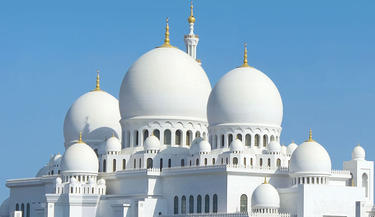
Sheikh Zayed Grand Mosque
The Sheikh Zayed Grand Mosque located in Abu Dhabi, United Arab Emirates.

Source: Thinkstock
Instead of a freedom-oriented Arab Spring, as cheery enthusiasts have hailed it in the face of toppled dictators, the Middle East is actually beset by a deepening Islamist winter (see "Winter Advisory: The Arab Spring That Wasn't "— intended as a prelude to this article). Does this relate at all to Bible prophecy, and does Scripture indicate where these trends may be leading?
Of course, Islamist rule has a long history in the Middle East, going all the way back to Muhammad, founder of Islam, in the seventh century. He set the example of spreading his new religion by the sword, taking control of the entire Arabian Peninsula in the space of 10 years (622-632).
After his death, he was followed by other rulers called caliphs, from the Arabic khalifah, meaning "successor" (to Muhammad) or "representative" (of Allah to mankind). And the caliph's dominion was known as the caliphate (Arabic khilafa and Turkish Hilafet ). Under the caliph, the dominion was governed by a religious hierarchy following Islamic law and jurisprudence—sharia.
After the first four Rashidun or "rightly-guided"caliphs, the caliphate passed to dynasties of rulers. The Ummayads (7th-8th centuries) and the Abbasids (8th-13th centuries) at their height ruled territory stretching from Spain all the way to India. The rival Shiite Fatimids (10th-12th centuries) took over much of the territory for a time.
Following the Mongol invasions from the east in the 13th century, the caliphate ceased to actually rule. But it was revived under the Turkish Ottomans when they took control of most Arab lands (16th-20th centuries).
After the fall of the Ottoman Empire at the end of World War I, Kemal Ataturk imposed a secularist state onto Turkey and dragged it into the Western sphere. Various kings and dictators took over the Arab states. These allowed principles of sharia as part of national rule to varying degrees, but not nearly to the satisfaction of most Muslims in the region. And in any case, they failed to all come together into a single ummah (supranational community) under a single caliph.

Dreams of a restored caliphate

Since the Ottoman fall, many devoted Islamists have dreamed of reestablishing the caliphate. One such dreamer was the Egyptian Hassan al-Bannah, who in 1928 founded the Muslim Brotherhood, the organization that has benefited most from the Arab Spring uprisings. The caliphate's restoration remains the Brotherhood's goal.
Moreover, the caliphate has been a recurring theme in recent speeches of Islamist leaders. As pointed out in the companion article on the Arab Spring, one celebrated Brotherhood preacher claimed that the election of Mohamed Morsi as president in Egypt was prelude to a coming Islamic caliphate—a United States of the Arabs with Jerusalem as its capital. And Morsi then acknowledged that Jerusalem's conquest was indeed the goal.
Yet so many in the West can't fathom that such rhetoric is at all serious. They won't even accept that Morsi would rule as an Islamist hardliner despite his ramming through a sharia-based constitution, confident that he will conform to Egyptian politics as usual as the realities of governing set in.
Former U.S. federal prosecutor Andrew McCarthy comments on this notion in his new book Spring Fever: The Illusion of Islamic Democracy:
"Then there are the eternal optimists who try to pass themselves off as hard-headed pragmatists. Their theory is that governing will make the ruler accountable to the public; consequently, the practical responsibilities of the offices to which they've been elected will tame Islamist politicians. They will evolve, coming to see that sharia and anti-Semitic, anti-Western animus are just not compatible with running a government in the modern world. Governing will transform them into moderates . . .
"[But] has Iran gotten more moderate over the last thirty years? Has Hamas's election in Gaza . . . helped that terrorist organization evolve? . . . The election of Islamic supremacists in Turkey has moved that country toward extremism, not away from it"(2013, p. 19).
Indeed, Turkey and other recent attempts at democracy in the Muslim world give us indications of developments that will follow elections of Islamists into power in Arab nations. Furthermore, as we will see, Bible prophecy also shows where events are headed. Will they end in a restored caliphate? Or will freedom come to the Middle East at last?

"The Turkish Model"

We should give some consideration to Turkey, as it's looked at by many in the West as a model for the Arab world—"the Yellow Brick Road to the sparkling Oz of 'Islamic Democracy'"(p. 75). U.S. President Barack Obama cherishes his friendship with Turkish Prime Minister Recep Tayyip Erdogan—his go-to counterpart in the Middle East, whom he has looked to for advice on regional issues, including the Arab Spring.
The problem in seeing Turkey as such a model is that its tradition of democracy has nothing to do with Islam. Just the opposite, Kemal Ataturk made Turkey a secular state, although the population remained predominantly Muslim.
Erdogan, on the other hand, is an Islamist —"a Muslim Brother who drank deep the lessons of the master, Hassan al-Banna"(p. 2). Since he became prime minister in 2003, a year after his Islamist "Justice and Development Party"(AKP in Turkish abbreviation) came to power, Erdogan has been leading Turkey away from democracy.
For the West and concerned secularists in his own country, Erdogan has sometimes presented himself as upholding secularism while merely allowing Islam free expression in the public sphere. But this is a man who in 1998, four years prior to his party's takeover, said effectively, "Democracy is just the train we board to reach our destination."
And what destination is that? Perhaps his words that followed, adapted from a nationalist poem, provide a clue: "The mosques are our barracks, the domes our helmets, the minarets [mosque towers] our bayonets and the faithful our soldiers."
Of course, returning Turkey to the Islamist camp has not been an overnight task—though it has proven far easier than it was for Ataturk to impose secularism. It was a split in Turkey's non-religious parties that allowed the AKP to take over parliament with just a third of the popular vote. Yet in the decade since, Erdogan has managed to play his hand well at several turns, at length overcoming the Kemalist "deep state,"the inner sanctum of state officials with military backing that long maintained the secular order against Islamist ingress.

A slow Islamist takeover of Turkey

So where is Turkey today? Erdogan has focused on education promoting Islamic principles, his AKP party moving to establish many new universities with Islamist leaders—part of an effort to reshape the culture.
Furthermore, notes McCarthy: "The prime minister also moved to lower the mandatory retirement age for various categories of government technocrat . . . [which] enabled the Islamists to depose incumbents from thousands of positions—including over 40 percent of the republic's 9000 judgeships.
"In their place, adherents of the AKP's Islamist ideology were installed. Meantime, to degrade further the judiciary's vital role in upholding the secular order, Erdogan refused to enforce judicial rulings and threatened to abolish the Constitutional Court, a key component of the deep state"(p. 80).
Turkey is now ranked as the world's worst jailer of journalists—with scores imprisoned, some sentenced to as many as 166 years. And things have definitely worsened under sharia's repression of women in the country:
"As female employment craters, the rate at which women are murdered has zoomed by 1400 percent. In 2002, when the AKP was first elected, there were sixty-six reported cases of 'honor killings'—murders of women and girls at the hands of family members who consider themselves shamed when sharia norms were violated. In just the first seven months of 2009, the number was 953"(p. 83, emphasis in original).
On the foreign policy front, Erdogan has cut off longstanding ties with Israel, accusing the Israelis of state terrorism. Meanwhile he has embraced Iran (as has Egypt's President Morsi). And the Turkish leader has even offered himself as a character witness for Sudanese President Omar al-Bashir, indicted for international war crimes because of his ethnic cleansing campaign in Darfur—Erdogan stating that "a Muslim can never commit genocide."
He's even had Turkey donate hundreds of millions of dollars to the government of Gaza, ruled by the terror group Hamas. "That is to say, Turkey is now bankrolling Hamas. Erdogan has taken his country from NATO ally to terror sponsor"(p. 116).
Do we imagine better for Egypt and the other Arab Spring countries where Islamists have gained power? If anything, it will be far easier to impose Islamic rule on these countries accustomed to authoritarian rule and sharia principles than it has been for Erdogan to transform Turkey from its decades of secular democracy.

Iraqi and Afghan forays into democracy as preview

Perhaps more closely paralleling the Arab Spring countries are the two countries the United States and other Western nations liberated from dictatorial rule and turned over to new constitutions and democratic processes. How has that worked out?
These are now, as McCarthy puts it, "a pair of sharia states hostile to American interests (Iraq is an Iranian satellite; Afghanistan verges on a Taliban re-conquest), to go along with a regional cavalcade of jihadists and totalitarian Islamists, now swaddled in sovereign legitimacy thanks to the subordination of democratic culture to democratic procedures —as if electing a class president somehow made the third grade a 'democracy' and the schoolyard bullies a 'political party'"(p. 41, emphasis in original).
U.S.-backed Afghan President Hamid Karzai has even suggested that Mullah Omar, the Taliban leader formerly ousted from power by the U.S. invasion, run for president in the next election!
We should also consider the plight of Christians. In the past few years, thousands of Christians have been murdered in Iraq, and hundreds of thousands more have fled to other countries in fear.
In Afghanistan, the United States twice had to exert great pressure to whisk away individuals who were to be executed for converting from Islam to Christianity—one of them released on the pretext that he was "not of sound mind"(for what else would a person who leaves Islam be?). In Egypt, according to a 2011 Pew survey, 84 percent of the people want the death penalty imposed for those abandoning Islam— 84 percent! The percentage is quite high in other Muslim countries as well.
And how's this for women's rights under sharia in Afghanistan? "At the end of 2011, Karzai's office announced that the president had magnanimously commuted the prison sentence of a nineteen-year-old woman who was serving a twelve-year term imposed by an Afghan court after she was convicted of . . . having sex out of wedlock . . . with a relative who had raped her. Karzai's rationale for the pardon? The woman had cured her indiscretion by agreeing to marry the rapist, whose child she had borne during her jail term"(p. 47, emphasis in original).
Such is the outcome of democracy in nations where those desiring the imposition of Islamist rule are in the majority. And appallingly the West, including the United States, has advocated for and continues to support this outrage. (See "Puzzling U.S. Support for Islamists Over Moderates ".)

What's to follow?

So, what can we expect will now follow? Certainly, the fallout from the Arab uprisings is still ongoing. Expect a tightening of sharia's grip in Egypt and throughout the Arab world and in other Muslim nations—and more misleading assurances from Western leaders and media that there's no cause for concern.
Also look for further conflagration where revolution has not stabilized. With Libya awash with weapons and many flowing to neighboring countries, al-Qaeda in North Africa and other terrorists have been strengthened.
The French intervened in Mali in January 2013 to prevent terrorists from taking complete control there after they had already overrun much of the country. And following the many people killed at the end of the Algerian hostage crisis just after, British Prime Minister David Cameron said that the Islamist threat in this region requires "a response that is about years, even decades, rather than months."
Furthermore, there is the grave danger of chemical weapons being unleashed by Bashar al-Assad in Syria as he struggles to survive. Yet others worry over Assad being toppled by the jihadists allied against him and his chemical weapons and the rest of his vast arsenal falling into terrorist hands.

The spreading Islamist revolution

What about the Arab monarchies, such as Jordan and Saudi Arabia? So far they've remained secure against the Arab uprisings. But the Muslim Brotherhood is agitating in these countries to spread the revolution. Numerous analysts believe they will be next to fall.
Lebanese-born author and commentator Brigitte Gabriel said in December that despite claims that U.S. Special Operations troops are stationed in Jordan over concern about what's happening in Syria, "the truth is that our Special Ops [personnel] are positioned in Jordan to protect King Abdullah, because King Abdullah right now has only two-percent approval in his country. The majority of people would vote the Muslim Brotherhood if elections are held in Jordan today"(quoted by Chad Groening, "Prediction: Jordan the Newest 'Arab Spring' Addition,"OneNewsNow.com, Dec. 11, 2012).
Elections were held in Jordan in January, but the Muslim Brotherhood boycotted them because electoral rules favor the monarchy. Of course, the Brotherhood will continue to press for changes that would allow its candidates to prevail.
Among the Palestinians, it appears a rapprochement is coming between the rival factions of Fatah and Hamas, but rapprochement with the Israeli Jews is out of the question. In line with recent Muslim Brotherhood calls in Egypt, the Palestinian Chief Islamic Judge Tayseer Al-Tamimi said this on Dec. 31, 2012:
"The caliphate will be restored after this tyrannical rule [by Israel] comes to an end. This is already the beginning of the end for the tyrannical rule. The Arab revolutions against injustice, tyranny, and oppression will bring its end, and the caliphate will be restored. What we are seeing in Egypt are birth pangs. The struggle between Islam and others, and all the conspiracies that aim at stopping the train that has already set out to liberate Jerusalem and to restore Islamic rule. Jerusalem will be the capital of the caliphate, Allah willing"(posted at the Middle East Media Research Institute [MEMRI] website, Jan. 7, 2013).
This echoes Erdogan's earlier mention of democracy as the train to reach the Islamist destination. And the ultimate destination is indeed a restored caliphate on its way to taking over the world. With the rate at which things are moving, perhaps the train is not too far from the station.

Clues from Bible prophecy

Bible prophecy does appear to tell us, in Psalm 83, that the world will see a confederation of Middle Eastern peoples intent on wiping out Israel—which will evidently involve the Arabs, the Palestinians, the Turks and others in the region.
Daniel 11 similarly speaks of an end-time "king of the South"who will reignite the age-old struggle against a power to the north—centered in Europe since Roman times—with the land of Israel caught up in between. This will provoke a retaliatory war resulting in the European occupation of many Middle Eastern lands, including Israel. (See "Israel: A Nation in Constant Peril " to learn more.)
The confederation and southern power in these prophecies could well be a restored Islamic caliphate, which now seems to be on the rise—although this is not a specific biblical requirement. The Bible mentions only the people and lands involved, not their governance. But given who and where these people are, Islam seems the most likely factor in their cohesion. It is certainly today's most powerful driving force in the region—and has been so for more than 13 centuries.
Some analysts in assessing the near future see the Islamization of the Middle East as almost inevitable. Given the failure of military dictatorships, Islamic rule beckons as a promising ideal for many Muslims. It seems they will have to live under its crushing boot to get it out of their systems, as many in Iran now have (though the Islamists maintain control there). Yet this will not really be enough to free the people, as vast numbers will not recognize their own plight, being enslaved to wrong thinking.

The long winter will cease

On Palestinian television Dec. 2, 2012, the wife of a Hamas parliament member told an interviewer regarding a woman's role in that culture: "She instills in her children the love of Jihad and martyrdom for the sake of Allah. If every mother were to prevent her son from waging Jihad for the sake of Allah, who would wage Jihad? Who would support Palestine?
"Palestine is dear to us, and its price is paid with our body remains and our lifeblood . . . I am constantly praying: 'Allah, make the end of our days be in martyrdom.' I pray for this even for my husband and my children. None of us want to die in our beds. We pray that Allah will grant us Paradise" (posted at MEMRI).
This is dumbfounding and heartbreaking —and devastating to any notions of freedom in the Islamist-dominated Middle East. How does one reason or negotiate with this conviction held by millions of people? It is not rational but is the product of generational programming and outright demonic deception and influence on a colossal scale.
The fact is, something monumentally earthshaking must break this evil hold on people's minds to truly set them free. And rest assured, something will.
As the Bible foretells, unimaginable cataclysm will engulf the world, and people will suffer under tyranny as never before. Then, Isaiah:19:20-21 tells us, the people of Egypt "will cry to the Lord because of the oppressors, and He will send them a Savior and a Mighty One, and He will deliver them. Then the Lord will be known to Egypt, and the Egyptians will know the Lord in that day."
In that day, Egypt will finally be at peace with Israel (verses 24-25). Yes, at long last Jesus Christ will come to save the Egyptians and all humanity—and all will come to know the true God.
The truth is that all have been slaves to wrong thinking to varying degrees. In that day, deception will be lifted and ancient hatreds will cease. The devil and his minions will be banished, and peace will reign under the wonderful Kingdom of God. At the end of man's perpetual winter, the springtime of the genuine paradise of God awaits. May it come swiftly!