Showing posts with label Hunger Games. Show all posts

Monday, November 24, 2014

Wknd Box Office: The Hunger Games: Mockingjay – Part 1; The Theory of Everything

Here is an interesting article from http://www.debbieschlussel.com/ reviewing some of the movies that came out over the past weekend. This follows this post about some of the movies from last week and THIS POST about some movies that have been released over the past few years that you might have missed! This all follows this post about guidelines to choosing good movies to watch yourself!


Wknd Box Office: The Hunger Games: Mockingjay – Part 1; The Theory of Everything


By Debbie Schlussel
I was in legal proceedings all day Friday (and almost the entire week) and didn’t have time to get my movie reviews up in time for the Jewish Sabbath. So, my apologies for the belated movie reviews. Believe me, if there was something I was very enthused about or felt very strongly against, I’d have made it a point to put these up earlier. But better late than never. You can always hear my movie reviews first thing every Friday morning on “The Mike Church Show” on SiriusXM Patriot Channel 125 after 7:05 am Eastern and on “The Pat Campbell Show” on KFAQ 1170 AM Tulsa at 7:35 am Eastern. I do my movie reviews on both, as well as some discussion of current political issues and pop culture topics on both shows. So check it out.

mockingjaypart1thetheoryofeverything


* “The Hunger Games: Mockingjay – Part 1“: Although there was considerable action in this, it was mostly slow-moving and kinda dull. On top of that, while watching it I felt like a cog in a movie sequel machine. This is a continuation of the last Hunger Games movie, “The Hunger Games: Catching Fire” (read my review), which was considerably more exciting and suspenseful. And if you didn’t see the previous movies, I don’t think you’ll know what is going on–at least not entirely, as it seems like you were dropped off in the middle of a story. Worse, the movie then ends in the middle of the story, to get you to go to the next and last of these Hunger Games movies. What I did like: the exercises in video propaganda that both sides in this movie use, which is akin to the kind that Al-Qaeda and ISIS use (and wimpy America doesn’t).
The story: in the last sequel, Katniss Everdeen (Jennifer Lawrence) was whisked out of the middle of the Hunger Games by the rebels who are looking to overthrow the Capital and the President of Panem. Now, the President of the rebels (Julianne Moore) and her top aide (the late Philip Seymour Hoffman) are trying to get Katniss to serve as their propaganda spokesperson–their “Mockingjay.” At first, she declines and is upset that the rebels didn’t rescue her partner in the Hunger Games, Peeta. But then she helps the rebels make videos for their side and go to war against the Capital.
Yeah, I didn’t think it was all that exciting. And it wasn’t. Boooooring. Next!
Nothing objectionable about it, except the gross human bones and skulls everywhere in this movie pimped on kids. But that’s everything coming out of Hollywood these days, sadly. Read my reviews of the first and second Hunger Games movies.
ONE REAGAN
reagancowboy


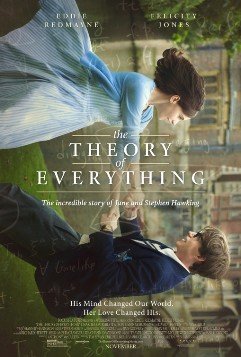
* “The Theory of Everything“: I had mixed feelings about this biopic concerning the life of physicist Stephen Hawking. While I believe most life has value and is worth living (exceptions are plentiful like Yasser Arafat, ISIS and Al-Qaeda terrorists, etc.)–and this movie makes that point (yes, it is a pro-life movie)–I found it painful and torturous to watch. I didn’t enjoy watching a man get progressively more and more disabled and helpless and, yet, still try to engage in bodily functions that don’t work for him. I also didn’t enjoy listening to the actor who plays him try to speak as Hawking apparently did when his vocal chords, voice box, and tongue stopped working. And, on top of all that, there’s the fact that Hawking is an overrated far-leftist anti-Semitic, anti-Israel jerk. So, it’s hard to watch a movie glorifying and gushing over him. Yes, this movie only does that and doesn’t at all show that Hawking’s theories were often disproven gibberish. Plus, his far-leftism gets only a quick mention or two.
That said, Eddie Redmayne, the British actor who plays Hawking in this, is very convincing. You really do believe he is Hawking, and the acting clearly stretches many bounds in his portrayal of Hawking’s ever-increasing disabilities. As I noted, I liked the pro-life message of this, and Hawking’s eventual admission that he believes it might be possible that there’s a G-d (he’s an atheist). There are many times when Hawking’s life could have been ended, but his wife insists he be kept alive and do what he can to remain useful and active in life. On the other hand, there are many innocent Jewish and other lives which are fully functional and worth living that were taken away by the Palestinian Muslim savages with whom Hawking allies in real life. And that deserved a mention that wasn’t given in this one-sided love letter of a movie.
The only negative on Hawking shown in this movie–even though there are many more not presented in this flick–is that he dumps his devoted wife, Jane (Felicity Jones), who gave everything to keep him alive and make him a success in life. And then he dumps her for his caregiver who gives him Playboys to read. . . for the articles, of course. All of that is also soft-pedaled and quick. On top of that, the movie is very slow and a little boring.
As I noted, I believe most human life is worthy. Sadly, while Hawking apparently believes his own is worthy, he doesn’t believe that Jewish life in Israel merits a heartbeat.
ONE MARX PLUS ONE ARAFAT
karlmarxmovies.jpgplus.jpgtinyarafat


Monday, November 25, 2013

Wknd Box Office: The Hunger Games: Catching Fire, The Book Thief, Delivery Man

Here is an interesting article from http://www.debbieschlussel.com/ reviewing some of the movies that came out over the past weekend. This follows this post about some of the movies from last week and THIS POST about some movies that have been released over the past few years that you might have missed! This all follows this post about guidelines to choosing good movies to watch yourself!

Wknd Box Office: The Hunger Games: Catching Fire, The Book Thief, Delivery Man


By Debbie Schlussel


I wasn’t that thrilled with any of this weekend’s new movies, but none of them is particularly terrible, as in many other weeks. I didn’t have time to finish up and post my reviews before the Jewish Sabbath began, so my apologies. Here they are:


* “The Hunger Games: Catching Fire“: While I liked this second installment of “The Hunger Games” movies better than the first (read my review). But it’s basically the same movie, cut in half.   And my objections remain the same: that it’s too violent and bloody for the kids at whom it is aimed, that its anti-capitalist and filled with class warfare–the enemies in the movie are rich people in “The Capitol” (while the oppressed and the heroes are the poor), that it’s a rip-off of other movies, such as “The Condemned” (read my review) and “Battle Royale,” and that it’s simply not believable that a stiletto thin woman can kick butt against males twice her size.   While the first half of this movie is slow and boring, when it finally heats up, it’s very suspenseful, action-packed, and the special effects are better than those in the first movie (the movie includes very cool clothing made of flames). But just as it gets to its most exciting point, the movie ends abruptly, and you have to wait for the next sequel to find out what happens. That’s a rip-off. Also a rip-off is that they merely repeat the same story almost verbatim in this movie as in the original. I felt like the writers phoned it in, and the story’s kinda silly.


The story: it’s a post-apocalyptic world in which there is no longer America, but Panem, a country made up of the rich and gaudy residents of “The Capitol” and several “districts,” which are filled with poor people who are basically enslaved, oppressed, and at the mercy of the President (Donald Sutherland) and the Capitol people. Katniss Everdeen and Peeta Mellark won the Hunger Games in the first movie (a teen male and female are chosen at random and forced to compete in a reality show in the wilderness, where they must kill each other and only one winner is supposed to survive).


The President is upset at what he perceives is a growing rebellion against Panem. So, he tells Katniss and Peeta that they must convince the country that they are in love (they aren’t). Since he thinks that Katniss and Peeta are symbols of the rebellion, he decides to do a new Hunger Games, requiring past winners, including Katniss and Peeta, to compete to the death against each other. So the movie from there is really a repeat of the first one.


Also, I felt like I was watching a futuristic version of “The Butler,” when Katniss and Peeta (both White) visit the districts of those who died in their Hunger Games, and the movie only shows the scene when they visit the Black district, showing how oppressed they are and how the families of the two kids who died in the Hunger Games are grieving. But this is the case in every district, so why focus on the Black district? To show us that Blacks are always the victims?


And, finally, when I saw that Katniss’ clothing designer is murdered, I was wondering if we can get rid of Mark Jacobs, too.


HALF A MARX


* “The Book Thief“: I was really excited to see this movie . . . and so incredibly disappointed when I did. It soft-peddles the Holocaust and tries to make us sympathetic to Germans who supported the Nazis and their “plight.” Um, no thank you. America doesn’t need a movie from the “German point of view.” The ghost of Leni Riefenstahl is laughing at us.

My late maternal grandparents struggled to survive the Holocaust and nearly died on a daily basis. Both of their families were wiped out, murdered by the Nazis, but you don’t see any of that, just a Jew who hides in a basement, and then miraculously survives at the end despite all odds against him. Yes, one German couple in a fiction movie risks their lives to save a Jew, but they were–in real life–the extreme exception, NOT the rule. I was disgusted at this Whitewash of the German people. Oh, and they show us the German bodies of “innocent victims” of Allied air raids. Guess what? There were plenty of bodies of Jewish Holocaust victims and American and British soldiers. Those they don’t show.


I realize the movie is based on a fiction book for young adults (although I’m told the book is better and the movie screws it up), but come on. The small German town where this takes place is an idyllic German town that reminded me of the “Willy Wonka & the Chocolate Factory” set, with gingerbread houses and charming, cute children. Even the townspeople and kids who support Hitler are cute and charming and not at all hateful.


The story: a young girl, Liesel (Sophie Nélisse), is the daughter of a Communist. The Nazis take her mother away, and she is adopted by a working class German couple in a small, charming town. Her new adoptive father, Geoffrey Rush, teaches her to read, and she eventually warms to her new parents. They are decent people who are reluctant about the Nazi book-burning rallies and so on. And, as they struggle to survive in meager times, they hide a Jewish boy in their cold basement (he is the son of a Jewish German soldier who saved Rush’s life in World War I).


The Jewish boy gets sick in the cold of the basement, and Sophie reads to him as he is unconscious, hoping this will save him. She “borrows” books by taking them from the Burgermeister’s house. And throughout it all, Liesel has her friend, Rudy, a cute blond friend who is a boy her age. He is a decent kid and helps her keep her secret about the Jew hiding in the basement. And that’s despite Rudy’s Nazi-loving, racist father. That’s not very believable either, as it would be rare for a very young kid to have morally sound views in opposition to those of his Nazi-supporting father.


While the acting is very good–Rush is always masterful and newcomer Nélisse is outstanding, the story is revisionist history. The Nazis came to power because the people in towns like these supported them and their Jew-hatred, but the movie glosses over and soft-peddles most of that. I guess I shouldn’t be surprised since the movie comes from the film studio owned by Rupert Murdoch and Jew-hating Saudi Prince Al-Waleed Bin Talal.


Two other things: the movie is very slow and seemed long because of it. And the use of “Death” as the narrator was not that effective.


ONE MARX


* “Delivery Man“: This is a remake of a French-language, French Canadian film, and it’s directed by the same guy. I had mixed feelings about this movie. While there are (a very few) moments that are touching and warm and show the importance of a father in kids’ lives, the overall message of the movie is Hillary Clinton’s “It Takes a Village” BS. And it’s that old world values and nuclear families with a traditional mother and father are passe. And it’s that men, particularly fathers, are dopes and losers.

This isn’t your typical Vince Vaughn movie, in that it’s more serious and less funny. And the real cut-up in the movie is the fabulously funny Chris Pratt, who plays Vaughn’s lawyer friend.


Vaughn plays a screw-up/loser who works at his Polish immigrant father’s meat business in New York. He is growing marijuana in his apartment, owes tens of thousands of dollars to the mob, and his cop girlfriend is pregnant with his kid (though she wants to raise it alone). He wants to be in his future child’s life, so he sets out to show her he deserves to be in her life. But just as he’s finally starting to realize he needs to shape up, he learns that a sperm bank where he made over 600 donations of sperm gave his sperm to every woman who sought the stuff. Therefore, he now has over 500 children, more than 100 of whom are suing to learn his identity.


Vaughn decides to see some of his sperm bank kids and gets involved in their lives. This is against the repeated advice of Vaughn’s best friend, Chris Pratt, who is a suspended lawyer and a father of four, whose young kids never listen to him. And, of course, Vaughn’s sperm bank kids are completely diverse as you would expect from any politically correct movie. He has Black, Indian, Asian, gay, and drug addict kids.


As I said, there are some touching points in this movie, such as when Vaughn repeatedly goes to visit a developmentally disabled sperm bank kid of his who is in an institution. The kid who does not communicate and is basically a vegetable (a term I hate, but is the best way to describe the situation), and yet Vaughn shows him love and respect for human dignity.


But almost all of the father figures in this movie–including Vaughn and Pratt–are dopes and idiots. And the one father who is decent, Vaughn’s married Polish immigrant father is seen as “backwards” and poor. He cannot afford to take his wife on a dream honeymoon to Italy, and yet later in life, Vaughn pays for the trip. But we later learn, Vaughn got the money to pay for the trip from his many masturbating sessions donating sperm to the sperm bank. Ick.


Eventually, Vaughn takes responsibility for all of his actions, but that doesn’t justify some of the many whacked out messages in the movie.


HALF A MARX


Friday, October 11, 2013

Music Discussions Lost +

A timely post about from www.TheSource4yM.com about a popular current song. This follows this post about the group “Tigres Del Norte” that was in the D.C. mall amnesty rally. In the meantime, you can get more involved if you like here and read an interesting book HERE.

Music Discussions Lost +


09/20/2013


Main Point of Discussion: In this life, we should live for the approval of God, rather than for the approval from men.


The Song: Lost +

This duet features two titans of the music industry, Coldplay and Jay Z. Jay Z has sold 50 million records worldwide throughout his career and holds the record for most number one albums by a solo artist. He’s been back on the airwaves recently with the new release of his album Magna Carta…Holy Grail. The title track and the album have both spent the last several weeks in the top ten on the Billboard Hot 100 charts and the ITunes top downloads.


Coldplay may not have been as active within the past year or so, but they have still sold around 60 million records during their career and their 2012 Mylo Xyloto tour was the 4th highest-grossing tour that year. They are set to release a new album soon, as well as a song that will be a part of the sound track for the second Hunger Games movie. So although this song is a few years old (2009), it combines two artists who most students are probably familiar with.


Lost+ is a song that reflects on the fleeting nature and pitfalls of success as the world defines it. It shows the elusive nature of living for things like fame, fortune, or the approval of others. It comes from two artists who have seemingly achieved all those things, yet they say that once they arrive where they thought they wanted to be, “the shine wears off.” They encounter attacks and criticism from others, or someone “bigger” and better comes along.


There isn’t really much to the video, although it does provide something interesting to look at. It’s a flashy video of the duo performing the song in concert. Yet alongside the images of Chris Martin singing to thousands of adoring fans, are some surprising reflections about the trappings of fame and the criticism that success invites.


Introducing the Song:

Jay-Z has been everywhere recently, especially since he released his new album Magna Carta in July. He’s been on TV, in advertisements, on the radio, and at the top of the charts. The song is a duet featuring Jay-Z and another superstar music group, Coldplay. These two artists are two of the most successful artists of our time. Together they have sold well over 100 million records and made untold amounts of money. They are the definition of success in the way that the world defines it. In light of that though, I think this song has some interesting and surprising things to say about fame and success. Let’s watch together.


Important Note for Leaders: True to form, Jay-Z uses some profanity in his rap. He uses the word s**t and ni**a in the music video, which can be found here: http://www.youtube.com/watch?v=kGl6KK90kbc.


Please use wise judgment in deciding whether you are comfortable showing the original to your youth or not. When I did this with our youth, I edited the two curse words out. If you would rather use the edited version, you can find it here: https://vimeo.com/72363565


Edited from bmcvideoproductions on Vimeo.


Song Lyrics:


Just because I’m losing

Doesn’t mean I’m lost!

Doesn’t mean I’ll stop

Doesn’t mean I'm across


Just because I’m hurting

Doesn’t mean I’m hurt

Doesn’t mean I don’t get what I deserved

No better and no worse


I just got lost

Every river that I tried to cross

Every door I ever tried was locked

Oh and I’m just waiting ‘til the shine wears off


You might be a big fish

In a little pond

Doesn’t mean you’ve won

‘Cause a long may come

A bigger one


And you’ll be lost

Every river that you tried to cross

Every gun you ever held went off

Oh and I’m just waiting until the firing stopped

Oh and I’m just waiting ‘til the shine wears off


[Jay-Z]

Aha, I gotcha, uh...

With the same sword they knight you, they gon' good night you with

Sh*t, That's only half if they like you

That ain't even the half what they might do

Don't believe me, ask Michael

See Martin, see Malcolm

See Biggie, see Pac, see success and its outcome

See Jesus, see Judas

See Caesar, see Brutus, see success is like suicide

Suicide, it's a suicide

If you succeed, prepare to be crucified

Media meddles, ni**az sue you, you settle

Every step you take, they remind you you're ghetto

So it's tough being Bobby Brown

To be Bobby then, you have to be Bobby now

And the question is, "Is to have had and lost

Better than not having at all?"

Because I'm...


Oh and I’m, just waiting ‘til the shine wears off

Oh and I’m, just waiting ‘til the shine wears off


Transitional Statement:

From listening to this song, it sounds like being famous and popular may not be as great as it is made out to be. In fact, if you look at the lyrics handout you have in front of you, Jay-Z even likens success to suicide. Wow! That’s probably not what you and I would have called it. But we should probably listen to him; after all, he’s had plenty of success. He should know exactly how fleeting it is to try and stay at the top. Coldplay says it’s tough; a bigger fish is always bound to come along. So, let’s not adopt the mindset of the world when it comes to success. In this life, we should live for the approval of God, rather than for the approval from men. Let’s discuss this some more in our small groups.


Divide into Small Groups:

Let’s go ahead and split up into our discussion groups, and then afterward we’ll come back together for a final word.


CLICK HERE for a quick training article on how to maximize your small groups using our small group format—a great resource to equip your small group leaders.


Discussion Questions:


1.AROUND THE CIRCLE: Before we dive in, tell everybody your name and a time that you were lost somewhere.


2.ASK A FEW: What were some phrases that stuck out to you from this song? What did they mean to you?


3.ASK A FEW: In particular, I found the lyrics to Jay Z’s rap to be very interesting. What do you think Jay Z was trying to say during his part?


4.ASK A FEW: Do you think this idea is true—that our society tries to tear down people who are successful? Why or why not?


5.ASK A FEW: Do you know someone who is really successful or good at what they do, for example, a doctor, a teacher, an athlete, an artist, a parent, etc.? If so, do you know if they are plagued with always trying to be better to please others?


6.ASK A FEW: Can you think of a time where you were criticized or made fun of for doing something well?


Read the following passage from the Bible:


1 Thessalonians 2:1-7


You know, brothers and sisters, that our visit to you was not without results. 2 We had previously suffered and been treated outrageously in Philippi, as you know, but with the help of our God we dared to tell you his gospel in the face of strong opposition. 3 For the appeal we make does not spring from error or impure motives, nor are we trying to trick you. 4 On the contrary, we speak as those approved by God to be entrusted with the gospel. We are not trying to please people but God, who tests our hearts. 5 You know we never used flattery, nor did we put on a mask to cover up greed—God is our witness. 6 We were not looking for praise from people, not from you or anyone else, even though as apostles of Christ we could have asserted our authority. 7 Instead, we were like young children among you.


NOTE: At this point, Paul had travelled to numerous cities, preaching the message of Christ and ministering to the Churches. Paul had certainly reached a lot of people for Christ and had seen a lot of success in ministry, but he had also faced a lot of opposition.


7.ASK A FEW: From reading this passage, what kinds of things did people accuse Paul of? (Leaders – He was accused of being deceitful, that his message “sprung from error,” that he was seeking praise from others, that he was using the church for his own greed, etc.)


8.ASK A FEW: How does Paul respond to these accusations? (HINT: Pay close attention to verses 4 and 6.)


9.ASK A FEW: Why does Paul say He seeks to please God rather than people?


10.ASK A FEW: What are some ways in which people seek the praise of others today?


11.ASK A FEW: What are some examples of ways we can please God?


12.AROUND THE CIRCLE: Do you think most of the decisions you make are for the approval of God or for the approval of other people? Why or why not?


13.ASK A FEW: How different would your life look if you cared more about what God thought of you than you did about what other people thought of you?


14.AROUND THE CIRCLE: How will you seek to please God more than people in the coming week?


Wrap Up:

The reality is that people can be really fickle sometimes. It’s very interesting that Jay Z, possibly one of the most popular musicians in all of history, is talking about how easily people turn against you and how you can be attacked for being successful.


Most of you probably have a few really good friends in your life who would stick by you no matter what, but there are many people who may claim to be our friends one day and then turn on us the next, and they may even tear us down for doing what’s right.


Many of you may be living for popularity above all else, you really want other people to like you at you your school. It may be that you want for a certain group to accept you, or maybe you long above all else for a certain person (maybe a particular boy or girl) to like you. It’s normal to want people to like you, so that isn’t necessarily a bad thing, but if we start to live for the acceptance of others above the acceptance of God, it can lead us to make some really bad choices.


This song and the Bible passage we read warn us is that if we are living for things like popularity or others’ acceptance, it’s like chasing after the wind. Even if you are successful for a moment in gaining these things, some of these people may turn on you, betray you, or hurt you.


That’s why Chris Martin, the Coldplay singer, says he’s “just waiting for the shine to wear off.” He is someone who has achieved fame, riches, and popularity, but he knows that one day the allure will wear off. He knows that eventually, people may turn against him, or attack him, or they may just forget about him altogether.


We can spend our lives chasing things like popularity, success, or money, but if we live for anything or anyone other than Jesus Christ, eventually the shine will wear off. People will come and go in our lives but the one thing that remains—the one thing that is eternal—is your relationship with God.


This doesn’t mean that it is wrong to care about other people’s opinions or that we should have no regard for others. What it means though, is that you will face criticism in this life at some point. If you are going to face it, you should face it for doing good rather than for doing evil. It also means we should never compromise our values in order to please other people.


It means we should live our life with the goal of pleasing God, who judges men’s hearts, above all else. If you need help doing that, hang around after we pray and speak with one of our adult leaders. You’ll be glad you did.


Close in Prayer


Written by Brandon McCarroll

Tuesday, April 17, 2012

Wknd Box Office: Lockout, Cabin in the Woods

Here is an interesting article from http://www.debbieschlussel.com/ reviewing some of the movies that came out over the past weekend. This follows this post some of the movies from last week and THIS POST about some movies that have been released over the past few years that you might have missed! This all follows this post about guidelines to chosing good movies to watch yourself!


Wknd Box Office: Lockout, Cabin in the Woods

By Debbie Schlussel


Not exactly a great weekend in new releases at movie theaters. But I liked one a lot. I did not see “The Three Stooges” or “Bully,” as they were screened at the same time as “Lockout,” which I chose to see instead.


* “Lockout“: I’m a big fan of Guy Pearce, the star of this movie, so I would have enjoyed this even if it were not a good movie (but it is). No matter what he’s in, he’s always good, and his American accent is perfect, never belying his real-life Australian brogue. In this movie, he’s also funny and gets to play the action hero. And I liked the storyline in this, which is complete with the mockery of the liberal do-gooder daughter of a Democratic President. If you like science fiction and action movies, as I do, this is for you. It’s written by the usually excellent Luc Besson, of whom I’m also a fan. Some of the stunts weren’t believable, but they’re far more believable than what you’ll see in a James Bond movie.


Pearce plays a man framed for the murder of his friend. He insists he didn’t commit the crime, claiming he was set up. It involves national security secrets and the apparent theft of them, and he’s convicted of conspiracy to commit espionage. Te President’s top advisers are heavily involved in questioning him.


It’s the future, and, sadly, the President is a Democrat. His bleeding-heart liberal, social activist daughter makes a trip to an outer space prison for violent criminals. Set on a space station, the prison contains hundreds of prisoners who are frozen for their entire sentence. The President’s daughter insists that this is inhumane treatment because allegedly the prisoners experience dementia and other severe illnesses as a result of being frozen for so long. While on her visit, she meets with a prisoner, who then takes her hostage. Pearce is sent to the outer space prison to rescue her. But he has another plan, too: he wants to rescue a friend of his who is imprisoned there and has the briefcase taken from the scene of the murder, which allegedly contains the national security secrets the President wants.


The movie is fast-paced, full of action, and while at first, you don’t really know what’s going on, it acquits itself nicely. Yes, the ending is predictable, but I enjoyed the ride. And Pearce makes it even more fun with his wisecracking.


TWO-AND-A-HALF REAGANS


* “Cabin in the Woods“:  I have mixed feelings about this atypical horror flick, which is supposed to be campy and sort of a parody of others like it.  It’s a mix of “The Hunger Games” (read my review),  “Creature” (read my review), and maybe even a little “The Truman Show,” which is probably why one of the characters is named Truman.  But it’s extremely violent, bloody, there’s a gratuitous topless scene and a disgusting scene of a woman making out with a stuffed wolf, and lot’s of dumb, groanworthy sexual innuendo and dialogue.


The story: Four college students take a motor home to a cabin in the woods. On their way there they stop at a gas station with a creepy owner. And interspersed with those scenes, we see several men who appear to be scientists but are actually something else. It appears they know what’s going on at the cabin and have set the whole thing up. Back at the creepy cabin, the college students discover a cellar and begin reading from a diary they found in the cellar, which awakens a family of dead people from the grave, who come after them.


I wouldn’t spend $10 on this.  I felt like it was a time bandit that robbed me of 1.5 hours of life.  But then I’m not the target demographic for this.  It’s aimed at 20-somethings and teens.  But if you’re a parent, here’s a tip:  It’s rated “R” for a reason . . . many of them.  Susan “Sigourney” Weaver–who compared American men to Islamic terrorists–makes a cameo appearance.


HALF A MARX

Monday, March 26, 2012

“The Hunger Games”: Long, Boring, Unoriginal, Feminist Snuff Film Marketed to Kids

Here is an interesting article from http://www.debbieschlussel.com/ reviewing some of the movies that came out over the past weekend. This follows this post some of the movies from last week and THIS POST about some movies that have been released over the past few years that you might have missed! This all follows this post about guidelines to chosing good movies to watch yourself!

“The Hunger Games”: Long, Boring, Unoriginal, Feminist Snuff Film Marketed to Kids


By Debbie Schlussel
In seven years as a movie critic, I’ve learned a few undeniable truths of the box office. One of them is: don’t believe the hype. You’ll always get burned. Another: there is little originality. Everything is either derivative or flat-out ripped off from something else. And so it goes with “The Hunger Games,” the much overhyped, overrated, and totally ripped-off movie that debuts in theaters, today. Sadly, this disgustingly violent and mostly soulless and unentertaining movie is marketed to kids, as the natural evolution from popular “Young Adult” lit. And it logs in at a slow-paced, sluggish two-and-a-half hours of undue self-importance.
In 2007, I reviewed “The Condemned,” a WWE-produced movie about 10 killers dropped on an island for a live reality-show game. The object was to be the one remaining survivor and would be rewarded with freedom and fame. Only one could live and the rest would have to die, mostly from being targeted by the others for death. I panned this sick “killing porn” movie, as did most critics. But, now, the same critics are gushing over a rehash of virtually the exact same plot in the long, slow, and extremely boring, “The Hunger Games.” The only difference is that, in “The Condemned,” the master of the game is a billionaire TV producer. In “The Hunger Games,” the master of the game is the President of a new fictional country, residing with his fellow elitist rich people in the “Capitol.” Both are typical lefty Hollywood constructs of capitalist creeps, who have no regard for human life, creating televised reality shows involving torture and death of “the little people” a/k/a “the 99 percent.”


It’s amazing how typically left-wing movie critics will gush over something as “high brow” when it is dressed up with Donald Sutherland (the President), Woody Harrelson, Elisabeth Banks, and young up-and-coming stars and wrapped in the phony label of “social commentary,” when it’s really just a repeat of the WWE product starring Stone Cold Steve Austin. (A reader of this site, “Ghostwriter,” notes that the storyline of “The Hunger Games” also sounds like a rip-off of “Battle Royale,” a Japanese movie about a bunch of teenagers that were taken to an island and forced to kill each other under the “Battle Royale Act.” You have to wonder if “Hunger Games” author Suzanne Collins saw either of these movies. I wouldn’t bet against that, as plagiarism is rewarded in America, and she’s rolling in cash from these books and now as executive producer of the movie.) I understand that the movie follows the first “Hunger Games” book very closely.
The thing is, “The Condemned” was rated “R” and meant only for adults. “The Hunger Games” is marketed to young teens with a PG-13 rating. But it is just as violent. That it isn’t an “R” movie is appalling. It deserves it . . . unless you think a close-up scene of one boy smashing another boy to death, with repeated bloody hits of a rock to his head, is good for kids. Sadly, so many “parents” in America are sperm and womb/egg donors who just want to be friends with their kids. And they will send their kids to see this, even take them there. Anyone who allows their kids–even teens–to see a snuff film, as this definitely is, should be tried for child abuse. At the very least, they are pimping out their kids to Hollywood violence and killing porn.

And part of the violence in this crappy flick is of the phony feminist variety–that women can kick butt and beat men much bigger than them. It’s not believable. Sadly, the movie has already made millions in advanced ticket sales and Thursday Night Midnight showings, which will falsely lead Hollywood to believe that America wants to buy into the BS that a slim, athletic girl can beat muscular guys twice her size and outlast them in the wilderness while they are trying to kill her. Sorry, but America doesn’t want that kind of fantasy, no matter how much feminists wish to make it so. In this movie, the male love interest to Katniss Everdeen, the heroine of the movie, is a crybaby, very weak, and an effeminate wimp with frosted hair, whose life is saved several times by the more masculine chick. Several women’s studies professors have been quoted in articles hyping this chick-kicks-butt movie. That ain’t real life, hags.

The story is more anti-capitalist left-wing bull-crap. It is a dystopian future and what used to be America is now called Panem. It’s divided into twelve districts of different types of working-class poor: farmers, coal miners, electrical workers, etc. They are not allowed to hunt for food, and, instead, the kids, aged twelve and up, must put an extra ticket with their name into a lottery, each time they want more food. Once a year, two names are drawn from each district: a male and a female, who must fight to the death–killing each other to survive and win–in a televised reality show in the Capital, a place filled with very rich, gaudy people in bright, clown-like clothing, make-up, and hairstyles. It’s sort of a modern day man-versus-man in the coliseum minus the culture and history, in this case mixed with a little bit of the most unreal Gloria Steinem/Betty Friedan feminist BS fantasy imaginable. The weak, nonsensical story is that because there was a violent revolution and war, the Hunger Games, as the contest is called, are held to remind the different districts of the cost of war and revolution.

Katniss Everdeen (Jennifer Lawrence) is an expert bow-hunter from District 12 (the coal miner district). She illegally hunts animals to sell and to feed her family, which consists of her inept, mentally
weak mother and her sister, who has just turned 12. When the annual drawing of names for the Hunger Games occurs, Katniss’ young sister is chosen, and Katniss volunteers to take her place. She and a guy from District 12 (Josh Hutcherson) are the chosen two and make their way to the Capital, where the residents snobbishly examine them and watch the Hunger Games.
As I said, Katniss outlasts all the others, and it’s just not believable. And it’s neither exciting or interesting. Just warmed over. I didn’t like the killing porn the first time when I saw it as the WWE’s “The Condemned.”

I like it even less as the regurgitated, feminist version aimed at “young adults.”

But America is made up of a bunch of suckers and sheep, so many of them racing to see this movie, having bought online tickets months ago. They eagerly ingest and digest the swill served up to them, without thought or hesitation. The other night, actress Kristen Bell uttered the most airheaded and sad comment of all about the books from which the movie was made:

This is the piece of literature that in a hundred years we’ll look back on and it will be the best thing we’ve ever written.

Spoken like a true moron. But, then, as the popularity of this movie and the books behind it proves, we are a nation of morons.

FOUR MARXES PLUS A BIN LADEN PLUS FOUR BETTY FRIEDANS
karlmarxmovies.jpgkarlmarxmovies.jpgkarlmarxmovies.jpgkarlmarxmovies.jpgplus.jpgbinladensmallerplus.jpgbettyfriedanbettyfriedanbettyfriedanbettyfriedan

Watch the trailer (which they won’t allow anyone to embed from YouTube).

Friday, March 23, 2012

“The Hunger Games”: Hollywood Markets Sick “Twilight” Killing Spree w/ She-Man Heroine, Girlie-Men

Here is an interesting article from www.DebbieSchlussel.com about some of the problems of the Hunger Games. This follows this post about the Hunger Games as a reflection on society.  This follows this post about some of the music that was poplular during 2011. This follows THIS POST about some movies that have been released over the past few years that you might have missed! This all follows this post about guidelines to chosing good movies to watch yourself!


“The Hunger Games”: Hollywood Markets Sick “Twilight” Killing Spree w/ She-Man Heroine, Girlie-Men


By Debbie Schlussel
Later today, I’ll be attending a critics’ screening of “The Hunger Games,” the much ballyhooed silver screen version of the best-selling “Young Adult” book series. I put “Young Adult” in quotation marks because the books are about a sick, violent vision of the future in which young people are selected to kill each other once a month, with only one survivor. When you teach teens that the future is dark, that fantasy should be dark, they’ll act and think dark in real life. Makes the “Twilight” contest between two girlie-men over a sullen chick sound like child’s play, huh?


Some are saying this is the new “Twilight,” and the movie is expected to garner a $100 million-plus opening when the movie debuts at Midnight Thursday Night/Friday Morning. But, to me, this sounds like just a more violent remix of “Twilight.” I’ve written that the Twilight movies are just about a girl who is the man and two “men” who are the chicks fighting over her with their sensitive sides. This looks like more of the same, with a “valiant” she-man chick as the heroine and the two men, with girlie-sounding names, “Gale” and “Peeta,” as the male chicks fighting over her. Her name is even more manly than theirs: Katniss Everdeen. The actress playing her, Jennifer Lawrence, is, in many ways, far more masculine than the carefully waxed, manicured, moussed, and gelled “guys” who play her romantic suitors, Liam Hemsworth (Miley Cyrus’ boytoy) and Josh Hutcherson. But, hey, they are suitable arm candy, the role women once played in movies like this.
And Hollywood is working overtime to market this to guys. It’s sad. We’ve already conditioned young men and 20-somethings to be slacker boys living at home with the parents. Now, we’re conditioning them in movies, more and more, to assume the role of the gushing, shrieking girls to a woman far more masculine than they are in a violent setting. Awwww. How cute. What ever happened to the movies where the guy is the hero with two hot chicks fighting over him? It’s basically true to call it a passe trend. The roles have been reversed in so many hard-to-believe movies, I’ve lost count.
Check out how the movie is being marketed to lull men-in-development into girlie-mandom and submission:
For the producers behind “The Hunger Games,” a movie based on a young-adult novel about a teenage girl fighting for survival and struggling with a love triangle, the guys matter.


The movie doesn’t open until March 23, but soothsayers are already predicting an opening-weekend gross in excess of $100 million. Barclays Capital estimates that the movie will generate $275 million domestically, on par with the most recent installment of the “Twilight” series. The studio, Lionsgate, is hoping to launch a multibillion-dollar franchise. Expectations have already sent its stock price soaring.
To avoid falling short of such lofty predictions, Lionsgate has been picking its way through a minefield of gender issues: reeling in male moviegoers without alienating core female fans. But male audiences, long the driver of blockbuster openings, have proved increasingly fickle as they divide their attention with videogames and other diversions.
Set in a dystopian future, “The Hunger Games” centers on Katniss Everdeen, a 16-year-old girl who is called upon to fight 23 other teens to the death in a twisted annual survival competition that is televised to the nation of Panem. The quick pace, strong characters and blood sport of author Suzanne Collins’s trilogy helped attract a robust male readership. . . .
From the start, the books were aimed at a crossover audience. The publisher, Scholastic, considered dozens of cover designs, including portraits of Katniss, before settling on a more “iconic” image of a bird pendant that plays a role in the story, said Rachel Coun, Scholastic’s executive director of marketing. When the book was first released, young male readers were targeted with a promotional videogame online. . . .
Some guys could be turned off by the perception that female cult fandom has sprung up around the movie, reinforced by the boisterous crowds—predominately girls—that have gathered at malls where “Hunger Games” cast members have appeared on a promotional tour. The mall strategy is pure “Twilight.” . . .
Says Vincent Bruzzese, president of Ipsos MediaCT’s Motion Picture Group, which does market research for movie studios and filmmakers: “What they are doing is marketing the archetypal themes that are gender-neutral.” Mr. Bruzzese says young men will watch action heroines.
Uh-huh, heroes are no longer male onscreen. They are “gender neutral,” which is code for: they’re women. Far too many guys have already assumed the position of Lois Lane, Veronica, and Betty (not to mention, Jughead). I know: I’m dating myself with these references, as fans of these flicks probably never heard of any of these characters, none of whom is tough and unfeminine enough for them. And this movie won’t help things.
If you don’t think that Hollywood and pop culture are shaping American males and teaching them how not to be men, you haven’t been paying attention.
And as I always say, not a single matriarchy in history has succeeded. Not one has lasted.
We are fooling ourselves in programming the genders for one.
Stay tuned for my review of the movie on Friday. In the meantime, watch the trailer (which they won’t allow anyone to embed from YouTube).

The Hunger Games: America’s Hideous Destiny?

Here is an interesting article from www.Vdare.com about the Hunger Games as a reflection on society. This follows this post about Cher's son. This follows this post about some of the music that was poplular during 2011. This follows THIS POST about some movies that have been released over the past few years that you might have missed! This all follows this post about guidelines to chosing good movies to watch yourself!


The Hunger Games: America’s Hideous Destiny?

Katniss EverdeenThe Hunger Games, perhaps the most anticipated movie in the history of cinema, will be released Friday March 23. Continuing a trend started by J.K Rowling with her Harry Potter series, and seemingly perfected by Stephenie Meyer with her Twilight stories, author Suzanne Collins has crafted the Young Adult franchise that appears likely to top both the popularity of wizards, vampires and werewolves combined.
The Hunger Games, the first book in a post-apocalyptic trilogy, has been ravenously consumed by readers of all ages. It doesn’t have the supernatural elements of Rowling’s or Collins work. But it deals with subject matter much darker and sinister than any curse conjured by Lord Voldemort or torment caused by Bella choosing Edward over Jacob.
It’s never quite clear what happened to the United States of America in The Hunger Games. But what replaces the USA on the North American continent is Collins’ subject.
We learn of droughts, storms, fires, rising ocean levels, and a brutal war waged over the dwindling resources. Ostensibly, that’s a nod to global warming and climate change. Which appears to qualify Collins’ work as distinctly liberal.
But it’s not.
There’s no mention of religion or faith in The Hunger Games either—wouldn’t the survivors of these wars over finite resources need something to believe in? And that appears to come from the liberal playbook too.
But not really.
The country of Panem has risen out of the ruins of our American civilization. The decadent and hated city of Capitol—whose residents have all the luxuries of advanced science, medicine and technology, coupled with the stylings of Queer Eye for the Straight Guy on steroids—is situated in what was the Rocky Mountain region of the American West. In thrall to Capitol are twelve Districts, each tasked with supplying the Capitol with one peculiar resource.
Seventy-four years before The Hunger Games begins, a rebellion against the Capitol by the subjugated Districts broke out. Twelve of the Districts were eventually subdued by the Capitol’s superior military technology. (Nuclear weapons are hinted at). The thirteenth District was completely destroyed.
After the defeat of the Districts, the Treaty of Treason was imposed by the victorious Capitol. This results in the eponymous Hunger Games. As punishment for the insurrection, one male and one female child is picked from each District to compete in this yearly event. These 24 individuals—Collins dubs them “tributes”—fight to the death, all broadcast on television for the enjoyment of the Capitol’s citizens.
Hunger Games’ heroine is Katniss Everdeen, played by Jennifer Lawrence, one of the 8,000 residents of District 12. At the tender age of 16, she volunteers to take her beloved younger sister’s place as one of the two children selected to compete in the 74th Hunger Games.
Ah, obviously another in a long-line of “butt-kicking” girl-power movies! A Sandra Fluke on the big screen! Katniss is just a younger version of Quentin Tarantino’s “The Bride” from the Kill Bill films!
But that’s not true either.
The residents of District 12 barely subsist on a diet of occasional bread. The residents of the Capitol enjoy opulent feasts at the push of a button. Hence the origins of the term “Hunger Games”.
Early in the book, the heroine Everdeen notes the brutal truth about what the Hunger Games symbolize:

Taking the kids from our districts, forcing them to kill one another while we watch—this is the Capitol’s way of remind us how totally we are at their mercy. How little chance we would stand of surviving another rebellion. Whatever words they use, the real message is clear, “Look how we take your children and sacrifice them and there’s nothing you can do. If you lift a finger, we will destroy every last one of you. Just as we did District Thirteen.”
To make it humiliating as well as torturous, the Capitol requires us to treat the Hunger Games as a festivity, a sporting event pitting every district against the others. The last tribute alive receives a life of ease back home, and their district will be showered with prizes, largely consisting of food.

“It is both a time of repentance and a time for thanks,” says the mayor of District 12 of the festivities that the Capitol mandates for all Districts before the start of the Hunger Games.
The world of Panem is brutish. Life seems devoid of all reason or hope. The Districts’ children are sacrificed in a ritual humiliation, satisfying the depraved urges of the maniacally surgically-enhanced Capitol residents. (Collins depicts skin piercing, augmentation, and plastic surgery gone to the Nth degree, with Capitol citizens having their skin bleached exotic colors, whiskers sewn on their faces, and other strange surgeries that seem straight from the fertile imaginations of current Bravo or E! producers).
Full disclosure: I don’t think that Collins has crafted a political book in a liberal vs. conservative sense.
Thus Glenn Beck’s The Blaze.com found it hard to label the book’s message as either anti-capitalist, anti-state—or just a critique of our current reality TV obsessed culture, which author Collins credits as the origin of The Hunger Games concept.
But what if the book is just a mirror of the United States circa 2012?
We are coerced to believe that global warming is the greatest threat to our future: Collins has made it the source of our civilization’s ultimate demise. A war on religion is being waged at every level of society: in the future, it doesn’t even exist. And, of course, “girl-power” is the motif of the day.
This weekend, tens of millions will flock to see a movie that is, at its basest level, just a story about 24 kids trying to kill one another. What does that say about us?
And what if it is something more?
Out of all the words written about The Hunger Games, I believe Counter Currents’ Gregory Hood has been able to distill the real message of Collins work:[Links added by VDARE.com]
[W]hile centrally produced and disseminated by a culturally destructive elite, a truly popular story can’t help but reflect deeply embedded archetypes or widely shared sentiments, even those that are suppressed or forbidden by the people themselves…
Rather than grim faced blonde Herrenvolk oppressing the colored masses of the Districts, Collins presents an exaggerated portrait of our own progressive elites. They are effeminate and hysterical physical weaklings with pointless lives. The complicated edifice of power reaches its zenith not in a black-garbed order of Übermenschen fanatically dedicated to an occult quest, but in a contemptible menagerie of spoiled sexual deviants that give themselves cat whiskers and brightly colored wigs to look “attractive”…
Rather than Nazis or even old school Communists, the oppressive Capitol society seems composed of liberal arts graduate students, part time workers at feminist bookstores in Portland, and a sprinkling of the wealthier members of Occupy Wall Street. Panem has somehow reversed Hegel’s master-slave relationship — the one who is unwilling to risk his life for honor has become the master.
Selectively controlled technology makes it possible. The Capitol’s media manipulation, genetically engineered creatures, warplanes, and hovercraft remind the reader of the current Hollywood Imperium’s unmanned drones. In contrast, Katniss is a poor and uneducated white huntress, precisely the kind of person sneered at nightly by the likes of Bill Maher or Jon Stewart Leibowitz. Hailing from the Appalachian coal country, she is from the one group that our own society despises beyond all others.
The Districts are contrasted with the Capitol because they produce actually useful products and necessities for life. Workers here are willing to risk their own lives in dangerous jobs to secure food for deeply loved families and friends. Meanwhile, those connected to the system can wallow in pointless luxury…
The name of the country itself says it all: the point of Panem is consumption—the pursuit of happiness, in its most degraded form. Rather than some departure from America, the Capitol is contemporary America taken to its logical conclusion. Neither market worshipping conservatives nor trendy lifestyle liberals should be comfortable with the results.
Gregory Hood, "The Hunger Games" , Counter-Currents Publishing, March 22, 2012
Those of us who consider the “National Question” the paramount issue of the day have—besides deciding whether or not there is an “America” left to defend—the problem of understanding how to pitch and market our message effectively.
The Hunger Games helps. Who in their right mind, reading The Hunger Games and then heading to the theater to see the film, would find any sympathy with the characters who reside in The Capitol—who indulge every degenerate fantasy at the expense of the hard work and sacrifices of the twelve (Red State) Districts’ citizens?
Collin’s book is a story of America’s potentially hideous destiny.
Paul Kersey[Email him] is the author of the blog SBPDL, and has published the books SBPDL Year One, Hollywood in Blackface and Captain America and Whiteness: The Dilemma of the Superhero.