Showing posts with label creationism. Show all posts

Wednesday, October 22, 2014

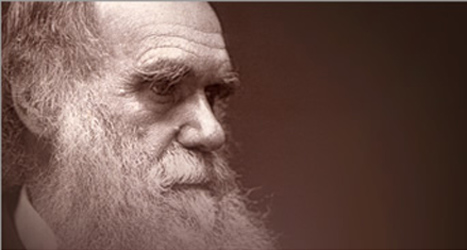
Charles Darwin's 10 Mistakes

An interesting article from http://www.ucg.org/ about Charles Darwin. This follows this post about the Pope and China. This follows this post about Ebola. For a free magazine subscription or to get the books recommended for free click HERE! or call 1-888-886- 8632.
I am leaving TWITTER SOON. Please continue to follow me here.


Charles Darwin's 10 Mistakes


We made a list of 10 reasons Darwin's theory of evolution does not hold up to scientific scrutiny.

[title]
1. "Warm little pond" theory: There is no solid evidence of life arising spontaneously from a chemical soup.
2. Simplicity of the cell theory: Scientists have discovered that cells are tremendously complex, not simple.
3. Theory about the cell’s simple information: It turns out cells have a digital code more complex and lengthy than any computer language made by man.
4. Theory of intermediate fossils: Where are the supposed billions of missing links in the evolutionary chain?
5. Theory of the variation of species: Genetic adaptation and mutation have proven to have fixed limits.
6. Theory of the Cambrian Explosion: This sudden appearance of most major complex animal groups at the same low level of the fossil record is still an embarrassment to evolutionists.
7. Theory of homology: Similarity of structures does not mean the evolution of structures.
8. Theory of ape evolution : Chimpanzees have not evolved into anything else. Neither has man.
9. Theory of the tree of life: Rather than all life branching from a single organism, evidence has revealed a forest of life from the very beginning.
10. Rejection of an intelligent designer: This opened the door for many to reject God, the Bible and Christianity.

Friday, September 19, 2014

The God Particle

An interesting article from http://www.ucg.org/ about the God Particle. This follows this post about the Three Overturns of the Royal Family. This follows this post about the Feast of Trumpets. For a free magazine subscription or to get the books recommended for free click HERE! or call 1-888-886- 8632.
I am leaving TWITTER SOON. Please continue to follow me here.


The God Particle

Scientists fear space and time could fly apart if too much energy is applied to the Higgs Boson, considered to be the fundamental basis for matter. Could this happen?


Media Download Options [ Download Media: right-click on link ]
filesVideo
MP4 Video
Video
MP4 Video - Low Quality
Audio
MP3 Audio - The God Particle


[Darris McNeely] An article came across my desk this morning that said that it could be possible for space and time to collapse if a particular particle called the Higgs boson had too much energy applied to it. Interesting concept, the idea that the universe would collapse because of time and space just simply disappearing if too much energy took place on something that is called the "God Particle". Everyone's favorite physicist Stephen Hawking wrote a introduction to a new book that's coming out in few weeks that is talking once again about this particular piece of energy or matter that was predicted, and a few years ago was actually found, called the Higgs boson.
Now, this is a very interesting term – don't get scared, it's such a unknown term, the Higgs boson – but what the Higgs boson really is, in essence, is the very fabric of energy that holds together the universe. That's about as simply as I can put it. Scientists believe that at the moment of the Big Bang, when the universe came into existence, energy and mass were created and held together by something that they call this particular Higgs boson or what it has been more popularly called, the God Particle – the very fabric of space, of matter, that they predicted would be there a few years ago. And again, in 2012, because of a huge machine that they built over in Switzerland that applied a great deal of energy to electrons – and a great force field was created – they actually proved that it existed. Now, Professor Hawking is saying that if too much energy were applied to it, that it could get out of control and space and time would collapse.
It's a fascinating subject and topic, as is the study of cosmology, and what scientists do know about our universe and are discovering almost every day with articles like this. You know, one of the things that can put the fear into a headline – and people perhaps don't have a combination of reason and faith as their foundation – is that what if something like this did happen? What if scientists got out of control and just ripped the fabric of the universe apart. Is it possible?
Well, I suppose theoretically, according to their formulas, it could be possibly done as well as so many other drastic scenarios that they predict will eventually happen as the universe expands to a point where something else more drastic will happen, but that's where, quite frankly, the matter of faith comes in, and those who do believe that there is a Creator God behind this universe can take great comfort and encouragement, as well as design and understanding, in what God does say about His role in the creation of the universe and also keeping it together because that's really what this is all about here – the idea of, can man by his own efforts destroy the universe? Don't worry; we can't.
In Hebrews:1:3, it makes a statement about God: "who being the brightness of His glory and the express image of His person, and upholding all things by the word of His power, when He had by Himself purged our sins, sat down at the right hand of the Majesty on high" – speaking of Jesus Christ, "who upholds all things by His power." Something that science hasn't yet discovered is that power by which God does uphold all things. We don't need to worry that some unknown force or energy – something that science calls the God Particle, or Higgs boson – if put into an unstable state, would destroy the universe. We don't need to worry about that. God is in control, just as He was when it was all created. That's encouraging and that's comforting.
That's BT Daily . Join us next time.

Wednesday, August 6, 2014

Vertical News: Sandstone Arches Shaped by Stress and Gravity

An interesting article from http://www.ucg.org/ about creation. This follows this post about Lamentations and the month called "Av."  For a free magazine subscription or to get the books recommended for free click HERE! or call 1-888-886- 8632. You can follow me at blogspot here and at twitter here https://twitter.com/brianleesblog. Please consider following both in case one goes down!


Vertical News: Sandstone Arches Shaped by Stress and Gravity


Printer-friendly version


Unique properties of sand grains under stress help scientists understand sandstone rock formations.

sandstone arch
Source: freeimages.com/ranjithd
Uniquely shaped sandstone arches and rock formations, like those found in the state of Utah and other places, are amazingly beautiful and for many years experts assumed their formation was simply the effect of random wind and rain erosion. However, recent research by scientists from Charles University in Prague has found that other factors are at play. Internal stress fields and the pull of gravity determine where and how much material is worn away by erosion.
In the experiment, small cubes of sand were used, put under stress and placed under water. As sand was worn away that which remained was put under greater stress and eventually the grains locked together and ceased to be affected by erosion. Using these basic factors, researchers were able to re-create some of the formations seen in the natural world (Jonathan Webb, “Sandstone Shapes ‘Forged by Gravity,’” BBC News at BBC.com, July 21, 2014).
God set laws of physics and nature in motion in order to shape and maintain the planet. The long-term effect of these laws can be seen in, among other things, the amazing variety of rock formations and strata visible all around the earth.
Using stress to create something far stronger and more lasting is an element of sandstone formation, as we’ve seen, but also a principle used in metalsmithing. However, the most relevant use of stress-to-strength is found as God works with us.
The apostle Peter put it this way, “But may the God of all grace, who called us to His eternal glory by Christ Jesus, after you have suffered a while, perfect, establish, strengthen, and settle you,” (1 Peter:5:10, NKJV).  God allows us to go through trials in order to forge our character and refine our outlook as we prepare now to be God-beings, a part of the family of God, in the Kingdom of God.


Tuesday, July 22, 2014

Can You Be a Scientist and a Christian?

An interesting article from http://www.ucg.org/  about Christians and science. This follows this post about Ukraine. For a free magazine subscription or to get the books recommended for free click HERE! or call 1-888-886- 8632. You can follow me at blogspot here and at twitter here https://twitter.com/brianleesblog. Please consider following both in case one goes down!


Can You Be a Scientist and a Christian?


How can we resolve the tension between reason and faith?


Media Download Options [ Download Media: right-click on link ]
filesVideo
MP4 Video
Video
MP4 Video - Low Quality
Audio
MP3 Audio - Can You Be a Scientist and a Christian?


[Darris McNeely] I was intrigued by a recent headline, "Can I Be a Scientist and a Christian?" It's a good question. It's a question endlessly debated today among people who believe strictly in science as a means of explaining our world and our universe, as opposed to those who believe in the Bible and take the Bible as the word of God and as a guide for life. Can we marry the two, or must the two remain forever separate?
You know, there are basically three different categories into which people fall as they try to explain the creation, or the existence of this world, life, the universe, and to reconcile faith and reason together, science and the Bible.
First off is what we might call atheistic evolution – the idea that evolution is the sole means to explain the origin of life on earth, there is not a God, there is no Creator, He is not involved in the process. According to a recent poll, about 15 percent of Americans polled adopt and accept this approach.
A second is what is called scientific creation – the idea that the Bible is literal and that there is a God who created this world, and science is not exactly as evolutionists would say that it is. About 46 percent of people adopt this approach. Many who call themselves Christian, fundamentalist or otherwise, and believe in the Bible as an account to explain the creation.
And then there's another third category in a general sense, called a theistic evolutionist, tends to blend the two – that the world, the universe was created by a God but evolution is used as part of the process by which the life forms arose on this earth, especially, and within the universe in terms of its creation, but with a hands-off approach from a Creator who designed into the processes the ideas and the things that we might term as the evolutionary process.
When you look at this, in one sense, these are three general classifications, but on Beyond Today , we have done a number of programs


Thursday, July 17, 2014

Vertical News: Giraffe Leg Ligaments, Elements of Design

An interesting article from http://www.ucg.org/  about creation. This follows this post about alternative lifestyles. This follows this post about a potential caliphate. For a free magazine subscription or to get the books recommended for free click HERE! or call 1-888-886- 8632. You can follow me at blogspot here and at twitter here https://twitter.com/brianleesblog. Please consider following both in case one goes down!


Vertical News: Giraffe Leg Ligaments, Elements of Design


Printer-friendly version


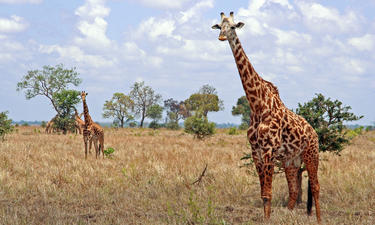
What makes a giraffe stand tall?

giraffes
Source: freeimages.com/mcleod
They loom over us at the zoo and capture the imagination of children. Such an improbable animal is the giraffe with its huge bulk suspended over long, thin legs and covered with a hard-to-miss pattern. They water awkwardly and seem delicate from a distance, despite their height.
However, scientists have uncovered one element of the overall giraffe design that allows the improbable to be possible. In an unusually deep groove or channel on the lower leg bone is an exceptionally strong ligament that allows the great mass of bodyweight the giraffe carries to remain safely suspended above the ground.
Researchers used the remains of giraffes that had died in captivity to gather data to test the actual strength of this ligament system. These super-strong ligaments allow giraffe legs to remain stiff and require less muscle engagement and thus fatigue. The findings will be helpful to further study of giraffe anatomy and also to the study and development of robotics, which takes many of its cues from animal design (Victoria Gill, “Giraffe Legs’ Strong, Skinny Secret,” BBC at BBC.com, July 2, 2014).
Jesus Christ, who before his human birth was the Creator God, designed and brought into existence all the “creeping things” or living, land based creatures on the sixth day, shortly before he created the first man, Adam (Genesis:1:24-25). The giraffe, with its spectacular ligament design would have been among this phenomenal part of the creation. 


Wednesday, May 14, 2014

A Response to Bill Nye's Critical Question: What truly is "the most serious problem facing human kind"?

An interesting article from http://www.ucg.org/ about Bill Nye. This follows this post about the Fatima visions. For a free magazine subscription or to get the book recommended for free click HERE! or call 1-888-886- 8632. You can follow me at blogspot here and at twitter here https://twitter.com/brianleesblog. Please consider following both in case one goes down!


A Response to Bill Nye's Critical Question: What truly is "the most serious problem facing human kind"?


Printer-friendly version


Source: By Ed Schipul (originally posted to Flickr as Bill Nye) [CC-BY-SA-2.0 (http://creativecommons.org/licenses/by-sa/2.0 )], via Wiki
I like Bill Nye. I actually like Bill Nye quite a lot.
A former Boeing engineer, Nye possesses the unique capacity to ignite a passion for discovery, particularly for young people. Leveraging his flair for disarming humor, his television programs on science and discovery are legendary. “Bill Nye the Science Guy” is a universally recognized brand.
Nye recently appeared in a quasi-debate on CNN’s “Crossfire” television program, a multi-person show that typically appears to be more of a verbal food fight with guests and hosts talking over each other on controversial issues. Following his appearance, many opined that Nye should now be known as “Bill Nye the Climate Guy,” as he emotionally defended a recent report on climate change. The ratings for this program were high.
Following the debate, he made a most interesting statement: “I will look anyone in the eyes and remind them that climate change is the most serious problem facing human kind…What will future generations think of us?”
Is climate change truly "the most serious problem facing human kind"? That's a fair and important question arising out of Nye's statement. Nye's follow-on question, “what will future generations think of us?” is equally valid.
To answer these questions, perhaps we can first pose another more probing question: what happens when one treats the symptoms of a problem and not its cause?
Engineering training includes a strategic emphasis on root cause analysis. If a product or application fails, it’s not enough to just fix it. Engineers want to know why it failed. By finding out what failed or caused the failure, a design flaw or issue can be remedied for future production and use.
Concerning Nye’s statement, let’s consider the root cause of possible climate change. In reality, greenhouse gases and toxic energy byproducts simply represent the symptoms of a much greater problem. The surprising root cause of Nye’s climate issue actually lies in ancient history, which cause has been amplified many times through the ages.
To frame things in perspective, consider this critical fact: students of the Bible know that scriptural teachings generally divide how we live life into two broad categories. The first is the way of life that God directs and espouses, which focuses on giving, sharing and collaborating. When this way of life is practiced, peace, balance and freedom result. The other way of life is one that tries to justify unfairly taking, hurting, promoting an unbalanced focus on self and harmful greed. It is commonly practiced today, and its outcomes (called “fruits” in various biblical analogies) are all-too evident.
It is this latter category of cognitive self-indulgence that allows emotional space to somehow tolerate children being gassed to death in Syria. It helps people justify why it is globally permissible for roughly five percent of the world’s population to greedily consume over 50 percent of the world’s finished goods (while depending on people living in poverty to sustain it). Its relabeling of greed as somehow justifiable allows people to rationalize living with hot national debt at incomprehensible levels in order to prop up an unsustainable lifestyle. Instead having a balanced approach to nurturing and caring for the land and environment that sustains life, this harmful approach to living explains away insolent atmospheric belching of harmful chemicals for industrial and energy production. It accounts for why nations distrust, even fear each other, and why they spend upwards of an inconceivable two trillion dollars annually on military expenditures. I could go on, but the picture is sufficiently clear.
Simply put, it is  give  versus  get .
And “get” wins hands down almost every time.
How did we arrive at this destructive point? Its etymology squarely lies in the answer to what is the most serious problem facing human kind. Future generations will talk long about the world’s present inability to properly address this issue.
What is it? What is the true root cause? Here it is: The most serious problem today is the foolish rejection of God by billions of people. Rejection of God means to willfully cut oneself off from critical guidance, from what the Bible describes as God’s “incomparably great power for us who believe” (Ephesians:1:19, New International Version).
Make no mistake. God is all-powerful. God is not trying to somehow convince us that He is right. At a future point where this way of “get” will lead humanity to the precipice of total annihilation, when the way of “get” crescendos to unfathomable evil, God  will  intervene (Matthew:24:22).
Until that time, God will continue to allow humanity to demonstrate to itself its incapacity to act and govern apart from God (James:4:1-3, Isaiah:59:8). He will permit the deadly consequences of human folly to nearly reach their full measure. We need to understand that the potential destructive outcomes of climate change represent some of these consequences.
Here’s the crux of the matter: It doesn’t have to be this way! The answer? David instructed Solomon: “Acknowledge the God of your father, and serve him with wholehearted devotion and with a willing mind, for the Lord searches every heart and understands every motive behind the thoughts. If you seek him, he will be found by you;  but if you forsake him, he will reject you ”(1 Chronicles:28:9, New International Version, emphasis added).
As the world will learn, “It is a fearful thing to fall into the hands of the living God” (Hebrews:10:31). The consequences of humanity’s present preferred way of life are relentless.
With all due respect to Bill Nye, here’s a new statement to consider: Our variant? “I will look anyone in the eyes and warn them that rejecting God and embracing ‘opposing ideas of what is falsely called knowledge’ [1 Timothy:6:20, NIV] is the most serious problem facing human kind. Climate change is simply the consequences of humanity rejecting the benevolent law of God, which if truly applied, would result in the outbreak of peace and sanity. To survive, we must identify and treat the cause of our problems, not just the symptoms.”
God’s way is a way of love, of helping, of prospering. You don’t have to be a victim of humanity’s most serious problem. You have a choice .
From across the ages, the cry to choose wisely is clear: “Save yourselves from this corrupt generation” (Acts:2:22). What will you do?


Blog posts do not undergo review by the doctrinal review team of the United Church of God. This post represents the personal opinion of the author and should not be considered the official stance of the United Church of God. If you have any questions or concerns please direct them to webmaster@ucg.org.

Wednesday, February 5, 2014

Vertical News: Upcoming Debate Between Creationist and Evolutionist

An interesting article from http://www.ucg.org/ about a debate between a creationist and an evolutionist. This follows this post about Russia's foreign policy in Ukraine. This follows this post about Valentine's Day.  For a free magazine subscription or to get the book shown for free click HERE! or call 1-888-886- 8632.


Vertical News: Upcoming Debate Between Creationist and Evolutionist


A February 4th debate between Ken Ham and Bill Nye puts the origins of the universe in the spotlight, once again.

dinosaur bones
Source: sxc.hu/mmagallan
On February 4 th a debate, sponsored by the Creation Museum located in Kentucky will be conducted by Ken Ham, a biologist and founder of the museum, and Bill Nye, a mechanical engineer, scientist and well-known public figure. The event has created a lot of media noise and debate, even before the official debate has begun.
Some supporters of evolution postulate that the debate will legitimize creationism by giving it equal standing with the theory of evolution. Others feel that Nye has a limited educational background from which to argue for the theory of evolution. Likewise, some feel that, whatever the outcome, it will do little to dissuade anyone from their previously held beliefs, creationist or evolutionist (Michael Gryboski, “ ‘Evolution Weekend’ Organizer Says Ken Ham-Bill Nye Debate Has ‘No Intellectual Purpose,’” The Christian Post at ChristianPost.com, January 31, 2014).
Despite the naysayers there appears to be significant interest in the event, with many tickets selling out quickly and livestreaming to be available during the debate.
The surrounding media interest is reminiscent of the Scopes Trial which took place in Dayton, Tennessee in 1925. It was a publicity stunt that drew significant attention to the possibility of human evolution being taught in public schools. Interestingly both sides were religious, and it was really a debate over how religion would deal with the theory of evolution.
In the case of the Ham-Nye debate, the sponsor, The Creation Museum, stands for a “young earth” form of creationism, in which the universe and earth were all created within the past 7,000 or so years. Most notable is their belief that dinosaurs and humans co-existed. Conversely, there are also “old earth” creationists who believe in a more reasonable, longer time-frame for the existence of the universe and the earth, with humankind coming in the past 7,000 or so years.
For a more in-depth look at this subject, please read, Creation or Evolution – Does It Really Matter What You Believe?
However the debate concludes, it should be a reminder to us to establish our understanding of God’s way and of what we believe because if we don’t, there will always be someone ready to fill the void in our minds with a false philosophy. 

Wednesday, July 24, 2013

God, Science and the Bible: More to Consider About the Ant


An interesting article from http://www.ucg.org/ about the evidence of creation in the ant. This follows this post about China's strategy in the Atlantic. For a free magazine subscription or to get the book shown for free click HERE! or call 1-888-886-8632.

God, Science and the Bible: More to Consider About the Ant


article by Robert Curry


Consider the ant, Solomon urged, and learn wisdom from her ways (Proverbs 6:6Go to the ant, thou sluggard; consider her ways, and be wise:


See All...).


Source: 123RFMost of us consider the ant to be a pest—an unwelcome nuisance that disrupts our picnic or invades our kitchen. But there is so much to consider about this tiny insect.


Vivid contrast to laziness

What did Solomon admire about the ant? "It has no commander, no overseer or ruler, yet it stores its provisions in summer and gathers its food at harvest" (Proverbs 6:7-8 [7] Which having no guide, overseer, or ruler,

[8] Provideth her meat in the summer, and gathereth her food in the harvest.


See All..., New International Version). Solomon challenged a "sluggard"—a habitually lazy person—to learn from how these energetic, industrious, relentless little creatures do their work without being told.


Solomon decries the way a sluggard sleeps too much and at the wrong time (Proverbs 6:10-11 [10] Yet a little sleep, a little slumber, a little folding of the hands to sleep:

[11] So shall thy poverty come as one that travelleth, and thy want as an armed man.


See All...). His motto: "A little sleep, a little slumber, a little folding of the hands to sleep ... " When the alarm sounds, his rested hand is practiced at unfolding and hitting the snooze button! When day is done, he has nothing done.


He procrastinates so habitually that he becomes a pro at it. When life's opportunities are presented to him like they are to others who make good choices and succeed, he fritters them away. Solomon warns that this leads to poverty, and the real danger is spiritual poverty.


Yet there are further observations to make.


The worker or the egg?—defying evolution

Though the anthill has a queen and can't survive without her, her only function is to lay eggs. In one study of an actual leaf-cutter ant colony—as reported in the 2013 BBC documentary Planet Ant: Life Inside the Colony —it was calculated that the queen laid about 30,000 eggs.


Myrmecologists (ant experts) say all the eggs are exactly the same. Yet, remarkably, how much food a worker ant feeds each egg determines whether the generic egg becomes another worker ant, a soldier ant or a queen! Think about the enormity of that—what's in that food?


More food to make a bigger ant is understandable. But how does more of the same food create ants with different functions? Not surprisingly, the film gives no explanation for this.


Can you even dream up a theory about how that could have evolved? Why would the first worker ant "think" it should go up and feed an egg a certain way?


How would evolution luckily create just the right mix of ant types for a balanced, functioning ant colony—every time?


And the real question is, like the famous chicken-and-egg conundrum, where did the first worker ant come from that was needed to feed an egg so that it could grow into the first worker ant?


As with all of God's wondrous creation, all unique features and parts had to work perfectly the first time or the ant colony would not have survived, let alone prospered. Though the film makes casual references to evolution, it states with a measure of awe, "There is nothing haphazard about this project." How true!


Extraordinary load bearing

The leaf-cutter ants do not cut leaves the way naturalists expect. They don't wield their mandibles like a pair of scissors. Instead, they anchor a leaf with one mandible and then drop the other rapidly like a guillotine!


The leaf-cutter ants also anchor with their back legs, and the result is the bigger the ant, the bigger an arc it can cut in the leaf. The film calls this "a really nice mechanism to make sure the bigger ants carry bigger loads."


And while ants certainly don't look like all that strong, each worker ant can carry up to four times its weight for as far as a kilometer—the equivalent of hundreds of miles for a human being. Some sources claim an ant can lift 20 times its own body weight!


How does that compare with what the strongest human beings can lift? The current official record for the clean and jerk in the men's 105+ kg class is held by Hossein Reza Zadeh of Iran—580 pounds (263 kg) at the 2004 Athens Summer Olympics. In the women's 75+ kg class at the same Olympics, Gonghong Tang of China lifted 402 pounds (182.5 kg). That's about 2 1⁄2 times their weight.


These human accomplishments came about through rigorous training, diet and determination, not blind chance. And they come nowhere close to matching an ordinary ant!


Can ants predict earthquakes?

In one remarkable study, red wood ants living along active faults in Germany were found to change their behavior the day before an earthquake (of magnitude 2 or greater). Instead of collecting food in the day and resting at night, they stayed active all night. The day after the quake, they returned to normal.


These startling findings were presented April 11, 2013, by Gabriele Berberich of the University Duisburg-Essen in Germany at the European Geosciences Union annual meeting in Vienna, Austria. Using a special camera and software, Berberich and her colleagues tracked the ants for three years from 2009 through 2012. During this period 10 earthquakes between 2.0 and 3.2 occurred.


How do the ants sense an earthquake coming? Berberich believes they are either registering changing gas emissions with special cells called chemoreceptors or reacting to tiny changes in the earth's magnetic field with their magnetoreceptors.


This is the first time it has been reported that ants react to future earthquakes. Berberich plans to conduct similar research in areas prone to more and bigger earthquakes—with the potential of saving many lives.


Copying ant efficiencies in technology

In 2006, researchers at the University of Bristol, England, spent countless hours analyzing Temnothorax albipennis ants searching for food. They found that both leader ants and followers appeared to work in tandem and provide bidirectional feedback.


Though a leader ant could race to the food four times faster on its own, it would work with a follower ant, teaching it how to find the food and remember its location. The teaching ant seemed to adapt its pace according to the follower's ability to keep up. Since ant colonies seem to function in flawless communication, researchers are analyzing what we should copy from their example.


Today's technologically driven world is considering the ant for clues about solving technical problems.


Consider the ants' ability to quickly determine the most efficient path to food and to bringing it back to the colony. Stated simply, an ant comes to a fork in the path. If food is found going left, the ant leaves a scent on the path. If no food is found on the right, the ant comes back and leaves no scent. At the junction the rest of the ants follow the scent left and reinforce it.


Recognizing such success, a nationwide company considers the ants' methods to determine the best sequence of deliveries to its warehouses. Experts focused on travel in outer space are considering such determination in slinging spacecraft from one planet to another by gravity for maximum energy efficiency.


These are some of the remarkable discoveries researchers are making about ants. Indeed, as Solomon advised, we have much to learn from them! For more than 3,000 years, wise men and women have found that it's worth our time to ponder this amazing part of God's creation!

.

Monday, August 1, 2011

Our Amazing Spaceship Earth

An interesting article from www.ucg.org about the complexities of earth. This follows this post about healing as a gift from God.  For a free magazine subscription or to get this book for free click HERE! or call 1-888-886-8632.

Our Amazing Spaceship Earth


Scientists from many fields have discovered that our planet not only teems with life, but seems to be expressly designed for life. An amazing intelligence seems to be behind Earth's perfect conditions. What is that intelligence telling us?


Have you ever dreamed of traveling through space? The prospects sound exciting to most people.


Amazingly, we are already traveling through space—but without being aware of it! Our planet can rightly be compared to a giant spacecraft carrying more than 6 billion people and billions more animals and plants. American scientist Buckminster Fuller coined the fitting term "Spaceship Earth" to describe our planet.


We are truly hurtling through space on this giant spacecraft called Earth—at the incredible speed of 66,600 miles per hour! This is far faster than man's speediest aircraft. At the same time, this space vehicle is spinning at 1,000 miles per hour at the equator. Every year we complete an entire circuit around the sun—a journey of more than half a billion miles!


Yet perhaps the most amazing aspect of our voyage is that we don't feel the trip at all. Certainly as we travel in a car at 50 miles per hour, we can sense the velocity and see the scenery go by. But the paradox is, once we get out of the car and sit down, everything on the ground seems at rest—yet we are still traveling at an incredible speed through space.


If we finish our life's journey with an average life span, we will have traveled around the sun some 76 times, and completed a trip of more than 38 billion miles— the equivalent of traveling several times to Pluto and back! All of this happens without us ever feeling the velocity or being aware of the trip itself.


This is just one of the incredible features of our remarkable spaceship.


Our privileged planet


In the last 30 years scientific discoveries have undermined the idea, once popular among some scientists and scholars, that we live on an unexceptional planet. That idea was summarized in the view of astronomer Carl Sagan, who spoke of "the delusion that we have some privileged position in the Universe" (Pale Blue Dot, 1994, p. 7, emphasis added).


We have come quite far from the similar notion posed by philosopher Bertrand Russell that humanity is merely, as he put it, "a curious accident in a backwater" (Religion and Science, 1961, p. 222). As scientific discoveries have accumulated, planet Earth has turned out to be not a backwater region, but instead a very privileged planet.


Astronomer Guillermo Gonzalez and philosopher Jay Richards recently wrote a book about the latest scientific findings that refute Sagan's assertion that we live on an insignificant planet. They aptly titled the book The Privileged Planet.


Instead of a universe once thought to be possibly teeming with life, more and more scientists are now realizing the rare qualities of our terrestrial globe. Cosmologists Peter Ward and Donald Brownlee wrote the 2003 book Rare Earth: Why Complex Life Is Uncommon in the Universe to explain some of our planet's unique features and how difficult it would be to duplicate these conditions on some other planet.


Similarly, the influential science textbook Earth begins its introduction with a section titled "the uniqueness of the planet Earth" (Frank Press and Raymond Siever, 1986, p. 3). So many factors have to be just right to duplicate the feats of our amazing Spaceship Earth that hope is slowly fading of ever finding intelligent life on other planets.


"From the seventeenth to the twentieth century," explain Drs. Gonzalez and Richards, "many expected to find intelligent, even superior life on the Moon, Mars, and other planets in the Solar System . . . Now, at the beginning of the twenty-first century, despite PR blitzes from Martian-life enthusiasts, the search has moved from the planets to a few obscure outlying moons. At the same time, the aspirations have been substantially downgraded" (The Privileged Planet, 2004, p. 253).


What are some of the remarkable features of our Spaceship Earth? Let's explore some of these characteristics so we can appreciate how carefully crafted it is. We can then ask, Could all these precise conditions be only a lucky accident? Hand-in-hand is another crucial question: What is the ultimate purpose of our life's journey through space?


A marvelous "window" to see out into the universe


As every spaceship has a porthole to view the outside, so our atmosphere acts in the same way.


In fact, we have a much better window than an ordinary spacecraft. Our "window" on this Spaceship Earth is not limited to a certain viewing area, but actually covers the entire planet. It is like having a porous crystal 430 miles thick that allows everyone aboard to have a full view of everything outside our planet and yet still blocks out the airless outer space.


Some planets are covered in thick clouds that make it impossible to see out. But our atmosphere enables us to view and discover the universe around us. Our earth is thus an exploration vessel.


The transparent canopy covering the planet also houses a renewable supply of oxygen for human beings and animal life, and carbon dioxide and nitrogen for plants. It also provides the proper air pressure for living things, and the outer edge of this translucent shell is composed of an ozone layer that protects life from harmful ultraviolet rays.


Strange as it may sound, this canopy even comes equipped with a protective force field! It sounds like something out of the TV series Star Trek, but it's true. We have a magnetic field generated by the spinning iron core at the center of our planet that deflects damaging cosmic rays and deadly solar winds. Without these features, life here would not be possible.


Last but not least, this marvelous canopy contains an automatically adjusting "curtain" to shade the terrestrial orb from too much light hitting its surface. This delicate shroud is formed by clouds, which act as moving shades that cover some 60 percent of the earth's surface at any given time.


What's in the cockpit?


What if we enter the cockpit of Spaceship Earth? What do we find?


Incredibly, no pilot is aboard, but instead we find an "autopilot" system governed by carefully adjusted physical laws. Although no one is seen physically aboard our spaceship to manage the system, our planet faithfully obeys the programmed, finely tuned commands of the myriad of physical laws and completes its yearlong journey around the sun, dutifully returning to its starting point only to begin yet another circuit.


What keeps the earth in its orbit? It is mainly the gravitational force of the sun that keeps the planet on its circular path. Truly, as the Bible says about our invisible and omnipotent God, "He hangs the earth on nothing" (Job:26:7He stretcheth out the north over the empty place, and hangeth the earth upon nothing.). That "nothing" is outer space, and the earth is able to "hang" suspended on nothing through the unseen force of gravity.


In this cockpit, although not seen, are the equivalent of hundreds of elaborate dials, each regulating an aspect of our planet's features. Each dial has been carefully calibrated to permit life to flourish on the planet. You can't see the great Engineer who set up the system, but you can measure the precision of each setting—and every one is just right!


Professor Robin Collins draws this comparison concerning the earth's precise settings: "I like to use the analogy of astronauts landing on Mars and finding an enclosed biosphere, sort of like the domed structure that was built in Arizona a few years ago. At the control panel they find that all the dials for its environment are set just right for life. The oxygen ratio is perfect; the temperature is seventy degrees; the humidity is fifty percent; there's a system for replenishing the air; there are systems for producing food, generating energy, and disposing of wastes.


"Each dial has a huge range of possible settings, and you can see if you were to adjust one or more of them just a little bit, the environment would go out of whack and life would be impossible" (quoted by Lee Strobel, The Case for a Creator, 2004, p. 130).


Everything— everything down to the tiniest details— is "adjusted" just right for us to live comfortably on this planet. We get a glimpse of the marvelous Designer who set up the whole system when the Bible speaks of "the LORD, who created the heavens, who is God, who formed the earth . . . who did not create it in vain, who formed it to be inhabited" (Isaiah:45:18For thus saith the LORD that created the heavens; God himself that formed the earth and made it; he hath established it, he created it not in vain, he formed it to be inhabited: I am the LORD; and there is none else.).


Truly, our planet is not some lucky accident since the evidence shows it was carefully designed to be inhabited by mankind and all other forms of life.


The spaceship's engines


What drives this craft and propels it through space? There are "twin engines" aboard, one pushing the planet forward and the other keeping it spinning and fueling its interior heat.


The centripetal force caused by gravity keeps the globe in its orbit. When an object reaches a certain speed and is spun by centripetal forces, it stays in a stable circuit around the center. This is what the earth does when orbiting around the sun. And our planet's distance from the sun, though varying slightly, is perfect for life—not so close to the sun that we would all burn up, nor so far that we would freeze.


The earth travels through space at 66,600 miles an hour as it orbits the sun. That speed perfectly offsets the sun's gravitational pull and keeps the earth's orbit the proper distance from the sun. If the earth's speed were less, it would be gradually pulled toward the sun, eventually scorching and extinguishing life. Mercury, the planet closest to the sun, has a daytime temperature of about 600 degrees Fahrenheit (316 Celsius).


On the other hand, if the earth's speed were greater, it would in time move farther away from the sun to become a frozen wasteland like Pluto, with a temperature of about minus 300 degrees (minus 184 Celsius), also eliminating all life.


The second engine is deep inside the earth itself. There, the fuel is decaying radioactive elements that heat the planet and drive plate tectonics. Geologists Frank Press and Raymond Siever call this "a gigantic but delicately balanced heat engine fueled by radioactivity" (Earth, p. 4).


"Not only does plate tectonics help with the development of continents and mountains, which prevent a water world," adds astronomer Guillermo Gonzalez, "but it also drives the Earth's carbon dioxide–rock cycle. This is critical in regulating the environment through the balancing of greenhouse gases and keeping the temperature of the planet at a livable level . . .


"This radioactive decay also helps drive the convection of the liquid iron surrounding the Earth's core, which results in an amazing phenomenon: the creation of a dynamo that actually generates the planet's magnetic field" (quoted by Strobel, pp. 182-183).


Surely, as Proverbs:3:19The LORD by wisdom hath founded the earth; by understanding hath he established the heavens. says, "The LORD by wisdom founded the earth, by understanding He established the heavens."


The passenger cabin


What about the passenger cabin of Spaceship Earth? How well designed is it? We find that our planet provides all the comforts a space traveler could desire—abundant and delicious food, plenty of water, gorgeous and entertaining scenery, a comfortable climate, challenging work and plenty of room to have a family.


Our planet is a veritable Noah's ark of animals and plants traveling on its timeless journey through space. It is a self-contained unit with renewable resources that can last, if properly taken care of, for potentially thousands of years into the future.


The atmosphere in the passenger cabin is finely tuned for life. No other planet in our solar system has anything remotely like it. High in the atmosphere, ozone blocks cancer-causing radiation emanating from the sun. The atmosphere also shields us from meteors, burning up the overwhelming majority long before they reach earth. Otherwise they would cause great damage and loss of life.


Our atmosphere contains a mixture of gases in perfect proportions to sustain life. Oxygen makes up 21 percent of our air. Without oxygen, all animate life—including all human life—would die in minutes. But too much oxygen is toxic and makes combustible materials more flammable. If the proportion of oxygen in the air increased to only 24 percent, destructive fires would frequently break out and be much harder to bring under control. Objects around us could literally burst into flame.


Nitrogen, making up 78 percent of earth's atmosphere, dilutes the oxygen and serves a vital function as a fertilizer for plants. Every day around our planet, millions of lightning bolts generated by thunderstorms combine some nitrogen with oxygen, creating compounds that are then washed to the earth by rain, where they can be utilized by plants.


Carbon dioxide makes up much of the rest of our atmosphere. Without it plant life would be impossible. Plants require carbon dioxide, which they take in while giving off oxygen. Animals and human beings are the opposite, breathing in oxygen and exhaling carbon dioxide. Plant life sustains human and animal life and vice versa in a magnificent, precise, self-sustaining cycle.


Another condition that makes Spaceship Earth hospitable for life is its size, which determines its gravity and in turn affects its atmosphere. If the earth were only a little larger, making its gravity slightly stronger, hydrogen, a light gas, would be unable to escape the earth's gravity and would collect in our atmosphere, making it inhospitable to life. Yet, if the earth were only slightly smaller, oxygen—necessary for life—would escape, and water would evaporate. Thus, if our planet were slightly larger or smaller, human life could not have existed here.


But that's not all. Even the thickness of the earth's crust plays a part in regulating our atmosphere. If earth's crust were much thicker, it would hoard oxygen below the surface as oxides. But a thinner crust would leave us susceptible to frequent earthquakes and devastating volcanoes that would permeate our atmosphere with volcanic ash.


How important is the precise balance in our atmosphere? Our neighboring planet Venus suffers from what is thought to be a runaway greenhouse effect in which heat is trapped and cannot escape. NASA planetary scientist John O'Keefe noted that our sterile, lifeless moon "is a friendly place compared to Venus, where, from skies forty kilometers high a rain of concentrated sulfuric acid falls toward a surface that is as hot as boiling lead" (God and the Astronomers, 1992, p. 117).


To keep the temperature comfortable for the passengers, our planet remains in orbit at just the right distance from the sun and is designed with an optimum tilt of 23.5 degrees. As Fred Meldau points out in Why We Believe in Creation Not in Evolution, "If the earth had been tilted as much as 45 degrees instead of what it is, temperate zones would have torrid zone heat in the summer and frigid zone cold in the winter. On the other hand, if the axis of the earth were vertical to the plane of its orbit, January and July would have the same climate and ice would accumulate until much of the continents would be ice-covered six months and flooded the other six months" (1972, pp. 27-28).


Astronomer Hugh Ross points out some of the other ways our planet is perfectly balanced for life: "As biochemists now concede, for life molecules to operate so that organisms can live requires an environment where liquid water is stable. This means that a planet cannot be too close to its star or too far away. In the case of planet Earth, a change in the distance from the sun as small as 2 percent would rid the planet of all life . . .


"The rotation period of a life-supporting planet cannot be changed by more than a few percent. If the planet takes too long to rotate, temperature differences between day and night will be too great. On the other hand, if the planet rotates too rapidly, wind velocities will rise to catastrophic levels. A quiet day on Jupiter (rotation period of ten hours), for example, generates thousand mph winds . . ." (The Creator and the Cosmos, 2001, pp. 135-136).


In contrast to Jupiter's 10-hour rotation, our neighboring planet Venus rotates once every 243 days. If earth's rotation took as long, plant life would be impossible because of the extended darkness and extremes of heat and cold from such long days and nights.


Psalm:104:24O LORD, how manifold are thy works! in wisdom hast thou made them all: the earth is full of thy riches. says: "O LORD, how manifold are Your works! In wisdom You have made them all. The earth is full of your possessions."


A protector fleet of spaceships


Not only does our terrestrial vessel have a magnetic force field and renewable resources, but it also has a number of accompanying spacecraft to stabilize and protect it.


The first of these is our moon. It is a veritable workhorse. Not only does it shield our planet from taking some meteor strikes (just look at its surface through a telescope!), but it stabilizes earth's vital tilt. Just as a clock has counterbalancing weights, so the moon acts as a counterbalance to the earth, keeping the planet's tilt carefully adjusted to allow the four seasons of the year. This tilt permits the sun's rays to uniformly heat the globe, much like a rotisserie slowly roasts a chicken.


The moon, along with the sun, also regulates our tides. The earth's tides help circulate the water in the oceans and sweep away waste products from the coasts. "If the moon were half as far away, or twice its present diameter," adds Fred Meldau, "great tides would wreck most of our harbors . . . If the moon were smaller and farther away, it would not have sufficient pull on our tides to cleanse our harbors or adequately rejuvenate (with oxygen) the waters of our oceans" (Why We Believe in Creation Not in Evolution, p. 31).


Also remarkable is the relative size and placement of the moon with respect to the sun. The sun's diameter is 400 times that of the moon, but it is also 400 times farther away—an arrangement that produces perfect solar eclipses when viewed from earth.


This extraordinary phenomenon has revealed crucial scientific facts about the composition of the sun and other stars, as well as providing concrete evidence of Einstein's theory of relativity (again illustrating how our earth is set up to allow us to make scientific discoveries about the universe).


Yet the moon is only the first of Spaceship Earth's protector fleet. The two gas giants, Jupiter and Saturn with their strong gravitational pulls, also help shield the planet by functioning as giant vacuum cleaners, sweeping the solar system of dangerous comets and asteroids. Astronomers witnessed a stark example of such protection in 1994 when Jupiter took a hit as the Shoemaker-Levy 9 comet broke apart due to Jupiter's gravitational pull and smashed into its atmosphere.


Dr. Hugh Ross describes how these planets play a vital role in preserving life on earth: "Late in 1993, planetary scientists George Wetherell, of the Carnegie Institution of Washington, D.C., made an exciting discovery about our solar system. In observing computer simulations of our solar system, he found that without a Jupiter-sized planet positioned just where it is, Earth would be struck about a thousand times more frequently than it is already by comets and comet debris. In other words, without Jupiter, impacts such as the one that is thought to have wiped out the dinosaurs would be common.


"Here is how the protection system works. Jupiter is two and a half times more massive than all the other planets combined. Because of its huge mass, thus huge gravity, and its location between the earth and the cloud of comets surrounding the solar system, Jupiter either draws comets (by gravity) to collide with itself, as it did in July 1994, or, more commonly, it deflects comets (again by gravity) right out of the solar system. In Wetherell's words, if it were not for Jupiter, ‘we wouldn't be around to study the origin of the solar system.'


"Neither would we be around if it were not for the very high regularity in the orbits of both Jupiter and Saturn. Also in July 1994, French astrophysicist Jacques Laskar determined that if the outer planets were less [orbitally] regular, then the inner planets' motions would be chaotic, and Earth would suffer orbital changes so extreme as to disrupt its climatic stability. In other words, Earth's climate would be unsuitable for life . . . Thus even the characteristics of Jupiter and Saturn's orbits must fit within certain narrowly defined ranges for life on Earth to be possible . . ." (The Creator and the Cosmos, pp. 137-138).


As the book The Privileged Planet notes: "The existence of a well-placed moon, of circular planetary orbits . . . of the outlying gas giants to sweep the Solar System of sterilizing comets . . . all these and more are profoundly important for the existence of complex life on our planet" (p. 256).


Traveling in the right zone


Not only is Spaceship Earth just the right distance from the sun to have a temperate climate, but its solar system is in an excellent neighborhood of stars. It lies between two spiral arms of the Milky Way galaxy, far away from the dangerous galactic core or the spiral arms, and is in what astronomers call a "safe zone."


"Certainly, our type of galaxy optimizes habitability," explains Guillermo Gonzalez, "because it provides safe zones. And Earth happens to be located in a safe zone, which is why life has been able to flourish here . . .


"Places with active star formation are very dangerous, because that's where you have supernovae exploding at a fairly high rate. In our galaxy, those dangerous places are primarily in the spiral arms, where there are also hazardous giant molecular clouds. Fortunately, though, we happen to be situated safely between the [Milky Way's] Sagittarius and Perseus spiral arms" (quoted by Strobel, p. 169).


This clear zone is a good vantage point for viewing our own galaxy and the rest of the universe—once again demonstrating the way our exploratory spaceship is set up for cosmic discovery.


Asking some tough questions


We can learn a great deal from examining the universe with telescopes or viewing life through a microscope, but even with the best scientific instruments we will never find the ultimate purpose of why we are traveling through space or what the meaning of our existence is.


All we can infer from the precise natural laws and the fine-tuned features of our planet is that the earth was optimally designed for life and for scientific understanding. Even a skeptical astrophysicist such as Stephen Hawking admits as much on the matter of life. "Wheeler agrees with Hawking and Carter," writes John Boslough, "that our own universe is uniquely fine-tuned to produce life, even if in just one small, lost corner" (Stephen Hawking's Universe, 1985, p. 125).


After surveying the astronomical and biological evidence, biochemist Michael Denton comes to this conclusion: "Four centuries after the scientific revolution science has provided no significant evidence that any alternative life is possible . . . Scientific exploration has found no token of another life, no shred of evidence for something other than ourselves or of our type of life as it exists on earth.


"On the contrary, science has revealed a universe stamped in every corner, riven in every tiny detail, with an overwhelmingly and all-pervasive biocentric [life-centered] and anthropocentric [human-centered] design" (Nature's Destiny: How the Laws of Biology Reveal Purpose in the Universe, 1998, p. 380).


So here we are, traveling on this spaceship called Earth, and everything we see around us is carefully designed and calibrated to sustain our existence. No wonder the Genesis creation account concludes with this summary of God's handiwork: "Then God saw everything that He had made, and indeed it was very good" (Genesis:1:31And God saw every thing that he had made, and, behold, it was very good. And the evening and the morning were the sixth day.).