Showing posts with label Sabbath. Show all posts

Friday, September 2, 2016

"In It You Shall Do No Work"

An interesting article from http://www.ucg.org/ about Labor Day and the Sabbath. This follows this post about China's military and trade. This follows this post about the Lost 10 Tribes.  This follows this post about Zika. For a free magazine subscription or to get the books recommended for free click HERE! or call 1-888-886- 8632.

MP3 Audio (4.97 MB)
According to the United States Department of Labor , Labor Day was created to honor the contributions that workers have made to the social and economic well-being of America. President Grover Cleveland first made it a federal holiday in 1894. Labor Day is the first Monday in September, falling on Sept. 5 this year. As an American college student myself, it makes a nice transition from working full-time to going back to classes for the year, giving summer one last hurrah.
God’s “work week” is a marvelous schedule that works. He pushes us to work hard at our jobs and various other responsibilities throughout the week, and then gives us the seventh day off to both relax and focus on Him.
Here’s an odd question: Have you ever stopped to consider God’s perspective on labor, or, as we might say today, “work”? It’s interesting to think and read about. God actually expects us to work for most of the week. In Exodus 20:9 we read God’s command that for “six [out of seven] days you shall labor and do all your work.” He also encourages us to work with passion and diligence: “Whatever your hand finds to do, do it with your might” (Ecclesiastes 9:10). Work is important and allows us to do many honorable things in life, such as provide for our families, grant help to those in need, and leave an inheritance for our children.
Are we then to work and slave away at all times? Certainly not! God understands that we aren’t tireless robots who can run all seven days of the week. He tells us—commands us even—to take the seventh day off!
Let’s return to Exodus 20 to get the rest of God’s important directive: “Six days you shall labor and do all your work, but the seventh day is the Sabbath of the LORD your God . In it you shall do no work” (Exodus 20:9-10; emphasis added). God wants us to take the seventh day off so bad that He makes it the fourth requirement in the most well-known section of His law: the Ten Commandments!
But there’s still more to the story besides not working! What are we supposed to do with these 24 hours of seemingly free time? The core of God’s Fourth Commandment is this: “Remember the Sabbath day, to keep it holy .” (Exodus 20:8; emphasis added).
One important way that we keep this day holy is by resting instead of working, as we already mentioned. Another significant way we honor the Sabbath is by attending church services, which are a holy convocation appointed by God Himself (Leviticus 23:3). Going to church allows us to converse with and encourage others who believe as we do and to worship and learn more about God and His truth. Please click here to find the congregation closest to you.
God’s “work week” is a marvelous schedule that works. He pushes us to work hard at our jobs and various other responsibilities throughout the week, and then gives us the seventh day off to both relax and focus on Him. This “recharge day” doesn’t come around just once a year; you can reap the benefits of God’s Sabbath every week! As you prepare for fall and for the upcoming holiday weekend, remember to always put God first and keep His Sabbaths holy. Have a blessed and restful Sabbath and Labor Day weekend.
For a more in-depth look at God’s instruction to keep the Sabbath, how to keep it, and its plethora of benefits, please reflect on the following writings:
Sunset to Sunset: God’s Sabbath Rest — our extensive booklet investigating the seventh-day Sabbath as it is mentioned throughout the Bible, from beginning to end.
“The Fourth Commandment: Key to a Relationship With Our Creator” — a look at the Sabbath as a command from God, demonstrating its deep importance to you individually.
“The Benefits of the Sabbath” — this article examines just a handful of the many benefits that you can experience right now by keeping God’s Sabbath.

Wednesday, May 7, 2014

Being Christian in Nigeria

An interesting article from http://www.ucg.org/ about Christianity in Nigeria. This follows this post about violence in Libya. For a free magazine subscription or to get the book recommended for free click HERE! or call 1-888-886- 8632. You can follow me at blogspot here and at twitter here https://twitter.com/brianleesblog. Please consider following both in case one goes down!


Being Christian in Nigeria


Printer-friendly version


In Nigeria it is extremely difficult for young people to become independent and able to live on their own.

Due to extremely poor economic conditions, young men and women tend to live with their parents for as long as possible.
It is very common to see 30-year-old (or older) men and women still living at home even though they might be working. This is because young people need years of savings to be able to afford a simple place of their own and then save for a wedding. Even then, young people often depend on their parents and relatives to finance as much as 90 percent of the cost of the wedding.
Education is one of the few ways to improve one's lot, and there is often great pressure to sacrifice all—even one's religion—for the opportunity to succeed. In this difficult environment, three young people in the United Church of God prove that one can be Christian in Nigeria.
Ibironke Abiona Akinbo is 28 years old . "Ronke," as her friends call her, finished high school at age 15. It then took almost five years for her to secure a university admission to study law. She had gained admission once, but there were too many admitted and the school decided to revoke the admissions of the last 150 students. She was among them.
Now she is a student of law at the state university where she lives. Sadly, due to incessant strikes by lecturers or student riots protesting one issue or another, the school has closed many times. What she expected to be a five year program has now extended to eight years.
In 2007, which was to be her final year, she learned there would be a mid-semester exam during the annual Feast of Tabernacles (see Leviticus:23:33-43), when she planned to be gone. Her friends urged her to cancel her plan to attend the biblical festival, but she decided to be true to her religious convictions and go anyway. Ronke decided to observe the Feast even though she knew it would mean failing the exam and perhaps losing an extra year. She decided to pray and hope that when she later sat for the final exams she would make a good enough grade to pass anyway.
After attending the Feast, she came home and took her final exams. Regrettably, she was not able to overcome the missing mid-semester exam and failed. She was really hurt and devastated. Even so, she was glad that she made the decision to attend the Feast anyway because God says to do so. And while Ronke is pained at having to lose an extra year for just that one exam, she says that she does not regret her decision and would not hesitate to make the same decision in the future!
Femi Akinfolarin , 23, is a soft-spoken, quiet young man. The church his family attends sits on a piece of land given to it within a large compound owned by his father. All of Femi's family attends this church. He, too, was an active member who played in the church band.
Then he came across a copy of The Good News magazine at a friend's house. He liked what he read because it made sense to him and addressed issues he had often wondered about, especially the weekly seventh-day Sabbath (from Friday sunset to Saturday sunset).
He found the local Web site for the United Church of God and attended a midweek Bible study. This led to him requesting more booklets and starting to attend Sabbath services. At first his family gave him grief over his new beliefs. They threatened to cut off the support they were giving him for his education and to throw him out of the house. They claimed that he had been hypnotized and brainwashed.
But Femi refused to give in to the pressure. He quietly stood his ground and continued to attend every week. In order to make sure he had money for transportation to church services, he'd start saving what he could early every week.
Over time, Femi's family has come to accept his beliefs. While his family still has reservations about him not attending church with them, Femi continues to be an active and committed member of the United Church of God in Lagos.
Yakub Hakeem Oladimeji , 28, comes from a non-Christian background. Akeem, as he is called, grew up in a polygamous home, and his parents are now separated. He came in contact with God's truth through a friend down the street from him whose entire family is in the Church of God. The family accepted him without question, and the depth of love and fellowship he received made him a regular visitor. His friend's house became Akeem's second home.
When Akeem learned about the beliefs of his friend and his friend's family, they made sense to him and he started attending Sabbath services. He was soon baptized and is now an active, committed member of the Church.
As a third-year law student, the time came for him to pay his school fees. This coincided with an unbiblical religious festival his family observed. Even though he had not celebrated this occasion with his family for some time, this year his father insisted he come home and participate before he would give him the school fees.
Akeem was faced with a serious choice. He could go home, participate in the festival and collect his money or refuse to go and risk not getting the money for his education. If he couldn't pay, he'd be thrown out of school. Having struggled for more than six years just to gain admission to his school, this was no small problem.
In counseling with his minister, Akeem was advised to go home, tell his father that he was now a Christian and that he could no longer celebrate this festival, and to pray that God would touch his father's heart so he would give him the money. Akeem knew that he also had to be ready to accept whatever decision his father made. Whatever the outcome, it was time his father knew about his faith of the past seven years!
When Akeem's father learned of Akeem's beliefs, he was not pleased and threatened to disown him and have nothing to do with him if he didn't abandon his Christianity. His dad was also a lecturer at the university and could make life tough for him or even get him expelled if he so chose.
Akeem pleaded with his father to respect his desire to follow God as his conscience dictated, but his father would have none of it. Akeem left with a heavy heart, hoping that he could get financial help somewhere else. Just a few days before the deadline for paying the money, his father called him, spoke strongly and harshly to him, but eventually gave him the money.
His father was still angry with him and shocked, but somehow, he had come to respect his decision. This may not be surprising to many in the developed world, but this is indeed a miracle in Nigeria and most of Africa.
When Akeem went to pay the fees, he saw a new notice stating that all who had a certain grade point average or better were exempted from paying the school fees. As long as they maintained their grades, they would receive a cash award equal to the value of the school fees. Because Akeem's grades met the standard, he wouldn't have to pay. He had been faithful to His spiritual Father in spite of the possibility of losing out on his education.

Living Conditions in Nigeria

With an estimated population in 2007 of approximately 135 million, Nigeria is often referred to as the "Giant of Africa." Nigeria is also a very poor country.
According to information published by the Federal Research Division of the Library of Congress sponsored by the U.S. Department of the Army (www.country-studies.com/nigeria/income-distribution.html ), Nigeria's GNP per capita in 1988 ranked it below India, Pakistan and Ghana. Rising debt, falling average income and rapid inflation (20 percent yearly between 1973 and 1980) were responsible for a standard of living that was lower in the mid-1980s than it had been in the 1950s. As inflation became more severe in the 1980s, wages fell almost 60 percent.
Economic conditions in Nigeria today continue to decline. Estate agents demand an initial house rent of two to three years as advance payment excluding commission and agreement. Everything has to be done with cash and paid in advance. To own a car is considered a luxury, and 90 percent of all car owners buy them secondhand, after the cars are 10 to 15 years old.
With no steady electricity, no pipe-borne water (people dig boreholes and pump their own water into reservoirs), terrible roads and high corruption that makes every imported item (raw materials or finished products) extremely expensive by the time it gets to the hands of the consumers, the cost of running a business is very high. Every business from the mundane to the magnificent must have its own electricity generating plant in order to function. Because of this, companies are not expanding and very few new jobs are created.
More and more people are now struggling to get a degree and have the opportunity for a better income. But there are few openings for such job seekers. A company may advertise for two job openings and have as many as 15,000 applicants. Unemployment continues to rise every year as the schools churn out more graduates and the economy worsens. VT


Friday, April 25, 2014

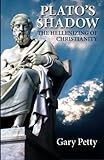
Book Review - Plato's Shadow: The Hellenizing of Christianity

An interesting article from http://www.ucg.org/ about Greek influence in Christianity. This follows this post about opinions. This follows this post about the likelihood of a war in Asia. . For a free magazine subscription or to get the book recommended for free click HERE! or call 1-888-886- 8632. You can follow me at blogspot here and at twitter here https://twitter.com/brianleesblog. Please consider following both in case one goes down!


Book Review - Plato's Shadow: The Hellenizing of Christianity


Printer-friendly version

United Church of God minister Gary Petty has compiled a concise overview of the tragic transformation of Christianity from its Hebraic roots to a syncretic religion laced with pagan doctrines and Greek philosophical concepts that are still present in traditional Christianity today. It’s a timely contribution in light of a growing interest in understanding and returning to “the faith once delivered to the saints,” as well as a valuable resource for every pastor..

Book Information

Author
Gary Petty

Publisher
Little Frog Publishing

Publication Date
2013-11-26

ISBN
0615917135

Recommendation
Larry Walker recommends this.

Paperback, 208 pages

Find it on Amazon
I discovered and obtained a copy of this book during a discussion with Mr. Petty at a recent meeting planning conference.
After reading it on the plane flight back home, I was impressed with how well it was written and its relevance for true, biblical, doctrinal understanding—especially for the increasing number of people who are becoming disgruntled with the weakened state of traditional Christianity, and for those involved in the recent trend of Christians seeking to rediscover what is often referred to as “the Jewish roots” or “Hebrew roots” of Christianity that characterized the teachings and practices of the first century Church.
Interestingly, while reading the book on my return flight, I overheard a conversation between two women in the row behind me discussing that very topic. One lady from Central Oregon was telling the lady next to her how much learning about the Jewish roots of Christianity has enriched her understanding of the truths of the Bible.
Plato’s Shadow begins with a brief introduction, which concludes with Gary’s explanation of his purpose for writing the book:
“This book is an attempt to discover elements of what is commonly called Primitive Christianity. In it we will explore a brief overview of the Jewish and Roman world of the early Christians and what the earliest followers of Jesus believed about the afterlife, the Ten Commandments, the Passover, baptism and idolatry. We will explore Christianity’s Jewish roots and the manner in which early Christian groups became influenced by Greek philosophy. The story is…important to examine if we are to understand the future of Christianity. It is important for anyone who desires to be a true disciple of Jesus Christ” (page 3).
A summary of the content on the back cover begins by asking, “If Jesus’ apostles walked the earth today, would they recognize Christianity?”

Continuing with the summary:

“Plato’s Shadow looks at some foundational teachings of the earliest Christians, exploring how Greek and Roman society later shaped their message. The early church used the Old Testament as Scripture and believed in Jesus as the prophesied Messiah. It also taught that baptism and laying on of hands are necessary for converts. Early Christians shunned the use of any images in their worship, observing the Ten Commandments as the foundation of Christian conduct.
“The forces of Gnosticism and Hellenistic society reshaped these teachings. As a result, some of today’s most cherished Christian teachings are remarkably different from what the early church taught.
“Today, millions of Christians are searching for a deeper understanding of God’s purpose in their lives. The answers can be found in the teachings and customs of the earliest followers of Jesus Christ. Discover for yourself the importance of ‘primitive Christianity’ through Plato’s shadow.”

Chapter headings:

1. A Jewish Sect in the Outpost of an Empire
2. The God of Abraham, Isaac and Jacob
3. Pythagoras, Plato, Philo and Philosophy
4. The Legacy of Romulus and Remus
5. A Rabbi Named Jesus
6. The Jewish Messiah
7. Growth of the Jesus Sect
8. Simon, Samaritans and Syncretism
9. Turning the World Upside Down
10. The Wisdom of the World
11. A Deranged Emperor and the Destruction of the Jewish Temple
12. Why Become a Christian?
13. Persecution, Forgeries and Gnostics
14. The Eighth Day and Quartodecimans
15. Hellenized Orthodoxy
16. Hellenized Christianity Triumphant
As the back cover of the book mentions: Gary Petty “is a regular contributor to The Good News magazine and a host of the Beyond Today television program.”
Because the target audience is the general public, the book is written with an approach and terminology that will resonate well. It is an easy read, even for those who are not familiar with New Testament Church history or technical theological terms.
I highly recommend the book for those seeking a more accurate view of Christianity.
Plato’s Shadow (published in 2013 by Little Frog Publishing, ISBN #9780615917139) is available in softcover, 204 pages, footnoted with reference sources and abundant scriptural references, and can be purchased from Amazon.com .


Wednesday, March 19, 2014

Pope Francis - Devotion and Obedience

An interesting article from http://www.ucg.org/ about Pope Francis I. This follows this post about a U.S. Roman Catholic Cardinal's comments on morality. For a free magazine subscription or to get the book shown for free click HERE! or call 1-888-886- 8632. You can follow me at blogspot here and at twitter here https://twitter.com/brianleesblog. Please consider following both in case one goes down!


Pope Francis - Devotion and Obedience

Submitted March 14, 2013


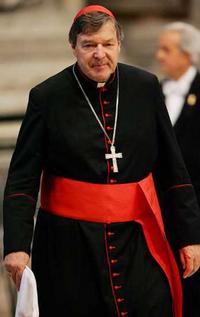
Cardinal George Pell of the Catholic Church. Every cardinal pledged obedience to the new pope.

Source: Wikimedia Commons/Gavin Scott
I joined millions of others in watching the biggest news story of the year so far unfold: the announcement of Francis I as the new pope. There was plenty of spectacle: impressive displays by the Swiss Guard, marching bands, excited throngs singing in the pope’s honor, and seemingly baffled news anchors barely keeping up with the action.
In all of the ritual and ceremonial dogma, one specific custom caught my eye. After the presentation of Pope Francis I as the new Bishop of Rome, each of the electing cardinals stepped up to the pope and, in turn, vowed to obey him. A vow of obedience is an enormous responsibility to commit yourself to. It means that you, in essence, are living for that person from that time on and acknowledging that their will is the most important thing in your life.
I had one question in mind after watching it all. Where is God in all of this? The focus on the celebration was clearly on a man—the pope—and the ones who selected him. The cardinals referred to Francis I as their “Holy Father.” Jesus specifically said that titles like that are reserved exclusively for God the Father (Matthew:23:9).
So is unquestioning obedience. Why was it a big deal for the cardinals to vow obedience to Pope Francis? Because, as leader of the Catholic Church, the pope takes responsibility for and acts as an official representative of the beliefs of his church. And frankly, some of those beliefs just aren’t biblical, like Sunday worship , Mary reverence and a Friday to Sunday crucifixion timeline .
The apostles faced religious leaders who demanded obedience to themselves instead of God. They had the right perspective. The apostles responded to them, “We must obey God rather than any human authority” (Acts:5:29, New Living Translation). The cardinals made their choice, and they decided they would obey a man. You have the same exact choice to make right now. Will you obey a man? Or will you obey the God who created the universe, the true Holy Father of all?


Friday, March 7, 2014

St. Patrick & St. Patrick's Day

An interesting article from http://www.ucg.org/  about the holiday called St. Patrick's Day. This follows this post about the problem of alcoholism.  For a free magazine subscription or to get the book shown for free click HERE! or call 1-888-886- 8632. You can follow me at blogspot here and at twitter here https://twitter.com/brianleesblog. Please consider following both in case one goes down!


St. Patrick & St. Patrick's Day


Who was this Patrick guy, anyway? Known as the patron saint of Ireland, he's an almost mythological figure in the Christian world, with tall tales of his legendary exploits known far and wide.

Theologian and historian James Moffatt said, "So much legend and fiction has been written about him that one is almost led to believe that there were two individuals—the real Patrick and the fictitious Patrick" ( The Church in Scotland , 1882, p. 140).
There are few hard facts about Patrick's life, but we can draw some reasonable conclusions from what we do know.
Patrick is credited with establishing the Roman Catholic Church throughout Ireland. But does history match tradition? Moffatt commented, "He should not be placed where certain historians seem determined to assign him … He was in no way connected with the type of Christianity which developed in Italy" (ibid).
As it turns out, Patrick probably wasn't even Catholic! His belief system was evidently quite different than that of continental Europe.
It's probable that Patrick even honored God's seventh day Sabbath! "It seems to have been customary in the Celtic churches of early times, in Ireland as well as Scotland, to keep Saturday, the Jewish Sabbath, as a day of rest from labor" (ibid).
Other historical records and Patrick's own writings reveal him to have been closer to biblical instruction than to traditional Christianity. Part of the Bible's teaching includes rejecting the use of pagan practices in the worship of the true God (Deuteronomy:12:29-32).
The real Patrick likely wouldn't even have approved of observing his own namesake holiday! This holiday on March 17 was supposedly to commemorate his death, but that date was in fact the time of the Roman Bacchanalia—celebrating the god of wine and partying. It seems the pagan party goes on in another guise. Bear that in mind when March 17 comes around. Forget the leprechauns, and put God first!
Read the related article "Do You Feel Lucky Today? "

Wednesday, December 18, 2013

What Do You Believe and Why?

An interesting article from http://www.ucg.org/ about personal beliefs. This follows this post about the rivalry between India and China. This follows this post about the Christmas tree. For a free magazine subscription or to get the book shown for free click HERE! or call 1-888-886- 8632.

What Do You Believe and Why?

Printer-friendly version


How do you know if what you believe is really true? Is it possible you have been influenced to believe things that are wrong? How can you replace faulty notions with true knowledge?

Elizabeth Kenny
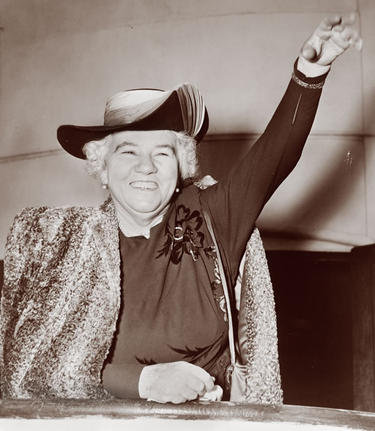
Elizabeth Kenny served as a nurse in the remote Australian outback.

Source: Wikimedia
Although people do not realize it, they may embrace beliefs that are simply not true. How is that possible? It's because their views have been formed as a result of tradition, hearsay or information not based in fact or properly researched.
Furthermore, people will often adopt the beliefs of their family, group or religion with little or no question. If or when those positions are challenged, people will defend them even if their position doesn't match the facts. An example of this reaction is described in the following true story.

Elizabeth Kenny and infantile paralysis

In the early 1900s Elizabeth Kenny served as a nurse in the remote Australian outback. She diagnosed and treated people who could not get to a doctor. For example, in 1911 she was called to a farm to help a young girl who was in severe pain and whose legs were seriously impaired.
In a telegram to Aeneas McDonnell, a physician at the Toowoomba, Queensland, hospital, Kenny described the symptoms and asked for a treatment method. Dr. McDonnell thought the symptoms indicated poliomyelitis, often called polio or infantile paralysis. Although there was no known cure, he advised Kenny to do what she could to deal with the symptoms.
She then treated the girl with applications of moist, warm towels so as to ease the pain and relax the muscle spasms in her legs. Kenny then gently stretched and massaged the muscles. However, the now-relaxed leg muscles would not function. Kenny then worked at retraining them so they could again operate normally.
Not only did the little girl recover completely, but Kenny administered her treatment to five other children in the vicinity who suffered from the same affliction. Each of them regained normal mobility.

Method in conflict with accepted practice

Kenny's innovative procedure conflicted with conventional medical practice, which was to immobilize affected limbs with casts and splints. She believed that the routine method of treating the disease actually generated its deformities and paralysis. Although Kenny's new technique was not a cure, it offered significant relief from pain and severe crippling.
Kenny's treatment brought her into sharp disagreement with many Australian medical authorities. They found it inconceivable that such a simple method, originating with a nurse and not a trained medical doctor, could produce such positive results.
Nevertheless, the resistance Kenny faced did not discourage her from working to help children in need. Although it took nearly three decades, her technique gained some recognition in Australia, where she set up treatment clinics in several cities.
In 1940 the government of New South Wales sent Kenny to the United States to introduce her treatment. Although many American physicians were opposed, the National Foundation for Infantile Paralysis found it credible.
In June 1940 she demonstrated her method at the University of Minnesota Medical School and Minneapolis General Hospital. The medical personnel at these institutions recognized Kenny's procedure as a new model in treating polio. During the 1940s many Kenny treatment centers opened across the United States.
Kenny retired to her home in Toowoomba in 1951. Two years after her death in 1952, a vaccine was developed that led to a rapid decline in the number of polio cases. Kenny's principles of muscle rehabilitation left an important mark in the medical world. Some have called her the founder of modern physical therapy.

Conventional wisdom often seems correct

Elizabeth Kenny's story is remarkable in terms of the thousands of children she helped. A larger point however, deals with the intense opposition she encountered for many years from the medical establishment. It is a prime example of what happens when people's beliefs are challenged by competing facts.
Such beliefs are often described as "conventional wisdom," which the dictionary defines as "the body of ideas or explanations generally accepted as true by the public or by experts in a field" (emphasis added throughout). People often feel comfortable with such beliefs because other people feel the same way, including perceived experts and authorities.
For example, through most of the 19th century epidemic illnesses such as cholera and the plague were commonly thought to be caused by poisonous mists in the night air. Also, until the early 20th century, a common way to treat disease was bloodletting. Even though these ideas were later proved wrong, generations of people believed they were valid.

Conventional wisdom is pervasive

Conventional wisdom can be a snare. People of all ages can be held in its grip. It can begin as early as childhood. If, for example, parents and relatives are members of a particular political party, union or religion, children simply assume the views of those organizations are correct.
Even though conventional wisdom is pervasive in both secular and religious society, it's often faulty. True knowledge comes only from the Creator God and is inherent in the laws He has set in motion to guide people's lives (Psalms 32:8). It's each person's responsibility to carefully examine what they accept as true (John 8:32).
Where does conventional wisdom come from? To understand, we must go far, far back in time.
One of God's angels, referred to in the Latin translation of Isaiah 14:12 as Lucifer, meaning "light bringer," was an honored cherub the Bible describes as "the seal of perfection, full of wisdom and perfect in beauty" (Ezekiel 28:12).
This archangel allowed his heart to be filled with pride. It corrupted his character and judgment. Afterwards he led a third of the angels in rebellion against God and attempted to take over God's heavenly throne. Being no match for Him, they were cast down to the earth (Luke 10:18; Revelation 12:4).
In their rebellion these angels became evil spirits or demons. And Lucifer became Satan—meaning "adversary." He has ever since incited rebellion and strife in the lives of human beings (Revelation 12:9; 1 John 5:19). He seeks to especially prevent people from understanding God's marvelous truth by insidiously promoting counterfeit knowledge and wisdom (2 Corinthians 4:3-4; James 3:13-14).
The devil is skilled at corruptly influencing humanity because people do not naturally want "to retain God in their knowledge" (Romans 1:28; Romans 8:7; see also Jeremiah 17:9). This leaves them easy prey for the devil's unrighteous influence.
The apostle Paul aptly described Satan-inspired, human wisdom as foolishness (1 Corinthians 3:19). He urged people to conduct themselves "not with fleshly wisdom but by the grace of God" (2 Corinthians 1:12). He cautioned them not to be held hostage to "the commandments and doctrines of men," which falsely offer "an appearance of wisdom" (Colossians 2:22-23).

Conventional Christian doctrines vs. the Bible

Perhaps you are a Christian and feel you understand the seriousness of what Paul said. You also need to be aware that the apostles and Jesus Christ Himself repeatedly warned about counterfeit Christianity. They also warned of ministers who, being unwittingly motivated by the devil, would promote seriously flawed doctrines (Matthew 7:15; 2 Peter 2:1; 2 Corinthians 11:15).
These wrong teachings are often filled with half-truths. That means they appear reputable to many people, but they don't accurately reflect what the Bible teaches (John 17:17; Luke 4:4; 11:28).
Here are some conventional beliefs you need to look at, each followed by what the Bible actually teaches:
• Conventional doctrine: "Once saved, always saved," also known as "eternal security." Biblical truth: An individual can receive salvation from sins through Christ and still, through neglect, ultimately come to reject God, thereby losing salvation (2 Peter 2:21; Hebrews 2:1-3; Hebrews 6:4-8; Hebrews 10:26-38).
• Conventional doctrine: The reward for a good life is going to live as a disembodied consciousness in heaven at the time of death. Biblical truth: The dead are not conscious, and no one has ascended consciously to heaven following death except Jesus Christ—after He was resurrected from the dead (Ecclesiastes 9:5, Ecclesiastes 9:10; John 3:13; Acts 2:29, Acts 2:34).
• Conventional doctrine: You have an immortal soul. Biblical truth: You do not have an immortal soul. A soul can die, and again there is no consciousness in death. Death is compared in Scripture to a lifeless sleep from which people must be awakened in a resurrection (Ezekiel 18:4, Ezekiel 18:20; Ecclesiastes 9:5, Ecclesiastes 9:10; Daniel 12:2; 1 Corinthians 15:18).
• Conventional doctrine: Sunday is the Sabbath. Biblical truth: The seventh day of the week, Friday sunset to Saturday sunset, is God's Sabbath (Genesis 1:31 - Genesis 2:1-3; Exodus 20:8-10; Isaiah 58:13; Mark 2:28).
• Conventional doctrine: Jesus was crucified on a Friday and resurrected on Sunday morning, being dead for parts of three days. Biblical truth: Jesus was in the grave for three days and three nights, which cannot fit between Friday afternoon and Sunday morning (Matthew 12:39-40).
These are just a few examples of many long-established, conventional Christian teachings contrasted with true biblical understanding. Do you see why it's so important for you to thoroughly challenge what you read, hear and accept as truth?

Jesus Christ resisted conventional religious ideas

Jesus Himself was the best example of challenging the status quo. His teachings and actions persuasively corrected accepted religious notions (Mark 1:22; Matthew 5:21-44). Jesus told His followers to carefully scrutinize what they were taught and to avoid following the wide, easy way that would lead to their destruction (Matthew 7:13).
The apostle Paul also encouraged people to "not be conformed to this world" but to "prove what is that good and acceptable and perfect will of God" (Romans 12:2). You also need to question your religious beliefs by honestly comparing them to scriptural truth (Acts 17:11).
True understanding comes from being willing to look outside traditional Christian teachings to what is actually written in the Bible (Isaiah 55:8-9; Isaiah 66:2; 1 Corinthians 1:19-21).
Of course it may be difficult to accept what you learn because you will have to unlearn deep-seated ways of thinking. Discovering that something you believe is wrong can, at first, make you feel uncomfortable. Admitting you have been wrong is one of the hardest things you will ever do. Nevertheless, if you sincerely desire to please your Creator and follow His way of life, you will strive to reject all error and love the truth (3 John 11; 1 Peter 1:22).

Living by every word of God

Elizabeth Kenny developed a revolutionary method to treat polio. Although many ridiculed her successful procedure, she never gave in to their criticisms. Kenny rejected conventional wisdom and lived by what she knew to be correct. You should also honestly compare traditional Christian doctrines with the Bible. Prove what's really true!