Book Review - Plato's Shadow: The Hellenizing of Christianity

United Church of God minister Gary Petty has compiled a concise overview of the tragic transformation of Christianity from its Hebraic roots to a syncretic religion laced with pagan doctrines and Greek philosophical concepts that are still present in traditional Christianity today. It’s a timely contribution in light of a growing interest in understanding and returning to “the faith once delivered to the saints,” as well as a valuable resource for every pastor..
Book Information
I discovered and obtained a copy of this book during a discussion with Mr. Petty at a recent meeting planning conference.
Author
Gary Petty
Publisher
Little Frog Publishing
Publication Date
2013-11-26
ISBN
0615917135
Recommendation
Gary Petty
Publisher
Little Frog Publishing
Publication Date
2013-11-26
ISBN
0615917135
Recommendation
Larry Walker recommends this.
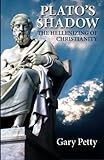
After reading it on the plane flight back home, I was impressed with how well it was written and its relevance for true, biblical, doctrinal understanding—especially for the increasing number of people who are becoming disgruntled with the weakened state of traditional Christianity, and for those involved in the recent trend of Christians seeking to rediscover what is often referred to as “the Jewish roots” or “Hebrew roots” of Christianity that characterized the teachings and practices of the first century Church.
Interestingly, while reading the book on my return flight, I overheard a conversation between two women in the row behind me discussing that very topic. One lady from Central Oregon was telling the lady next to her how much learning about the Jewish roots of Christianity has enriched her understanding of the truths of the Bible.
Plato’s Shadow begins with a brief introduction, which concludes with Gary’s explanation of his purpose for writing the book:
“This book is an attempt to discover elements of what is commonly called Primitive Christianity. In it we will explore a brief overview of the Jewish and Roman world of the early Christians and what the earliest followers of Jesus believed about the afterlife, the Ten Commandments, the Passover, baptism and idolatry. We will explore Christianity’s Jewish roots and the manner in which early Christian groups became influenced by Greek philosophy. The story is…important to examine if we are to understand the future of Christianity. It is important for anyone who desires to be a true disciple of Jesus Christ” (page 3).
A summary of the content on the back cover begins by asking, “If Jesus’ apostles walked the earth today, would they recognize Christianity?”
Continuing with the summary:
“Plato’s Shadow looks at some foundational teachings of the earliest Christians, exploring how Greek and Roman society later shaped their message. The early church used the Old Testament as Scripture and believed in Jesus as the prophesied Messiah. It also taught that baptism and laying on of hands are necessary for converts. Early Christians shunned the use of any images in their worship, observing the Ten Commandments as the foundation of Christian conduct.“The forces of Gnosticism and Hellenistic society reshaped these teachings. As a result, some of today’s most cherished Christian teachings are remarkably different from what the early church taught.
“Today, millions of Christians are searching for a deeper understanding of God’s purpose in their lives. The answers can be found in the teachings and customs of the earliest followers of Jesus Christ. Discover for yourself the importance of ‘primitive Christianity’ through Plato’s shadow.”
Chapter headings:
1. A Jewish Sect in the Outpost of an Empire2. The God of Abraham, Isaac and Jacob
3. Pythagoras, Plato, Philo and Philosophy
4. The Legacy of Romulus and Remus
5. A Rabbi Named Jesus
6. The Jewish Messiah
7. Growth of the Jesus Sect
8. Simon, Samaritans and Syncretism
9. Turning the World Upside Down
10. The Wisdom of the World
11. A Deranged Emperor and the Destruction of the Jewish Temple
12. Why Become a Christian?
13. Persecution, Forgeries and Gnostics
14. The Eighth Day and Quartodecimans
15. Hellenized Orthodoxy
16. Hellenized Christianity Triumphant
As the back cover of the book mentions: Gary Petty “is a regular contributor to The Good News magazine and a host of the Beyond Today television program.”
Because the target audience is the general public, the book is written with an approach and terminology that will resonate well. It is an easy read, even for those who are not familiar with New Testament Church history or technical theological terms.
I highly recommend the book for those seeking a more accurate view of Christianity.
Plato’s Shadow (published in 2013 by Little Frog Publishing, ISBN #9780615917139) is available in softcover, 204 pages, footnoted with reference sources and abundant scriptural references, and can be purchased from Amazon.com .


 Posts


