Showing posts with label Bolivia. Show all posts

Monday, November 2, 2015

Weekend Box Office: Burnt, Our Brand is Crisis, Room

Here is an interesting article from http://www.debbieschlussel.com/ reviewing some of the movies that came out over the past weekend. This follows this post about some of the movies from last week and THIS POST about some movies that have been released over the past few years that you might have missed! This all follows this post about guidelines to choosing good movies to watch yourself!


Weekend Box Office: Burnt, Our Brand is Crisis, Room

By Debbie Schlussel

burntourbrandiscrisis

room
I would not spend ten bucks-plus and two hours of my life on any of the new releases in theaters today. Here’s why:
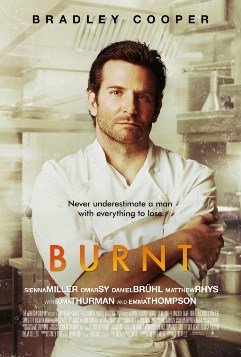
* “Burnt” – Rated R: I (and probably you, too) have seen what seems like a zillion addict-redeems-himself-and-makes-a-comeback movies. This is the latest, and definitely not the best. It’s not the worst, either. But it seems like I’ve seen what’s in this over and over again. The guy has a relapse. He blows it all and hurts his friends and lovers, but then he doesn’t really blow it all and gets back on the wagon. And so on. Check, check check. It’s all in this movie. (A protagonist for whom we root to overcome his addiction and make that comeback . . . well, not exactly, as the lead character here isn’t all that likable.)
I’ve also seen plenty of chef and cuisine movies, and this also isn’t the best of those, either. But, again, not the worst. It’s somewhat entertaining in that respect. I’d have to say that my favorite recent chef/food movie is last year’s “Chef” (read my review), which is far superior to this and a much better chef comeback movie on all levels. It’s funnier, heartier, relaxing, and much more pleasant to watch.
This stressed me out a little. I have no use for melodramas that are overly melodramatic just to hit me over the head over and over again with it, and for no legitimate reason. This did that. We’re treated over and over again to chef Bradley Cooper’s in-kitchen tantrums and scream-fests. It seems like he’s channeling a real-life chef who gets off on this overdone ranting, Gordon Ramsay. But that act has been worn out by Ramsay and is unwanted noise here. The guy is screaming just to scream (as Ramsay does), and it’s unnecessary.
The story: Cooper plays a world-class gourmet chef who was on top of the world at a fancy French restaurant. But he was a drug addict whose addiction ended his career and ruined everything, but not until after he’d earned two highly-coveted Michelin stars for the restaurant he helmed. After rehab, Cooper is working in a self-imposed penance of shucking a million clams at a dive restaurant. Once he’s reached the magic number, he sets out on his comeback, this time in London. Cooper convinces his former maître d’ (Daniel Brühl), the man he believes to be the best in the biz (and who also happens to be the son of a fatally ill, wealthy hotel owner), to open a new restaurant bearing Cooper’s name. Through dirty tricks, some groveling and even posting bail, he also gets the top restaurant staff with whom he used to work.
Cooper’s cooking style is considered “old-fashioned” because it’s five years old (who knew the styles of haute cuisine change that quickly?). But he’s striving to beat a rival to getting that rare, third Michelin star rating for the new restaurant. While he does that, he must overcome competition, resistance and revenge from his staff, and his own ego (something he doesn’t overcome even once in this movie).
The thing is, pretty much every other character in this movie is infinitely more likable than Cooper’s. They are all people for whom we feel sympathy and commiseration. For instance, the always excellent Brühl’s maître d’ character is the most likable (and the most taken advantage of by Cooper). Sienna Miller as a semi-romantic partner and sous chef is also a sympathetic character, but Cooper has no empathy for her, and yet, she makes out with the jerk and stands by him. Why (other than that a lot of women like jerks)? And, so, as I mentioned before, there is no desire on the audience’s part (or shouldn’t be) to hope for Cooper’s comeback. He’s just an egomaniacal jerk and bully. And his story is nothing new. This movie is being mentioned as an Oscar vehicle for Cooper. Not in my book.
As I noted, this movie is somewhat entertaining, but overly melodramatic for a movie about a chef. It’s just food. Not brain surgery or rocket science or winning World War II. Not even close. The best thing about this movie is that the ending is ambiguous and sudden–and I generally like that in a movie. If only the rest of the movie matched this master stroke.
By the way, with all of the scenes of food, sauces, cooking, tasting, and eating in this, if you do go to see it, don’t go on an empty stomach.
ONE REAGAN
reagancowboy
Watch the trailer . . .

* “Our Brand is Crisis” – Rated R: I really liked the first 85% of this movie, and was getting ready to write a great review, but then, as often happens, this flick let me down and turned into a bait-and-switch, far-left, anti-American sh-t-show. If you like politics and campaigns and their funny, clever, dirty tricks, then you, too, will like the first 85% of this movie. I thought this was going to be about how political advisers and their machinations can turn a campaign around, and for most of it, that’s what this was. In the end, though, this movie turns out to be about how the “evil” American gringos help prop up capitalist elites in poor countries and betray and rip off the poor, indigenous peoples. You know, the usual Hollywood hate-America narrative. Even worse, they don’t even tell or show you that the evil American gringos who did this were . . . liberal Democrats, including Clintonista James Carville. In this movie, they reverse the true story and make the Carville character into the adviser of the “honest man of the people.” And the fact that this is produced by lefty liar George Clooney has everything to do with that.
This movie is very loosely based on the 2005 documentary of the same name (it’s an annoying trend–documentaries remade as fiction movies), which followed American political consultants James Carville, Stan Greenberg, and Bob Shrum–all of them liberal Democrats–as they advised the campaign of “conservative,” wealthy, American-born Gonzalo Sánchez de Lozada and helped him win the 2002 Bolivian Presidential election over uber-Marxist America-hater Evo Morales. The left-wing documentary makers tried to sell their movie as an anti-Bush movie, pimping the absurd notion that Carville et al sold Sanchez de Lozada as an extension of America selling the world on the war in Iraq. Huh?
In this movie, Sandra Bullock plays a character that is essentially the composite of Carville and his minions. Her role was originally a male character. A bald Billy Bob Thornton is the Carville-esque adviser to the Evo Morales-esque candidate, who in this movie is an honest, likable man of the people, and not at all shown to be the evil, America-hating Commu-Nazi that Morales actually is.
Most of the movie is fun and enjoyable, as the film depicts the various dirty tricks and zingers traded back and forth between political operatives and their candidates–the same kind of stuff that goes on in the U.S. in election campaigns. And the Wile E. Coyote/Roadrunner frenemy relationship between Bullock’s and Thornton’s characters is amusing and entertaining.
But then it veers into “evil America,” “Down wit’ da Latin America-hating struggle” territory. **** SPOILER ALERT ****: After Bullock’s candidate wins the election, a young peasant who has been helping the campaign gets disillusioned. He sees that their candidate, who is now President, was a liar–that he told Bolivian peasants and farmers that he would not bring in the IMF to interject itself into the Bolivian economy; but now he’s done exactly that as his first act of office, saying the peasants are too dumb to understand why it needs to be done, so they needed to be lied to. Apparently, in Hollywood’s view, this is the first politician on earth to lie. Amazing. Who knew they lied?
When confronted with this, at first Bullock tells the young campaign worker that her job is not about morality or truth-telling. She was hired to win a campaign, and the world moves on. But, then, she decides this is wrong, quits her job, and joins the anti-capitalist Occupy Bolivia protesters in the street (no, they don’t call themselves “Occupy Bolivia,” but same difference here). And after that, she founds the “Latin America Solidarity Network” to fight this horrible American capitalist “conservative” gringo liar she’s just helped elect. Yup, now she’s down wit’ da struggle. Viva La Hollywood!
In case you were wondering, the title of the movie is taken from the campaign strategy Bullock employs for her candidate (and which Carville et al employed for theirs) in order to win the election. The thinking is that, when your candidate has previously held office and is older, wealthier, and thought of as the establishment guy versus an upstart, younger, revolutionary candidate, your candidate’s brand must be “Crisis.” The only way to win the election is to paint the country as in a crisis–economic, national security, or whatever–and your candidate as the only one with the experience and toughness to get the country through it. Otherwise, the thinking goes, the electorate will pick the younger, newer, more revolutionary guy. By the way, my brand is American patriotism. And if you don’t like America, maybe you should take your movie and shove it you know where.
If this review were based on the first 85% of the movie, I’d give it THREE REAGANS or so. Most of the movie was funny, clever, and smart–not to mention, accurate as far as what goes into a winning campaign in contemporary Wesern elections. But since I’m reviewing it based on the whole thing . . . and the fact that Hollywood lied to you and me in marketing it as a campaign comedy (when it’s really more anti-American crap), I have to give it . . .
TWO MARXES PLUS TWO OBAMAS
karlmarxmovies.jpgkarlmarxmovies.jpgplus.jpgobamasmilingsmallerobamasmilingsmaller
Watch the trailer . . .

* “Room” – Rated R: This movie is being raved about (and talked up for the Oscars) by most movie critics because, like them, it is dark, pretentious, and liberal. And unnecessary. America has this growing sick obsession with darkness and tragedy, and it’s a reflection of the growing nihilism of our ever-more areligious, amoral, liberal society in which anything goes and there is no god whose name isn’t Kim, Kanye, Kylie or Caitlin. Anything goes now, and we are so bored that we need the ever more dark and macabre to interest us. And so it goes with “Room.”
I note that Emma Donoghue, writer of the best-selling novel from which this movie is taken, insisted that all of the names of the places and items occupying the small space where a kidnap victim and her son live, not be preceded by adjectives, articles, or indefinite articles. So, no “the room” or “the door” or “the rat.” This pretentous author insisted that everything be called, “Room,” “Door,” “Rat,” etc., as if these are proper nouns. Any director interested in making her book into a film, who used adjectives or articles was immediately dismissed. That’s part of the pretentiousness of Donoghue, her book, and, now, this movie: they (she and the filmmakers) think they are much more important and magically insightful than they actually are. Instead, this is a tawdry, cheap tabloid story pretending to have some great message or contribution. It has neither.
The story is one you and I have seen in the headlines a few times already, and there was no point in fictionalizing it into a movie. It only adds to what I’ve coined the “Kidnapped Like a Kardashian” culture (or is that, “Kulture”?), in which kidnap victims, once freed, don’t go quietly into that sweet night and live their lives. Instead, they become instant celebrities, with Elizabeth Smart gracing the People mag cover several times and going on high-paid speaking engagements. Jaycee Dugard, not content with the $20 mill she got in a settlement with the State of California, sells products online bearing her name. They’ve branded themselves in a burgeoning industry of kidnaphood. “I’ve been kidnapped and raped. Now, buy my stuff!”
In this movie, the first half shows us a young woman (Brie Larson) and her five-year-old son in a room. Oops, I mean, “in Room” It turns out the room–Room!–is a shed in the backyard of the woman’s kidnapper. The woman is a 24-year-old (or so) who was kidnapped in her neighborhood at the age of 17, when a child molester neighbor tricks her into helping him with his non-existent “sick dog.” The man has held her captive for seven years in the shed, and she has the five-year-old as a product of the nightly rapes she must endure. The son watches the rapes through the slats in a wardrobe where he is hidden.
Desperate to get out and realizing her son is now old enough, the woman comes up with a plan to escape and enlists her son, in the plot. He doesn’t know anything but the room–Room!–and must be convinced that there is a real world out there beyond “Room.” Since trailers for this movie show it, I’m not giving anything away by saying that they do escape.
Once mother and son get out, then the melodrama multiplies geometrically. And it’s not realistic or accurate. In contrast to most real-life kidnapees, the woman is not ecstatic to be free. Her parents are now divorced, with her father living in another city. Her father refuses to acknowledge the son that is the product of rape. I doubt that would ever happen in real life (unless the father were Muslim–in which case, Hollywood would whitewash that and make the guy the most loving rape-victim dad ever!). The woman is depressed, negative, sullen, and constantly moping, stewing, and yelling at everyone. She blames her mother for being kidnapped and losing years of her life, telling her that “it’s your fault because you told me to be nice to everyone.” But since I was a little kid, parents haven’t told their kids to be nice to everyone. The exact opposite, in fact. “Don’t talk to strangers” is a mantra which is decades old and something most parents in America have taught their kids since at least the ’70s. Ditto for “stranger danger!”
Also not real: the woman does a TV interview for money and the news anchor who interviewers her, blames her for having her son and raising him in captivity. Puh-leeze. No media personalities are ever the least bit challenging or accusatory when they interview kidnap victims (not that I’m saying that they should be, but someone needs to ask about the endless, overboard branding of female kidnap victims). On the contrary, they go overboard in the other direction. They fawn over the kidnapees, gushing over them effusively, and wrongly calling them “heroic” and “courageous,” when they are simply very unfortunate victims who managed to survive. I mean, has anyone missed Diane Sawyer and others fawning over Elizabeth Smart and Jaycee Dugard, and Robin Roberts slobbering over the captives of Ariel Castro in Cleveland (and each of their unnecessary books)?
The ending features an unnecessary revisit to the scene of their captivity (which also is without the “Inside Edition” cameras you know would be there in real life, for yet another paid interview). And the mother takes her son there. That’s hardly motherly, nor “closure.” And if it is, that’s pathetic and says a lot about American victimhood.
The only parts of this movie that interested me were the moments of hope and nail-biting suspense, when the escape attempts (and success) happen. That was the only part of the movie that resembles more traditional and less tawdry and dark kidnap rescue movies–the type liberal movie critics pan (because they aren’t dark and negative enough and the victims are rescued and happy about it). Other than that, the one highlight of the movie is nine-year-old actor Jacob Tremblay as Jack, the five-year-old son and the product of the rape. He’s a great actor and very cute. But Tremblay, who was seven or eight when this movie was shot, shouldn’t have been exposed to the subject of rape and the material in this movie. His mother is the Teri Shields of this generation, and she should be arrested for child abuse. She took away her son’s childhood all for money, not via the force of a kidnapping child molester.
The movie ends on an ever so tentative, ever so slight positive or redemptive note. But it’s not enough to justify this cheap, dark exercise in the unnecessary.
TWO MARXES
karlmarxmovies.jpgkarlmarxmovies.jpg
Watch the trailer . . .

Tuesday, May 8, 2012

Venezuelan dictator’s health casts doubts on upcoming election

A very interesting post from http://babalublog.com/ about Hugo Chavez and Venezuela. This follows this post about Russia rebuilding its Soviet shere of influence. This follows this article about American energy independence and preventing money from going to hostile countries such as Iran and Venezuela. For more that you can do to get involved click HERE and read this very interesting book HERE!

Venezuelan dictator’s health casts doubts on upcoming election


By Alberto de la Cruz,
With the health of Venezuelan dictator Hugo Chavez apparently worsening, serious doubts regarding the upcoming elections in that country, which were already dubious, are beginning to emerge.


Anna Pelegri with AFP:


Chavez reelection bid in doubt


President Hugo Chavez's repeated trips to Cuba for cancer treatment and the government's silence about his health are fueling rumors that he will name a successor to run in October presidential elections.


So far, the government has fiercely maintained that there is no alternative to Chavez, who still leads in the polls. But several names have begun to circulate among observers to take the helm should Chavez delegate his powers.


Foreign Minister Nicolas Maduro, Vice President Elias Jaua and National Assembly President Diosdado Cabello are considered potential candidates. They are already cited in polls, triggering speculation over the ramifications of a possible succession battle.


Any departure of Chavez from the national stage would have profound consequences in Venezuela, where he has governed since 1999. It would also have a huge impact across Latin America, especially in leftist ally nations which have been showered with his country's oil wealth.


Jaua will soon be named president of the Council of State, an advisory body whose creation this week is seen by some analysts as the first step toward a potential political transition since Chavez experienced a relapse of the cancer first detected in June 2011.


"With the lack of information, all scenarios are possible, including Chavez's absence and the naming of a successor" for the October 7 vote, said Datanalisis polling firm president Luis Vicente Leon.

Friday, July 8, 2011

From Cuba to China, People Worry About Demise Of Venezuela’s Chavez

A very interesting post from http://bigpeace.com/ about Hugo Chavez. This follows this previous post about him consolidating his power.This follows this article about the recent news about the former ban on offshore drilling which would encourage American energy independence and prevent money from going to hostile countries such as Iran   and Venezuela. For more that you can do to get involved click HERE and read this very interesting book HERE!

From Cuba to China, People Worry About Demise Of Venezuela’s Chavez


When Venezuelan president Hugo Chavez, in Cuba for an operation, gave a pre-recorded TV address on Thursday evening to announce that he had cancer, said that he was fine, and that he was still running the country as a long-distance president. In a phone call on Friday, he was so optimistic that he said that his illness would “strengthen” him, according to Bloomberg.


Hugo Chavez on TV on Thursday


Chavez didn’t say what kind of cancer he had, or at what stage, but doctors consulted by the Miami Herald agree that from the few details Chávez shared, he most likely has colon cancer and could face treatment for the next eight to nine months.


“What struck me is that at one point during his announcement, he misspoke and said ‘evolution’ instead of ‘evaluation.’ He corrected himself, but it was odd that in a video that was so staged — complete with props of the Venezuelan flag and a painting of Simon Bolivar — they did not do a retake,” said Douglas Leon, president of the Venezuelan Medical Federation. “What does that say? To me, it says he can only stand up for about 20 minutes, and they couldn’t let him stand for the time it would take to do it over.”


The shock announcement has put Venezuelan politics into turmoil as the 2012 presidential election approaches. If and when Chavez returns to Venezuela, the country will be in considerably worse shape than it was when he left it, according to Financial Times (Access). With Chavez convalescing, there are serious problems that are likely to fall by the wayside — a housing shortage, violence in overcrowded prisons, and electrical blackouts across the country.


Venezuela’s politics is largely dependent on Chavez’s personality and personal relationships, and those relationships will suffer if Chavez is forced to leave office.


China, for example, signed a huge oil deal with Venezuela in 2009, according to the BBC.


But the greatest effect of the disappearance of Chavez, if it occurs, would be on Cuba itself. When Chavez came to power in 1999, Cuba’s economy was in tatters, after losing the East bloc support it depended on for three decades, according to AFP.


Cuba’s cooperation with Venezuela generations about $6 billion a year for Cuba, its top source of income. Venezuela is invovled in Cuban projects big and small, in oil, fiber optic cable, food supplies, technology, transportation and tourism.


Venezuela provides 100,000 barrles of oil per day to Cuba, for little or no cost, and in return, Cuba sends almost 40,000 teachers and doctors to Venezuela – who don’t always get paid.


Leading the struggle for socialism

The relationship between Venezuela and Cuba is not seen by Chavez as a purely commercial one. Chavez sees himself in the role of defeating capitalism and bringing back socialism, after the breakup of the Soviet Union. According to VenezuelAnalysis:


“The most advanced political struggles in the world today are taking place in Latin America, specifically in Cuba and Venezuela where forces representing the working class have conquered state power, broken with imperialism and continue to consolidate their own revolutions and assist the leftward advance across the continent.


Socialists should wholly identify with the leadership of the Cuban revolution, with Fidel Castro in particular, and with Hugo Chávez in Venezuela which are leaderships that seek to represent the interests of the working class and oppressed worldwide.


First upturn in world politics for 30 years


The advance of the class struggle in Latin America over the past decade was the first indication of an up-turn in the world political situation after the 1990s period of retreat following the destruction of the Soviet Union, the advance of capitalism into Eastern Europe and in Latin America including the defeat of the Nicaraguan revolution.”


I always feel that statements like these are really pathetic because, putting on my mathematician’s hat, it’s easy to prove from the mathematics of complexity theory that socialism becomes mathematically impossible as population increases. You can prove that enforcement of socialist policies eventually requires the entire population to become bureaucrats, so that there is no new production. That’s why countries like Cuba and North Korea, and Eastern Europe before the collapse of the Soviet Union, were stuck in the 1950s. It’s literally mathematically impossible for socialism to work.


That’s also why China gave up pure socialism several decades ago. It’s also why Cuba itself is changing policies and will permit the buying and selling of homes and automobiles as personal property before the end of 2011, according to Ahora (Cuba).


But Chavez isn’t being defeated by the mathematics of complexity theory. Chavez is being defeated by cancer, the great leveler of socialists and capitalists alike. Unless the Cubans find a way to completely cure him, Chavez’s dream of leading the world into a new, glorious era of socialism is not going to occur.

Friday, June 17, 2011

Hugo Chavez's New Power Grab

A very interesting post from www.americanthinker.com about Venezuela's Hugo Chavez consolidating his power. This follows this post about China's inroads into Iran and the rest of the Middle East. This follows this article about the recent news about the former ban on offshore drilling which would encourage American energy independence and prevent money from going to hostile countries such as Iran   and Venezuela. For more that you can do to get involved click HERE and read this very interesting book HERE!

Hugo Chavez's New Power Grab

Like the canary in a mine shaft who dies at the first sign of toxic gasses, journalists are often the first creatures to suffer when a totalitarian dictator is ascending to power. There are few developed nations in the world that show the methodical approach to smothering free speech, but Venezuela's "great leader" is demonstrating the process in our very own hemisphere. Since other leftist heads of state are watching with dreamy eyes, it might be a good preventative measure if we all start paying attention to his techniques.


Signaling darker days ahead for that county's free press, Venezuela fell from 124th to 133rd out of 178 countries in the 2010 version of the Press Freedom Index (http://www.rsf.org/ ). In 2008, they were ranked in 113th place and they held 77th place as recently as in 2002. That was early in the Chávez reign, but he has grown with the job. To prevent any misunderstanding, I should clarify the Press Freedom Index ranking system: Just like a golf score, the higher number is normally considered bad for elected leaders . . . but they work pretty well for dictators fostering a climate of fear among their people.


And "fearful" is an accurate description of conditions in Venezuela after their government announced last week that they have used taxpayer funds to purchase a 20 per cent ownership stake in Globovisión and are on their way to gaining even more control. Reporters Without Borders calls Globovisión the only remaining over-the-air TV channel in Venezuela still critical of President Hugo Chávez. The network has long been under attack since showing support for the losing side during an April 2002 coup attempt against Chávez. Just last July, Diosdado Cabello, head of the Venezuelan Communications Authority (Conatel), said the state was planning to obtain "administration" of 50% of the channel's license, after one of the Globovisión franchise holders died.


Adding to the grave concerns of Venezuelan journalists and international observers, the Venezuelan National Assembly granted another "enabling law" (this one for 18 months) to President Chávez. The extraordinary powers, normally reserved for emergency conditions, will allow him to bypass the legislative process and rule by absolute decree. Not letting a good crisis go to waste, the declared "urgency" this time around comes after several days of rain brought heavy flooding, 35 dead, and more than 100,000 homeless.


"There's no time to lose, not a second," he said in a speech broadcast on state-controlled media.


The last time Chávez ruled by "enabling law," he used his unchecked power to seize control of privately run oil fields, impose new taxes and nationalize telecommunications, electricity and cement companies.


His political opponents see this move as a grab for power before his party's super-majority erodes in the National Assembly in early January. Julio Borges, head of the opposition party, noted that President Chávez will no longer have the ability to gain enabling law when the new legislators are sworn into office; but the new law enables Chávez to rule without input from the National Assembly.


"The President is desperate to pass socialist laws and boost control over the media and internet," Borges said in an email statement. "He says he's giving more power to the people, but he's really exerting more power over the people."


Several news sources report that Chávez did not specify what decrees he was considering but said they would cover rural and urban land, plus (and most ominously) the constitution. Adding to the climate of fear, he is using a familiar tactic: He is waiting until people are distracted by Christmas holiday festivities to announce his next moves.


"There are a series of laws that I want to decree on the 22nd, 23rd, 24th and 25th of December right in the middle of Christmas . . . and the New Year," he told Reuters. And so he did.


Among other items on the agenda of Chávez and the National Assembly is a proposal to regulate internet service providers and electronic media, according to the Knight Center for Journalism in the Americas. The law would create a single point of internet access in Venezuela and would also give their government complete control of all internet content by levying heavy fines to punish any internet service provider allowing "prohibited" messages.


Several media and citizen groups have warned that the bill threatens freedom of expression and is an attempt by the government to police text messages, social networks, and email, the website reports. His critics say that President Chávez is looking to implement "censorship mechanisms" by developing "new legal tools" to silence any media organizations that are critical of his administration. (http://knightcenter.utexas.edu/ )


The tragic lesson to learn from all of the emergency measures being taken by Chávez is that he is showing the entire world exactly how any power-hungry leader can achieve totalitarian control. There are countless other nations which have observed this process in a more personal way, but only a few of them were ever this similar (in terms of economic and social development) to the United States.


While North Korea and Cuba are already hopelessly isolated from any outside opinion or wisdom, and numerous African nations suffer these dark forces with little Western attention, the insulated observer might feel that such control would be unobtainable in a nation as developed as was Venezuela before Chávez came to power. Their economy is now rated 172 out of 183 by the World Bank (www.doingbusiness.org/rankings )


Because the freedom-loving segments of Venezuela's population continue to speak out, anybody not otherwise distracted can now have a front-row seat to the unfolding cautionary tale of how dictators seize power and destroy lives during an era of expanding communication technology. Revisiting the advice of Shakespeare's Dick the butcher, Chávez is teaching the world that killing all the lawyers before beginning a reign of terror is not nearly as effective as suppressing all the journalists.

Thursday, March 18, 2010

Oil Companies Aren’t Evil–Except PEMEX

This is an interesting article from www.VDare.com about some of the wealth of Mexico.This on the heels of this post which shows a foreign nation which Barack Obama condemns. Another issue is Barack Obama's failure to dry up money rogue states by allowinng domestic offshore oil drilling instead of sending oil revenues to nations like Iran and Venezuela and everybody concerned about anti-Americanism should support this. For more posts like this click here.


Oil Companies Aren’t Evil–Except PEMEX
[James Fulford]
Thomas Sowell has an article saying that oil companies aren’t necessarily evil, in which he says, among other comments:
“Now that oil prices have dropped big time, does that mean that oil companies have lost their ‘greed’? Or could it all be supply and demand – a cause and effect explanation that seems to be harder for some people to understand than emotions like ‘greed’?”The “Greed” Fallacy,
But Mark In Mexico has a post about one company that doesn’t really underestand supply and demand–the only oil company in North America that may be running out of oil: PEMEX.He writes that
Pemex was formed after 1938 when President Lázaro Cárdenas nationalized Mexico’s oil industry. When a government nationalizes its oil industry, that means that the government steps in and confiscates all of the equipment, drills, pumps, buildings, refineries, vehicles, ships, airplanes, offices, records, bank accounts etc. of the private companies to which that same government had previously sold leases and other rights.In other words, the government sells licenses to various foreign investors to attract them to invest billions of dollars, then steps in and steals it all. In almost all cases, the government blames the foreign companies, and often the foreign governments, for “robbing” the people’s energy inheritance. Except, of course, when a US company is involved, in which case the local government always blames the US government.And, frequently, America gets blamed even when there are no US companies involved at all.
In Bolivia, the Bolivian Gas War was brought on by a minority group’s charge that the United States was absconding with the Bolivian people’s natural gas inheritnce. But the companies that had extraction rights are all European companies. If an American energy company wanted Bolivian gas, it had to buy that gas from and pay market prices to a European energy company that was extracting that gas. Oh well.The problem is, in essence, that while the corrupt governments, and corrupt governments, that control the company are greedy, the company itself, as a government-run monopoly, isn’t greedy.
So the Mexican government and a whole slew of Mexican governments since 1938 have had control of the Mexican oil industry through a government controlled company called Pemex. You know how that had to go. Badly. And it has.These governments have, year after year and decade after decade, used Pemex as a private funding source. It is estimated that Pemex loses a cool billion dollars a year just to internal corruption.All of that corruption has little to do with oil extraction or oil availability or oil reserves. What it does do however, is cause gasoline at Pemex gas stations — the only ones allowed here — to cost the Mexican consumer about $1.00 per gallon more than that same oil costs once it is shipped to the United States. At an Exxon station in Laredo, Texas, you pay $1 per gallon less for gasoline than you do at a Pemex station just a couple of miles to the south. And that’s for gasoline produced from oil from the same Mexican well.What that corruption also does is bleed money away from Pemex that should have been reinvested in the company. That loss, along with the Mexican government’s skimming off 60% of all Pemex revenue to pay for all the sub-standard public services that the bloated Mexican constitution guarantees to the Mexican citizens, leaves no money for exploration or drilling for new sources or the technology development necessary to tap those new sources nor even enough to maintain its existing facilities.
I’ve noted that earlier that Mexico has a public holiday celebrating
the biggest armed robbery of the twentieth century. It left all the oil in Mexico in the hands of corrupt Mexican governments, who couldn’t even get most of it out of the ground; a lot of it is just sitting there, because they won’t allow foreigners to touch it.
See Businessweek’s article Pemex: Still in the Dark Ages, for a discussion of how Mexico doesn’t want to have Americans exploit Mexicans by drilling wells, which means fewer jobs for Mexicans, who go north illegally and exploit Americans.

VDARE.com: Blog Articles — proudly powered by WordPressThe articles on VDARE.com are brought to you by the VDare Foundation.We are supported by generous donations from our readers. Contributions are tax deductible and appreciated. Contribute