Showing posts with label Sochi. Show all posts

Friday, February 21, 2014

The Blues and the Greens: A Historic Sports Rivalry!!!

A timely post about from  http://isteve.blogspot.com about Ukraine and the Olympics. This follows this post about the Senate race in Texas. In the meantime, you can get more involved if you like here and read an interesting book HERE.


The Blues and the Greens
The carnage in Kiev is vaguely reminiscent of the great riots of 532 AD in Constantinople that began at the chariot races when the rival fan clubs, the brawling followers of the Blue and Green racing teams, joined forces and turned on Emperor Justinian the Great. It is perhaps trivializing of the issues at stake in Kiev to point out this connection with Constantinople (which, by the way, converted the Kievan Rus to to Orthodoxy in 969), but this famous story is worth recalling in its own right.

For some reason, this tale is peculiarly appealing to science fiction authors. (The influence of Edward Gibbon's The Decline and Fall of the Roman Empire on sci-fi writers would be an interesting topic: e.g., Isaac Asimov's Foundation series is obviously inspired by Gibbon.)

For most of the 20th Century, historians assumed that the Blues and the Greens of Byzantine Constantinople weren't really just sports fans, but represented the upper class versus the lower class or the religiously orthodox versus the heretical or some neighborhoods versus some other neighborhoods. After all, nobody would get that worked up over sports, would they?

But in the 1970s, historian Alan Cameron, referencing the soccer hooligans of his own day, argued that we shouldn't overlook how important sports were in the Byzantine Empire to young men: "The truth is (of course) that Blues hated the Greens, not because they were lower-class or heretics -- but simply because they were Greens."

But that raises the question of whether sports rivalries can be uncorrelated with other subdivisions of society. Generally, sports rivalries in the modern world correlate with all sorts of demographic traits because they are territorial: teams have their home fields, which tend to attract local fans.

However, the home turf of both the Greens and the Blues was the vast hippodrome in downtown Constantinople.

A vague modern analog might be the NBA's Los Angeles Lakers and Clippers, who have both played in the Staples Center in downtown Los Angeles for the last 15 years.

Traditionally, the Lakers are more successful and more popular, especially with movie stars, but it's not particularly clear that fans of the Lakers or Clippers represent different neighborhoods or classes or ethnicities. The Lakers tend to appeal to Angelenos who like winners and don't mind spending money to associate themselves with winners (i.e., most of them) , while I presume the Clippers appeal to the budget-conscious (the Clippers charge about half as much as the Lakers for the same seat) and those who like underdogs. A marketing plan for the Clips speculates:
The Clippers' current fan base is of a low income bracket, probably young and from out of town, doesn not want to be seen as a bandwagoner, prefers to avoid the mainstream teams and is hoping the Clippers will write a Cinderella story.

On the other hand, the Lakers v. Clippers rivalry is low intensity by the standards of Chicago Cubs v. Chicago White Sox, much less Rangers v. Celtic in Glasgow. One reason for this is the lack of success of the Clippers hasn't generated much loyalty toward them.

Another is that Southern California hasn't been conducive to local sports animosities -- only USC v. UCLA in football generates much heat. Los Angeles Dodger baseball fans, for instance, often root for the Anaheim Angels if they are winning and vaguely wish them well when they aren't. In general, as James Q. Wilson noted after moving from L.A. to Boston in the 1940s to attend Harvard, Angelenos don't have turf, they have cars.

Finally, since enthusiasm (such as it is) for the Clippers has been distributed less regionally or ethnically than psychologically, with the Clippers appealing to random frugal eccentrics, there's not much this rivalry does to tap into human territoriality.

On the other hand, it's hard for me to fathom how the Blues and Greens couldn't come to be correlated with other factors such as class or neighborhood.

Gibbon wrote:
Constantinople adopted the follies, though not the virtues, of ancient Rome; and the same factions which had agitated the circus, raged with redoubled fury in the hippodrome. ...


Insolent with royal favor, the blues affected to strike terror by a peculiar and Barbaric dress, the long hair of the Huns, their close sleeves and ample garments, a lofty step, and a sonorous voice. In the day they concealed their two-edged poniards, but in the night they boldly assembled in arms, and in numerous bands, prepared for every act of violence and rapine. Their adversaries of the green faction, or even inoffensive citizens, were stripped and often murdered by these nocturnal robbers ... 

The first edict of Justinian, which was often repeated, and sometimes executed, announced his firm resolution to support the innocent, and to chastise the guilty, of every denomination and colour. Yet the balance of justice was still inclined in favour of the blue faction, by the secret affection, the habits, and the fears of the emperor; his equity, after an apparent struggle, submitted, without reluctance, to the implacable passions of Theodora, and the empress never forgot, or forgave, the injuries of the comedian. ...

As a poor child, the family of the future Empress Theodora was scorned by the Greens but treated well by the Blues.
Sedition of Constantinople, surnamed Nika, A.D. 532, January.  
A sedition, which almost laid Constantinople in ashes, was excited by the mutual hatred and momentary reconciliation of the two factions. In the fifth year of his reign, Justinian celebrated the festival of the ides of January; the games were incessantly disturbed by the clamorous discontent of the greens:... 
At this dangerous moment, seven notorious assassins of both factions, who had been condemned by the praefect, were carried round the city, and afterwards transported to the place of execution in the suburb of Pera. Four were immediately beheaded; a fifth was hanged: but when the same punishment was inflicted on the remaining two, the rope broke, they fell alive to the ground, the populace applauded their escape... (51) 
As one of these criminals was of the blue, and the other of the green livery, the two factions were equally provoked by the cruelty of their oppressor, or the ingratitude of their patron; and a short truce was concluded till they had delivered their prisoners and satisfied their revenge. The palace of the praefect, who withstood the seditious torrent, was instantly burnt, his officers and guards were massacred, the prisons were forced open, and freedom was restored to those who could only use it for the public destruction. A military force, which had been despatched to the aid of the civil magistrate, was fiercely encountered by an armed multitude, whose numbers and boldness continually increased ... The conflagration involved the cathedral of St. Sophia ...

Thus was destroyed the predecessor of the great St. Sophia cathedral that was built five years later in 537 AD.
 From such scenes of horror and distress, the wise and wealthy citizens escaped over the Bosphorus to the Asiatic side; and during five days Constantinople was abandoned to the factions, whose watchword, NIKA, vanquish! has given a name to this memorable sedition. (52) 
... They agreed to censure the corrupt management of justice and the finance; and the two responsible ministers, the artful Tribonian, and the rapacious John of Cappadocia, were loudly arraigned as the authors of the public misery. The peaceful murmurs of the people would have been disregarded: they were heard with respect when the city was in flames; the quaestor, and the praefect, were instantly removed, and their offices were filled by two senators of blameless integrity. After this popular concession, Justinian proceeded to the hippodrome to confess his own errors, and to accept the repentance of his grateful subjects; but they distrusted his assurances, though solemnly pronounced in the presence of the holy Gospels; and the emperor, alarmed by their distrust, retreated with precipitation to the strong fortress of the palace. The obstinacy of the tumult was now imputed to a secret and ambitious conspiracy, and a suspicion was entertained, that the insurgents, more especially the green faction, had been supplied with arms and money by Hypatius and Pompey, two patricians, who could neither forget with honor, nor remember with safety, that they were the nephews of the emperor Anastasius. 
... If the usurper [Hypatius], who afterwards pleaded the merit of his delay, had complied with the advice of his senate, and urged the fury of the multitude, their first irresistible effort might have oppressed or expelled his trembling competitor [Justinian]. The Byzantine palace enjoyed a free communication with the sea; vessels lay ready at the garden stairs; and a secret resolution was already formed, to convey the emperor with his family and treasures to a safe retreat, at some distance from the capital. 
Firmness of Theodora.  
Justinian was lost, if the prostitute whom he raised from the theatre had not renounced the timidity, as well as the virtues, of her sex. In the midst of a council, where [General] Belisarius was present, Theodora alone displayed the spirit of a hero; and she alone, without apprehending his future hatred, could save the emperor from the imminent danger, and his unworthy fears. 
"If flight," said the consort of Justinian, "were the only means of safety, yet I should disdain to fly. Death is the condition of our birth; but they who have reigned should never survive the loss of dignity and dominion. I implore Heaven, that I may never be seen, not a day, without my diadem and purple; that I may no longer behold the light, when I cease to be saluted with the name of queen. If you resolve, O Caesar! to fly, you have treasures; behold the sea, you have ships; but tremble lest the desire of life should expose you to wretched exile and ignominious death. For my own part, I adhere to the maxim of antiquity, that the throne is a glorious sepulchre." 
The firmness of a woman restored the courage to deliberate and act, and courage soon discovers the resources of the most desperate situation. It was an easy and a decisive measure to revive the animosity of the factions; the blues were astonished at their own guilt and folly, that a trifling injury should provoke them to conspire with their implacable enemies against a gracious and liberal benefactor; they again proclaimed the majesty of Justinian; and the greens, with their upstart emperor, were left alone in the hippodrome. 
The fidelity of the guards was doubtful; but the military force of Justinian consisted in three thousand veterans, who had been trained to valour and discipline in the Persian and Illyrian wars. Under the command of Belisarius and Mundus, they silently marched in two divisions from the palace, forced their obscure way through narrow passages, expiring flames, and falling edifices, and burst open at the same moment the two opposite gates of the hippodrome. In this narrow space, the disorderly and affrighted crowd was incapable of resisting on either side a firm and regular attack; the blues signalized the fury of their repentance; and it is computed, that above thirty thousand persons were slain in the merciless and promiscuous carnage of the day. 
   

Wednesday, February 19, 2014

What does the Bible say about same-sex marriages?

An interesting article from http://www.ucg.org/ about the bible's stance on homosexuality. This follows this post about U.S. energy problems caused by its foreign policies. For a free magazine subscription or to get the book shown for free click HERE! or call 1-888-886- 8632.


What does the Bible say about same-sex marriages?

How does the Bible define marriage?


Answer: Jesus left no doubt about His mind on the subject of marriage in His statements in Matthew 19:4-6: "Have you not read that He who made them at the beginning ‘made them male and female,' and said, ‘For this reason a man shall leave his father and mother and be joined to his wife, and the two shall become one flesh'? So then, they are no longer two but one flesh. Therefore what God has joined together, let not man separate."
Homosexuality is an explosively controversial subject in our present society, but not a new issue for the Church of God. It confronted the early New Testament Church. Note the following from 1 Corinthians 6:9-10: "Do you not know that the unrighteous and the wrongdoers will not inherit or have any share in the kingdom of God? Do not be deceived (misled); neither the impure and immoral, nor idolaters, nor adulterers, nor those who participate in homosexuality...will inherit or have any share in the kingdom of God" (Amplified Bible).
Based upon the biblical instruction, the United Church of God believes homosexual behavior to be both unnatural and sin (Romans 1:26-27). The Scriptures are plain on the subject.
What of people who practiced homosexuality in the past? Here is what follows the above quote: "And such were some of you. But you were washed, but you were sanctified, but you were justified in the name of the Lord Jesus and by the Spirit of our God" (1 Corinthians 6:11). Members of the Church of God in Corinth were guilty of some or all of the sins listed—including homosexuality—but later converted and turned from their sins. Following the scriptural example, the United Church of God graciously welcomes into our fellowship all people who repent of their sins—any sins. But we neither practice nor recognize same-sex "unions" or marriages.
For more information, please read our booklet Marriage and Family: The Missing Dimension .

Tuesday, February 18, 2014

Energy Costs, the Mideast and Illegals Are Americans' Biggest Concerns

An interesting article from http://www.ucg.org/ about U.S. energy problems caused by its foreign policies. This follows this post about the historical character Simon Magus. For a free magazine subscription or to get the book shown for free click HERE! or call 1-888-886- 8632.


Energy Costs, the Mideast and Illegals Are Americans' Biggest Concerns

Printer-friendly version


A recent poll on NBC's Meet the Press showed Americans are primarily concerned about the price of gas, Iran, illegal immigrants and Iraq. All four concerns are interconnected.

Gasoline has been gradually increasing in price for some months now, reaching almost $3 a gallon by the end of April, an increase of over 50 cents in two months. That's still less than 80 U.S. cents a liter. In the United Kingdom, the same gas was selling for just over one British pound per liter, roughly the equivalent of $2—or two and a half times the American price.
But Americans are more dependent on gas than other nations are. This is because the United States is so spread out. The local grocery store in England is often within walking distance, while in America it is more likely to be miles away. The same goes for the workplace, school, medical facilities and places of entertainment—everything is miles away, an impossible distance to walk or even to cycle. Public transport is very limited and nonexistent in some areas.
Not only are the American people dependent on gas, they are dependent on cheap gas! Any increase in the cost of gas will inevitably have a greater effect on the U.S. economy than a similar increase would have elsewhere. In fact, since World War II a recession has followed every significant increase in the U.S. price of gas.
So it's understandable that the price of gas is the number one concern of most Americans.
What I found particularly interesting in this survey is that all four major concerns are interconnected, but none of the panel on Meet the Press mentioned this. It's as if the price of gas is somehow not connected to events in the real world.
As if to emphasize this, a letter to our local newspaper a few days later said that Washington should simply order suppliers to sell gas at $1 a gallon and then enforce the price! Clearly, not everybody is aware of the law of supply and demand.
Among the causes of the gas price increase are uncertainty over Iran and the continuing war in Iraq, numbers two and four of the primary concerns of the U.S. electorate. What happens in the Mideast largely determines the price of oil. If there are any jitters in and around the Persian Gulf, the price will inevitably go up.
Just as serious weather problems in California can push up the price of strawberries and other fruits, so problems in the Persian Gulf push up the world price of oil. The American president has no control over this. Washington can't suspend the law of supply and demand!
Mideast oil supply at risk
Before the current war in Iraq, Iraq produced 3.5 million barrels of oil a day. Now, it produces only 2 million, creating a 1.5 million barrel per day shortfall. This alone pushed up the world price of oil.
The fear of another conflict in the region, this time with Iran, is enough to send oil futures skyrocketing as buyers look to secure oil for their clients. Also in the Persian Gulf, terrorist attacks by Islamic radicals in Saudi Arabia are on the increase, causing further instability over oil futures.
There's also uncertainty in Nigeria, where local rebels disrupt oil production by frequently kidnapping oil workers. Venezuela, the fourth biggest producer in the world, keeps making anti-American noises, which only add to the uncertainty of supplies from that country. There are also refining problems in the United States, which further erodes supply.
Americans account for less than 5 percent of the world's population, but consume 25 percent of the world's oil. These disparities are unlikely to change in the near future, particularly when you consider that every year the United States adds a few more million people to its population.
Illegal immigration has become an issue recently. Estimates of the number of illegals run as high as 12 million. Whether illegal or not, immigrants are also energy consumers. Moreover, they send home tens of millions of dollars, adding to America's growing trade deficit, a major factor in the current fall in value of the U.S. dollar. This is yet another factor that could add to the price of gas.
It's understandable that people who are suffering economically should want to move to the United States, but it seems that American politicians are unwilling to consider the negative consequences of this massive movement of people.
The spreading urban sprawl is another factor, as people live further and further from their places of work, consuming increasing amounts of fuel in their daily commute.
Problems show a lack of vision
The Bible says "a prudent man foresees evil and hides himself" (Proverbs 22:3). "Hides himself" means that he takes steps to avoid it. Proverbs 27:12 repeats the principle, adding another thought: "A prudent man foresees evil and hides himself; the simple pass on and are punished."
The book of Proverbs contrasts the "simple" with the "wise" throughout. A simple person is one who is immature and perhaps irresponsible. Failing to anticipate the future, the shortsighted will reap the unpleasant consequences.
America should learn a lesson from the example of its ancestor, the Old Testament patriarch Joseph. With God's help, he was able to interpret the Egyptian pharaoh's two dreams, which revealed that seven years of plenty would be followed by seven years of scarcity. You can read all about this in the book of Genesis, chapter 41.
Taking full advantage of the seven years of warning, Joseph led the nation to prepare itself for massive food shortages that lay ahead. The principle to note here is the need to plan ahead, to prepare for times of scarcity, whether it be fuel or food, or both.
Remember that even food production today is heavily dependent on cheap oil. The United States has had 30 years of warning of possible fuel shortages but is still unprepared. In an emergency, the strategic oil reserve would only provide fuel for a few months. Politicians are calling for the use of the oil reserve to bring the price down now, which defeats the purpose of a strategic reserve, for emergencies only.
The first warning of problems ahead for U.S. fuel supplies came in the aftermath of the October War of 1973, during which Arab OPEC members, angry at U.S. support for Israel, nearly quadrupled the price of oil and reduced the supply. There were long lines of cars at pumps around the world.
Over 30 years later, Americans are even more dependent on cheap gas, and additionally, the population has risen dramatically, adding to the pressures. Growth is still the nation's top economic priority, but perhaps it's time to do a rethink, to ask if the country has reached the limits to growth, at least in some areas.
It's not only fuel that is likely to be a major issue in the future. Food supplies may be also. Last year was the first year in which the United States imported more food than it exported, at least in dollar terms.
CNN's Lou Dobbs has frequently highlighted the fact that by 2020, the United States will be heavily dependent on food imports. This could happen sooner if there is a problem with the oil supply, since oil is needed in the production of fertilizers. Mr. Dobbs has been emphasizing the need to do something about immigration, because it only exacerbates the problem.
The price of fuel is a major priority for Americans. An increase in the gas price will inevitably give a spurt to inflation as the price of gas affects the price of just about everything else. Inflation will also be boosted by the falling value of the dollar, down 7 percent in April, a move likely intended to reduce America's international debt burden and make U.S. manufacturers more competitive. An added threat is the Iranian move to start pricing oil in euros. Other oil producers are likely to follow. This would also push up the price of fuel in the United States.
This world needs leaders with clear vision about how to resolve the mounting problems that face it, not the typical politicians who busy themselves with getting votes and by pointing fingers of accusation at their opponents.
Both major U.S. political parties are quick to accuse the other of being guilty of "a culture of corruption." They may be right. God foretells of our leaders, "…your princes are rebellious, and companions of thieves; everyone loves bribes, and follows after rewards. They do not defend the fatherless, nor does the cause of the widow come before them" (Isaiah 1:23).
The United States is still within a time frame for action, but the clock is ticking. WNP

Tuesday, February 11, 2014

Europe's Growing Energy Worries

An interesting article from http://www.ucg.org/ about Europe becoming more dependent on Russia for energy. This follows this post about Valentine's Day. For a free magazine subscription or to get the book shown for free click HERE! or call 1-888-886- 8632.


Europe's Growing Energy Worries

Printer-friendly version


To what extent should the European Union be dependent on foreign sources of energy? That question is a matter of growing concern for EU leaders. Case in point: Natural gas.

When European Union Commission President José Manuel Barroso, EU chief foreign diplomat Javier Solana and Austrian Chancellor Wolfgang Schüssel visited Russian President Vladimir Putin at the Black Sea resort of Sochi on May 25, they were not in a holiday mood. Instead, their agenda consisted mainly of two important questions for the Russian leader: What does the future hold for the EU-Russian economic partnership, and how dependable are Russian energy deliveries to Europe?
The meeting between Putin and his European visitors reflects Europe's increasing dependence on foreign energy supplies, primarily from the Persian Gulf and Russia. Of the two regions, Russia is currently the greater source of concern. Russia is viewed by many in Europe as using its vast energy resources to position itself as a global "energy player," a type of "fossil fuels superpower."
In an analysis published in November 2000 on the subject of energy security, the EU Commission warned that by the year 2030 Europe would be importing 90 percent of the petroleum it needs, up from the current 76 percent. The same trend is predicted for natural gas, the other leading component in Europe's energy mix. This year Europe will import about 40 percent of the natural gas it consumes. Three fourths of those imports come from Russia and the rest come mainly from the Persian Gulf. With Europe's own natural gas reserves being depleted—largely in the Netherlands and the North Sea—Russia will be supplying well over half the natural gas used in Europe by 2030.
Russia's energy giant Gazprom is already the dominant energy supplier for natural gas in several new EU countries in eastern Europe. It has a market share of 100 percent in the Baltic States and in Slovakia, 99 percent in Poland and 82 percent in the Czech Republic. Gazprom's current market share of 35 percent in Germany will jump in 2010 when the new North European Gas Pipeline comes on line, supplying Germany directly from Russia via a pipeline that will be laid on the floor of the Baltic Sea.
Limited options
Europe's options for reducing its dependence on foreign energy are limited. Gas and oil account for 60 percent of the energy used in Europe. The rest of Europe's energy comes from domestic sources: Nuclear power (15 percent), coal (18 percent) and renewable energy sources (about 7 percent).
However, environmental concerns create considerable resistance to expanding the use of nuclear power and coal. In Germany, for example, all nuclear power plants currently in use are required to be phased out by 2020. Renewable sources of energy won't make up the gap caused by using less nuclear power and coal. The result? An increase in the demand for oil and natural gas, which have to be imported.
Some argue that Europe's concerns about its growing dependency on Russian natural gas are unfounded. After all, the European Union is Gazprom's main customer. About three fourths of Russian gas exports are delivered to Europe, and the rest is sold to former Soviet republics who generally pay much less than Europe does. In 2005 the EU accounted for 65 percent of Gazprom's total gross receipts, with the bill for imported gas totaling approximately 19.6 billion euros.
It's no surprise that Gazprom CEO Alexei Miller, handpicked by Vladimir Putin for his job, once remarked that "in this century there won't be any problem meeting Europe's gas requirements. Whatever amount of gas Europe needs, that's what Gazprom will deliver."
That seemed to be the sentiment when the first section of the new North European Gas Pipeline was welded together on Dec. 9, 2005, at a ceremony 250 miles northeast of Moscow with Gazprom officials and Germany's new economics minister, Michael Glos, in attendance. According to Glos, the new pipeline highlighted a "further milestone of German-Russian cooperation," important for ensuring Europe's future energy needs.
Wulf Bernotat, head of German natural gas provider E.ON, described the new pipeline as "a direct and reliable connection to Russia's huge natural gas reserves" ( Hamburger Abendblatt, Dec. 10, 2005).
It seems odd, then, that just five months later concerns about Russia's reliability had become so important. What influenced European thinking?
When the lights went out in the Ukraine
As part of the former Soviet Union, the Ukraine had been one of Gazprom's "special" customers, getting natural gas at a price well below the world market price. However, when Gazprom announced well ahead of January 2006 that a different price structure would take effect this year, the Ukraine balked at the new price. In late December 2005, Ukrainian President Viktor Yushchenko refused a last minute offer by Russian President Vladimir Putin to continue receiving cheap gas for another three months in exchange for a promise to accept Gazprom's new price starting April 1, 2006. On Jan. 1, 2006, Gazprom engineers cut off supplies of natural gas to the Ukraine.
Gazprom actually runs five gas lines into the Ukraine. Two lines are for the Ukraine, and the other three are transit lines into Europe to supply some of Gazprom's European customers. About 80 percent of Gazprom's natural gas for Europe runs through the Ukraine.
When pressure in the three transit lines started to drop, Gazprom accused the Ukraine of stealing natural gas. Ukrainian officials responded by referring to the transit fees Gazprom had agreed to pay for routing the lines through Ukrainian territory. The fees—paid in natural gas, not cash—could not be collected any other way since the Ukraine had been cut off from Gazprom gas.
When pressure in the gas lines supplying European customers began to drop—especially in Austria—EU leaders urged Russia and the Ukraine to resolve their dispute. Four days later Russia and the Ukraine settled their dispute with a new five-year agreement, and Gazprom turned on the gas again. The mid-winter gas dispute had European analysts and commentators warning about a new "cold war" of a different sort, since much of the natural gas exported to Europe is used for heating.
In the aftermath of the Ukrainian gas crisis, European leaders wondered how reliable Gazprom really is as a supplier. Gazprom's tactics toward the Ukraine were a reminder of what happened when Lithuania became the first of the former Soviet republics to declare its independence from Moscow in 1990. Moscow reacted by simply cutting off oil and gas deliveries to Lithuania. Those facts belied reassurances that gas supplies to Western Europe were never interrupted for political reasons during the Cold War.
EU disunited energy policy
Europe's dependence on imported energy is aggravated by the lack of a joint energy policy for the European Union, which is all the more remarkable since the EU is the world's largest importer of energy. Like other critical areas, including taxation and economic policy, energy policy is still determined at the national level. The result is that Europe has no common approach to dealing with Gazprom. Each individual EU member negotiates its own contracts with the Russian energy giant, and Gazprom has been more than willing to utilize a "divide and conquer" strategy.
The lack of a unified European energy policy also results in contradictory approaches among EU members. While Germany is scheduled to phase out all nuclear power generation by 2020, a large portion of France's electricity is produced by atomic energy. Some of France's excess capacity is occasionally sold to German utility companies—a common practice in Europe. So even though nuclear power will soon no longer be used to generate electricity in Germany, some Germans may still be using electricity generated by nuclear plants in neighboring France.
The lack of a joint energy policy has also delayed any attempt to look for other countries as possible sources for imported energy, which would lessen Europe's heavy reliance on just two regions as suppliers.
For far too long European countries simply relied on free market forces to determine energy pricing. With China's and India's needs for imported energy growing at a fast pace, it will be difficult—if not impossible—for Europe to dislodge itself from its dependence on its current suppliers. With an ever-larger energy crunch looming on Europe's horizon, look for energy policy within the European Union eventually to be decided on a supranational level.
Don't be surprised if Europe's energy crisis begins to affect its foreign policy decisions, especially vis-à-vis the two regions that supply the bulk of European energy imports: Russia and the Persian Gulf. The end-time "king of the North" spoken of in Daniel 11 apparently will be the final ruler of an end-time, European-centered superpower, the same one called "the beast" in Revelation 17.
The final resurrection of the Roman Empire can be seen today in embryonic form in the European Union. This is not to say that all current EU nations will be part of the final configuration, but those that choose to participate will combine to form a powerful military force. Daniel 11:40-43 shows that the end-time king of the North will move against the Middle East.
Other prophecies indicate that religion may be part of the reason for Europe's interest in the Middle East. However, history shows that economic reasons can be a major cause for warfare (James 4:1-2), and Europe's economy depends on oil imports from the Persian Gulf.
Once the king of the North has occupied a considerable portion of the Middle East, news from an area northeast of the Holy Land (verse 44) will be the catalyst for further military action. Is there an important economic factor for Europe northeast of Jerusalem? Yes—the vast natural gas deposits of Russia, located largely in Siberia. WNP

Friday, February 7, 2014

American Cowards in Sochi: Our Embarrassing, Unfounded Fear, Cowering to Islamic Terrorists

A timely post about from www.debbieschlussel.com about U.S. athletes in the Sochi Olympics. This follows this post about the lies of Obamacare, the Affordable Care Act. In the meantime, you can get more involved if you like here and read an interesting book HERE.


American Cowards in Sochi: Our Embarrassing, Unfounded Fear, Cowering to Islamic Terrorists


By Debbie Schlussel
Bleeping cowards. That’s what Americans are in Sochi. Cowards.
sochiolympics

The impending Sochi Olympic Games will be the safest Olympic Games ever. They will be much safer than the 2002 Mitt Romney Salt Lake Olympic Winter Games (where Mitt famously scolded Americans for patriotism and told them NOT to cheer for the U.S. Olympic Team–Mitt Happens). There will be more than twice the security personnel per capita in Sochi during the Games than during the Salt Lake Games or any other Olympics.
And, yet, the Obama U.S. government is telling American Olympians not to wear their uniforms outside of Olympic venues. Huh? And, then, there are athletes like Jessica Jerome of the U.S. Olympic Ski Jumping Team, who bragged to both ABC and NBC News that she told her parents, “Bring a jacket that doesn’t scream America.” Are we that cowardly that we can no longer show we are Americans and be openly proud of our country at the Olympics? The Israelis–who lost nearly their entire Olympic team at Munich–don’t act that way. They are proud and secure. Secure and proud. The only reason the Munich Islamic terrorist attacks happened to them is that the Germans and the Olympic power elites refused to let Israeli security guard the Israelis. I’ll bet the Israelis are not telling their athletes, “Make sure you don’t look Jewish (or Israeli–Israel also has non-Jewish, Arab athletes in athletic events).
I’m embarrassed that America is cowering. And since we are, why on earth are we there? If things are so unsafe that we must hide that we are Americans, then we have no business being there.
But that’s simply not the case. For all of his faults, Vladimir Putin knows how to respond to Islamic terrorists. That’s why they fear and respect him. That’s why they pick soft targets like train stations and theaters. They wouldn’t dare shoot up a Russian military base like Nidal Malik Hasan did at Fort Hood. They wish they could, but they know they wouldn’t get that far, while we looked the other way at Hasan’s behavior every step of the way.


When the Superbowl was held in Detroit not long after 9/11, there were claims that over 10,000 law enforcement personnel were in town to keep everyone safe. Yet, there were two murders (at least one of which remains unsolved) in the center of all the bars and restaurants and just a couple of blocks from the venue, Ford Field. A giant underground parking lot in the heart of it all could have been easily bombed to destroy the Superbowl weekend. And friends of mine easily snuck into this “highly guarded” Superbowl.
But Vladimir Putin’s security is much tighter. His state security, the FSB, sniffed out the dangerous Tsarnaev Brothers before they successfully waged jihad on America, and America was warned. The CIA’s and FBI’s excuse is that they asked the Russians for more info, and the Russians never responded. So the US federal law enforcement agencies just forgot about it and didn’t care much. That’s not how it works in Russia.
As I’ve noted before, I have no fascination with Putin, forever a KGB agent and the welcoming host of Edward Snowden and his espionage, but I’d feel very safe at the Sochi Olympics. For two weeks, it will be the safest place on earth.
And despite that, Americans are chickens. And chicken littles. “The sky is falling,” even though it isn’t. It reminds me of the cowardice just before the Benghazi attacks, when our Embassy in Cairo was under attack and we merely closed up shop and cowered.
That’s what Muslims and their terrorist henchmen want. They want to make us fear them and disrupt our lives and lifestyles to accommodate that fear.
And with athletes like Ms. Jerome telling their parents to be afraid and other athletes telling their parents not to show up, they are achieving that goal, whether or not a Black Widow carries out her Islamic terrorist plans. Ditto for the Obama State Department’s warning not to wear the U.S. uniform. The only reason not to wear it is that it looks like a bad Christmas sweater, not a proud emblem of American patriotism (sorry, Ralph Lauren).
sochiamericanuniform

Americans and American athletes should be proud and beaming at Sochi. That’s the only thing that Muslims respect.
As far as all that cowardice goes, Kchortu [let the devil take it--a Russian idiom usually wished on someone for good luck].

Tuesday, February 4, 2014

Current Events & Trends: Russia flexes its muscles in Ukraine

An interesting article from http://www.ucg.org/ about Russia's foreign policy in Ukraine. This follows this post about differences within Christianity. This follows this post about Valentine's Day.  For a free magazine subscription or to get the book shown for free click HERE! or call 1-888-886- 8632.


Current Events & Trends: Russia flexes its muscles

Printer-friendly version


A feature article in the Financial Times quoted Georgian diplomat and foreign policy analyst Alexander Rondeli as joking "that while Russians may not be good at 'soft power'—the art of attraction—'they know how to do soft blackmail'" (Neil Buckley and Roman Olearchyk, "Eastern Europe: Which Way to Turn?" Nov. 11, 2013).

One nation currently feeling the pressure is Ukraine. Russia has constructed 62 miles of barbed-wire fence along their common border. And the Russian natural gas monopoly Gazprom has demanded that cash-strapped Kiev pay its overdue gas bill of nearly $900 million, threatening yet another Russian shutoff (James Marson, "Russia Warns Ukraine Over Gas Bill," The Wall Street Journal, Oct. 29).
Meanwhile the European Union and Ukraine are not far from closing a natural gas deal that would free Kiev from relying on Russian gas. Clearly Brussels and Moscow are vying for Ukraine. Some see Russian bullying as driving Kiev into the arms of the European Union. Yet the EU has also been exercising a milder form of bullying to encourage Ukraine to throw in its lot with Europe by joining the EU.
Russian influence is also increasingly felt in its ever-wary neighbor Finland. Moreover, the London Times reported Nov. 14, "Egypt's military leaders hope to strike a $2 billion arms deal with Russia today as Moscow seeks to capitalise on souring relations between Cairo and Washington."
But most disturbing of all are Moscow's plans to spend $755 billion over the next decade to bolster its military. While the United States and Britain pare their defense budgets considerably, both Russia and China are substantially increasing theirs. (Sources: Financial Times, The Wall Street Journal, The Times [London].)

Thursday, January 30, 2014

Where Does America Go From Here?

An interesting article from http://www.ucg.org/ about the direction the U.S. is going. This follows this post about Turkey's role in the Middle East. This follows this post about Valentine's Day.  For a free magazine subscription or to get the book shown for free click HERE! or call 1-888-886- 8632.


Where Does America Go From Here?


As the American president takes his oath of office with his hand on the Bible, proclaiming to faithfully fulfill his responsibilities "so help me God," should we not take into consideration how God views the "state of the union" of the United States?

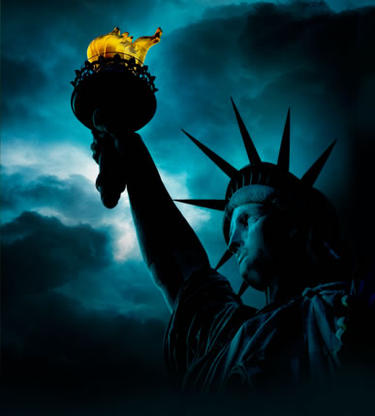
Statue of Liberty with dark sky
Source: Photo illustration by Shaun Venish/123RF/iStockphoto
Warning signs come in many forms. Sometimes it's the piercing shriek of a fire alarm or the Emergency Alert System on the TV or radio. Maybe it's the wail of a loudspeaker indicating an oncoming tornado or hurricane. At times it might be the flashing lights and siren of an ambulance, fire truck or other emergency vehicle.
Regardless of their form, we're usually aware of what warning signs mean. They're intended to alert us to approaching danger, and we know that we must take action if we are to remain safe.
Sometimes the warning signs are not so obvious. Rather than screaming in our ears or shouting in our faces to get our attention like the examples above, the signs can be much more subtle. And if we're distracted by other things and not paying attention, we can easily miss them.
Could individuals—and sometimes even great nations—remain blind to dangers that otherwise should be obvious? Could Americans be ignoring warning signs that are shouting for our attention?

A look at the state of the union

Early each year the U.S. president gives his annual State of the Union address to Congress—and, by extension, the nation and world as a whole. It's typically a lofty speech filled with ideals and platitudes expressing the president's agenda.
But despite what it's called, the speech seldom addresses the actual state of the nation. If we were to examine the condition of the United States from the perspective of God's Word, what would we find?
On the rostrum above the head of the president as He gives this speech, seemingly avoided by TV cameras, is the motto "In God We Trust." The president is himself sworn into office with his hand on a Bible as he pledges to carry out his duties "so help me God."
So what would God think about the current state of the United States?

Growing acceptance of immoral behavior

The November 2012 U.S. elections were a revealing window into the prevailing mindset of voters. For the first time, voters legalized marriage between homosexuals in several states—Maine, Maryland and Washington.
Same-sex marriage had already been approved by state legislatures or courts in six other states, but this was the first time it was approved directly by voters—after it had previously been rejected 32 times in statewide votes dating back to 1998.
Homosexual behavior is repeatedly condemned in Scripture (Leviticus 18:22; Leviticus 20:13; Romans 1:26-27; 1 Corinthians 6:9-10; 1 Timothy 1:10). Yet far from being ashamed of such behavior, many pride themselves on their acceptance of it.
With the country's many "gay pride" marches and parades, could Isaiah 3:9 be a prophecy for America today? "The look on their faces testifies against them; they parade their sin like Sodom; they do not hide it. Woe to them! They have brought disaster upon themselves" (New International Version, emphasis added throughout).
Meanwhile, in two states—Colorado and Washington—voters approved possession and recreational use of marijuana, a hallucinogenic drug that remains illegal under federal law. Nineteen other states allow what is called "medicinal" use of the drug, though it's clearly abused by many who want to use it simply to get high.
Although marijuana isn't directly mentioned in Scripture, God's Word clearly condemns intoxication in any form—calling those seeking it "drunkards" who will have no place in the Kingdom of God (1 Corinthians 5:11; 1 Corinthians 6:10; Galatians 5:21). The reason so many use marijuana is for the intoxicated state it produces. Otherwise, why do it?
Any nation brings curses on itself when it turns its back on biblical values and accepts sin as normal and commonplace. Thinking themselves enlightened, people in reality only show how shortsighted and blind they are to the consequences of their choices.
They fail to take into account God's view, which He states in Isaiah 5:20-25: "Woe to those who call evil good, and good evil; who put darkness for light, and light for darkness; who put bitter for sweet, and sweet for bitter! Woe to those who are wise in their own eyes, and prudent in their own sight! . . .
"Therefore, as the fire devours the stubble, and the flame consumes the chaff, so their root will be as rottenness, and their blossom will ascend like dust; because they have rejected the law of the Lord of hosts, and despised the word of the Holy One of Israel. Therefore the anger of the Lord is aroused against His people; He has stretched out His hand against them and stricken them . . ."

Broken marriages + broken families = broken society

As we have often discussed in the pages of The Good News, marriage and family are the building blocks of society. When marriages and families break down, so do the bonds holding society together.
So what's the state of marriage and family in America today?
For years about half of all U.S. marriages have ended in divorce. Seeing this sad fact, growing numbers of couples choose to skip marriage altogether.
According to U.S. census figures, between 1960 and 2000 the number of unmarried couples living together increased tenfold. It doubled again from 2000 to 2010, to 7.5 million couples—though the actual number may be considerably higher since unmarried partners may describe themselves as just friends or roommates.
About 12 percent of U.S. households are now unmarried couples living together. In some cities a third of couples living together are not married to each other. Other recent studies have shown that almost 60 percent of women ages 19-44 have chosen to live with a partner of the opposite sex at some point in their lives.
However, rather than a formula for stability, living together before marriage only increases the odds that a couple will break up. About 40 percent of couples who move in together separate before marriage. And, of those who do marry, studies show the divorce rate ranges from 50 to 80 percent higher than those who chose not to live together before marriage.

The curses of promiscuity, abortion and illegitimacy

Sexual promiscuity begins early. Studies show that from 40 to 50 percent of U.S. teens are sexually active, with 20 percent having sexual intercourse by age 15.
And they are reaping the tragic fruits of breaking God's command against engaging in sex outside of marriage (Exodus 20:14; Ephesians 5:3, 5; Hebrews 13:4; Revelation 21:8). Young people ages 15-24 account for nearly half of the nation's 19 million new sexually transmitted infections each year. One in four females ages 15 to 19 is infected with at least one sexually transmitted disease. And each year more than 750,000 15- to 19-year-old females become pregnant, the vast majority unintended.
With so many showing such disregard for God's instruction regarding sex and marriage, it's no surprise that the nation is suffering from twin curses of abortion and illegitimacy. According to the U.S. Centers for Disease Control and Prevention (CDC), almost one in five pregnancies (18 percent) in America end in the abortion of the unborn baby. The nation's estimated annual death toll from abortion ranges from about 750,000 to over 1 million.
To put this in perspective, Americans were rightfully horrified by the terrorist attacks on Sept. 11, 2001, in which nearly 3,000 people lost their lives in the World Trade Center, the Pentagon and in the crash of an airliner in a Pennsylvania field. Yet almost the same number of innocent unborn children are murdered by abortion in America every single day. Where is the outrage? What does this tell us about the deplorable moral state of the nation?
Another sad fruit of the nation's promiscuity is that the percentage of births that are illegitimate—children born to unmarried parents—is also dramatically rising.
Of first births to mothers ages 15 to 44 today, almost half—46 percent— are illegitimate. For women ages 20-24, well over half—a staggering 61 percent —are to unmarried mothers.

A huge financial toll on society

As bad as these percentages are, they only hint at the terrible toll this takes on society—and on these children in particular. Numerous studies have shown that children born into fatherless homes are far more likely to die in infancy, to be poor, to show aggressive behavior, to abuse drugs, to have behavioral problems in school and to spend time in jail or prison.
Nearly 2 million children are born each year to unmarried parents, often to women with limited education and prospects for improving their lives. What is the cost to taxpayers?
In the 2011 fiscal year, federal and state governments spent a combined $450 billion on assistance to low-income families with children—with about three quarters of this, or some $330 billion, going to single-parent families. This averages out to about $30,000 in assistance to each single-parent household.
But this doesn't mean that this much is actually going to those who need it. Vast amounts go to the government bureaucracies and hundreds of thousands of federal and state employees tasked with overseeing assistance programs. The U.S. government currently operates more than 80 different means-tested federal programs that provide social services, medical care, food, housing, cash and other assistance to low-income families and individuals.

The curse of skyrocketing debt

It should be no surprise that the nation's growing social ills have contributed to an explosion in its financial problems.
Over the last year the debt problems of the European "PIIGS" countries—Portugal, Italy, Ireland, Greece and Spain—have regularly made headlines. Each of the five have enormous debt problems due to their inability to rein in government spending.
However, the per-person share of the government's outstanding debt in the United States is actually higher than in any of these deeply troubled countries!
Each American's share of federal government debt is about $45,000—15 percent higher than the per-capita debt of Greeks at almost $39,000. Even worse, American per-capita debt is expected to grow to almost $75,000 by 2020, only seven years away.
Why is government debt exploding? The simple answer is that the government is borrowing 40 cents of every dollar it spends.
To put this in perspective, the U.S. government is like a family with a $21,700 annual income spending $38,200 a year, with $16,500 of that put on credit cards—when the family already owes $142,710 on those credit cards!
For four consecutive years the federal government has amassed a trillion-dollar deficit. It took the United States 200 years to accumulate its first trillion dollars in debt. Now it takes about 10 months!
In September 2012 the total deficit passed $16 trillion— an amount exceeding the nation's entire GDP! How vast is that number? A stack of 16 trillion $1 bills would extend higher than Mt. Everest, past the space station, past the moon 239,000 miles away and back to Earth— twice.
Shocking as these figures are, they in fact vastly underestimate the scope of the problem. We need to factor in unfunded liabilities—the amount needed to fully fund government promises for Social Security, Medicare, military and government employee pensions and health care. The real debt load then jumps, depending on which set of economic and demographic assumptions one works from, to five to ten times the $16 trillion amount— far exceeding the GDP of the entire planet! And that doesn't even include similar unfunded liabilities for the 50 individual states and hundreds of American towns and cities.
The bottom line? America's cities are broke, its states are broke, and the nation is broke. And we're living in a fool's paradise.
God warned centuries ago that "the borrower is servant to the lender" (Proverbs 22:7). America currently spends more than $400 billion per year just to pay interest on its staggering debt!
God pronounced curses that would come from a nation disobeying Him and rejecting His instruction: "The alien who is among you shall rise higher and higher above you, and you shall come down lower and lower. He shall lend to you, but you shall not lend to him; he shall be the head, and you shall be the tail" (Deuteronomy 28:43-44).
The United States is experiencing a drastic turnaround unparalleled in history. Until about a generation ago, the United States was the world's leading lender nation. But now that has completely reversed, and America is the most indebted nation in world history—with more than half of U.S. debt held by rival nations such as China, Russia, Iran and Venezuela.

From blessings to curses

The United States is under a curse—as warned of centuries ago in the pages of your Bible. Leviticus 26 and Deuteronomy 28 record the blessings God promised would come when a nation honored and obeyed Him—and the curses that would come when it dishonors and disobeys Him, such as becoming a debtor nation, as quoted above.
For its first two centuries America enjoyed the abundant blessings foretold.
Yet God had warned: "But it shall come to pass, if you do not obey the voice of the Lord your God, to observe carefully all His commandments and His statutes which I command you today, that all these curses will come upon you and overtake you" (Deuteronomy 28:15).
What curses did He foretell?
"Cursed shall you be in the city," He began (Deuteronomy 28:16). What is the state of America's cities? Many are impressive on the outside, but they are rotten at the core. Growing numbers are bankrupt. Many are ridden with crime. Poverty, corruption, failing schools and thousands of unassimilated immigrants eat away at their stability. Millions of people flee them—with many millions more wishing they could do the same.
"Cursed shall be your basket and your kneading bowl," God continues (Deuteronomy 28:17). These represent our food sources. Study after study shows that many of our food sources aren't healthy or good for us. For many, our diet and lifestyle may in fact be dangerous to our health.
"Cursed shall be the fruit of your body" (Deuteronomy 28:18). Birthrates are declining. And with the legalization of abortion, we have viewed our own children as curses and slaughtered them by the millions.
For the American children who are born, one in six has some kind of developmental disability according to the CDC—and the number is growing.
Moreover, as noted above, millions of children are born into households where the mother or father or both are ill-equipped
to care for them financially, emotionally, mentally or spiritually.
"Cursed shall be . . . the produce of your land, the increase of your cattle and the offspring of your flocks" (Deuteronomy 28:18). Only a few years ago the United States was among the world's largest exporters of food—primarily wheat, corn and meat. Now that too is reversed, and America actually imports more food than it exports.
"The Lord will make the plague cling to you . . . [He] will strike you with consumption, with fever, with inflammation, with severe burning fever . . . they shall pursue you until you perish" (Deuteronomy 28:21-22). In comparison to much of the world, Americans as a whole enjoy good health and long life. But that comes at an increasingly steep price. From 1980 to today, health care expenses have exploded more than tenfold.
Health care costs are currently about $2.8 trillion, amounting to 18 percent of the nation's GDP. Yet in spite of such enormous expenditures, Americans' life expectancy ranks only 42nd in the world, well behind most advanced nations.

Drought and defeat

"The sky over your head shall be bronze, and the earth under you iron. The Lord will change the rain of your land into powder, and only dust shall come down upon you from the sky until you are destroyed" (Deuteronomy 28:23-24, New Revised Standard Version).
Many Americans were rightfully worried about the widespread droughts and massive wildfires that plagued the country in 2012—as they did in several preceding years. With the nation having moved into winter, the situation remains serious. Lack of rainfall and snowfall has created the worst conditions for the winter wheat crop in almost 30 years.
Drought conditions have caused levels of two of the Great Lakes—Michigan and Huron—to fall to near-record lows, with the other three below historical averages. On the Mississippi River, water levels have dropped 15 to 20 feet below normal in some places, threatening to halt the barge traffic that carries millions of tons of crops and other goods through the American heartland.
"The Lord will cause you to be defeated before your enemies; you shall go out one way against them and flee seven ways before them; and you shall become troublesome to all the kingdoms of the earth," God continues (Deuteronomy 28:25).
At the end of World War II America emerged as a new world superpower. With the collapse of the Soviet Union several decades later, it stood as the world's lone superpower. Yet in spite of its might, in a struggle lasting eight years and costing more than 4,400 American lives and more than $1 trillion, the United States withdrew from Iraq, leaving behind a dangerous and unstable nation. A similar pattern was followed in Afghanistan, where U.S. troops are scheduled to be gone by the end of 2014.
Why is it that the most powerful military in the world was essentially fought to a draw by comparatively primitive forces—the enemies having no navy, air force or massive war machinery and fighting from caves and holes in the ground, armed with IEDs and AK-47s?
This makes no sense at all until we consider God's warning and curse for our sins: "The Lord will cause you to be defeated before your enemies . . ."

Will we heed the warnings?

Leviticus 26 and Deuteronomy 28 also list other curses to fall on the nation that defies Him—many truly horrifying to contemplate. We don't have space to cover them all here, but you can and should read them. This is what lies ahead unless the nation changes its ways!
America likes to be viewed as a religious nation. But for many their religiosity is only skin deep. Most American households have not just one but several Bibles. The problem is that they don't read the Bible, much less do and live as it says.
If you don't believe these warnings from the Bible, consider these other warnings from two of the nation's greatest presidents:
Thomas Jefferson, to whom many wrongly attribute belief in complete separation of church and state, wrote: "I tremble for my country when I reflect that God is just [and] that his justice cannot sleep for ever . . ."
Abraham Lincoln, who saw the nation through a horrifying civil war, said: "At what point shall we expect the approach of danger? By what means shall we fortify against it? . . . I answer, if it ever reach us, it must spring up amongst us. It cannot come from abroad. If destruction be our lot, we must ourselves be its author and finisher."
God's justice is indeed awakening from a long sleep. The warning signs are all around. Our destruction, as Lincoln warned, is coming from ourselves as a once-great nation increasingly rots from the core.
It may be too late to turn the nation around, but it's not too late for you. "Seek the Lord while He may be found, call upon Him while He is near," the Bible urges us. "Let the wicked forsake his way, and the unrighteous man his thoughts; let him return to the Lord, and He will have mercy on him; and to our God, for He will abundantly pardon" (Isaiah 55:6-7).
God's blessing, forgiveness and assurance of peace and safety await those who are willing to repent—who turn to seek Him with all of their heart.
Will you heed your Creator's plea?