Showing posts with label Honduras. Show all posts

Tuesday, September 1, 2015

Watch Out America! More Latino Legerdemain Coming To Washington!

An interesting article from www.vdare.com about the loyalty of Hispanic government officials. This follows this post about Mexico and other Hispanic nations meddling in the U.S. election. Remember, “Amnesty” means ANY non-enforcement of existing immigration laws! This follows this comment and this post about how to Report Illegal Immigrants! Also, you can read two very interesting books HERE.
Please follow me here.


Memo From Middle America | Watch Out America! More Latino Legerdemain Coming To Washington This Week!


leg·er·de·main
[lej-er-duh-meyn]
noun 1. sleight of hand.
2. trickery; deception.
3. any artful trick.
Do you believe that American immigration policy should be decided by American citizens?
You do? You’re behind the times! In recent years, foreign governments have taken a strong interest in our immigration policies and are actively meddling in them. That’s particularly true now with the current debate over “Comprehensive Immigration Reform” a.k.a. amnesty.
Mexico is the main culprit, of course. See my recent article Mexican Foreign Ministry Meddling In Amnesty Debate—Where Is U.S. Government (And GOP)?
But Mexico is not the only case of Latino legerdemain—light-fingered Latin American countries attempting to steal America from under our noses.
For example, three Central American countries—Guatemala, El Salvador and Honduras—have teamed up to push for amnesty for their illegal aliens on U.S. soil.
Here at VDARE.COM we’ve been writing about foreign meddling for years. The Mainstream Media might catch up to us if it didn’t have another agenda. But we’re thankful for anything—this month The Hill ran a story headlined Foreign governments lobbying hard in favor of immigration reform (by Julian Pecquet, February 7 , 2013]:
Foreign governments are working hard to shape the debate on immigration reform as momentum for a comprehensive bill builds in Congress. While the issue routinely comes up in talks between foreign leaders and the executive branch, embassy officials are ramping up their outreach to Congress and the White House in order to take advantage of the best hope for reform in years. A number of countries with significant immigration ties to the United States—notably Mexico, Ireland and several Central American nations—have been making their concerns known while doing their best to avoid meddling in domestic affairs.
The Hill article reported that Mexico’s new ambassador Eduardo Medina-Mora (see my article linked above) is already in the thick of it, having had “a number of meetings with the administration” on immigration; and that the Mexican ambassador “is expected to meet with lawmakers shortly as legislation begins to take form.”
Of course, these foreign meddlers have allies in the U.S. Congress:
Rep. Xavier Becerra (D-Calif.), a leader on immigration reform [with an F- grade from Numbers USA , see VDARE.COM file here], said he’d had “conversations over time with a number” of ambassadors about immigration reform. He said he didn’t see any reason not to listen to anyone with “good ideas.”
According to Becerra, “…it’s no hidden secret that it’s important for a lot of these ambassadors and their governments to see comprehensive immigration reform pass.”
No kidding!
But why would an “American” congressman be helping them?
Whose side is he on?
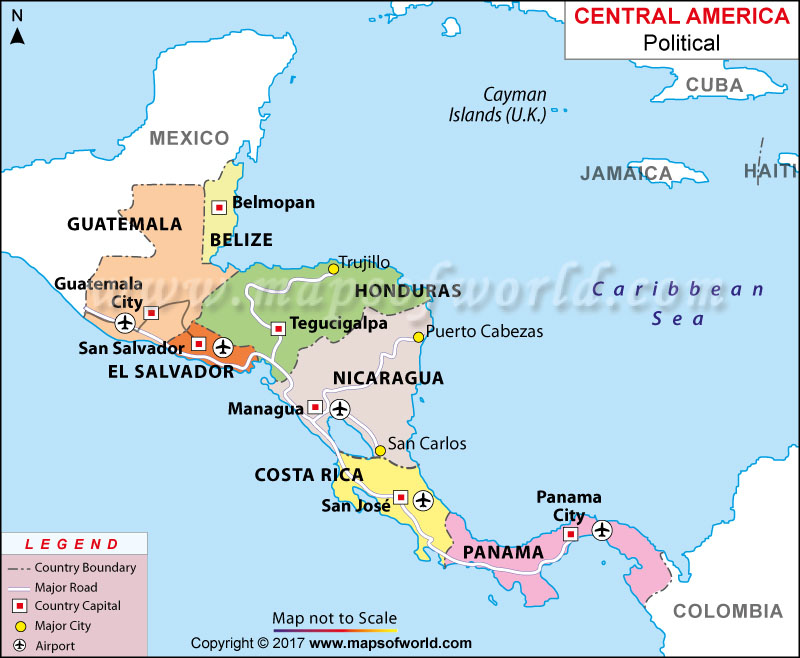
Guatemala, El Salvador and Honduras are three Central American, Spanish-speaking countries, southeast of Mexico and poorer than Mexico. (Here’s a map). Central American illegal aliens reach the U.S. by traversing Mexico, where they are treated very badly (see here).
The Salvadoran foreign minister, Hugo Martinez, recently announced a joint Project involving El Salvador, Honduras and Guatemala. According to the EFE news agency, the three countries “together will lobby American functionaries and lawmakers in search of achieving the migratory reform in that country. [Honduras, El Salvador y Guatemala cabildearán por reforma migratoria en EUA , La Prensa.hn, February 12, 2013]
In fact, the three foreign ministers (Martinez of El Salvador, Fernando Carrera of Guatemala, Arturo Corrales of Honduras) are planning to visit Washington during the last week of February to lobby for amnesty.
Martinez explained that “We have made an alliance with Guatemala, with Chancellor Carrera, and with Chancellor Corrales of Honduras” since their three countries would be “the most impacted by an eventual migratory reform in the United States.
Martinez went on:
…We are going to make a joint negotiation in Washington with representatives of the House of Representatives, with senators and with members of the executive of the United States to sensitize and raise awareness of the urgency of a comprehensive migratory reform.
According to their own governments, there are five million immigrants (legal and illegal) from the three countries in the U.S.: 1.5 million Guatemalans, 2.5 million Salvadorans, a little more than a million Hondurans.
As a consequence, there is a lot of interest in these countries about their fellow citizens way up in the United States. For example, in El Salvador there is a page on the website of the La Prensa Grafica newspaper entitled “Departamento 15”.
El Salvador is divided into 14 administrative divisions called departamentos. So the Salvadoran diaspora in the United States constitutes Departamento 15!
Get it?
Recently, the page featured a story about a Salvadoran candidate (Ana Cubas) running for the Los Angeles City Council (District 9) who was endorsed by the LA Spanish language newspaper La Opinion—and, of course, about the U.S. immigration debate.
Through the immigrants, there is a lot of remittance money flowing from the U.S. to these countries—accounting for an even bigger share of their economies than of Mexico’s. For Honduras, remittances constitute a whopping one-quarter of its entire economy.
So these three little countries’ governments are motivated to meddle. They want their illegals in our country to be able to stay. They don’t want them coming home.
We should not underestimate their motivation. Nor should we underestimate their capabilities. They have substantial diplomatic “boots on the ground” (Guccis on the ground?) on U.S. soil. I’ve written often about the Mexican diplomatic networks in the U.S., but these three Central American countries are nothing to ignore either.
Each has an embassy in Washington, D.C. In addition, they have quite a few consulates spread from coast to coast:
  • Guatemala has ten consulates, located in Atlanta, Chicago, Denver, Houston, Los Angeles, Miami, New York, Phoenix, Providence and San Francisco.
  • Honduras has eleven consulates, located in Washington, D.C., Miami, Atlanta, Houston, New York, Boston, Chicago, New Orleans, Los Angeles, San Francisco and Phoenix.
  • El Salvador has no less than 16 consulates! They are located in Elizabeth (New Jersey), Long Island, Boston, Chicago, Coral Gables (Florida), Dallas, Houston, Las Vegas, Los Angeles, Nogales [on the border with Mexico], New York, San Francisco, Santa Ana (California), Washington (D.C.), Woodbridge (Virginia), Woodstock (Georgia).
The total population of El Salvador is 6,090,646, but there are supposed to be 1,978,000 Salvadoran-Americans.
On the other hand, only 19, 000 Americans live in El Salvador—because El Salvador apparently has much better immigration controls than we do.
So we can expect some heavy-duty lobbying from these countries and their Fifth Column of expatriates on U.S. soil.
Why do we allow this? Why are foreign politicians and diplomats allowed to openly meddle in our immigration policy?
And, as I’ve asked before: who in the GOP is standing up to this?
American citizen Allan Wall (email him) moved back to the U.S.A. after many years residing in Mexico. Allan`s wife is Mexican, and their two sons are bilingual. In 2005, Allan served a tour of duty in Iraq with the Texas Army National Guard. His VDARE.COM articles are archived here; his Mexidata.info articles are archived here; his News With Views columns are archived here; and his website is here.

Monday, July 14, 2014

Editorial: Camp of the Saints

Editorial


If you haven't read it. Now is a good time to read or re-read the book Camp of the Saints as previously pointed out here.


It is summarized here:


An interesting book  is called Camp of the Saints which you can get from Amazon by clicking here or your library here. The book says to "suppose a million starving people from the Ganges actually took Western rhetoric of compassion, explotiation, etc., to heart, and comandeered, en masse, shipping, with the intention of moving to the shores of France? (Raspail, of course, is French.) Would anyone stop them?"


Remember this also:


 312,000 illegal aliens from El Salvador, Nicaragua and Honduras have been allowed to stay ‘temporarily’ in the US after Hurricane Mitch, which occurred more than ten years ago.


Tuesday, July 8, 2014

Pres. Obama Asking for Border Surge Funds


An interesting article from www.numbersusa.com about more funds for the border. This follows this post about where illegal immigrants are being bussed to. “Amnesty” means ANY non-enforcement of existing immigration laws! This follows this comment and this post about how to Report Illegal Immigrants! For more about what you can do click here and you can read two very interesting books HERE.
You can follow me at blogspot here and at twitter here https://twitter.com/brianleesblog. Please consider following both in case one goes down!

Pres. Obama Asking for Border Surge Funds


President Obama is asking Congress for $2 billion to help deal with the surge of illegal aliens at the border.  However, for this money to be effective, Congress needs to:
  • Pass legislation to treat unaccompanied illegal alien minors (UACs) from Central American nations the same as those from Mexico and Canada -- they are interviewed by Border Patrol officers then quickly and humanely repatriated;
  • Prevent foreign aid being sent to nations that refuse the repatriation of their citizens; and
  • Ensure all the funds go to the Border Patrol and ICE to detain, process, and remove illegal aliens; not to resettle illegal aliens in the United States.

Please send a fax to your three Members of Congress and convey this message.

Monday, June 23, 2014

Editorial: The World Cup Diversion

Editorial


Is the World Cup of Soccer (football) a diversion while refuges and transvestites invade the U.S.?

Thursday, November 17, 2011

The Mexican Drug Cartel Threat in Central America

A very interesting post from http://www.stratfor.com/ about Mexico's cartels meddling in Central America on their Southern border, as the government of Mexico meddles in the country on their Northern border. This follows this post about discrimination in Mexico. This follows this article about  American energy independence and preventing money from going to hostile countries such as Iran and Venezuela. For more that you can do to get involved click HERE and read this very interesting book HERE!


The Mexican Drug Cartel Threat in Central America


By Karen Hooper


Guatemalan President-elect Otto Perez Molina told Mexican newspaper El Universal on Nov. 9 that he plans to engage drug cartels in a “full frontal assault” when he takes office in 2012. The former general said he will use Guatemala’s elite military forces, known as Los Kaibiles, to take on the drug cartels in a strategy similar to that of the Mexican government; he has asked for U.S. assistance in this struggle.


The statements signal a shifting political landscape in already violent Central America. The region is experiencing increasing levels of crime and the prospect of heightened competition from Mexican drug cartels in its territory. The institutional weakness and security vulnerabilities of Guatemala and other Central American states mean that combating these trends will require significant help, most likely from the United States.


From Sideshow to Center Stage


Central America has seen a remarkable rise in its importance as a transshipment point for cocaine and other contraband bound for the United States. Meanwhile, Mexican organized crime has expanded its activities in Mexico and Central America to include the smuggling of humans and substances such as precursor chemicals used for manufacturing methamphetamine. Substantial evidence also suggests that Central American, and particularly Guatemalan, military armaments including M60 machine guns and 40 mm grenades have wound up being used in Mexico’s drug conflict.


From the 1970s to the 1990s, Colombian cartels transited directly to Miami. After U.S. military aerial and radar surveillance in the Caribbean effectively shut down those routes, Mexico became the last stop on the drug supply chain before the United States, greatly empowering Mexico’s cartels. A subsequent Mexican government crackdown put pressure on Mexican drug trafficking organizations (DTOs) to diversify their transit routes to avoid increased enforcement at Mexico’s airstrips and ports. Central America consequently has become an increasingly significant middleman for South American suppliers and Mexican buyers of contraband.


The methods and routes for moving illicit goods through Central America are diverse and constantly in flux. There is no direct land connection between the coca-growing countries of Colombia, Peru and Bolivia. A region of swampy jungle terrain along the Panamanian-Colombian known as the Darien Gap has made road construction prohibitively expensive and thus barred all but the most intrepid of overland travelers. Instead, aircraft or watercraft must be used to transport South American goods north, which can then be offloaded in Central America and driven north into Mexico. Once past the Darien Gap, the Pan American Highway becomes a critical transportation corridor. Honduras, for example, reportedly has become a major destination for planes from Venezuela laden with cocaine. Once offloaded, the cocaine is moved across the loosely guarded Honduran-Guatemalan border and then moved through Guatemala to Mexico, often through the largely unpopulated Peten department.


Though precise measurements of the black market are notoriously difficult to obtain, these shifts in Central America have been well-documented — and the impact on the region has been stark. While drug trafficking occurs in all Central American countries to some extent, most violence associated with the trade occurs in the historically tumultuous “Northern Triangle” of Guatemala, El Salvador and Honduras. No longer receiving the global attention they did when the United States became involved in their Cold War-era civil wars, these countries remain poverty stricken, plagued by local gangs and highly unstable.


The violence has worsened as the drug traffic has increased. El Salvador saw its homicide rate increase by 6 percent to 66 per 100,000 inhabitants between 2005 and 2010. At the same time, Guatemala’s homicide rate increased 13 percent, to 50 per 100,000 inhabitants. Meanwhile Honduras saw a rise of 108 percent, to 77 per 100,000 inhabitants. These are some of the highest homicide rates in the world.


In comparison, the drug war in Mexico caused murder rates to spike 64 percent, from 11 to 18 deaths per 100,000 between 2005 and 2010. Conservative estimates put the number of dead from gang and military violence in Mexico at 50,000. These numbers are slightly misleading, as Mexican violence is concentrated in scattered pockets where most drug trafficking and competition among drug traffickers occurs. Even so, they demonstrate the disproportionate impact organized criminal groups have had on the societies of the three Northern Triangle countries.


Guatemala’s Outsized Role


Increased involvement by Mexican cartels in Central America inevitably has affected the region’s politico-economic structures, a process most visible in Guatemala. Its territory spans Central America, making it one of several choke points on the supply chain of illicit goods coming north from El Salvador and Honduras bound for Mexico.


Guatemala has a complex and competitive set of criminal organizations, many of which are organized around tight-knit family units. These family organizations have included the politically and economically powerful Lorenzana and Mendoza families. First rising to prominence in trade and agriculture, these families control significant businesses in Guatemala and transportation routes for shipping both legal and illicit goods. Though notorious, these families are far from alone in Guatemala’s criminal organizations. Major drug traffickers like the well-known Mario Ponce and Walther Overdick also have strong criminal enterprises, with Ponce reportedly managing his operations from a Honduran jail.


The relationship of these criminal organizations to Mexican drug cartels is murky at best. The Sinaloa and Los Zetas cartels are both known to have relationships with Guatemalan organized criminal groups, but the lines of communication and their exact agreements are unclear.


Less murky, however, is that Los Zetas are willing to use the same levels of violence in Guatemala to coerce loyalty as they have used in Mexico. Though both Sinaloa and Los Zetas still need Guatemalan groups to access high-level Guatemalan political connections, Los Zetas have taken a particularly aggressive tack in seeking direct control over more territory in Guatemala.


Overdick facilitated Los Zetas’ entry into Guatemala in 2007. The first indication of serious Los Zetas involvement in Guatemala occurred in March 2008 when Leon crime family boss Juan Leon Ardon, alias “El Juancho,” his brother Hector Enrique Leon Chacon and nine associates all died in a gunbattle with Los Zetas, who at the time still worked for the Gulf cartel. The fight severely reduced the influence of the Leon crime family, primarily benefiting Overdick’s organization. The Zetas most flagrant use of force occurred in the May 2011 massacre and mutilation of 27 peasants in northern Guatemala intended as a message to a local drug dealer allegedly tied to the Leon family; the Zetas also killed and mutilated that drug dealer’s niece.


MS-13 and Calle 18


In addition to ramping up relationships with powerful political, criminal and economic players, Sinaloa and Los Zetas have established relationships with Central American street gangs. The two biggest gangs in the region are Mara Salvatrucha (MS-13) and Calle 18. The two groups are loosely organized around local cliques; the Mexican cartels have relationships at varying levels of closeness with different cliques. The U.N. Office on Drugs and Crime estimates that there are 36,000 gang members in Honduras, 14,000 in Guatemala and 10,500 in El Salvador.


They were formed by Los Angeles gang members of Central American origin whose parents had immigrated to the United States to escape the region’s civil wars. After being arrested in the United States, these gang members were deported to Central America. In some cases, the deportees spoke no Spanish and had no significant ties to their ancestral homeland, encouraging them to cluster together and make use of the skills learned on the streets of Los Angeles to make a living in Central America via organized crime.


The gangs have multiplied and migrated within the region. Many have also returned to the United States: U.S. authorities estimate that MS-13 and Calle 18 have a presence in as many as 42 states. Though the gangs are truly transnational, their emphasis is on controlling localized urban turfs. They effectively control large portions of Guatemala City, Guatemala; Tegucigalpa, Honduras; and San Salvador, El Salvador. Competition within and among these gangs is responsible for a great deal of the violence in these three countries.


In a March statement, Salvadoran Defense Minister David Munguia Payes said his government had evidence that both Sinaloa and Los Zetas are active in El Salvador, but that he believes MS-13 and Calle 18 are too anarchic and violent for the Mexican cartels to rely on heavily. According to Honduran Security Minister Pompeyo Bonilla, Mexican cartels primarily hire members of these gangs as assassins. The gangs are paid in drugs, which they sell on the local drug market.


Though limited in their ties to the Mexican cartels, the prevalence of MS-13 and Calle 18 in the Northern Triangle states and their extreme violence makes them a force to be reckoned with, for both the cartels and Central American governments. If Central American street gangs are able to better organize themselves internally, this could result in closer collaboration, or alternately serious confrontations with the Mexican cartels. In either case, the implications for stability in Central America are enormous.


The U.S. Role


The United States has long played an important, complex role in Latin America. In the early 20th century, U.S. policy in the Western Hemisphere was characterized by the extension of U.S. economic and military control over the region. With tactics ranging from outright military domination to facilitating competition between subregional powers Guatemala and Nicaragua to ensuring the dominance of the United Fruit Company in Central American politics and business, the United States used the first several decades of the century to ensure that Central America — and by extension the Caribbean — was under its control. After World War II, Central America became a proxy battleground between the United States and the Soviet Union.


On a strategic level, Central America is far enough away from the United States (thanks to being buffered by Mexico) and made up of small enough countries that it does not pose a direct threat to the United States. U.S. interest in the region did not end after the Cold War, however, as it is critically important to the United States that a foreign global competitor never control Central America or the Caribbean.


The majority of money spent combating drug trafficking from South America to the United States over the past decade has been spent in Colombia on monitoring air and naval traffic in the Caribbean and off the Pacific coasts, though the U.S. focus has now shifted to Mexico. Central America, by contrast, has languished since the Reagan years, when the United States allocated more than $1 billion per year to Central America. Now, the region has been allocated a total of $361.5 million for fiscal years 2008-2011 in security, economic and development aid through the Merida Initiative and the Central America Regional Security Initiative (CARSI). The Obama administration has requested another $100 million for CARSI. Of this allocated funding, however, only 18 percent has been dispersed due to failures in institutional cooperation and efficiency.


The U.S. Drug Enforcement Administration (DEA) has facilitated most U.S.-Central American security cooperation. The DEA operates teams in the Northern Triangle that participate in limited counternarcotic operations. They are also tasked with both vetting and training local law enforcement, a particularly tricky — and most likely doomed — task. As the failure of Guatemala’s highly vetted and lauded Department of Anti-Narcotics Operations shows, preventing local law enforcement from succumbing to the bribes and threats from wealthy and violent DTOs is a difficult, if not impossible, task.


The DEA’s limited resources include five Foreign-deployed Advisory and Support Teams worldwide. These are the agency’s elite operational teams that are equipped to train foreign law enforcement and military personnel and to conduct support operations. Originally established to operate in Afghanistan exclusively, the teams have been deployed to several countries in Central America, including Guatemala and Honduras. These teams are designed to be flexible, however, and do not represent the kind of long-term commitment that would likely be necessary to stabilize the region.


Central America’s Challenge


Central America has no short-term escape from being at the geographical center of the drug trade and from the associated violence. Unless and until technologies shift to allow drugs to flow directly from producer to consumer via ocean or air transport, it appears likely that Central America will only become more important to the drug trade. While the drug trade brings huge amounts of cash (admittedly on the black market) into exceedingly capital-poor countries, it also brings extreme violence.


The billions of dollars drugs command create an insurmountable challenge for the regional counternarcotic campaigns. The U.S. “war on drugs” pits the Guatemalan elite’s political and financial interests against their need to retain a positive relationship with the United States, which views the elites as colluding with drug organizations to facilitate the free passage of drugs and key figures in the drug trade.


For the leaders of Central America, foreign cartel interference in domestic arrangements and increasing violence is the real threat to their power. It is not the black market that alarms a leader like Perez Molina enough to call for greater involvement by the United States: It is the threat posed by the infiltration of Mexico’s most violent drug cartel into Guatemala, and the threat posed to all three countries by further Central American drug gang destabilization, which could lead to even more violence.


Looking Forward


The United States is heavily preoccupied with crises of varying degrees of importance around the world and the significant budget-tightening under way in Congress. This makes a major reallocation of resources to Guatemala or its Central American neighbors for the fight against Mexican drug cartels unlikely in the short term. Even so, key reasons for paying close attention to this issue remain.


First, the situation could destabilize rapidly if Perez Molina is sincere about confronting Mexican DTOs in Guatemala. Los Zetas have proved willing to apply their signature brutality against civilians and rivals alike in Guatemala. While the Guatemalans would be operating on their own territory and have their own significant power bases, they are neither technologically advanced nor wealthy nor unified enough to tackle the challenge posed by heavily armed, well-funded Zetas. At the very least, such a confrontation would ignite extremely destabilizing violence. This violence could extend beyond the Northern Triangle into more stable Central American countries, not to mention the possibility that violence spreading north could open up a new front in Mexico’s cartel war.


Second, the United States and Mexico already are stretched thin trying to control their shared 2,000-mile land border. U.S. counternarcotic activities in Mexico are limited by Mexican sovereignty concerns. For example, carrying weapons and operating independent of Mexican supervision is not allowed. This hampers the interdiction efforts of U.S. agencies like the DEA. The efforts also are hampered by the United States’ unwillingness to share intelligence for fear that corrupt Mexican officials would leak it.


Perez Molina’s invitation for increased U.S. participation in Guatemalan counternarcotic operations presents a possibility for U.S. involvement in a country that, like Mexico, straddles the continent. The Guatemalan choke point has a much shorter border with Mexico — about 600 miles — in need of control, and is far enough north in Central America to prevent insertion of drug traffickers into the supply chain between the blocking force and Mexico. While the United States would not be able to stop the illicit flow of cocaine and people north, it could make it significantly more difficult. And although significantly reducing traffic at the Guatemalan border would not stop the flow of the drugs to the United States, it would radically decrease the value of Central America as a trafficking corridor.


Accomplishing this would require a much more significant U.S. commitment to the drug war, and any such direct involvement would be costly both in money and political capital. Absent significant U.S. help, the current trend of increased Mexican cartel influence and violence in Central America will only worsen.


Reprinting or republication of this report on websites is authorized by prominently displaying the following sentence, including the hyperlink to STRATFOR, at the beginning or end of the report.


"The Mexican Drug Cartel Threat in Central America is republished with permission of STRATFOR."


Read more: The Mexican Drug Cartel Threat in Central America
STRATFOR

Tuesday, February 9, 2010

Costa Rica Elects Right-Wing Woman Prez

This is an interesting article from www.sweetness-light.com about a conservative woman being elected in Latin America. This follows this post about problems in Left-Wing Venezuela. To get more stories like this, click here


Costa Rica Elects Right-Wing Woman Prez
From (a surely outraged) Associated Press:
Costa Rica elects 1st woman president in landslide
By Marianela Jimenez,
SAN JOSE, Costa Rica – Costa Ricans have elected their first woman president as the ruling party candidate won in a landslide after campaigning to continue free market policies in Central America’s most stable nation.
With most of the votes from Sunday’s election counted, Laura Chinchilla held a 22-point lead over her closest rival. Her 47 percent share of the vote was well beyond the 40 percent needed to avoid a run-off.
The 50-year-old protege of the current president, Nobel Peace Prize laureate Oscar Arias, promised to pursue the same economic policies that recently brought the country into a trade pact with the U.S. and opened commerce with China.
"Today we are making history," said Chinchilla, who will be the fifth Latin American woman to serve as president when she takes office in May. "The Costa Rican people have given me their confidence, and I will not betray it." ..
Arias’ economic policies helped insulate Costa Rica from the world economic crisis as he kept a high profile on the world stage as a negotiator in Honduras’ political crisis after a coup deposed President Manuel Zelaya in June.
Critics of the Arias government, in which Chinchilla served as vice president, contended its policies catered to big developers to boost the economy at the cost of the nation’s fragile ecosystems.
But most Costa Ricans were reluctant to shake up the status quo in a country with relatively high salaries, the longest life expectancy in Latin America, a thriving ecotourism industry and near-universal literacy.
Chinchilla, the mother of a teenage son, is a social conservative who opposes abortion and gay marriage. She appealed both to Costa Ricans seeking a fresh face and those reluctant to risk the unknown…
This is wrong in so many ways. At least according to our establishment media.
A pro-capitalist candidate wins in South America — in a landslide. And she’s ‘anti-Green’? And she’s a woman?
(We thought all right-wingers were all chauvinist pigs.)
You can bet we will hear as little about this as possible from our media masters.
After all, she’s no Hillary Clinton.

Monday, November 30, 2009

Free Election in Honduras - Against All O(bama)dds

An interesting post from http://www.hughhewitt.com/ about the elections in Hondorus. You can get more interesting articles by subscribing to this post here.

Free Election in Honduras - Against All O(bama)dds
Posted by: Jude The Presidential election is underway today in Honduras. Very little thanks to the Obama administration, which has treated our poor neighbor like a banana republic, ignoring the Honduran constitution - and virtually all of Honduras' governing bodies - while threatening to not recognize the results of today's election unless the criminal Chavez crony, "Mel" Zelaya were reinstated. Along the way, of course, we (Omerica) sanctioned the country and punished its people by cutting off aid while also trying to deligtimize the government by revoking travel visas, so that no representative of the current administration could appear at the UN. I've gone on about this before, but for now I'm glad our State Department has finally wrapped its collective head around some obvious truths after two months of supporting a would-be strongman in order to align more closely with Hugo Chavez and his acolytes in the region. We officially "support" the election process, which at this point may well be a surprise to democratic dissidents around the world. Of course, Obama also officially, wants Zalaya to be reinstated after the election for a brief term, but thankfully the Honduran Congress gets to decide that one....Maybe the big moment came when Zalaya told the press that he was being bombarded with some kind of alien technology by Israeli commando mercenaries, or something, while holed up in the Brazillian Embassy... maybe then Ian Kelly told Secretary Clinton that she had to break the news to President Obama that there just wasn't enough cover left for him to side with Chavez, Castro, Arias, Ortega (the latest Latin American leader trying to extend his term beyond constitutional limits), probably FARC, and Zalaya, and against representative constitutional democracy, rule of law, good old truth, the will of the people, and President Micheletti, who has been calmly tryng to shepherd his country though an election in which he himself was never a candidate. Or maybe the integrity and character of the Honduran people won the day, by never taking the bait laid all around them by Zelaya and Chavez toward more civil unrest. Here's to tomorrow in Honduras!
Update: the NYTimes gives the Obama administration a press release on the whole crisis. Also reports that Panama and Costa Rica are the only OAS members also pledged to recognize today's election.
Update II: Neither Barack Obama's election as the first African American President nor his premie Peace Prize are being cited by Hondurans in exit pols as to why they are excercising their right to vote...

Tuesday, September 22, 2009

UPDATED: Honduran coup may be imminent, abetted by Obama administration

An update from www.redstate.com to a previous post about Hondorus here . Of course, this is on the heels of abandoning Poland and the Czech Republic to Vladmir Putin on missle defense!!

UPDATED: Honduran coup may be imminent, abetted by Obama administration

Once again, Obama siding with tyrants
Posted by E Pluribus Unum (Profile)

[UPDATE 6:30 EDT : the government has imposed a curfew from 4pm today till 6am tomorrow]
Multiple sources (Reuters) (AP) report that ousted and exiled former president Manuel Zelaya is back in Honduras, hidden for the moment in somebody’s embassy and therefore out of the reach of authorities, who have promised to arrest him and try him for treason if he re-appears on sovereign Honduran soil.
By the way, when you hear the name Manuel Zelaya, you should think pal and disciple of Venezuelan thug dictator Hugo Chavez.
Zelaya was ousted in what has widely been reported in the American press as a “coup” on June 28. The United Nations, the Obama administration, the OAS and other dubious characters like Hugo Chavez have roundly condemned the constitutional government in Honduras and have worked diligently to bring pressure to bear to reverse events in Honduras. The Reuters link above includes the assertion that “Soldiers toppled Zelaya”.
The truth is quite the opposite. Honduran officials acted perfectly according to their own constitution and within their authority in removing from office a president who was attempting to install himself as the permanent ruler similarly to how Hugo Chavez did in Venezuela. Take your time reading the sources. The facts of the matter are widely available, yet the Obama administration has led the way in applying pressure to Honduras, invoking economic sanctions and going so far as to revoke the visas of most high Honduran officials in order to block their attendance at this month’s United Nations General Assembly.
You don’t want to know who all *did* make the cut and will attend. OK, yes you do: Mahmoud Ahmadinejad, Raul Castro, Hugo Chavez, and Muammar Gaddafi.

So far today:Details are conflicting as to Zelaya’s actual location — he’s been reported as at the UN compound, at the Brazilian Embassy, NOT at the US Embassy (although his wife is apparently there). The more authoritative reports place him in the Brazilian Embassy. He apparently gave an address on Honduran television that was audio-only, in which he called his supporters to show up at the UN compound, where several thousand people have now gathered.
There are various reports as to how he arrived, and nobody seems to know much more than is being reported. Will there be an armed uprising? Rioting? Will foreign governments intervene? One thing is clear. The Obama administration has steadfastly applied pressure to force the constitutional government of Honduras to accept a return of the deposed president. They may be about to get their wish.
And it’s about as evil, cruel, and criminal a turn of events as can be imagined for a nation whose people only want to be free to be governed at their own consent, by their own constitution

Monday, September 21, 2009

A national disgrace : Obama’s harrassment of freedom-loving Honduras

A timely article from www.redstate.com! about our friends in Hondorus! See here for more in addition to the article below!


A national disgrace : Obama’s harrassment of freedom-loving Honduras
Supports ousted president who *actually* tried to stage a coup
Posted by E Pluribus Unum
You may have missed this crisis if you get your news from the alphabet soup partisan media, who have mostly failed to cover it except to misrepresent it in favor of Obama.
You are probably not surprised to find that Poland and the Czech Republic are not the only loyal and faithful American allies getting screwed by the Obama Administration these days. The ongoing drama in Honduras is an outrage and a disgrace, but not because the Hondurans have done anything wrong. It’s because the Obama administration is actively intervening on behalf of a thug would-be dictator whom the Hondurans properly and legally drove from power.
Shame on you, Barack.
.Follow closely, because this is an extremely important and telling example of the kind of foreign policy we are getting from Barack Obama. Let’s review what’s been going on in Honduras this year, and how the Obama administration has come down completely on the side of tyrants, cheaters, and marxists They’ve done it deliberately, and in keeping with their overall global policy of rejecting freedom and snuggling up to the thugs and bandits of the world [remember Iranian protesters after the fraud election? remember soldiers shooting them? remember Obama's reaction?].

The Scene
Honduras is one of the most impoverished countries in central America, but it has been and remains a democratic republic in a region currently overshadowed by several evil dictators who are intent on spreading the evils of drug-money fueled marxism and tyranny to the entire region: Fidel & Raul Castro of Cuba, Evo Morales of Bolivia, Rafael Correa of Ecuador, and most of all, Hugo Chavez of Venezuela. [a cynic like me might add Daniel Ortega in neighboring Nicaragua to the list, as he's lobbying to change their constitution to allow him to run for president again]
Morales, Correa, and Chavez were ALL elected in free elections, then seized power by one means or another, and turned republics into their personal tin-pot dictatorships. In the crisis currently underway, Zelaya tried to do the same thing.
Manuel Zelaya ran for president as a left-centrist in 2005, but once elected, his friendship and alliances with Hugo Chavez and Raul Castro and signing Honduras onto the Bolivarian Alliance (ALBA, aka, “we hate the US club”) along with clashes with the business sector, rising violent crime rates, and a seeming lack of a coherent domestic policy led to 25% approval ratings by 2008.

The Rules
The Honduran Constitution, ratified in 1982, is the latest in a series (common among nations not named “The United States”). This one appears to have improved on previous ones, and one notable character of it is that it strives to guard against tyranny.
Article 4 (translated)
The form of government is republican, democratic and representative. Is exercised by three branches: legislative, executive and judicial, and independent and complementary relationship of subordination..Alternation in the presidency of the Republic is required..Violation of this rule constitutes the crime of treason.
Article 239 (translated)
The citizen that has been the head of the Execut[ive] Branch cannot be President or Vice-President (again). Whoever violates this law or proposes its reform, as well as those that support such violation directly or indirectly, will immediately cease in their functions and will be unable to hold any public office for a period of 10 years.
Article 272 (translated)
The Armed Forces of Honduras, are a National Institution of a permanent basis, essentially professional, apolitical, obedient and non-deliberative..They are set to defend the territorial integrity and sovereignty of the Republic, maintain peace, public order and the rule of the Constitution , the principles of free suffrage and alternation in the exercise of the Presidency of the Republic..Cooperate with the National Police in the maintenance of public order ..In order to ensure the free exercise of the vote, the custody, transport and surveillance of electoral materials and other aspects of the security of the process, the President of the Republic, put the Armed Forces available to the National Elections Tribunal, from a month before the elections, until the final declaration of the same.
.The Constitution is straightfoward enough:
It is a crime of treason to even propose to change the constitution to allow a president to have a second consecutive term. That may be a little strict or strange to you, but its intended purpose seems to have been to keep a person like Zelaya from following his baser instincts.
The duties of the military include enforcing the constitution, mentioning in particular the maintenance of the alternation of the presidency.

According to Miguel Estrada — yes, THAT Miguel Estrada, born in Honduras, educated at Columbia and Harvard Law school, apprenticed under Supreme Court Justice Anthony Kennedy, and argued cases in front of the Supreme Court as Assistant Solicitor General; the one the Democrats filibustered to keep from becoming an appellate judge purely because he was Hispanic; THAT Miguel Estrada — there are only three unamendable provisions in the Honduran Constitution:
the country’s borders
the rules that limit a president to a single four-year term
the requirement that presidential administrations must “succeed one another” in a “republican form of government.”

The Crime
As I mentioned above, Zelaya ’s been hanging around with dictators while crime rates have gone up and his popularity has gone down. Early this year, with his term winding to a close, he called a referendum for June 28, which if approved, would call a constitutional convention for the purpose of replacing the current constitution with a brand new one.
Given Zelaya ’s leanings, track record, and his waning presidency, there could be only one reason to scrap the constitution: to, in effect, amend the unamendable portions. This move was widely viewed in that light. A referendum requires a 2/3 vote of Congress to even propose to the people, and the Congress voted it down, saying it was illegal. Yet the referendum was proceeding.
Attorney General Alberto Rubi filed suit to stop the referendum, and a court order made it so. Zelaya declared the referendum would proceed, but called it an “opinion survey” . This was also halted but the courts. Nevertheless he persisted. No printer in Honduras would print ballots in defiance of the courts, so he had the ballots printed in Venezuela and flown in.
Persistent cuss, ain’t he? He wasn’t done yet.
He ordered the military to dispense the ballots to polling stations. He was refused, so he fired General Romeo Basquez, leader of the military. The Supreme Court re-instated him. Since the military was not going to dispense the ballots, on June 25, a group of Zelaya supporters marched into the Air Force installation where they were sequestered, stole them, and began distributing them.

The Consequence
At this point, AG Rubi asked for an arrest warrant from the Supreme Court on grounds of treason for violation of Article 239. He also asked the Congress to impeach Zelaya . In response, the Supreme Court, ordered the military, per Article 272, to arrest Zelaya , which was done June 28, the day the referendum had been scheduled. In a breach of protocol, the military exiled Zelaya to Costa Rica instead of placing him in custody in Honduras to face trial for treason.
So far, it would seem the Supreme Court and the military acted within their authority in enforcing the Constitution. The Congress, dominated by Zelaya’s party, voted 122-6 to remove him from office (I presume this is the impeachment Rubi asked for). Since the Vice President had quit earlier (to run for President) and had not been replaced, next in the line of succession was Roberto Micheletti, leader of Congress (analogous to our Speaker of the House, who is also 3rd in line), also of Zelaya’s party. He was appointed to complete Zelaya’s term, which expires next January. He cannot run for re-election, and has experssed no interest in doing so.

A coup?
Estrada sums it up:
It cannot be right to call this a “coup.”
Micheletti was lawfully made president by the country’s elected Congress.
The president is a civilian.
The Honduran Congress and courts continue to function as before.
The armed forces are under civilian control.
The elections scheduled for November are still scheduled for November.
.Indeed, after reviewing the Constitution and consulting with the Supreme Court, the Congress and the electoral tribunal, respected Cardinal Oscar Andres Rodriguez Maradiaga recently stated that the only possible conclusion is that Zelaya had lawfully been ousted under Article 239 before he was arrested, and that democracy in Honduras continues fully to operate in accordance with law. All Honduran bishops joined Rodriguez in this pronouncement.

Yet Obama called it a ‘coup’, and continues to do so.
President Obama said yesterday that the military ouster of Honduran President Manuel Zelaya was illegal and could set a “terrible precedent,”.(snip).Obama repeated yesterday that the United States viewed Zelaya as Honduras’s president and that “the coup was not legal.”

The Meddling Outsiders - ‘it was a coup’
Since claiming from the start that it was a coup, Obama has directed broadside after broadside at the poor but courageous nation of Honduras. From the beginning, he along with OAS has called for the unconditional re-instatement of Zelaya. On July 2, he suspended military and non-humanitarian aid, and on Sept 3, that was made permanent, and apparently all aid, including humanitarian, agricultural and other, is threatened. The State Department also threatened to not recognize the results of the upcoming November election:
“Based on conditions as they currently exist, we cannot recognize the results of this election. So for the de facto regime, they’re now in a box,” said State Department spokesman Philip J. Crowley. “And they will have to sign on to the San Jose accords to get out of the box.” He was referring to the plan for Zelaya’s return, which was negotiated in the Costa Rican capital.
Further insulting Honduras, the administration has revoked the visas of Interim President Micheletti 14 members of the Supreme court, and Foreign Minister Carlos Lopez, ahead of the upcoming UN General Assembly. Oh, did I mention, the UN condemned the ouster of Zelaya?
So while Obama is putting the screws to Honduras and refusing their proper authorities entry into America for the UN summit this month, here’s a short list of despots, tyrants, dictators, and blood-soaked murders who will be welcomed onto American soil to attend the General Assembly:.Mahmoud Ahmadinejad, Raul Castro, Hugo Chavez, Muammar Gaddafi..I don’t know whether that’s hope or change. I lose track.

The Conclusion
The Honduran people strongly desire freedom while their nation, as a primary corridor of drug traffic between Columbia and the United States, is racked with murder and violent crime not of their making. They have ousted, by perfectly legal means, a president who tried to overthrow their constitution.
In response, Obama and his administration have acted in the most vile and disgraceful way possible, acting against the best interests of not only a staunch ally in Honduras, but against the obvious interests of United States.
Honduras deserves a chance.
.
Honduras deserves our support.
.
And no pony for you, Barack!

Monday, September 14, 2009

Honduras: A Truth Stranger Than Fiction?

To keep tabs on what is going on in Honduras see below and also http://brianleesblog.blogspot.com/2009/04/what-our-president-should-have-read.html


Honduras: A Truth Stranger Than Fiction?
by Chris Burgard
Imagine an America in the not too distant future:President Obama has entered into a special trade pact with Cuba, Venezuela and Nicaragua. Once the treaty is signed doctors and teachers from Cuba and Nicaragua offer their services to help the American “poor.” As soon as they enter the United States and become embedded in the countryside, they immediately begin organizing and indoctrinating the “poor” as to how oppressed they are and how they are entitled to the same lifestyle, privileges and properties that the “rich” enjoy.Honduran President Roberto Micheletti and Chris Burgard
The “rich” are now defined as anyone who has more than two bedrooms in their home. In this imaginary, future America, President Obama owns several mansions across the nation, yet he declares that it is the patriotic duty of every “rich” homeowner to turn their 3rd and 4th bedrooms over to the “poor.”
President Obama raises the minimum wage by 60% percent. The “poor” hail him as their champion. Unable to meet the federal minimum wage requirement, thousands of small businesses close. Overnight 7,740,000 Americans lose their jobs. The American economy slumps even further.
Taiwanese investors agree to build new hydro electric power plants to revitalize the failing American energy grid. However, they rescind their offer when President Obama begins to talk of nationalizing energy production. Other foreign investors take notice and foreign investment in America stalls.
Even though the country cannot afford it, President Obama starts to subsidize gasoline. He gives the” poor” free electricity. He then makes a deal with Hugo Chavez and the Iranians to give free tractors to the poor. In the most rural parts of America every public works project has a big sign on it: “This has been built for you by Barack Obama!”
The “poor” people love him for it.
President Obama also makes huge concessions to the labor unions. Teachers now get paid whether they are in the classroom or on strike. As a result instead of a 220 day school year, American public schools are now only open 70 days per year. Public school students are hit the hardest. They soon fall far behind the few American students who can still afford private school. However, with the teacher’s union in his debt, President Obama now has a ready demonstration force that can be mobilized for public rallies at a moment’s notice.About this time, President Obama loses trust in the Secret Service and military personnel assigned to protect him. House minority leader, John Boehner and others believe that the President has his own private security force made up of Nicaraguans and other foreign nationals.
With the end of his second term in sight, President Obama decides that he doesn’t want to leave office. He banks on his charisma and the devotion of his cult followers to allow him to follow in the footsteps of Hugo Chavez. President Obama declares that he will add a referendum to the ballots for the upcoming Presidential primaries. There will be a special box on the ballots that Americans can check in order to eliminate presidential term limits.
But Americans rise up against this attack on their Constitution. There is not a single printing company in the United States that will print the illegal ballots.
With the exception of only three legislators, the entire Congress votes against the President. Undeterred President Obama again turns to his friend, Hugo Chavez. Millions of illegal ballots are printed in Venezuela for use in the United States.President Obama orders Joint Chief of Staff, Admiral Mullen to distribute the illegal ballots to every polling place across the nation. When Admiral Mullen refuses, the president fires him.
The US Supreme Court orders Admiral Mullen reinstated and the illegal ballots confiscated.President Obama then takes his cause to the streets. Organizers, the unions and the “poor” rally to his side. The mob breaks into an air force base and seizes the illegal ballots by force.In this fictional, future United States, there are no articles of impeachment, but the law does apply to all citizens equally, even the President.
Article 239The citizen who has served as head of the Executive branch shall not serve again as President or Vice President of the Republic….He who violates this disposition or proposes its reform….shall immediately be removed from office.The Supreme Court orders President Obama arrested. On a Sunday morning at 6am, Admiral Mullen and the military carry out that arrest warrant.In this future, fictional United States, the office of Vice President is vacant.
Vice President Biden had recently resigned, so according to Constitutional succession the speaker of the House, Nancy Pelosi, is sworn in as President.World reaction is swift. Within hours, the Organization of American States, the European Union and the United Nations all stand against Nancy Pelosi’s administration. Putin, Calderon and Gordon Brown stand in solidarity with the Castro brothers, Daniel Ortega and Hugo Chavez, in demanding that Barack Obama be reinstated immediately.With the exception of Germany, Panama and Israel, the United States stands alone against the world.There is reported troop movement on the US Southern border. Hugo Chavez threatens to move in with Nicaraguan and Venezuelan troops in an effort to “restore democracy” and help Barack Obama avoid a civil war. Americans live in fear of foreign invasion.Foreign operatives and paid organizers spread cash and chaos wherever television cameras are likely to be found. They threaten American citizens.Americans are afraid to leave their houses.The pro-Obama factions immediately take to the streets. The rallies number in the hundreds and sometimes thousands. The demonstrators call each other “comrade.” Posters of Che Guevara are predominate among the protesters. Red bandannas and clothing are every where. Communist leaders from the 1980s direct graffiti artists to blanket the capitol streets in propaganda. The protesters burn diesel fuel and tires in the streets. They carry a blind old lady off of a bus and then torch the vehicle. They fire bomb a Popeye’s restaurant while there are still women and children inside. At one demonstration, they cut holes in an airport fence and charge government forces. A young man is killed.In response, pro-Constitution rallies soon pop up. The demonstrators wear red, white and blue clothes. They don’t litter. They don’t burn things. They don’t attack security forces, vandalize or burn businesses. The pro constitution rallies number in the tens of thousands. The biggest rally hits one hundred thousand. But the Main Stream Media focuses almost exclusively on the Obama rallies and the violence that they create. The outside world never knows the full extent of popular support that the US Constitution carries within its borders.Fortunately for us this is a purely fictional future United States. I do not believe that President Obama would ever do these things. Unfortunately for the people of Honduras, this is their reality. Ex President Manuel Zelaya did all of these things. The story you have just read is true. The President and the country were changed to put it into an American perspective.I spent two weeks in July and August covering the events in Honduras for Pajamas Media. I interviewed, spoke and traveled with campesinos living with no electricity and dirt floors, teachers, military officers and enlisted personnel, missionaries, business leaders, national police, the House Minority leader, the Chief Supreme Court Justice, the ex First Lady: Xiomara Castro, hard core ex president Manuel Zelaya supporters, community organizers, militant revolutionaries and the current Honduran president: Roberto Micheletti.I lost count of how many times I heard…”We never thought this could happen to us! We are a democracy.”Hondurans were shocked when their democratically elected leader, Manuel Zelaya, began shifting dramatically to the far left and began to adopt the policies of Hugo Chavez.After Manuel Zelaya was arrested and removed from office, Hondurans were stunned when President Obama called this a military coup. Within hours, President Obama stood in solidarity with Daniel Ortega, Hugo Chavez and the Castro brothers in demanding the return to power of Manuel Zelaya.Manuel Girbal, a retired Honduran Army officer wanted me to know that the Honduran military swears an oath to the Constitution, not the President. In his eyes, by protecting the constitution, the military was protecting the people.Chief Supreme Court Justice, Magistrado Presidente Rivera explained to me that the Honduran Constitution does not have articles of impeachment, but that the law applies equally to all men, even the president. Manuel Zelaya broke constitutional law and that is why the Supreme Court issued an arrest warrant and ordered the army to serve it.Later, as Honduran troops deployed once more to guard the Presidential Palace and the Marriot Hotel from pro Zelaya demonstrators, I was asked by an Army Lieutenant why the United States had abandoned their friends in Honduras. Honduras gets a lot of criticism from its neighbors for leasing Soto Kano airbase to the Americans. Soto Kano is strategically located and plays a huge part in stopping the flow of drugs into the US. This lieutenant had served five months in Iraq because President Bush asked him. He wanted to know why President Obama had now abandoned them.From the president on down to the peasants, from the right to the left, Hondurans are asking their Northern cousins to come and see for themselves what is going on in Honduras.Unfortunately for them, Michael Jackson died the same week that Manuel Zelaya was removed from office. It was Michael Jackson that dominated American television screens.Regular Honduran Presidential elections are scheduled for November 29. Hondurans are hoping to have free elections and a new president. According to the constitution, President Micheletti is ineligible to ever hold the office of president again.The EU has cut off over 90 million dollars in aid to Honduras. The US has cut off military aid and suspended diplomatic visas. All joint US/Honduran narco/military operations have been suspended. Labor unions across the planet have demanded that longshoremen refuse to unload Honduran fruit and coffee cargos. Between this and the US tourism warnings, the Honduran economy is taking a huge hit.In spite of all of this punishment, Honduras is standing tall. Everyday that they do not cave into international pressure brings them one day closer to their Presidential elections.Over and over Hondurans told me that they would rather have six months of hell, than a lifetime of communism.In the two months since Manuel Zelaya was arrested, Daniel Ortega has declared that Nicaragua needs to change their constitution in order to extend his stay in power. Oscar Arias, the president of Costa Rica and the man that Hillary Clinton put in charge of mediations between Zelaya and the Micheletti administration came out last week with similar demands on the Costa Rican constitution.There are lessons to be learned here and there are friendships that should not be forgotten.Those of us who do not learn from history are destined to repeat it. Those of us who do not pay accurate attention to the plight of our friends and neighbors may not fare much better.

Friday, September 4, 2009

Honduras: A Truth Stranger Than Fiction?

If you haven't been following this, this is the latest about Honduras from http://bighollywood.breitbart.com


Honduras: A Truth Stranger Than Fiction?
by Chris Burgard
Imagine an America in the not too distant future:
President Obama has entered into a special trade pact with Cuba, Venezuela and Nicaragua. Once the treaty is signed doctors and teachers from Cuba and Nicaragua offer their services to help the American “poor.” As soon as they enter the United States and become embedded in the countryside, they immediately begin organizing and indoctrinating the “poor” as to how oppressed they are and how they are entitled to the same lifestyle, privileges and properties that the “rich” enjoy.
Honduran President Roberto Micheletti and Chris Burgard
The “rich” are now defined as anyone who has more than two bedrooms in their home. In this imaginary, future America, President Obama owns several mansions across the nation, yet he declares that it is the patriotic duty of every “rich” homeowner to turn their 3rd and 4th bedrooms over to the “poor.”
President Obama raises the minimum wage by 60% percent. The “poor” hail him as their champion. Unable to meet the federal minimum wage requirement, thousands of small businesses close. Overnight 7,740,000 Americans lose their jobs. The American economy slumps even further.
Taiwanese investors agree to build new hydro electric power plants to revitalize the failing American energy grid. However, they rescind their offer when President Obama begins to talk of nationalizing energy production. Other foreign investors take notice and foreign investment in America stalls.
Even though the country cannot afford it, President Obama starts to subsidize gasoline. He gives the” poor” free electricity. He then makes a deal with Hugo Chavez and the Iranians to give free tractors to the poor. In the most rural parts of America every public works project has a big sign on it: “This has been built for you by Barack Obama!”
The “poor” people love him for it.
President Obama also makes huge concessions to the labor unions. Teachers now get paid whether they are in the classroom or on strike. As a result instead of a 220 day school year, American public schools are now only open 70 days per year. Public school students are hit the hardest. They soon fall far behind the few American students who can still afford private school. However, with the teacher’s union in his debt, President Obama now has a ready demonstration force that can be mobilized for public rallies at a moment’s notice.
About this time, President Obama loses trust in the Secret Service and military personnel assigned to protect him. House minority leader, John Boehner and others believe that the President has his own private security force made up of Nicaraguans and other foreign nationals.
With the end of his second term in sight, President Obama decides that he doesn’t want to leave office. He banks on his charisma and the devotion of his cult followers to allow him to follow in the footsteps of Hugo Chavez.
President Obama declares that he will add a referendum to the ballots for the upcoming Presidential primaries. There will be a special box on the ballots that Americans can check in order to eliminate presidential term limits.
But Americans rise up against this attack on their Constitution. There is not a single printing company in the United States that will print the illegal ballots.
With the exception of only three legislators, the entire Congress votes against the President. Undeterred President Obama again turns to his friend, Hugo Chavez. Millions of illegal ballots are printed in Venezuela for use in the United States.
President Obama orders Joint Chief of Staff, Admiral Mullen to distribute the illegal ballots to every polling place across the nation. When Admiral Mullen refuses, the president fires him.
The US Supreme Court orders Admiral Mullen reinstated and the illegal ballots confiscated.
President Obama then takes his cause to the streets. Organizers, the unions and the “poor” rally to his side. The mob breaks into an air force base and seizes the illegal ballots by force.
In this fictional, future United States, there are no articles of impeachment, but the law does apply to all citizens equally, even the President.
Article 239
The citizen who has served as head of the Executive branch shall not serve again as President or Vice President of the Republic….He who violates this disposition or proposes its reform….shall immediately be removed from office.
The Supreme Court orders President Obama arrested. On a Sunday morning at 6am, Admiral Mullen and the military carry out that arrest warrant.
In this future, fictional United States, the office of Vice President is vacant. Vice President Biden had recently resigned, so according to Constitutional succession the speaker of the House, Nancy Pelosi, is sworn in as President.

World reaction is swift. Within hours, the Organization of American States, the European Union and the United Nations all stand against Nancy Pelosi’s administration. Putin, Calderon and Gordon Brown stand in solidarity with the Castro brothers, Daniel Ortega and Hugo Chavez, in demanding that Barack Obama be reinstated immediately.
With the exception of Germany, Panama and Israel, the United States stands alone against the world.
There is reported troop movement on the US Southern border. Hugo Chavez threatens to move in with Nicaraguan and Venezuelan troops in an effort to “restore democracy” and help Barack Obama avoid a civil war. Americans live in fear of foreign invasion.
Foreign operatives and paid organizers spread cash and chaos wherever television cameras are likely to be found. They threaten American citizens.
Americans are afraid to leave their houses.
The pro-Obama factions immediately take to the streets. The rallies number in the hundreds and sometimes thousands. The demonstrators call each other “comrade.” Posters of Che Guevara are predominate among the protesters. Red bandannas and clothing are every where. Communist leaders from the 1980s direct graffiti artists to blanket the capitol streets in propaganda. The protesters burn diesel fuel and tires in the streets. They carry a blind old lady off of a bus and then torch the vehicle. They fire bomb a Popeye’s restaurant while there are still women and children inside. At one demonstration, they cut holes in an airport fence and charge government forces. A young man is killed.
In response, pro-Constitution rallies soon pop up. The demonstrators wear red, white and blue clothes. They don’t litter. They don’t burn things. They don’t attack security forces, vandalize or burn businesses. The pro constitution rallies number in the tens of thousands. The biggest rally hits one hundred thousand. But the Main Stream Media focuses almost exclusively on the Obama rallies and the violence that they create. The outside world never knows the full extent of popular support that the US Constitution carries within its borders.
Fortunately for us this is a purely fictional future United States. I do not believe that President Obama would ever do these things. Unfortunately for the people of Honduras, this is their reality. Ex President Manuel Zelaya did all of these things. The story you have just read is true. The President and the country were changed to put it into an American perspective.
I spent two weeks in July and August covering the events in Honduras for Pajamas Media. I interviewed, spoke and traveled with campesinos living with no electricity and dirt floors, teachers, military officers and enlisted personnel, missionaries, business leaders, national police, the House Minority leader, the Chief Supreme Court Justice, the ex First Lady: Xiomara Castro, hard core ex president Manuel Zelaya supporters, community organizers, militant revolutionaries and the current Honduran president: Roberto Micheletti.
I lost count of how many times I heard…”We never thought this could happen to us! We are a democracy.”
Hondurans were shocked when their democratically elected leader, Manuel Zelaya, began shifting dramatically to the far left and began to adopt the policies of Hugo Chavez.

After Manuel Zelaya was arrested and removed from office, Hondurans were stunned when President Obama called this a military coup. Within hours, President Obama stood in solidarity with Daniel Ortega, Hugo Chavez and the Castro brothers in demanding the return to power of Manuel Zelaya.
Manuel Girbal, a retired Honduran Army officer wanted me to know that the Honduran military swears an oath to the Constitution, not the President. In his eyes, by protecting the constitution, the military was protecting the people.
Chief Supreme Court Justice, Magistrado Presidente Rivera explained to me that the Honduran Constitution does not have articles of impeachment, but that the law applies equally to all men, even the president. Manuel Zelaya broke constitutional law and that is why the Supreme Court issued an arrest warrant and ordered the army to serve it.
Later, as Honduran troops deployed once more to guard the Presidential Palace and the Marriot Hotel from pro Zelaya demonstrators, I was asked by an Army Lieutenant why the United States had abandoned their friends in Honduras. Honduras gets a lot of criticism from its neighbors for leasing Soto Kano airbase to the Americans. Soto Kano is strategically located and plays a huge part in stopping the flow of drugs into the US. This lieutenant had served five months in Iraq because President Bush asked him. He wanted to know why President Obama had now abandoned them.
From the president on down to the peasants, from the right to the left, Hondurans are asking their Northern cousins to come and see for themselves what is going on in Honduras.
Unfortunately for them, Michael Jackson died the same week that Manuel Zelaya was removed from office. It was Michael Jackson that dominated American television screens.
Regular Honduran Presidential elections are scheduled for November 29. Hondurans are hoping to have free elections and a new president. According to the constitution, President Micheletti is ineligible to ever hold the office of president again.
The EU has cut off over 90 million dollars in aid to Honduras. The US has cut off military aid and suspended diplomatic visas. All joint US/Honduran narco/military operations have been suspended. Labor unions across the planet have demanded that longshoremen refuse to unload Honduran fruit and coffee cargos. Between this and the US tourism warnings, the Honduran economy is taking a huge hit.
In spite of all of this punishment, Honduras is standing tall. Everyday that they do not cave into international pressure brings them one day closer to their Presidential elections.
Over and over Hondurans told me that they would rather have six months of hell, than a lifetime of communism.

In the two months since Manuel Zelaya was arrested, Daniel Ortega has declared that Nicaragua needs to change their constitution in order to extend his stay in power.
Oscar Arias, the president of Costa Rica and the man that Hillary Clinton put in charge of mediations between Zelaya and the Micheletti administration came out last week with similar demands on the Costa Rican constitution.
There are lessons to be learned here and there are friendships that should not be forgotten.
Those of us who do not learn from history are destined to repeat it. Those of us who do not pay accurate attention to the plight of our friends and neighbors may not fare much better.

Thursday, July 2, 2009

Stand With President Roberto Micheletti and the Democratic Government of Honduras

A very timely post from www.redstate.com about Honduras!


Stand With President Roberto Micheletti and the Democratic Government of Honduras
Posted by Erick Erickson (Profile)
Wednesday, July 1st at 8:00AM EDT 13 Comments
Call the members of the House and Senate foreign relations committees. Urge that they support Roberto Micheletti and the actions of the Honduran Supreme Court and Congress.
Go here to find the phone numbers.
Note: you’ll only see your Congressman or Senator IF they serve on the relevant committees.
Former Honduran President Manuel Zelaya, in defiance of the Honduran Supreme Court and Congress, attempted to hold an unconstitutional referendum to set himself up as President for life.
His move was backed by Hugo Chavez, Fidel Castro, and Barack Obama.
The democratic institutions of Honduras ordered the Honduran military to arrest Zelaya and named Robert Micheletti as President of Honduras.
Zelaya tried to make himself a dictator. Barack Obama has sided with American enemies against the lawfully elected government of Honduras.
Call the members of the House and Senate foreign relations committees. Urge that they support Roberto Micheletti and the actions of the Honduran Supreme Court and Congress.