Showing posts with label United States and Britain in Bible Prophecy. Show all posts

Friday, September 12, 2014

Why the Scottish Vote For Independence Matters

An interesting article from http://www.ucg.org/ about Scotland. This follows this post about Iraq. This follows this post about the Feast of Trumpets. For a free magazine subscription or to get the books recommended for free click HERE! or call 1-888-886- 8632.
I am leaving TWITTER SOON. Please continue to follow me here.


Why the Scottish Vote For Independence Matters


Printer-friendly version


Lost in all the fear and concern over what the United States will do about the growing threat in the Middle East from ISIS is next week’s vote on Scottish independence. This historic vote, set for September 18, is off the radar of most Americans. It’s likely only a few within the Washington policy establishment are watching it with any idea what is at stake. While the growing threat from another terrorist group has grabbed our attention this little watched issue could impact the effectiveness of any response to this new danger.
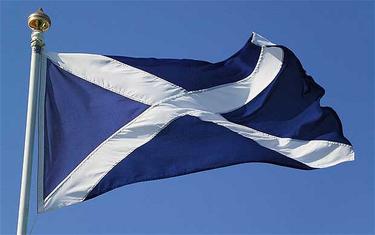
The United Kingdom, which has for 307 years included Scotland, is in danger of breaking up. Polls show a growing support for a “Yes” vote next week to take Scotland out of the union and on its own. With Scotland out of the Union, Great Britain would definitely be downgraded as a lending nation. The impact of such a step is virtually unknown. Much would change. A new flag would have to designed. Wales and Ireland would no doubt reconsider their status. Would they too desire to leave the Union? Britain left alone would be exposed as a diverse nation, shorn of its last vestige of glory with only grey hairs exposed. It would not be a pretty sight.
At stake is the existing status of Great Britain as an effective power in the world. America and the UK have had a long standing "Special Relationship” that has greatly benefited the world. Eleven years ago as the United States formed a coalition to go into Iraq it was Great Britain who provided key military and political support. Now, as America looks like it will have to ramp up another major military effort in the region, its key ally faces a possible breakup of it’s essential political and cultural basis. Anything that changes or weakens Great Britain’s standing among the nations impacts America. The Special Relationship would indeed be weakened.
Britain’s nuclear capability is stationed on Scottish soil. This nuclear deterrent is part of the key to its viability as a partner in NATO. If Scotland secedes from the union what does England do with its nukes? With a weakened political profile what kind of military power will Great Britain be able to project? Scotland’s men and women have played key historic roles as part of England’s military during this period of unity. Anything that weakens Britain’s military standing weakens America and by extension it weakens NATO. Make no mistake Russia’s Vladimir Putin is carefully watching this vote as he probes the resolve of Western Europe over Ukraine.
All this comes at a critical moment in world events. The Middle East is going through historic changes. The Syria and Iraq border has been redrawn by the emergence of ISIS, a virtual autonomous Islamic state which has proclaimed itself as a resorted Caliphate within the region. Whether this new group will remain in place or be replaced or reduced to a minor role is yet to be seen. Their presence and actions have everyone’s attention. How Europe, America and Asia handle this development is important. No one is served in the long term by a barbaric Islamist terror state within this volatile region.
Add to the mix the crisis in Ukraine. Russian leader Putin has invaded a sovereign nation's lands and violated an international border. No European nation will respond forcefully enough to restore Ukraine’s former borders. Indeed, whether or not Ukraine itself will muster the courage to resist this invasion, clean up its own political house and assert its rights as a nation are yet to be determined. Corrupted leadership exists within these nations and those who will suffer most are the people in the streets.
The Scottish vote next week matters when it is considered against the larger stage of current world events. The world order is being shaped by major events. If Scotland secedes from the United Kingdom and breaks up an important centuries old union then other, unintended things could happen. As small an event as this seems it is not occurring in a vacuum.

Tuesday, January 15, 2013

Two Thoughts on the "Special Relationship"

An interesting article from http://www.ucg.org/ about the relationship between the U.S. and Great Britain. This follows this post about children and monsters.  For a free magazine subscription or to get this book for free click HERE! or call 1-888-886-8632.

Two Thoughts on the "Special Relationship"


 The special relationship between the United States and Great Britain is referenced twice in today's Financial Times . Both speak truths overlooked and taken for granted by people on both sides of the Atlantic.


The common language of English is one of those bonds. That an American movie can be received and understood in England as well as a BBC series like Downton Abbey is in America illustrates the point. Michael Skapinker points out that the Afrikaans language of the South African Dutch is far different from the ancestral language of the Netherlands. British rule in the land severed the ties and helped create an insular language shared today by no one outside the country. It seems that America and England reveled in forming a common understanding of the differences in expression while retaining a unifying appreciation for the power of English.


The second reference is to Great Britain's future within the EU. Prime Minister David Cameron is due to give a major speech outlining his governments position on the role the country will have with the changing European bloc. The lead editorial points out Britain's EU membership is a key feature of its "special relationship" with the United States, Even American officials acknowledge this fact. Britain is seen as an advocate for American economic interests in Brussels, something it does not wish to lose. The evolving economic crisis of the the last four years has affirmed the critical importance of open communication with the world's largest global market. The EU may be wounded but it is not out. No right-minded observer thinks this. Should Great Britain exit the EU it would rearrange the seats at the world's biggest table.


The "special relationship" between American and Great Britain goes deeper than most understand. It is rooted in a Biblical story of God's promises to Abraham and his descendants. It is not a coincidence of nature these two nations rose to become world powers speaking the same language. No fair minded historian thinks otherwise. It's a story you can understand by reading our Bible study aid booklet The United States and Britain in Bible Prophecy It is the missing dimension in world history.

Monday, July 9, 2012

Has God already begun to break the pride of American power?

An interesting article from http://www.ucg.org/ about America's power. This follows this post about drug use.  For a free magazine subscription or to get this book for free click HERE! or call 1-888-886-8632.


article by Good News Editor


Has God already begun to break the pride of American power?


"Economies can be rebuilt, armies can be repopulated, but once a nation’s pride is gone it can almost never be restored" (Michael Savage, Trickle Down Tyranny , 2012, p. 1). These words are powerfully reminiscent of what God told the people of ancient Israel if they persisted in their sins: "I will break the pride of your power" (Leviticus 26:19And I will break the pride of your power; and I will make your heaven as iron, and your earth as brass:


See All...).


For those with eyes to see, the strength of this powerful biblical passage is finding its greatest fulfillment in our time.


Both Leviticus 26 and Deuteronomy 28 constitute the "blessings and curses" chapters of the Bible. The blessings are for obedience to God, while the curses are for dis obedience. Both chapters are prophetic.


Prophecy is often dual in nature. What is foretold may find fulfillment in two or even more occasions (see our free booklet You Can Understand Bible Prophecy ). There are many dual prophecies that have been fulfilled to some degree in the past but still await greater fulfillment in the future.


Has God already begun to break the pride of American power?


In mid-April Kwasi Kwarteng, a Conservative Party member of the British Parliament, wrote, "The Arab Spring, the threat of Iran as an emerging nuclear power, the continuing violence in Syria and the American reluctance to get involved there, have all signaled the weakness, if not the end, of America’s role as a world policeman" ("As Britannia Ceased to Rule, So Will America," International Herald Tribune, April 18, 2012).


Whenever we scan the national headlines, we see repeated warnings that the prophecy of broken pride in America’s national power is beginning to be fulfilled—and may be on the verge of accelerating with frightening speed if the nation doesn’t take drastic steps to repent and change its self-destructive course.

.

Monday, March 26, 2012

Current Events & Trends: Sexual abuse, rape widespread in America

An interesting article from http://www.ucg.org/ about the high amount of crime in America. This follows this post about the Time of the End. For a free magazine subscription or to get this book for free click HERE! or call 1-888-886-8632.

Current Events & Trends: Sexual abuse, rape widespread in America

Printer-friendly version


We are so far from the true sexual intimacy men and women were divinely intended to experience in godly marriage!

USA Today reported these shocking statistics at the end of last year: "Sexual violence is a widespread problem in the USA that strikes the majority of its victims early in life, according to a major government study released Wednesday. Nearly 1 in 5 women...report being raped in their lifetime," according to the Centers for Disease Control and Prevention (Janice Lloyd, "Study: Sexual Violence 'Widespread,’" Dec. 16, 2011).
In 2009 there were just over 155 million females in the United States, and probably somewhere near 160 million presently. Some 32 million women residing in America (ideally the land of the free and the home of the brave) have been raped at least once in their lifetime. These numbers are horrendous beyond words—and our sexually obsessed media culture bears a heavy responsibility.
"The study is the first to examine the prevalence of rape, sexual violence other than rape, stalking and intimate partner violence, and to report the damaging health consequences that last a lifetime," the article continued.
What callous and unfeeling men do to very young women and girls can only be called horrific and unconscionable. "Among female victims, 30% report being first raped when they were between 11 and 17 years old; 12% were 10 or younger." Clearly child abuse, especially of teenagers and very young girls, is a staggering problem in the United States.
Further, "nearly 1 in 2 women (44.6%) and 1 in 5 men (22.2%) experienced sexual violence other than rape at some point in their lives." How far from the true sexual intimacy men and women were divinely intended to experience in godly marriage! The master deceiver, Satan the devil, has turned what was meant by God to be the most pleasurable of human experiences between a husband and a wife into a living nightmare for the victims while inciting the brutality of callous perpetrators (see Revelation 12:9; 2 Timothy 3:1-4).
If you have been a victim of any type of sexual abuse, your life can be turned around by a genuine encounter with the living God. Read our free Bible study aid booklets Who Is God? and Marriage and Family: The Missing Dimension plus the PDF article "Dealing with Abuse ." (Source: USA Today. )

Wednesday, November 24, 2010

America's Declaration of Dependence on Divine Providence

An interesting article from http://www.gnmagazine.org/ about something you might want to consider on Thanksgiving! This follows this post  about coveting.  For a free magazine subscription click HERE! or call 1-888-886-8632.


America's Declaration of Dependence on Divine Providence


A commentary by John Miller

President of Superb Industries


America's Declaration of Independence is as much a declaration of dependence on Divine Providence as it is a declaration of independence from an oppressive monarch.

The Continental Congress in its first session on September 6, 1774 passed this resolution: "Resolved, that the Rev. Mr. Duché be desired to open Congress tomorrow morning with prayer, at Carpenter's hall, at nine o'clock."

Prayer for divine favor

Duché's prayer on September 7, 1774 pleaded: "O Lord! our heavenly Father, high and mighty, King of kings, and Lord of lords, who dost from thy throne behold all the dwellers on earth, and reignest with power supreme and uncontrolled over all kingdoms, empires, and governments. Look down in mercy, we beseech thee, on these our American States who have fled to thee from the rod of the oppressor, and thrown themselves on thy gracious protection, desiring to be henceforth dependent only on thee … All this we ask in the name, and through the merits of Jesus Christ thy Son and our Savior. Amen" (Thatcher's Military Biography, p. 121).

The Declaration of Independence begins by attributing the States' "entitlement" to become a "separate and equal station" to "the Laws of Nature and of Nature's God" and concludes with an appeal "to the Supreme Judge of the world for the rectitude of [their] intentions."

While it certainly declares the founding fathers' intent "to dissolve the political bands" to a despotic British sovereign and lists his "repeated injuries and usurpations," it does so on the basis of "unalienable rights" and principles endowed to them by Almighty God; their Creator, the Supreme Judge of the world.

The major founding personalities—despite their varying individual beliefs regarding religious matters—acknowledge that the success of their seemingly fragile endeavor rested firmly on the grace of God.

Confirmed by Franklin and Adams

Benjamin Franklin stated in a speech to the Continental Convention: "We have been assured, Sir, in the Sacred Writings, that 'except the Lord build the House they labor in vain who build it.' I firmly believe this; and I also believe that without his concurring Aid, we shall succeed in this political Building no better than the Builders of Babel" (The Works of Benjamin Franklin, by John Bigelow, p. 377).

John Adams confirms decades later in an 1813 letter to Thomas Jefferson the original intent of those formative years: "The general Principles, on which the Fathers Achieved Independence, were the only Principles in which that beautiful Assembly of young Gentlemen could Unite…Now I will avow, that I then believed, and now believe, that those general Principles of Christianity, are as eternal and immutable, as the Existence and Attributes of God" (John Adams to Thomas Jefferson, June 28th, 1813, from Quincy in The Adams-Jefferson Letters).

The founders' unabashed declaration of dependence on Divine Providence both for the justification of their cause and for the success of their endeavor should give us pause to ponder 233 years later.

Will it last?

Are we still on the same course? Do we still perceive the need for God's guidance and blessings?

That the God who created the Universe has blessed our nation with the choicest bounties of heaven is a matter of historical fact. One can argue about the manifold faults of our nation's endeavors, but no one can dispute the historical fact that the United States of America has become the most powerful and influential nation in the history of man.

But can it last? Foreclosures on the American dream are rampant. Jobs have been exported by the thousands. Plant closings are common. Not only is it difficult to buy products made in America, it may soon become difficult to find companies that are owned by Americans.

Perhaps a business associate of mine from Pennsylvania said it best a few years ago in a discussion about some of our impending challenges. "Greed," he said, "will become our undoing."

Today's moral bankruptcy

But should this surprise us? In contrast to our founding fathers who thought it necessary to invoke the principles and favor of Divine Providence, we live in a morally bankrupt materialistic society that wants more for less yesterday and hopes to pay for it tomorrow.

As a nation we deny the existence of our Creator, worshipping instead an evolving creation. We have banned prayer from public schools, driven God from the public square, banished His Law for the courtroom and scorned His guiding principles.


Learn how and why America became the recipient of unprecedented divine blessings and why a very different future lies ahead. Simply request, download or read online our free, enlightening booklet, The United States and Britain in Bible Prophecy..

For even further reading click here


Thursday, November 18, 2010

Sino-American currency war expected

An interesting article from http://www.wnponline.org/  about America's national financial state. This follows this post about coveting. For a free magazine subscription click HERE!  or call 1-888-886-8632.

Sino-American currency war expected


Most observers of the financial scene are fully expecting a damaging currency war principally between the People's Republic of China and the United States, but extending to the euro and other global currencies.


The Wall Street Journal reports: "The U.S. and China deepened their confrontation over Beijing's foreign-exchange policies, prompting fears that the dispute could undermine economic relations between the world's two largest economies ... The increasingly hostile rhetoric suggests that leaders aren't moving closer to an agreement over how best to address the issue" (Damian Paletta and John Miller, "China, U.S. Step Up Fight Over Currency]," Oct. 7, 2010).


Reuters columnist James Saft put it this way: "China is so adroit in melding diplomacy, jawboning and action to keep the value of its currency low, that you have to feel something approaching compassion for the plodding adversaries from the United States, Europe and Japan" ("China's Skill Is Breeding Frustration," International Herald Tribune, Oct. 6, 2010, emphasis added throughout).


The recent fall of the dollar offers no encouragement in effectively marketing potentially lucrative exports. The Wall Street Journal reported that "the U.S. dollar touched record lows against several currencies [Oct. 7], adding to already high levels of strains between countries competing in the financial markets to keep their export markets competitive ... As [the] dollar weakens, talk of a 'currency war' is building" (Tom Lauricella, "As Dollar Falls, No Clear Path Toward Stability," Oct. 8, 2010).


The Financial Times also expressed its concerns: "If the world is on the brink of an out-and-out currency war, a variety of battalions has been out on manoeuvres in the past few weeks. The Bank of Japan ... has launched a fusillade of intervention to hold down [Japan's currency] the yen in foreign exchange markets ... The main combatants, the US and China, continued to exchange rhetorical salvos" (Alan Beattie, "Global Economy: Going Head to Head," Oct. 8, 2010). The same article noted that, according to the managing director of the International Monetary Fund (IMF), "There is clearly the idea beginning to circulate that currencies can be used as a policy weapon."


Recent diplomatic pressure by the European Union (EU) to persuade China to let the yuan rise to ease the situation has been met with strongly stated rebuffs voiced by Chinese Premier Wen Jiabao. Clearly Beijing has the monetary reserves to maintain a relatively weak currency.


Financial Times columnist John Authers sums up the potential risks: "First that a 'loser' in the currency war snaps and resorts to a trade war and second that currency traders get caught as they did in 2008 and lose a bundle. Those losses could cascade elsewhere in the [global] financial system" ("Everyone Will Lose in a Global Currency War," Oct. 10, 2010).


Such developments would compound the fragility of the financial infrastructure around the world, especially at a time when many nations are trying to climb out of the worldwide recession. (Sources: The Wall Street Journal, Financial Times [London].)

Friday, November 12, 2010

Farewell to America as a Financial World Power

An interesting article from http://www.wnponline.org/ about America's national financial state. This follows this post about coveting.  For a free magazine subscription click HERE!  or call 1-888-886-8632.


Farewell to America as a Financial World Power


A major shift in world financial power centers is on the horizon. America is on the decline, while Asia and Europe are on the rise.

by Paul Kieffer

Just five years ago, it would have been hard to imagine an official representative of the German government making such statements in a speech outlining his government's position in Germany's parliament, the Bundestag. Yet at the end of September German Finance Minister Peer Steinbrück bluntly stated his view of the world financial crisis.


For Steinbrück one thing is absolutely clear: "The United States is the place of origin and the focal point of the crisis." Although the long-term effects of the crisis are as yet undetermined, Germany's finance minister prophesied that America "will lose its status as [the] superpower of the world's financial systems."


It doesn't take a lot of insight to identify America as the cause of the turbulence in the world's financial markets. The third quarter of 2008—especially the month of September—will go down as one of the most noteworthy chapters in the history of the modern financial system. In less than 30 days the world witnessed several alarming developments in the United States:


• The U.S. Department of the Treasury nationalized mortgage lenders Fannie Mae and Freddie Mac.


• The investment bank Lehman Brothers declared bankruptcy, making it the largest insolvency in American history with a $600 billion loss. Several German institutions had holdings in Lehman Brothers, including the Postbank, various national health insurance carriers and even the German national social security system.


• The investment banks Goldman Sachs and Morgan Stanley applied to operate as commercial banks to gain access to the FDIC for securing investor deposits. In so doing, both banks voluntarily accepted regulation by the U.S. Federal Reserve Bank.


• The U.S. Congress approved an emergency aid package worth $700 billion.


According to Steinbrück, the financial malaise in the United States has "spread like a poisonous oil spill." The European Union and several Western countries have adopted their own emergency measures to cope with the crisis. The Bundestag passed emergency legislation authorizing the establishment of an emergency fund for German banks that is proportionately even larger than America's $700 billion plan.


One result of the worldwide financial crisis is already foreseeable: "The world will not be the same again as it was before this crisis," was Steinbrück's prediction. Europe's response to the crisis is likely an indication of the shape of things to come.


In September German Chancellor Angela Merkel flatly rejected any possibility of Germany's participation in America's relief fund. She also criticized the United States in unusually direct public comments for delaying implementation of the Basel II agreement, which was initially published in June 2004 and creates an international standard that banking regulators can use when implementing regulations on how much capital banks need to set aside to guard against financial and operational risks that banks encounter in doing business.


The EU and Asia are also pushing for new regulations to oversee the world's financial markets. President Bush reluctantly approved additional regulation, although he clearly still embraces the traditional American free-market philosophy.


For 40 years former U.S. Federal Reserve Chairman Alan Greenspan has championed unregulated capital markets. "I made a mistake," Greenspan said in recent Congressional hearings, "in presuming that the self-interest of organizations, specifically banks and [other financial institutions], were such that they were best capable of protecting their own shareholders and the equity in the firms." Some analysts called this a non-apology apology, an attempt to deflect blame away from his management decisions.


An alternate view is that the U.S. Congress is itself largely responsible for the crisis because it interfered too much in the mortgage industry. It ordered lenders to give mortgages to people who would otherwise not be able to obtain one, leading to the now infamous subprime mortgage.


Regardless of the political viewpoint, it is naive to fail to account for human nature's ability to make use of an opportunity for personal enrichment at the expense of others. "Love of money" is one of the characteristics of those perilous times to arise in the last days, according the apostle Paul (2 Timothy 3:1-2). Even without the current crisis, though, the U.S. position as the world's financial leader has been threatened by America's risky financial policies.


A developing shift in the geopolitical balance of power

With the turbulence in world financial markets, "small" investors are understandably concerned about the safety of their deposits and investments. However, the current situation is more than just a financial crisis. It signals an impending irrevocable shift in global power. The age of America 's dominance as the world's financial superpower is coming to an end.


The damage to America's standing in the world community as a result of the current crisis will be irreversible. Government intervention in the U.S. economy and the nationalization of financial institutions defies the principles of free capitalist markets. The inherent weaknesses in America's economic system are being exposed, just as were those of the Soviet system.


The American system operates on the premise that capital markets will be self-regulating to everyone's benefit, assuming that human nature under Satan's influence is good. The result of this false premise—as the current financial crisis clearly demonstrates—is a "predatory capitalism" where quick profits are sought using greed techniques like short-selling, leveraged buy-outs, speculative hedge funds, etc., that provide no real economic value.


For years American administrations seemed to be schoolmasters, lecturing other countries on the virtues of sound financial planning, budget deficits and related issues. American influence within the International Monetary Fund was the reason countries like Argentina, Indonesia and Thailand went into recession when their governments were forced to cut government spending in exchange for funding via the IMF.


However, the United States did not practice what it was preaching. Overspending and the burden of unforeseen military obligations have led to an unprecedented increase in the federal budget deficit. At the end of September the U.S. national debt exceeded $10 trillion for the first time in history.


In the past, concerns over America's growing national debt were countered by the argument that the creditors were largely Americans themselves, who bought U.S. treasury bills. Today, however, 25 percent of America's annual federal budget deficit is paid for by foreign purchases of treasury bills.


The percentage has doubled in just the last 20 years and is set to continue to increase. Why? The average savings rate of the American public—the percentage of disposable income set aside in savings—is at an all-time low and is actually negative at about 2 percent. That means that the average American is actually spending more money each year than he has available to spend. By contrast, the German savings rate is at a postwar record level at 11.2 percent.


America's emergency aid package will lead to more deficit spending, which is being financed increasingly by foreign nations like China . Oddly enough, China has been one of the nations that Washington lectured in the past on sound fiscal policy. Today there don't appear to be any Chinese banks on the verge of bankruptcy.


Will China and other nations that have been major purchasers of U.S. treasury securities in recent years—countries like Russia and the petrodollar nations lining the Persian Gulf—continue to support the U.S. dollar as the world's leading currency? Or will the current crisis be the impetus that eventually leads to moving away from the dollar?


Whatever the answer is, the United States won't be determining the answer on its own. The current financial mess can only be solved via cooperation among the affected regions of the world.


The national debt trap

The U.S. economy is not about to collapse. It will remain the world's largest economy for the time being. However, the demise of former world empires was often tied to the adverse effects of financing military expenditures, with one adverse effect being the rise in national debt.


For example, the British Empire began to buckle under the weight of its colonial obligations in the 19th century, and expenditures for World War I pushed Britain further down the road to losing its position as the world's financial center. One of the reasons for the collapse of the Soviet system was the failure of its economy, which was strained by the war in Afghanistan and the attempt to keep up with the United States in the arms race.


It won't be any different for America when it comes to the impact of military costs and deficit spending. In the five years since the United States invaded Iraq, the national debt has grown by $500 billion annually. This trend would have threatened America's position as the world's primary financial center even without the current crisis.


Currently the publicly held portion of the national debt accounts for about 37 percent of the U.S. gross domestic product. When that portion of the national debt held by U.S. governmental agencies is factored in, the percentage rises to 65 percent. That is twice as high as at the end of World War II, which was the most expensive war in U.S. history. By contrast, the current ratio of national debt to GDP for China is only about 19 percent.


If current trends continue and legislated increases in U.S. entitlement programs and deficit spending for unfunded Social Security obligations are factored in, then America's national debt will be well over twice the country's annual GDP by the year 2040. "Who will want to lend us money then?" asks financial expert David Walker.


Proverbs 22:7 reveals an interesting principle that this development will have on America's status as a world leader: "The rich rules over the poor, and the borrower is servant to the lender." Most Christians do not realize that America's greatness as a nation—and her impending decline—was prophesied in the Bible. America's real heritage can be traced back to the ancient nation of Israel, comprised of the 12 tribes of Israel.


One of the blessings promised Israel for its faithfulness to God was a solid financial standing among the community of nations: "You shall lend to many nations, but you shall not borrow. And the LORD will make you the head and not the tail; you shall be above only, and not be beneath" (Deuteronomy 28:12-13). Conversely, Israel was prophesied to become a debtor nation if it chose to disobey God (verse 44).


Bible prophecy indicates a shift in the balance of power among the world's major regions for the period preceding Jesus' return. The main focal point of that development will be the continued decline of the English-speaking peoples that descended from their British homeland, including the United States. That's the real story behind the current financial crisis and the impact it will have on the future of the United States.


You can find more information on America's unknown heritage by reading our free booklet The United States and Britain in Bible Prophecy.


--------------------------------------------------------------------------------


Related Resources

Coping With a Growing Economic Crisis

Last year was the worst year for U.S. home foreclosures since 1932, at the height of the Great Depression. The economy may be in trouble, but you can take steps to prepare for the growing downturn.


The Debt Trap: How Do I Get Free?

How can you escape the debt burden? The solution isn't hard to understand, but it takes effort.


Are You a Slave to Debt?

Millions have allowed themselves to become enslaved to a harsh taskmaster—debt. Are you one of those caught in this trap? What can you do to break free?

Tuesday, November 9, 2010

Does the United States Appear in Bible Prophecy?

An interesting article from http://www.wnponline.org/ about Britian and America. This follows this post about Covetousness.  For a free magazine subscription click HERE!  or call 1-888-886-8632.

Does the United States Appear in Bible Prophecy?


Small nations like Egypt, Jordan and Libya are found in Bible prophecies of the time of the end. But what about the major English-speaking countries like the United States, Britain, Canada and Australia? Are they absent from Bible prophecy, or do we just not know where to look?

by Howard Davis

This may sound like crazy fiction to many people—and maybe to you too. But a considerable amount of Bible prophecy specifically talks about the United States and other major English-speaking Western nations at our time in history—a time the Bible calls "the time of the end."


Most readers of the Bible believe it's the basis of spiritual truth. Many know that a large number of prophecies are found within it. But without the vital key to understanding where these nations are found in Scripture, Christians cannot perceive what's going to happen next in the world.


Nations small and great described in Bible prophecy

Several midsize and smaller nations, such as Egypt, Jordan and Libya, are identified clearly in the Bible. So does it makes sense that the greatest single nation of our time or the greatest community of nations would be left out?


Many events now in the past were laid out in advance in the Bible. God's prophets accurately foretold the rise and fall of great empires and nations, and sometimes specific kings one after another. Many prophecies, including those dealing with the United States and other major English-speaking nations today, were spoken and written down thousands of years before their fulfillment.


Prophecies make up a fourth to a third of the Bible. But why are the scriptures that identify the United States and give advance news of its future not widely taught or understood among Christians today?


A primary reason is that the key to understanding the most sweeping prophecies has gone largely ignored. It can be found in the first books of the Bible—especially the book of Genesis.


Key to the prophecies of the United States

In the book of Genesis we find that God made great promises to one man—Abram, whose name was changed to Abraham. We read about this first in Genesis 12:1-3: "Now the Lord had said to Abram: 'Get out of your country, from your family and from your father's house, to a land that I will show you. I will make you a great nation; I will bless you and make your name great; and you shall be a blessing. I will bless those who bless you, and I will curse him who curses you; and in you all the families of the earth shall be blessed'" (emphasis added throughout).


Within God's statement to Abram are two promises. The first is that God would make from him "a great nation." Now when God calls something great, it is great!


Most people are blind to the tremendous meaning of this promise today. If they have any opinion at all, most think modern Jews fulfill this prophecy. But they are wrong. Although significant, the Jewish people have constituted a relatively small nation in world history—with modern nation-states such as the United States, China, India, Russia, Germany, Britain and others far exceeding them in terms of national greatness.


And indeed, God's promises of national greatness to Abraham's descendants have been fulfilled among other great nations—nations related to the Jewish people, as we will see.


Most churches generally acknowledge the second part of God's promise to Abraham in Genesis 12—that "in you all the families of the earth shall be blessed." This deals principally with the saving knowledge of the coming Messiah, Jesus Christ, and God's gift of eternal life through Him.


However, God intended to shape all history through His promises to Abraham's descendants of building a great nation—one that would dominate the world in the time before Christ's second coming. Another would have significant influence over much of the rest of the world.


Promise of a great nation and multiple nations

Later God expanded His national promises to Abraham. He said, "I will make your descendants as the dust of the earth; so that if a man could number the dust of the earth, then your descendants also could be numbered" (Genesis 13:16).


Then, when Abraham was 99 years old, God spoke again, making these national promises even bigger, more elaborate and everlasting: "I will make you exceedingly fruitful, and I will make nations of you, and kings shall come from you" (Genesis 17:6). So not just a single nation but multiple nations would descend from Abraham.


God also promised that He would deal with Abraham's descendants directly. He would guide their history through the ups and downs of prosperity, peace, war and poverty, whether they acknowledged Him or not: "And I will establish My covenant between Me and you and your descendants after you in their generations, for an everlasting covenant, to be God to you and your descendants after you" (verse 7).


It's important to recognize that the covenant promises of national greatness—including multiple nations—were to be fulfilled through Abraham's son Isaac (compare verses 19-21).


Notice that at first God told Abraham his descendants would possess and rule over the land of Canaan where Abraham sojourned: "Lift your eyes now and look from the place where you are—northward, southward, eastward, and westward; for all the land which you see I give to you and your descendants forever" (Genesis 13:14-15).


The land of Canaan is all the territory that theologians, Christian and Jewish, will acknowledge as the national promise to Abraham. But next let's notice that this promise extended to vast regions of the entire earth, not just the sliver of land in the Middle East. This fact helps to explain the many more Bible prophecies indicating that the Israelites would be spread throughout the world in the future—prophecies not fulfilled in the ancient world.


The expansion was revealed in a dream to Abraham's grandson through Isaac, Jacob—whose name was later changed to Israel. First, God reconfirmed that Jacob's descendants were to possess Canaan. God began the prophecy saying, "The land on which you lie I will give to you and your descendants" (Genesis 28:13).


A few centuries after the dream, Jacob's descendants were led out of Egypt and occupied the land of Canaan. This fulfilled the first part of the dream promise, but the Israelite territory was generally much smaller than the Egyptian empire and other great empires of the ancient world, except for a short time under David and Solomon.


But notice that God added a huge extension of national greatness in Jacob's dream: "Also your descendants shall be as the dust of the earth; you shall spread abroad to the west and the east, to the north and the south" (verse 14). They were to move far beyond their boundaries in the Middle East!


Later, God made it clear that the promise of multiple nations was to come through Jacob. In fact, God specifically told Jacob that through him would come "a nation and a company of nations" (Genesis 35:11).


Never fulfilled in ancient times

The promise of national expansion beyond Canaan into a great nation and company of nations was never fulfilled in biblical times by the Israelites. After having reached the peak of their power during Solomon's reign, the tribes of Israel split into two competing kingdoms at his death.


The 10 tribes of the northern part of the land of Israel formed the kingdom or "house" of Israel. Two tribes of the south, Judah and Benjamin (along with most of the scattered priestly tribe of Levi), formed the smaller territorial state of the kingdom or "house" of Judah—so named after the larger of the two tribes and from which the term "Jew" is derived.


Curiously, the first time reference to "Jews" is found in the Bible (2 Kings 16:5-6, King James Version), they are at war with their northern cousins in the kingdom of Israel! This shows, contrary to what most people assume, that "Jews" and "Israelites" are not the same peoples. Being descendants of Jacob or Israel, all Jews are Israelites. But not all Israelites are Jews!


Both of these small Middle Eastern states disappeared off the map in ancient times. First, Israel was taken into captivity through invasions by the Assyrian Empire, one in 733 B.C. and another in 722 B.C. Because of their many sins, as 2 Kings 17:23 tells us, "the Lord removed Israel out of His sight...So Israel was carried away from their own land to Assyria, as it is to this day." Never returning to their homeland, they became known to history as "the lost 10 tribes" of Israel.


The kingdom of Judah, repeating Israel's sins, was conquered and exiled by the Babylonian Empire in 586 B.C. Only a small group of exiles of the tribes of Judah, Benjamin and Levi (Nehemiah 11:3-36) returned from Babylon to set up the politically weak provinces where Jesus Christ's ministry took place.


However, after two disastrous rebellions against Rome from A.D. 66-73 and 132-135, Jewish power was shattered. They were only reestablished as the modern state of Israel in 1948. Even then, Israel exists as an independent state largely because the United States and Britain have supported its existence in the Middle East.


Joseph's descendants to be great

We see, then, that these promises of national greatness were never fulfilled anciently by either Israel or Judah. So how were they fulfilled?


Jacob, or Israel, was the father of 12 sons who founded the 12 tribes of Israel. When he went to Egypt to be reunited with his son Joseph, God inspired specific prophecies of national greatness to the two sons of Joseph. Of all the tribes of Israel, those from Joseph would be the specific nations on which the promise of national greatness would predominantly come—not the descendants of Judah, the Jews.


Again we need to understand that this would not be fulfilled among the people of the small kingdom of Israel in ancient times. Rather, the fulfillment would be vastly greater, yet still among the same peoples of the house of Israel, though much later in history, when Israelites would dwell around the world.


Jacob told His son Joseph that his two sons, Ephraim and Manasseh, would grow to become great powers on earth, not in a tiny portion of the Middle East. Conveying to them the promises originally given to Abraham (and later expanded), he said, "Bless the lads; let my name be named upon them, and the name of my fathers Abraham and Isaac; and let them grow into a multitude in the midst of the earth" (Genesis 48:16).


The language is very expansive. God said the promise of national greatness would mean a world power involving "a multitude" in the middle of the entire world system—global in scope and power.


Prophetic fulfillment "in the last days"

When were these stupendous prophecies of national greatness going to be fulfilled? The Bible is very clear. Just before he died, "Jacob called his sons and said, 'Gather together, that I may tell you what shall befall you in the last days'" (Genesis 49:1). The promises of global greatness to the descendants of Joseph would occur "in the last days"—the time leading up to the second coming of Jesus Christ!


The language in this prophecy shows that the blessings of burgeoning population, fabulous wealth, power and military dominance were to be fulfilled on a global scale.


Notice this prophetic description of Joseph's descendants "in the last days": "Joseph is a fruitful bough...his branches run over the wall...The arms of his hands were made strong by the hands of the Mighty God of Jacob" (verses 22-24).


God inspired Jacob to get quite specific about the characteristics to look for in the nations that would fulfill the promises made to Abraham, his grandfather. And the promise of national greatness would not be limited to the small corner of the world.


"The Almighty...will bless you with blessings of heaven above, blessings of the deep that lies beneath, blessings of the breast and of the womb. The blessings of your father have excelled the blessings of my ancestors, up to the utmost bound of the everlasting hills. They shall be on the head of Joseph" (verses 25-26).


The nation and company of nations identified

Jacob revealed that the descendants of Joseph would become two great peoples—brother nationalities. Those descended through his son Manasseh would become a great people, while those who would come through his other son, Ephraim, would become a group or multitude of nations (Genesis 48:19). Both would dominate the earth as no others in history.


Thus, through them would be fulfilled the earlier promise to Jacob of a nation and company of nations. But have the prophecies of Israel's global greatness been fulfilled? Yes—by two geopolitical powers on the world stage that have defined global greatness for the last two centuries.


Descended from Ephraim was the group of nations that formed out of the greatest empire the world has ever seen, the British Empire.


It ruled over five times the territory of the Roman Empire, and four times the number of people. Its territory encompassed almost a quarter of the earth's population and surface, including many of its most fertile and productive regions. Meanwhile, the Royal Navy ruled the seas. Out of this power came the British-descended countries of the Commonwealth of Nations—Britain, Canada, Australia and New Zealand.


From Manasseh came the great single nation. Its people dwelt with the Ephraimites in Great Britain until it was time for their separation through westward colonization and a war for independence—the American Revolution, by which came the formation of the United States.


The post World War II period saw America rise to replace the British Empire as the world's wealthiest and most dominant nation. Since World War II, up to half of the wealth of the world was owned by America. And until the current recession, 33 percent of the gross domestic output of the global economy was from the United States despite having only 4 percent of the world's population. Militarily, as Britain dominated the 19th century, America dominated the 20th—and remains the world's lone superpower.


Many prophecies in the books of Isaiah, Hosea, Jeremiah and Ezekiel foretold the future history of the ancient scattered Israelites who would one day form the United States and the other British-descended nations in the last days. The promises of national greatness God made to Abraham, Isaac, Jacob and Joseph are fulfilled in these nations. Americans called it their "Manifest Destiny" to become the greatest nation of the world in their time. They were right!


Yet these prophecies also show what is going to happen next to the United States—as well as all the British-descended nations. Your life and future may depend on understanding these prophecies and acting in accordance with God's warnings and instructions! GN


Related Resources

The United States and Britain in Bible Prophecy

Where does the United States of America appear in Bible prophecy? Does Bible prophecy neglect to mention major nations such as the United States, Canada and the United Kingdom? In fact, many prophecies do mention these nations.


You Can Understand Bible Prophecy

How will the world finally find peace? What will happen before that finally comes to pass? The Bible reveals many details about end-time events and the major trends that will lead up Jesus Christ's return.


America and Britain's Global Reach—Prophesied in the Bible?

The United States and Britain combined to defeat European tyranny in two world wars, then Iraqi tyranny twice in the last 12 years. Why has it fallen to them to police the world?


America's Astounding Destiny: A Nation Losing Its Way

In parts 1 and 2 of this series we saw the birth and expansion of the United States fulfilling Bible prophecy. We end with a look at America's replacement of Britain as global protector and how a nation's turning its back on God threatens its existence.


America's Astounding Destiny Rise To Greatness

In part 1 of this series we noted America's unlikely break from Britain to chart a new and independent course—in fulfillment of Bible prophecy. Now we examine the foretelling of the United States' rise to greatness and its dramatic fulfillment.


America's Astounding Destiny: Was It Foretold in the Bible?

The rise of the United States of America from British colony to superpower is an incredible story worth retelling. Equally incredible is the fact that the rise of the United States and the British Empire was foretold thousands of years ago.


What's Ahead for America?

Sensing a weakness of will, hostile nations appear to be ganging up on America. Some consider the United States a second-rate power. What are some of the specific problems, internationally and domestically, and how will they affect America's future?

Thursday, August 5, 2010

Immigration: How a Foreign Invasion Is Reshaping the West

An interesting article from www.gnmagazine.org about immigration is an invasion that is reshaping the west! This follows this post to read for "Christmas in July." This follows this post about prophecy's purpose. For more interesting stories like this click here to follow this blog.

Immigration: How a Foreign Invasion Is Reshaping the West
In the last 50 years, millions of people from the Third World have moved into the Western democracies. Many have contributed to the welfare of these nations, but others lack work skills, proper education and democratic convictions. What will it mean if and when these ever-growing minorities begin to constitute the majority in several key countries?
by Melvin Rhodes
Suddenly, immigration is becoming a bigger issue throughout the Western world. Governments around the globe are very concerned about potential problems that massive immigration may bring.

The American state of Arizona, which borders Mexico, recently passed a law authorizing police to inquire of people they've stopped for other legitimate reasons if they are in the United States legally, should there be sufficient reason to suspect otherwise, and to ask for proof of their legal status in such case. Illegal immigrants have contributed to mounting crime, increasing health and educational costs and other problems in the state.

Most of Arizona's citizens support the law, though some organizations outside the state have announced boycotts, which could cost it a great deal. Even the federal government is considering filing lawsuits to prevent the law from being implemented.

Immigration reshaping Western countries
A car bomb placed in New York City's Times Square on May 1, 2010, was the 11th attempted terrorist act in the city of New York since the attacks of Sept. 11, 2001. The bomb—which, thankfully, failed to go off as planned—raised some deeply troubling questions about even legal immigration.

How could a young Pakistani immigrant who lived the American dream possibly want to kill hundreds of his fellow citizens? The United States and other Western democracies, still coming to terms with radical Islam, are finding it hard to fathom. It just doesn't fit into the multicultural ideal!

France, Belgium, Italy and other European countries are passing laws to block Islamic women from wearing full veils in public. Germany's Chancellor Angela Merkel is insisting the country's large Turkish population should assimilate, while the Turkish prime minister insists they should have their own separate schools to protect their Islamic identity.

Meanwhile, a Danish cartoonist whose cartoon depicting the prophet Muhammad led to riots in a number of countries was threatened by an ax-wielding intruder, and a Swedish cartoonist was physically attacked by protesters shouting "Allah is great!" as he gave a lecture on free speech. Muslims insist that freedom of speech, long cherished in the West, has its limits.

In Britain, the issue of immigration may have cost Prime Minister Gordon Brown the recent election. When a 65-year-old supporter of his own party approached him during the campaign and expressed concern about all the immigrants from Eastern Europe flowing into her neighborhood, Mr. Brown was overheard in his car describing her as a "bigoted woman." Leaders clearly don't like the sensitive issue of immigration being brought up.

But it's not going to go away.

Majorities becoming minorities in their own land
People are feeling increasingly threatened by the changing demographics in their own nations. The ethnic composition of Western countries is rapidly altering due to massive immigration in the last few decades. The United States alone took in 10 million more immigrants in the seven years following Sept. 11, 2001—many of them from countries rife with radical Islamists. To many citizens, this just doesn't make sense.

An increasing number of Americans are aware that these demographic changes will lead to a majority nonwhite population in their own lifetimes. How they handle this will determine the country's future. As Time magazine put it: "How the current majority reacts to its incipient minority status is the most crucial socio-demographic issue facing the country" (Gregory Rodriguez, "The White Anxiety Crisis," March 22, 2010, international edition).

In an amazing break from tradition, many Western nations changed their immigration policies after World War II and welcomed millions of people from the Third World. Even the United States, often deemed a cultural "melting pot," had an immigration policy prior to 1965 that favored maintaining the racial status quo.

The late Senator Edward Kennedy's 1965 immigration bill deliberately changed earlier policy, welcoming a big influx of immigrants from the world's poorer nations. At the time, Americans were assured it would not alter the ethnic mix and social fabric of their nation.

Now it's evident this assurance was false. One could easily make the argument that the election of America's first African-American president would not have happened without the reality of changing demographics.

Immigration leading to unrest
The issue of immigration was briefly discussed on NBC's Chris Matthews Show on May 9, 2010.

During the program, John Heilemann of New York magazine observed: "We're going through one of these once-in-a-century transformations that cuts across a lot of different things—cultural change, there's big demographic change, there's big economic change, and technological change, and it makes people really nervous. It's been going on for about 15 years in America—the sense of anxiety, the sense we've lost control of our lives."

Also on the show was Cynthia Tucker, a columnist with the Atlanta Journal-Constitution, who offered this perspective: "I've always thought that this great melting pot or salad, however you want to describe this diverse nation, works as long as the economy is good, as long as the pie is growing and every American believes he or she has an opportunity to get a piece of that pie, we're all pretty happy."

However, now that the economy is not doing so well, the United States could be in for a more stressful time when it comes to assimilating the various ethnic groups that now live in the country.

The same applies elsewhere, of course. Some of the eurozone countries are on the brink of financial collapse due to decades of overspending. Severe government spending cuts are inevitable. The nations have already seen unemployment rise. Without jobs, many are already blaming immigrants for their situation.

In the latest election in Britain, the anti-immigrant British National Party almost tripled the share of the vote it received in the 2005 election. In fact, anti-immigrant parties are seeing growing support in a number of European countries.

The perceived threat applies on several different levels.

Security a growing concern
Besides feeling that their way of life is threatened, both culturally and economically, people are also becoming more concerned about security as radical terror movements increasingly recruit homegrown terrorists. Commenting on the recent attempted bombing in Times Square, Johns Hopkins School of Advanced International Studies professor Fouad Ajami wrote the following in the May 10, 2010, Wall Street Journal:

"'A Muslim has no nationality except his belief,' the intellectual godfather of the Islamists, Egyptian Sayyid Qutb, wrote decades ago. Qutb's 'children' are everywhere now; they carry the nationalities of foreign lands and plot against them. The Pakistani-born Faisal Shahzad [who set up the car bomb] is a devotee of Sayyid Qutb's doctrine, and Maj. Nidal Malik Hasan, the Fort Hood shooter, was another.

"Qutb was executed by the secular dictatorship of [Egyptian President] Gamal Abdel Nasser in 1966. But his thoughts and legacy endure. Globalization, the shaking up of continents, the ease of travel, and the doors for immigration flung wide open by Western liberal societies have given Qutb's worldview greater power and relevance. What can we make of a young man like Shahzad working for [the cosmetics company] Elizabeth Arden, receiving that all-American degree, the MBA, jogging in the evening in Bridgeport, then plotting mass mayhem in Times Square?

"The Islamists are now within the gates. They fled the fires and the failures of the Islamic world but brought the ruin with them. They mock national borders and identities. A parliamentary report issued by Britain's House of Commons on the London Underground bombings of July 7, 2005, lays bare this menace and the challenge it poses to a system of open borders and modern citizenship.

"The four men who pulled off those brutal attacks, the report noted, 'were apparently well integrated into British society.' Three of them were second-generation Britons born in West Yorkshire. The oldest, a 30-year-old father of a 14-month-old infant, 'appeared to others as a role model to young people.' One of the four, 22 years of age, was a boy of some privilege; he owned a red Mercedes given to him by his father and was given to fashionable hairstyles and designer clothing...Two of the four, rather like Faisal Shahzad, had spent time in Pakistan before they pulled off their deed.

"A year after the London terror, hitherto tranquil Canada had its own encounter with the new Islamism. A ring of radical Islamists were charged with plotting to attack targets in southern Ontario with fertilizer bombs. A school-bus driver was one of the leaders of these would-be jihadists.

"A report by the Canadian Security Intelligence Service unintentionally echoed the British House of Commons findings. 'These individuals are part of Western society, and their "Canadianness" makes detection more difficult. Increasingly, we are learning of more and more extremists that are homegrown. The implications of this shift are profound'" ("Islam's Nowhere Men: Millions Like Faisal Shahzad Are Unsettled by a Modern World They Can Neither Master nor Reject," emphasis added).

Prophecy warned of consequences for national sins
The modern descendants of the ancient Israelites include many of the nations that make up today's Western world. In Leviticus 26 and Deuteronomy 28, God promised tremendous physical blessings if they would obey Him, but He also warned them of the dire consequences of disobedience. The promised blessings for obedience are awe-inspiring; the assurances of punishment for sins are deeply troubling.

These chapters make for sobering reading when we consider trends in recent years. In Deuteronomy 32, verse 25 warns of "terror within"—a prophecy clearly being fulfilled now, with an even greater increase in the problem likely still to come.

The apostle Paul spoke of how God created "from one blood every nation of men to dwell on all the face of the earth, and has determined their preappointed times and the boundaries of their dwellings" (Acts 17:26).

Of course, this passage does not mean that correctly controlled immigration is inherently wrong, seeing that when the Israelites left Egypt the door was opened for a certain number of non-Israelites to dwell among them. However, they had to leave their culture behind and abide by the same laws God gave the Israelites. We are now learning the negative consequences of the multicultural society that has been propagated for the last 50 years.

Mixing cultures, and especially religions, can be volatile! We should have known that before the change in immigration laws just by looking at history and at other societies where mixing religions has led to serious tension and conflict.

The people of Europe feel particularly threatened. With higher population densities than the United States and closer proximity to the volatile Middle East, many West European nations have significantly high Muslim populations. Add to this Europe's low birthrate in contrast to the high Islamic birthrate, and the potential for violent conflict only increases.

And as we've seen, it's not just security that is threatened. Economics also play a major role. God Himself warned of serious consequences for the native peoples as a result of immigration: "The alien who is among you shall rise higher and higher above you, and you shall come down lower and lower. He shall lend to you, but you shall not lend to him; he shall be the head, and you shall be the tail" (Deuteronomy 28:43-44).

In other words, the strangers—those of foreign cultures and religions—will end up on top, in control and in time possibly dictating a way of life foreign to the indigenous population.

This is, of course, exactly what happened when European settlers started arriving in North America, Australia and elsewhere—they ended up on top and in control, displacing the native populations. Now, two or three centuries later, they are the ones losing control to newer arrivals.

Immigration trends and birthrates show that sometime in this century the peoples who currently dominate most of the Western nations will be minorities in their own lands. Whatever you may think of the ethnic mix, the reality is that significant change is underway, and it's threatening no less than the future of Western civilization. GN


Related Resource
The United States and Britain in Bible Prophecy
Where does the United States of America appear in Bible prophecy? Does Bible prophecy neglect to mention major nations such as the United States, Canada and the United Kingdom? In fact, many prophecies do mention these nations.

Wednesday, June 30, 2010

Morality is the Secret of America's Founding Fathers

An interesting article from Virtual Christian Magazine analyzing America's founding fathers. This follows this post about the Gulf Spill. For more interesting stories like this click here to follow this blog.

Morality is the Secret
By Walter Hawk
Many of America’s Founding Fathers were inspired by Christian principles. Is there anything we can learn from them?
he founding of the United States of America was an amazing revolution for the establishment of personal freedom based on a written constitution, which in turn was largely based on the principles taught in the Bible. Let’s take a look at the dedication of those founders and learn some lessons that we can apply in our Christian lives.
If you looked at what is written at the close of the American Declaration of Independence, you would see this sentence: “And for the support of this Declaration with a firm reliance on the protection of divine providence, we mutually pledge to each other our lives, our fortunes and our sacred honor.”
Freedom of religion was as important to our forefathers then as it is to us today.
Now let’s change this statement and make it read this way: “For the support of God’s work, for which I am called, with a firm reliance on the protection of His divine providence, we mutually pledge to each other and to God our lives, our fortunes and our sacred honor.” You should also ask yourself, “Do I have the dedication, commitment and resolve necessary to pledge to God my life, my fortune and my sacred honor?”
During the writing of the Declaration of Independence, a total of 86 alterations were made to the proposed draft. After three days the vote was taken by the colonies. On July 4, 1776, the Declaration of Independence was adopted and was signed in Philadelphia on August 2.
The full title of the Declaration of Independence is “The Unanimous Declaration of the thirteen United States of America,” and it starts with this:
“When, in the course of human events, it becomes necessary for one people to dissolve the political bonds which have connected them with another, and to assume among the powers of the earth, the separate and equal station to which the laws of nature and of nature’s God entitle them, a decent respect to the opinions of mankind requires that they should declare the causes which impel them to the separation.
“We hold these truths to be self-evident, that all men are created equal, that they are endowed by their Creator with certain unalienable rights, that among these are life, liberty and the pursuit of happiness. That to secure these rights, governments are instituted among men, deriving their just powers from the consent of the governed. That whenever any form of government becomes destructive to these ends, it is the right of the people to alter or to abolish it, and to institute new government, laying its foundation on such principles and organizing its powers in such form, as to them shall seem most likely to effect theirs and happiness. Prudence, indeed, will dictate that governments long established should not be changed for light and transient causes; and accordingly all experience hath shown that mankind are more disposed to suffer, while evils are sufferable, than to right themselves by abolishing the forms to which thy are accustomed. But when a long train of abuses and usurpations, pursuing invariably the same object evinces a design to reduce them under absolute despotism, it is their right, it is their duty, to throw off such government, and to provide new guards for their future security.”
The Bill of Rights
From this declaration came the United States Constitution, which contains the Bill of Rights. Let us take a look at the first two Amendments, as these are the two that we hear a lot about. As you hear these words, think about where the Founding Fathers got the inspiration for these “laws.” (You may also want to read Deuteronomy chapters 4 through 31.)
Amendment 1: “Congress shall make no law respecting an establishment of religion, or prohibiting the free exercise thereof; or abridging the freedom of speech, or of the press; or the right of the people peaceably to assemble, and to petition the government for a redress of grievances.”
Freedom of religion was as important to our forefathers then as it is to us today. They did not want the government to tell them who, what or how to worship. Therefore, we have the First Amendment, which was intended to allow worship without establishing any particular religion as the only one acceptable.
Amendment 2: “A well-regulated militia, being necessary to the security of a free State, the right of the people to keep and bear arms, shall not be infringed.”
We should examine the commitment to this country by these men, and compare it to our commitment to God.
You must understand the reason for the Second Amendment is to make sure that the people of this country never find themselves in a situation where they are unarmed against a government prone to tyranny. Patrick Henry is remembered for these words: “An appeal to arms and the God of hosts is all that is left us. But we shall not fight our battle alone. There is a just God that presides over the destinies of nations. The battle sir, is not to the strong alone. Is life so dear or peace so sweet as to be purchased at the price of chains and slavery? Forbid it almighty God. I know not what course others may take, but as for me, give me liberty, or give me death.”
Christian leaders
Was Patrick Henry a Christian? In 1776, he wrote, “It cannot be emphasized too strongly or too often that this great Nation was founded not by religionists, but by Christians: Not on religious, but on the Gospel of Jesus Christ. For that reason alone, people of other faiths have been afforded freedom of worship here.” But what of other American leaders?
“I am a real Christian, that is to say, a disciple of the doctrines of Jesus. I have little doubt that our whole country will soon be rallied to the unity of our Creator and, I hope, to the pure doctrine of Jesus also.”(Thomas Jefferson, from the front of his Bible)
“The highest glory of the American Revolution was this: It connected in one indissoluble bond the principles of civil government with the principles of Christianity.”(John Quincy Adams, sixth U.S. President)
And it has not been just single leaders espousing this view. In 1782, the United States Congress voted this resolution: “The Congress of the United States recommends and approves the Holy Bible for use in all schools.”
Changes
However, 1947 saw a radical change of direction for the Supreme Court. It required ignoring every previous precedent set by the Supreme Court in the past 160 years. For the last 60+ years, there have been multiple court challenges opposing the influence of religion, and especially anything Bible-based. The opposition is usually characterized as upholding “separation of church and state,” an ambiguous and misleading phrase. In the ways intended by the founding fathers, the United States has always practiced separation of church and state. Some of the legal changes that have taken place have been beneficial, but it is tragic that acknowledgment of God, the Bible, etc. have been completely pushed out of the classroom in the name of “separation of church and state.”
It has been said that our founding fathers created the constitution as a living and adaptable document, which would allow the changes that came about in 1947. But total prohibition of all things religious would seem to contradict what we know of those early patriots. What kind of men were the 56 signers who adopted the Declaration of Independence and who, by their signing, committed an act of treason against the Crown? Most of us know little of the signers. Who were they? What happened to them?
Ben Franklin, at 70, was the only truly old man there. Eighteen were under forty and forty were in their twenties. Of the fifty-six, twenty-four were judges and lawyers, eleven were merchants, nine were landowners and farmers, and the remaining twelve were doctors, ministers and politicians. With only a few exceptions, these were men of substantial property. All but two had families. The vast majority were men of education and standing in their communities. They had economic security as few men had in the 18th century. It was Ben Franklin who noted, “Indeed we must all hang together; otherwise we shall most assuredly hang separately.”
Setting an example
We should examine the commitment to this country by these men, and compare it to our commitment to God. The penalty for treason was death by hanging. These men wanted equality with the mother country, beginning with the principle of taxation with representation. As Christians, we too want to be a part of something better, ever committed to following the path of our savior Jesus Christ at any cost.
Of those 56 who signed the Declaration of Independence, nine died of hardships during the war. Five were captured and imprisoned, and each case dealt with brutal treatment. Several lost wives, sons or entire families. One lost his thirteen children. Two had wives that were brutally treated. All were, at one time or another, the victims of manhunts and driven from their homes. Twelve signers had their homes completely burned. Seventeen lost everything they owned, yet not one defected or went back on his pledged word.
When you were baptized, what kind of a commitment did you make to God? Because of what we know from the Bible prophecy about end-time persecution, all these things could happen to each one of us—and maybe will in the not too distant future. When you were baptized, you really pledged to the service of God your life, finances and your sacred honor.
The 56 signers of the Declaration of Independence proved by their every deed that they made no idle boast when they composed the most magnificent curtain line in history. “And for the support of this Declaration with a firm reliance of the protection of divine providence, we mutually pledge to each other our lives, our fortunes and our sacred honor.” Why would these men do that willingly? Why did you willingly become baptized and make a commitment to God for His work?
America’s responsibility
In this Satan-blinded world, we as God’s people are responsible to be examples of God’s law in action.
Some look to the United States, seeking answers to painful and bitter questions. Americans have rarely been so confused about right and wrong, about what is acceptable and what is to be forcefully condemned. We are learning the hard way that a self-governing nation must consist of self-governing individuals. Violence, crime, drug abuse, sexual promiscuity, and out-of-wedlock births all undermine the blessings of liberty and prosperity. Galatians 6:7 tells us we reap what we sow.
If America makes the economic, political, and moral changes necessary to move forward in the years ahead, then the rest of the world has a much better chance of getting it right. America got a great start because of God’s blessings. Therefore, we carry a special responsibility to honor and obey God and to be a light to the rest of the world. God will hold us as a nation and individuals accountable for our failure.
Freedom is the presence of justice tempered with mercy (Micah 6:8). Freedom is following God’s laws, which insure the success of these things. That’s why James called God’s law the “law of liberty” (James 1:25; 2:12). Freedom is a priceless treasure that the state is supposed to safeguard, because human beings have an intrinsic right to be free that comes not from the state but from God. To the Founding Fathers, this was a “self-evident” truth.
The Founders believed that man’s place in the universe was no accident; that man himself and the world in which he lives were created and sustained by a just and loving God. George Washington wrote, “It is impossible to account for the creation of the universe without the agency of a Supreme Being and it is impossible to govern the universe without the aid of a Supreme Being.” James Madison put it this way: “The belief in a God All Powerful, wise and good, is so essential to the moral order of the world and to the happiness of man, that arguments which enforce it cannot be drawn from many sources.”
Statements from the Founding Fathers
Our forefathers and leaders made various statements which when put together, give a message. These are great thoughts from great Americans and they have a lot of meaning for us today.
“We have been the recipients of the choicest bounties of Heaven. We have been preserved these many years in peace and prosperity. We have grown in numbers, wealth and power as no other nation has ever grown. But we have forgotten God. We have forgotten the gracious hand which preserved us in peace, and multiplied and enriched and strengthened us; and we have vainly imagined, in the deceitfulness of our hearts, that all these blessings were produced by some superior wisdom and virtue of our own. Intoxicated with unbroken success, we have become too self-sufficient to feel the necessity of redeeming and preserving grace, too proud to pray to the God that made us! It behooves us, then, to humble ourselves before the offended Power to confess our national sins, and to pray for clemency and forgiveness.” (Abraham Lincoln)
“The choices you make in moral and religious questions determine the way America will go. The choice before us is plain: Christ or chaos, conviction or compromise, discipline or disintegration. I am rather tired hearing about our rights and privileges as American citizens. The time has come; it now is, when we ought to hear about the duties and responsibilities of our citizenship. America’s future depends upon her accepting and demonstrating God’s government. It is just as plain and clear as that.” (Peter Marshall)
“History fails to record a single precedent in which nations subject to moral decay have not passed into political and economic decline. There has been either a spiritual awakening to overcome the moral lapse or a progressive deterioration leading to ultimate national disaster.”(General Douglas MacArthur)
“We have staked the whole future of American civilization not upon the power of government, far from it. We have staked the future of all our political institutions upon the capacity of mankind for self government; ourselves, to sustain ourselves according to the Ten Commandments of God.” (James Madison)
Life, liberty and the pursuit of happiness; the order of these rights, first life, then freedom, and then the equal opportunity to pursue ones own happiness, was written with great care and precision. The founders understood the need to balance man’s right to be free with man’s responsibility to be honest, just and fair. Switch the order of these fundamental human rights putting the pursuit of happiness before liberty, or liberty before life and you end up with moral chaos and social anarchy. Deny the God-given nature of these rights and you open the door to tyranny.
“Can the liberties of a nation be sure when we remove their only firm basis, a conviction in the minds of the people, that these liberties are the gift of God?”(Thomas Jefferson)
“We have no government armed with power capable of contending with human passions unbridled by morality and religion. Our Constitution was made only for a moral and religious people. It is wholly inadequate to the government of any other.”(John Adams)
Modern liberalism rejects absolute moral standards and has abandoned the proper ordering of man’s fundamental rights. As a result, modern liberalism has undermined a long-held American principle: that the law should protect the weakest among us, not just the strong, the healthy, and the rich. Liberalism wrongly insists on parents’ freedom to choose an abortion while simultaneously denying parents’ freedom to choose the schools their children may attend. Its moral confusion over the sanctity of human life and the vital importance of the traditional family has consequently reshaped American law and society.
In this Satan-blinded world, we as God’s people are responsible to be examples of God’s law in action. We are to let God’s light shine through us to a dark world, showing the world that Satan will not win. Are we willing to accept the responsibility God has put on us—to demonstrate to America as well as to the world, that God’s way to live brings happiness, freedom, and productive life?
Each one of us needs to affirm, “For the support of God’s work, for which I am called, with a firm reliance on the protection of His divine providence, we mutually pledge to each other and to God our lives, our fortunes and our sacred honor.”

Further reading
Ask to receive the following free booklets for more information: The United States and Britain in Bible Prophecy, Who is God? and The Ten Commandments.

Free Literature