Is Islam really a peaceful religion, as we are often told?
When the 9/11 hijackers flew planes into the World Trade Center, the
Pentagon and a field in Pennsylvania, killing 3,000 Americans and
citizens of other countries, did they violate their own
faith's teachings?
When Muslim suicide bombers blow themselves up, as hundreds have done
in recent years, what motivates them? What reward do they expect now or
in the afterlife?
The answers to these questions are crucial if we are to understand what
is really going on in the world around us. Otherwise we risk burying
our heads in the sand and remaining blind to danger.
Let's begin with a simple question: Could the actions of Muslim
terrorist groups have developed logically from their faith's
time-honored theology?
Do the traditional interpretations of the Islamic faith's sources of
authority—its holy book the Koran (Qur'an), the Hadith (collections of
the acts and sayings of Muhammad) and Sharia law—promote violence and
war against non-Muslims (infidels)?
The “Arab Spring” has cleared from the world's stage several long-time
secular nationalist Arab dictators, with Islamic religious groups lining
up to grab a share of power. Further, many Muslims, not least among
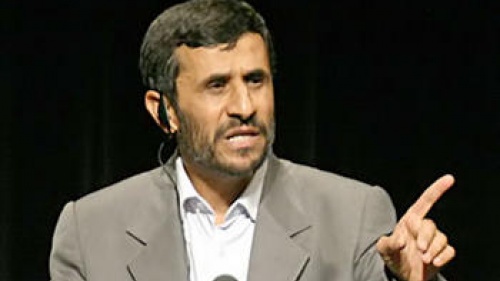
them Iranian President Mahmoud Ahmadinejad, believe in the imminent
arrival of an Islamic messiah known as the Mahdi, or “Guided One,” who
will establish Islam as the world's dominant religion.
So it's a good time to carefully examine the theological underpinnings
of Islam that are behind so many of today's conflicts and that could
lead to the biblically prophesied end-time clash between the Middle
Eastern Arab countries and the West.
Why is Islam so different?
In the last century, political groups seeking independence from the
Western colonial powers or wishing to impose communist ideology on their
nations were the main sources of terrorism. But with almost all former
colonies having gained independence, and with the fall of the Soviet
Union and other Eastern Bloc nations discrediting communism, what is
today's largest source of terrorism?
What do an overwhelming majority of terror attacks in recent years have
in common? The perpetrators are Muslim. Why? Certainly many Muslims are
peaceful. Not all advocate violence or terrorism. But there is
evidently something about Islamic teachings or the conditions of Muslim
lands and communities that provoke far more Muslims, proportionately, to
resort to violence than equally poor, mistreated and uneducated people
of other faiths.
So is it poverty, lack of education, lack of political freedom or lack
of opportunity that explains Islamic terrorism? A desire for national
independence or a history of suffering under imperialism hardly explains
why Muslim terrorist groups presently kill far more people for
political and religious reasons than non-Muslims who've
suffered similarly.
Are poverty and lack of education the cause?
According to an article in the British newsmagazine
The Economist,
a conference in Ireland brought together dozens of former terrorists
and political revolutionaries to try to uncover the roots of
violent extremism.
Such factors as child abuse, alcoholism, “lonely teenage years,” the
desire to belong, and personal identity crises were used to explain why
the participants became terrorists. But as the article acknowledged,
“For some, most notably those who had been involved in Islamist groups,
ideology played an important and complex role” (“Violent Extremists: Of
Skinheads and Jihadists,” July 2, 2011, p. 51).
Young people may become alienated for many reasons, but why do
disaffected Muslims, including second-generation ones born in Europe in
circumstances considerably more privileged than their parents, generally
commit its worst recent terrorist attacks?
People's levels of poverty and education correlate poorly with people's
choice to become terrorists, explain Alan Kreuger and Jitna Maleckova
in their
Journal of Economic Perspectives article “Education, Poverty, and Terrorism: Is There a Causal Connection?” (Fall 2003, pp. 119-144).
They found that no significant correlation appears between the amount
of terrorism and the average levels of either education or national
GDP
per capita figures (adjusted for the level of civil liberties).
Likewise, Claude Berrebi's 2007 study of 285 Palestinian terrorists
discovered that they had better educations and came from less
poor families.
For example, Al-Qaeda and other Islamist groups blame America's
interventions in the Middle East and/or Israel's treatment of the
Palestinians for provoking the 9/11 and other terrorist attacks.
However, the United States has intervened in Latin America much more and
over a longer time, yet has provoked very little terrorism from there
compared to the Middle East.
Likewise, China's Communist rulers worry far less about Buddhist
Tibetans attacking Beijing than Russia's leaders fear Muslim Chechens
striking Moscow (as has happened repeatedly). A desire for national
independence, political oppression and/or a history of imperialism
hardly explains why Muslim terrorist groups have killed far more people
than non-Muslims in similar circumstances.
Since such non-ideological, sociological factors can't account for
grossly disproportionate Muslim terrorism, let's look for
other explanations.
To understand the mindset behind such actions, secularly minded people
need to overcome a skeptical tendency to believe religion never really
influences anybody's actions. The fact is, it has and does. History
shows that Islamic theology has and will stir up far more religious wars
and terrorist actions proportionately than Christianity, Judaism,
Hinduism or other religious belief systems.
Some Koranic verses abrogate other verses
Those who claim that Islam is a religion of peace commonly cite verses
from the Koran such as Sura 2:256, “There shall be no compulsion in
religion,” and Sura 4:90, “Therefore, if they keep away from you and
cease their hostility and offer you peace, [Allah] bids you not to harm
them” (Dawood translation throughout).
However, few admit that, because many verses in the Koran contradict
other verses, Islamist leaders long ago formulated the principle of
naskh, or “abrogation,” which teaches that Allah's later revelations override His earlier ones.
This is even spelled out in Sura 2:106, which says, “If We [Allah]
abrogate any verse or cause it to be forgotten, We will replace it by a
better verse or one similar. Do you not know that [Allah] has power over
all things?”
Muslims believe Allah revealed the Koran to Muhammad over a span of 22
years. Interestingly, almost all of the peaceful, tolerant verses appear
in the earlier “Meccan” suras (chapters) of the Koran, but the verses
promoting violence and holy war emerge in the later “Medinan” suras.
Naskh isn't some esoteric theory with no practical consequences. Two years before killing 13 people at Fort Hood, Texas, the Muslim
U.S.
Army Major Nidal Malak Hasan cited this principle in relation to jihad
in a presentation explaining Islam that he gave at Walter Reed Hospital.
What are the historical origins of
naskh? Muhammad began his
religious career in Mecca as a preacher against considerable
opposition. But after fleeing to Medina, he became a military commander
leading his followers in battle against unbelieving Arabs.
Correspondingly, as his circumstances changed, so too did the supposed
revelations of Allah. When he was in the distinct minority in Mecca and
trying to establish his new religion, his revelations advocated peace
and cooperation with others. But in Medina, as he gained a large
following and military and political power, a very different message
appeared in his revelations.
What the Koran clearly states
According to the notorious “verse of the sword” (Sura 9:5), Muhammad
was told, “Slay the idolaters wherever you find them. Arrest them,
besiege them, and lie in ambush everywhere for them”—unless
they convert.
Some argue that this is no different from the biblical command to the
Israelites to kill the idolatrous Canaanites when they entered the
Promised Land. But there are big differences. Whereas the command to
Joshua was limited in time and circumstances, the Koran places no
similar boundaries on Muslims to wage war against unbelievers.
According to Sura 9:29, Muslims are to “fight against such as those to
whom the Scriptures [i.e., the Bible] were given as they believe in
neither [Allah] nor the Last Day… until they pay tribute out of hand and
are utterly subdued.”
This, in the eyes of Muslim fundamentalists, justifies permanent war
against non-Muslims until the entire world is under Islamic rule.
They also cite Sura 8:39, in which, after winning a crucial battle,
Muhammad received instruction that permanently authorizes holy wars to
spread Islam: “Make war on them until idolatry shall cease and [Allah's]
religion [Islam] reigns supreme.”
According to the Koran, Allah gives Muslims a spiritual incentive for
joining in jihad, or holy war: too: “Fight for the cause of [Allah];
whether they die or conquer, We shall richly reward them” (Sura 4:74).
The reward of those who die in jihad, in Islamic teaching, is to
immediately go to Paradise.
Elsewhere the Koran authorizes violent war against unbelievers (see
“Does the Koran Promote Peace and Cooperation?”). No clear pacifist
verses appear that temper or overrule its warlike teachings. By
contrast, in the New Testament, Jesus Christ told His followers to turn
the cheek to those who would strike them (
Matthew 5:39) and to love and pray for their enemies (verse 44).
After Peter tried to defend Him by attacking someone in a group trying
to arrest Him, Jesus responded, “Put your sword in its place, for all
who take the sword will perish by the sword” (
Matthew 26:52).
While on trial for His life before the Roman governor, Jesus explained
that His servants would fight only if His Kingdom were part of this
present world (
John 18:36). Since it wasn't, they didn't.
Even in the Old Testament, Israel's armies sometimes miraculously won
battles without any physical violence. For example, in one night, an
angel struck down 185,000 Assyrians besieging Jerusalem (
2 Chronicles 32:8, 21;
Isaiah 37:36) after righteous King Hezekiah prayed for deliverance.
Following Muhammad's example
Serious Muslims aspire to follow the personal example of Muhammad, whom
they regard as the perfect example to emulate. According to his early
biographer Ibn Ishaq, Muhammad took part in 27 raids and battles. If he
literally waged war to promote Islam, wouldn't that encourage his
followers to do the same?
The most reliable reports among the Hadith and the early legal rulings
that compose the core of Sharia law clearly endorse holy wars as well.
For example, in one tradition, when asked what was the best good deed a
person could do besides becoming a Muslim, Muhammad replied, “To
participate in jihad”—holy war.
In another report Muhammad proclaimed, “Paradise is under the shades of swords.”
According to one particularly important Hadith story, Muhammad told
Muslims to ask their enemies before starting hostilities to convert to
Islam, to surrender to Islamic rule, or to go to war. Restated in one
form or another, this standard three-way offer repeatedly reappears
historically in Muslims' conflicts with nonbelievers.
Later Islamic rulings enshrined jihad
The teachings of the Koran and Hadith about jihad aren't ancient dead letters. They remain a live issue
because they were codified and frozen into place centuries ago.
Why is it so hard to reform Islamic teachings about jihad? Sunni
Muslims, who are in the great majority, uphold the legal theory that
open inquiry into the Koran's interpretation ended in the ninth century.
Thus, freely interpreting and inquiring into the meaning of the Koran
and Hadith to form basic new legal rulings is no longer allowed. As a
result, the early medieval jurists' rulings about Allah's will are not
to be reconsidered and overturned, including those about jihad.
The four main Muslim legal schools clearly endorse literal jihad. For example, the jurist Al-Qayrawani (who died in
A.D.
996) declared: “Jihad is a precept of Divine institution … It is
preferable not to begin hostilities with the enemy before inviting the
latter to embrace the religion of Allah … They have the alternative of
either converting to Islam or paying the poll tax (jizya), short of
which war will be declared against them.”
Because orthodox Islam is very legalistic, what these jurists wrote
centuries ago still serves as living legal authority for mainstream
Muslims. The teachings about jihad of Ibn Taymiyya, who died in 1328,
still resonate today as Osama bin Laden and other jihadists fondly
quoted him.
What about modern Koranic interpretations
To illustrate how traditional Muslim teachings are applied in today's
world, consider the beliefs of Sayyid Qutb (1906-66). He was the chief
ideologist of the Muslim Brotherhood. Founded in Egypt in 1928 by Hasan
Al-Banna, this Islamist organization is the world's most influential
Muslim group.
Its power and political organization far surpasses any other
non-governmental group in Egypt. It boasts chapters in more than 100
countries and an estimated 600,000 members. Since the Arab Spring and
the revolution in Egypt has greatly increased the Brotherhood's
influence, we should be sure we understand the beliefs of one of its
most important past leaders.
According to Qutb in his seminal work
Milestones, Islam has
an affirmative duty to impose Sharia law on the whole world: “Other
societies do not give [Islam] any opportunity to organize its followers
according to its own method, and hence
it is the duty of Islam to annihilate all such systems” (2005, p. 48, emphasis added).
He went on to explain that the Islamic community “has a God-given right
to step forward and take control of the political authority so that it
may establish the divine system on earth.”
According to Qutb, Muslims who teach that jihad should only be
defensive wars mistakenly ignore the progressive revelation of Allah's
will in the Koran: “This is because they regard every verse of the
Qur'an as if it were the final principle of this religion” (ibid.). Thus
for Qutb, the principle of
naskh, or abrogation, for Koranic interpretation allows for aggressive jihads.
Could we see a return of the caliphate?
What about the Islamist teaching that Muslims should have a
supranational spiritual leader, or caliph, to lead all Muslims
worldwide? The father of modern secular Turkey, Mustafa Kemal Ataturk,
formally abolished the caliphate in 1924 after the collapse of the
Ottoman Empire following World War I.
So is the idea obsolete? Dr. Douglas McLeod's political research and
polling team found that majorities in Egypt, Morocco, Indonesia and
Pakistan favor reestablishing the caliphate!
As the Arab Spring produces a power vacuum, with the old secular
nationalist dictators pushed aside, the mosque emerges as the most
important source of social organization in Arab Muslim countries.
Most importantly, their people's sense of national identity and
patriotism is weak compared to their religious and tribal affiliations.
Furthermore, even as a small but intensely committed political minority,
radical Islamists could take over governments weakened by
recent revolutions.
After all, few Russians were Bolsheviks in 1917, but the October
Revolution ultimately gave them full control of their war-ravaged
nation. Although the Muslim Brotherhood's 1982 Syrian revolt was
ruthlessly suppressed, the group could use violence in the future again,
and succeed.
For this reason and because Islamists can publicly intimidate the
majority of sincere conservative Muslims as “bad Muslims” when they
disagree with their policies, public opinion polls in Muslim countries
that show Islamist parties lack popularity should
not be reassuring.
Further, in the present unsettled conditions of Middle Eastern
politics, Islamist parties could easily win elections, much as Hamas did
in the Palestinian territories (2006) and the Islamic Salvation Front (
FIS) did in Algeria (1991).
Although the brief merger of Egypt and Syria as the United Arab
Republic more than 50 years ago (1958-61) proved abortive, a future
dynamic leader calling himself the caliph and/or the mahdi could succeed
in doing what the Arab nationalist Gamal Abdel Nasser failed to do.
Does this play into end-time events?
The biblical prophet Daniel tells us that “at the time of the end” a
leader will arise, apparently from the heart of the Muslim world, called
“the king of the South.” He will launch an attack of some sort against a
new European-centered geopolitical superpower (
Daniel 11:40).
Given the historical background described above, it's not much of a
stretch of imagination to think that either a new Muslim caliph or a new
Muslim messiah would see it as his duty to expand Islam into Europe by
force, or jihad. For decades now, much of the Muslim world, both Sunni
and Shiite, has heard such preaching about imminent end-time events,
including the coming of an Islamic messiah. And they've long desired to
expand Islam into Europe—and indeed, this is a major factor in current
Muslim immigration into Europe.
In the years to come, the Bible prophesies that this longtime clash of
civilizations between a traditionally Christian Europe and the Islamic
Arab world will reach an earth-shaking climax. After the king of the
South (i.e., quite possibly a mahdi or caliph to come) attacks, the
leader of the new European-centered superpower, called “the king of the
North” (and in Revelation “the Beast”) will strike back “like a
whirlwind … he shall enter the [Arab] countries [of North Africa],
overwhelm them, and pass through” (
Daniel 11:40).
The future dictator of a united Europe will successfully invade both Israel and Egypt (verses 41-42; compare
Revelation 11:1-2;
Luke 21:24).
Being now forewarned by this knowledge of how Islamic theology will likely impact the world's future, what should we do?
First, we must stay alert to world news reports as Europe and the Arab
worlds both become more politically unified and increasingly
authoritarian as well. The high hopes of the Arab Spring for creating
Western-style democracy in the Middle East will ultimately be dashed.
Since the only source of spiritual and even physical protection in the
times of deep trouble to come is our great God, we need to prepare
ourselves spiritually by turning our lives over to Him through
repentance and faith in His Son Jesus Christ, remembering His warning to
us in
Matthew 24:44: “Therefore you also be ready, for the Son of Man is coming at an hour you do not expect.”
 Wikimedia



 AFP PHOTO Romeo GACAD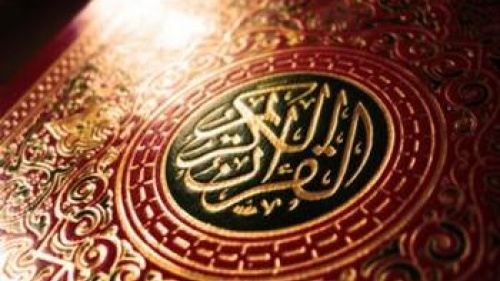



 Posts
Posts


