Showing posts with label Pearl Harbor. Show all posts

Wednesday, December 7, 2016

Raymond Ibrahim: Pope Francis vs. Saint Francis on Islam

A timely post about from www.jihadwatch.org about Pope Francis. This follows this post about "hate crimes" against Muslims. This follows this post about Steve Bannon and Keith Ellison. This follows this article about American energy independence and preventing money from going to hostile countries. For more, you can read two very interesting books HERE.You can follow me here.


Raymond Ibrahim: Pope Francis vs. Saint Francis on Islam

APTOPIX Italy Pope Epiphany
When Cardinal Jorge Mario Bergoglio became the new Catholic pope in 2013, he chose the name of Francis to indicate that his pontificate would be one of mercy and compassion for the poor and needy—for such is the reputation of his eponym, Saint Francis of Assisi: “the man of poverty, the man of peace, the man who loves and protects creation,”explained Bergoglio, now Pope Francis, as to why he chose that name.
St. Francis (1182-1226) is indeed known for all those qualities.  But he was known for something else that his modern day namesake fails to live up to: unapologetically confronting Islam.
According to St. Francis of Assisi and the Conversion of the Muslims by Frank M. Rega:
Fully aware of the dangers, Francis was determined to go on a mission to the unbelievers of the Muslim nations.  The primary sources are in agreement that he was now ready to sacrifice his life and die for Christ, so there can be little doubt that the intent of his journey was to preach the Gospel even at the risk of martyrdom (p. 43).
Along with saving souls, he sought to save lives as well; to help bring peace to the turbulent world he lived in, where Christians, responding to centuries of Islamic invasions and conquests of Christian lands, had gone to war with Islam, that is, the Crusades:
Converting the Muslims by his preaching was the ultimate goal of Francis’ efforts, and a peaceful end to the war would be a consequence of their conversion.  In the words of scholar Christoph Maier, “Francis, like the crusaders, wanted to liberate the holy places in Palestine from Muslim rule.  What was different was his strategy….   He wanted their total submission to the Christian faith” (p. 63).
In 1219, during the Fifth Crusade, Francis and a fellow monk traveled to the Middle East and sought audience with Sultan al-Kamil—despite al-Kamil’s vow that “anyone who brought him the head of a Christian should be awarded with a Byzantine gold piece” (p. 57).  St. Francis’ contemporaries also warned him that Muslims “were a mean people who thirst for Christian blood and attempt even the most brazen atrocities,” (p. 34).  The determined monks continued their journey, only to experience the inevitable:
The early documents are unanimous in agreeing that the two Franciscans were subjected to rough treatment upon crossing Muslim territory.  The men of God were seized in a violent manner by the sentries, assaulted, and bound in chains.  Celano reports that Francis “was captured by the Sultan’s soldiers, was insulted and beaten” yet showed no fear even when threatened with torture and death (p. 58).
Eventually brought before Sultan al-Kamil, the monks sought to “demonstrate to the Sultan’s wisest counselors the truth of Christianity, before which Mohammed’s law [Sharia] counted for nothing: for ‘if you die while holding to your law, you will be lost; God will not accept your soul.  For this reason we have come to you.’”
Intrigued by the cheeky monks, “the Sultan called in his religious advisers, the imams.  However, they refused to dispute with the Christians and instead insisted that they be killed [by beheading], in accordance with Islamic law (p. 60).”
The sultan refused: “I am going counter to what my religious advisers demand and will not cut off your heads… you have risked your own lives in order to save my soul.”
During their disputation and in reference to “the centuries-old Muslim conquest and occupation of lands, peoples, and nations that had once been primarily Christian,” Kamil sought to trap the monks with their own logic: if Jesus had taught Christians to “turn the other cheek” and “repay evil with good,” he inquired, why were “Crusaders … invading the lands of the Muslims?”
Francis quipped by also quoting Christ: “If your right eye causes you to stumble, gouge it out and throw it away. It is better for you to lose one part of your body than for your whole body to be thrown into hell.”
Francis then explained: “That is why it is just that Christians invade the land you inhabit, for you blaspheme the name of Christ and alienate everyone you can from His worship”—a reference to Islam’s dhimmi rules which, along with debilitating Christian worship, make Christian lives so burdensome and degrading that untold millions had converted to Islam over the centuries to ease their sufferings.
There are more interesting aspects concerning St. Francis’ encounter with Sultan Kamil, including those that find parallels in the modern world, such as Sharia’s strict bans on blasphemy against Islam and evangelizing for Christianity (often seen as one and the same) and call for the execution of apostates from Islam.  They are discussed in this brief article.
For now, consider some important differences between St. Francis and his modern day namesake, Pope Francis.
While the saint accused Islam of persecuting Christians, and sought to bring them succor—to the point of putting his life on the line—Pope Francis refuses to confront Islam.  When he has the attention of the world he habitually fails to condemn or even shed light on the nonstop Muslim persecution of Christians, including millions of Catholics.
Last year he delivered a nearly hour long speech before the United Nations.  Only once did Francis make reference to persecuted Christians—and he merged their sufferings in the very same sentence with the supposedly equal sufferings of “members of the majority religion,” that is, Sunni Muslims.   In reality, of course, Sunnis are not being slaughtered, beheaded, enslaved, and raped for their faith; are not having their mosques bombed and burned; are not being jailed or killed for apostasy, blasphemy, or proselytization.   That’s because the terrorists—whether al-Qaeda, Boko Haram, or ISIS—are Sunnis.
And before that Francis issued his first encyclical—an important document meant to be relayed to the world’s Catholics—with no mention of persecuted Christians.
More recently, after a journalist asked Pope Francis about the slaughter of an 85-year-old priest in France, and how he was clearly “killed in the name of Islam,” the pope disagreed and proceeded to offer a plethora of absurd and silly rationalizations in defense of Islam.  
Nor did St. Francis preach passivity before aggression:
A foremost expert on Francis and the Fifth Crusade, Professor James Powell, wrote: “Francis of Assisi went to Damietta [Egypt, where Sultan Kamil was] on a mission of peace. There can be no question about this.  We should not however try to make him a pacifist or to label him as a critic of the crusade.”  Another leading crusade scholar, Christoph Maier, was even more explicit: “Francis thus accepted the crusade as both legitimate and ordained by God, and he was quite obviously not opposed to the use of violence when it came to the struggle between Christians and Muslims.”  At one time Francis had remarked to his friars that “… paladins and valiant knights who were mighty in battle pursued the infidels even to death…”  Francis admired the deeds of such brave men because “… the holy martyrs died fighting for the Faith of Christ” (p.70).
This is why those who know the true biography of St. Francis deplore his modern day transformation into some sort of Medieval “hippy”—or, in Pope Francis’ words, “the man of peace, the man who loves and protects creation.”  In 1926 Pope Pius XI issued the following statement:
What evil they do and how far from a true appreciation of the Man of Assisi [St. Francis] are they who, in order to bolster up their fantastic and erroneous ideas about him, image such an incredible thing … that he was the precursor and prophet of that false liberty which began to manifest itself at the beginning of modern times and which has caused so many disturbances both in the Church and in civil society!
In the context of confronting Islam, Rega laments that, “for the revisionists, the ‘real’ Francis was not a bold Evangelist, but a timid man, whose goal was to have the friars live passively among the Saracens [Muslims] and “to be subject to them” (p.95).
A final important point: while St. Francis did not mock Muhammad—though apparently not enough to dissuade the pious from calling for his head—he unequivocally portrayed the Muslim prophet’s message as false.  Unlike the diplomatic Pope Francis, who never seems to preach Christ to Muslims but rather confirms them in and validates their religion, the sincere saint was actually more concerned with the souls of Muslims, to the point of putting his own life on the line. This used to be one of the chief concerns of all popes, the “Vicars of Christ.”  But apparently not for Pope Francis.
In short, there’s a fine line between St. Francis’ compassion and Pope Francis’ cowardice—or worse, complicity.  When it comes to confronting Islam and standing up for the faith and persecuted Christians, Pope Francis woefully fails to live up to the brave monk whose name he appropriated.
Belgium: Son of imam was planning jihad attack on Christians with chainsaw in mall
Egyptian Christian teens sentenced for "defaming Islam" flee to Switzerland

Tuesday, December 6, 2016

Peace on Earth?

An interesting article from http://www.ucg.org/ about Pearl Harbor. This follows this post about bankruptcy. This follows this post about Jesus Christ and Christmas. For a free magazine subscription or to get the books recommended for free click HERE! or call 1-888-886- 8632.


A few years back I called several newspapers on December 7, and asked if they knew what day it was. The reporters didn't know it was Pearl Harbor Day. Of course, even fewer remember Victory in Europe (VE) Day or VJ Day or other days of remembrance.
How contradictory that the world seeks peace by waging war. The horrors of war were made painfully clear with World War I and World War II. But the world continues to seek peace through conflicts and armed battles. Aren't we all looking for the day when the whole world will have a truly peaceful environment in which to live a happy, enjoyable life?
Rather than relying on peace treaties, what if all the world followed the Golden Rule? It certainly appears there would be a much, much more peaceful world if all the “war lords” would use the Golden Rule as a daily guide and settle their differences in more peaceful ways.
General Douglas MacArthur understood the answers to these questions at the end of World War II when he spoke aboard the USS Missouri September 2, 1945: “Let us pray that peace be now restored to the world and that God will preserve it always.”
He declared: “We have had our last chance. If we will not devise some greater and more equitable system, our Armageddon will be at our door. The problem basically is theological and involves a spiritual recrudescence, an improvement of human character that will synchronize with our almost matchless advances in science, art, literature and all material and cultural developments of the past two thousand years. It must be of the spirit if we are to save the flesh.”
In all, we need to honor God on these days of remembrance—Pearl Harbor Day, VE Day, VJ Day, Memorial Day, Veteran's Day and Armistice Day—because of His giving us victory. We also honor the tremendous sacrifices Americans have made to try to bring about peace and keep America and the rest of the world free. Each time we remember these days of war and victory, we can remember the words of General MacArthur and the fact that war doesn't really make a peaceful world. More than that, we can look to the Book that teaches the Golden Rule and the true way to peace.
Dean Rammelsberg served aboard the USS Goshen in the Pacific from December 13, 1944, until the end of the war.

You might also be interested in...

Thursday, May 26, 2016

What was the Bataan Death March?

An interesting article from http://www.ucg.org/ about the Bataan Death March. This follows this post about Pearl Harbor. This follows this post about Facebook and Transgendered people. For a free magazine subscription or to get the books recommended for free click HERE! or call 1-888-886- 8632.

On June 23, 1938, John Rynerson, joined the 29th Army Corps of Engineers topographical mapping unit. Little did John realize that he would find himself in a few years involved in World War II and fighting for his life on one of the most infamous and terrible marches of the war. After several transfers John was placed in the 93rd Bomber Squadron in the Philippines. As it turned out, this transfer saved his life. The plane that he had worked on as a radio operator crashed, and he would have been on that plane if he had not been transferred. John feels that God was already working in his life to preserve him.
After the attack on Pearl Harbor Dec. 7, 1941, the Japanese attacked the Philippines. On April 9, 1942, the garrison on Bataan was taken over by the Japanese and John's long and difficult struggle for survival began. Only one third of the soldiers taken captive at Bataan survived the Japanese imprisonment.
After the capture of Bataan, the Japanese marched the American prisoners over 70 miles. This became the infamous “Bataan Death March” in which more than 600 American soldiers died. They marched for a period of seven days after already being weakened because of the short rations they had to live on before they surrendered to the Japanese. The soldiers' captors allowed the prisoners to eat only once during the entire march. If any soldier slowed the march, he was killed.
John quickly realized he was in a struggle for survival. He began to make observations that led to actions that would save his life. The treatment of the prisoners by the Japanese was horrendous. As they marched, they would meet Japanese soldiers moving south. John noticed that the first group of American soldiers were treated better than the last group of soldiers. The Japanese were taught never to surrender, and they were so startled to see prisoners of war that they passed by the first group without harming the prisoners. As they came to the end of the line of prisoners, they would start beating and mistreating prisoners. Anyone who slowed down or was unable to walk was killed without hesitation. John made the important decision to be in that first group of prisoners who started out in the morning.
John was a prisoner of war for over three years. He was moved to a prison camp in Manchuria on the “death” ship, Tori Maru. The ships with prisoners were not marked, so American warplanes often attacked them, not knowing that their fellow soldiers were inside those ships. John was able to stay on deck during the voyage on the Tori Maru and avoided being put below where the conditions were terrible.
He was able to survive because of the mental attitude that he had as he determined that if one soldier was to survive this imprisonment, it was going to be him. He had been taught by his mother to be clean, so when he was given rice, he tried to get the bugs and other unclean material out of the bowl before he ate it. He also knew that he had to have good hygiene and made sure that he stayed as clean physically as possible. He knew that a key to his survival was to stay free from disease. He also had the attitude that he would never give up.
Finally on Aug. 15, 1945, John was released from the Japanese prison camp and returned to his family in the United States. John's family had not known if he was alive for those three long years.
When he returned home, he did not discuss in detail the conditions he endured during his imprisonment as he did not want to burden his family and cause them distress. What an amazing and wonderful example John set enduring the terrible suffering of World War II!
John and Sarah Rynerson were married in 1946 and have been members of God's Church since 1970. They have seen the difficulties and problems that the Church has gone through over the years and have remained faithful and true to God's Word and to the truths that they have been taught. John is now 81 years old and continues to work cleaning floors for grocery stores in the Ogden, Utah, area. What a wonderful example of perseverance and endurance in spite of difficulties and trials.
Christ told us that we must be prepared to “endure” until the end, and there is much we can learn from John Rynerson's example. One of the main reasons John endured has to do with his mental attitude. He determined that he was going to survive the terrible conditions of the Bataan Death March and the following imprisonment.
In Matthew 24:12-13, Christ said: “And because lawlessness will abound, the love of many will grow cold. But he who endures to the end shall be saved.” We have seen this lawlessness on the earth today and conditions will get worse in time. Many have fallen by the spiritual wayside and Satan the devil has completely destroyed their faith, just as the Japanese killed stragglers on the Bataan Death March.
Because of John's determination to survive, he took the steps physically that helped him survive. He ate only “clean” food, removing such contaminants as flies and dirt. He took two canteens of water with him at the start of the march and some food also. He made sure that he was in the front of the line of soldiers marching on the Bataan Death March, which protected him somewhat from the abuse that others later in line were receiving. He tried to do everything he could physically accomplish that would help him with his main goal—survival!
Spiritually, are we doing all that we can to achieve our goal, the Kingdom of God? John ate only clean rice and this helped him avoid deadly physical illness. Spiritually, are we feeding ourselves with a good spiritual diet? This means studying the Bible on a daily basis, attending Church every week possible, going to the Feast of Tabernacles, avoiding contaminating and dirty (unclean) movies, etc. We know the things that lead to a healthy spiritual lifestyle.
Just like John during World War II in a Japanese prison camp, we are in a foreign world. A world that does not know the true God or the purpose of life. This knowledge of God's truth should spur us on to take the measures to insure our success in the only goal worth anything in this life, attaining the Kingdom of God.
John Rynerson had a purpose that he never forgot during those terrible years of World War II—the goal of survival. He had a clearly defined goal that motivated him and a mental attitude that helped him endure.
Let's never forgot the spiritual purpose of our life, the goal that God has set before us and the glory and honor that await those who attain that goal! UN

You might also be interested in...

Wednesday, May 25, 2016

Pearl Harbor Day and the Pearl of Great Price

An interesting article from http://www.ucg.org/ about Pearl Harbor. This follows this post about moral leadership. This follows this post about Facebook and Transgendered people. For a free magazine subscription or to get the books recommended for free click HERE! or call 1-888-886- 8632.


Pearl Harbor Day, 70 years later, December 7, 2011.
December 7, 1941, was the worst day in U.S. military history as a Japanese armada of ships and planes made a devastating surprise attack on Pearl Harbor. This Hawaiian U.S. naval base was a tempting target for the imperialist Japanese since America’s entire Pacific Fleet was headquartered at Pearl. The Japanese met little resistance as their planes bombed and strafed U.S. Navy ships and Army aircraft.
The next day the President Franklin Roosevelt addressed the U.S. Congress and delivered what turned out to be the most famous American political speech of the 20 th century—the “Day of Infamy Speech.” Congress then declared war on Japan, and three days later it declared was on Nazi Germany.
The United States, by being unprepared for this attack, paid a very heavy price:
- 2,388 Americans died in the attack
- 1,178 Americans were wounded
- 21 American ships were sunk or damaged
- 323 American aircraft were destroyed or damaged
The Japanese paid a dear price but not nearly so great:
- 64 Japanese died during the attack, though the number of injuries is unknown
- 5 Japanese ships were destroyed
- 103 Japanese aircraft were destroyed or damaged
The U.S. paid the greater short-term price but Japan paid the greater long-term price. If much more time had gone by without the U.S. getting involved militarily, both the Japanese and the Nazis might have been victorious in their conquests. Quite likely, God allowed the Pearl Harbor bombing to awaken America to join the war against Japan and Germany.

Some inspiring facts

The Japanese failed to accomplish their primary objective when they bombed Pearl Harbor. They wanted to destroy the aircraft carriers, but the three carriers were all at sea away from the port at the time. Those carriers were critically important in the ensuing war against Japan. and at the same time protected the aircraft carriers. Sparing those carriers was also likely an act of Providence.
Lately several websites have posted a message which had also been sent around the world by e-mail. It supposedly is an excerpt from a book titled, “Reflections on Pearl Harbor” by Admiral Chester Nimitz. Although it sounds like it could have been authored by Admiral Nimitz, I have not been able to verify that such a book exists. However, I did verify most of the facts stated. Following is my summary of that message:
“Immediately after the Pearl Harbor attack, President Roosevelt appointed Admiral Chester Nimitz to be the Commander of the Pacific Fleet.
“When Nimitz landed at Pearl Harbor on Christmas Eve, 1941, there was such a spirit of despair, dejection and defeat—you would have thought the Japanese had already won the war. On Christmas Day, 1941, Adm. Nimitz was given a boat tour of the destruction wrought on Pearl Harbor by the Japanese.
“Afterwards, someone asked him, ‘Well Admiral, what do you think after seeing all this destruction?’ Admiral Nimitz's reply shocked everyone: ‘The Japanese made three of the biggest mistakes an attack force could ever make, or God was taking care of America.’
“Nimitz explained:
“Mistake number one: The Japanese attacked on Sunday morning. Nine out of every ten crewmen of those ships were ashore on leave. If those same ships had been lured to sea and been sunk, we would have lost 38,000 men instead of 3,800.
“Mistake number two: When the Japanese saw all those battleships lined in a row, they got so carried away sinking those battleships, they never once bombed our dry docks opposite those ships. If they had destroyed our dry docks, we would have had to tow every one of those ships to America to be repaired. As it is now, the ships are in shallow water and can be raised. One tug can pull them over to the dry docks, and we can have them repaired and at sea by the time we could have towed them to America. And I already have crews ashore anxious to man those ships.
“Mistake number three: Every drop of fuel in the Pacific theater of war is on top of the ground in storage tanks five miles away over that hill. One attack plane could have strafed those tanks and destroyed our fuel supply. That's why I say the Japanese made three of the biggest mistakes an attack force could make, or God was taking care of America.”
Whether or not Admiral Nimitz said those exact words, it’s obvious that this disaster could have been much, much worse.  God has been very merciful to the United States and to freedom-loving people in general.

The “pearl of great price”

Pearl Harbor has a nice name. It originally had a native Hawaiian name which meant “Water of Pearl.” The harbor was teeming with pearl-producing oysters until the late 1800’s.
One of the most famous and popular Bible passages is Matthew 13:45-46, in which Jesus said, “Again, the kingdom of heaven is like a merchant seeking beautiful pearls, who, when he had found one pearl of great price, went and sold all that he had and bought it.”
The naval base at Pearl Harbor has been and still is extremely valuable for the United States. It would have been extremely valuable for the Japanese had they been able to conquer and hold it.
But the combined value of that that harbor, that real estate, the military facilities, the ships and planes, and the strategic location are a tiny pittance compared to the value of life after death—life in the Kingdom of God forever and ever! Every sacrifice that we ever need to make in this life will be a small price to pay for glorious eternal life!
The “good news” is this: All those who died on December 7, 1941—and at all other times and places—will yet have their opportunity to learn God’s truth and to qualify for God’s Kingdom! With Jesus Christ reigning over all the earth, we will at last have peace on earth!
Someday all peoples will have the opportunity to attain “the pearl of great price”!

You might also be interested in...

Did Pearl Harbor have anything to do with the Japanese Empire? - Islamic terrorism considered

A timely post about from www.jihadwatch.org about Jihad and Japan. This follows this post  about a U.S. pastor's freedom of speech. This follows this article about American energy independence and preventing money from going to hostile countries. For more, you can read two very interesting books HERE.You can follow me here.

“Minnesota man” pleads guilty to aiding the Islamic State

A “Minnesota man,” eh?
Pearl Harbor, Hawaii, December 7, 1941: A group of Japanese men were accused today of bombing the U.S. Navy base here. President Roosevelt took to the airwaves to assure the nation that the attack had nothing whatsoever to do with the Japanese Empire, and to warn against a “backlash” against Japanese people living in America. Stay tuned for an update on Rita Hayworth.
HamzaAhmed
“Another Defendant in Terror-Recruiting Case Pleads Guilty,” by Dave Aeikens and Ellen Galles, KSTP.com, April 25, 2016 (thanks to WL):
A Minnesota man arrested in 2015 on charges he and several others were trying to assist the Islamic State terror group pleaded guilty Monday in federal court.
Hamza Ahmed pleaded guilty to conspiracy and student financial fraud. He could get up to 20 years in prison.
He told the judge today that he originally pleaded ‘not guilty’ to appease his mother. He said she wanted to see his case go to trial and “she was a big influence in that.”
Judge Michael Davis ordered a pre-sentence investigation report, and will schedule a sentencing hearing after it is complete.
Ahmed was stopped at a New York City airport in November as he and three others were attempting to travel to Syria. Ahmed has been indicted on charges of lying to the FBI during a terrorism investigation, conspiring to provide material support to the Islamic State terror group, and attempting to provide material support, according to federal charges….
Bloomberg View: "To Defeat Islamic State, Treat Muslims Better"
This week: Robert Spencer in Western Canada
FacebookTwitterLinkedInDiggBlogger PostDeliciousEmailPinterestRedditStumbleUponPrint

Friday, December 7, 2012

Pearl Harbor Day and the Pearl of Great Price

An interesting article from http://www.ucg.org/ about Pearl Harbor. This follows this post about marriage problems. This follows this post about the season called Advent. For a free magazine subscription or to get this book for free click HERE! or call 1-888-886-8632.

Pearl Harbor Day and the Pearl of Great Price


 Submitted December 6, 2011


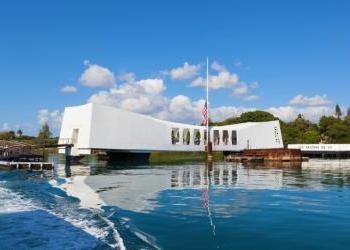
USS Arizona Memorial Pearl Harbor Hawaii


Source: Photos.comPearl Harbor Day, 70 years later, December 7, 2011.


December 7, 1941, was the worst day in U.S. military history as a Japanese armada of ships and planes made a devastating surprise attack on Pearl Harbor. This Hawaiian U.S. naval base was a tempting target for the imperialist Japanese since America’s entire Pacific Fleet was headquartered at Pearl. The Japanese met little resistance as their planes bombed and strafed U.S. Navy ships and Army aircraft.


The next day the President Franklin Roosevelt addressed the U.S. Congress and delivered what turned out to be the most famous American political speech of the 20 th century—the “Day of Infamy Speech.” Congress then declared war on Japan, and three days later it declared was on Nazi Germany.


The United States, by being unprepared for this attack, paid a very heavy price:


- 2,388 Americans died in the attack


- 1,178 Americans were wounded


- 21 American ships were sunk or damaged


- 323 American aircraft were destroyed or damaged


The Japanese paid a dear price but not nearly so great:


- 64 Japanese died during the attack, though the number of injuries is unknown


- 5 Japanese ships were destroyed


- 103 Japanese aircraft were destroyed or damaged


The U.S. paid the greater short-term price but Japan paid the greater long-term price. If much more time had gone by without the U.S. getting involved militarily, both the Japanese and the Nazis might have been victorious in their conquests. Quite likely, God allowed the Pearl Harbor bombing to awaken America to join the war against Japan and Germany.


Some inspiring facts

The Japanese failed to accomplish their primary objective when they bombed Pearl Harbor. They wanted to destroy the aircraft carriers, but the three carriers were all at sea away from the port at the time. Those carriers were critically important in the ensuing war against Japan. and at the same time protected the aircraft carriers. Sparing those carriers was also likely an act of Providence.


Lately several websites have posted a message which had also been sent around the world by e-mail. It supposedly is an excerpt from a book titled, "Reflections on Pearl Harbor" by Admiral Chester Nimitz. Although it sounds like it could have been authored by Admiral Nimitz, I have not been able to verify that such a book exists. However, I did verify most of the facts stated. Following is my summary of that message:


“Immediately after the Pearl Harbor attack, President Roosevelt appointed Admiral Chester Nimitz to be the Commander of the Pacific Fleet.


“When Nimitz landed at Pearl Harbor on Christmas Eve, 1941, there was such a spirit of despair, dejection and defeat--you would have thought the Japanese had already won the war. On Christmas Day, 1941, Adm. Nimitz was given a boat tour of the destruction wrought on Pearl Harbor by the Japanese.


“Afterwards, someone asked him, ‘Well Admiral, what do you think after seeing all this destruction?’ Admiral Nimitz's reply shocked everyone: ‘The Japanese made three of the biggest mistakes an attack force could ever make, or God was taking care of America.’


“Nimitz explained:


“Mistake number one: The Japanese attacked on Sunday morning. Nine out of every ten crewmen of those ships were ashore on leave. If those same ships had been lured to sea and been sunk, we would have lost 38,000 men instead of 3,800.


“Mistake number two: When the Japanese saw all those battleships lined in a row, they got so carried away sinking those battleships, they never once bombed our dry docks opposite those ships. If they had destroyed our dry docks, we would have had to tow every one of those ships to America to be repaired. As it is now, the ships are in shallow water and can be raised. One tug can pull them over to the dry docks, and we can have them repaired and at sea by the time we could have towed them to America. And I already have crews ashore anxious to man those ships.


“Mistake number three: Every drop of fuel in the Pacific theater of war is on top of the ground in storage tanks five miles away over that hill. One attack plane could have strafed those tanks and destroyed our fuel supply. That's why I say the Japanese made three of the biggest mistakes an attack force could make, or God was taking care of America.”


Whether or not Admiral Nimitz said those exact words, it’s obvious that this disaster could have been much, much worse. God has been very merciful to the United States and to freedom-loving people in general.


The "pearl of great price"

Pearl Harbor has a nice name. It originally had a native Hawaiian name which meant “Water of Pearl.” The harbor was teeming with pearl-producing oysters until the late 1800’s.


One of the most famous and popular Bible passages is Matthew 13:45-46 [45] Again, the kingdom of heaven is like unto a merchant man, seeking goodly pearls:

[46] Who, when he had found one pearl of great price, went and sold all that he had, and bought it.


See All..., in which Jesus said, “Again, the kingdom of heaven is like a merchant seeking beautiful pearls, who, when he had found one pearl of great price, went and sold all that he had and bought it.”


The naval base at Pearl Harbor has been and still is extremely valuable for the United States. It would have been extremely valuable for the Japanese had they been able to conquer and hold it.


But the combined value of that that harbor, that real estate, the military facilities, the ships and planes, and the strategic location are a tiny pittance compared to the value of life after death—life in the Kingdom of God forever and ever! Every sacrifice that we ever need to make in this life will be a small price to pay for glorious eternal life!


The “good news” is this: All those who died on December 7, 1941—and at all other times and places—will yet have their opportunity to learn God’s truth and to qualify for God’s Kingdom! With Jesus Christ reigning over all the earth, we will at last have peace on earth!


Someday all peoples will have the opportunity to attain “the pearl of great price”!


--------------------------------------------------------------------------------