Showing posts with label Day of the Dead. Show all posts

Tuesday, November 1, 2016

Consider the "Sins of Jeroboam"

An interesting article from http://www.ucg.org/ about the Israelite king Jeroboam. This follows this post about Halloween. For a free magazine subscription or to get the books recommended for free click HERE! or call 1-888-886- 8632.


Consider the "Sins of Jeroboam"

Login or Create an Account

With a UCG.org account you will be able to save items to read and study later!
Sign In | Sign Up
×
Throughout the history of the kings of Israel, one bad king set the standard for the onslaught of evil kings to follow: King Jeroboam. Subsequent kings were measured by whether they continued in the “sins of Jeroboam” (1 Kings 15:34 1 Kings 15:34And he did evil in the sight of the LORD, and walked in the way of Jeroboam, and in his sin with which he made Israel to sin.
American King James Version×
, 1 Kings 16:19 1 Kings 16:19For his sins which he sinned in doing evil in the sight of the LORD, in walking in the way of Jeroboam, and in his sin which he did, to make Israel to sin.
American King James Version×
, etc.), and no king achieved a higher degree of infamy. Jeroboam did many evil things, but the most distinctive offense, the one that really belonged to Jeroboam, was changing God's Feast of Tabernacles!
After Solomon's reign, God split the 12 tribes of Israel into two distinct nations. God chose Jeroboam as the first king of the newly formed “house of Israel,” consisting of the 10 northern tribes, and promised to bless him with an enduring line of kings if he would follow God's law (1 Kings 11:38 1 Kings 11:38And it shall be, if you will listen to all that I command you, and will walk in my ways, and do that is right in my sight, to keep my statutes and my commandments, as David my servant did; that I will be with you, and build you a sure house, as I built for David, and will give Israel to you.
American King James Version×
). However, many of God's commandments revolved around worshiping at the temple in Jerusalem - located in the rival “house of Judah” consisting of the southern two tribes. Specifically, God commanded the people to return to Jerusalem each year for His appointed festivals, and Jeroboam feared that these annual visits would sway the allegiance of the people (1 Kings 12:26-27 1 Kings 12:26-2726 And Jeroboam said in his heart, Now shall the kingdom return to the house of David: 27 If this people go up to do sacrifice in the house of the LORD at Jerusalem, then shall the heart of this people turn again to their lord, even to Rehoboam king of Judah, and they shall kill me, and go again to Rehoboam king of Judah.
American King James Version×
). As a result, Jeroboam decided to replace the problematic laws of God with a counterfeit religious system that consolidated his power.
Jeroboam set up temples full of idols for the people to worship and established his own priesthood (1 Kings 12:31 1 Kings 12:31And he made an house of high places, and made priests of the lowest of the people, which were not of the sons of Levi.
American King James Version×
). As sinful as these actions were, they were nothing new and were certainly not unique to Jeroboam! The people of Israel had been committing idolatry ever since the golden calf at Mount Sinai (Exodus 32:1 Exodus 32:1And when the people saw that Moses delayed to come down out of the mount, the people gathered themselves together to Aaron, and said to him, Up, make us gods, which shall go before us; for as for this Moses, the man that brought us up out of the land of Egypt, we know not what is become of him.
American King James Version×
), and they had already defiled the office of the priesthood by setting up their own priests (Judges 17:5-6 Judges 17:5-65 And the man Micah had an house of gods, and made an ephod, and teraphim, and consecrated one of his sons, who became his priest. 6 In those days there was no king in Israel, but every man did that which was right in his own eyes.
American King James Version×
). Though he instituted much evil, there is only one “sin of Jeroboam” that was truly original:
“Jeroboam ordained a feast on the 15th day of the 8th month, like the feast that was in Judah… in the month which he had devised in his own heart ” (1 Kings 12:32-33 1 Kings 12:32-3332 And Jeroboam ordained a feast in the eighth month, on the fifteenth day of the month, like to the feast that is in Judah, and he offered on the altar. So did he in Bethel, sacrificing to the calves that he had made: and he placed in Bethel the priests of the high places which he had made. 33 So he offered on the altar which he had made in Bethel the fifteenth day of the eighth month, even in the month which he had devised of his own heart; and ordained a feast to the children of Israel: and he offered on the altar, and burnt incense.
American King James Version×
).
The “feast that was in Judah” is the Feast of Tabernacles, which begins yearly on the 15th day of the 7th lunar month. The sin which truly set Jeroboam apart was changing God's commanded Feast of Tabernacles from its appointed time to “the month which he had devised in his own heart .” Many Israelites were led astray by this deception, but did you know that an even greater deception now afflicts the majority of Christianity? Have you ever wondered why Christmas and Easter are not mentioned by name in the bible, and why there is no command to celebrate these events? Like Jeroboam's feast, these holidays were devised in the hearts of men as a counterfeit of God's Holy Days!
The Feast of Tabernacles, the very observance that Jeroboam infamously turned Israel away from, just ended. God wants Christians to worship Him in “spirit and truth” (John 4:23-24 John 4:23-2423 But the hour comes, and now is, when the true worshippers shall worship the Father in spirit and in truth: for the Father seeks such to worship him. 24 God is a Spirit: and they that worship him must worship him in spirit and in truth.
American King James Version×
). Take the time to learn the ugly truth about the holidays that you have been taught, and even more so the amazing truth about God's Holy Days that you have not been taught!


Monday, November 2, 2015

Editorial: Reject the "Day of the Dead"

Editorial

A new, corrupt holiday is now being foisted upon the American people called the "Day of the Dead." This is a multicultural attempt to get Americans to learn the sacrificial practices of the Aztecs.

From Vdare.com, this is a brief summary.


http://www.vdare.com/articles/the-fulford-file-the-many-wars-on-halloween 

  • Mexicans’ War On American practices: It’s Now The Day Of The Dead, Gringos!
When reporter Daniel Hernandez wrote Day of the Dead: Your New American Holiday, FasterTimes.com, October 31, 2009,  he talked about cities “Mexicanizing”. When we say that, it’s Hate. Hernandez wrote:
Day of the Dead is increasingly becoming a United States holiday, with people of all backgrounds in Mexicanizing U.S. cities adopting the parties and customs of Mesoamerica’s cousin to Halloween. Just check out the annual scene at Hollywood Forever cemetery in Los Angeles. There are political touchstones to the holiday as well; In El Paso they are observing Día de los Muertos with a vigil for migrants who have died attempting to cross the U.S.-Mexico border.
day-of-the-dead-celebration-sugar-skullRight! But as I wrote at the time, in a sense there’s nothing new here–most people don`t seem realize that the Day of the Dead is just All Saints Day and All Souls Day in a slightly different garb. Halloween, the Eve Of All Hallows, is part of the same festival.
Nothing wrong with that, although Americans can`t be blamed for finding the Mexican festival, with its candy skulls and Aztec associations slightly more bizarre than the American Trick Or Treating, the Great Pumpkin and Treehouse of Horror.


Friday, October 30, 2015

What a Former Witch Told Me About the Dark Side

An interesting article from http://www.ucg.org/ about witchcraft. This follows this post about Halloween.  This follows this post about "Christian" alternatives to Halloween. This follows this post about Purgatory. This follows this post about the Devil infiltrating churches. For a free magazine subscription or to get the books recommended for free click HERE! or call 1-888-886- 8632.
Please follow me here for continued posts.


Dear World News and Prophecy Subscriber, Halloween is this weekend, in case you haven’t noticed. But it’s hard not to notice. Halloween has become the second-largest retail holiday in North America. It’s second only to Christmas in sales generated by the strong consumer desire to party with the dead and macabre elements. Imitating ghosts and demons may seem like harmless fun. It’s not. Playing with the darker elements of this world is inviting strong forces into your life. You do this at your own peril. I recently interviewed a lady who spent 20 years as a practicing witch. Her story was the centerpiece of a Beyond Today program called “Dancing With the Dark Side.” The program aired last week on WGN America and drew considerable comment from viewers. One viewer wrote asking for help counseling a child who wished to become a witch. Another wrote detailing the disastrous impact on his family from involvement with the dark, satanic world. As my interview with “Mary” (the pseudonym for the woman who was once a witch) shows, you do not want to go down that road. Here is part of that interview. McNeely: What do you think you were looking for when you entered into that world? Mary: Power. To be special, to be unique. McNeely: You think that’s what other people are looking for, as well? Mary: Oh yes. Yeah. I mean, you get into it seeking power to control your life, manifest or will things into your life, but the bad thing about it is after it progresses, it starts taking on a negative tone. I started out with Wicca. I started out with thinking I was just worshipping the earth because I wanted something tangible, something I could see, something I could adhere to. The equinox, the sabbaths in Wicca. It soon didn’t feel like enough. I felt compelled to check out or read books about necromancy and voodoo, and like I said, I was in it for about 20 years and there toward the end, I felt like if I hadn’t had the car wreck, I would’ve been gone, because I would’ve opened myself up to channeling. I’d already started using my own blood in my own rituals, in my own spells. I’d already started making voodoo dolls and casting bad spells on people. McNeely: Did you actually see those spells come to pass? Mary: Mhm. McNeely: You did? Mary: Yes. McNeely: Things happened? Mary: Yes. Things always happened. Mary went on to explain that people who dabble with the dark arts are looking for a power to control their lives and that of others. They end up being controlled by a darker power they do not understand. Fortunately for Mary, she escaped the hold of the dark side and is building a better life for herself. She finally is in control of her life, in a right way. Why not watch the entire Beyond Today video, “Dancing With the Dark Side,” on our BeyondToday.tv Web site? Is There Really a Devil?Satan offers a clever counterfeit path to power for those who venture into his dark world. But the tragedy is that his path is a dead-end street filled with wrecked and broken lives. Evil is a very real force in this modern world that scoffs at the existence of a spiritual dimension. This Halloween, instead of celebrating a holiday for the dead, why not educate yourself in the truth? Our booklet Is There Really a Devil? provides solid biblical teaching on the subject. Though the media often trivializes it today, there is indeed a dark spiritual world, and it wants to deceive and destroy you. Don’t let it happen. Resist it, and cling to the incredible future God has prepared for you. Keep watching!

Thursday, October 29, 2015

How did Halloween come to be considered a "Christian" celebration?

An interesting article from http://www.ucg.org/ about Halloween. This follows this previous post about it. This follows this post about "Christian" alternatives to Halloween. This follows this post about Purgatory. This follows this post about the Devil infiltrating churches. For a free magazine subscription or to get the books recommended for free click HERE! or call 1-888-886- 8632.
Please follow me here for continued posts.


How did Halloween come to be considered a "Christian" celebration?

Does the Bible say anything about All Hallows' or All Saints' Day?


Login or Create an Account

With a UCG.org account you will be able to save items to read and study later!
Sign In | Sign Up
×
Most people know that Halloween takes place on Oct. 31. Far fewer understand the connection between Halloween and the next day on the calendar, the festival of All Hallows’ or All Saints’ Day, celebrated by some churches and denominations Nov. 1.
One author concludes that All Saints’ Day was established to commemorate the saints and martyrs of the Roman Catholic Church and was first introduced in the seventh century (Man, Myth, and Magic, Vol. 1, 1983, p. 109). Oddly enough, history shows that Halloween—this ancient, thoroughly pagan holiday with its trappings of death and demonism—is inseparably tied to All Saints’ Day.
Pagan festivals have had a curious way of worming their way into Christianity over the centuries. The Encyclopedia of Religion explains that “the British church attempted to divert the interest in pagan customs by adding a Christian celebration to the calendar on the same date as the Samhain [the ancient Celtic name for the festival that we call Halloween].
“The Christian festival, the Feast of All Saints, commemorates the known and unknown saints of the Christian religion just as the Samhain had acknowledged and paid tribute to the Celtic deities” (1987, Vol. 6, p. 177).
How did this strange turn of events come about? How did the Catholic Church transform an ancient pagan festival into one to supposedly honor dead saints?
The 1913 edition of The Catholic Encyclopedia says this about All Saints’ Day: “In the early days the Christians were accustomed to solemnize the anniversary of a martyr’s death for Christ at the place of martyrdom. In the fourth century, neighboring dioceses began to interchange feasts, to transfer relics, to divide them, and to join in a common feast. Frequently groups of martyrs suffered on the same day, which naturally led to a joint commemoration.
“In the persecution of Diocletian the number of martyrs became so great that a separate day could not be assigned to each. But the Church, feeling that every martyr should be venerated, appointed a common day for all. [Eventually] Gregory III (731-741) consecrated a chapel in the basilica of St. Peter to all the saints and fixed the anniversary for 1 November” (Vol. 1, p. 315).
Pope Gregory’s choice of Nov. 1 for this celebration was significant. Author Lesley Bannatyne explains: “That the date coincided with Samhain was no accident: the Church was still trying to absorb pagan celebrations taking place at this time…
“Villagers were also encouraged to masquerade on this day, not to frighten unwelcome spirits, but to honor Christian saints. On All Saints’ Day, churches throughout Europe and the British Isles displayed relics of their patron saints. Poor churches could not afford genuine relics and instead had processions in which parishioners dressed as saints, angels and devils. This religious masquerade resembled the pagan custom of parading ghosts to the town limits. It served the new church by giving an acceptable Christian basis to the custom of dressing up on Halloween.
“In addition, the Church tried to convince the people that the great bonfires they lit in homage to the sun would instead keep the devil away” (Halloween: An American Holiday, An American History, 1998, pp. 9, 11).
Later a second celebration, All Souls’ Day, was instituted on Nov. 2. Eventually these two holidays merged into the present observance on Nov. 1, which was also called All Hallows’ Day. The name of All Hallows’ Even (evening) for the night of Oct. 31 evolved into the name Hallowe’en, or Halloween as it is called today.
This is a brief history of how men rationalized taking an ancient pagan festival rooted in death and demonism and adapting it for use as a “Christian” celebration. Regrettably, it flies in the face of God’s explicit instruction to not use pagan practices to worship Him.
He clearly states in Deuteronomy 12:30-32 Deuteronomy 12:30-3230 Take heed to yourself that you be not snared by following them, after that they be destroyed from before you; and that you inquire not after their gods, saying, How did these nations serve their gods? even so will I do likewise. 31 You shall not do so to the LORD your God: for every abomination to the LORD, which he hates, have they done to their gods; for even their sons and their daughters they have burnt in the fire to their gods. 32 What thing soever I command you, observe to do it: you shall not add thereto, nor diminish from it.
American King James Version×
: “Do not inquire after their gods, saying, ‘How did these nations serve their gods? I also will do likewise.’ You shall not worship the Lord your God in that way; for every abomination to the Lord which He hates they have done to their gods… Whatever I command you, be careful to observe it; you shall not add to it nor take away from it.”
For more understanding, please read our booklet Holidays or Holy Days: Does It Matter Which Days We Observe?


Tuesday, October 27, 2015

Can Halloween Be Christianized?

An interesting article from http://www.ucg.org/ about "Christian" alternatives to Halloween. This follows this post about Purgatory. This follows this post about the Devil infiltrating churches. For a free magazine subscription or to get the books recommended for free click HERE! or call 1-888-886- 8632.
Please follow me here for continued posts.


Can Halloween Be Christianized?

Login or Create an Account

With a UCG.org account you will be able to save items to read and study later!
Sign In | Sign Up
×
Finding the shadows of the evil customs of Halloween abhorrent, many Christians have sought to sanitize the holiday by integrating religious symbols with which they are more familiar and comfortable (this process is called syncretism). Some, for example, carve the name Jesus onto pumpkins and add religious phrases in the hopes of evangelizing those who go trick-or-treating.
Others have undertaken a more elaborate revision of the holiday, attempting to turn it into a harvest festival interwoven with Christian themes and devoid of its more obvious pagan overtones. Church basements are turned into carnivals featuring games, contests and, of course, candy.
What should you do in deciding how you will approach this hotly debated issue?
The fundamental argument in favor of mixing ancient pagan customs and practices with the worship of God is that some believe it is an effective way to gradually win people over to Christian understanding. (Of course, in the present world we should ask ourselves why people who already see themselves as Christian would find any need to continue associations with pagan religious customs.)
This is sometimes a hotly disputed subject, and sincere people have concluded it indeed is useful to integrate the practices of ancient religious customs with the worship of God.
But perhaps we should address a fundamental question: What does God advise?
There is a scriptural precedent that offers guidance and direction for those who accept the Bible's instruction. The Israelites were confronted with these issues as they settled and built a new nation in the Promised Land. They encountered many worshipers of pagan deities as they entered the land and for centuries faced the problem as they dealt with neighboring peoples.
Even before they entered the land, God revealed His thinking and told them how to handle this challenge. His directions were explicit: “When the LORD your God cuts off from before you the nations which you go to dispossess, and you displace them and dwell in their land, take heed that you are not ensnared to follow them … Do not inquire after their gods, saying, 'How did these nations serve their gods? I also will do likewise.' You shall not worship the LORD your God in that way; for every abomination to the LORD which He hates they have done to their gods … Whatever I command you, be careful to observe it; you shall not add to it nor take away from it” (Deuteronomy 12:29-32 Deuteronomy 12:29-3229 When the LORD your God shall cut off the nations from before you, where you go to possess them, and you succeed them, and dwell in their land; 30 Take heed to yourself that you be not snared by following them, after that they be destroyed from before you; and that you inquire not after their gods, saying, How did these nations serve their gods? even so will I do likewise. 31 You shall not do so to the LORD your God: for every abomination to the LORD, which he hates, have they done to their gods; for even their sons and their daughters they have burnt in the fire to their gods. 32 What thing soever I command you, observe to do it: you shall not add thereto, nor diminish from it.
American King James Version×
).
God's instructions are crystal clear. He refuses to accept worship that is compromised and tainted by customs used in the worship of fraudulent religion. He expects His worshipers to revere Him in accordance with His commands, not their own imaginings.
Many centuries later the apostle Paul expressed a similar thought when correcting some in the church in Corinth for their poor judgment. “What partnership can righteousness have with wickedness?” he asked. “Can light associate with darkness? Can Christ agree with [the devil] …? Can there be a compact between the temple of God and idols? And the temple of the living God is what we are” (2 Corinthians 6:14-16 2 Corinthians 6:14-1614 Be you not unequally yoked together with unbelievers: for what fellowship has righteousness with unrighteousness? and what communion has light with darkness? 15 And what concord has Christ with Belial? or what part has he that believes with an infidel? 16 And what agreement has the temple of God with idols? for you are the temple of the living God; as God has said, I will dwell in them, and walk in them; and I will be their God, and they shall be my people.
American King James Version×
, Revised English Bible).
The modern debate over Christianizing pagan worship customs could be resolved simply by reading and heeding God's plainly expressed will.
To help you learn more about what the Bible says about Halloween, please read these online articles:
Halloween: A Celebration of Evil
How did Halloween come to be considered a “Christian” celebration? Does the Bible say anything about All Hallows' or All Saints' Day?
Halloween: Behind the Mask
Should Christians Celebrate Halloween?
How Did a Pagan Holiday Become a 'Christian' Celebration?
Video: Don't Kid Yourself About Halloween


Wednesday, October 14, 2015

What is a "soul"?

An interesting article from http://www.ucg.org/ about what a soul is. This follows this post about Christopher Columbus. For a free magazine subscription or to get the books recommended for free click HERE! or call 1-888-886- 8632.
Please follow me here for continued posts.


What is the "soul"?

http://www.ucg.org/bible-study-tools/booklets


Login or Create an Account

With a UCG.org account you will be able to save items to read and study later!
Sign In | Sign Up
×
The Bible, in both the Old and New Testaments, repeatedly makes reference to the “soul.” Mainstream Christianity generally teaches that this soul is an immortal component of human beings; that upon our death, it is released from our bodies to spend eternity in either eternal bliss or eternal torment, depending on our conduct in this life. But a closer examination of the word shows that this is not the case.
The only Hebrew word translated as “soul” in the Old Testament, nephesh , is also translated elsewhere as “creature” or “being.” All three words are synonymous, whether we look at God's creation of “an abundance of living creatures [ nephesh ]” in the sea (Genesis 1:20 Genesis 1:20And God said, Let the waters bring forth abundantly the moving creature that has life, and fowl that may fly above the earth in the open firmament of heaven.
American King James Version×
) or that “man became a living being [ nephesh ]” (Genesis 2:7 Genesis 2:7And the LORD God formed man of the dust of the ground, and breathed into his nostrils the breath of life; and man became a living soul.
American King James Version×
) or read God's declaration that “the soul [ nephesh ] who sins shall die” (Ezekiel 18:4 Ezekiel 18:4Behold, all souls are mine; as the soul of the father, so also the soul of the son is mine: the soul that sins, it shall die.
American King James Version×
).
That last verse is key to understanding the concept of a soul. If the soul is immortal, it would be impossible to say that sinning would produce death. Rather, if mainstream Christianity were correct in its doctrine of hell, Ezekiel 18:4 Ezekiel 18:4Behold, all souls are mine; as the soul of the father, so also the soul of the son is mine: the soul that sins, it shall die.
American King James Version×
would have to say, “the soul who sins shall be condemned to eternal torment.” But it, along with the apostle Paul in Romans 6:23 Romans 6:23For the wages of sin is death; but the gift of God is eternal life through Jesus Christ our Lord.
American King James Version×
, plainly states that the penalty of sin is death , not never-ending fiery torment in hell.
Given that the soul is capable of death, and taking into consideration the fact that the word translated “soul” is used in reference to all sorts of living creatures, we can only conclude that the soul talked about in the Bible is a living being itself—not an eternal component of mankind.
For further explanation of the soul, including a look at instances of the word in the New Testament and information about the “spirit in man” (Job 32:8 Job 32:8But there is a spirit in man: and the inspiration of the Almighty gives them understanding.
American King James Version×
).
Please read our booklets What Happens After Death? and Heaven and Hell: What Does the Bible Really Teach?

You might also be interested in...

Is the soul talked about in the Bible an immortal part of human beings...or is...
That's an insightful question. It leads to showing that human beings do not...

Friday, October 31, 2014

Should You Keep Halloween, Holyween, or All Saints Day?

An interesting article from http://www.ucg.org/ about Halloween. This follows this post about homosexuality. This follows this post about the attack in Canada. This follows this post about diseases. This follows this post about Supreme Court nominees. For a free magazine subscription or to get the books recommended for free click HERE! or call 1-888-886- 8632.
I am leaving TWITTER SOON. Please continue to follow me here.


Should You Keep Halloween, Holyween, or All Saints Day?


Printer-friendly version


flames
Source: freeimages.com/dejure
The answer is that you should keep none of the above. But why?
During this last week of October the Vatican hosted a conference of The International Association of Exorcists (IAE) formed in 1990 by a group of Catholic  priests who specialize in exorcising (casting out) demons (fallen angels who are now evil). Reports indicate that Pope Francis praised their work in the battle against the Devil.
The Association itself also advocated replacing Halloween with “Holyween” where Catholic children dress up as saints presumably as a compliment to the existing Roman Church festival on November 1 st of All Saints Day—also called All Hallows or Hallowmas.
In the early 1500s Martin Luther, leader of the Protestant Reformation, officially rejected the traditional Catholic doctrine that the faithful go to heaven where they act on behalf of those who pray to them. Saints were and are typically canonized by the Vatican some length of time after their deaths by adding them to the official list. However, Protestantism has generally sanctioned the perpetuation of the holiday we know as Halloween—although it has much more ancient roots in many pagan and later Celtic annual celebrations. The bulk of today’s Halloween symbols devolve from its ancient roots.
Interestingly, Pope Francis and leaders of the IAE denounced the traditional Halloween festival which glorifies Satan, demonic spirits, so-called ghosts and all manner of evil—which prompted the Holyween alternative.
How does a true Bible student make sense of Halloween, Holyween or All Saints Day? What’s true? What isn’t true? And what does God expect of you?
1.  Humans do not have immortal souls. “…The soul who sins shall die” (Ezekiel:18:4, 20). If souls were immortal, then they couldn’t die. However, since souls (meaning the person) can die, then to live forever in God’s Kingdom they must be given immortality at some future point. “So when…this mortal has put on immortality, then shall be brought to pass that is written, ‘Death is swallowed up in victory’” (1 Corinthians:15:54).
2.  True saints are not in heaven, but in the grave until the first resurrection of the dead which occurs at Jesus Christ’s return to earth. “For the Lord Himself will descend from heaven with a shout, with the voice of an archangel, and with the trumpet of God. And the dead in Christ will rise first” (1 Thessalonians:4:16).
3.  Satan the Devil and his demonic fallen angels do exist and are evil—but we do not glorify them with a celebration or party! Laughing at or celebrating evil is the first step to accepting and embracing it. The true Christian’s reaction to the Devil is “Resist him, steadfast in the faith…” (1 Peter:5:9).
4.  True Christians observe God’s Holy Days from the Bible and reject and avoid the pagan-based holidays of the world no matter what religious label of acceptance is attached to them. God’s sanctioned days are cataloged in Leviticus 23 starting with the weekly Sabbath and followed by His annual Festivals or Feasts. The reason that choosing the right days of official worship is that a true follower of Jesus Christ seeks what is true—and true only.  Jesus specifically stated, “But the hour is coming, and now is, when the true worshipers will worship the Father in spirit and truth; for the Father is seeking such to worship Him” (John:4:23).
If you seek to be a “true worshiper” of God the Father and Jesus Christ, then you choose to directly reject any semblance of Halloween, Holyween, All Saints Day or Hallowmas in your life’s activities and in your worship of God.


Blog posts do not undergo review by the doctrinal review team of the United Church of God. This post represents the personal opinion of the author and should not be considered the official stance of the United Church of God. If you have any questions or concerns please direct them to webmaster@ucg.org.
Nobody has commented yet. Be the first to kick off the discussion!
Login/Register to post comments

Friday, October 24, 2014

Should Christians Celebrate Halloween?

An interesting article from http://www.ucg.org/ about Halloween. This follows this post about Supreme Court nominees. This follows this post about Ebola. For a free magazine subscription or to get the books recommended for free click HERE! or call 1-888-886- 8632.
I am leaving TWITTER SOON. Please continue to follow me here.


Should Christians Celebrate Halloween?


Halloween is a major holiday in the Western world for people of various backgrounds. Can Halloween celebrations be reconciled with a Christian worldview and lifestyle? The Bible holds the answer.

Should Christians Celebrate Halloween?
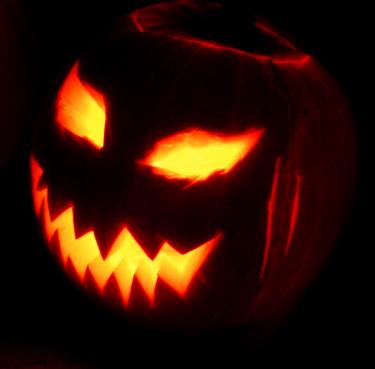
Jack-O'-Lantern
Source: Wikimedia Commons
Monday night millions of children around the nation will be donning costumes, ringing doorbells and uttering the traditional "trick or treat" Halloween greeting. Most people consider this a harmless, fun activity for children. Others condemn the entire occasion because of the pagan origin of the day and connect it with demonism and the occult.
An article from a prominent Christian magazine suggested that "Christians should embrace the 'devilish' holiday with gusto—and laughter." The author suggests that Halloween presents us with an opportunity to "mock" and "laugh at" Satan and "the forces of evil."
A local pastor, writing wistfully of his past childhood Halloween celebration, said, "I enjoyed being a devil." He asserted that "a child doesn’t think of a red devil as an enemy of God or the apostle of hate and destruction." He went on to defend wearing costumes as merely superficial, and suggested that opposition to celebrating Halloween stems from lack of confidence in Christian beliefs.

Really only harmless fun?

Wait a minute! Is it unchristian for parents not to want their children to dress up as the Devil? Or does Satan theDevil even exist? According to a recent Barna survey, nearly 50 percent of professing Christians do not believe that Satan is a living being. For these folks, the whole question must be a moot point. But perhaps the rest of us ought to reconsider our perspective regarding Halloween.
Would anyone dare to suggest applying this reasoning to Hitler? Would wearing Hitler masks and swastikas and dressing like the skeletal remains of his victims be an appropriate way to "laugh at" Hitler and "mock" the diabolical evils of Nazism?
Is Satan a laughing matter? Does God want our children to associate fun and treats with the forces of evil?
I am not implying that a child who puts on a Halloween mask is dabbling in the occult or is in danger of demon possession. I am simply questioning the suggestion that Halloween serves a positive Christian purpose.
According to Deuteronomy:12:31-32 God does not approve of recycling, reconstituting and relabeling pagan customs to celebrate Christian events.

Carnal holidays trumped by God's Holy Days

My wife and I just finished celebrating eight fun-filled days of the Feast of Tabernacles with more than 700 men, women and children here in Central Oregon. I so much wish all of Christianity could share the joy of this meaningfuloccasion. Here is a God-ordained festival that was observed by Jesus, Paul and the apostolic Church and is still celebrated today by many Christians. It is one of seven annual Holy Days that foreshadow future events in God's plan (Colossians:2:16-17) rather than focusing on the powers of darkness that form the legacy of Halloween.
Anyone who dares express objections to Halloween has two strikes against him: 1. It is fun for the kids, and 2. It is a long-standing, firmly entrenched custom in our culture.
But the Feast of Tabernacles has Halloween beat in both categories: 1. It is fun for kids and the whole family and is eight days long, and 2. It was established thousands of years ago by God Himself. And most importantly, it and all of Holy Days of the Bible teach valuable lessons about the plan of God.
For more information, I invite you to read our free booklets, Holidays or Holy Days: Does It Matter Which Days We Observe?  and Is There Really a Devil?