Showing posts with label Superman. Show all posts

Monday, March 28, 2016

Wknd Box Office: Batman v Superman: Dawn of Justice, Eye in the Sky, My Big Fat Greek Wedding 2, Creative Control

Here is an interesting article from http://www.debbieschlussel.com/ reviewing some of the movies that came out over the past weekend. This follows this post about some of the movies from last week and THIS POST about some movies that have been released over the past few years that you might have missed! This all follows this post about guidelines to choosing good movies to watch yourself!

Wknd Box Office: Batman v Superman: Dawn of Justice, Eye in the Sky, My Big Fat Greek Wedding 2, Creative Control

By Debbie Schlussel

batmanvsupermaneyeinthesky

mybigfatgreekwedding2creativecontrol
The new superhero behemoth is the worst of the new movies in theaters this weekend. Among the others, there are some decent choices.
* Batman v Superman: Dawn of Justice – Rated PG-13: As I noted in my Thursday review, this long, confusing bore is a waste of ten-bucks-plus and 2.5 hours of your life you’ll never recover. It’s an uninteresting, dark, messy buildup to a short, ridiculous, barely-explained fight between the two superheroes in the title. Read my complete review.
TWO MARXES
karlmarxmovies.jpgkarlmarxmovies.jpg
* Eye in the Sky – Rated R: This is a great movie because it does a great job of showing how liberal bureaucrats and their faux-humanitarian concerns get in the way of the West fighting Islamic terrorists. It captures that so well that I highly recommend it (even though it stars the late Jew-hating, anti-Israel schmuck Alan Rickman, RIH). It’s well-done, even if an important twist to the plot line is contrived and unlikely. The movie is also a great indictment of the liberalism that cripples the British government from being an effective actor (though I think the movie is far too charitable in making the U.S. look tougher than it actually is these days, under Barack Obama–and even earlier, under George W. Bush). Helen Mirren gives her usual excellent performance. Also, with one or two exceptions, the movie doesn’t hedge on who the enemies are: Islamic terrorists.
The story: satellite video and intelligence indicate to British military and government officials that several wanted Islamic terrorists have been located in Southern Kenya and may be planning a terrorist attack. A British colonel (Mirren) wants to bomb them immediately, as does a Brit general (Rickman). But British government officials repeatedly hem and haw and delay to avoid making the decision to take lives (even though the lives are those of documented Islamic terrorists who’ve planned and executed terrorist attacks). The movie explores the ethics of using drones and shows that with each ridiculous delay, the situation becomes more and more dangerous and risky.
One particularly liberal (and repulsive) British government official, a woman, is straight out of ACLU central casting. She objects to bombing the terrorist location for every reason she can come up with. First, it’s that the terrorists are not an imminent threat and need to be captured and given a trial (which isn’t possible). Then, when bomb vests are shown and it’s obvious a terrorist attack by these individuals is imminent, the woman insists that because some of the terrorists are British and American citizens, they cannot be assassinated.
When the decision is finally made to strike, a young Muslim girl is now outside the compound, selling bread. The girl just so happens to be the daughter of “enlightened, liberal” Muslim parents who allow her to play with a hula hoop and learn math, both of which are forbidden by the local Muslim terrorists controlling the area. This is the contrivance–in fact, the deceit–of this movie. What are the odds that a “cute, enlightened, moderate” Muslim girl would be outside a terrorist compound selling bread? Hint: they aren’t very good odds. In fact, usually, fellow scumbags and terrorists are outside the terrorist compound. Or Muslims who morally support the terrorists. Or a Muslim girl who is taught by her hateful Muslim parents to hate America, not to hula hoop. And, sadly, the people who run this country often care more about sparing these America-haters’ lives than our own.
What I think is accurate in this film–in addition to the frustrating idiocy of liberal government bureaucrats–is that the American military officers who are to perpetrate the strikes (one of them is played by Aaron Paul) are very sad and filled with anguish over risking the girl’s life. Unfortunately, our Muslim enemies have no such humanity or sympathies.
The movie was nail-biting suspenseful throughout, and incredibly frustrating. Also, I was fascinated by the technological details (I hope the enemy doesn’t learn too much from this, if it’s accurate), such as the mini-drone, made to look like a tiny insect, which is flown inside the home where the terrorists are meeting and films them. That was very cool.
I did not like that the movie made it look like American officials had no problem with the strikes and were very anxious to go forward. That’s the way it should be, but we know that American liberal policy under both Obama and Bush actually rules the day. So, we often don’t effectuate such strikes, to avoid hitting women and children, etc. Take the opportunity we had to strike Osama Bin Laden under the George W. Bush Administration. But Bush didn’t want to hit other guests of Bin Laden–supporters who were Gulf State royalty (as if they had some sort of innocence or merited protection when they hung out with this murderer of Americans). Yes, unfortunately, we are often as bad as the British bureaucrats in this movie.
I also didn’t like that the late friend and enabler of Islamic terrorism, Alan Rickman, plays a courageous, bold fighter of Islamic terrorism (with great, tough dialogue, especially at the end of the film). That’s not irony. It’s BS.
Still, this movie really captured the outrageous, ludicrous handicaps, nonsense, and frustrations the West needlessly imposes upon itself in fighting the enemy. And making it an ineffective, losing fight.
THREE REAGANS
reagancowboyreagancowboyreagancowboy
Watch the trailer . . .

* My Big Fat Greek Wedding 2 – Rated PG-13: To say I didn’t like the original My Big Fat Greek Wedding is an understatement. So, 14 years later, I expected to hate this sequel. But, while some of it is really dumb and some of the jokes are gross or fall flat, I laughed a lot and was mildly entertained by this. It’s not bad. And, guys, if you must take your significant other to a chick flick, this is one of the most bearable ones. Plus, where else will you hear Billy Idol’s “White Wedding” sung in Greek? That said, if I were Greek or they made a movie like this about Jews, I’d be offended.
While the movie (made by Greeks) is about a traditional, immigrant Greek family, it could be–like it’s first installment–about any ethnic immigrant family to America, still green and feeling its way around American culture, while trying to hold on to old world values, mores, and idiosyncracies. And about half of the actors playing Greeks in this movie are Jewish or Italian or from some other ethnic background. SCTV alumna Andrea Martin, who is of Armenian descent, is the real star of this, reprising her role as Aunt Voula. She’s hilarious. Without her, the movie would mostly sink. Also good is Mark Margolis (Margolis is a Jewish surname, not Greek), whom you might remember from “Breaking Bad” as the old Mexican gangster in the wheelchair who helps blow up drug kingpin Gus.
The setting of the movie is nearly two decades after the original takes place. Toula Portokalos (Nia Vardalos, who also wrote this and, along with Tom Hanks and his Greek wife Rita Wilson, executive-produced it) is back. But now, she and her “white bread” American husband Ian (John Corbett), are the parents of Paris (the beautiful Elena Kampouris), who is nearly 18 and applying to colleges (all while she is embarrassed by her “boater” family). Her parents and the rest of the extended family want her to stay in Chicago. Also, Toula and Ian are trying to bring back the romance to their marriage. At the same time, Toula’s parents (Lainie Kazan, also Jewish, and Michael Constantine) discover that they are not legally married under the Greek Orthodox church because the priest who married them back in Greece, never signed the marriage certificate. Now, they must decide if they want to get married again to make it legit.
Throughout all of this, Aunt Voula (Martin) dispenses her very blunt, hilarious advice. Also Toula’s dad (Constantine) asserts that virtually all of Western civilization came from Alexander the Great, and he tries to prove he’s Alexander’s descendant.
Not a “great” movie, or even the best comedy I’ve ever scene. Not even close. But it’s light and entertaining, fun stupidity. Relative to most chick flicks, this one is cute and funny. And you needn’t have seen the first one to fully appreciate this one.
ONE-AND-A-HALF REAGANS
reagancowboyhalfreagan
Watch the trailer . . .

* Creative Control – Rated R: This independent, low-budget movie is produced by Amazon.com and Mark Cuban’s Magnolia Pictures. It was not screened for critics, so I went to see it on my own. It’s high on style, less so on story. But, still, it does have a slightly interesting concept and story idea, though the execution of those isn’t as interesting. The movie also moves slowly with very little payoff at the end. I definitely wouldn’t pay ten bucks to see this (and didn’t have to–the theater I went to lets me see movies free, as a member of the Detroit Film Critics Society). The movie probably isn’t for anyone 60 or over, and it has stark sexual themes.
This movie takes place in the future in Brooklyn. The movie is mostly filmed in black and white for a reason: so that virtual reality features, functions, and AI creations can stand out in color. David (Benjamin Dickinson, who also wrote and directed this) is an executive at a pretentious hipster New York ad agency. He and his girlfriend Juliette (Nora Zehetner), a yoga teacher, are bored and complacent in their relationship and their lives. David has a thing for his best friend, Wim’s fashion designer girlfriend Sophie (Alexia Rasmussen). Wim (Dan Gill) is a fashion photographer and isn’t faithful to Sophie. He’s cheating on her with the models he shoots.
One day, David is assigned to an account for a company that produces virtual reality glasses (a la Google glass). He begins using the glasses and soon creates a female virtual reality lover with the face of Sophie and the body he himself designs. And the virtual sexual affair begins. In the meantime, Dan is also trying to have a real-life affair with Sophie. While she seems slightly receptive, the virtual reality version is much more receptive.
As Dan has his virtual reality affair with the image created via the glasses, Dan and his real-life live-in girlfriend Juliette grow apart. And things being to fall apart for Dan at work and in his social life, too. Dan is assigned to make an ad campaign for the glasses using real-life avant-garde hip-hop/soul artist and actor Reggie Watts. But Watts is all over the place and doesn’t make something that is usable. Plus Dan, obsessed with his virtual reality life, isn’t on top of things.
Dan falls further and further into an addiction with his virtual reality love and it ruins all other aspects of his life. Or does it?
The movie’s sudden ending is fine. I like that kind of thing when it’s done right. It’s just that this movie wasn’t that great leading up to the ending. And I felt like, “Is that all there is?” when I walked out.
Again, the ideas here are interesting (especially as virtual reality becomes more and more a part of our lives). The execution of those ideas, not so much.
HALF A MARX

Watch the trailer . . .

Batman v Superman: Dawn of Justice – Ridiculous Penis Envy/Pissing Contest Bore

By Debbie Schlussel
batmanvsuperman
On Tuesday night, I saw Batman v Superman: Dawn of Justice (Rated PG-13), which is in theaters tonight. And the only “justice” here would be to give me back that 2.5 hours of my life that I’ll never get back. The movie is an endless, unremarkable pissing contest between two dull, miserable characters in capes consumed by a “my penis is bigger than yours (or maybe yours is bigger than mine)” fight.
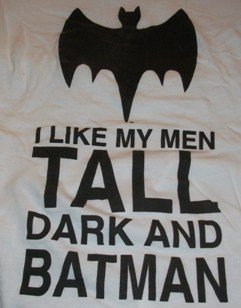
batmantshirt
I went to the movie wearing a t-shirt that said, “I Like My Men Tall, Dark, and Batman” (see above). But no longer. I hated this movie, and I especially hated this Batman–the “adult” spoiled brat Batman played by “adult” spoiled brat Ben Affleck, who looked very much like an aging mobster–like his character from the box office bomb, “Gigli,” a couple of decades later. [BTW, the t-shirt’s a lie. I don’t actually like Batman. My fave is Supe. But I liked the t-shirt.]
I can’t believe Michigan taxpayers paid through the nose to subsidize this crappy movie. The money would have been better spent getting the people of Flint drinkable water. But, instead, bazillions were spent to make the movie here so one of its stars (I think I know who it is–and it isn’t Affleck or Henry Cavill) could give some chick an STD and so that leftist Democrat Senator Debbie Stab-a-cow could be the world’s most forgettable movie star as the Governor of Metropolis (and I thought Metropolis was a city, not a state).
Despite a ton of special effects and action, I was bored to tears by this movie. I even fell asleep twice and missed nothing . . . except more brooding by every single character in this confusing silver screen mess. Would it have killed Affleck (Bruce Wayne/Batman) or Henry Cavill (Clark Kent/Superman) or the self-hating Jewish Israeli Gal Gadot (Diana Prince/Wonder Woman) to smile even just once? Back in the day when superhero movies were actually decent, Christopher Reeve was generally happy. He smiled, he was a smart aleck with a wink, and you wanted to get to know him. He was likable. These guys aren’t. They’re a miserable lot–unhappy, suffering (from what, I’d love to know), and so overstuffed with angst, it made me uncomfortable and annoyed. But this is what the Millennials want. Hipsters love suffering, darkness, and feeling bad about something even though they are the most privileged, spoiled generation in history. The same goes for these superheroes (who weren’t so super in this; not even close). They are bored and unhappy, and they like darkness (their costumes, including that of Wonder Woman are darker than ever). It’s not good enough to be heroes and have magical superpowers.
So, instead, for some unexplained reason, Bruce Wayne is out to get Superman, whom he knows is Clark Kent. And for some unexplained reason, Clark Kent doesn’t like Bruce Wayne, whom he knows is Batman. And Kent mouths off some stuff about Wayne’s lack of respect for civil liberties. Huh? Yeah, I had no idea to what he was referring, and I just didn’t care. Ditto for the bombing of the U.S. Capitol building, which was jarring to see on the same day that Islamic terrorists bombed two locations in Brussels. But no worries, there are no Islamic terrorists in this movie–keeping true to the modern-day “we cannot identify the real terrorists [Muslims]” rule for superhero movies and, frankly, almost all Hollywood movies. Instead, it’s some guy in a wheelchair who lost both his legs when Gotham got attacked by General Zod and fought with Superman, something that isn’t really explained. It had to be explained to me by the fanboy sitting next to me, whom I had to consult during the entire movie.
And that’s the thing: the movie is waaaaay tooo confusing. I had no idea what was going on at times or who some of the people were onscreen. You need a fanboy translator at the ready during the entire movie. I was lucky to have one–and, while I’m usually a movie Nazi who gets upset when others talk during the movie, I probably bugged everyone around me with my endless questions to Fanboy Translator.
The only parts of the movie that were clear were Lois Lane’s naked breasts in the bathtub scene. Little was left to the imagination in the gratuitous, repeated shots, with only actress Amy Adams’ nipples missing from the shot. Barely missing. I mean, I know there was a “love scene” between Margot Kidder and Christopher Reeve in one of the Superman movies of the past. But in a superhero movie that you know kids are gonna see, did they need to see most of Amy Adams’ chest?
Oh, and another part of the movie that’s clear: Adams’ Lane is trapped by terrorists somewhere in Africa (you think they’re Muslim, but the movie is too chicken and PC to say so). Superman rescues her from being killed by them, and so he’s the bad guy because of collateral damage. Congress holds hearings. So typical. But even more typical: the movie doesn’t take sides on this. Maybe Supe is a bad dude for causing destruction when fighting terrorists. Barf. Oh, and by the way, you and I are the bad guys for wanting to deport aliens. You see, we’re on the same side as the guy they show with the sign calling to deport aliens like Superman. Haha, funny.
Then, there is Lex Luthor, overplayed by the poorly cast Jesse Eisenberg. Eisenberg, who once played Facebook dictator Mark Zuckerberg, plays him here again, on steroids. We all know that if Mark Zuckerberg could do what he really wants, he’d be even more evil than he already is. And instead of merely playing online recruiter, propagandist, and censor for ISIS and Islam, he’d probably spy on superheroes, pit them against each other using artificial contrivances, and then create a half-Kryptonian, half-human monster (very bad CGI) from his own blood to try to kill Superman, as he does in this movie. Especially if you add in a dash of Nazi collaborator George Soros. Still, I wasn’t buying it. Eisenberg is probably the worst Lex Luthor we’ve ever seen in a Superman movie.
The movie doesn’t really tell you who Diana Prince is (you hear her first name once and you never hear the name “Wonder Woman”). And there are few scenes of her arguing with Bruce Wayne because she stole some hard drive from him. Why? No clue. They don’t tell you. Soon, we see surveillance tapes of many superheroes and comic book characters, including many not in this movie. I had no idea who they were and the movie doesn’t say, so, again, I had to consult Fanboy. The tapes, made by Lex Luthor, show Diana Prince/Wonder Woman getting money from an ATM. What was the point of this? It was like reading US Magazine and seeing “Superheroes–They’re Just Like Us! They use the ATM machine.” Well, I guess they had to give her something to do to fill space in this 2.5-hour cure for insomnia. Yaaawn.
You might compare this movie to bad sex. It builds up for so long to the unexplained, unjustified fight between Batman and Superman. But when it finally happens, it lasts just a minute or two and isn’t exciting. Plus, it’s not believable. Remember, Batman isn’t really a superhero. He’s not an alien or the result of an experiment gone wrong. He doesn’t have any superpowers. He’s just a spoiled rich kid in a pretentious costume and cape. So, in a contest between him and Superman, who do you think would prevail. Here’s a SPOILER hint: it’s not logical the way it turns out.
On Monday, I told a friend how excited I was to see this the next night. He was dismissive and said, “But why are they fighting? That’s so dumb. It doesn’t make sense.”
After seeing this, my thoughts exactly.
***
At the beginning of this movie, director Zack Snyder told us not to give away spoilers and ruin the movie for everyone else. But there’s only one real spoiler, which I had questions about. So I’m putting it on another page. If you want to read it, click here.
TWO MARXES
karlmarxmovies.jpgkarlmarxmovies.jpg
Watch the trailer . . .

Thursday, March 10, 2016

Today's Toys Child's Play or Something Else?

An interesting article from http://www.ucg.org/ about modern toys. This follows this post about job hunting. For a free magazine subscription or to get the books recommended for free click HERE! or call 1-888-886- 8632.


“Yank out alien organs dripping in glowing alien blood.” This cheery invitation greets children 7 and under from the box of a toy called Dissect-an-Alien. It's part of the popular Mad Scientist line of playthings made by one of the nation's largest toy manufacturers.

Toys aren't what they used to be

Have you noticed what kinds of toys your children have been playing with lately? How are some of the new types of games and toys affecting them?
Toy manufacturing and marketing has boomed into a multibillion-dollar business. Toy makers not only follow the trends; they start them. Electronics and vivid graphics have added a new dimension to our children's toys.
But, with all that is available, are our children better off?

Benefits of playtime

When most of us reminisce about our childhood, we cannot help but think about our play with siblings, friends, pets and toys. I smile when I think about hiking to a waterfall in the woods with my dog or playing catch with my brother. On wintry Sunday afternoons, I remember playing chess for hours with my father.
Whether we had many toys or only a few, we all remember our favorite teddy bears, dolls, model cars or construction sets. Through toys children experiment, explore, express and discover themselves. They give their toys life, character, abilities and talents. With their imagination they project themselves into their play. Through make-believe they build a bridge with adulthood and look forward to growing up.
Play is important for a child's development. It is one way children learn about the world around them. How they relate to and play with toys helps them learn skills such as dexterity and hand-eye coordination.
Playing with other children helps a child with social development. He (or she) learns how to get along with, tolerate and share with other kids. By interacting with others, children learn how to solve problems.

Survival of the funnest

The first toys could well have been natural objects such as sticks, fir cones, seed pods, bones and smooth, round stones. Since then, dolls, balls, spinning tops and pull toys have become the basic playthings of many cultures.
When visiting a toy store in Russia, I was fascinated to see how universally boys and girls are attracted to animal shapes, puppets, dolls, and miniature cars, trucks and tractors.
At ancient burial sites, animal figures have been found that appear to have been made for no purpose other than to play with. For example, Persian wheeled pull or push toys carved from white limestone into the shapes of animals date from the 12th century B.C. Clues to the nature of many old toys have been found on ancient vases and reliefs, which often picture hobbyhorses, carts, hoops, balls, tops and musical instruments.
Toys were almost completely handcrafted until late in the 18th century, after which mass-produced objects for children to play with began to appear for the first time.
The last decade saw some entirely new species of toys. The computer-game craze reflects advances in science and technology. Yet, although the complexity of toys is on the increase, the longevity of games and toys is decreasing with the constantly changing popularity of styles and heroes.
Although exceptional toys exist that bring out the best in our children, there are an increasing number that represent alarming trends that we as parents need to be beware of. Many toys do not help a child develop imagination, or they develop an entirely wrong kind of creativity.

Violence, the occult, repulsion

Toy makers have found models such as GI Joe (a perennial best-seller) or Rambo-or characters from the current space, war and adventure movies-to be hot-selling items. Toy firearms that discharge lasers and fake bullets sell exceptionally well.
Toys that are disturbing to many parents, like The Blaster, casually offer a child a way to blow up the world. With push buttons and a handgrip with vast firepower, this toy is advertised to help its operator relieve tension: “Leave in your wake a flood of totally imaginary destruction and feel good about yourself once again.” The Blaster simulates machine-gun fire, laser beams and nuclear explosions.
Is this a good way to release tension? What are the lessons a child learns from this kind of toy? Are we doing anything other than teaching barbarism with toys like this?
The impact of playing with war toys increases inappropriate behavior such as hitting, kicking, hair-pulling and teasing. War toys can desensitize children toward violence, produce exaggerated fear of others and increase angry and violent behavior. Children may become more hyperactive, fight and quarrel more, and generally demonstrate more belligerence when they play with miniature weapons of destruction.

Sending a deadly message

By buying children war toys, the message parents send them is that it is appropriate to fight and solve problems violently. If we give impressionable children toys that imply that war or hostility is acceptable, then we send them the message that it is all right to act out feelings using weapons.
On the other hand, the prophet Isaiah speaks about a time during which man will no longer learn war and violence. In those days, erstwhile combatants “shall beat their swords into plowshares, and their spears into pruning hooks; nation shall not lift up sword against nation, neither shall they learn war anymore” (Isaiah 2:4).
The huge increase in the popularity of electronic games assaults our children with violence. The National Coalition on Television Violence studied 95 Nintendo video games and found that 83 percent feature violent themes, with 58 percent spotlighting war games. The study discovered that children ages 8 through 10 are 80 percent more likely to fight among themselves after playing with interactive laser weapons.
In addition, video games can produce stress, are inherently frustrating and promote obsessive, even addictive, behavior. They also tend to isolate children from other people. Children scream at a video game because it won't do what they want it to. They may throw down the controls in rage or yell at people who come near them and break their concentration. If playmates are involved, they may yell at each other or end up fighting because of the game.
A mother commented that the family's video-game unit turned her two children, ages 10 and 8, into “animals.” She said her 10-year-old “can't stop playing once he starts.” The 8-year-old becomes frustrated, hostile, angry and violent when he plays. The two fight and argue with their friends over Nintendo.

Toying with the occult

Along with violent toys, children and adolescents experiment with the occult-and plenty of toys and games based on the supernatural are available. I strolled down the aisle of the largest toy chain store near my home. Piled high in one section were Ouija boards and other games that encourage dabbling in the occult.
One particularly hideous game is Nightmare on Elm Street: The Freddie Game, based on a movie about a man who murders teenagers. In this nightmare of a toy, Freddie is depicted wearing a glove equipped with razor-sharp blades for slashing his victims.
Do we really want our children to amuse themselves with such a “game”? What could possibly be redeeming about it? Such games only encourage children to come close to the mysterious world of fear, ugliness and death.
Another toy, Boglins, encourages children to identify with lovable but ugly little creatures that come alive in their hands. Still another, the Brain Blaster, has a head that falls apart, with brain matter falling out in chunks. Drool is a hand puppet that lives up to its name. Airsickness depicts an airline passenger strapped into a seat with a look of nauseated anticipation on his face.
Other toys in the Mad Scientist series include one called Monster Lab, which invites children to “make disgusting, gross monsters . . . then sizzle the flesh off their bones.” On the box, a group of young boys is depicted dipping a creature in a frothing vat of make-believe acid.
Then there is the Glowing Glop kit, with advertising that advises youngsters to “squeeze 'em! Alien blood oozes from their eyes.” The popularity of such dreadful toys has prompted a popular brand of candy that looks like spiders and rats, which children are encouraged to devour.
Some adults are rightly concerned with trends toward repulsiveness in lines of toys such as Garbage Pail Kids, because the ugliness desensitizes children to the point that they are no longer offended by violence, sadism and the grotesque.
In the context of children, Jesus Christ warned those who would take advantage of the impressionable and defenseless: “But whoever causes one of these little ones who believe in Me to sin, it would be better for him if a millstone were hung around his neck, and he were drowned in the depth of the sea” (Matthew 18:6).

You buy the toys

The president of Child World, which owns Children's Palace, the second-largest toy-store chain in the United States, stated that playthings featuring the grotesque “are selling quite well. They seem to be part of what we see as a larger trend aimed at little boys for gross kinds of stuff.”
The Toy Manufacturers Association sees no harm in such toys. “When it comes to grossness, we firmly believe that the decision to buy the toys should be made by the parents.”
Even though it comes from a perspective I strongly disagree with, that's good advice, parents. The TMA couldn't have said it any better. The decision to purchase such toys is up to you. As parents, we should closely monitor and evaluate the kinds of toys our children play with. We should make it clear to our offspring that we, as adults, will help choose their toys.
How is it that children are so knowledgeable about and lust for certain kinds of consumer goods? It is no coincidence that children's television programming is often little more than one long advertisement for toys. Your children are a lucrative market, to say the least.
In one year the average 4- to 8-year-old will see 1,000 or more 30-second and 180 or so 30-minute cartoon commercials selling war toys—the equivalent of 18 days of classroom instruction in exciting, stimulating pro-war entertainment. Advertising like this is effective; war-toy sales increased 700 percent in five years from 1982 to 1987.
Don't let yourself feel guilty if you don't get your children the particular toys they want. Don't allow children to go crazy for every toy with a certain make-believe character's picture on it. Monitor what your children watch, and take control of the toy purchases in your family. Your children should not be preyed upon by toy manufacturers competing for your money with bizarre and grotesque products.

What's good

In the midst of commercialism and chaos, you can make many sensible choices if first you consider the impact of a toy before you buy it.
Toys need not be expensive. For example, a device as simple as a yo-yo will teach a child a memorable lesson about objects in motion he will recall in high school and college when he studies physics.
Question the value of any toy your child asks for. How will he (or she) benefit from a particular toy? Will his imagination be directed toward wholesomeness? What will she learn? Will it help her solve problems? Will it help him use his mind?
Will the toy help him interact with others? Will it help her refine her skills or explore and discover things about herself and the world around her? There are many creative, peaceful toys that will stretch your child's imagination while giving hours of fun.
Classic construction sets such as those made by Tinker Toys, Lego, Lincoln Logs and Erector are excellent choices. They help a child imagine a structure, then build it. A simple microscope-or chemistry or electronic kit-with which you can guide a child in learning about the physical creation is also a good choice.
When shopping for toys, you may find it best to avoid the products of high-visibility companies that promote toys that go well with heavily sugared cereals and Saturday-morning television. You can do a lot better by going to the toy department of a science museum or out-of-the-way shops near college campuses.
Hobby stores are a good source for toys. In them you will find products that force parents to spend time with their children as together they learn how they work.

Keep it simple

The toy industry has made many of their wares too complicated. Simplicity should top the list of things to look for in a toy. Something as basic and durable as a ball could be a child's first toy. Skills learned from throwing, catching and bouncing a ball endure for a lifetime.
Often the simplest toys last while the complicated ones drop dead when their batteries run down. Keeping toys supplied with alkaline sources of power can get expensive.
When planning a purchase, consider how an item could be used by the whole family to help bring parents and children together to play and talk. One problem with many electronic games is that children retire to their own little world and tune out everything and everyone around them.
Parents are often irritated and repulsed by a game's sounds, or they may not have the faintest idea how to play it. If children spend too much time playing with electronic games, they tend to get bored easily and aren't interested in developing relationships with others.
Sports toys are wholesome. Many parlor games promote discussion. Pictionary, for example, teaches children to follow rules, take turns, learn new words and communicate with symbols.

The play's the thing

Children want to play. Toys are perfect for play. In our busy world, we often abdicate our responsibilities as parents by using toys as a crutch to entertain our children while we do something else. Children respond favorably to parents and friends who interact with and pay attention to them. Playtimes can be fun and educational and can nurture familial ties.
Make your precious children's early years an experience they will treasure. In the world of the future, there will be the right kind of play with the right kind of toys, for “the streets of the city shall be full of boys and girls playing in its streets” (Zechariah 8:5). GN

You might also be interested in...

Friday, October 23, 2015

Superman Takes on the Cops, Batman Takes on Gentrification, and Captain America Takes on Border Control

A timely post from http://townhall.com about current "Superheros." This follows this post about the movie, "Back to the Future".
You can follow me here.

Superman Takes on the Cops, Batman Takes on Gentrification, and Captain America Takes on Border Control

Ben Shapiro |
Ben Shapiro
  • One of the most depressing features of modern American life lies in the left's total war on every facet of our shared culture. It isn't enough to produce movies with Steve Carell and Julianne Moore and Ellen Page about lesbian partners seeking legal protection for conveyance of property. Now, even comic books must be hijacked in order to promote leftist messaging.

    The latest run of Captain America features the newest Cap, Sam Wilson, taking on the Sons of the Serpent -- an evil group of tea party types intent on stopping illegal immigration. The writer, Nick Spencer, is an ardent opponent of Donald Trump, and slathered the comic with his dislike for conservatives: the Sons of the Serpent amass at the border to stop the poor, bewildered illegal immigrants, whereupon the Sons of the Serpent leader announces, "Attention all trespassers! I am the Supreme Serpent! By invading this sovereign land, you defy the laws of God, Nature and the United States Constitution. Therefore, I hereby apprehend you by the power vested in me by the aforementioned God, Nature, et cetera, et cetera." One of the illegal immigrants cries, "Please, whoever you are -- we don't want any trouble --"
    But the Supreme Serpent will have none of it: he continues, "Until the mighty wall is built, you come here for employment that is rightfully ours! And if denied it, you seek welfare paid for by our tax dollars!"
    Thankfully, Captain America stops by to shut down the Minutemen wannabes, shouting, "If you're done threatening a bunch of unarmed folks, mostly women and children ... I'd pack up the pickup and head home if I were you, gentlemen."
    It's not just Captain America now mouthing leftist talking points. Superman, once a friend to the cops, has now become their enemy. In the latest run of Superman Action Comics No. 42, the temporarily powerless Man of Steel ends up on the wrong side of the police -- a group of faceless fascists looking to shut down any discussion. That's when Superman arrives to take on the riot squad. That follows on the incredibly overrated Grant Morrison making Superman a black president of the United States back in Action Comics No. 9 in 2012.
    And then there's Batman No. 44, in which the Caped Crusader stumbles on the body of a slain black teenager. The teenager was shot by a cop while wearing a hoodie. Writer Scott Snyder said, "Of course you want Batman to beat this officer up, and be like, 'How could you?'"
    How did this black teenager end up in a confrontation with the police in the first place? He went to the Penguin for a loan since the evil, evil banks wouldn't give him a loan based on his lack of credit history; he needed a loan to keep his father's corner business going. For some reason, all of this is supposedly Bruce Wayne's fault for gentrifying the area -- even though gentrification would make his corner business valuable, and therefore saleable. Writer Brian Azzarello explains, "This thing is such a ripple, the way lives are affected by gentrification. ... And if you have no money, you have no voice."
    Culture is one of the few areas of American life that allows us to continue to speak with one another. Left and right may have little in common, but we all like our movies and our television shows and our comic books. But when the left decides to turn comics into yet another outlet for their political propaganda, those cultural ties break, leaving yet another, small gap in our common life -- and indoctrinating another generation into leftist nonsense.