Showing posts with label Resurrection. Show all posts

Tuesday, March 31, 2015

What Easter Doesn't Tell You

An interesting article from http://www.ucg.org/ about Easter. This follows this post about Iran. This follows this post about Israel and Blood Moons. For a free magazine subscription or to get the books recommended for free click HERE! or call 1-888-886- 8632.
I am leaving TWITTER SOON. Please continue to follow me here.


What Easter Doesn't Tell You


Could it be that Easter traditions leave something missing in the story of Jesus Christ?

Basket of decorated Easter eggs.
Source: Martin Poole/Photodisc/Thinkstock
What do brightly colored eggs, rabbits, decorated cakes and sunrise services have to do with the Jesus Christ of the Bible?
There are Christians who believe in Jesus Christ as their Savior who do not observe any Easter traditions. I happen to be one of them. Let me explain why.
I’ve learned that Easter doesn’t tell you the whole story about Christ’s life, death and resurrection. If something is missing—and there is—then it changes the entire story. What’s missing and why is crucial for you to understand!

What do Easter customs have to do with Jesus Christ?

Did you know that Easter as a celebration has nothing to do with Jesus Christ?
The name itself doesn’t mean Jesus’ resurrection, as some might assume. The word Easter actually comes from the name of an ancient Babylonian fertility goddess worshipped long before Jesus was born!
A quick Internet search will reveal the origins of Easter bunnies, colored eggs, hot cross buns and the sunrise service. You’ll find that these traditions associated with Easter for the most part come from ancient, idolatrous, pre-Christian fertility celebrations. They were part of religious rites a long time before the time of Christ, and they have nothing to do with what the Bible instructs or the practice of the early Church.
Perhaps none of this matters to you. Maybe you believe Easter customs are fun as part of your worship of Christ or family traditions. If that’s the case, let me show you from God’s Word why it should matter.

Exchanging truth for lies

The Church Jesus founded had a very clear understanding of who He was and how to worship Him. But over many decades things changed. Early Christians became confused and then lost the plain biblical teaching about God the Father and Jesus Christ.
How could people who believed in God possibly let that happen? One reason is that we all have a natural tendency to forget the things we learn. The early Church learned the true faith by the teachings of Christ and the apostles. But we can tell from the very early writings of the New Testament that heresy was beginning to spread in the Church. False teachings were beginning to gain ground.
The apostle Paul warned that some were already flirting with a false gospel (Galatians:1:6). The apostle Peter warned that “there will be false teachers among you, who will secretly bring in destructive heresies, even denying the Lord who bought them” (2 Peter:2:1).
In the years after the death of the original apostles, other false teachings began creeping into the Church. Among them was a distortion of the truth about the death and resurrection of Jesus.
As we just read, Peter warned that there was a danger of “denying the Lord who bought them”—that is, replacing the clear truth about Jesus Christ and His teachings on salvation and eternal life with pagan myths and falsehood. Yet despite Peter’s clear warning, many bought into the denial.

Pagan myths at the heart of Easter

Easter evolved from a story about an ancient god named Tammuz. The story of Tammuz is at the heart of the pagan world—and at the heart of Easter. It’s a story of a never-ending annual cycle without meaning, direction or purpose. In this myth, Tammuz died every year at the beginning of winter and was “resurrected” in the spring by a goddess named Ishtar.
Did you notice that name— Ishtar? Does it sound familiar?
That’s because the word Easter ultimately comes from the name of this ancient false goddess, Ishtar. So much of what people do today to celebrate Easter is nothing more than customs that come directly from the way ancient people worshipped their goddess Ishtar. Why and how did this happen? People had embraced the Ishtar and Tammuz myths and related stories for centuries. In the decades following Jesus and the apostles, as Christianity spread across the world, people started blending these myths into the true story of Christ.
Eventually the fake stories replaced the true one. For the corrupted church leadership taking control at the time, it was convenient to blend pagan myths into biblical truth to attract more people to the church—the more to hold power over. It’s a recurring story told often in the Bible.
But the life of Tammuz and other pagan gods is meaningless when it comes to salvation and what God is really doing with human life. Only God coming to live in the flesh could open the door of salvation for the human creation. Borrowing from false pagan myths to create a “Christian” story doesn’t work. It’s nothing more than empty, meaningless tradition.
But is it ever popular! Every year there are parades and Easter sunrise services. In America, Easter egg rolling takes place annually on the White House lawn.
People dress in their finest, and for many this is the one of perhaps two or three times a year they actually attend a church service. Easter services, even for casual believers, ease their conscience. Coupled with Good Friday, Easter observance becomes a long weekend of leisure and worship tradition.

Easter non-existent in the record of the early Church

About now you may be thinking, “All of this really doesn’t matter because I do it to honor God.” But it does matter. Something is missing in this story. What’s missing is truth!
What’s missing is understanding of the way to eternal life through Jesus Christ, the Son of God. Jesus came in the flesh and showed us, through His death and resurrection, the way into the Kingdom of God. He made possible the most awesome reality—the potential for you and me to become the very children of God in the family of God, entering eternity crowned with infinite glory and honor.
You may be surprised to learn that Easter is nowhere found in the story of Jesus and His followers. The book of Acts, which tells the story of the apostles and the Church in its first decades, has no account at all of Easter. The apostles constantly preached the resurrection of Jesus Christ. But they put this in the context of the true biblical festivals they already knew and observed.
These festivals were central to the life of the Church of God in the first century. As recorded in Acts:2:1, the Church was gathered and given the Holy Spirit on the biblical feast of Pentecost. Later, in Acts:20:6, Luke referred to key events taking place during the Feast of Unleavened Bread. Another festival, the Day of Atonement, is also mentioned in Acts:27:9. The weekly Sabbath, another Holy Day of the Bible, is featured several times as the apostle Paul taught both Jews and gentiles (non-Israelites) alike on that day (Acts:13:14, Acts:13:27, Acts:13:42, Acts:13:44; Acts:16:13; Acts:17:2; Acts:18:4).
On another occasion, Paul told the gentile Christians in the city of Corinth to keep the Feast of Unleavened Bread (1 Corinthians:5:8). He told them to keep these days “with the unleavened bread of sincerity and truth”—that is, bearing in mind the underlying spiritual reality these days represent.

Resurrection taught, but no Easter

Easter celebrations were nowhere in the picture during the early days of the Church. But Jesus Christ’s resurrection as found in the Bible was.
Notice the first sermon that Peter gave on the feast of Pentecost. Speaking of the prophecies about the Messiah that King David gave, Peter said: “He, foreseeing this, spoke concerning the resurrection of the Christ, that His soul was not left in Hades [the grave], nor did His flesh see corruption. This Jesus God has raised up of which we are all witnesses”(Acts:2:31-32, emphasis added throughout).
When he was called to task for healing a lame man, Peter was “filled with the Holy Spirit” and said, “Let it be known to you all, and to all the people of Israel, that by the name of Jesus Christ of Nazareth, whom you crucified, whom God raised from the dead, by Him this man stands here before you whole” (Acts:4:8-10).
Paul preached to a city in Greece for three straight Sabbaths “that the Christ had to suffer and rise again from the dead, and saying ‘This Jesus whom I preach to you is the Christ’” (Acts:17:2-3). Again, throughout the New Testament, it’s the resurrection of Jesus Christ that was taught. But it is never found in connection with an Easter service.
Christ’s death and resurrection are clearly connected with the Passover and the Feast of the Unleavened Bread. Jesus was killed as “our Passover” (1 Corinthians:5:7). He was buried just as the Days of Unleavened Bread began in that year. Three days and three nights later He was resurrected during this seven-day festival. And He appeared to the disciples the morning after His resurrection on the same day that He was accepted by the Father.
All this was clearly understood by the Church. It was part of the apostles’ doctrine or teaching in the early days. Celebrating Easter was not part of the story. When it did come, it introduced doctrinal error!
Easter enters the picture long after the apostles. The story of how it became inserted into the teachings about the resurrection is preserved for us in history.
Decades after Jesus’ death and resurrection, as the apostles began to pass from the scene, the Christian faith began changing. Before long it was transformed into something they wouldn’t have recognized. The false teachers that Peter warned about introduced false teaching about Christ’s death and resurrection, with some elements taken from pagan myths, and a great uproar resulted.
This is known in history as the Quartodecimen Controversy. That’s a big word, but the name really means the 14th day of the month, referring to the day the Passover was observed. Some were beginning to keep an Easter tradition borrowed from pagan myths instead of the biblical feasts of Passover and Unleavened Bread.
The controversy became so intense that some church leaders excommunicated others who wouldn’t go along with them and the newer teaching about Easter. History records what happened next.

A powerful defense of God’s truth

A bishop of Rome named Victor, who was advocating for Easter, got so bold as to put out of the church another minister named Polycrates, who was standing up for the biblical teaching regarding Passover and the Feast of Unleavened Bread.
Polycrates gave one of the most spirited and inspiring defenses of truth ever recorded. He was not about to abandon his conscience or faith for a pagan myth. At great cost, he rose in defense of the faith. His words are recorded for us:
“We, therefore, observe the genuine day [of Passover]; neither adding thereto nor taking therefrom. For in Asia great lights have fallen asleep, which shall rise again in the day of the Lord’s appearing, in which he will come with glory from heaven, and will raise up all the saints . . .”
The great lights in Asia that he was talking about were members and leaders of the first-century Church who first received the truth and kept it. They died in the faith and they await the resurrection. Among those Polycrates mentioned were the apostle John and other early men and women.
Polycrates went on to say this:
“All these observed the fourteenth day of the Passover according to the gospel, deviating in no respect, but following the rule of faith. Moreover, I, Polycrates, who am the least of all of you, according to the tradition of my relatives, some of whom I have followed. For there were seven, my relatives [who were] bishops, and I am the eighth; and my relatives always observed the day when the people threw away the leaven.”
Here Polycrates mentions the Feast of Unleavened Bread. He was the eighth generation of his family to keep these biblical feasts, and he wasn’t about to abandon what he knew to be biblical truth. Notice how he concludes:
“I, therefore, brethren, am now sixty-five years in the Lord, who having conferred with the brethren throughout the world, and having studied the whole of the sacred Scriptures, am not at all alarmed at those things with which I am threatened, to intimidate me. For they who are greater than I, have said, ‘we ought to obey God rather than men.’”
This is an inspiring but little-known story about how one man stood up against the Easter traditions that crept into the Church of God and overturned the true faith.

Does it matter to God?

But what does this matter? So many times on these issues we encounter the reasoning, “But if we have turned a pagan idea into a Christian idea, isn’t that acceptable to God?” And sometimes we hear: “Christ conquers paganism.” People reason around the issue, and as ideas are repeated again and again, they eventually become accepted.
But this doesn’t square with God’s instructions, which are actually crystal-clear: “Do not be trapped into following their [the pagan nations’] example in worshiping their gods. Do not say, ‘How do these nations worship their gods? I want to follow their example.’ You must not do this to the Lord your God. These nations have committed many detestable acts that the Lord hates, all in the name of their gods. Carefully obey all the commands I give you. Do not add to them or subtract from them” (Deuteronomy:12:30-32, New Living Translation, 1996).
It’s hard to get plainer than that. God says He hates the mixing in of pagan practices to worship Him!

Easter obscures important truths

What Easter doesn’t tell you is that you are missing out on the wonderful meaning of Passover and reconciliation through the death of Jesus—as Easter focuses only on part of the story and then mixes it with error.
What do you need to know? You need to know that Christ died according to the Scripture as our Passover Lamb, in fulfillment of the many prophecies that foretold His coming, His suffering, His death and His resurrection.
You need to know that the Passover observance, as instituted by Christ the night before He died, fills this need.
You need to know that the Feast of Unleavened Bread shows the life of the resurrected Christ, the true Bread of Life of which we are to partake, and His power today. Because He was resurrected, we have the power to live a life of hope and meaning with the power of God in you. It is that spiritual power, God’s Holy Spirit, that can fill the emptiness in your life, giving you meaning and understanding in the midst of a confusing world.
It is this festival that Paul taught the gentile world to observe. This Festival of Unleavened Bread is what you can observe today to realize the full meaning of the life, death and resurrection of Christ.
You need to know that Easter misses all of these vitally important truths about Jesus Christ!

No room for error

Paul said in 1 Corinthians:15:19 that without Christ’s resurrection, we are of all people most pitiable. The truth of the resurrection must be told, sticking to what the Bible actually reveals. There is no room for error and myth in this most important event.
Look at what you know, or what you think you know about the resurrection. The truth about the resurrection is a key to opening a relationship with Christ and the Father based on fact and truth. (Be sure to read “ Saved by His Life ,” “ Christ’s Resurrection: Key to Our Salvation ” ).
Paul said, “But now Christ is risen from the dead, and has become the firstfruits of those who have fallen asleep” (1 Corinthians:15:20).
Because Christ was resurrected from the dead and lives today, you have assurance that you, too, can enter eternal life. No humanly devised holiday can teach you what God reveals through His Holy Days. You need to educate yourself with the full story!

Friday, May 9, 2014

Will I Go to Heaven When I Die?

An interesting article from http://www.ucg.org/ about going to heaven. This follows this post about having balance in life.  For a free magazine subscription or to get the book recommended for free click HERE! or call 1-888-886- 8632. You can follow me at blogspot here and at twitter here https://twitter.com/brianleesblog. Please consider following both in case one goes down!


Will I Go to Heaven When I Die?


Printer-friendly version


The idea of going consciously to heaven at death seems comforting. But does that make it true? The Bible's answer may astonish you!

A man sleeping.
How does Jesus Himself describe death? He simply compares it to sleep.

Source: Medioimages/Photodisc/Thinkstock
Funerals are sad experiences. It's heartbreaking to pay your final respects to someone you knew and loved.
Perhaps you've had to say farewell to a mother or father, laid to rest a brother, sister or perhaps say goodbye to a spouse or best friend. Have you wondered: What's happened to them? Where have they gone? Why do I doubt?
You may feel unexpected emotions such as shock and disbelief—making it difficult to accept what's happened.
You desperately want to know the truth. Supposing the person is safe and looking down from heaven is just not enough. You're skeptical, not completely satisfied with mere speculation. And you think: What about me? What will happen to me when I die?
You need to know what God has said. Is there a sure word from Him that will help you?

Going to heaven at death—truth or empty hope?

Sometimes you have a need to believe, especially at those times in life that force you to think about your mortality. We all know that in the end no one beats death. But it's one thing to know it in the back of your mind, and something else to come face to face with it.
When you're looking in the face of death, the idea of heaven can seem comforting. It can seem beautiful—but does that make it true? Is it just wishful thinking, or can you know the facts? Is it just a matter of faith?
Now here's what may be surprising: What the Bible says about death and heaven is probably quite different from what you may think you know or what you believe.
So how can you be sure of what you believe? The majority of Americans and Britons still believe in life after death. According to a Gallup poll, 81 percent of Americans and 55 percent of Britons say they believe in going to heaven.
We want to believe that our loved ones who have died are okay and that we'll be okay. So surveys show that most people are confident, or at least they have a feeling, that life doesn't end at the grave.

Only Jesus has gone to heaven

How would you answer this question: Where do your ideas about heaven come from? Most Christians would say they come from the Bible. Yet some have an image of floating on clouds. Some believe they'll be given wings like angels. Others believe that they'll gaze into the face of God for eternity.
Yet did you know that none of these are what the Bible actually says is in store for us? None of these are ideas that God has given us in the pages of His Word. It's time to examine your concept of death and your belief in going to heaven!
Don't just believe what someone else has said, or what a Sunday school teacher may have taught you, or what a church or religion says, or what this article says. Why not? If it's not based on the truth, what good is it? So don't believe any person's opinion—believe your Bible! You must believe what God says in the pages of His Word. That's the challenge today. Are you willing to look at what Scripture actually teaches? That's where our understanding of life and death must come from—the Word of God!
Notice what is stated in John:3:13 (emphasis added throughout): "No one has ascended to heaven but He who came down from heaven" —and that one Being is Jesus Christ, who has returned to heaven!
Now that may be startling to you—but the Bible here is clear and plain. How does what it teaches here compare with what you've thought was true? If you look in the New International Version, it renders the statement as, "No one has ever gone into heaven." The Message says, "No one has ever gone up into the presence of God." God's Word Translation says, "No one has gone to heaven." The only exception is Jesus Christ Himself!
Jesus' disciple Peter echoed this sentiment in Acts 2: "Men and brethren, let me speak freely to you of the patriarch David, that he is both dead and buried, and his tomb is with us to this day . . . For David did not ascend into the heavens" (Acts:2:29, Acts:2:34).
So Jesus' disciples did not teach that life beyond the grave meant going to live forever in heaven. Jesus Himself never promised that Christians would go consciously to heaven at death!
Hebrews 11, speaking of great men and women of faith of past ages, tells us that they are still awaiting their future reward of being made perfect in God's Kingdom: "And all these, having obtained a good testimony through faith, did not receive the promise . . . that they should not be made perfect apart from us" (Hebrews:11:39-40).

Death compared to sleep—that is, temporary

So why haven't they yet received the promise of eternal life? And if they aren't in heaven, where are they?
When Jesus' friend Lazarus died, Christ's reaction was very telling. Jesus Himself said, "'Our friend Lazarus sleeps, but I go that I may wake him up.' Then His disciples said, 'Lord, if he sleeps he will get well.' However, Jesus spoke of his death, but they thought that He was speaking about taking rest in sleep. Then Jesus said to them plainly, 'Lazarus is dead'" (John:11:11-14).
That tells us something important. How does Jesus Himself describe death? He doesn't say that people who died immediately went to heaven or hell at death. He simply compares it to sleep.
So let's think of that comparison for a moment. When someone is in a deep sleep, they have no awareness of the passing of time or any knowledge of events that are occurring while they're asleep. It's like they're unconscious. They're oblivious to circumstances. So throughout the Bible, we see that it describes the dead as figuratively in a state of sleep. They're unaware. They're waiting in the grave.
King Solomon confirmed the fact that death is like a deep, unconscious sleep: "Whatever your hand finds to do, do it with your might; for there is no work or device or knowledge or wisdom in the grave where you are going" (Ecclesiastes:9:10). Just before that he wrote, "For the living know that they will die; but the dead know nothing" (Ecclesiastes:9:5).
So it becomes clear that the Bible consistently teaches that good people don't go to heaven or anything like heaven at death—instead they sleep in the grave. All of the dead—the good and the not-so-good alike— wait in the grave.
Now that's quite a change in perspective! We don't have to be overwhelmed and consumed by grief because we're told that even in death there is hope. As the apostle Paul wrote in 1 Thessalonians:4:13, "I do not want you to be ignorant, brethren, concerning those who have fallen asleep, lest you sorrow as others who have no hope." So instead of the chilling thought of our loved ones having ceased to be, we're told that we can be comforted. We can be encouraged by thinking of them as being asleep in Christ!

A greater promise than heaven as commonly imagined

Think of the common concept of heaven. Supposedly heaven is where you, your best friends and your relatives go after you die. Many believe that their departed family members are looking down on them from paradise.
But if so, have you ever wondered what that paradise would really be like? Would it really be a place of perfect happiness? Would it really be a place of ideal joy and bliss? Imagine if it were true: How could it really be heavenly?
Imagine if you were in heaven, looking down and seeing this world. What would you see? You'd see a world of pain. You'd see a world of war and grief. Imagine watching your loved ones—seeing their shortcomings, seeing their blunders, watching them go through terrible trials, seeing their sinful acts—witnessing a world of evil! Would that be paradise? No. That would be torture and misery. Rather than some dreamy paradise, it would be your worst nightmare!
The Bible reveals a much greater truth and fate for those who die. Let's see again what Jesus Himself taught.
Since the dead are waiting in the grave as if asleep, what are they waiting for? When and how will they be awakened from that sleep?
The answer to that question is one of the great revelations of Scripture. God's promise of the resurrection of the dead truly brings us hope. It is not just a resurrection to life, but to a life of meaning and purpose with Jesus Christ here on earth, ruling for a thousand years (Revelation:20:4). This all begins with the return of Christ, at which point His faithful followers are resurrected (1 Thessalonians:4:16).
The Old Testament patriarch Job understood the gravity and full meaning of this future resurrection. Notice what he said in Job:14:14: "If a man die, shall he live again? All the days of my appointed time will I wait, till my change come" (King James Version). Job understood that he would one day be resurrected.
Even more importantly, he understood that a change would occur. This same change is described by Paul in 1 Corinthians 15 as a change from mortality to immortality—from physical, mortal flesh to immortal, glorified spirit. That is what the coming resurrection of the dead in Christ is all about—not an aimless eternity in heaven, but a real change to becoming like Jesus Christ (1 John:3:2).

Change your life now to be part of the change at the resurrection

This is the wonderful truth of God's plan for His people. It's God's purpose for your life. The Bible speaks clearly of a resurrection and a change from physical life to spiritual life. Understanding how one can have a part in that resurrection is so very important to having an understanding of what our life today is about and certainly a genuine hope for the future.
It tells us how we need to live right now. Our understanding of and belief in God's plan should make a difference in who we are and how we live our lives. Jesus clearly showed us what our priorities in life should be: "Seek first the kingdom of God and His righteousness" (Matthew:6:33).
When you look to the truth of the Word of God instead of human tradition, you can have hope. You see that death, like sleep, is not permanent. You see that there will be an awakening and a change to an incorruptible life with Jesus Christ as your King!
This beautiful picture of the future is not a figment of your imagination. It comes directly from the Bible—the Word of God.
When you look to the one true source, the source of all things, you find incredibly good news. The time will come when the dead in Christ will be resurrected from sleep to immortal life at Jesus Christ's return to earth.
So be faithful. Look forward to His return!


Friday, April 18, 2014

Something Better Than Easter

An interesting article from http://www.ucg.org/ about Easter observance. This follows this post about the likelihood of a war in Asia. This follows this post about Jesus statement about "three days and three nights" as his proof of being the Messiah. For a free magazine subscription or to get the book recommended for free click HERE! or call 1-888-886- 8632. You can follow me at blogspot here and at twitter here https://twitter.com/brianleesblog. Please consider following both in case one goes down!


Something Better Than Easter


Exactly how did Easter - a holiday not found in the Bible and never celebrated in the early Church - come to replace the Passover, an observance that is plainly found in the Bible?

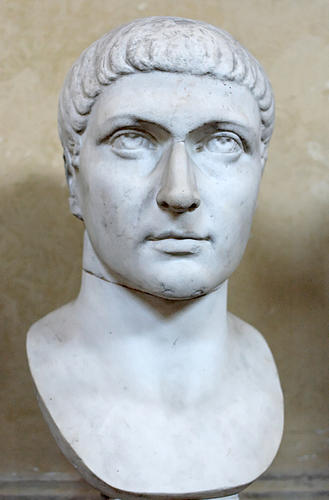
Bust of Constantine in the Vatican Museum.
Bust of Roman emperor Constantine in the Vatican Museum.

Source: Wikimedia
How did Easter become the popular holiday it is today? Have you ever looked into it?
Isn't it important to know the truth of the matter? Jesus Christ Himself said that the truth would make us free (John:8:32). He was speaking of being free of wrong ideas that mislead, entrap and enslave us.
If we look back in history, one key date regarding Easter is the year A.D. 325. At that time, the Roman emperor Constantine held an assembly with some 250 bishops at Nicaea, a town in what is now northwestern Turkey, close to present-day Istanbul. This meeting is known in history as the Council of Nicaea.
What does this Council have to do with Easter? It actually set the stage for the removal of God's biblical feasts and the establishing of alternative feasts not found in the Bible, including Easter. Yet the Bible reveals what our practice ought to be.

Constantine and the Nicene Council reject biblical practices

At the Council of Nicaea, under the dominating eye of Constantine, the majority of the bishops backed replacing the biblical and Christian observance of Passover with the celebration of Easter, among other issues.
Actually, it should be understood that while they called the new celebration of Jesus' resurrection Pascha or Passover, it was certainly not the Passover of Scripture, but a religious celebration derived from pagan origins. Later it would become known as "Easter," the Germanic name for this festival and what it is commonly called today. (Other languages still call it Passover of the Resurrection, which can cause some confusion. Some English sources refer to the true Christian Passover, a memorial of Christ's death, as Easter, but this is clearly a misnomer, as we'll see.).
The dispute over this matter in the early Christian centuries is known in history as the Paschal Controversy. Regrettably, we virtually have only one side of the story.
James Carroll, writing about the Nicene Council in his book Constantine's Sword, explains the Roman emperor's motives: "Immediately upon coming to power as the sole ruler of the empire [A.D. 324], but only then, Constantine asserted the right to exercise absolute authority over the entire Church. He did this despite the fact that he was not baptized, and, as was not unusual, would not be until shortly before he died" (2001, p. 188, emphasis added throughout).
After this Council, Constantine wrote a blatantly anti-Semitic letter to the churches in the Roman Empire letting them know his thoughts about the Easter-Passover controversy.
Here is part of what he wrote as to the rationale for Christians to abandon the biblical feast of Passover, which the Jewish people had long observed in fulfillment of God's commands: "And truly, in the first place, it seemed to everyone a most unworthy thing that we should follow the custom of the Jews in the celebration of this most holy solemnity, who, polluted wretches!, having stained their hands with a nefarious crime, are justly blinded in their minds.
"It is fit, therefore, that, rejecting the practice of this people, we should perpetuate to all future ages the celebration of this rite in a more legitimate order ... Let us then have nothing in common with the most hostile rabble of the Jews.
" We have received another method from the Savior. A more lawful and proper course is open to our most holy religion ... Let us withdraw ourselves, my much honored brethren, from that most odious fellowship" (quoted by Eusebius of Caesarea, Ecclesiastical History , "Council of Nice," 1974, p. 52).
At first glance, it appears Constantine was attacking only Jews of the Jewish faith, but notice what Mal and Donna Broadhurst insightfully point out: "The fact that Christianity never had religious fellowship with non-Christian Jews means the Jews referred to were the Christian Jews . The reference to Jews instructing Christians how to observe the Christian Passover feast could only be applicable to Christian Jews, as non-Christian Jews did not tell Christians how to observe the Passover. The fellowship from which Constantine wanted the Church to withdraw was fellowship with Christian Jews" ( Passover Before Messiah and After ,1987, p. 147).
In fact, the leaders of Jewish Christianity, the successors of the group who had held the prevailing beliefs for the first century after the Church was founded, were either not invited to this Council or knew better and did not appear.
As the Broadhursts point out: "Constantine apparently began his plan to unify the church by simply not inviting any [Christian] Jewish representatives to the Council. (It is possible Jewish church leaders were invited and refused to come, but other facts about the Council lead to the former conclusion.) The lists of those present at the Council shows them all to have had Greek names. None of those present had characteristic Jewish names. The Palestinian delegates were from the coastal cities where mainly Gentiles lived. It is known that there were Jewish bishops in Palestine at the time" (p. 146).

The sword drawn against "Fourteeners"

As emperor, Constantine tolerated no dissent. So he soon drew his sword against those not following his wishes in not conforming to the teachings of the Catholic, or universal, church. The historian Robin Lane Fox notes: "At Nicaea, the Emperor himself imposed criminal sentences of exile on the bishops who refused to sign . He also investigated other reports of heresy" ( Pagans and Christians, 1986, p. 656).
Eventually, those bishops who did not agree with the decisions made in Nicaea were exiled and their works banned. A vicious persecution against Christian Jews and others branded as heretics began. So the Catholic Church, which previously had been persecuted, became the chief persecutor of those who chose to obey the commands of the Bible rather than the commands of a deeply compromised church.
"The Paschal Controversy was 'settled' at the Council of Nicaea—not theologically, but politically," the Broadhursts further explain. "It was settled by eliminating one of the viewpoints. Church law had been laid down. No longer could any Christians celebrate [the] Christian Passover the way [the apostle] John, Philip and other [Christian] Jews had celebrated it. All were required to celebrate on the Sunday following the 14th [of the Hebrew first month of Nisan]. Once respected 'Quartodecimans' ["Fourteeners"] who persisted in the belief handed down to them from the Apostles, would henceforth be called heretics" (p. 148).
What was the result of this Council? Historian Jesse Hurlbut candidly describes the consequences: "But while the triumph of Christianity resulted in much that was good, inevitably the alliance of the church and state also brought in its train many evils. The ceasing of persecution was a blessing, but the establishment of Christianity as the state religion became a curse.
"Everyone sought membership in the church, and nearly everybody was accepted ... The forms and ceremonies of paganism gradually crept into the worship. Some of the old heathen feasts became church festival s with change of name and of worship ... As a result of the church sitting in power, we do not see Christianity transforming the world to its ideal, but the world dominating the church" ( A History of the Christian Church, 1918, pp. 78-79).

A.D. 325 as the beginning of the Dark Ages

So the year 325 is crucial in the outcome of what traditional Christianity has become.
"As far as [the] Christian Passover is concerned , "the Broadhursts conclude, "the beginning of the Dark Ages can be set at 325 A.D. with the Council of Nicaea. Along with turning their backs on [Christian] Jews, the Gentiles turned their backs on the Jewish Scriptures [the Old Testament].
"They disallowed Jewish input to their faith, lifestyle, and worship ... It took a major reformation centuries later [in the 1500s] to begin to undo the horror and destruction the church brought on the world when the Gentiles at Nicaea formally adopted the policy of 'having nothing in common with the Jews'" (p. 149).
A few years later, in 332, Constantine again sternly rebuked those who opposed Catholic teachings with this warning and threat: "Forasmuch, then, as it is no longer possible to bear with your pernicious errors, we give warning by this present statute that none of you henceforth presume to assemble yourselves together.
"We have directed, accordingly, that you be deprived of all the houses in which you are accustomed to hold your assemblies: and [ we ] forbid the holding of your superstitious and senseless meetings, not in public merely, but in any private house or place whatsoever.
"Let those of you, therefore, who are desirous of embracing the true and pure religion, take the far better course of entering the catholic Church, and uniting with it in holy fellowship, whereby you will be enabled to arrive at the knowledge of the truth" (quoted by Eusebius, Life of Constantine, sect. 3, chap. 65).
A bloodbath eventually occurred. Those who did not conform to the Church of Rome, now united with the powerful Roman Empire, suffered implacable persecution. Regarding the aftermath of the Council of Nicaea, famed historian Will Durant stated, "Probably more Christians were slaughtered by Christians in these two years (342-3) than by all the persecutions of Christians by pagans in the history of Rome" ( The Story of Civilization, Vol. 4: The Age of Faith, 1950, p. 8).

The Roman calendar adopted by the Roman Church

Due to the decisions of the Nicene Council, the pagan Roman calendar was adopted instead of the Jewish calendar to determine the dates of what were now deemed to be Christian festivals. Those who continued keeping the true Christian Passover as handed down from the apostles had to go into hiding, for they were targeted along with other "heretics" by the church under Constantine and his successors.
Church historian Henry Chadwick points out about the Easter controversy: "Victor of Rome's intervention [referring to the earlier Roman bishop Victor's ruling to observe Easter instead of the Christian Passover or be excommunicated] turned out to be successful in the sense that his view was eventually to prevail. But it was a long time before those who kept Easter [i.e., the true Passover, it being misnamed here] on the fourteenth day (nicknamed Quartodecimans) died out.
"The group still existed in the ninth century despite the vigor with which church councils deplored them. It was impossible in so weighty a practical question for diversity to be allowed, but there can be little doubt that the Quartodecimans were right in thinking that they had preserved the most ancient and apostolic custom. They had become heretics simply by being behind the times" ( The Early Church, 1967, p. 85).
So from approximately 325 to 1585, a period of 1,260 years, Christians who continued to follow the Bible's instruction about Passover had to flee and hide from the vicious church and state persecutions during those ensuing centuries.

The curtain finally rises on the period of religious persecution

It was only during the time of Elizabethan England that a measure of religious tolerance was granted and the inheritors of the legacy of those early Jewish and gentile Christians, who followed the original practices of Jesus and the apostles, could finally emerge.
In 1585, England and Spain went to war, mainly over the attempt of Spain to militarily impose the Catholic faith on England. Spain lost the war, and also its famed Spanish Armada, so England was free to continue its religious tolerance—which eventually spread to its colonies abroad, including what became the United States and Canada.
Interestingly, there is a prophecy in the Bible which describes how the Church, symbolized by a woman, would have to flee and hide in safety for 1,260 days (Revelation:12:1-6). According to Scripture, a "day" in a prophetic context can represent a year (see Numbers:14:34; Ezekiel:4:6). So this period mentioned in Revelation 12 could well refer to the Church having to flee from the vicious persecutions during those terrible 1,260 years—until those dark ages ended and a new era of religious tolerance began.
In large part thanks to what happened then, we enjoy those same freedoms of worship in advanced nations of the world today.

The returning Christ will lead the world to keep God's festivals

Let's move forward to the 21st century. From what we have read, dare we ask if there is something better and more biblical to observe than Easter?
To answer this, just imagine in your mind the following scene: Jesus Christ has finally returned to rule on the earth, just as He had promised (Matthew:24:30).
And note what will happen, as foretold in Zechariah:14:3-19: "Then the Lord will go forth and fight against those nations, as He fights in the day of battle. And in that day His feet will stand on the Mount of Olives, which faces Jerusalem on the east ... And the Lord shall be King over all the earth ...
"And it shall come to pass that everyone who is left of all the nations which came against Jerusalem shall go up from year to year to worship the King, the Lord of hosts, and to keep the Feast of Tabernacles [one of God's annual festivals, listed in Leviticus 23]. And it shall be that whichever of the families of the earth do not come up to Jerusalem to worship the King, the Lord of hosts, on them there will be no rain.
"If the family of Egypt will not come up and enter in, they shall have no rain; they shall receive the plague with which the Lord strikes the nations who do not come up to keep the Feast of Tabernacles. This shall be the punishment of Egypt and the punishment of all the nations that do not come up to keep the Feast of Tabernacles."
Yet that is not the only festival all will be required to observe. Jesus will command all to celebrate God's weekly Sabbath and all His appointed annual feasts, and those who don't will be sternly disciplined. At last, all the nations will accept His rule and will observe His teachings. Then there will finally be joy, peace and harmony on the earth.
Included then among the required festival observances will be not Easter, but the true Christian Passover and the Feast of Unleavened Bread immediately following.

What Easter replaced—the Christian Passover and Feast of Unleavened Bread

Shortly before His death, Jesus prophesied to His disciples what feast He would keep when He returned. Again, it was not the manmade counterfeit Easter. Rather, He said, "With fervent desire I have desired to eat this Passover with you before I suffer; for I say to you, I will no longer eat of it until it is fulfilled in the kingdom of God" (Luke:22:15-16). Clearly, one of the festivals Christ will again celebrate when He establishes His Kingdom is the Christian Passover!
Similarly, the apostle Paul reminded Church members in Corinth to keep the Christian Passover and the Feast of Unleavened Bread that followed it. He wrote: "Therefore purge out the old leaven, that you may be a new lump, since you truly are unleavened. For indeed Christ, our Passover, was sacrificed for us. Therefore let us keep the feast, not with old leaven, nor with the leaven of malice and wickedness, but with the unleavened bread of sincerity and truth" (1 Corinthians:5:7-8).
These true feasts of God were banished from the mainstream Christian calendar when the Council of Nicaea ruled that people were not to follow biblical instruction with regard to the feasts, but rather to eventually set up a different reckoning of time. As we have seen, the Nicene Council targeted the first of the annual biblical feasts—the Christian Passover—and there they chose instead Easter Sunday. Logically, since the seven annual feasts of God are grouped together as a unit in Leviticus 23, this decree would also affect the keeping of the other listed feasts as well.
This substitution of manmade feasts for the feasts of the Bible should not be taken lightly. It was prophesied centuries earlier in the book Daniel that such change would eventually be attempted, when a future haughty ruler would try to change the biblical dates and laws. (And considering that much of Bible prophecy is dual, these changes may be a forerunner of similar changes to occur during the end times.)
Speaking of this development, God had foretold in Daniel:7:25: "He shall speak pompous words against the Most High, shall persecute the saints of the Most High, and shall intend to change times and law"— dates on the calendar and biblical festivals, among other vile revisions. Remember, only the Bible, as the inspired Word of God, should determine which days are God's Holy Days and when they are to be kept—instead of looking to manmade traditions.
So yes, there is something available that is far better and more satisfying than Easter, and that is the Christian Passover, which was celebrated by the apostles of Jesus and the early Church. And although it was largely stamped out after the Council of Nicaea in A.D. 325, God's faithful people continued to celebrate this deeply meaningful biblical festival in spite of the threat of persecution and even death.
We can look forward to the day when Jesus Christ returns and restores all the genuine Christian feasts that were changed by deceived and deluded men in the distant past. The good news is that we can now celebrate all His feasts and rejoice in them every year—having wonderful fellowship and, as Jesus foretold in John:4:23-24, truly worshipping God in spirit and truth.

Wednesday, April 4, 2012

Roman Forms of Crucifixion

An interesting article from http://www.ucg.org/ about Roman crucifixion. This follows this post about the death and rising of Jesus Christ.  For a free magazine subscription or to get this book for free click HERE! or call 1-888-886-8632.


Roman Forms of Crucifixion


Crucifixion wasn't always carried out the way we've seen it typically depicted in paintings and pictures.


Crucifixion wasn't always carried out the way we've seen it typically depicted in paintings and pictures. In fact, as noted in this chapter, a crucifixion victim likely wasn't nailed through the hands, since their structure cannot support the weight of a human body. Most likely victims were nailed through the wrist or, in some instances, had their arms tied rather than being nailed.


Nor were victims always crucified on the kind of cross typically shown in depictions of Christ's crucifixion. Note what The Anchor Bible Dictionary says in its article on crucifixion:


"At times the cross was only one vertical stake. Frequently, however, there was a cross-piece attached either at the top to give the shape of a 'T' ( crux commissa ) or just below the top, as in the form most familiar in Christian symbolism ( crux immissa ). The victims carried the cross or at least a transverse beam ( patibulum ) to the place of execution, where they were stripped and bound or nailed to the beam, raised up, and seated on a sedile or small wooden peg in the upright beam...


"Executioners could vary the form of punishment, as [Roman historian] Seneca the Younger indicates: 'I see crosses there, not just of one kind but made in many different ways: some have their victims with head down to the ground; some impale their private parts; others stretch out their arms on the [cross-piece]'...


"In his account of what happened to Jewish refugees from Jerusalem [in the Jewish war of A.D. 67-70], [first-century historian] Josephus also lets us see that there was no fixed pattern for crucifying people. Much depended on the sadistic ingenuity of the moment" (David Noel Freedman, editor-in-chief, 1992, Vol. 1, pp. 1208-1209).


"The accursed tree"


The Roman historian Seneca, describing the horror of crucifixion, argued that it would be better to commit suicide than endure such a tortured death. "Can anyone be found who would prefer wasting away in pain dying limb by limb, or letting out his life drop by drop, rather than expiring once for all? Can any man be found willing to be fastened to the accursed tree, long sickly, already deformed, swelling with ugly weals on shoulders and chest, and drawing the breath of life amid long-drawn-out agony? He would have many excuses for dying even before mounting the cross" (ibid., p. 1209).


Seneca's reference to "the accursed tree" is strongly reminiscent of Peter's words when he speaks of Jesus, "who Himself bore our sins in His own body on the tree" (1 Peter 2:24Who his own self bare our sins in his own body on the tree, that we, being dead to sins, should live unto righteousness: by whose stripes ye were healed.


See All...; compare Acts 5:30The God of our fathers raised up Jesus, whom ye slew and hanged on a tree.


See All...). In some cases crucifixions seem to have been carried out on a literal tree, albeit one that was basically only a trunk from which the branches had been cut away.


In these crucifixions the condemned victim would be nailed to the upright trunk or would carry his own crossbeam, which would then be fastened to the trunk and him nailed to both. It's possible that the "cross" Jesus carried to His execution, carried part of the time by Simon of Cyrene, was simply a large beam of wood.


Shape of the cross not spelled out


The word translated "cross" in the New Testament is the Greek word stauros, which "denotes, primarily, 'an upright pale or stake'" ( Vine's Expository Dictionary of Old and New Testament Words, 1985, "Cross, Crucify").


"Both the noun and the verb stauroo, 'to fasten to a stake or pale,' are originally to be distinguished from the ecclesiastical form of a two beamed 'cross'" (ibid.).


The Bible contains no specific description of the stauros on which Jesus died. The word stauros was used in nonbiblical writings of the time to refer to pieces of wood of various shapes, with and without crosspieces. If it were important that we know its exact shape, the Gospel writers could have easily provided us that information—yet none of them do. What is important for us to know is the willing sacrifice Jesus made of His own life for our sakes.


If we don't know whether Jesus was executed on a stake or a cross, or what shape of cross, how did the t-shaped cross come to be the most popular symbol of Christianity?


Vine's explains: "The shape of the [two-beamed cross] had its origin in ancient Chaldea, and was used as the symbol of the god Tammuz (being in the shape of the mystic Tau, the initial of his name) in that country and in adjacent lands, including Egypt. By the middle of the 3rd cent. A.D. the churches had either departed from, or had travestied, certain doctrines of the Christian faith.


"In order to increase the prestige of the apostate ecclesiastical system pagans were received into the churches...and were permitted largely to retain their pagan signs and symbols. Hence the Tau, or T, in its most frequent form, with the cross-piece lowered, was adopted to stand for the 'cross' of Christ'" (ibid.).


Thus we see that the most common symbol of Christ and Christianity was a symbol that long predated Jesus and biblical Christianity.