Showing posts with label Ireland. Show all posts

Thursday, March 17, 2016

Who Was "Saint Patrick"? Should a Christian Observe Saint Patrick's Day?

An interesting article from http://www.ucg.org/ about St. Patrick. This follows this previous post about it. This follows this post about former Muslims in America. This follows this post about the Pope and immigration. For a free magazine subscription or to get the books recommended for free click HERE! or call 1-888-886- 8632.


Let’s start with what most people think they know. We have been told that Patrick was a Catholic monk who brought the Trinity doctrine to the people of Ireland. And along the way he drove all the snakes from the Emerald Isle. He became so renowned that the Catholic Church made him a “saint.” None of that is true!

Patrick was Scottish!

Patrick’s given name was actually Maewyn Succat (or Sucat). He took the name Patrick most likely because of the area he was from in Scotland. That’s right, Patrick was Scottish, not Irish! Here’s what Patrick said himself of his background: “ I, Patrick…had Calpornius  for my father, a deacon, a son of the late Potitus, the presbyter, who dwelt in the village of Banavan…I was captured. I was almost sixteen years of age…and taken to Ireland in captivity with many thousand men” (William Cathcart, D. D., The Ancient British and Irish Churches , p.127).
Patrick labored for six years as a slave until he managed to escape back to his native Scotland around A.D. 376. He believed he had a calling from God, however, to go back to Ireland to teach God’s Word to the people there. The Catholic Church, while having had an impact in England and later Scotland, did not have a significant foothold in Ireland until the 12th century. They didn’t even acknowledge Patrick for about 200 years after his death.  Patrick was connected to what is known as the Celtic Church. It was very much opposed to what was taught in the Roman Catholic Church.

Patrick did not follow Roman Catholic doctrine

While we have little of Patrick’s history and teaching written by himself, what’s taught about Patrick now didn’t surface until about 500 years after his death. It was the Catholic priest Jocelyn, writing around A.D. 1130 who wrote most extensively about Patrick. He ignored much of what was known then about Patrick and inserted a Catholic background into Patrick’s story. Patrick never wrote about a connection to Rome or popes or that his authority came from there. So if Patrick wasn’t Roman Catholic, what did he teach?
In A.D. 596 Pope Gregory sent a group of monks to England to try and bring the Celtic Church under the authority of Rome. However, the Celts refused to acknowledge Gregory’s authority and rejected the teachings of the Roman Church. In Ireland the monks found that the Celtic Church permitted their priests to marry. They also practiced baptism by full immersion in water. The Celtic Church also rejected the doctrine of (papal) infallibility and veneration, transubstantiation, the confessional, the Mass, relic worship, image adoration and the primacy of Peter ( Truth Triumphant , by B.G. Wilkinson, pg. 108). The latter list is of specific Roman Catholic doctrines that the Celtic Church knew were not taught in the Scriptures.

Patrick observed the Saturday Sabbath, Passover and rejected the Trinity doctrine

Patrick also rejected the merging of church and state (a main teaching of Catholicism). He believed and taught the same as Jesus in John 18:36 that God’s Kingdom is not of this world. The Celtic Church had local ecclesiastical councils and kept Saturday as a day of rest , (A.C. Flick, The Rise of Medieval Church, pp. 236-327). In this matter of a Saturday (Sabbath) rest, Dr. James C. Moffatt wrote that, “They [the Celtic churches] obeyed the fourth commandment [the Sabbath commandment] literally upon the seventh day of the week” ( The Church in Scotland , pg. 140).
Patrick (and the Celtic Church) observed the other “festivals of the Eternal” (Leviticus 23), believed human beings were mortal (that is rejected the teaching of an immortal soul and the doctrine of going to heaven or hell), rejected the Trinity doctrine, followed the food laws of Leviticus 11, refused veneration of “saints” or worship of Mary, and believed that only Jesus Christ is our mediator (Leslie Hardinge, The Celtic Church in Britain  ; B.G. Wilkinson, Truth Triumphant ).
The Celtic Church had a long history before the Catholic Church pushed deeper into England, Scotland and Ireland. Celtic writings speak of individuals coming from Asia Minor who brought with them the doctrines they received from John, Paul, Philip and other apostles of Jesus. A Catholic “father,” Bede, (who lived in the mid 700s A.D.) who wrote about the Celtic Church: “They ignorantly refuse to observe our Easter [Pascha, or Passover] on which Christ was sacrificed, arguing that it should be observed with the Hebrew Passover on the fourteenth of the moon” (Bede, Historia Ecclesiastica ).

Is Saint Patrick’s Day in the Bible?

Saint Patrick’s Day is not a biblical holiday or Holy Day. And, as it is currently celebrated, St. Patrick’s Day actually has nothing to do with the historical man Patrick. Many “Christian” holidays are a mixture of truth and error. Because of this, most people don’t really know the history or purpose of the day. We encourage you to read what God said in the Bible to know which Holy Days He made and who He said are saints. The United Church of God traces its origins to the Church that Jesus founded in the early first century. We follow the same teachings, doctrines and practices established then, and believe our commission is to proclaim the gospel of the coming Kingdom of God to all the world as a witness and teach all nations to observe what Christ commanded.
It appears that Patrick believed these same teachings. We encourage you to read the online Bible study aids, Fundamental Beliefs of the United Church of God and The Church Jesus Built  to learn more about what individuals like Patrick taught and what we teach from Scripture. From our best historical understanding, the Patrick you didn’t know lived a life according to the Bible, rather than human traditions. You can too.

You might also be interested in...

Wednesday, March 16, 2016

St. Patrick & St. Patrick's Day

An interesting article from http://www.ucg.org/ about St. Patrick. This follows this post about the Celts. This follows this post about the Pope and immigration. For a free magazine subscription or to get the books recommended for free click HERE! or call 1-888-886- 8632.

Theologian and historian James Moffatt said, “So much legend and fiction has been written about him that one is almost led to believe that there were two individuals—the real Patrick and the fictitious Patrick” ( The Church in Scotland , 1882, p. 140).
There are few hard facts about Patrick's life, but we can draw some reasonable conclusions from what we do know.
Patrick is credited with establishing the Roman Catholic Church throughout Ireland. But does history match tradition? Moffatt commented, “He should not be placed where certain historians seem determined to assign him … He was in no way connected with the type of Christianity which developed in Italy” (ibid).
As it turns out, Patrick probably wasn't even Catholic! His belief system was evidently quite different than that of continental Europe.
It's probable that Patrick even honored God's seventh day Sabbath! “It seems to have been customary in the Celtic churches of early times, in Ireland as well as Scotland, to keep Saturday, the Jewish Sabbath, as a day of rest from labor” (ibid).
Other historical records and Patrick's own writings reveal him to have been closer to biblical instruction than to traditional Christianity. Part of the Bible's teaching includes rejecting the use of pagan practices in the worship of the true God (Deuteronomy 12:29-32).
The real Patrick likely wouldn't even have approved of observing his own namesake holiday! This holiday on March 17 was supposedly to commemorate his death, but that date was in fact the time of the Roman Bacchanalia—celebrating the god of wine and partying. It seems the pagan party goes on in another guise. Bear that in mind when March 17 comes around. Forget the leprechauns, and put God first!
Read the related article “Do You Feel Lucky Today? “

You might also be interested in...

Monday, March 16, 2015

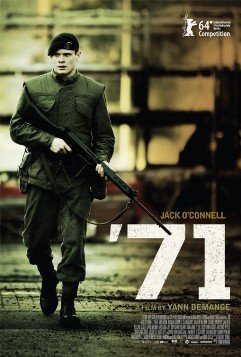
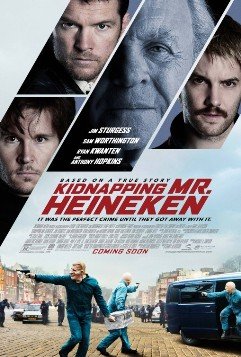
Wknd Box Office: Cinderella, Run All Night, ’71, Kidnapping Mr. Heineken

Here is an interesting article from http://www.debbieschlussel.com/ reviewing some of the movies that came out over the past weekend. This follows this post about some of the movies from last week and THIS POST about some movies that have been released over the past few years that you might have missed! This all follows this post about guidelines to choosing good movies to watch yourself!


Wknd Box Office: Cinderella, Run All Night, ’71, Kidnapping Mr. Heineken


By Debbie Schlussel
Well, the new movies at the theater this weekend are getting better (relatively speaking), so Spring and Summer must be just around the corner.
cinderellarunallnight

71kidnappingmrheineken


* “Cinderella“: When I first heard about this Disney project, I thought, “Again?! Do we really need yet another ‘Cinderella’?” But, actually, after seeing this, the answer is, “Yes.” This was just fantastic, from the beautiful costumes and sets to the acting to the computer generated images and effects. Everything about this was terrific and charming. And, for once in all of these years I’ve been reviewing movies, there is finally a prince in the Cinderella story who isn’t an effeminate, bumbling dope. The prince in this one is principled, courageous, and masculine. The movie is great, wholesome fare to which to take the entire family. Even the adults will enjoy this.
You know the Cinderella story, so I need not repeat it here. This is true to the real fairy tale. And the acting is terrific, especially that of beautiful newcomer Lily James in the title role. The costumes and jewelry are just terrific–incredibly beautiful, especially evil stepmother Cate Blanchett’s clothing and bejeweled accoutrements. The pumpkin carriage is magnificent. If the costume and set designers for this don’t win Oscars, it’s a crime. Then, there is the lizard man, who is one of the coachmen. He looks exactly as I would have imagined a lizardly human to look. The prince’s viceroy, the “Captain,” British actor Nonso Anozie, is a doppelganger for former NFLer Warren Sapp (minus the prostitutes). Helena Bonham Carter looks better than she has in years, here as the fairy godmother.
nonsoanoziewarrensapp

Nonso Anozie; Warren Sapp

Several in the PC-crowd are upset that Cinderella/James is too thin, and I thought they were going overboard. But when I saw the movie, her waist is shockingly tiny during the ball scene. I doubt, though, that this will make America’s girls want to be anorexic. Our problem is too many overweight children, not too many who are too thin. And the movie makes clear that the women in this age wore corsets, which did give this effect in real life. I guarantee this won’t cause a whole bunch of girls to run out and buy corsets. Nobody seems to be concerned that the Kartrashians are already pimping corsets.
Director Kenneth Branagh did a terrific job here. A great, fun movie. See it with your whole family or enjoy it alone. It’s just beautiful and well done all around. There is an animated “Frozen” short before the movie begins.
FOUR REAGANS
reagancowboyreagancowboyreagancowboyreagancowboy
Watch the trailer . . .

* “Run All Night“: This was much better than I expected, but far too violent and bloody for my taste. It’s not for kids or even teens in my view. Still, I found it to be edge-of-your-seat entertainment from beginning to end, full of suspense throughout. It features a few bad actors as actors: Islam-pimp Liam Neeson, who proudly espouses gun control, but made this violent, gun-filled movie; neo-Communist Ed Harris, who sat on his hands when the late, great anti-Communist director Elia Kazan received a Lifetime Achievement Oscar; and Muslim, racist rapper Common. I loved it when he got his. And I liked that the movie did not glorify Neeson’s character, a burnt-out, friendless, mafia hit man, though I was troubled that you tend to root for the guy in this movie, given the story line.
The story: Harris heads an Irish mafia family in New York. Neeson, his lifelong friend, was also his lifelong personal hit man, killing many innocents. Neeson’s son, Joel Kinnaman, is honest and straight and, therefore, has disowned his father, Neeson, and kept him out of his life. But, one night, Kinnaman witnesses Irish mafia chief Harris’ son commit murder, and the son tries to kill Kinnaman. Just as he’s about to kill Kinnaman, Neeson shoots the mob boss’ son. Harris, the mob boss, tells Neeson that he (Harris) will now make it his goal to murder Neeson’s son and Neeson, himself. So the estranged mob hit man and his honest son are stuck that night trying to escape the Irish mob, corrupt cops on the take from the mob, and a professional hit man (Common). Like I said, it’s non-stop action and suspenseful stuff.
The ending is predictable, but it’s a tight thriller and pretty well-crafted, but for the excessive blood and killing. But nobody said the mob is populated by saints and those dedicated to saving lives. Rated “R” for several reasons, including extreme violence and language. 74-year-old crypt-keeper Nick Nolte, looking every bit of his 94 years, makes a cameo.
TWO REAGANS
reagancowboyreagancowboy
Watch the trailer . . .

* “’71“: This movie is about a British soldier who gets left behind in the middle of violent Belfast, Northern Ireland. He’s being chased and kidnapped and shot at repeatedly, all over the place. Meanwhile, the Brits are looking for him, as well as rival Irish Catholic factions and undercover police who are really working for and collaborating with the British. Very bloody and violent, especially a scene where we are shown–at close range–strangers sewing crude stitches on the soldier without anesthesia. Um, no thanks. Wasn’t sure what the point of this movie was, even though it’s billed as a thriller. And while it was thrilling at times, it was also a dry bore at others. I wish there would be a movie that would depict the IRA and their real-life partnerships and exploits with the PLO and the Sandinistas. This ain’t it. Also, about a third of the time, I needed a translator to understand the quick clips of working-class Irish cockney.
HALF A REAGAN
halfreagan
Watch the trailer . . .

* “Kidnapping Mr. Heineken“: This was mildly entertaining but you and I have seen this movie a zillion times: lazy people who don’t want to work for a living cook up a scheme to kidnap a rich dude for the ransom and get rich quick. Except that it never works. I learned this as a little kid when my parents took me to see “Benji” and the kidnappers didn’t get away with the money then. At least in that movie, we knew that Benji helped foil the bad guys. In this movie, they never really tell you much about how police nailed the real-life kidnappers who snatched Dutch beer magnate Alfred Heineken (Anthony Hopkins), other than a postscript that an anonymous tip was phoned in to police. Instead, this is more of an exercise in frustration–we watch the kidnappers grow ever more frustrated that their ransom demands have been ignored. Plus they do a bunch of dumb things and are constantly feuding. This isn’t a relaxing movie. If I need to see people fight and become frustrated, I’ll go watch family court. It’s free, and more intense.
HALF A REAGAN
halfreagan
Watch the trailer . . .

Thursday, March 13, 2014

Help counter YET ANOTHER pro-amnesty lobbying effort by calling GOP House Members in your state

A very interesting post from www.NumbersUSA.com about an attempt to drastically increase immigration. This follows this post about the Border Patrol being disarmed. This follows this post about the claim of Barack Obama as "Deporter in Chief." REMEMBER, “Amnesty” means ANY non-enforcement of existing immigration laws! This follows this comment and this post about how to Report Illegal Immigrants! For more about what you can do click here and you can read two very interesting books HERE.
You can follow me at blogspot here and at twitter here https://twitter.com/brianleesblog. Please consider following both in case one goes down!
Friends,
The group, Irish Lobby for Immigration Reform, will be meeting with House GOP Members on Capitol Hill, urging them to pass the Senate-approved Schumer-Rubio-Obama amnesty bill, S.744. The bill would grant legal status and work permits to 11-18 million illegal aliens and double the annual number of legal immigrants.
Congress needs to hear from Americans, like you, who oppose legalization for illegal aliens and support sensible immigration reform.
Please call House GOP Members from your state and tell them that as an American, you oppose amnesty!
During the lead-up to St. Patrick's Day, ILIR will also impress on visiting Irish politicians the importance of speaking out about the undocumented and securing future legal access to the U.S. for the Irish. Taoiseach (Prime Minister) Enda Kenny will spend much of Friday, March 14 at the White House and Capitol Hill for the annual Irish visit to mark St. Patrick's Day.
https://www.numbersusa.com/emailsupport/email/common/icon-action-fax.pngCall House GOP Members Today!
We've posted a new phone note on your Action Board that lists all the GOP House Members in your state. Call each one and tell them you oppose any legalization for illegal aliens and the doubling of legal immigration. We've provided additional talking points on the phone note.
https://www.numbersusa.com/emailsupport/email/common/icon-action-phone.png Call House GOP Members
Also, if you haven't sent the fax we posted yesterday to your Three Members of Congress, please do so today.
https://www.numbersusa.com/emailsupport/email/common/icon-action-fax.png Send a fax

Friday, March 7, 2014

St. Patrick & St. Patrick's Day

An interesting article from http://www.ucg.org/  about the holiday called St. Patrick's Day. This follows this post about the problem of alcoholismFor a free magazine subscription or to get the book shown for free click HERE! or call 1-888-886- 8632. You can follow me at blogspot here and at twitter here https://twitter.com/brianleesblog. Please consider following both in case one goes down!


St. Patrick & St. Patrick's Day


Who was this Patrick guy, anyway? Known as the patron saint of Ireland, he's an almost mythological figure in the Christian world, with tall tales of his legendary exploits known far and wide.

Theologian and historian James Moffatt said, "So much legend and fiction has been written about him that one is almost led to believe that there were two individuals—the real Patrick and the fictitious Patrick" ( The Church in Scotland , 1882, p. 140).
There are few hard facts about Patrick's life, but we can draw some reasonable conclusions from what we do know.
Patrick is credited with establishing the Roman Catholic Church throughout Ireland. But does history match tradition? Moffatt commented, "He should not be placed where certain historians seem determined to assign him … He was in no way connected with the type of Christianity which developed in Italy" (ibid).
As it turns out, Patrick probably wasn't even Catholic! His belief system was evidently quite different than that of continental Europe.
It's probable that Patrick even honored God's seventh day Sabbath! "It seems to have been customary in the Celtic churches of early times, in Ireland as well as Scotland, to keep Saturday, the Jewish Sabbath, as a day of rest from labor" (ibid).
Other historical records and Patrick's own writings reveal him to have been closer to biblical instruction than to traditional Christianity. Part of the Bible's teaching includes rejecting the use of pagan practices in the worship of the true God (Deuteronomy:12:29-32).
The real Patrick likely wouldn't even have approved of observing his own namesake holiday! This holiday on March 17 was supposedly to commemorate his death, but that date was in fact the time of the Roman Bacchanalia—celebrating the god of wine and partying. It seems the pagan party goes on in another guise. Bear that in mind when March 17 comes around. Forget the leprechauns, and put God first!
Read the related article "Do You Feel Lucky Today? "

Monday, October 21, 2013

99% of People With Down Syndrome Happy With Their Lives, Don’t Abort Them

BLOGGERS NOTE: I WILL BE MOVING FROM FACEBOOK TO TWITTER AND BLOGSPOT SOON!

An interesting story from www.lifenews.com  about Down’s Syndrome. This follows this post about Cory Booker of New Jersey. For more that you can do to get involved click HERE and you can also get two very interesting books HERE.

99% of People With Down Syndrome Happy With Their Lives, Don’t Abort Them


The recent debate on abortion for anencephaly in Northern Ireland has reopened the wider debate on abortion for fetal disability. http://www.lifenews.com/2013/10/18/99-of-people-with-down-syndrome-happy-with-their-lives-dont-abort-them/

Friday, January 4, 2013

Europe in 2013: A Year of Decision

A very interesting post from www.Stratfor.com about tensions in Europe. This follows this post about the Benghazi Report.  This follows this article about American energy independence and preventing money from going to hostile countries such as Iran . For more about what is happening in the nation now click here and read a very interesting book HERE.


Europe in 2013: A Year of Decision

Stratfor

By George Friedman

Founder and Chief Executive Officer


The end of the year always prompts questions about what the most important issue of the next year may be. It's a simplistic question, since every year sees many things happen and for each of us a different one might be important. But it is still worth considering what single issue could cause the world to change course. In my view, the most important place to watch in 2013 is Europe.


Taken as a single geographic entity, Europe has the largest economy in the world. Should it choose to do so, it could become a military rival to the United States. Europe is one of the pillars of the global system, and what happens to Europe is going to define how the world works. I would argue that in 2013 we will begin to get clarity on the future of Europe.


The question is whether the European Union will stabilize itself, stop its fragmentation and begin preparing for more integration and expansion. Alternatively, the tensions could intensify within the European Union, the institutions could further lose legitimacy and its component states could increase the pace with which they pursue their own policies, both domestic and foreign.


The Embattled European Project

It has been more than four years since the crisis of 2008 and about two years since the problems spawned by 2008 generated a sovereign debt crisis and a banking crisis in Europe. Since that time, the crisis has turned from a financial to an economic crisis, with Europe moving into recession and unemployment across the Continent rising above 10 percent. More important, it has been a period in which the decision-making apparatus created at the founding of the European Union has been unable to create policy solutions that were both widely acceptable and able to be implemented. EU countries have faced each other less as members of a single political entity than as individual nation-states pursuing their own national interests in what has become something of a zero-sum game, where the success of one has to come at the expense of another.


This can be seen in two ways. The first dimension has centered on which countries should bear the financial burden of stabilizing the eurozone. The financially healthier countries wanted the weaker countries to bear the burden through austerity. The weaker countries wanted the stronger countries to bear the burden through continued lending despite the rising risk that the loans will not be fully repaid. The result has been constant attempts to compromise that have never quite worked out. The second dimension has been class. Should the burden be borne by the middle and lower classes by reducing government expenditures that benefit them? Or by the elites through increased taxation and regulation?


When you speak with Europeans who support the idea that Europe is in the process of solving its problems, the question becomes: What problem are they solving? Is it the problem of the banks? The problem of unemployment? Or the problem of countries' inability to find common solutions? More to the point, European officials have been working on this problem for years now, and they are among the best and brightest in the world. Their inability to craft a solution is not rooted in a lack of good ideas or the need to think about the problem more. It is rooted in the fact that there is no political agreement on who will pay the price geographically and socially. The national tensions and the class tensions have prevented the crafting of a solution that can be both agreed upon and honored.


If the Europeans do not generate that sort of solution in 2013, it is time to seriously doubt whether a solution is possible and therefore to think about the future of Europe without the European Union or with a very weakened one. If, however, Europe does emerge with a plan that has general support and momentum behind it, then we might say that Europe is beginning to emerge from its crisis, and that, in turn, would be the single most important thing that happens in 2013.


At this point, a reasonable person will argue that I am ignoring the United States, which has different but equally significant economic problems and is also unable to generate consensus on how to solve them, as we have seen during the recent "fiscal cliff" affair, which will have many more iterations. But as valid as the comparison is on the financial level, it is not valid on the political level. The United States does not face the dissolution of the republic if it follows contradictory policies. The United States is more than two centuries old and has weathered far worse problems, including the Civil War and the Great Depression. The European Union is only about 20 years old in its current form, and this is its first significant crisis. The consequences of mismanaging the U.S. financial system are significant to say the least. But unlike Europe, the consequences are not an immediate existential threat.


The Other Costs of the Crisis

It is the political dimension that has become the most important, not the financial. It may well be that the European Union is in the process of dealing with its banking problems and might avoid other sovereign debt issues, but the price it has paid is both a recession and, much more serious, unemployment at a higher rate than in the United States overall, and enormously higher in some countries.


We can divide the European Union into three categories by measuring it against the U.S. unemployment rate, which stands at about 7.7 percent. There are five EU countries significantly below that rate (Austria, Luxembourg, Germany, Netherlands and Malta). There are seven countries with unemployment around the U.S. rate (Romania, Czech Republic, Belgium, Denmark, Finland, the United Kingdom and Sweden). The remaining 15 countries are above U.S. unemployment levels; 11 have unemployment rates between 10 and 17 percent, including France at 10.7 percent, Italy at 11.1 percent, Ireland at 14.7 percent and Portugal at 16.3 percent. Two others are staggeringly higher -- Greece at 25.4 percent and Spain at 26.2 percent. These levels are close to the unemployment rate in the United States at the height of the Great Depression.


For advanced industrialized countries -- some of the most powerful in Europe, for that matter -- these are stunning numbers. It is important to consider what these numbers mean socially. Bear in mind that the unemployment rate goes up for younger workers. In Italy, Portugal, Spain and Greece, more than a third of the workforce under 25 is reportedly unemployed. It will take a generation to bring the rate down to an acceptable level in Spain and Greece. Even for countries that remain at about 10 percent for an extended period of time, the length of time will be substantial, and Europe is still in a recession.


Consider someone unemployed in his 20s, perhaps with a university degree. The numbers mean that there is an excellent chance that he will never have the opportunity to pursue his chosen career and quite possibly will never get a job at the social level he anticipated. In Spain and Greece, the young -- and the old as well -- are facing personal catastrophe. In the others, the percentage facing personal catastrophe is lower, but still very real. Also remember that unemployment does not affect just one person. It affects the immediate family, parents and possibly other relatives. The effect is not only financial but also psychological. It creates a pall, a sense of failure and dread.


It also creates unrooted young people full of energy and anger. Unemployment is a root of anti-state movements on the left and the right. The extended and hopelessly unemployed have little to lose and think they have something to gain by destabilizing the state. It is hard to quantify what level of unemployment breeds that sort of unrest, but there is no doubt that Spain and Greece are in that zone and that others might be.


It is interesting that while Greece has already developed a radical right movement of some size, Spain's political system, while experiencing stress between the center and its autonomous regions, remains relatively stable. I would argue that that stability is based on a belief that there will be some solution to the unemployment situation. Its full enormity has not yet sunk in, nor the fact that this kind of unemployment problem is not fixed quickly. It is deeply structural. The U.S. unemployment rate during the Great Depression was mitigated to a limited degree by the New Deal but required the restructuring of World War II to really address.


This is why 2013 is a critical year for Europe. It has gone far to solve the banking crisis and put off a sovereign debt crisis. In order to do so, it has caused a serious weakening of the economy and created massive unemployment in some countries. The unequal distribution of the cost, both nationally and socially, is the threat facing the European Union. It isn't merely a question of nations pulling in different directions, but of political movements emerging, particularly from the most economically affected sectors of society, that will be both nationalist and distrustful of its own elites. What else can happen in those countries that are undergoing social catastrophes? Even if the disaster is mitigated to some degree by the shadow economy and emigration reducing unemployment, the numbers range from the painful to the miserable in 14 of Europe's economies.


Europe's Crossroads

The European Union has been so focused on the financial crisis that it is not clear to me that the unemployment reality has reached Europe's officials and bureaucrats, partly because of a growing split in the worldview of the European elites and those whose experience of Europe has turned bitter. Partly, it has been caused by the fact of geography. The countries with low unemployment tend to be in Northern Europe, which is the heart of the European Union, while those with catastrophically high unemployment are on the periphery. It is easy to ignore things far away.


But 2013 is the year in which the definition of the European problem must move beyond the financial crisis to the social consequences of that crisis. Progress, if not a solution, must become visible. It is difficult to see how continued stagnation and unemployment at these levels can last another year without starting to generate significant political opposition that will create governments, or force existing governments, to tear at the fabric of Europe.


That fabric is not old enough, worn enough or tough enough to face the challenges. People are not being asked to die on a battlefield for the European Union but to live lives of misery and disappointment. In many ways that is harder than being brave. And since the core promise of the European Union was prosperity, the failure to deliver that prosperity -- and the delivery of poverty instead, unevenly distributed -- is not sustainable. If Europe is in crisis, the world's largest economy is in crisis, political as well as financial. And that matters to the world perhaps more than anything else.

 Reprinting or republication of this report on websites is authorized by prominently displaying the following sentence, including the hyperlink to Stratfor, at the beginning or end of the report.

"Europe in 2013: A Year of Decision is republished with permission of Stratfor."


Read more: Europe in 2013: A Year of Decision
Stratfor

Friday, September 21, 2012

Phone & Ask The GOP Senators to Stop Irish Guest Worker Vote‏

A very interesting post from www.NumbersUSA.com about allowing more immigration. This follows this post about preventing illegal aliens from voting. This follows this post about how to Report Illegal Immigrants! For more that you can do to get involved click HERE and HERE and you can read a very interesting book HERE.

Ask your GOP Senators to Stop Irish Guest Worker Vote


This new phone call request has been posted in your Action Buffet based on your answers to the Interest Survey.


You can find this phone call request by proceeding to

http://www.numbersusa.com/phones?ID=14218


Senator Scott Brown (R-Mass.) is once again attempting to bring his Irish guest worker bill up for a vote before the Senate leaves for recess. The legislation would amend the Immigration and Nationality Act to add the Republic of Ireland to the E-3 visa program. If passed, an additional 10,500 visas would be available to low-skilled workers from Ireland to compete for U.S. jobs. These two-year visas can be renewed indefinitely.


This is bad legislation that would bring in more foreign workers to compete against unemployed Americans. Please call your Republican U.S. Senators and ask them to do all they can to prevent S. 2005, Sen. Brown's Irish guest worker legislation from coming up for a vote.

Thursday, June 21, 2012

The Futility of European Elections

A very interesting post from http://www.stratfor.com/  about the Eurozone's problems. This follows this post about Russia, which may be supporting Assad in Syria and could be trying to drag the United States into a war there. This follows this post about Greece, which is having strained relations with the EU and Germany in particular.  This follows this article about American energy independence and preventing money from going to hostile countries such as Iran and Venezuela. For more that you can do to get involved click HERE and read this very interesting book HERE!


The Futility of European Elections


--------------------------------------------------------------------------------


Stratfor

By George Friedman


Europe and the financial markets watched intently June 17 as Greece held general elections. German Chancellor Angela Merkel, French President Francois Hollande and Italian Prime Minister Mario Monti all delayed their flights to the June 18 G-20 summit in Mexico to await the results.


The two leading contenders in the elections were the center-right New Democracy Party (ND), which pledged to uphold Greece's commitments to austerity and honor the country's financial agreements with the European Union and the International Monetary Fund, and the Coalition of the Radical Left (SYRIZA), a group of far-left politicians who pledged to reject Greece's existing agreements, end austerity and maintain the country's position in the eurozone. A third major party, the center-left Panhellenic Socialist Movement (PASOK), shares the ND's position of maintaining Greece's bailout agreement. PASOK had been Greece's ruling party until it formed a unity government with the ND late in 2011.


For a while it seemed these elections would be definitive. Either Greece would reject the country's agreement with its international lenders, potentially being forced out of the eurozone, or it wouldn't. If Greece rejected austerity and forcibly or voluntarily left the eurozone, the country might set a precedent for other troubled states and precipitate a financial crisis -- a eurozone exit and default would likely go hand in hand. Europe would be tested as never before, and it would find out how resilient it is to a wider financial crisis.


But in Europe, the least likely outcome is a definitive one. ND won the election with about 29.5 percent of the vote, earning 78 seats in parliament plus another 50 seats awarded to the winning party by the Greek Constitution. SYRIZA received roughly 27.1 percent of the vote, equivalent to 72 seats, and PASOK received roughly 12.2 percent of the vote, or about 33 seats. The rest of the vote was scattered among a host of other parties. A party needs 151 seats to gain an absolute majority in parliament, but since no single party passed that threshold, a governing coalition must be formed. So the ND needs PASOK if it is going to cobble together a governing coalition, but PASOK has said it will not join a coalition without SYRIZA. It is unclear what a coalition would look like between a party that wants to respect the bailout agreement and a party that wants to reject it, but such a coalition is unlikely to happen anyway. SYRIZA wants to form a powerful opposition. Something resembling a government eventually will be assembled regardless of current rhetoric.


The Greek vote has settled nothing. In fact, it may not even lead to the formation of a government; the last election failed to produce a government and forced this election. That the European crisis most severely affected a country so politically fractious could be seen as pitiable. On the other hand, one could argue that the crisis inevitably would be most severe in the most divided country -- not because the divisions caused the crisis, but because the crisis caused the divisions.


The pressure brought on by the circumstances in Greece undermined whatever political order was in place; the choices for policymakers were so limited and so frightening that coherent responses were difficult. Greece has options, but it is unable to choose one. More than anything, Europe wants a decision on its future, whatever that decision might be. On June 17, Greece disappointed Europe not because of the choice it made but because it was crippled with indecision.


Crisis Management

Greece's indecisions are at the ground level of Europe. Another and more significant framework for indecision is emerging in Franco-German relations. The French Socialist Party won an absolute majority the same day that the Greeks entered another gridlock. This makes it possible for France's Socialists to form a government without the Greens, giving Hollande a strong and coherent platform from which to operate.


France's position on managing the sovereign debt crisis differs fundamentally from Germany's. Germany has said it will not agree to proposed solutions that would essentially turn the eurozone into a transfer union until the rest of Europe can balance their budgets through austerity measures. Germany believes this must be the first step to further EU and eurozone integration. Hollande takes a different position. He, too, wants greater European and eurozone integration. However, Hollande advocates economic stimulus alongside austerity measures as a means to rebalance the finances of European governments.


Hollande wants to grow Europe out of its financial problems. This means stimulating economies, a process that requires deficit spending. Hollande upholds a traditional Keynesian tenet that increasing demand for goods among consumers will increase economic activity and increase investment. As a Socialist with a strong leftist contingent in his party, Hollande cannot support the German position, which constrains the economy, particularly by decreasing government expenditures, thereby depressing consumption.


The difference between the French and German approaches is substantial. It reveals a dispute at the heart of the European strategy for managing the crisis. The Germans have been aggressive in demanding balanced budgets. The French are becoming equally aggressive in demanding expansionary policies. Both want to avoid defaults, but the Germans want to guarantee payments of debt by a combination of bailout and austerity. The French want to add stimulus to this, which changes the situation entirely because the stimulus would be funded in large part by German coffers.


This is not a simple matter of divergent economic theory. It is a matter of national interest. France is not as economically decrepit as Spain or Italy, let alone Greece, but nonetheless it is feeling the pressures of the financial crisis. If Europe continues on its path toward recession, France will face higher unemployment and therefore domestic political pressure under the German plan. It is not in Hollande's or France's interests to follow the German course. For its part, Germany cannot risk further government deficits in the European economic system. Germany's robust economy gives the country a financial cushion to soften the effects of deficit cuts; the rest of Europe, including France, does not have this luxury.


Interestingly, France and Germany were as one on this issue until Hollande was elected president. Indeed, the foundation and mission of European integration has been the close alignment of Germany and France. A founding principle of the union, such an alignment guaranteed stability and discouraged conflicts that had torn Europe apart. Now, Europe has lost its coherence at the highest level, albeit in a more orderly manner than in Greece.


Disharmony and Public Opinion

Of course, the situation is not that simple. What Germany says it wants differs from what it allows to happen. Germany claims to favor disciplined austerity, but more than any other country Germany needs the eurozone to stay intact. It is thus willing to compromise on austerity and on underwriting bad debts. On the other hand, Germany rejects the idea that a systematic strategy to stimulate growth is needed or likely to work. France sees no other solution, lest it face austerity itself. Both want different fiscal policies from the members and also, logically, from the European Central Bank.


From the most beleaguered members of the European Union to the relations between its strongest and most stable members, there is now profound disharmony. What drives this disharmony is public opinion. The Greek public is divided politically; therefore, Greece is paralyzed. France held an election in which Hollande, who holds serious doubts about German policy, forced out and replaced former French President Nicolas Sarkozy, who shared the German position on managing the crisis.


It is not the policymakers that are divided. Rather, the electorate is driving apart policymakers. The German solution to the problem is so unpalatable to the rest of Europe that traditional elite politicians supporting Germany's plan, such as Sarkozy and former Greek Prime Minister George Papandreou, are being replaced. Their replacements tend to reject the German position.


Indeed, political reality has constrained the actions of European lawmakers. Until about five years ago, a broad consensus governed Europe when it came to EU matters, and politicians were free to align themselves with Europe. This is no longer the case -- the solution for maintaining Europe has diverged. Most important, Germany has become the problem in the eurozone where once it was the solution.


Structural issues, such as German dependence on exports to the European Union, only partly explain the change in Germany's public perception. More accurately, German methods for managing the crisis increasingly are seen by other countries as significant threats to their well being -- there is not one anti-German coalition. Germany wants to find accommodation with France. The problem rests in how the French and German views are reconciled. France is not yet leading a coalition against Germany, but it is difficult to imagine a different scenario.


The more elections are held, the more the public will force their leaders in various directions. More often than not, this direction will eschew austerity and Germany. Over time this will solidify into a new map. While this has yet to happen, the recent elections at the least are not solving Europe's problem. In fact, they may be further dividing the Continent. And there are many elections to go.


--------------------------------------------------------------------------------

.


Read more: The Futility of European Elections
Stratfor