Showing posts with label Rosh Hoshanna. Show all posts

Wednesday, September 28, 2016

Why should Christians celebrate the Feast of Trumpets?

An interesting article from http://www.ucg.org/ about the Feast of Trumpets. This follows this post about Iraq. For a free magazine subscription or to get the books recommended for free click HERE! or call 1-888-886- 8632.

The fourth festival of God (after Pentecost) is the Feast of Trumpets (or a “memorial of blowing of trumpets,” Leviticus 23:24-25), which falls in September or October. This festival is called Rosh Hashanah by the Jews today. Ancient Israel understood that trumpets were used as a way of announcing special, very important messages (Numbers 10:1-10).
In the New Testament, Jesus Christ reveals that before His return to the earth, there will be the blowing of seven trumpets, announcing progressive stages of the downfall and overthrow of this world’s kingdoms, ending with the return of Christ to take possession of the earth. Christ’s return is announced by the seventh and final trumpet (Revelation 8:2; Revelation 11:15). This day also pictures the time when faithful Christians will be resurrected to eternal life at the time of the seventh trumpet (1 Corinthians 15:52; 1 Thessalonians 4:16) to reign with Jesus Christ for 1,000 years (Revelation 20:4-6).
Interestingly, it was around this time of year that Jesus was born—not in the dead of winter (see “Biblical Evidence Shows Jesus Wasn’t Born on December 25 “). And the fall feast season represents the time when Jesus Christ will come to the earth again to reign in glory.
The remaining fall feast days describe steps in the establishment of the prophesied Kingdom of God on earth and judgment of humanity after Christ’s return. The Feast of Trumpets is followed by the Day of Atonement.
For more information, please read our booklet God’s Holy Day Plan: The Promise of Hope for All Mankind .

You might also be interested in...

Friday, August 28, 2015

Does the Bible Predict Storms Like Katrina for the End Time?

An interesting article from http://www.ucg.org/ about Katrina and storms like it. This follows this post about Israel and Iran. For a free magazine subscription or to get the books recommended for free click HERE! or call 1-888-886- 8632.
Please follow me here for continued posts.


Does the Bible Predict Storms Like Katrina for the End Time?

Login or Create an Account

With a UCG.org account you will be able to save items to read and study later!
Sign In | Sign Up
×
We have certainly seen devastating earthquakes in recent years. The December 2004 earthquake off Indonesia was the most powerful in decades, unleashing a massive tsunami that took some 300,000 lives—the greatest number of casualties from an earthquake in more than 500 years.
But this word translated “earthquakes” in Matthew 24:7 Matthew 24:7For nation shall rise against nation, and kingdom against kingdom: and there shall be famines, and pestilences, and earthquakes, in divers places.
American King James Version×
deserves a closer look. The Greek word is seismos, from which we derive such English words as “seismic” and “seismology,” referring to earthquake activity and the study of earthquakes. Strong's Lexicon defines it as “a commotion, i.e. (of the air) a gale, (of the ground) an earthquake—earthquake, tempest” (Strong's No. 4578).
Seismos encompasses a broader meaning than just the earth shaking. Matthew 8, for example, records the famous story of how a violent storm overtook Jesus and His disciples on the Sea of Galilee, threatening to capsize their fishing boat and drown them—until Jesus miraculously calmed the winds and waves.
The word used in verse 8 for this sudden, powerful storm is seismos, here translated “great tempest.” The parallel account in Mark 4:37 Mark 4:37And there arose a great storm of wind, and the waves beat into the ship, so that it was now full.
American King James Version×
calls it a “great windstorm.” Therefore, seismos can also refer to violent storms involving wind and water, and isn't limited strictly to earthquakes as we might assume.
When Jesus Christ foretold “famines, pestilences and earthquakes in various places,” His words encompass natural disasters that include earthquakes, but also can apply to hurricanes, typhoons, tornadoes and other such violent storms in the air.
As the world recently saw with Katrina's devastation of New Orleans and the Gulf Coast, hurricanes can be enormously destructive. Katrina took more than 1,000 lives and caused an estimated $200 billion in damage. In 1998, rainfall from hurricane Mitch generated more than a million landslides in Honduras alone, wiping our roads and burying towns and farmland.
Are such natural disasters increasing as Jesus foretold?
The Sept. 16 issue of Science magazine reports on research by scientists at the Georgia Institute of Technology and the National Center for Atmospheric Research in Boulder, Colorado. They concluded that while the number of hurricanes and cyclones had not increased, “the researchers did find a sharp increase during the past 35 years in the number of category 4 and 5 tropical cyclones, the most intense storms that cause most of the damage on landfall” (Richard Kerr, “Is Katrina a Harbinger of Still More Powerful Hurricanes?”, p. 1807).
Specifically, they found that the frequency of the most dangerous and damaging storms—those rated category 4 and 5— increased by 80 percent from the 1970s to the last decade. Their conclusions mirrored findings by a Massachusetts Institute of Technology meteorologist reported in the Aug. 4 issue of Nature.
Such findings should certainly make us sit up and take notice. Later in that same prophecy of the end time, as recorded in Luke 21:25-28 Luke 21:25-28 25 And there shall be signs in the sun, and in the moon, and in the stars; and on the earth distress of nations, with perplexity; the sea and the waves roaring; 26 Men’s hearts failing them for fear, and for looking after those things which are coming on the earth: for the powers of heaven shall be shaken. 27 And then shall they see the Son of man coming in a cloud with power and great glory. 28 And when these things begin to come to pass, then look up, and lift up your heads; for your redemption draws near.
American King James Version×
(New International Version), Jesus says: “There will be signs in the sun, moon and stars. On the earth, nations will be in anguish and perplexity at the roaring and tossing of the sea.” This appears to be not just a reference to massive storms, but also to more devastating tsunamis like the Indian Ocean tsunami from last December.
Here we also find Jesus using an interesting Greek word. Salos, translated “tossing,” means “the tossing motion of large waves on a body of water—'surging waves'” ( Louw-Nida Lexicon ). A Greek-English Lexicon of the New Testament defines its meaning as “a rolling or tossing motion, surge, esp. of the waves in a rough sea . . .” Both of these definitions mention surging of waves. The huge storm surges produced by hurricanes are perhaps their most damaging aspect.
Jesus continues: “Men will faint from terror, apprehensive of what is coming on the world, for the heavenly bodies will be shaken. At that time they will see the Son of Man coming in a cloud with power and great glory. When these things begin to take place, stand up and lift up your heads, because your redemption is drawing near.”

Monday, October 6, 2014

Editorial: Worshipping God in the New Testament

Editorial


Many New Testament Christians have a sincere desire to follow Jesus Christ. However, many have not heard of the Holy Days that he celebrated while he was on earth or have dismissed them as being "nailed to the cross" because we are not "under the law."


Now is a time to reconsider that view. You can read this link about how these Holy Days are commemorations of Jesus Christ, not something that he replaced. Please consider reading the following link for a balanced view on this topic.


How God's Festivals Teach Us About Jesus Christ

Wednesday, September 24, 2014

The Shofar, the Rapture and the Feast of Trumpets

An interesting article from http://www.ucg.org/ about the Feast of Trumpets. This follows this post about the Oil Chessboard. For a free magazine subscription or to get the books recommended for free click HERE! or call 1-888-886- 8632.
I am leaving TWITTER SOON. Please continue to follow me here.


The Shofar, the Rapture and the Feast of Trumpets


What do these terms have to do with Christ's return? You need to separate truth from fiction.


Media Download Options [ Download Media: right-click on link ]
Windows Media Player Video
High WMV
Low WMV
Video
MP4 Video
filesAudio
MP3 Audio -

Every autumn the Jewish community observes a holiday called Rosh Hashanah, also called the Feast of Trumpets. On this day a shofar, or ram’s horn, is blown.
Most Christians find little meaning in the Feast of Trumpets, but this day holds an important message for you and your future?
There are connections between this ancient holy day, the idea of the Christian Rapture and the Second Coming of Jesus Christ. Join us on Beyond Today as we explore The Shofar, the Rapture and the Feast of Trumpets.
Jackie has been a Christian all of her life. She believes that we are fast approaching a time of massive war, disease epidemics and natural calamities.
She also believes that God is going to save her by the “Rapture.” Many Christians believe that the Rapture is a prophesied event where Christ “raptures” away Christians into the clouds before the time of the Great Tribulation.
She worries about her husband, who isn’t concerned with any church or the Bible. Will he be left behind to suffer and possibly die?
At a synagogue down the street a group of Orthodox Jews meet to celebrate the Feast of Trumpets.
Part of this ceremony will be the blowing of the shofar, or ram’s horn. In ancient times the shofar was blown for various reasons, including a call to waror the heralding of an important event.
It would appear that these two events: a Christian woman thinking about the Rapture and a group of Orthodox Jews observing the Feast of Trumpets have nothing in common.
The truth is that the Feast of Trumpets is a celebration of one of the most important times for both Jews and Christians. It is a day that celebrates events that are yet to happen!
On Beyond Today we’re going to explore the wonderful meaning of the Feast of Trumpets and how—for Christians—understanding what this day pictures can change your understanding of God’s plan for all humanity…and for you personally.
The book of Revelation tells of a time when seven angels will blast seven trumpets, each one heralds a great event during the time leading to the return of Jesus Christ as the King of Kings.
A careful study of these events shows that Jackie’s concern about the Rapture is based on a wrong understanding of the prophecies.
If you’re a Christian who believes in the Rapture, about this time you’re saying, “I know this guy is wrong. The Rapture is mentioned in the Bible by the Apostle Paul in 1 Thessalonians.”
Let’s take a look at those verses. If you don’t have a Bible in front of you get one and follow along. Let’s turn to 1 Thessalonians:4:13. Here the Apostle Paul writes to the church in Thessalonica
Let’s look at what Jesus taught about His Second Coming and the gathering of the saints: Matthew:24:29-31.
We can see that there are remarkable similarities between what Paul wrote and what Jesus says about the events that take place at the end of the tribulation.
Are Jesus and Paul talking of two different events? Are they contradicting themselves?
To answer these questions we have two other passages to explore, but before we do I want to personally offer you a free booklet that explains what the Bible really teaches about the Feast of Trumpets and its importance for Christians.
God’s Holy Day Plan will take you step by step through the annual holy days given by God to ancient Israel and observed by Jesus and the early Church. You’ve probably heard that these are Jewish observances and are not important to Christians. It’s not true! These divinely ordained holy days reveal God’s plan of salvation for humanity.
God’s Holy Day Plan will show you the deep spiritual meaning of the Passover, Feast of Unleavened Bread, Pentecost, Feast of Trumpets, Day of Atonement and the Feast of Tabernacles. In reading this booklet your walk with God will change forever!
Go online right now to beyondtoday.tv to read or order your free copy of God’s Holy Day Plan. Or, call toll-free 1-triple-eight-886-8632. That's, 1-triple-eight-886-8632, or go online to beyondtoday.tv.
What does the Bible really teach about the Rapture? So far we’ve compared what Paul taught in 1 Thessalonians with what Jesus taught in Matthew 24. Now, let’s go to another passage by Paul where he writes of this same future event.
The book of Revelation states that there will be seven major events that happen toward the end of the Tribulation. These events are called the “Seven Trumpets.” At the last, or seventh trumpet, Christ returns.
Let’s compare one last passage. This time from the book of Revelation.
REVELATION 20:4-6
When we look at these scriptures it is plain that there is little support for the pre-Tribulation Rapture. Jesus Christ is returning for His followers, but it will be at the end of the Tribulation, at the sound of the last, or seventh, trumpet, when all the elect and dead are changed together.
We’ve seen the importance of the blowing of the shofar, or trumpet, and how it fits into understanding the Rapture.
But what does this have to do with you and the Feast of Trumpets? We’ll be back to explain something you’ve probably never heard and help you understand God’s grand design for the future of humanity.

Wednesday, September 17, 2014

Beheaded Steven Sotloff Story About Praying, Fasting on Yom Kippur is Fake, BS – Totally Debunked

A very interesting post from www.DebbieSchlussel.com about one of the beheaded Americans. This follows this post about Ukraine and ISIS. This follows this article about American energy independence and preventing money from going to hostile countries. For more about what you can do to get more involved click here and you can read two very interesting books HERE.
I am leaving TWITTER SOON. Please continue to follow me here.


Steven Sotloff Story About Praying, Fasting on Yom Kippur is Fake, BS – Totally Debunked


By Debbie Schlussel
**** SCROLL DOWN FOR UPDATES ****
A number of people have sent me the phony story repeated all over the mainstream media claiming that ISIS’ leftist “Jewish” beheadee prayed and fasted on Yom Kippur while in captivity with ISIS. The story is completely false and unsubstantiated.
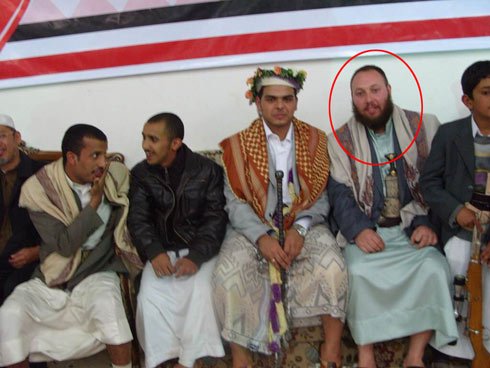
sotloffyemen

The story, originally published by left-wing, anti-Israel Israeli newspaper Yediot Ahronot (or as a friend calls it, Idiot Ahronot), is based on the claims of an “anonymous” alleged friend of Sotloff’s who claims he/she/it was in ISIS captivity along with Sotloff. The portion of the dubious story that has now been repeated a gazillion times by the rest of the media is below. There are so many holes in the story, it would make a great colander for halal spaghetti dinner. Sadly, the story has been repeated far and wide by many Jews and Westerners who want to make this Islamopanderer and cheerleader for Islamic terrorists into a martyr for the Jewish people. He is and was no such thing, and, again, the story is bunk. But the mainstream and Jewish media have repeated the BS as fact all over the Net and it has taken on a life of its own.
A friend who was with Sotloff in captivity told Ynet’s sister-print publication Yedioth Aharonoth that Sotloff was Jewish – a fact he hid from his captors – and even managed to observe the Yom Kippur fast while in Islamic State captivity. “He told them he was sick and didn’t want to eat, even though we were served eggs that day,” the friend said. “He used to pray secretly in the direction of Jerusalem. He would see in which direction (his Muslim captors) were praying and then adjust the angle.”
*** UPDATE: But there are only a handful of documented cases of any hostages released/freed by ISIS (even for large amounts of ransom), except for Nicolas Henin, who now says he was held ISIS but says only that he was held with James Foley, NOT Steven Sotloff. He was held together with three other French journalists and they were all chained together for a large portion of that time. And while they’ve talked publicly about Foley being beaten, none has publicly stated anything about Sotloff. And it’s unlikely if they did so, they’d choose to be anonymous, since they haven’t been anonymous in their statements thus far about the rest of their experiences in ISIS captivity. There is absolutely no evidence that any of the very few hostages released by ISIS ever saw Steven Sotloff pray on Yom Kippur or do any of the things in the fairy tale story of an “anonymous source” quoted in Idiot Ahronot. END UPDATE *** But there are a lot of people who barely knew him trying to glom onto the story (see fake “Mossad agent” Gregg Roman, who told me both he and Sotloff were Mossad agents–not true–and who described Sotloff as “the Jewish Indiana Jones”–even more blatant baloney).
The same reporter for the same anti-Israel Israeli newspaper who wrote the phony baloney Yom Kippur story on Sotloff now has a story up about Sotloff’s self-proclaimed “heroic” left-wing friends (most of whom didn’t actually know Sotloff), including fake Mossad agent Gregg Roman (who barely knew Sotloff if at all). The reporter is clearly easily manipulated into fake “scoops” without any verification whatsoever, by people who are interested in rehabilitating Sotloff’s reputation.
Anyone who believes this fantastic fairy tale is an incredibly naive and easily duped fool who ignores the facts about Steven Sotloff. A number of people who’ve sent me the story are Jews who don’t want to face the facts that Sotloff was a documented lover of Islam and a cheerleader of Islamic “rebels” a/k/a terrorists of every dangerous stripe. They want to believe he died as a religious Jew, when he never ever was one and was a documented HAMAS and ISIS lover.


Many of Steven Sotloff’s friends and classmates from college have contacted me regarding how angry they are by this phony story because Steven Sotloff was a completely secular Jew, who barely knew Hebrew, much less the Yom Kippur prayers (which even many Orthodox Jews would not know by heart). There is no way he would know the prayers, much less which day it was on the Hebrew calendar to even know which day was Yom Kippur. He reveled in his apostasy, which is why he embraced Islam and deeply loved Islamic culture, according to all press people and friends of his on the ISIS trail. All of those who know him say he was more likely to be driving around and eating a bacon cheeeseburger on Yom Kippur than praying.
And all of those who knew him tell me that the reason these stories are now out there is that the media and some of Sotloff’s friends want to make him into a martyr, rather than what he was–a panderer to and cheerleader to Islamic terrorists–which makes his story and his beheading far less compelling and sympathetic.
Sotloff went to a Reform Temple, which he did not attend regularly. Anyone who knows anything about Judaism knows that Reform Jews are completely ignorant of Judaism. Most cannot read a word of Hebrew (which is why most of their abbreviated, hippie-style prayers are in English), and none can remember the Yom Kippur prayers by heart (heck, even the most religious Orthodox Jews don’t remember those prayers without a prayer book). Most do not even fast on Yom Kippur.
The story is highly phony–there isn’t a single shred of evidence to back it up–and not a thing that makes it believable. Moreover, even in the very unlikely event that the story is true (it isn’t) and that this guy finally “found G-d” when he knew death could be near, it makes no difference with regard to–nor does it negate–Sotloff’s long history of supporting HAMAS (while he was in college at Israel and held Israeli citizenship) and his history of supporting Shi’ite terrorists in Bahrain, Sunni Muslim Brotherhood terrorists in Egypt, Sunni Al-Qaeda terrorists in Libya, and Sunni ISIS and FSA terrorists in Syria and Iraq, all of which he did.
The story simply isn’t true, though, and it’s amazing that when people and the mainstream media want to promote and believe something, they’ll run with it, no matter how phony the story is and how thin the evidence (in this case, none) there is.
Anytime you see a story with the byline of Yitzhak Benhorin, the guy who wrote this fairy tale for Yediot Ahronot, you’ll know you can’t believe a word.
***
Much has also been made of Sotloff’s reported Israeli citizenship, but here’s a tip: Sotloff obtained citizenship before going to college there at the IDC (Interdisciplinary Center). He only lived there for college, from 2005-2008, during which his classmates all knew him as an anti-Israel left-winger and apologist for HAMAS. His classmate, Hillary Lynne Glaser, said he “hated Israel” (but not enough not to come visit ONCE for a friend’s wedding). Sotloff did NOT, by the way, ever serve in the IDF (the Israeli Defense Forces) as is required of all Jewish citizens, so he was a draft dodger.
After he left Israel in 2008, Sotloff lived FOR YEARS in Yemen, where all of his friends told the media, he “deeply loved the Islamic world.” It’s funny to read stories that claim Sotloff made “aliyah” to Israel. Aliyah is the Hebrew word for “going up.” It’s the term for Jews who move to Israel permanently, but Sotloff never did that. He left in 2008, which would make what he did “Yeridah” (going down), the term used for Jews who leave Israel.
Funny how Yediot Ahronot, which “reported” in the same story featuring the BS Sotloff Yom Kippur praying and fasting fairy tale, also claimed Sotloff made “aliyah” and didn’t point out the “yeridah” part.
**** UPDATE: To give you an idea of how easily duped people are by Idiot Ahronot’s phony story about Sotloff praying and fasting on Yom Kippur and how it’s taken on a life of its own, read this e-mail message I received this morning:
From: Joel Moskowitz yoel.moskowitz@gmail.com
Date: Thu, Sep 4, 2014 at 8:37 AM
Subject: Steve Sotloff
To: writedebbie@gmail.com
I don’t know you and now certainly don’t care to. What you are doing to Mr. Sotloff who died sanctifying God’s name is a disgrace to humanity. You are taking your advocacy of a just cause to the levels of the murderers you rail against. You should repent to God and his family before Yom Kippur.
Yoel (Joel) Moskowitz
yoel.moskowitz@gmail.com
Reality check: Sotloff didn’t die “sanctifying G-d’s name.” He died just after reading an anti-American propaganda statement ISIS forced him to read and which he did, even though he knew he was about to beheaded (his being killed is part of the statement he read). He died after YEARS of living in Yemen, where he “deeply loved Islam,” according to all of his friends’ accounts in the mainstream media. He died after years of apologism for HAMAS, the Muslim Brotherhood, Al-Qaeda, ISIS, and Hezbollah Shi’ites.
Sanctifying G-d’s name wasn’t involved. Unless you consider his own family’s statement through their Muslim spokesman in Arabic in which they said that Steven Sotloff died “as a martyr for allah.”
Got that?

Wednesday, September 4, 2013

Are God's Holy Days Relevant Today?

An interesting article from http://www.ucg.org/ about the Holy Days of God. This follows this post about  Russia attempting to undermine U.S. policy. For a free magazine subscription or to get the book shown for free click HERE! or call 1-888-886- 8632.

Are God's Holy Days Relevant Today?


Should Christians today keep the Holy Days?


When God begins something in this present age of mankind, He nearly always starts small. In Matthew 13:33Another parable spake he unto them; The kingdom of heaven is like unto leaven, which a woman took, and hid in three measures of meal, till the whole was leavened.


See All... Jesus Christ compared God's Kingdom to both a mustard seed and leaven. Both analogies start with something small that expands into something much larger. Similarly, in Old Testament times God called only a relatively few people who were willing to follow His ways.


The biblical record shows that in early human history only a small number of people decided to obey God. A faithful few such as Abel, Enoch and Noah responded to the revelation of God's plan of salvation (Matthew 23:35That upon you may come all the righteous blood shed upon the earth, from the blood of righteous Abel unto the blood of Zacharias son of Barachias, whom ye slew between the temple and the altar.


See All...). After the great Flood of Noah's time, God called and worked with Abraham and his wife Sarah. Of God's obedient people of those times, Hebrews 11:13These all died in faith, not having received the promises, but having seen them afar off, and were persuaded of them, and embraced them, and confessed that they were strangers and pilgrims on the earth.


See All... says they "all died in faith" with the sure knowledge that they would gain eternal life (Hebrews 11:40God having provided some better thing for us, that they without us should not be made perfect.


See All...).


We should note that the plan for providing eternal life was already at work in the lives of these early people of God. The plan did not start with a covenant God made with ancient Israel; nor did it start with Jesus' earthly ministry.


God loved the world so much "that He gave His only begotten Son, that whoever believes in Him should not perish but have everlasting life" (John 3:16For God so loved the world, that he gave his only begotten Son, that whosoever believeth in him should not perish, but have everlasting life.


See All...). God's love in giving His Son continued His plan of salvation in effect from the foundation of the world (Matthew 25:34Then shall the King say unto them on his right hand, Come, ye blessed of my Father, inherit the kingdom prepared for you from the foundation of the world:


See All...; 1 Peter 1:20Who verily was foreordained before the foundation of the world, but was manifest in these last times for you,


See All...). The blueprint of the Holy Days would reveal in due time the plan God had designed from the very beginning. These festival observances were not just a cosmic afterthought.


With Abraham's family we see God beginning to reveal the good news about His plan of salvation (Galatians 3:8And the scripture, foreseeing that God would justify the heathen through faith, preached before the gospel unto Abraham, saying, In thee shall all nations be blessed.


See All...). Genesis 26:3-4 [3] Sojourn in this land, and I will be with thee, and will bless thee; for unto thee, and unto thy seed, I will give all these countries, and I will perform the oath which I sware unto Abraham thy father;

[4] And I will make thy seed to multiply as the stars of heaven, and will give unto thy seed all these countries; and in thy seed shall all the nations of the earth be blessed;


See All... identifies specific blessings God promised to Abraham and his descendants. The Creator pledged to bestow these blessings "because Abraham obeyed My voice and kept My charge, My commandments, My statutes, and My laws" (Genesis 26:5Because that Abraham obeyed my voice, and kept my charge, my commandments, my statutes, and my laws.


See All...). Abraham's faith and obedience is why the Bible calls him "the friend of God" and "the father of all those who believe" (James 2:23And the scripture was fulfilled which saith, Abraham believed God, and it was imputed unto him for righteousness: and he was called the Friend of God.


See All...; Romans 4:11And he received the sign of circumcision, a seal of the righteousness of the faith which he had yet being uncircumcised: that he might be the father of all them that believe, though they be not circumcised; that righteousness might be imputed unto them also:


See All...; Genesis 18:17-19 [17] And the LORD said, Shall I hide from Abraham that thing which I do;

[18] Seeing that Abraham shall surely become a great and mighty nation, and all the nations of the earth shall be blessed in him?

[19] For I know him, that he will command his children and his household after him, and they shall keep the way of the LORD, to do justice and judgment; that the LORD may bring upon Abraham that which he hath spoken of him.


See All...).


A nation singled out

Abraham's descendants would grow into a mighty nation (Genesis 18:18Seeing that Abraham shall surely become a great and mighty nation, and all the nations of the earth shall be blessed in him?


See All...). The promised line of blessed descendants would come through and be named after his grandson Jacob, whose name was changed to Israel (Genesis 32:28And he said, Thy name shall be called no more Jacob, but Israel: for as a prince hast thou power with God and with men, and hast prevailed.


See All...). After settling in Egypt they eventually became slaves (Exodus 1). The story of God's deliverance of ancient Israel from their bondage and His deliverance of people today is part of the intricately woven fabric of His festivals.


In due time the Creator set in motion a series of events involving festival observances that, illustrating His great plan, led to the Israelites being freed from slavery in Egypt. When Moses and his brother Aaron appeared before Pharaoh, they told the Egyptian ruler that the God of Israel commanded, "Let My people go, that they may hold a feast to Me in the wilderness" (Exodus 5:1And afterward Moses and Aaron went in, and told Pharaoh, Thus saith the LORD God of Israel, Let my people go, that they may hold a feast unto me in the wilderness.


See All...).


Moses and Aaron had earlier called for the elders of Israel to assemble and had explained to them God's plan to deliver them (Exodus 3:16-18 [16] Go, and gather the elders of Israel together, and say unto them, The LORD God of your fathers, the God of Abraham, of Isaac, and of Jacob, appeared unto me, saying, I have surely visited you, and seen that which is done to you in Egypt:

[17] And I have said, I will bring you up out of the affliction of Egypt unto the land of the Canaanites, and the Hittites, and the Amorites, and the Perizzites, and the Hivites, and the Jebusites, unto a land flowing with milk and honey.

[18] And they shall hearken to thy voice: and thou shalt come, thou and the elders of Israel, unto the king of Egypt, and ye shall say unto him, The LORD God of the Hebrews hath met with us: and now let us go, we beseech thee, three days' journey into the wilderness, that we may sacrifice to the LORD our God.


See All...). God then performed miracles through these two men in the sight of the people (Exodus 4:29-30 [29] And Moses and Aaron went and gathered together all the elders of the children of Israel:

[30] And Aaron spake all the words which the LORD had spoken unto Moses, and did the signs in the sight of the people.


See All...). As a result, the Israelites (although they later faltered) believed God would deliver them and fulfill His covenant with Abraham, as He had promised (Exodus 4:31And the people believed: and when they heard that the LORD had visited the children of Israel, and that he had looked upon their affliction, then they bowed their heads and worshipped.


See All...; Exodus 6:4-8 [4] And I have also established my covenant with them, to give them the land of Canaan, the land of their pilgrimage, wherein they were strangers.

[5] And I have also heard the groaning of the children of Israel, whom the Egyptians keep in bondage; and I have remembered my covenant.

[6] Wherefore say unto the children of Israel, I am the LORD, and I will bring you out from under the burdens of the Egyptians, and I will rid you out of their bondage, and I will redeem you with a stretched out arm, and with great judgments:

[7] And I will take you to me for a people, and I will be to you a God: and ye shall know that I am the LORD your God, which bringeth you out from under the burdens of the Egyptians.

[8] And I will bring you in unto the land, concerning the which I did swear to give it to Abraham, to Isaac, and to Jacob; and I will give it you for an heritage: I am the LORD.


See All...).


What followed was the first Passover and Feast of Unleavened Bread for the Israelites who had been enslaved. Much later the New Testament Church kept these same days as a reminder of Christians' deliverance through Jesus Christ. For instance, Paul told members of the Church at Corinth—both Jews and gentiles (non-Israelites)—that they should put out leaven, symbolic of sin, because "Christ, our Passover, was sacrificed for us" (1 Corinthians 5:7Purge out therefore the old leaven, that ye may be a new lump, as ye are unleavened. For even Christ our passover is sacrificed for us:


See All...). In the next verse Paul said to this mixed group of Jews and gentiles, "Therefore let us keep the feast," referring to the same festival God had instituted in ancient Israel many centuries before.


The festivals in the New Testament

From His earliest childhood years, Jesus observed the feast days with His parents. "His parents went to Jerusalem every year at the Feast of the Passover," Luke 2:41Now his parents went to Jerusalem every year at the feast of the passover.


See All... tells us. The following verses describe Jesus, at age 12, engaging the theologians of His day in a spirited discussion during this festival season (Luke 2:42-48 [42] And when he was twelve years old, they went up to Jerusalem after the custom of the feast.

[43] And when they had fulfilled the days, as they returned, the child Jesus tarried behind in Jerusalem; and Joseph and his mother knew not of it.

[44] But they, supposing him to have been in the company, went a day's journey; and they sought him among their kinsfolk and acquaintance.

[45] And when they found him not, they turned back again to Jerusalem, seeking him.

[46] And it came to pass, that after three days they found him in the temple, sitting in the midst of the doctors, both hearing them, and asking them questions.

[47] And all that heard him were astonished at his understanding and answers.

[48] And when they saw him, they were amazed: and his mother said unto him, Son, why hast thou thus dealt with us? behold, thy father and I have sought thee sorrowing.


See All...). Clearly, He astonished these religious leaders with His understanding and insight. John writes of Jesus continuing to observe God's annual feasts as an adult during His ministry (John 2:23Now when he was in Jerusalem at the passover, in the feast day, many believed in his name, when they saw the miracles which he did.


See All...; 4:45).


In one of the most instructive examples, we find that Jesus risked His personal safety to attend the annual Feast of Tabernacles (John 7:1-2 [1] After these things Jesus walked in Galilee: for he would not walk in Jewry, because the Jews sought to kill him.

[2] Now the Jews' feast of tabernacles was at hand.


See All..., John 7:7-10 [7] The world cannot hate you; but me it hateth, because I testify of it, that the works thereof are evil.

[8] Go ye up unto this feast: I go not up yet unto this feast: for my time is not yet full come.

[9] When he had said these words unto them, he abode still in Galilee.

[10] But when his brethren were gone up, then went he also up unto the feast, not openly, but as it were in secret.


See All..., John 7:14Now about the midst of the feast Jesus went up into the temple, and taught.


See All...). We're told that "on the last day, that great day of the feast, Jesus stood and cried out, saying, 'If anyone thirsts, let him come to Me and drink. He who believes in Me, as the Scripture has said, out of his heart will flow rivers of living water.' But this He spoke concerning the Spirit, [which] those believing in Him would receive; for the Holy Spirit was not yet given, because Jesus was not yet glorified" (John 7:37-39 [37] In the last day, that great day of the feast, Jesus stood and cried, saying, If any man thirst, let him come unto me, and drink.

[38] He that believeth on me, as the scripture hath said, out of his belly shall flow rivers of living water.

[39] (But this spake he of the Spirit, which they that believe on him should receive: for the Holy Ghost was not yet given; because that Jesus was not yet glorified.)


See All...).


Many churches believe that the apostle Paul later fundamentally changed the way Christians are to worship. This notion assumes he taught gentiles that observance of the festivals and Holy Days was unnecessary. Although some of his writings were difficult to understand, even by his contemporaries (2 Peter 3:15-16 [15] And account that the longsuffering of our Lord is salvation; even as our beloved brother Paul also according to the wisdom given unto him hath written unto you;

[16] As also in all his epistles, speaking in them of these things; in which are some things hard to be understood, which they that are unlearned and unstable wrest, as they do also the other scriptures, unto their own destruction.


See All...), Paul's explicit statements and actions contradict any notion that he annulled or abolished observance of these Holy Days.


In 1 Corinthians 11:1-2 [1] Be ye followers of me, even as I also am of Christ.

[2] Now I praise you, brethren, that ye remember me in all things, and keep the ordinances, as I delivered them to you.


See All..., for example, Paul told his followers, "Imitate me, just as I also imitate Christ," and, "Keep the traditions as I delivered them to you." A few verses later he explained, "For I received from the Lord that which I also delivered to you: that the Lord Jesus on the same night in which He was betrayed took bread; and when He had given thanks, He broke it and said, 'Take, eat; this is My body which is broken for you; do this in remembrance of Me'" (1 Corinthians 11:23-24 [23] For I have received of the Lord that which also I delivered unto you, That the Lord Jesus the same night in which he was betrayed took bread:

[24] And when he had given thanks, he brake it, and said, Take, eat: this is my body, which is broken for you: this do in remembrance of me.


See All...).


If Paul's practice had not been to observe the feast days God had instituted, his comments to the Jews and gentiles in Corinth would have been meaningless. Clearly, evidence is lacking that Paul ever discouraged anyone from keeping the annual festivals. Such a notion would have been unthinkable for him (see Acts 24:12-14 [12] And they neither found me in the temple disputing with any man, neither raising up the people, neither in the synagogues, nor in the city:

[13] Neither can they prove the things whereof they now accuse me.

[14] But this I confess unto thee, that after the way which they call heresy, so worship I the God of my fathers, believing all things which are written in the law and in the prophets:


See All...; Actis 25:7-8; Acts 28:17And it came to pass, that after three days Paul called the chief of the Jews together: and when they were come together, he said unto them, Men and brethren, though I have committed nothing against the people, or customs of our fathers, yet was I delivered prisoner from Jerusalem into the hands of the Romans.


See All...).


On the contrary, the biblical record of Paul's ministry repeatedly depicts the Holy Days as important observances and milestones in his life. For example, he told the Christians in Ephesus, "I must by all means keep this coming feast in Jerusalem" (Acts 18:21But bade them farewell, saying, I must by all means keep this feast that cometh in Jerusalem: but I will return again unto you, if God will. And he sailed from Ephesus.


See All...). In Acts 20:16For Paul had determined to sail by Ephesus, because he would not spend the time in Asia: for he hasted, if it were possible for him, to be at Jerusalem the day of Pentecost.


See All... and 1 Corinthians 16:8But I will tarry at Ephesus until Pentecost.


See All... we find Paul arranging his travel schedule to accommodate the Feast of Pentecost. In Acts 27:9Now when much time was spent, and when sailing was now dangerous, because the fast was now already past, Paul admonished them,


See All... Luke, Paul's companion in his travels, referred to a particular time of year as being after "the Fast," a reference to the Day of Atonement (on which, as we will discuss later, one was to fast).


The Expositor's Bible Commentary, in a reference to Acts 20:6And we sailed away from Philippi after the days of unleavened bread, and came unto them to Troas in five days; where we abode seven days.


See All..., notes that Paul, unable to arrive at Jerusalem for the Passover, "remained at Philippi to celebrate it and the week-long Feast of Unleavened Bread" (Richard Longenecker, 1981, Vol. 9, p. 507). Regarding Acts 20:16For Paul had determined to sail by Ephesus, because he would not spend the time in Asia: for he hasted, if it were possible for him, to be at Jerusalem the day of Pentecost.


See All..., the same commentary notes that Paul "wanted, if at all possible, to get to Jerusalem for Pentecost on the fiftieth day after Passover" (p. 510).


Paul's ministry included observing the Holy Days with the Church. In defending the gospel he preached, Paul said he brought the same message the other apostles taught: "Therefore, whether it was I or they, so we preach and so you believed" (1 Corinthians 15:11Therefore whether it were I or they, so we preach, and so ye believed.


See All...).


Paul and all the apostles taught a consistent message of the Christian's obligation to follow the example of Jesus Christ in all matters. The apostle John, who wrote near the close of the first century, summed up this message: "He who says he abides in Him ought himself also to walk just as He walked" (1 John 2:6He that saith he abideth in him ought himself also so to walk, even as he walked.


See All...).


Jewish Christians continued to uphold the Holy Days, as did gentile believers (see "Colossians 2:16 Shows Gentile Christians Observed the Biblical Holy Days "). From these references (as well as many others), we can conclude only that the practice of the early Church was to continue the observance of the annual festivals God gave, the first of which is the Passover.


Friday, September 14, 2012

The Feast of Trumpets: A Turning Point in History

An interesting article from http://www.ucg.org/  about the Feast of Trumpets. This follows this post about Islam and peace.  For a free magazine subscription or to get this book for free click HERE! or call 1-888-886-8632.

The Feast of Trumpets: A Turning Point in History


The Feast of Trumpets depicts the return of Jesus Christ to earth to establish the Kingdom of God.


The Feast of Trumpets introduces the autumn festivals—representing the culmination of the present age of man and the beginning of an incredible time during which God will play a much more direct part in world events. The previous festivals constitute personal responses to the workings of God in the people He calls and chooses. But the Day of Trumpets heralds the intervention of God in the affairs of humanity on a global basis. This Holy Day represents a dramatic turning point in world history.


This particular festival also marks the beginning of the third and final feast season (Exodus 23:14Three times thou shalt keep a feast unto me in the year.


See All...; Deuteronomy 16:16Three times in a year shall all thy males appear before the LORD thy God in the place which he shall choose; in the feast of unleavened bread, and in the feast of weeks, and in the feast of tabernacles: and they shall not appear before the LORD empty:


See All...), which includes the final four Holy Days of the year.


The return of Jesus Christ!


The Feast of Trumpets depicts nothing less than the return of Jesus Christ to the earth to establish the Kingdom of God! The book of Revelation reveals a sequence of earth-shaking events heralded by angels sounding a series of seven trumpet blasts. The seventh angel's sounding of the last trumpet signifies that "the kingdom of the world has become the kingdom of our Lord and of his Christ" (Revelation 11:15And the seventh angel sounded; and there were great voices in heaven, saying, The kingdoms of this world are become the kingdoms of our Lord, and of his Christ; and he shall reign for ever and ever.


See All..., NIV). The Bible foretells that at this time Jesus Christ will at last return to the earth. Of all the prophecies in the Bible, this one surely heralds the most exciting news possible for this weary, sin-filled world!


The Feast of Trumpets also marks the future fulfillment of the many Old Testament prophecies that speak of a Messiah coming as a king of the line of David who will sit on the throne of Israel and rule with power and authority over all nations. The concept of a conquering Messiah was on the minds of the apostles immediately after Jesus' resurrection. When He appeared to them in those early days, they asked Him, "Lord, will You at this time restore the kingdom to Israel?" (Acts 1:6When they therefore were come together, they asked of him, saying, Lord, wilt thou at this time restore again the kingdom to Israel?


See All...).


Even in His earthly ministry, Jesus had spoken of distinctions between His first and second comings. When Pontius Pilate, the Roman governor of Judea, questioned Him just before the crucifixion, Jesus stated clearly that He had not come to rule at that time.


"My kingdom is not of this world," Jesus told the governor. "If My kingdom were of this world, My servants would fight, so that I should not be delivered to the Jews; but now My kingdom is not from here." So Pilate asked Him, "Are You a king then?" Jesus answered in the affirmative: "You say rightly that I am a king. For this cause I was born, and for this cause I have come into the world, that I should bear witness to the truth" (John 18:36-37 [36] Jesus answered, My kingdom is not of this world: if my kingdom were of this world, then would my servants fight, that I should not be delivered to the Jews: but now is my kingdom not from hence.

[37] Pilate therefore said unto him, Art thou a king then? Jesus answered, Thou sayest that I am a king. To this end was I born, and for this cause came I into the world, that I should bear witness unto the truth. Every one that is of the truth heareth my voice.


See All...).


After Christ's resurrection, the apostles excitedly anticipated the fulfillment of Jesus' promises. They were aware of messianic prophecies such as Isaiah's that describe a time during which "the government will be upon His shoulder" and "of the increase of His government and peace there will be no end" (Isaiah 9:6-7 [6] For unto us a child is born, unto us a son is given: and the government shall be upon his shoulder: and his name shall be called Wonderful, Counsellor, The mighty God, The everlasting Father, The Prince of Peace.

[7] Of the increase of his government and peace there shall be no end, upon the throne of David, and upon his kingdom, to order it, and to establish it with judgment and with justice from henceforth even for ever. The zeal of the LORD of hosts will perform this.


See All...).


In answer to the apostles' question as to whether He would soon establish the Kingdom, Jesus told them it was not for them to know the "times or seasons which the Father has put in His own authority" (Acts 1:7And he said unto them, It is not for you to know the times or the seasons, which the Father hath put in his own power.


See All...). Instead, Christ told them to focus on spreading the gospel—the good news—throughout the world. Later, in due time, the apostles realized that Christ's second coming was not necessarily imminent. Numerous scriptures describe the saints as eagerly looking forward to His return.


Why the symbolism of trumpets?


The excitement of this Holy Day, picturing these monumental events, is captured in the symbolism of this festival. Ancient Israel celebrated it with "a sacred assembly commemorated with trumpet blasts" (Leviticus 23:24Speak unto the children of Israel, saying, In the seventh month, in the first day of the month, shall ye have a sabbath, a memorial of blowing of trumpets, an holy convocation.


See All..., NIV).


Actually, the word "trumpet" does not appear in this verse. The phrase "trumpet blasts" translates a single Hebrew word, teruah , which means a loud, resounding noise—a great shout or blaring, or an awakening blast. This was the sound of a "trumpet," but not the metal, musical kind also used by the Israelites. The God's Word Translation renders this phrase as "a holy assembly announced by the blowing of ram's horns." In that day a hollow animal horn, known as a shofar, was used to communicate important messages.


Such horns, blaring an alarm like a modern air-raid or tornado siren, were used to warn of impending danger, such as imminent war. As the prophet Jeremiah lamented: "O my soul, my soul! I am pained in my very heart! My heart makes a noise in me; I cannot hold my peace, because you have heard, O my soul, the sound of the trumpet [ shofar ], the alarm of war" (Jeremiah 4:19My bowels, my bowels! I am pained at my very heart; my heart maketh a noise in me; I cannot hold my peace, because thou hast heard, O my soul, the sound of the trumpet, the alarm of war.


See All...; compare Amos 3:6Shall a trumpet be blown in the city, and the people not be afraid? shall there be evil in a city, and the LORD hath not done it?


See All...).


This ties in with the fact that the events of the Day of the Lord that will usher in Christ's return will be cataclysmic, announced, as already mentioned, with angels blowing trumpets (Revelation 8-9; compare Zephaniah 1:14-16 [14] The great day of the LORD is near, it is near, and hasteth greatly, even the voice of the day of the LORD: the mighty man shall cry there bitterly.

[15] That day is a day of wrath, a day of trouble and distress, a day of wasteness and desolation, a day of darkness and gloominess, a day of clouds and thick darkness,

[16] A day of the trumpet and alarm against the fenced cities, and against the high towers.


See All...).


With their ability to transmit sound over great distances, trumpets were in ancient times excellent instruments for attracting people's attention. God even used the sound of a shofar to herald His meeting with Israel when He descended on Mount Sinai to speak the Ten Commandments (Exodus 19:16And it came to pass on the third day in the morning, that there were thunders and lightnings, and a thick cloud upon the mount, and the voice of the trumpet exceeding loud; so that all the people that was in the camp trembled.


See All...). Moreover, the shofar was used in coronation ceremonies (1 Kings 1:34And let Zadok the priest and Nathan the prophet anoint him there king over Israel: and blow ye with the trumpet, and say, God save king Solomon.


See All..., 39), and we've already seen that Christ assumes rule over the earth at the last trumpet.In connection with this Feast Day, Psalm 81:3Blow up the trumpet in the new moon, in the time appointed, on our solemn feast day.


See All... exhorts, "Blow the trumpet at the time of the New Moon . . . on our solemn feast day."


Amplification of the meaning of trumpets


The writers of the New Testament revealed additional understanding of the significance of the blowing of trumpets. Notice Paul's description of the return of Jesus Christ: "For the Lord Himself will descend from heaven with a shout, with the voice of an archangel, and with the trumpet of God. And the dead in Christ will rise first. Then we who are alive and remain shall be caught up together with them in the clouds to meet the Lord in the air" (1 Thessalonians 4:16-17 [16] For the Lord himself shall descend from heaven with a shout, with the voice of the archangel, and with the trump of God: and the dead in Christ shall rise first:

[17] Then we which are alive and remain shall be caught up together with them in the clouds, to meet the Lord in the air: and so shall we ever be with the Lord.


See All...).


Paul also spoke of the day when the firstfruits pictured by Pentecost will be resurrected to immortal life. In 1 Corinthians 15:52In a moment, in the twinkling of an eye, at the last trump: for the trumpet shall sound, and the dead shall be raised incorruptible, and we shall be changed.


See All... he says this will happen "in a moment, in the twinkling of an eye , at the last trumpet. For the trumpet will sound, and the dead will be raised incorruptible, and we shall be changed." Thus the awakening blast of this last trumpet will awaken the dead!


Although the Trumpets festival isn't mentioned by name in the New Testament, we have no valid reason for assuming that this Holy Day should not be observed today. On the contrary, the early Church used the Hebrew Scriptures as the foundation for doctrine (2 Timothy 3:16All scripture is given by inspiration of God, and is profitable for doctrine, for reproof, for correction, for instruction in righteousness:


See All...). Like the Ten Commandments (James 2:10-11 [10] For whosoever shall keep the whole law, and yet offend in one point, he is guilty of all.

[11] For he that said, Do not commit adultery, said also, Do not kill. Now if thou commit no adultery, yet if thou kill, thou art become a transgressor of the law.


See All...), each of God's festivals is intimately and intricately related to the others. By keeping all of them, we can understand God's remarkable plan for humanity as it unfolds. We should not ignore some of His Holy Days while observing others.


Jesus' prophetic teaching


Near the end of Christ's earthly ministry, the apostles asked Him about the end of the present era. Notice Matthew 24:3And as he sat upon the mount of Olives, the disciples came unto him privately, saying, Tell us, when shall these things be? and what shall be the sign of thy coming, and of the end of the world?


See All...: "Now as He sat on the Mount of Olives, the disciples came to Him privately, saying, 'Tell us, when will these things be? And what will be the sign of Your coming, and of the end of the age?'"


Earlier, Daniel had prophesied about the establishment of the Kingdom of God and how the saints, or God's people, would inherit that Kingdom (Daniel 2:44And in the days of these kings shall the God of heaven set up a kingdom, which shall never be destroyed: and the kingdom shall not be left to other people, but it shall break in pieces and consume all these kingdoms, and it shall stand for ever.


See All...; 7:18). Like the disciples, however, Daniel did not understand when the Kingdom would come.


Jesus, in response to His disciples' questions, laid out for them a series of events that would lead up to His return. He mentioned to them religious deception, wars, famines, disease, earthquakes and other calamities (Matthew 24:4-13 [4] And Jesus answered and said unto them, Take heed that no man deceive you.

[5] For many shall come in my name, saying, I am Christ; and shall deceive many.

[6] And ye shall hear of wars and rumours of wars: see that ye be not troubled: for all these things must come to pass, but the end is not yet.

[7] For nation shall rise against nation, and kingdom against kingdom: and there shall be famines, and pestilences, and earthquakes, in divers places.

[8] All these are the beginning of sorrows.

[9] Then shall they deliver you up to be afflicted, and shall kill you: and ye shall be hated of all nations for my name's sake.

[10] And then shall many be offended, and shall betray one another, and shall hate one another.

[11] And many false prophets shall rise, and shall deceive many.

[12] And because iniquity shall abound, the love of many shall wax cold.

[13] But he that shall endure unto the end, the same shall be saved.


See All...). He characterized the time of His return as an era of hatred and lawlessness. In this setting Jesus said, "This gospel of the kingdom will be preached in all the world as a witness to all the nations, and then the end will come" (verse 14).


More details in the book of Revelation


Later Jesus Christ revealed many more details about this pivotal time. The book of Revelation is described as "the Revelation of Jesus Christ, which God gave Him to show His servants—things which must shortly take place" (Revelation 1:1The Revelation of Jesus Christ, which God gave unto him, to shew unto his servants things which must shortly come to pass; and he sent and signified it by his angel unto his servant John:


See All...). Here Christ repeated through the apostle John the same events He had described to His disciples decades earlier. Now, however, Jesus used the symbolism of a series of seals He would open one by one (Revelation 6).


After this, at the beginning of God's anger against the disobedient nations, seven plagues will be poured out on a sinning world, with a trumpet blast announcing each, as we've seen (Revelation 8-9). Finally God will send two "witnesses," or "prophets," to proclaim His truth to a rebellious world (Revelation 11). Such prophetic witness is compared to a trumpet warning (Isaiah 58:1Cry aloud, spare not, lift up thy voice like a trumpet, and shew my people their transgression, and the house of Jacob their sins.


See All...). Tragically, the godless society of the last days will reject these two servants of God and kill them (verses 7-10).


These dramatic events set the stage for the seventh angel's trumpet sounding and Jesus Christ's return to begin the rule of His government over the entire earth (Revelation 11:15And the seventh angel sounded; and there were great voices in heaven, saying, The kingdoms of this world are become the kingdoms of our Lord, and of his Christ; and he shall reign for ever and ever.


See All...).


Of this same scenario, Matthew 24 says that "immediately after the tribulation of those days the sun will be darkened, and the moon will not give its light; the stars will fall from heaven, and the powers of the heavens will be shaken. Then the sign of the Son of Man will appear in heaven, and then all the tribes of the earth will mourn, and they will see the Son of Man coming on the clouds of heaven with power and great glory. And He will send His angels with a great sound of a trumpet, and they will gather together His elect from the four winds, from one end of heaven to the other" (verses 29-31).


Unprecedented events at Christ's return


Incredibly, when Jesus Christ returns to the Mount of Olives in Jerusalem, the nations of the earth will gather to fight against Him (Zechariah 14:1-4 [1] Behold, the day of the LORD cometh, and thy spoil shall be divided in the midst of thee.

[2] For I will gather all nations against Jerusalem to battle; and the city shall be taken, and the houses rifled, and the women ravished; and half of the city shall go forth into captivity, and the residue of the people shall not be cut off from the city.

[3] Then shall the LORD go forth, and fight against those nations, as when he fought in the day of battle.

[4] And his feet shall stand in that day upon the mount of Olives, which is before Jerusalem on the east, and the mount of Olives shall cleave in the midst thereof toward the east and toward the west, and there shall be a very great valley; and half of the mountain shall remove toward the north, and half of it toward the south.


See All...). Revelation 19:19And I saw the beast, and the kings of the earth, and their armies, gathered together to make war against him that sat on the horse, and against his army.


See All... describes this impending battle: "And I saw the beast, the kings of the earth, and their armies, gathered together to make war against Him [Jesus Christ] who sat on the horse and against His army."


Why would anyone want to fight the Messiah? The armies will try to destroy Christ because Satan has deceived the whole world (Revelation 12:9And the great dragon was cast out, that old serpent, called the Devil, and Satan, which deceiveth the whole world: he was cast out into the earth, and his angels were cast out with him.


See All...). The devil's influence will inspire the nations to fight against Jesus when He returns.


Also at the time of Christ's return, His faithful followers will be resurrected to immortality. Revelation 20:5But the rest of the dead lived not again until the thousand years were finished. This is the first resurrection.


See All... describes this as the "first resurrection," which is also a "better resurrection" (Hebrews 11:35Women received their dead raised to life again: and others were tortured, not accepting deliverance; that they might obtain a better resurrection:


See All...). This change to immortal life was the hope of early Christians and remains the fervent hope of those who understand God's plan.


In the book of Romans, Paul depicts this resurrection as a glorious deliverance from bondage: "For the earnest expectation of the creation eagerly waits for the revealing of the sons of God . . . because the creation itself also will be delivered from the bondage of corruption into the glorious liberty of the children of God . . . And not only they, but we also who have the firstfruits of the Spirit, even we ourselves groan within ourselves, eagerly waiting for the adoption, the redemption of our body" (Romans 8:19For the earnest expectation of the creature waiteth for the manifestation of the sons of God.


See All..., 21, 23).


We see that, even though tragic events lie ahead, the good news is that God will intervene to save humanity and guide mankind into His abundant way of life.


Jesus Christ will return to raise His followers from death and establish God's perfect rule over the earth. This is the wonderful, inspiring meaning of the Feast of Trumpets. Christ taught us to pray to the Father, "Thy kingdom come" (Matthew 6:10Thy kingdom come. Thy will be done in earth, as it is in heaven.


See All..., KJV). How urgently we need the answer to that prayer!