Not long ago, in a small midwestern city, an older gentleman who
happened to live in the same neighborhood as my son and his family went
to a nearby grocery store to shop. My son and his wife often shopped at
this store, and although they were careful, especially at night, they
never thought what happened would ever happen in their relatively
safe neighborhood.
The gentleman was in his 70s and appeared harmless. As he came out of
the store, three young men accosted him and demanded money. Apparently
he didn't move fast enough, or maybe he verbally disagreed with them.
Regardless, they quickly turned violent.
They knocked him around, then one of them pulled out a pistol and shot
him. The young men left him on the ground, helpless and bleeding. The
elderly gentleman died from his wounds, wounds he received outside that
well-lit, small-city supermarket.
If this can happen in a relatively small and peaceful midwestern city,
what is life like in much larger cities where burglaries, robberies and
murders happen regularly?
A world at risk
Have you been a victim of crime? The odds are that you—or someone close
to you—have been victimized at least once, and possibly several times.
Almost every day we hear of terrible crimes committed against innocent
people. In some quarters walking the streets in broad daylight can be
every bit as frightening and dangerous as dark alleys at midnight.
Political motives are often offered for violent terrorist acts. No
nation anywhere in the world is a safe haven from the horrendous acts of
violence recently witnessed in Russia, Israel, Spain, Sudan, Saudi
Arabia, Iraq and Indonesia.
The horrible crimes we read about in our daily newspapers are only a
drop in the bucket compared to the violent carnage perpetrated on
humanity every single day.
Peace and safety are elusive and illusory in much of the world. We fear
for our safety and the security of our families and loved ones. Parents
worry that their children are at risk from drive-by shootings, violence
on school grounds and possible kidnappings.
The high cost of crime
In 2003, crime rates in the United States were at a 30-year low. This
is certainly encouraging news. Yet at the same time, it seems that
almost everyone has been or knows a victim of a serious crime. Even with
such record-low crime rates, last year about 1 in 44 Americans was a
victim of a violent crime (murder, assault, rape or armed robbery) and
about 1 in 6 was a victim of a crime such as burglary and auto theft.
The Federal Bureau of Investigation reported that
16,503 murders were committed in America last year.
But that's only part of the story. Total violent crimes—murder,
manslaughter, armed robbery, rape and assault—numbered some 1,381,000.
Property crimes—burglary, larceny, theft, motor vehicle theft, arson and
the like—totaled some 10,436,000.
These statistics are repugnant to any sane-thinking citizen, especially
those who value their freedoms. What about the freedom to remain alive,
to live a normal life span and to enjoy grandchildren and
great-grandchildren? What about the devastating cost to society?
Declines in crime
Although the drop in the
U.S. crime rate is certainly good news, a look at the reasons for the decline is revealing.
The largest single factor in the crime decline is demographics: The
U.S.
population is aging. As the baby-boom generation has reached middle
age, its members are far less inclined to commit crimes than they were
in their younger years. The same goes for their children, who are now
settling down and having children of their own.
At the same time, sociologists are predicting an increase in crime as
more and more of these children approach the teen years and create a new
crime wave.
Another major factor is the sheer number of
U.S. citizens locked away from society. The
U.S. prison population is at an all-time high, with
2.1 million adults locked away in federal and state prisons. Some
4.8 million more were on probation, parole or in jail in 2003.
As more and more criminals are locked up for longer periods of time,
they are not on the streets committing additional crimes. The costs to
American taxpayers, however, are staggering—about $30,000 per inmate per
year, or some
$60 billion annually. Costs for police and the judicial system easily bring the total governmental cost of crime to well over
$120 billion per year.
Yet, as high as those costs are, it may be money well spent considering
the even higher costs of crime and violence Americans would experience
were these systems
not in place to safeguard citizens. One
need only look at some other countries where law and order are breaking
down to see how much worse it could be.
Root causes of crime
What is the source of crime and violence? How did crime begin, and why
is it perpetuated from generation to generation? Why, after centuries of
trying, has mankind been unable to find a solution to the scourge
of crime?
Modern experts have not given us the answers. For the solutions to
crime and violence, we have to turn to God's Word, the Holy Bible. It
specifically reveals the true causes.
Psychologists and sociologists have many rationalizations for why
society is plagued with crime. Many place the blame on poverty,
dysfunctional families, poor parenting and the like. Although these no
doubt increase the likelihood of criminal activity, they are
not the fundamental cause.
Though sometimes committed out of irrational frustrations,
crime is a personal choice. None of the above factors ever
forced
a person into criminal activity. We all have freedom to weigh courses
of actions, to consider the consequences, to make and follow through on
decisions. We are not forced to make decisions based on our social or
family background.
Man's Creator, in His Word, makes it clear where crime originates. All too often it is the bitter fruit of our own
greed and
selfishness.
“Where do these wars and battles between yourselves first start?” asks James. “Is it not precisely in
the desires fighting inside your own selves? You want something and you lack it;
so you kill. You have an ambition that you cannot satisfy,
so you fight to get your way by force …” (
James 4:1-2, New Jeru-salem Bible, emphasis added throughout).
What is man really like?
Many people assume that we human beings are essentially good and that
we will eventually solve our problems through our efforts and ingenuity.
However, thousands of years of history show that we are fundamentally
incapable of living at peace with one another for very long.
After all, only 60 years ago citizens of the most advanced societies of
modern civilization were slaughtering, maiming and exterminating each
other on an unprecedented scale during World War
II.
And the world has seen dozens and dozens more wars since then, along
with literally millions of individual crimes against one another.
The Bible paints a less-than-optimistic picture of man's nature.
“The heart is more deceitful than all else and
is desperately sick; who can understand it?” (
Jeremiah 17:9, New American Standard Bible).
The prophet Jeremiah adds that we are naturally
incapable of making the decisions that will allow us to live together in peace. “… I know
the way of man is not in himself; it is not in man who walks
to direct his own steps” (
Jeremiah 10:23). Man needs help!
Wise King Solomon tells us that often the ways that
appear right to human beings ultimately lead to tragedy. “There is a way that
seems right to a man, but its end is
the way of death” (
Proverbs 14:12; 16:25).
As Jeremiah asked, “who can understand” his own heart—his innermost
thoughts and motivations? We human beings have a remarkable capacity to
deceive ourselves, to rationalize our actions and justify our selfish
behavior. Is it any wonder, then, that we live in a world plagued
with crime?
The apostle Paul speaks of the results of what Jeremiah described as our “desperately wicked” heart: “There is
none righteous, no, not one; there is
none who understands; there is
none who seeks after God. They have all turned aside; they have together become unprofitable; there is
none who does good, no, not one … Their feet are
swift to shed blood; destruction and misery are in their ways; and
the way of peace they have not known. There is no fear of God before their eyes” (
Romans 3:10-12,15-18). Strong language indeed! Without sane spiritual guidance, humanity is incapable of living in real peace.
Spiritual deception
Paul reminds us that
“all have sinned” (verse 23)—none of us
is completely faultless or innocent, regardless of how we might view
ourselves. James describes the process that leads to lawbreaking: “…
Each one is tempted when,
by his own evil desire, he is
dragged away and enticed. Then, after desire has conceived, it gives birth to sin; and sin, when it is full-grown, gives birth to death” (
James 1:14-15, New International Version).
Before you disagree with the Bible's description of our motivations and thoughts, ask yourself a few questions:
How often have you been tempted to take something that wasn't yours?
How many times have you shaded the truth to your advantage?
How often have you been so frustrated, disgusted or angry at another person that you wished that person didn't exist?
How often have you been tempted to enter a sexual relationship with
someone other than your husband or wife, or to imagine such a
relationship through pornography and fantasy?
Those evil desires, said James, are there within us craving to be
satisfied. And too often we don't exercise the character and
self-control to keep our greed and selfishness in check. We give in.
Sometimes we're caught and suffer the consequences; other times we think
we get away with it.
An unseen criminal mastermind
The Bible reveals another major factor at work in all human
societies—an immensely powerful invisible being who continually leads
man down a path toward selfishness and self-destruction. Scripture calls
him
Satan or
the devil and describes him as the
enemy of all humanity.
Jesus Christ described this being as the real power behind those who
wanted to destroy both Him and His message. Confronting a group of men
who wanted to kill Him, He said: “You are of your father the devil, and
the desires of your father you want to do. He was a murderer from the
beginning, and does not stand in the truth, because there is no truth in
him. When he speaks a lie, he speaks from his own resources, for he is a
liar and the father of it” (
John 8:44).
Jesus knew that Satan's lies misled our first human parents, Adam and
Eve (Genesis 3). And Satan has continued his manipulative, corrupting
influence ever since. This angelic being “sinned from the beginning” (
1 John 3:8), and he has continued to sin and to lead and tempt men and women to sin for thousands of years.
The consequences of sin, however, can be deceptive in the sense that
they are not always immediate. Adam lived for 930 years before death
finally occurred. It is precisely because the penalties are often
delayed that the sinner thinks he can get away with lawbreaking (
Ecclesiastes 8:11). But God's great spiritual law is self-enforcing.
Satan's enormous influence on mankind
How great is the devil's influence? It is
enormous. The Bible tells us that he “deceives the whole world” (
Revelation 12:9).
Along with the other fallen angels, the demons, he sows seeds of
selfishness, greed, envy, jealousy and hatred among people everywhere.
The apostle Paul describes the state of most of mankind as “dead in
your transgressions and sins, in which you used to live when you
followed the ways of this world and of the ruler of the kingdom of the
air,
the spirit who is now at work in those who are disobedient” (
Ephesians 2:1-2,
NIV).
Satan's unseen influence is always at work, though very few recognize
it. Under his influence, our primary motivation is “gratifying the
cravings of our sinful nature and following its desires and thoughts”
(verse 3,
NIV).
The devil deceives us into thinking that the way to happiness lies in
continually seeking self-satisfaction and gratification. We fail to
recognize that this very thing is what ultimately leads to crime and
untold human suffering!
The apostle John informs us that
“the whole world lies under the sway of the wicked one” (
1 John 5:19). Whether we realize it or not, we have all fallen victim to his malignant, deceitful influence. Paul even calls him “the
god of this age” (
2 Corinthians 4:4)—meaning that Satan is whom most people unknowingly follow and worship, enshrouded as they are in spiritual blindness.
Jesus Christ commissioned Paul to go and open people's eyes to the truth “in order to turn them from darkness to light, and
from the power of Satan to God …” (
Acts 26:18).
Who is really imprisoned?
Most societies lock criminals behind bars for stealing from and killing
their fellow man. But that's not the end of the story. Are those
convicted of crimes against humanity the only ones behind bars, the only
ones imprisoned?
Sadly, no.
The rest of us must lock our doors and windows at night.
The rest of us are the ones who look over our shoulder to see whether we're in danger of being mugged.
The rest of us are the ones who must watch our children carefully, lest they be kidnapped, molested or murdered.
The rest of us are the ones who live in uneasiness about our personal safety.
We are the ones who share in the high cost of crime through taxes to
pay for law enforcement, the judicial system, the burgeoning prisons and
jails. Through insurance we all pay the cost of vandalism and the
millions of burglaries, arsons and stolen cars. Through higher prices,
everyone pays the price for shoplifting, embezzlement and other
employee theft.
In our modern society we are
all “imprisoned”—if not in our
homes, certainly in our minds. We fear for our lives when drugs, guns
and thievery abound. In the larger metropolitan areas, gangs control
whole regions of the cities, making it risky just to walk down
the street.
We all pay a heavy price for the spiritual blindness that
envelopes humanity. What a tragedy! But it won't always be this way.
Peace has been promised mankind. It
will come—not
because of the efforts of human beings but
in spite of them.
The end of crime and imprisonment
Part of the promise of Jesus Christ's first coming was to bring peace to the earth “to all in whom [God] delights” (
Luke 2:14, Revised English Bible).
But humanity has never seen that promised peace and goodwill. Those
promises have been extended to only a few—those who willingly surrender
their own wills, their own selfish motivations, to God and thereby put
into action the way of life Jesus Himself lived and taught.
The rest of mankind is not now willing to submit to the way of peace as
taught and exemplified by Jesus Christ. So the vast majority of people
will experience those promises only after Christ comes to earth a second
time. He will then establish the Kingdom of God on earth (
Revelation 11:15). The gospel, or good news, that He proclaimed (
Mark 1:14) will at last become a reality!
However, the transition will not come easily. When Christ returns, He will initially have to
force peace on humanity. Most of mankind will be
angry at His second coming (
Revelation 11:18).
The nations will not submit to God's will without a fight! Jesus will
have to “rule them with a rod of iron … tread[ing] the winepress of the
fierceness and wrath of Almighty God” (
Revelation 19:15).
Nor will Satan willingly surrender his grip on humanity. Before
Christ's second coming the devil will be filled with “great wrath,
because he knows that he has a short time” (
Revelation 12:12).
In his rage he will persecute those who are faithful to God (verse 17)
and lead the world's great geopolitical powers into massive bloodshed
that will be brought to a halt at Christ's return.
But this will mark the end of Satan's rule on earth. He will at that
time be spiritually shackled, incarcerated so he can no longer deceive
and mislead the peoples of earth during Jesus Christ's thousand-year
reign (
Revelation 20:1-3).
Real peace at last
When the Prince of Peace returns, He will bring crime and violence to
an end. “They shall not hurt nor destroy in all My holy mountain
[Christ's Kingdom on earth], for the earth shall be full of the
knowledge of the Lord as the waters cover the sea” (
Isaiah 11:9).
The world will at last experience a peace it has never known. The
prophet Micah describes this world, transformed under the rule of Jesus
Christ: “Now it shall come to pass in the latter days that the mountain
of the Lord's house shall be established on the top of the mountains,
and shall be exalted above the hills; and peoples shall flow to it.
“Many nations shall come and say, 'Come, and let us go up to the
mountain of the Lord, to the house of the God of Jacob; He will teach us
His ways, and we shall walk in His paths.' For out of Zion the law
shall go forth, and the word of the Lord from Jerusalem.
“He shall judge between many peoples, and rebuke strong nations afar
off; they shall beat their swords into plowshares, and their spears into
pruning hooks; nation shall not lift up sword against nation, neither
shall they learn war anymore. But everyone shall sit under his vine and
under his fig tree, and no one shall make them afraid; for the mouth of
the Lord of hosts has spoken” (
Micah 4:1-4).
In that day, yet ahead of us, man at last will know true peace. All
people will be freed from crime and the prison of blindness, and the
tyrannical overseer of man's captivity, Satan the devil, will himself
be imprisoned.
The peace of God will break out on earth, and humankind will finally be
free! God assures us that this hope will one day become a wonderful
reality.
GN




 So the focus of the United States government, the FBI right now, is trying to find people who might be threatening or saying negative things about Muslims, targeting them, finding them, and exploring ways to punish them. That's just the tip of the iceberg. Have you heard about the Obama counterterrorism strategy called Countering Violent Extremism? It's actually... That's what it's called: CVE. Have you heard of that? Well, let me tell you about it.
 The theory behind Countering Violent Extremism -- the theory of the strategy -- is that, number one, Muslim communities have uniformly rejected terrorism so we don't need to investigate them. We don't need to, because they're a religion of peace. Remember now, you think it's a joke, but Obama and the Democrats, when they say, "Terrorism has nothing to do with Islam; it's a bastardization; Islam is a religion of peace. All these people out there, ISIS, ISIL, claiming to do what they're doing for Islam? They are not Islamists! They are extremists; they are not Muslim."
 We can't use it, because we're not allowed to Hoover up that kind of information unless Muslim outreach partners inform us. So when a guy goes to get a gun, he passes our background checks, and that's it! You wonder how? This is how. This is why things like Orlando happen. We're not allowed, by virtue of Obama's legislation... Well, it is legislation, because this is the icing on the cake. It's about to run out of money. I mean, the FBI's trying to investigate, but they are limited by these guidelines -- Countering Violent Extremism -- that do not allow them.
 Writing at
 "The instruction to refrain from scrutinizing social-media commentary ... is a straightforward application of what passes for the official Obama administration 'anti'-terrorism strategy, known as 'Countering Violent Extremism.' Malik, a native Pakistani, who immigrated to the United States in July after living for a time in Saudi Arabia," as did Mateen, "joined her husband, Syed Rizwan Farook, in [killing] 14 people in San Bernardino, California... Government officials now concede that Malik was inadequately screened before being permitted to relocate to the United States on a K-1 visa, issued because she was the fiancee of Farook, an American citizen.
 Well, it turns out that the people the FBI interact with happen to be Muslim Brotherhood or CAIR or other such representatives. That's the only way the FBI can learn officially what's going on. They're not allowed to do it! I know this doesn't... Folks, I can imagine you're saying, "Rush, this doesn't make sense. You have to have something wrong here." I know you're thinking that. Even though you trust me implicitly -- even though after 28 years, 27, whatever it is, you know instincts I don't lie or make things up -- you still can't believe this. This doesn't make sense.
 Obama, why won't you say militant Islamic terrorism, extremist Islamic terrorism? Why won't you say it? Precisely 'cause of this! It doesn't exist, in his world. Countering Violent Extremism imagines movies being shot up by wacko members of the Tea Party. Of course, the things they imagine right wingers doing doesn't happen, don't happen. "'Violent extremism' didn't produce the Orlando shootings..." Now, wait. Now, wait. See, this is important. You're thinking, "Rush, now, come on." No, no, no. "'Violent extremism' didn't produce the Orlando shootings..."
 CALLER: Exactly. And he even said that they became radicalized over information on the internet, as if it was just a virus.
 In the aftermath, we learned that he was all over the internet telling people his anger, what was enraging him, and what his intentions were. The guy called the FBI during the act. He was on the FBI watch list. They didn't do anything about it. People said, "Why not?" Now we know. They're not allowed to. The guy called the Washington Post in the middle of the act. He calls 911; he calls the Washington Post. When I heard that, I said, "Aand it still happened?" He calls 911 in the middle of his rampage! When you discover this, when you learn this, you say, "Wait a minute! This doesn't make any sense."
 The CIA director just threw Obama under the bus. But it's budget time in Washington at the same time. And the CIA has many budgets, including the black budget that nobody ever sees. Got all kinds of money in it for black ops that nobody ever sees and that we never know. But it still has to be appropriated. Here we have the first of two. This is Obama at the Treasury department. This from the press conference where he got all defensive about people accusing him of never using the term "militant Islamic extremism" or "terrorism."
 CALLER: Hi, Rush. Thank you for taking my call.



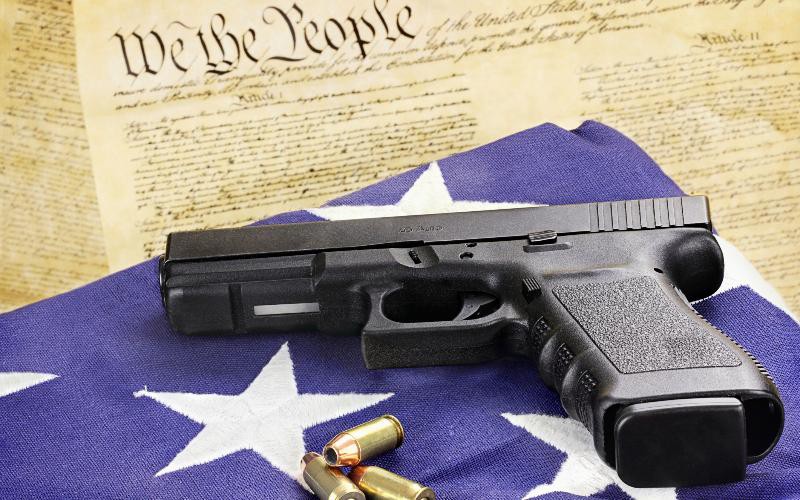 With the introduction of legislation Thursday, Rep. Steven Palazzo (R-Miss.) called on his colleagues to censure President Barack Obama for “unconstitutional executive actions” on guns.

 Posts
Posts


