Showing posts with label Che Guevara. Show all posts

Tuesday, May 31, 2016

Editorial: Memorial Day and Desecration

Editorial

As you likely heard, many, many cemeteries and other monuments dedicated to honoring the war dead of the U.S. have been recently desecrated.

Of course, having a Commander in Chief who has had his picture taken with memorials to Che Guevara and Ho Chi Minh over the past two months, as well as going to a battle site which ended up shortening World War II, and saving countless American, Chinese, Korean, as well as Japanese lives, shows where his priorities are. 

Tuesday, November 10, 2015

Ronald Reagan Remembered

An interesting article from http://www.ucg.org/ about Ronald Reagan and the victory over Communism. This follows this post about the gay agenda of intolerance. For a free magazine subscription or to get the books recommended for free click HERE! or call 1-888-886- 8632.
Please follow me here for continued posts.


The first communist country in the aftermath of World War I was Russia, renamed the Union of Soviet Socialist Republics (U.S.S.R.). Millions in the West thought that the new U.S.S.R. was “the workers' paradise.” American journalist John Reed visited the country and proclaimed, “I have seen the future and it works.”
Neighboring Mongolia soon followed. After World War II more countries joined the communist empire–the nations of Eastern Europe forcibly annexed into the Stalinist Soviet system. China's communist government took power in 1949. North Korea and North Vietnam soon followed; Cuba a decade later.
In the 1970s communists took control of much of Indochina (South Vietnam, Cambodia, Laos), Afghanistan, Ethiopia, Mozambique and Angola. Grenada in the Caribbean and Yemen on the Arabian peninsula had also fallen to communism.
One after another they fell like dominoes until almost half the world's landmass was communist and a great deal of the rest flirted with various forms of socialism, communism watered down.
Until Ronald Reagan.
The 40th President of the United States took over the leadership of the country at a troubled time.
Americans had lost confidence in their institutions during the Watergate scandal and the defeat in Vietnam. The resignation in disgrace of President Richard Nixon in 1974 came at a time of economic trouble caused by events in the Middle East. The brief interim presidency of Gerald Ford was followed by that of Jimmy Carter. Well-meaning and idealistic President Carter was seen around the world as a lightweight, more interested in advancing humanitarian programs than in leading the free world.
The 1979 revolution in Iran was a turning point in Mr. Carter's presidency and led inevitably to his fall from power. The seizure of American diplomatic staff as hostages and their 444-day captivity showed the impotence of the United States and the incompetence of its leadership at the end of a bad 15-year period.
Within minutes of Ronald Reagan being sworn in as President in January 1981, it was announced that the hostages had been released by Iran's revolutionary Islamic government.
By the end of his presidency, the communist system was in a state of collapse, the handwriting on the wall. At least four other leaders can be given some credit for this. Among them were the Polish Pope, John Paul II, who inspired the people of Poland to revolt against their atheistic leaders; British Prime Minister Margaret Thatcher, who turned back the tide of socialism in her own country and inspired the Polish dockyard workers of Gdansk to do the same; Soviet leader Mikhail Gorbachev, who chose not to resist the inevitable, and the Pakistani President General Zia who shipped American arms through his territory to help those rebelling against the Soviet invaders.
But, without Ronald Reagan, communism would still be a threat to the peace and security of the world. It was his single-minded vision—“Mr. Gorbachev, tear down this wall!” —which brought down the Berlin Wall and ended over four decades of division in Europe.
At the beginning of his presidency he described the Soviet empire as an “evil empire,” thereby going directly against the diplomacy of decades. Just a few months after the Soviet invasion of Afghanistan he chose to substantially increase U.S. defense spending. Unable to match the increase, bogged down in a war it could not win and with an economic system that had failed miserably to deliver the goods, Moscow was doomed. The Soviet Union staggered on until 1991, but it was Reagan's vision that led directly to its fall.
American columnist George Will wrote following Mr. Reagan's death: “One measure of a leader's greatness is this: By the time he dies, the dangers that summoned him to greatness have been so thoroughly defeated, in no small measure by what he did, it is difficult to recall the magnitude of those dangers, or of his achievements.”
Certainly, communism is totally discredited and no longer remains a credible threat.
Proverbs 29:18 says, “Where there is no vision, the people perish.” Americans were floundering when Ronald Reagan became president. After his eight years in the White House, Americans once again had a vision, a sense of purpose and a determined resolve.
In remembering Mr. Reagan we should also take notice of the presence of one other world leader at his state funeral. Former British Prime Minister Margaret Thatcher, now in ill health following a series of strokes, will be there. Mrs. Thatcher, now Baroness Thatcher, did for Britain what Mr. Reagan accomplished in America–turning a country around after a period of decline. Together, the two revived the strong Anglo-American alliance that continues to this day.
To better understand America's place in the world, and how it was foretold thousands of years ago in the Bible, please request or download our free booklet The United States and Britain in Bible Prophecy .

Monday, November 9, 2015

Editorial: Celebrate the Fall of the Berlin Wall - Reagan's Victory over the Soviet Union!

Editorial

November 9, 1989 was when the Berlin Wall fell, liberating those under Communist rule in the Soviet Union and Eastern Europe and freeing 425,574,817 people while the Communists, including Lenin, Stalin, Mao, Ho Chi Minh, Che Guevara, and others murdered 100,000,000 people!

 Young America's Foundation has some interesting ways to commemorate this below!

http://www.yaf.org/eventdetails.aspx?id=14295 

http://www.yaf.org/uploadedFiles/Webpages/Students/Reagan%20Reality%20Flier3.pdf

Monday, November 2, 2015

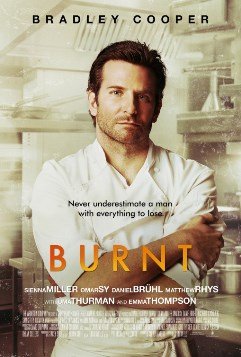
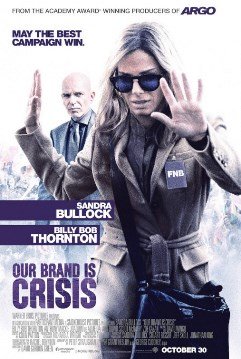
Weekend Box Office: Burnt, Our Brand is Crisis, Room

Here is an interesting article from http://www.debbieschlussel.com/ reviewing some of the movies that came out over the past weekend. This follows this post about some of the movies from last week and THIS POST about some movies that have been released over the past few years that you might have missed! This all follows this post about guidelines to choosing good movies to watch yourself!


Weekend Box Office: Burnt, Our Brand is Crisis, Room

By Debbie Schlussel
burntourbrandiscrisis

room
I would not spend ten bucks-plus and two hours of my life on any of the new releases in theaters today. Here’s why:
* “Burnt” – Rated R: I (and probably you, too) have seen what seems like a zillion addict-redeems-himself-and-makes-a-comeback movies. This is the latest, and definitely not the best. It’s not the worst, either. But it seems like I’ve seen what’s in this over and over again. The guy has a relapse. He blows it all and hurts his friends and lovers, but then he doesn’t really blow it all and gets back on the wagon. And so on. Check, check check. It’s all in this movie. (A protagonist for whom we root to overcome his addiction and make that comeback . . . well, not exactly, as the lead character here isn’t all that likable.)
I’ve also seen plenty of chef and cuisine movies, and this also isn’t the best of those, either. But, again, not the worst. It’s somewhat entertaining in that respect. I’d have to say that my favorite recent chef/food movie is last year’s “Chef” (read my review), which is far superior to this and a much better chef comeback movie on all levels. It’s funnier, heartier, relaxing, and much more pleasant to watch.
This stressed me out a little. I have no use for melodramas that are overly melodramatic just to hit me over the head over and over again with it, and for no legitimate reason. This did that. We’re treated over and over again to chef Bradley Cooper’s in-kitchen tantrums and scream-fests. It seems like he’s channeling a real-life chef who gets off on this overdone ranting, Gordon Ramsay. But that act has been worn out by Ramsay and is unwanted noise here. The guy is screaming just to scream (as Ramsay does), and it’s unnecessary.
The story: Cooper plays a world-class gourmet chef who was on top of the world at a fancy French restaurant. But he was a drug addict whose addiction ended his career and ruined everything, but not until after he’d earned two highly-coveted Michelin stars for the restaurant he helmed. After rehab, Cooper is working in a self-imposed penance of shucking a million clams at a dive restaurant. Once he’s reached the magic number, he sets out on his comeback, this time in London. Cooper convinces his former maître d’ (Daniel Brühl), the man he believes to be the best in the biz (and who also happens to be the son of a fatally ill, wealthy hotel owner), to open a new restaurant bearing Cooper’s name. Through dirty tricks, some groveling and even posting bail, he also gets the top restaurant staff with whom he used to work.
Cooper’s cooking style is considered “old-fashioned” because it’s five years old (who knew the styles of haute cuisine change that quickly?). But he’s striving to beat a rival to getting that rare, third Michelin star rating for the new restaurant. While he does that, he must overcome competition, resistance and revenge from his staff, and his own ego (something he doesn’t overcome even once in this movie).
The thing is, pretty much every other character in this movie is infinitely more likable than Cooper’s. They are all people for whom we feel sympathy and commiseration. For instance, the always excellent Brühl’s maître d’ character is the most likable (and the most taken advantage of by Cooper). Sienna Miller as a semi-romantic partner and sous chef is also a sympathetic character, but Cooper has no empathy for her, and yet, she makes out with the jerk and stands by him. Why (other than that a lot of women like jerks)? And, so, as I mentioned before, there is no desire on the audience’s part (or shouldn’t be) to hope for Cooper’s comeback. He’s just an egomaniacal jerk and bully. And his story is nothing new. This movie is being mentioned as an Oscar vehicle for Cooper. Not in my book.
As I noted, this movie is somewhat entertaining, but overly melodramatic for a movie about a chef. It’s just food. Not brain surgery or rocket science or winning World War II. Not even close. The best thing about this movie is that the ending is ambiguous and sudden–and I generally like that in a movie. If only the rest of the movie matched this master stroke.
By the way, with all of the scenes of food, sauces, cooking, tasting, and eating in this, if you do go to see it, don’t go on an empty stomach.
ONE REAGAN
reagancowboy
Watch the trailer . . .

* “Our Brand is Crisis” – Rated R: I really liked the first 85% of this movie, and was getting ready to write a great review, but then, as often happens, this flick let me down and turned into a bait-and-switch, far-left, anti-American sh-t-show. If you like politics and campaigns and their funny, clever, dirty tricks, then you, too, will like the first 85% of this movie. I thought this was going to be about how political advisers and their machinations can turn a campaign around, and for most of it, that’s what this was. In the end, though, this movie turns out to be about how the “evil” American gringos help prop up capitalist elites in poor countries and betray and rip off the poor, indigenous peoples. You know, the usual Hollywood hate-America narrative. Even worse, they don’t even tell or show you that the evil American gringos who did this were . . . liberal Democrats, including Clintonista James Carville. In this movie, they reverse the true story and make the Carville character into the adviser of the “honest man of the people.” And the fact that this is produced by lefty liar George Clooney has everything to do with that.
This movie is very loosely based on the 2005 documentary of the same name (it’s an annoying trend–documentaries remade as fiction movies), which followed American political consultants James Carville, Stan Greenberg, and Bob Shrum–all of them liberal Democrats–as they advised the campaign of “conservative,” wealthy, American-born Gonzalo Sánchez de Lozada and helped him win the 2002 Bolivian Presidential election over uber-Marxist America-hater Evo Morales. The left-wing documentary makers tried to sell their movie as an anti-Bush movie, pimping the absurd notion that Carville et al sold Sanchez de Lozada as an extension of America selling the world on the war in Iraq. Huh?
In this movie, Sandra Bullock plays a character that is essentially the composite of Carville and his minions. Her role was originally a male character. A bald Billy Bob Thornton is the Carville-esque adviser to the Evo Morales-esque candidate, who in this movie is an honest, likable man of the people, and not at all shown to be the evil, America-hating Commu-Nazi that Morales actually is.
Most of the movie is fun and enjoyable, as the film depicts the various dirty tricks and zingers traded back and forth between political operatives and their candidates–the same kind of stuff that goes on in the U.S. in election campaigns. And the Wile E. Coyote/Roadrunner frenemy relationship between Bullock’s and Thornton’s characters is amusing and entertaining.
But then it veers into “evil America,” “Down wit’ da Latin America-hating struggle” territory. **** SPOILER ALERT ****: After Bullock’s candidate wins the election, a young peasant who has been helping the campaign gets disillusioned. He sees that their candidate, who is now President, was a liar–that he told Bolivian peasants and farmers that he would not bring in the IMF to interject itself into the Bolivian economy; but now he’s done exactly that as his first act of office, saying the peasants are too dumb to understand why it needs to be done, so they needed to be lied to. Apparently, in Hollywood’s view, this is the first politician on earth to lie. Amazing. Who knew they lied?
When confronted with this, at first Bullock tells the young campaign worker that her job is not about morality or truth-telling. She was hired to win a campaign, and the world moves on. But, then, she decides this is wrong, quits her job, and joins the anti-capitalist Occupy Bolivia protesters in the street (no, they don’t call themselves “Occupy Bolivia,” but same difference here). And after that, she founds the “Latin America Solidarity Network” to fight this horrible American capitalist “conservative” gringo liar she’s just helped elect. Yup, now she’s down wit’ da struggle. Viva La Hollywood!
In case you were wondering, the title of the movie is taken from the campaign strategy Bullock employs for her candidate (and which Carville et al employed for theirs) in order to win the election. The thinking is that, when your candidate has previously held office and is older, wealthier, and thought of as the establishment guy versus an upstart, younger, revolutionary candidate, your candidate’s brand must be “Crisis.” The only way to win the election is to paint the country as in a crisis–economic, national security, or whatever–and your candidate as the only one with the experience and toughness to get the country through it. Otherwise, the thinking goes, the electorate will pick the younger, newer, more revolutionary guy. By the way, my brand is American patriotism. And if you don’t like America, maybe you should take your movie and shove it you know where.
If this review were based on the first 85% of the movie, I’d give it THREE REAGANS or so. Most of the movie was funny, clever, and smart–not to mention, accurate as far as what goes into a winning campaign in contemporary Wesern elections. But since I’m reviewing it based on the whole thing . . . and the fact that Hollywood lied to you and me in marketing it as a campaign comedy (when it’s really more anti-American crap), I have to give it . . .
TWO MARXES PLUS TWO OBAMAS
karlmarxmovies.jpgkarlmarxmovies.jpgplus.jpgobamasmilingsmallerobamasmilingsmaller
Watch the trailer . . .

* “Room” – Rated R: This movie is being raved about (and talked up for the Oscars) by most movie critics because, like them, it is dark, pretentious, and liberal. And unnecessary. America has this growing sick obsession with darkness and tragedy, and it’s a reflection of the growing nihilism of our ever-more areligious, amoral, liberal society in which anything goes and there is no god whose name isn’t Kim, Kanye, Kylie or Caitlin. Anything goes now, and we are so bored that we need the ever more dark and macabre to interest us. And so it goes with “Room.”
I note that Emma Donoghue, writer of the best-selling novel from which this movie is taken, insisted that all of the names of the places and items occupying the small space where a kidnap victim and her son live, not be preceded by adjectives, articles, or indefinite articles. So, no “the room” or “the door” or “the rat.” This pretentous author insisted that everything be called, “Room,” “Door,” “Rat,” etc., as if these are proper nouns. Any director interested in making her book into a film, who used adjectives or articles was immediately dismissed. That’s part of the pretentiousness of Donoghue, her book, and, now, this movie: they (she and the filmmakers) think they are much more important and magically insightful than they actually are. Instead, this is a tawdry, cheap tabloid story pretending to have some great message or contribution. It has neither.
The story is one you and I have seen in the headlines a few times already, and there was no point in fictionalizing it into a movie. It only adds to what I’ve coined the “Kidnapped Like a Kardashian” culture (or is that, “Kulture”?), in which kidnap victims, once freed, don’t go quietly into that sweet night and live their lives. Instead, they become instant celebrities, with Elizabeth Smart gracing the People mag cover several times and going on high-paid speaking engagements. Jaycee Dugard, not content with the $20 mill she got in a settlement with the State of California, sells products online bearing her name. They’ve branded themselves in a burgeoning industry of kidnaphood. “I’ve been kidnapped and raped. Now, buy my stuff!”
In this movie, the first half shows us a young woman (Brie Larson) and her five-year-old son in a room. Oops, I mean, “in Room” It turns out the room–Room!–is a shed in the backyard of the woman’s kidnapper. The woman is a 24-year-old (or so) who was kidnapped in her neighborhood at the age of 17, when a child molester neighbor tricks her into helping him with his non-existent “sick dog.” The man has held her captive for seven years in the shed, and she has the five-year-old as a product of the nightly rapes she must endure. The son watches the rapes through the slats in a wardrobe where he is hidden.
Desperate to get out and realizing her son is now old enough, the woman comes up with a plan to escape and enlists her son, in the plot. He doesn’t know anything but the room–Room!–and must be convinced that there is a real world out there beyond “Room.” Since trailers for this movie show it, I’m not giving anything away by saying that they do escape.
Once mother and son get out, then the melodrama multiplies geometrically. And it’s not realistic or accurate. In contrast to most real-life kidnapees, the woman is not ecstatic to be free. Her parents are now divorced, with her father living in another city. Her father refuses to acknowledge the son that is the product of rape. I doubt that would ever happen in real life (unless the father were Muslim–in which case, Hollywood would whitewash that and make the guy the most loving rape-victim dad ever!). The woman is depressed, negative, sullen, and constantly moping, stewing, and yelling at everyone. She blames her mother for being kidnapped and losing years of her life, telling her that “it’s your fault because you told me to be nice to everyone.” But since I was a little kid, parents haven’t told their kids to be nice to everyone. The exact opposite, in fact. “Don’t talk to strangers” is a mantra which is decades old and something most parents in America have taught their kids since at least the ’70s. Ditto for “stranger danger!”
Also not real: the woman does a TV interview for money and the news anchor who interviewers her, blames her for having her son and raising him in captivity. Puh-leeze. No media personalities are ever the least bit challenging or accusatory when they interview kidnap victims (not that I’m saying that they should be, but someone needs to ask about the endless, overboard branding of female kidnap victims). On the contrary, they go overboard in the other direction. They fawn over the kidnapees, gushing over them effusively, and wrongly calling them “heroic” and “courageous,” when they are simply very unfortunate victims who managed to survive. I mean, has anyone missed Diane Sawyer and others fawning over Elizabeth Smart and Jaycee Dugard, and Robin Roberts slobbering over the captives of Ariel Castro in Cleveland (and each of their unnecessary books)?
The ending features an unnecessary revisit to the scene of their captivity (which also is without the “Inside Edition” cameras you know would be there in real life, for yet another paid interview). And the mother takes her son there. That’s hardly motherly, nor “closure.” And if it is, that’s pathetic and says a lot about American victimhood.
The only parts of this movie that interested me were the moments of hope and nail-biting suspense, when the escape attempts (and success) happen. That was the only part of the movie that resembles more traditional and less tawdry and dark kidnap rescue movies–the type liberal movie critics pan (because they aren’t dark and negative enough and the victims are rescued and happy about it). Other than that, the one highlight of the movie is nine-year-old actor Jacob Tremblay as Jack, the five-year-old son and the product of the rape. He’s a great actor and very cute. But Tremblay, who was seven or eight when this movie was shot, shouldn’t have been exposed to the subject of rape and the material in this movie. His mother is the Teri Shields of this generation, and she should be arrested for child abuse. She took away her son’s childhood all for money, not via the force of a kidnapping child molester.
The movie ends on an ever so tentative, ever so slight positive or redemptive note. But it’s not enough to justify this cheap, dark exercise in the unnecessary.
TWO MARXES
karlmarxmovies.jpgkarlmarxmovies.jpg
Watch the trailer . . .

Wednesday, October 7, 2015

Editorial: Cuba's Che Guevara

Editorial

Since the U.S. president is normalizing relations with Cuba, and the Pope visited the island. This quiz is an important perspective about one of its favortie sons.

http://www.yaf.org/who-said-it.aspx

Wednesday, August 12, 2015

Chinese Interests in Bahamas

An interesting article from http://www.ucg.org/ about China in the Bahamas. This follows this post about Japan's military. For a free magazine subscription or to get the books recommended for free click HERE! or call 1-888-886- 8632.
Please follow me here for continued posts.


In Brief... World News Review

Chinese Interests in Bahamas

Login or Create an Account

With a UCG.org account you will be able to save items to read and study later!
Sign In | Sign Up
×
In 1962 the United States and Russia came dangerously close to nuclear war over the issue of nuclear weapons based in Cuba, just a few miles off the coast of Florida. Today there are concerns expressed over the presence of a Chinese company, Hutchison Whampoa Limited, in Panama, where it has contracted to manage the entrances to the former U.S. possession. The same Chinese company is currently completing construction of the largest container port in the world in Freeport, Bahamas-just 60 miles from Florida.
While this is a far cry from placing nuclear weapons close to United States soil, it has raised concerns that a company with Communist Chinese connections is operating in two strategic geographic points very close to American interests.
Several U.S. military experts say that these activities in both Panama and the Bahamas by Hutchison Whampoa Limited, a Hong Kong-based conglomerate, pose a significant risk to U.S. national security.
Officials for Hutchison Whampoa have heatedly denied any links with the Red Chinese government, but several established connections suggest that the Chinese government has a keen interest in the company's activities.
One port facility that has captured the interest of the Chinese government is Hutchison Whampoa's sprawling port facility in the tourist destination of Freeport on Grand Bahama Island.
According to the company's Web site, the port is located at one of the most strategic spots in the world because “Freeport is the closest offshore port to the east coast of the United States, at the cross-roads of routes between Europe and the Americas and through the Panama Canal.”
Senate Majority Leader Trent Lott (Republican-Mississippi) and former U.S. Defense Secretary Caspar Weinberger have expressed concerns about Hutchison's influence over the Panama Canal.
Lott has described the Hong Kong firm as “an arm of the People's Liberation Army.”
Hutchison Whampoa's chairman, Li Ka-Shing, is also a board member of CITIC-the China International Trust and Investment Corporation. U.S. intelligence sources have described the firm as a front for China's governmental State Council.
Congressman Dana Rohrbacher (Republican-California) has stated that CITIC has been used as a front company by China's military to acquire technology for weapons development. A recently declassified report by the United States Southern Command's Joint Intelligence Center, prepared in October 1999, said that “Hutchison Whampoa's owner, Hong Kong tycoon Li Ka-Shing, has extensive business ties in Beijing and has compelling financial reasons to maintain a good relationship with China's leadership.”
The military intelligence report also warns that “Hutchison containerized shipping facilities in the Panama Canal, as well as the Bahamas, could provide a conduit for illegal shipments of technology or prohibited items from the West to the PRC, or facilitate the movement of arms and other prohibited items into the Americas.”
Retired Admiral Thomas Moorer, former chairman of the Joint Chiefs of Staff, and former commander in chief of the Pacific and Atlantic Fleet said this of the Chinese efforts: “Of course the Chinese military sees the benefit of having a base, a future base, so close to the United States. What China is trying to do is get a kind of maritime position worldwide, and they need a home base, so to speak, in every ocean.” (Newsmax.com)

Friday, December 19, 2014

The New York Times; Unrepentant Communist Enabler

A timely post about from http://townhall.com about the New York Times and Cuba. This follows this post  about impeachment.
You can follow me here.


The New York Times; Unrepentant Communist Enabler

Humberto Fontova | Oct 20, 2014
Humberto Fontova

This week the New York Times ran two editorials pleading for a U.S. economic lifeline to the Castro brothers’ terror-sponsoring regime (i.e. to end the so-called embargo.) One editorial ran on Sunday the other on Tuesday. The second editorial contains the following:
“Fidel Castro…has largely vanished from public view in Cuba. But the 88-year-old former president (italics mine) has not altogether abandoned the business of telling Cubans what to think.”
Is the Times --at long last!--acknowledging a totalitarian streak in the longest-reigning Stalinist dictator of modern history? Sure sounds like it. Now please pay close attention as the editorial continues:
“On Tuesday, Mr. Castro dedicated a column to an editorial published in The (New York) Times on Sunday that called on the Obama administration to restore diplomatic ties with the Cuban government and end the counterproductive (italics mine) embargo the United States has imposed on the island for decades. His take was remarkable for one main reason…quoting nearly every paragraph in the (our) editorial…Hosts of Cuban state-run radio stations (also) read Mr. Castro’s column and discussed its content…”
In brief: so closely did the New York Times echo the sentiments of a Stalinist dictator that he gleefully ordered their article disseminated—almost word for word-- throughout his regime’s KGB-founded and mentored media. It gets better:
“He (Fidel Castro) appeared to endorse the thrust of the editorial,” The second NY Times editorial boasts, “comparing it to an interview he gave in 1957 as a young rebel leader to a (New York) Times foreign correspondent at the time, Herbert Matthews…”
In April of 1959--amidst an appalling bloodbath of Cubans by firing squad ordered by Fidel Castro but mostly administered by his ever-faithful Igor, Che Guevara--Castro made a special visit to the New York Times offices in New York. After a warm greeting from Arthur Hayes Sulzberger a beaming Fidel Castro personally decorated a beaming Herbert Matthews with a specially-minted medal expressing his bloody regime’s highest honor.
“To our American friend Herbert Matthews with gratitude,” beamed Castro as the flashbulbs popped. “Without your help, and without the help of the New York Times, the Revolution in Cuba would never have been.”
“Fidel Castro has strong ideas of liberty, democracy and social justice,” Matthews had written on the front pages of (at the time) the world’s most prestigious newspaper in February 1957. “But it amounts to a new deal for Cuba, radical, democratic, and therefore anti-communist.”
Herbert Matthews double-downed a few months later: “This is not a Communist revolution in any sense of the term. Fidel Castro is not only not a Communist, he is decidedly anti-Communist.” (Herbert Matthews, the New York Times, July 1959.)
Reasonable people might ask: has any tiny little thing transpired in the intervening half-century that might cause the New York Times to regret their enabling of Fidel Castro?
But reasonable people will search in utter vain for any hint of such regret, especially in light of this week’s editorials which –if anything--double-down on the New York Times historical fondness for the Castro regime.
Through their unrivaled (at the time) public relations cachet’ and their heavy influence with their ideological cohorts and cronies in the CIA and U.S. State Department the New York Times. enabled into power a regime that:
*Jailed and tortured political prisoners at a higher rate than Stalin’s during the Great Terror.
*Murdered more Cubans than Hitler’s murdered Germans during the Night of Long Knives.
* In the above process converted a nation with a higher per-capita income than half of Europe into one that repulses Haitians.
* Wantonly brought the world within a whisker of nuclear war.
Over fifty times as many Cubans have died (and horribly) while attempting to flee Castro’s Cuba as Germans died trying to flee East Germany. And prior to Castroism Cuba welcomed more immigrants per-capita (primarily from Europe) than did the U.S.
And remember, the New York Times like all anti-embargo propagandists (Chamber of Commerce, Hillary Clinton, Brookings Inst., CATO Inst., etc.) advocate against the so-called embargo (in fact, the flow of cash and visitors from the U.S. to Cuba during the Obama administration exceeds the flow in the 1950’s) by claiming Castro secretly favors it. The embargo-- the intellectual eggheads wink and snicker at us knuckle-draggers-- gives Castro a foil for his economic failures and an excuse to keep the clamps on. “Don’t you blockheads understand?”.
We’re greatly impressed with your erudition and powers of ratiocination and especially the nasal tone of its expression, Think-Tank eggheads. But first off, if Castro “secretly favors the embargo,” then why did every one of his secret agents campaign secretly and obsessively against the embargo while working as secret agents? Castro managed the deepest and most damaging penetration of the U.S. Department of Defense in recent U.S. history. The spy’s name is Ana Belen Montes, known as "Castro’s Queen Jewel" in the intelligence community. In 2002 she was convicted of the same crimes as Ethel and Julius Rosenberg and today she serves a 25-year sentence in Federal prison. Only a plea bargain spared her from sizzling in the electric chair like the Rosenberg’s.
Prior to her visit from the FBI and handcuffing, Ana Belen Montes worked tirelessly to influence U.S. foreign policy against the embargo. The same holds for more recently arrested, convicted and incarcerated Cuban spies Carlos and Elsa Alvarez and Kendall and Gwendolyn Myers. All of these worked tirelessly to influence U.S. policy against the "embargo"-- while working as secret agents.
In brief, the “reasoning” against the so-called embargo by people who fancy themselves intellectuals calls for Rod Serling introducing a Twilight Zone episode:
"Imagine if you will...a place where every "prestigious" Think-Tank (from Brookings to CATO) and every "prestigious" publication (from the New York Times to The Atlantic) denounces the Cuba "embargo" as "Castro's best-friend, a policy he secretly favors"--even when every one of Castro’s convicted secret agents campaigned secretly and obsessively against the embargo while working as secret agents. On top of that, the KGB-mentored media of Castro's totalitarian regime makes it a point to reprint every "end-the-embargo" article ever printed in the world, especially those by the New York Times...
Imagine if you will...a place where the institutions that call the embargo "Castro's Best-Friend" still manage to be known as “Think-Tanks.”
Fidel Castro Votes In Cuba's Elections
Former Cuban leader Fidel Castro voted in the country's parliamentary elections, his first public appearance in months, Cuba's state media reported Monday.
CBS Miami
Fidel Castro Votes In Cuba's Elections
Former Cuban leader Fidel Castro voted in the country's parliamentary elections, his first public appearance in months, Cuba's state media reported Monday.
CBS Miami


Thursday, December 18, 2014

World News and Trends: Fidel Castro's regime eroding?

An interesting article from http://www.ucg.org/ about Cuba. This follows this post about the plans for a global caliphate. This follows this post about the birth of Jesus. This follows this post about the movie Exodus: Gods and Kings. For a free magazine subscription or to get the books recommended for free click HERE! or call 1-888-886- 8632.
I am leaving TWITTER SOON. Please continue to follow me here.


World News and Trends: Fidel Castro's regime eroding?


Printer-friendly version


Cuban President Fidel Castro temporarily ceded power recently to his brother, Raul, when he was hospitalized for surgery. Either President Castro is dying or he is testing the Cuban people to see how well the communist politburo is ensconced.

Cuban President Fidel Castro temporarily ceded power recently to his brother, Raul, when he was hospitalized for surgery. Either President Castro is dying or he is testing the Cuban people to see how well the communist politburo is ensconced. Raul Castro is faithful to his brother Fidel, but most political watchers say he doesn't possess the charisma that Fidel has. That can spell a big difference.
Fidel has ruled Cuba for a surprising 47 years, a long tenure for any leader. The U.S. naval blockade of Soviet ships bringing war munitions to Cuba in the 1960s dampened his brash international threats. His government suffered greatly with the Soviet collapse. Riots followed this signal event.
Are we seeing the end of Fidel's regime and the possibility of a more democratic form of Cuban government? Exiled Cubans in Miami hope so. They have family ties in Cuba and a love for their native land. Cuba would benefit greatly from a free society, both in tourism, fishing, sugar, tobacco and rum, as well citrus, cocoa and nickel.
Equally, the United States would benefit internally and externally, and there would be one less government threatening it.

Friday, October 3, 2014

No More Che Day 2014

An interesting article from www.yaf.org  about the Cuban Che Guevara. This follows this post about the midterm election.
I am leaving TWITTER SOON. Please continue to follow me here.


No More Che Day 2014

October 09, 2014
Che LogoChe Guevara was an international terrorist and mass murderer. During his vicious campaigns to impose Communism on countries throughout Latin America, Che Guevara trained and motivated the Castro regime's firing squads that executed thousands of men, women, and children.
For decades, the Left tried to glorify murderers and thugs like Lenin, Mao, and even Stalin. They are discredited today because people know about their evil deeds. Che is more obscure. He is one notorious figure who is idolized by the Left and hailed as a "hero," yet most students never learn the truth about his cult of violence.
Use the anniversary of Che's death on October 9 to educate the campus community about Che's atrocities.  
Young America's Foundation can provide you with free copies of our "Victims of Che Guevara" poster and other downloadable fliers.
 Che Flier Che Flier(1) Che Iron Curtain Che Proof of Guilt 
 
 
 Che Proof of Guilt Che Logo quarter sheetSocialism Quiz
       Socialism Quiz


Wednesday, October 9, 2013

The Early Church Was Not Communist - and Neither Was Jesus

An interesting article from http://www.ucg.org/ about Communism. This follows this post about Cuba and Russia. For a free magazine subscription or to get the book shown for free click HERE! or call 1-888-886- 8632.

The Early Church Was Not Communist - and Neither Was Jesus


article by Don Hooser, Tom Robinson


A common misunderstanding is that the early Church practiced communal socialism, which some believe based on what they read in the beginning chapters of Acts.


Source: iStockphotoNote Acts 2:44-45 [44] And all that believed were together, and had all things common;

[45] And sold their possessions and goods, and parted them to all men, as every man had need.


See All...: "Now all who believed were together, and had all things in common, and sold their possessions and goods, and divided them among all, as anyone had need."


But this was a unique situation that didn't last very long. We later see that elderly widows were to be financially provided for by a common church fund only if they had no family members in the Church who could privately support them (1 Timothy 5:3-16 [3] Honour widows that are widows indeed.

[4] But if any widow have children or nephews, let them learn first to shew piety at home, and to requite their parents: for that is good and acceptable before God.

[5] Now she that is a widow indeed, and desolate, trusteth in God, and continueth in supplications and prayers night and day.

[6] But she that liveth in pleasure is dead while she liveth.

[7] And these things give in charge, that they may be blameless.

[8] But if any provide not for his own, and specially for those of his own house, he hath denied the faith, and is worse than an infidel.

[9] Let not a widow be taken into the number under threescore years old, having been the wife of one man,

[10] Well reported of for good works; if she have brought up children, if she have lodged strangers, if she have washed the saints' feet, if she have relieved the afflicted, if she have diligently followed every good work.

[11] But the younger widows refuse: for when they have begun to wax wanton against Christ, they will marry;

[12] Having damnation, because they have cast off their first faith.

[13] And withal they learn to be idle, wandering about from house to house; and not only idle, but tattlers also and busybodies, speaking things which they ought not.

[14] I will therefore that the younger women marry, bear children, guide the house, give none occasion to the adversary to speak reproachfully.

[15] For some are already turned aside after Satan.

[16] If any man or woman that believeth have widows, let them relieve them, and let not the church be charged; that it may relieve them that are widows indeed.


See All...). Obviously, all members of the Church's congregations at this later time were not being provided for out of a common fund—only a select number in real need.


In considering Acts 2, we should note that Christians were being persecuted. Also, thousands of new believers, some from distant lands, had just been added to the Church at the Feast of Pentecost in Jerusalem.


No doubt many decided to remain in Judea at that time to learn more about their new faith and rely on one another through growing persecution rather than return to their homes far away. These people thus had an immediate need for food and lodging, and a voluntary pooling of resources took care of that.


The believers at the time felt extremely blessed, grateful, hospitable and generous. Many who had extra assets sold some of them to help finance the living expenses of others. The expression "all things in common" means this: "I love you, and therefore your needs are just as important to me as my own needs. I consider all that I have as being yours also."


However, keep in mind that they could not sell what they did not own. They were voluntarily selling some of their privately owned property so they could help others. This was charity, not communism. No one was compelled to sell his property, nor did anyone confiscate one's property or income to give it to others, as many governments do today.


Acts 4:32-35 [32] And the multitude of them that believed were of one heart and of one soul: neither said any of them that ought of the things which he possessed was his own; but they had all things common.

[33] And with great power gave the apostles witness of the resurrection of the Lord Jesus: and great grace was upon them all.

[34] Neither was there any among them that lacked: for as many as were possessors of lands or houses sold them, and brought the prices of the things that were sold,

[35] And laid them down at the apostles' feet: and distribution was made unto every man according as he had need.


See All..., which follows shortly after in time order, shows that the pooling of resources was still going on. The account of Ananias and Sapphira in Acts 5:1-11 [1] But a certain man named Ananias, with Sapphira his wife, sold a possession,

[2] And kept back part of the price, his wife also being privy to it, and brought a certain part, and laid it at the apostles' feet.

[3] But Peter said, Ananias, why hath Satan filled thine heart to lie to the Holy Ghost, and to keep back part of the price of the land?

[4] Whiles it remained, was it not thine own? and after it was sold, was it not in thine own power? why hast thou conceived this thing in thine heart? thou hast not lied unto men, but unto God.

[5] And Ananias hearing these words fell down, and gave up the ghost: and great fear came on all them that heard these things.

[6] And the young men arose, wound him up, and carried him out, and buried him.

[7] And it was about the space of three hours after, when his wife, not knowing what was done, came in.

[8] And Peter answered unto her, Tell me whether ye sold the land for so much? And she said, Yea, for so much.

[9] Then Peter said unto her, How is it that ye have agreed together to tempt the Spirit of the Lord? behold, the feet of them which have buried thy husband are at the door, and shall carry thee out.

[10] Then fell she down straightway at his feet, and yielded up the ghost: and the young men came in, and found her dead, and, carrying her forth, buried her by her husband.

[11] And great fear came upon all the church, and upon as many as heard these things.


See All... adds further clarity. God did not execute judgment on these two for their refusing to share, but for their telling a lie to make themselves look good.


The apostle Peter asked Ananias, "While it [their possession] remained [unsold], was it not your own? And after it was sold, was it not in your own control?" The couple was not obligated either to sell their land or to give away the proceeds. Again, this was not communism or socialism.


The words of Jesus Himself should make it even clearer. In His parables of the workers in the vineyard in Matthew 20, He portrayed God as a vineyard owner paying different employees the same agreed-on amount even if they worked for less time.


The employees who worked longer thought it unfair. But the owner, representing God, replies to one: "Friend, I am doing you no wrong. Did you not agree with me for a denarius? Take what is yours and go your way. I wish to give to this last man the same as to you. Is it not lawful for me to do what I wish with my own things?" (verses 13-15).


To the final question here, communists and socialists, and those with such leanings, would answer no —since in those systems the community or state decides. Jesus' statement, while figurative of spiritual principles, is nevertheless a ringing endorsement of both private ownership and free market exchange without wage control. He was certainly no communist—and neither were His followers.

Tuesday, October 8, 2013

World News and Trends: Russia allied with Cuba again?

An interesting article from http://www.ucg.org/ about Cuba and Russia. This follows this post about life on other planets. For a free magazine subscription or to get the book shown for free click HERE! or call 1-888-886- 8632.

World News and Trends: Russia allied with Cuba again?


article by Jerold Aust, John Ross Schroeder


What will the ties between Cuba and Russia mean for the nuclear state of Venezuela?


According to Jorge Castañeda, Mexico's former foreign minister and now a professor at New York University, "Russian Prime Minister Vladimir Putin's surprising announcement in early August that his country would seek to 're-establish' ties with the Soviet Union's old allies in Havana stirred up excitement in many foreign newsrooms and raised eyebrows in a few foreign ministries around the world" ( Newsweek, Aug. 18, 2008).


We wonder why the surprise, since such a development would be in perfect keeping with the Russian Federation's foreign policy moves for the entire year.


The possibility of the Russian military using Cuba as a fueling station for its Bear bombers has been broached. These bombers are capable of carrying nuclear weapons. Russia is also increasing its ties to Venezuela, with President Hugo Chavez having already bought between $4 and $6 billion of arms from the Russians, with an apparent deal to purchase $60 billion more in the next six years. We may well ask the question as to why Venezuela needs all those arms. (Source: Newsweek. )

.

Wednesday, October 10, 2012

No More Che Day 2012

A very interesting post from  www.Yaf.org  about Che Guevara. This follows this post about the Space Shuttle Endeavor.  This follows this post about some of the music that was poplular during 2011. This follows THIS POST about some movies that have been released over the past few years that you might have missed! This all follows this post about guidelines to chosing good movies to watch yourself!


No More Che Day 2012


October  2012

Blogger's Note: You can read More about Che here


Che Guevara was an international terrorist and mass murderer. During his vicious campaigns to impose Communism on countries throughout Latin America, Che Guevara trained and motivated the Castro regime's firing squads that executed thousands of men, women, and children.


For decades, the Left tried to glorify murderers and thugs like Lenin, Mao, and even Stalin. They are discredited today because people know about their evil deeds. Che is more obscure. He is one notorious figure who is idolized by the Left and hailed as a "hero," yet most students never learn the truth about his cult of violence.


Use the anniversary of Che's death on October 9 to educate the campus community about Che's atrocities.


Young America's Foundation can provide you with free copies of our "Victims of Che Guevara" poster and other downloadable fliers.


Tuesday, March 2, 2010

Hugo Chavez Outed!!

This is an interesting article from www.redstate.com to send to your friends who are enamored by Che or Chavez and think that Cuba may be a "bad country" but at least they have universal health coverage and follows this previous article here. To read more about Hugo Chavez's vision of Latin America click here. And if you want to forward this to the Secretary of State of the United States, Hillary Clinton, click here.


The Inter-American Commission on Human Rights outs Hugo Chavez
Has Secretary Clinton read this report?
Monday, March 1st at 10:18AM
From the give credit where credit is due file: The Washington Post editorializes today on the damning Inter-American Commission on Human Rights report on Venezuela that was issued last week. The evisceration of Venezuela’s democracy is laid out in dispassionate detail–the judicial and media crackdowns, the elimination of the private sector and the targeted use of violence against any and all opposition. Our tendency has been to dismiss Venezuelan dictator Hugo Chavez as a minor annoyance–a buffoon who bumbled his way into power and would bumble out again at some point, or, worse, to embrace him as a modern day Che Guevara who channels low-cost heating oil through the kindly auspices of Joe Kennedy and Bill Delahunt to underprivileged Americans. But this report paints a very different and ugly picture of a canny, ruthless manipulator who has over the last decade effectively consolidated power the power of this once-vibrant democracy into his despotic hands.
The response so far has been a resounding so what? Why should we care, and even if we could summon the energy to care, what can we do about it? Unfortunately, the answers to these questions are now we should care very much and there is precious little we can do–although if Secretary of State Hillary Clinton would read this report it would be a start.
From a purely self-interested viewpoint, we should care because Venezuela is a large, potentially productive, resource-rich country that would be a valuable friend if it were not headed in the direction of being a deadly foe. Hugo Chavez can see the attention commanded by his nuclear allies Iran and North Korea. He has been arming up–can there be any doubt that he has nuclear ambitions as well? And if we are so concerned about the damage that could potentially be done by North Korean or Iranian missiles, how much more concerned should we be about the potential placement of such weapons much closer to our own borders? Chavez has demonstrated that he’s not squeamish about using violence on a small scale, and if history be our guide that generally translates into a reliance on larger-scale violence as an acceptable way to settle disputes. Chavez is also familiar with the tactical use of terrorism as he is quite cozy with the Colombian FARC and may well be harboring terrorist camps on his own soil. So by ignoring his activities we are enabling the rise of a trigger-happy thug with small regard for collateral damage in our own backyard. I think this merits our attention.
Now to the second point–what is to be done? Unfortunately, by delaying action for so long we have left ourselves few options. Chavez has made hating the Yanquis into an article of patriotic faith, so attempts to domesticate him are probably a fool’s errand. We have squandered the opportunities to support the opposition, and Chavez has taken advantage of our inaction to hector and intimidate these groups into ineffective submission. It has become fashionable to express solidarity with pro-democracy dissidents in Iran, which is of course a good thing, but it would be encouraging if we could rally similar support for those enduring the sickening grind of repression in our own hemisphere. But somehow Chavez, not those he oppresses, has emerged as the romantic hero of this story.
The much criticized U.S. intervention in the 2002 coup attempt against Chavez was another wasted opportunity. The episode has been held up as evidence of cynical American support for anti-democratic forces, but as Honduras has demonstrated there are coups–and then there are coups. It looks now as if that was the last chance to oust Chavez without substantial upheaval in the region and he has turned it into a public relations bonanza.
That upheaval now appears increasingly unavoidable. The sort of repression documented in the Inter-American Commission Report is not generally the recipe for a contented and prosperous state that co-exists peaceably with its neighbors. Chavez responded, predictably, by calling his critics names and threatening the body that issued the report. But words can only take him so far. Given his disastrous economic policies, Chavez is going to face increasing unrest from his once-docile population, and one of his options is provoking conflict with the American imperialists he has so successfully demonized in his country. By lashing out at us with more than fiery rhetoric Chavez could rally support that would encourage him to ever greater aggression in the region and beyond.

It is an unsavory circumstance, but the Inter-American Commission Report may provide something of an opportunity. With all eyes focused on Latin America in the aftermath of the Chilean earthquake, Secretary of State Hillary Clinton is embarking on a six-nation trip through the region today. Rather than engaging in one of the Obama administration’s favored “listening tours,” it might be that this is Secretary Clinton’s opportunity to speak. With the report in hand she can demonstrate the fallacy of the Chavez-as-Robin-Hood myth, and point out to Venezuela’s neighbors the likely consequences of consorting with this violent and repressive regime. Clinton might recommend robust, coordinated action by the OAS, which is, after all, supposed to defend democracy in the region–action that could isolate and contain Venezuela. Clinton is ostensibly travelling to Latin America to consolidate Brazilian support for sanctions against Iran–while she’s at it, she might want to consider enlarging the issue to include Venezuela as well. With the evidence now before us, she could make a persuasive case if she finds her voice

Friday, February 12, 2010

John Murtha: Requiem for a Corruptocrat

This is an interesting post from Michelle Malkin of http://www.vdare.com/ about a congressman that died earlier this week. It talks about the dangers that fighting a Middle East dictatorship can have, which is a follow up to this post here about a more current problem. For more posts like this click here


John Murtha: Requiem for a Corruptocrat

By Michelle Malkin
We are not supposed to speak ill of the dead. But those whom the deceased viciously smeared and humiliated deserve to be defended. Entrenched Democratic Rep. John Murtha passed away on Feb. 8 after a botched gallbladder surgery. He has been hailed as a "military advocate" (Associated Press) and "one of the greatest patriots ever to serve in Congress" (former Democratic Rep. Harold Ford Jr.). These obsequious obituaries leave out inconvenient truths:
John "Jack" Murtha was an unrepentant smear merchant and corruptocrat to the bitter end.
In May 2006, during an MSNBC TV show appearance that Marines and their families will never forget or forgive, Murtha accused U.S. troops of wantonly killing some two dozen civilians, including children, in the terrorist stronghold of Haditha, Iraq. Bellowed Murtha: "Our troops overreacted because of the pressure on them, and they killed innocent civilians in cold blood." Murtha publicly indicted the Marines before military investigations had been completed. His remarks opened military-bashing floodgates around the world.
In the wake of Murtha's reckless blabbing, MSNBC executioner Keith Olbermann accused the Haditha Marines of "willful targeted brutality." The Nation magazine claimed that "members of the 3rd Battalion, 1st Marine Regiment perpetrated a massacre." The New York Times dubbed Haditha the "defining atrocity" of the Iraq war. International papers piled on with Vietnam-era "My Lai" allusions. Murtha cold-bloodedly sat back and enjoyed the ride while the Marines were left twisting in the wind.
By 2008, seven of the Marines charged in the incident had been exonerated or had charges against them dropped. Lt. Andrew Grayson was acquitted. Lance Cpl. Stephen Tatum, Capt. Lucas McConnell, Lance Cpl. Justin Sharratt, Sgt. Sanick Dela Cruz and Lt. Col. Jeffrey Chessani all had their cases dismissed. Sgt. Frank Wuterich, the last of the Marines facing charges, awaits a long, dragged-out trial this year.
Murtha, the so-called "military advocate," went to his deathbed refusing to apologize or retract the attacks on the Haditha Marines (several of whom unsuccessfully sued him for libel to restore their honor). Decent people would call this intransigent treachery. Murtha's friends apparently consider it great patriotism.
The ego-bloated, big-mouthed lawmaker treated his own constituents with trademark contempt. During his last congressional campaign, he mocked voters in his district as bigots. "There's no question that western Pennsylvania is a racist area," he told the Pittsburgh Post-Gazette. Responding to mounting criticism on both sides of the aisle about his logrolling orgies on the Hill, he sniffed: "If I'm corrupt, it's because I take care of my district."
First, foremost and forever, Jack Murtha took care of Jack Murtha. The glowing encomiums from his liberal colleagues have glossed over the 19-term Democrat's defining moment of political self-service. In 1980, Murtha was an unindicted co-conspirator in a massive bribery probe—in which undercover FBI agents videotaped Murtha entertaining a $50,000 bribe from agents posing as emissaries for Arab sheiks trying to enter our country illegally. From transcripts of those conversations published by the late newspaper columnist Jack Anderson, Murtha's true colors shined:
"I want to deal with you guys awhile before I make any transactions at all, period. … After we've done some business, well, then I might change my mind. …"

"I'm going to tell you this. If anybody can do it—I'm not B.S.-ing you fellows—I can get it done my way," he boasted. "There's no question about it."[Murtha and Abscam: A Sad Spectacle, August 6, 1980]
Murtha worried not about his integrity or how his constituents might be harmed, but about getting ratted out:
"All at once," he said, "some dumb (expletive deleted) would go start talking eight years from now about this whole thing and say (expletive deleted), this happened. Then in order to get immunity so he doesn't go to jail, he starts talking and fingering people. So the (S.O.B.) falls apart."

"You give us the banks where you want the money deposited," offered one of the bagmen.

"All right," agreed Murtha. "How much money we talking about?"

"Well, you tell me."
By the time of his death, Murtha had been caught intervening on behalf of a law-breaking Pennsylvania company convicted of selling military equipment parts illegally overseas; had steered unprecedented billions in federal earmarks to friends, family and donors; had earned multiple "most corrupt in Congress" designations from both the left-leaning Citizens for Responsibility and Ethics in Washington and the right-leaning Judicial Watch; and had remained intimately tied to PMA Group, a former lobbying firm under federal investigation, and Kuchera Industries, a defense contractor also under federal investigation.
From his character assassination of innocents to his insatiable appetite for pork and power, Jack Murtha embodied everything that is wrong with Washington. If only the culture of corruption he serviced could be buried six feet under with him.

Michelle Malkin [email her] is the author of Invasion: How America Still Welcomes Terrorists, Criminals, and Other Foreign Menaces to Our Shores. Click here for Peter Brimelow’s review. Click here for Michelle Malkin's website. Michelle Malkin is also author of Unhinged: Exposing Liberals Gone Wild and the just-released Culture of Corruption: Obama and his Team of Tax Cheats, Crooks & Cronies.