Showing posts with label Ben Bernanke. Show all posts

Thursday, December 15, 2016

Could the Dollar Fall? What the Federal Reserve is doing!

An interesting article from http://www.ucg.org/ about the Federal Reserve and the U.S. dollar. This follows this post about Jesus Christ and Christmas. For a free magazine subscription or to get the books recommended for free click HERE! or call 1-888-886- 8632.

Several recent headlines in London's Financial Times illustrate a continuing thought among world financial leaders. The first headline said, “Brazil and China Eye Plan to Axe Dollar.” “China Attacks Dollar's Dominance” read another. A third spoke of “De-Dollarization and the Ending of America's Financial-Military Hegemony.” Another spotlighted the lack of confidence in American financial leadership: “Dollar Falls as Geithner [the U.S. Treasury Secretary] Hails Recovery Hopes.”
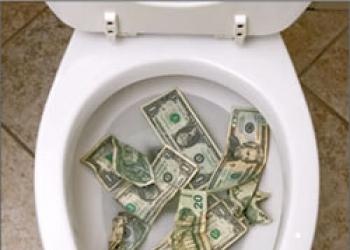
Warning shots are being fired across America's bow. Many want an end to the era of the dollar as the world's reserve currency. If that happens, your financial world will be forever altered.

Could this happen?

The United States is now the world's largest debtor nation ($10.6 trillion). And China owns more of that debt than any other nation—more than $800 billion. Chinese Premier Wen Jiabao has publicly expressed “worries” over China's significant holdings of U.S. government bonds, which ties China to America's good times and its bad times.
China is concerned that the U.S. Treasury bills (T-bills) and bonds it holds will lose much of their worth if the dollar is devalued or the financial crisis does not turn around.
By calling for the creation of another reserve currency, China, Russia and other nations seek insurance for their economies against the problems generated when one country's economy goes bad. They also seek to end American dominance over the world economy. America's decline and China's rise fit their geopolitical ambitions.
Ending the dollar's role in the world economy is not an easy matter. The Wall Street Journal stated: “The technical and political hurdles to implementing China's recommendation [to create a new standard world currency to replace the dollar] are enormous, so even if backed by other nations, the proposal is unlikely to change the dollar's role in the short term.
“Central banks around the world hold more U.S. dollars and dollar securities than they do assets denominated in any other individual foreign currency. Such reserves can be used to stabilize the value of the central banks' domestic currencies” (“China Takes Aim at Dollar,” March 24, 2009).

Will the dollar's reign soon end?

Before the dollar, the British pound sterling formed the underpinning of the global economy. It took two world wars and several decades for the world standard to shift from the pound to the dollar. Since the end of World War II, the dollar has been king.
Although the current financial problems ignited in America have led to a global meltdown, it will take more than what we've experienced so far to topple America from its current role. That is not to say this could not or will not happen.
Creating another world currency requires several factors to be in place. Research analysts at the private intelligence agency Stratfor outlined what those factors would be:
“As to a world beyond the dollar, the issue is that a reserve currency is not decided upon; it creates itself. Two things are needed to create a reserve currency. First, there must be sufficient liquidity to support a global system. That requires a central bank with an enormous amount of autonomy from a state government, and the U.S. Federal Reserve is unparalleled on this count. Not even the European Central Bank can compete.
“Second, the economy upon which the currency is based must be large enough to withstand fluctuations caused by other economies buying and selling its assets in massive amounts. Again, the United States is the only economy that potentially could qualify.
“Part and parcel of any replacement of the U.S. dollar would be a large-scale abandonment of U.S. T-bills as the core of Chinese currency reserves, which—as the conventional wisdom holds—would force intractable economic problems upon the United States. But a closer look reveals that this is not the case.
“First, selling U.S. T-bills en masse simply is not possible. Every seller requires a buyer, and the volumes at hand cannot be exchanged quickly. Second, starting down that road would cause the value of the securities in question to plummet, destroying the savings the Chinese have been building up for years. The so-called 'nuclear option' really is not an option at all” (“China's Calculated Currency Rhetoric,” March 25, 2009).
China has its own problems. The huge middle class created by their recent boom is beginning to experience layoffs and financial setbacks. The ruling Communist Party cannot afford discontent from this segment of its society. Once people have tasted materialism, they won't go back. For now it's in China's interest to blame a foreign power (America). It deflects attention from the home front.
Yet clearly, China is playing a very dangerous geopolitical game with calls for a new reserve currency.

What would it mean for Americans?

Since the end of World War II, the dollar has been the dominant world currency. For most living Americans, this is the world into which they were born. This is all they have known. Americans enjoy one of the world's highest living standards due to the stability and wealth created by America's dominant economic role.
So what would it mean for the American consumer if the dollar were no longer the world's reserve currency?
Everything Americans import would cost more— everything. Americans would have to buy the new currency in order to trade in world markets. Last year's $4-per-gallon gasoline would quickly look like a bargain.
The credit market would collapse. Investors would flee toxic assets, further locking up the economy.
The U.S. Federal Reserve would print more money to combat the credit squeeze, with the likely result being hyperinflation, meaning higher prices for available goods. Remember the stories of Weimar Germany after World War I when it took a wheelbarrow full of money to buy a loaf of bread? Not pretty.
American power and influence in the world would seriously decline. Little understood today is the role of the economy in shaping and controlling world events. The dollar's place in the world adds incalculable weight to American influence. With the dollar diminished, that influence would be reduced substantially. Russia and China are waiting for their turn to assume that power, but they would certainly meet with competition from the European Union.
Big losers from the fall of the dollar would include Japan and Latin America. Because they hold much of America's debt, China and the oil-rich Persian Gulf states would also see huge losses. Israel and Egypt would suffer as well because of massive amounts of American aid they would lose. What this would mean to the Middle East calculus is unknown, but Egypt could be destabilized as a result.
World politics would be altered. The vacuum of power created would be contested. The EU, which stands to gain from the fall of the dollar, would be among the chief contenders. China would no doubt make a play as well, but a number of factors would hinder its bid. Stability would arise from the potential period of chaos with another power becoming the global economy's main engine. America's time in the sun would be over.
American lifestyles would change radically. The end of cheap oil, low interest rates and deficit spending would mean a lower quality of life and higher taxes. What this would mean to the social fabric of the nation is unknown. But Americans' way of life would dramatically change.
This last point speaks to the character of the American people. Do they have the same qualities that helped a prior generation survive the upheaval of a Great Depression and World War II?

America losing the pride of her power?

Those pushing to create a different world are no doubt working hard to bring about the demise of the dollar and the end of America's dominant role in the world. In The Good News we have spoken before of America's prophesied loss of “the pride of [its] power” (Leviticus 26:19). While military might is what we think of first in this regard, economic factors are also important here. The dollar losing its reserve currency status would radically change America's leading role in the world.
For one, America's crippling foreign debt would get worse with decreased ability to finance the burden. In time the country would be at the mercy of those holding its obligations, with little room to maneuver. Economic enslavement to other nations would be on the horizon.
However, it's unlikely that this will happen immediately. China and several Arab states hold too many dollar-denominated instruments to see this change. As mentioned, they would lose too much. Right now the United States is too big, too rich and too powerful for them to allow it to fail. There is too much at stake on the global scene.
That does not mean things couldn't change—and change quickly—but the proper circumstances have to be in place.
It will not happen until the God of heaven allows it to happen. God has blessed America with its wealth, power and resulting prestige. He will move to change that when it fits His timing for His great plan for all the nations.
Until then we have days to live and many lives to touch. We have character to develop and mistakes to correct. We have days to love those close to us and, above all, time to discover God and His attention to the details of eternity, history and our lives. Make the most of the time while you can. GN


You might also be interested in...

Wednesday, April 24, 2013

Secure in Gold?

An interesting article from http://www.ucg.org/ about buying gold as a hedge against the dollar and other paper currency. This follows this post about the war between Russia and Chechnya. For a free magazine subscription or to get the book shown  for free click HERE! or call 1-888-886-8632.

Secure in Gold


The price of gold has dropped hundreds of dollars? Why should it matter?


[Steve Myers] Gold is in the news today because the prices are dropping. If you think back a number of years ago in the year 2000, gold was trading for about $272 an ounce. Up until just recently, gold had gotten to $1900 an ounce. Now you might say, "Okay, what's the problem with that?" The problem is the dollar then becomes devalued. Can the United States government afford for gold to be that expensive? The answer is no because what happens then is countries are going to move away from the dollar and trading in dollars and move to other currencies. And we've seen that lately. We've seen that Australia wants to move away from the dollar. Certainly Russia wants to move away, China. And that creates a major economic problem. And so the United States has been getting the help of other countries to help prop up the dollar as well. And so it seems there is definitely a connection between the value of the gold and the value of the dollar. So the United States needs gold to trade for a lot less than that $1900. So could that be part of the reason that gold is dropping?


Now of course that's only a temporary thing because people are trying to find out, "Well, what should I put my hope in? Should I put it in gold? What should I put my trust in? I want my own personal economics to prosper." You see, that's an issue. And there is a spiritual connection I think as well. You know, is gold the answer? Is gold going to save you? And of course we know it is not. Gold cannot, physical things cannot. And so it reminded me of an amazing Psalm. Psalm 9:9The LORD also will be a refuge for the oppressed, a refuge in times of trouble.


See All... and here's what it says, "The Lord also will be a refuge for the oppressed, a refuge in times of trouble." You see gold is not going to be the refuge. When you see what Psalm 9 says, it's the ultimate reminder. A physical thing is not where to put our trust. Psalm 9:10And they that know thy name will put their trust in thee: for thou, LORD, hast not forsaken them that seek thee.


See All... says, "Those who know Your name will put their trust in You." So you see the ultimate trust belongs in God and what He can do. It says, "You Lord will not forsake those who seek You." So if they want to forsake the dollar and move to gold that's one thing. But you know if we begin to put our faith and trust in the dollar or in gold or in any other physical thing, we're in trouble. So remember where to put your trust. Ultimately God says our trust must be in Him.


That's BT Daily . We'll see you next time.

.

Friday, January 18, 2013

New World Order: The Good, the Bad and the Ugly

An interesting article from http://www.ucg.org/  about international rulers. This follows this post about supporting a suffering athlete.   For a free magazine subscription or to get this book for free click HERE! or call 1-888-886-8632.


A commentary by Don Hooser


Influential people predict that world peace can't really come unless it is enforced by some world government. But many others believe that cure is worse than the problem.


Confusion and controversy are intensifying regarding a future "New World Order," commonly abbreviated as NWO. What does it mean? Would it be good or bad for the world?


Let's first acknowledge an implied difference between a new world order and the "New World Order ."


Hopes for a new world order

During the past century, many world leaders and others have expressed their desire and hope for a better world with peaceful relations among all the nations, and some have used the phrase a new world order .


For example, Woodrow Wilson and Winston Churchill spoke of their desires for a new world order following World War I and World War II, respectively.


The popular usage of the phrase escalated when President George H.W. Bush expressed in a half dozen speeches his hope for a new world order. In his March 6, 1991, address to Congress, he said, "Now, we can see a new world coming into view. A world in which there is the very real prospect of a new world order... A world where the United Nations, freed from cold war stalemate, is poised to fulfill the historic vision of its founders."


Some were alarmed by President Bush's use of the term, but it was largely seen in the context of the fall of the Berlin Wall and the end of the cold war. Now, however, it seems many more Americans have become quite alarmed after numerous remarks by President Barack Obama indicating his desire to see a powerful "international order" to solve the world's problems.


Influence of books on popular thought

British writer and futurist H.G. Wells published a nonfiction book in 1940 titled The New World Order . The book addressed the ideal of a world without war in which law and order emanated from a world-governing body and collectivist economy.


Other books have taken a negative view. Consider two popular dystopian novel s where a society promoted by the rulers as a utopia becomes, in reality, a nightmare.


Brave New World is a 1932 novel by Aldous Huxley about life in London in A.D. 2540. It describes a totalitarian state in which everyone is kept preoccupied and "happy" by hypnotic recordings, propaganda, disinformation, materialistic consumption, promiscuous sex and drugs.


Nineteen Eighty-Four is a 1949 novel by George Orwell picturing a world of pervasive government surveillance (by "Big Brother") and incessant public mind control .


American televangelist Pat Robertson in his 1991 book The New World Order popularized the NWO theory that rich and powerful people, banks, secret and semisecret societies, and other groups conspire together to form the shadow government that controls world events from behind the scenes, steering us constantly and covertly in the direction of world government under the Antichrist.


Many other books and booklets about an NWO have been marketed as well.


Fears of the New World Order

Until about 1990, most people ignored the warnings of conspiracy theorists about a coming NWO. But in addition to the other influences, the Internet has given a powerful worldwide voice to all the conspiracy theorists and subcultures.


And globalization is proceeding at an astonishing pace, having major impacts on the nations and peoples of the world—impacts good and bad.


Would a New World Order be good or bad? An NWO implies that all nations surrender their sovereignty to a world-ruling government. For nearly a century, the world has depended on the protection and leadership provided by a strong, independent United States of America. Considering the corruption that absolute power seems to always bring, a powerful world government ruled by human beings would be a catastrophe for the United States and all the world.


But that doesn't mean we need to research all the different conspiracy theories out there. The real and important truth about the past, present and future of the world is in the Bible!


The real conspiracy and the real solution

The power of human conspiracies is usually overemphasized. But throughout history, there has been one superpowerful conspiracy by Satan the devil, "who deceives the whole world" (Revelation 12:9And the great dragon was cast out, that old serpent, called the Devil, and Satan, which deceiveth the whole world: he was cast out into the earth, and his angels were cast out with him.


See All...).


Will an NWO happen? In a sense, the answer is that the world is going to experience two! First, there will be a New World Order that will be bad and ugly—a dystopia. Satan will mastermind the formation of an international government and religious system referred to in the Bible as "the beast" and "Babylon the great" (Revelation 17:5-7 [5] And upon her forehead was a name written, MYSTERY, BABYLON THE GREAT, THE MOTHER OF HARLOTS AND ABOMINATIONS OF THE EARTH.

[6] And I saw the woman drunken with the blood of the saints, and with the blood of the martyrs of Jesus: and when I saw her, I wondered with great admiration.

[7] And the angel said unto me, Wherefore didst thou marvel? I will tell thee the mystery of the woman, and of the beast that carrieth her, which hath the seven heads and ten horns.


See All..., 13). They will dominate "all the nations" and "the kings of the earth" and "the merchants of the earth" (Revelation 18:1-4 [1] And after these things I saw another angel come down from heaven, having great power; and the earth was lightened with his glory.

[2] And he cried mightily with a strong voice, saying, Babylon the great is fallen, is fallen, and is become the habitation of devils, and the hold of every foul spirit, and a cage of every unclean and hateful bird.

[3] For all nations have drunk of the wine of the wrath of her fornication, and the kings of the earth have committed fornication with her, and the merchants of the earth are waxed rich through the abundance of her delicacies.

[4] And I heard another voice from heaven, saying, Come out of her, my people, that ye be not partakers of her sins, and that ye receive not of her plagues.


See All...).


But Jesus Christ, the "King of Kings," will destroy that order ( disorder! ) and will replace it with a worldwide utopia—the glorious Kingdom of God (Revelation 19:11-16 [11] And I saw heaven opened, and behold a white horse; and he that sat upon him was called Faithful and True, and in righteousness he doth judge and make war.

[12] His eyes were as a flame of fire, and on his head were many crowns; and he had a name written, that no man knew, but he himself.

[13] And he was clothed with a vesture dipped in blood: and his name is called The Word of God.

[14] And the armies which were in heaven followed him upon white horses, clothed in fine linen, white and clean.

[15] And out of his mouth goeth a sharp sword, that with it he should smite the nations: and he shall rule them with a rod of iron: and he treadeth the winepress of the fierceness and wrath of Almighty God.

[16] And he hath on his vesture and on his thigh a name written, KING OF KINGS, AND LORD OF LORDS.


See All...). He loves His human creation and has our best interests at heart. His government will never be corrupted but will produce a world where disease will be replaced with health, hunger will be banished by abundance and everyone will be able to achieve his or her full potential.

.

Wednesday, November 16, 2011

Germany Conquering Europe?

An interesting article from www.ucg.org about Germany and the current European financial crisis. This follows this post about the Euro currency crisis. For a free magazine subscription or to get this book for free click HERE! or call 1-888-886-8632.


Germany Conquering Europe?


article by Tom Robinson


It’s not every day that you open a major British newspaper and read a headline like this: “Rise of the Fourth Reich, How Germany Is Using the Financial Crisis to Conquer Europe” (Simon Heffer, Daily Mail, Aug. 17, 2011). Many observers are pointing out the same thing—though typically in much less blunt terms.


Underwriting the bailouts of eurozone members, Germany is demanding austerity measures and increased control: “There was forceful talk of Eurozone countries being coerced into balancing their budgets and reducing their debt through what [German Chancellor Angela] Merkel and [French President Nicolas] Sarkozy called a ‘true European economic government movement’ made up of all the heads of state and led, initially, by the EU President Herman Van Rompuy. . . If such a plan succeeded it would make Europe effectively a German empire, with non-Eurozone countries such as Britain on the sidelines” (ibid.).


For eurozone members, “this would entail a loss of sovereignty not seen in those countries since many were under the jackboot of the Third Reich 70 years ago. For be in no doubt what fiscal union means: it is one economic policy, one taxation system, one social security system, one debt, one economy, one finance minister. And all of the above would be German” (ibid.).


Strong sentiments but, as Bible prophecy reveals, Europe is indeed in the process of becoming a new German-led empire. It will be the last in a series of prophesied revivals in Europe of the Roman Empire (see the March-April 2010 issue of The Good News to learn more). And this final revival will fall with the return of Christ. Stay tuned to events in Europe and the Middle East (Source: Daily Mail).

.

Monday, November 14, 2011

"Will the Euro Collapse?"

An interesting article from www.ucg.org  about the Euro currency crisis. This follows this post about the debt problems in America and Europe.   For a free magazine subscription or to get this book for free click HERE! or call 1-888-886-8632.

"Will the Euro Collapse?"


article by Good News Editor


Some great factor - quite possibly the economic crisis that is increasingly shaping up in Europe - will force the transformation of the European Union into a new, more tightly integrated and powerful alliance.


Source: Photos.comNewsweek recently reported: "Mayhem in the euro zone is a major contributor to the international financial crisis. The immediate cause may be reckless policies pursued by governments and banks, but the institutional structure of the European Monetary Union is the stubborn root of the problem" (John Eatwell, "Euro Vision," Sept. 5, 2011).


The magazine article went on to ask: "Can the Europeans build the necessary institutions to run an effective monetary union—institutions that took 100 years, a civil war and a Great Depression to build in the United States? Or will the euro collapse?"


Three days later the Financial Times published an article stating, "Angela Merkel, German chancellor, declared on Wednesday that 'the euro will not fail'" ("Merkel Promises Euro 'Will Not Fail,' Sept. 8, 2011). It continued with the Chancellor's explanation that "Germany would continue to demand drastic debt reduction from its eurozone partners in exchange for providing them with financial guarantees."


Yet Merkel faces a great deal of opposition from the greater German ruling intelligentsia. The International Herald Tribune observed that "the euro zone's debt crisis gets messier, and Germany, the euro's self-styled guardian, is playing a large role in magnifying the uncertainty.


"Despite repeated pledges by Chancellor Angela Merkel to keep Europe together, the cacophony of dissent within her country is becoming almost deafening. That is casting fresh doubt—justified or not—over the nation's commitment to the euro" ("Dissent Adds to Euro Zone Uncertainty in Germany," Sept. 12, 2011).


Financial commentator Thorold Barker of The Wall Street Journal asked, "What is the future of the euro if old hands from Germany's Bundesbank have lost faith in the institution charged with overseeing the currency?" ("Stark Signal for the Euro," Sept. 12, 2011).


One key person has resigned from the European Central Bank apparently because of the prospect of further decisions like the purchase of Italian and Spanish sovereign bonds. The Journal article concluded with this stark assessment: "Even when compared with weak currencies like the dollar, the euro's future as a store of value looks bleak."


Still, many seasoned observers consider scrapping the eurozone at this stage highly unlikely because they believe an economic catastrophe would ensue for Europe. One recalls the Germany of the early 1930s, when economic conditions were so bad that a wheelbarrow full of German marks would purchase just one pound of butter. So much has been invested in monetary and human resources that it's considered foolhardy to turn back because of the current crisis!


But catastrophic occurrences are clearly possible, if not likely, in this world of unstable and uncertain economics and politics. As Time magazine somewhat counterintuitively declared earlier this year: "Out of times of chaos and uncertainty can come a world order that is strong and vital. It happened in Europe centuries ago" (Parag Khanna, "For a New Renaissance," Jan. 31, 2011).


From the biblical point of view, this semi-prophetic declaration certainly has been accurate a number of times in centuries past. Parts of Europe are in economic travail now, but make no mistake: Europe is indeed in the process of becoming a great superpower empire, with Germany in the forefront.


Some great factor—quite possibly the economic crisis that is increasingly shaping up in Europe—will force the transformation of the European Union into a new, more tightly integrated and powerful alliance. It will be the last in a series of revivals of the old Roman Empire foretold in Bible prophecy. To understand more, request or download our free booklets The Book of Revelation Unveiled and Are We Living in the Time of the End?

.

Friday, November 11, 2011

European and American Debt: No Easy Way Out

An interesting article from www.ucg.org  about the debt problems in America and Europe. This follows this post about the world's economic turmoil.  For a free magazine subscription or to get this book for free click HERE! or call 1-888-886-8632.

European and American Debt: No Easy Way Out


article by Good News Editor


The huge debt problems in Europe and the Unites States are creating enormous problems on the world geopolitical scene.


Source: Photos.comFinancial Times columnist Gillian Tett declared in FT Magazine, a supplement to the weekend edition of the newspaper: "Another week, another bout of wailing about global debt woes. In Europe, there is panic about the finances of places such as Italy or Greece. In America, the US debt headache gets ever worse. And, on a more mundane level, millions of people (like me) have just returned from holiday feeling uneasy about their next credit card bill" ("Debt: It's Back to the Future," Sept. 10-11, 2011).


The lead editorial in the Sept. 12, 2011, International Herald Tribune took Europe to task over its management of the eurozone debt. It stated: "Europe's leaders believe they can stave off economic disaster without taking real action. They keep pretending that they will not have to ask taxpayers to help shore up fragile banks . . . and that Europe can continue to reap the benefits of monetary union without the shared responsibilities of greater fiscal union.


"No one else believes this—not credit markets, which have bid up interest rates on sovereign debt; not the International Monetary Fund, which has warned repeatedly that major banks appear undercapitalized; and not the Organization for Economic Cooperation and Development, which last week forecast negative growth in the coming quarter for Germany, France and Italy, the euro zone's three biggest economies.


"The immediate fear is that one or more major European banks may fail. Confidence is plummeting because they have large holdings of Greek, Spanish and Italian bonds. A major bank failure would damage America's economy as well—which helps explain the urgent pleas from Washington last week for Europe to come up with a strategy for recovery and growth" ("Europe's Fiscal Fantasies," emphasis added throughout).


Desmond Lachman, resident fellow of the American Enterprise Institute, wrote in The Wall Street Journal about the financial crisis in Europe possibly diminishing President Barack Obama's reelection chances. The U.S. financial system suffers from "massive exposure to the European banks . . . of over a trillion dollars—or roughly 45% of money markets' overall assets" ("The Euro's Problems Are America's Too," Sept. 9-11, 2011). Lachman fears Greece will default on its sovereign debt before year's end.


He also stated: "Judging by recent events, the euro zone's end-game may not be far off. Greece's economic and fiscal reforms appear to be seriously off track, and the debt crisis has now spread from Greece, Portugal and Ireland to Spain and Italy. These latter two countries are aptly described as being both too big to fail and too big to bail."


These huge debt problems are creating enormous problems on the world geopolitical scene. At this point no one can say with certainty how it will all shake out. But while an individual realistically can do nothing about these great problems, as an individual you can still apply time-tested biblical principles to your personal life.


If you are in debt, or just want to exercise better financial control over your economic affairs, request or download for our free booklet Managing Your Finances.


A companion booklet, Making Life Work, expands these biblical principles to subjects such as "Finding Success in Your Job and Career." These two publications work well together to bring the Bible into the problem-solving aspects of your life.

.

Thursday, November 10, 2011

The World's Financial Turmoil: What Are the Root Causes?

An interesting article from www.ucg.org  about the world's economic turmoil. This follows this post about America's debt problems. For a free magazine subscription or to get this book for free click HERE! or call 1-888-886-8632.

The World's Financial Turmoil: What Are the Root Causes?


article by Ewin Barnett


Nothing has dominated the news over the last few years like the economic crises still battering many nations. What, fundamentally, is the problem? Let's examine some financial basics from a biblical perspective.


Our desire to live beyond our individual and collective means has enticed us to engage in individual and collective coveting.


Source: iStockphotoRegardless of where they live, nearly everyone has taken a hit in the wallet due to rising prices or rising taxes, with more likely on the horizon—not to mention budget crises, staggering debt and unemployment problems that threaten more and more governments and citizens alike.


What's at the core of so many of these problems? Let's look at some basic realities about economics to gain a better understanding of the world's financial turmoil.


Economics is about behavior and choices

All economic interaction springs from human beings expressing wants and needs by deliberate action to improve their circumstances.


At the heart of economic decisions are our limitations in terms of resources and mortal time constraints. How we allocate and prioritize resources reflects our thoughts, appetites and values. Thus, economics is far more about our behavior and choices than it is about money.


Jesus said that out of the abundance of one's heart his mouth speaks (Luke:6:45A good man out of the good treasure of his heart bringeth forth that which is good; and an evil man out of the evil treasure of his heart bringeth forth that which is evil: for of the abundance of the heart his mouth speaketh.)—a person's words reflecting the values that motivate his thoughts. Similarly, we could say that out of the abundance of one's heart his wallet speaks, as people use money for what matters to them.


Respected economist Carl Menger opened his 1871 book Principles of Economics with the statement, "All things are subject to the law of cause and effect." This parallels Scripture, which is full of spiritual cause and effect, such as in the blessings and curses of Deuteronomy 28 and the fact that we reap what we sow (Galatians:6:7Be not deceived; God is not mocked: for whatsoever a man soweth, that shall he also reap.). Our behavior and choices always have spiritual consequences. They often have economic consequences as well.


How is wealth created?

From man's beginnings, people have grown and made things. They harvested fish and game and raised domesticated animals. They extracted minerals from the earth. They created works of art. While people have many different preferences, the things we value make up our wealth. Some of our wealth is in the form of our home, our furnishings or other possessions. Our wealth also includes our job skills and ability to earn a living. Some forms of wealth are readily convertible into money; others are not.


A wonderful place to see many of these forms of wealth creation is in the praises for the resourceful and hardworking wife in Proverbs:31:10-31[10]Who can find a virtuous woman? for her price is far above rubies.[11]The heart of her husband doth safely trust in her, so that he shall have no need of spoil.[12]She will do him good and not evil all the days of her life.[13]She seeketh wool, and flax, and worketh willingly with her hands.[14]She is like the merchants' ships; she bringeth her food from afar.[15]She riseth also while it is yet night, and giveth meat to her household, and a portion to her maidens.[16]She considereth a field, and buyeth it: with the fruit of her hands she planteth a vineyard.[17]She girdeth her loins with strength, and strengtheneth her arms.[18]She perceiveth that her merchandise is good: her candle goeth not out by night.[19]She layeth her hands to the spindle, and her hands hold the distaff.[20]She stretcheth out her hand to the poor; yea, she reacheth forth her hands to the needy.[21]She is not afraid of the snow for her household: for all her household are clothed with scarlet.[22]She maketh herself coverings of tapestry; her clothing is silk and purple.[23]Her husband is known in the gates, when he sitteth among the elders of the land.[24]She maketh fine linen, and selleth it; and delivereth girdles unto the merchant.[25]Strength and honour are her clothing; and she shall rejoice in time to come.[26]She openeth her mouth with wisdom; and in her tongue is the law of kindness.[27]She looketh well to the ways of her household, and eateth not the bread of idleness.[28]Her children arise up, and call her blessed; her husband also, and he praiseth her.[29]Many daughters have done virtuously, but thou excellest them all.[30]Favour is deceitful, and beauty is vain: but a woman that feareth the LORD, she shall be praised.[31]Give her of the fruit of her hands; and let her own works praise her in the gates.. While this wife has many skills, carpentry is not listed. We may suppose that when she expanded her sewing room, she hired carpenters. Yet those carpenters might have chosen to hire a blacksmith for something made out of iron. People deciding their own occupation leads to "the division of labor," a vital factor in wealth creation.


Another factor in the creation of wealth is free exchange. In fact, free exchange is the only form of economic interaction through which the wealth of all parties is increased. Free exchange can be seen in many of the parables of Jesus, such as that of the pearl of great price (Matthew:13:45-46[45]Again, the kingdom of heaven is like unto a merchant man, seeking goodly pearls:[46]Who, when he had found one pearl of great price, went and sold all that he had, and bought it.).


The last main factor in wealth creation is savings. Wealth used to purchase new equipment or to start a new business can only come from what people have saved. The greater the savings, the more wealth is available for capital investments, resulting in higher worker productivity and new opportunities to create more wealth.


Of course, total wealth is increased only by activity that produces more wealth than it consumes. And we need to realize that wealth and money are not exactly the same. Indeed, confusion on that point is one of the causes of the present financial crisis.


That crisis illustrates that wealth can also be wrongly acquired by sinful means—through taking from others, whether by violence, coercion, fraud or dishonesty perpetrated by private individuals or government.


The role of God in wealth is primarily in blessings—by intervening to enable earning or wealth creation in harmony with His law and by giving those who love Him clarity of vision and understanding by which they can be skilled and prudent in the conduct of their personal affairs (see Exodus:35:31And he hath filled him with the spirit of God, in wisdom, in understanding, and in knowledge, and in all manner of workmanship;; 1 Kings:4:29And God gave Solomon wisdom and understanding exceeding much, and largeness of heart, even as the sand that is on the sea shore.; Psalm:111:10The fear of the LORD is the beginning of wisdom: a good understanding have all they that do his commandments: his praise endureth for ever.; Daniel:9:22And he informed me, and talked with me, and said, O Daniel, I am now come forth to give thee skill and understanding.). While God wants those who love him to prosper, He is focused on our spiritual wealth far more than our material wealth (Hebrews:11:24-26[24]By faith Moses, when he was come to years, refused to be called the son of Pharaoh's daughter;[25]Choosing rather to suffer affliction with the people of God, than to enjoy the pleasures of sin for a season;[26]Esteeming the reproach of Christ greater riches than the treasures in Egypt: for he had respect unto the recompence of the reward.).


God also decrees the rightful possession of wealth, placing such importance on private property that He directly protects it in two of the Ten Commandments—the Eighth, which forbids theft, and the Tenth, which forbids coveting (Exodus:20:15Thou shalt not steal., 17).


What is money?

The concept of money came about in part because it was impossible to divide a large item of value like an ox when it was bartered for something of far lesser value. Money must be easily divisible, durable and difficult to falsify. Money has three roles—a medium of exchanging value, a way of storing wealth and a unit of accounting. Again, money should not be confused with the wealth it represents.


God shows in Deuteronomy:14:23-26[23]And thou shalt eat before the LORD thy God, in the place which he shall choose to place his name there, the tithe of thy corn, of thy wine, and of thine oil, and the firstlings of thy herds and of thy flocks; that thou mayest learn to fear the LORD thy God always.[24]And if the way be too long for thee, so that thou art not able to carry it; or if the place be too far from thee, which the LORD thy God shall choose to set his name there, when the LORD thy God hath blessed thee:[25]Then shalt thou turn it into money, and bind up the money in thine hand, and shalt go unto the place which the LORD thy God shall choose:[26]And thou shalt bestow that money for whatsoever thy soul lusteth after, for oxen, or for sheep, or for wine, or for strong drink, or for whatsoever thy soul desireth: and thou shalt eat there before the LORD thy God, and thou shalt rejoice, thou, and thine household, that wealth in the form of grain or livestock can be exchanged for money, which can later be exchanged for food. Notice that the wealth is retained even though its form is changed. Today, it's common for people to keep only a fraction of their total wealth in the bank, and an even smaller fraction in the form of cash in their pocket.


When money is made of something that itself has value, such as gold or silver, the money has its own intrinsic value apart from government. Such money is acquired by exchanging value for value, and that value would be hard for any third party like government to influence or manipulate.


When the money is just a piece of paper, its value is initially determined by government decree. Of itself, a piece of paper money or a plastic card has almost no value. Electronic money doesn't even exist in physical form. For example, 10 bushels of grain is exchanged for $100 in electronic money in a bank account that exists only in a computer. There is no intrinsic value.


While money itself is subject to the law of supply and demand, because it's not used up it's not a commodity like oil or wheat. If the supply of money in circulation increases, its value declines, so it takes more of it to buy the same items. Paper money can be printed at will. The supply of electronic money can be changed with the click of a mouse button. But if gold or silver is used as money, the amount available for use cannot change rapidly or at a politician's whim.


Inflation is a form of theft

When government spends money newly created by mere decree, the wealth that money represents comes from all the existing holders of that currency by dilution of the value of their holdings. More dollars (or euros, or yen, or rubles) are chasing the same amount of goods and services. This results in rising wages and prices, an effect we call "inflation." It's actually a subtle form of theft, because the money is then worth less than it was before. And there are other consequences.


Since people place higher value on receiving something now instead of later, money has a time value. When combined with risk, this leads to the concept of interest. When people borrow money, what is really being borrowed is the wealth the money represents. The lender will only freely lend if he can expect to be repaid and to be compensated for the risk he took.


However, if over the life of the loan the money is inflated, then the borrower will be repaying with less valuable money. This works to the lender's disadvantage and the borrower's advantage. When borrowing stretches over decades, even a modest amount of inflation can destroy a substantial fraction of the wealth repaid to the lender. For example, at a 4 percent inflation rate over 20 years, $1 declines in value to 46 cents.


In Deuteronomy:25:13-15[13]Thou shalt not have in thy bag divers weights, a great and a small.[14]Thou shalt not have in thine house divers measures, a great and a small.[15]But thou shalt have a perfect and just weight, a perfect and just measure shalt thou have: that thy days may be lengthened in the land which the LORD thy God giveth thee. God instructed Israel to keep honest weights and measures. When government inflates the value of money by deliberate policy, this destroys the amount of wealth being paid in long-term contracts and loans. It is the same as having dishonest weights and measures—again, a form of stealing.


The largest amount of long-term debt is issued by governments. Government officials openly talk of printing new money with which to pay the interest on previously issued debt. But none of this money printing creates any new wealth or resources. Money printing can only induce a temporary mirage of prosperity that fades when the money printing stops.


What about prices?

Prices have two functions in an economy. They facilitate value-for-value exchange. We equate money with wealth because when we go shopping, we look at monetary prices, not prices in terms of hours worked or bushels of wheat or barrels of oil.


Prices also inform every other participant in the broader economy about the relative value of things, sending signals that help everyone adjust their own expectations and plans. They also help businesses set production levels.


Prices then allow us to easily make judgments about relative value. Should we work an extra hour or go to the movies? Is this pair of shoes a better value than that other pair?


When any third party intrudes in the economy, this distorts the signals about relative values of the myriad of goods and labor skills. These distortions cause faulty decisions and plans about possible investments. This is especially true when government intrudes in the monetary system and distorts the time value of money by manipulating interest rates. These decisions cause what prominent 20th-century economist Ludwig von Mises called malinvestment.


For example, in recent years when people thought housing was a good investment and home loans were easily available, many malinvested in a home that was bigger and more expensive than they otherwise would have purchased. In advancing its policy goal of increasing home ownership, governments also relaxed lending standards.


Many loans were granted to people with a poor credit record. This easy money allowed buyers to bid up home prices. Homebuilders saw this as a signal to build more new homes with upscale features. Building supply companies then built new factories. Investors saw these price signals as verification the economy was sound, and so on.


At some point, many realized that home-owners could not sustain the level of debt they had incurred and that many would default on their loans. This caused a cascade of signals through the U.S. economy to retract and contract. Home prices in some areas fell to almost half of what they were at the peak of malinvestment. We suffer from a boom-bust business cycle exactly because we have disconnected money from wealth.


In Luke:14:28For which of you, intending to build a tower, sitteth not down first, and counteth the cost, whether he have sufficient to finish it?, Jesus asked, "For which of you, intending to build a tower, does not sit down first and count the cost, whether he has enough to finish it."


Yet even when you can count the cost of a big project down to the penny, if the value of the penny changes over the life of the project, you cannot count the cost in terms of wealth. Worse, you cannot reliably anticipate if that new business or factory or apartment building will create more wealth than it consumes. This is how uncertainty and risk are introduced into private economic calculation by government manipulation of the value of money or as a result of its efforts to directly influence prices.


If erroneous price signals fool people into approving a project that diminishes their wealth, they may eventually have no wealth at all. Von Mises explained that an economy with significant levels of government intrusion was unsustainable—a pattern we have seen repeated around the world through the years.


Government intrusion at work

Governments come up with funds to spend by taxing, borrowing, or creating money. Spendable funds also come from expanding credit. This is done by allowing banks to lend out the same deposit multiple times. America's recent housing bubble was funded mainly by allowing government-related corporations, like Fannie Mae, to lend money based on corporate assets subject to dramatic market value change (in Fannie's case, home mortgages).


As of March 31, 2008, Fannie had borrowed $804 billion (short term) to buy more mortgages (mostly long term) while its stockholders provided it with only $39 billion in equity to serve as capital, a ratio of 20:1. At its peak, the ratio may have been 30:1 or worse. While such massive borrowing allows the rapid creation of new lendable funds as misleading market signals cause a malinvestment upswing, it doesn't take much of a decline on the eventual downswing to completely wipe out all corporate equity. And that is exactly what happened.


The Federal Reserve has swapped hundreds of billions of dollars' worth of low-quality bank debt and created money and money instruments like bonds for banks to hold as reserves. Bloomberg News reported on August 11, 2011, that in 2008 the Federal Reserve created a total of $1.2 trillion to lend to banks in addition to other government bailouts.


The various ways the European Central Bank is bailing out banks in Greece and other member countries are all a form of money printing—leading to dilution of the value of the euros held by others. Experts fear that this rescue program is too small for anticipated future bailouts. Economists who follow in the footsteps of Menger and Von Mises warn that old debt cannot be paid off by new debt—that any proposed solution that involves the issuing of more debt will eventually fail.


Any expansion of credit by a central bank results in the creation of new debt that carries an obligation to pay interest. When a government attempts to stimulate an economy by inflating or borrowing to finance projects and those projects fail to produce enough economic benefit to pay their costs, the public must pay the interest. This becomes a budgetary issue when revenues are insufficient to pay for ongoing needs like defense, upkeep of roads and the care of the truly indigent.


The root causes are ultimately spiritual

Without property rights, a free market, price information that allows calculation of profit, the ability to save and invest those savings, and honest money, a growing economy is impossible. And the roots of the present financial crisis are found where these points touch God's laws.


People as individuals cannot broadly destroy property rights or distort the value of money. But governments can. Yet governments often reflect the character and values—and demands—of the peoples they represent.


James:1:14But every man is tempted, when he is drawn away of his own lust, and enticed. warns that "each one is tempted when he is drawn away by his own desires and enticed." Here are the roots of our present financial crisis. Our desire to live beyond our individual and collective means—or to require that others bail us out if we run a failing business—has enticed us to engage in individual and collective coveting.


We think we can live at the expense of others, even if government must print or borrow money to pay for it. But no one has the authority to take from others what he can provide for himself. The sin of coveting ripens into the sin of theft.


It matters not that we sanitize and legalize this through a democracy. We are told we can all be more prosperous when we spread the wealth of others around. But this does not lead to increased prosperity—except for the few beneficiaries of government favoritism.


And so we must live with the consequences of our collective behavior and choices, consequences we would have avoided had we followed God's laws individually and collectively. As Galatians:6:7Be not deceived; God is not mocked: for whatsoever a man soweth, that shall he also reap., cited up front, tells us, "Do not be deceived, God is not mocked; for whatever a man sows, that he will also reap."


As nations and individuals, we all need to repent and make sure we are following what God says when it comes to our economic choices and interaction—and humbly look to Him to deliver us from the mess we have gotten ourselves into.


To Learn More...

Would you like some sound financial guidance in dealing with your personal finances, especially in this time of financial uncertainty? We’ve prepared an important booklet, Managing Your Finances, to help you better handle your household finances and budget. Download or request your free copy today!

.

Friday, November 4, 2011

Why the Euro Crisis is My Crisis-and Maybe Yours Too

An interesting article from www.ucg.org  analyzing the Euro Crisis. This follows this post about dead people. . For a free magazine subscription or to get this book for free click HERE! or call 1-888-886-8632.

Why the Euro Crisis is My Crisis-and Maybe Yours Too

by Darris McNeely


Source: Photos.com"So why aren't people out buying homes and at least looking at homes for sale", I asked my real estate agent with only a small hint of frustration. This was the second phone call in a month telling me I should consider lowering the asking price for my home. I am relocating to a new assignment and need the cash to buy a home when I move. We have had no action on our sale. No one is looking. The local real estate market is frozen.


"Fear" was his reply, "people are living in fear today".


It's true. People are afraid they might lose their jobs and afraid the United States might dip back into a second recession. They fear Congress will not come up with a viable deficit reduction plan. They fear the unknown problem of Europe's ongoing crisis. They frankly fear there is a lack of political will and leadership to produce effective solutions to our economic problems. This fear is keeping them from making even sound some sound financial decisions.


While applying for a mortgage loan yesterday the lending officer I am working with gave her take on the current housing crisis. "First time home buyers are afraid to step into the market and buy a home even when it makes economic sense to buy rather than rent" That's true too. Interest rates are at historic lows making monthly housing payments for modest homes very affordable–much cheaper than rent. Now I know home ownership is not for everyone but today there are some bargains in today's housing market that could pay future dividends. But if fear rules, then nothing happens.


Fear may be the biggest part of our dilemma. We have some big problems facing us but they are not insolvable. With some moral, ethical and political will the United States and other world economies could climb out of the sinkhole of economic malfeasance that has brought us to the brink. But if fear locks up the mind and will then it will be very difficult to work our way to a solution. Fear immobilizes and closes down possibility and opportunity. Like him or not, Franklin Roosevelt hit upon the core of the issue when he said, "we have nothing to fear but fear itself".


Folks, there is a lot of fear on the today's street.


Since I am buying a home out of state I am working with another agent at our destination. She is like many who are looking for hopeful news in each days economic report. Like us, she has seen many years of good times and believes the good times will return. Most of us think the same way, we have no real choice. And I do hope we soon see the end of rough times and a stabilizing in world markets that will cause the numbers to go up.


I look at Europe's economic problem and understand how it impacts Main Street in America. American Banks are exposed to Greek, Italian and Spanish debt. If any one of those nations default on their debt it could bring down another large American financial institution. The ripple effect through the economy is unknown. This keeps banks from making loans out of fear, even as they sit on billions of dollars in cash. And that locks up capital and expansion of business which in turn keeps jobs from growing and puts in jeopardy existing jobs. And that explains why a lot of people are afraid to step out in a large long term commitment like a home mortgage. And so, Europe's crisis becomes my minor "crisis" as I wait for someone to buy me out of my existing home.


But life goes on and we have to make decisions. I am reminded of how the prophet Jeremiah was instructed by God to buy a field in Jerusalem as the city was about to fall to the Babylonians and the citizens killed and led off in captivity. It didn't make economic sense. Buying real estate in the midst of an entire cultural collapse is pretty risky if not outright stupid. But Jeremiah bought the field from his cousin and filed the deed in a clay jar in the ground. God said, "houses and fields and vineyards shall be possessed again in this land." (Jeremiah:32:15For thus saith the LORD of hosts, the God of Israel; Houses and fields and vineyards shall be possessed again in this land.)


Talk about hope and confidence–there it is. Jeremiah made a decision and put down his money based on confidence in God. He made a statement to live, to move forward in hope without fear. With this action he said there is a future. Jeremiah was a pretty positive man when you scrape away the outer anxiety we sometimes see.


The world economy is going through some rough waters right now. America's leadership role is changing. Europe is seeing its biggest crisis since going to the single currency more than ten years ago. But Europe will hold together and the Euro will remain in place. They have too much invested to see it all collapse. Too much history is pushing Europe toward a solution that will bring them to an even larger role in world affairs. Don't count them out.


And don't count America down and out just yet. For reasons most do not understand, America still plays the key military, economic and political role in world. God is bringing this world to a moment of decision. Keep your eyes and heart focused on Him. Put your hope and confidence in Him and keep fear at bay

Wednesday, October 5, 2011

Occupy Wall Street's misguided anger‏

A very interesting post from http://www.westernpac.org/ about Occupy Wall Street. This follows this previous post about it. This follows this previous article about it to encourage American energy independence. This is a key issue to prevent money from going to hostile countries such as Iran  and Venezuela. For more that you can do to get involved click HERE and you can read a very interesting book  HERE!

Occupy Wall Street's misguided anger‏


Dear Patriot,


Yesterday, I shared part of my analysis of the financial meltdown with you. I said clearly that I sympathize with many of the protesters about the failure of Wall Street in regards to the financial markets. I still remember watching the value of my home collapse, watching as one by one people close to me were let go and laid off from their jobs, and seeing foreclosure signs popping up in my neighborhood. While all that was happening, Wall Street executives were taking billions of dollars in bonuses. AIG went so far as to have Chris Dodd and Timothy Geithner change bailout language to allow them to pay their failed executives $165 million dollars in bonuses with some of the $170 billion dollars in taxpayer bailouts.


Decisions made on Wall Street literally destroyed millions of American lives, and it was their lack of prudence that caused skyrocketing unemployment and plummeting home prices. They failed the American people and while we suffered incredible hardship, they used their influence in government to keep their gravy train going. In a free market, they would have suffered the consequences of their bad decisions, but they had an ace up their sleeve: they controlled the Federal Reserve and the Treasury.


When they needed a bailout, former Goldman Sachs CEO Hank Paulson was there to deliver $700 billion dollars worth of bailouts. Paulson and Fed Chair Ben Bernanke scared Congress into passing the Troubled Assets Relief Program (TARP) under the premise that Paulson would use that money to buy the toxic assets that we talked about yesterday. After passage, Paulson changed his mind in favor of giving the banks a “cash infusion,” or gigantic handout. Paulson, Bernanke, and Timothy Geithner had already manipulated the free market when they arranged shotgun marriages between Merrill Lynch and Bank of America, and Bear Stearns and JP Morgan. While they helped consolidate power for some, they also let Lehman Brothers fail. After letting Lehman fail, they changed policies and opened up the Federal Reserve discount window to investment banks. This policy shift would have saved Lehman, but conveniently for Goldman Sachs it came just hours too late. Hank Paulson used his government position to eliminate one of his firm's largest competitors.


Despite promises to the contrary, Obama continued Wall Street’s control of fiscal policy by reappointing Wall Street favorites Ben Bernanke (Fed) and Timothy Geithner (Treasury). Obama famously said to 13 Wall Street bankers, “I’m the only thing between you and the pitchforks,” and he has been delivering for them ever since.


I sympathize with the “Occupy Wall Street” protestors because when I joined the Tea Party movement, I wanted to see the criminals who caused this mess serving long prison sentences. I started researching how the whole thing happened, and what I found was that the people who needed to be put in prison were GOVERNMENT officials. The irresponsible Wall Street executives deserved to fail and suffer the same fate as the American people they stole from, but the true criminals are the corrupt government officials who betrayed the American people by manipulating the market in exchange for favors. As the ranking members of the House and Senate committees that oversaw fiscal policy, Barney Frank and Chris Dodd were the worst offenders. They were joined by a long list of bipartisan bastards who sold us all out, and as I learned, I focused my anger towards both defeating the corrupt politicians and electing patriots who would investigate their criminal behavior.


I could go on and on about how the government, at the behest of Wall Street, engineered the financial collapse, and for the sake of brevity have left out information about Clinton’s deregulation, the “Affordable Housing Act,” and hundreds of other corrupt policies purchased for pennies on the dollar from crooked politicians. Hopefully, the “Occupy Wall Street” protestors will realize the same way I did that the only reason Wall Street was able to rob the American people -searching to satisfy their unquenchable greed - was that a large group of corrupt politicians took control of a government that had far too much control over our lives. The solution is not MORE government; the solution is FAR LESS government.


I believe in limited government, personal responsibility, and FREE markets. The markets have been manipulated by a government that is far too powerful. I hate the corrupt bastards whose reckless gambling sank our economy, but I blame the corrupt government that both let them do it, and then protected them from the consequences that they had earned. I pray that these protestors will educate themselves and make the logical decision to join our political movement that is going to restore our great nation.


To leave a comment on this issue, please visit us on Facebook or at our blog.


Sincerely,


Dustin Stockton

Co-Founder, Western Representation PAC

Friday, May 13, 2011

The Brink of Bankruptcy: Unfunded Liabilities Threaten the U.S. Economy

An interesting article from www.gnmagazine.org about the deficit of the United States. This follows this post about Gaddafi of Libya. For a free magazine subscription or to get this book for free click HERE! or call 1-888-886-8632.


The Brink of Bankruptcy: Unfunded Liabilities Threaten the U.S. Economy


article by Mike Kelley


We're used to hearing regular reports of U.S. government debt growing to staggering levels. But recent events are spotlighting another huge problem—the unfunded liabilities of state and local governments that spell future financial chaos.


Source: iStockphotoIn early April, Americans by the millions were gripped by the specter of a Federal government shutdown, with members of the Democratic and Republican political parties battling each other over spending priorities. While both sides agree on the need for spending cuts in the face of a projected $1.4 trillion deficit for fiscal 2011, newly elected Republican representatives want a significant rollback of spending, but Democrats are somewhat more selective in the programs they would cut.


Hard on the heels of the looming Federal budget crisis, however, is the growing threat of unfunded liabilities, which threaten to swamp government at all levels in a deepening mire of fiscal impossibility. Promises made decades ago are coming back to haunt cash-strapped governments, leaving them scrambling to fund pension and medical liabilities that have mushroomed out of control in a population increasingly made up of retirees, older citizens and those needing medical care.


The problem has hit state and local governments especially hard. America watched in amazement during February and early March as thousands of Wisconsin teachers and other unionized state employees converged on the state capitol building in Madison to protest Governor Mark Walker's proposal to curtail the collective bargaining rights of state employees.


In scenes reminiscent of the civil rights demonstrations of the 1960s, thousands of Wisconsin school teachers and pro-union supporters marched, shouted slogans and occupied the capitol building, refusing to move until a court order forced them out.


Though the immediate issue centered on collective bargaining rights, a larger issue deals with state government finances. Wisconsin, which prides itself as the home of the American progressive movement, is nearly broke, with a deficit projected to top $3.6 billion for the fiscal year ending June 2013. Walker, the Republican elected governor in last November's Republican sweep, promised drastic reforms aimed at returning the state to fiscal responsibility.


Shortly after taking office, he announced a bold plan to balance the state's budget by requiring that Wisconsin's teachers be responsible for a greater share of their pension and health-care costs. The bill he introduced in the Wisconsin legislature also contained a provision to eliminate collective bargaining over benefits, which the teachers, as well as their supporters in the AFL-CIO union federation, saw as an attempt to break the union.


In sympathy with the teachers and government employee unions, Democratic legislators responded by leaving the state, preventing the needed quorum for a vote they knew they would lose. For three weeks the battle raged, only to reach a sort of climax on March 9 when Wisconsin Republicans found a legal loophole to pass the collective bargaining bill.


Trillions in unfunded liabilities threaten governments' solvency

Wisconsin has become the poster child for the desperate fiscal plight of state and local governments. Walker's plan to plug the budget shortfall has ignited similar moves in Michigan, Ohio, Indiana and other largely pro-union states, where desperate state legislatures are considering bills similar to the one passed in Wisconsin. As of mid-March, almost 9 out of 10 U.S. states were either experiencing or expected to experience major budget shortfalls.


The bottom line is that local government pensions are on a collision course with reality. A study published in late 2010 by a team of economists at Northwestern University and the University of Chicago warned that mounting pension liabilities "threatened the ability of state and local governments to operate."


Looking closely at data from 77 of the largest municipal defined-benefit pension plans, covering two million public employees and retirees, the study concluded that the estimated liability of all U.S. municipal retirement funds is $574 billion. Of course, the amount of liability varies from city to city. Every household in Chicago, for example, is on the hook for nearly $42,000 for its local pensions, while New York City households face the second-highest liability at nearly $39,000.


The National League of Cities, in its most recent annual survey of fiscal condition, ranked the problem of unfunded liabilities at the top of the list of financial concerns, with mounting employee healthcare costs and pension costs as the major concerns.


The problem is not confined to local governments: States are also facing hundreds of billions of dollars in unfunded liabilities. When local and state liabilities are added together, the figures are staggering. A 2010 study by the respected Pew Foundation put the figure for unfunded liabilities at more than $1 trillion over the next decade, with other studies putting the figure much higher.


Even these figures pale when total U.S. liability is factored in. The total of all of America's debt, added to the monumental long-term commitments of Social Security, Medicare and Medicaid, amounts to, by some estimates, more than $50 trillion—a staggering half million dollars for each American household! The mind simply boggles at such figures.


States and municipalities are waking up to the reality of the problem. In Philadelphia, which is about to run out of money from existing assets, Mayor Michael Nutter defined the city's defined benefit plan as "unsustainable" and announced plans to replace it with a defined contribution plan, which has no payout guarantees.


Small towns are also feeling the pinch. Prichard, Alabama, a small city on the outskirts of Mobile, ran out of money in 2009 in its municipal pension fund. In spite of a state law mandating the payments, Pritchard simply stopped sending out monthly retirement checks to its 150 retirees. The move sent shock waves through the state, while desperate pensioners filed lawsuits to get their benefits.


Harsh economic realities start to hit home

The growing problem of how to fund billions in pension, retirement and medical benefits has led to a national debate: Are pensions a right guaranteed to state and municipal employees?


Many state constitutions contain language supposedly guaranteeing state pension rights. In Illinois, the legislature recently passed a series of laws reforming the state's pension system that will save hundreds millions over the next decade. But it may be "too little and too late," as many observers doubt this will solve Illinois' budget problems.


Across the country, state and local pension funds are being forced to face harsh economic realities. Recent years have seen swelling numbers of state and municipal employee retirements, while increasing lifespans are lengthening the time pensions must be paid. The rapid rise of U.S. medical costs, which have been increasing at twice the rate of inflation for more than a decade, only exacerbates the problem.


This has occurred while state and local government hiring has stagnated, reducing the number of new workers paying into the systems. And as the United States continues to wallow in economic stagnation, cash-strapped cities and states are forced to lay off thousands of employees who are paying into the retirement and health-care systems.


States and municipalities also are getting squeezed by low interest rates that reduce returns on invested pension funds. For years, most state and municipal fund managers managed to get 7 to 8 percent returns on invested pension funds—a realistic rate until recently.


For example, California's massive California Public Employees Retirement Systems (CalPERS) fund, the nation's largest at more than $200 billion, achieved an annualized return of 7.75 percent for 20 years. But the past two years have seen this return drop dramatically. Though many fund managers are hoping for returns in the 6 to 7 percent range going forward, the economic turmoil of the past two years suggests that even this level of return may be overly optimistic.


It's interesting that many state constitutions mandate payment of pensions, but none of these state constitutions has figured out a way to create money! Unlike the Federal government, which has followed the underhanded policy of endless debt creation, states and cities must balance their budgets each year.


Some states, such as Illinois, have tackled the problem through tax increases on personal and corporate taxes. But wealthy citizens and their businesses are "voting with their feet" and simply leaving high-tax states. As one blogger puts it, "the laws of economics are far less yielding than the law of conspiracy-against-the-taxpayer."


California presents a case in point. If it were a separate nation, California would have the world's eighth-largest economy. Yet, facing a staggering $28 billion budget shortfall over the next 18 months, former Governor Arnold Schwarzenegger declared a state of "economic emergency."


The California Public Policy Center's estimates of funding shortfalls for California's state and local retirees range from $325 billion to nearly $500 billion over the next decade. By contrast, state revenues have averaged $94.5 billion per year over the past five years.


Currently, California's state and local governments employ more than 1.5 million workers, or nearly 5 percent of the state's population. Each of them is entitled to generous pension benefits under the state's defined-benefit plan—one of the most lavish in the nation. Its pension fund, estimated at more than $200 billion, is one of the largest investment pools on Wall Street.


California, recognizing the approaching disaster, passed measures in 2009 and 2010 designed to roll back some of the past decade's increases in public-sector employee pensions and increase employee contributions to the pension funds. But these halfhearted attempts have failed to solve the basic problems, and California is facing, as the Public Policy Center puts it, "a financial implosion."


Late last year, California State Controller John Chiang pointed out the unsettling news that the state's unfunded liability grew by $8.1 trillion during fiscal 2010, an amount nearly equal to 25 percent of the year's entire kindergarten-through-high-school education budget. Clearly, all California did was kick the fiscal can down the road.


Public employee pension plans are increasingly being likened to pyramid schemes, in which "contributions" withheld from those presently working are used to pay benefits to those currently retired or about to retire. The growing fear is that, like all pyramid schemes, those who come in last are the ones who end up losing. In state after state, pension plan "reforms" take the form of reduced pension benefits promised to newer public employees, who are often socked with higher benefits contributions.


Generous benefits for public-sector employees

Economic and financial observers point to the juicier benefits packages that most government employees receive. A 2010 study by the American Legislative Exchange Council, the nation's largest, nonpartisan voluntary membership organization of state legislators, showed public-sector employees get benefit packages worth far more than those in the private sector.


The study revealed that government employee benefits packages are 69 percent greater than those of private-sector employees and account for most of the roughly $11 per hour more that public-sector employees receive.


These heftier benefits packages, of course, require larger contributions on the part of state and local governments. Figures recently released by the Federal government's Bureau of Labor Statistics showed that state and local government contributions to public employee retirement and health-care benefits totaled $7.64 per hour versus only $2.93 per hour in the private sector.


A factor in national downfall

Observers of all political stripes agree that the problem of massive unfunded liabilities threatens the very economic survival of the nation. Many do not realize that history provides ample lessons of the dangers of national fiscal irresponsibility.


It has often been pointed out that fiscal breakdown was a major cause of the fall of ancient Rome. The 18th-century historian Edward Gibbon cited excessive taxation and spiraling government debt as one of the reasons for the collapse of the most powerful empire of ancient times. In his monumental work The History of the Decline and Fall of the Roman Empire, Gibbon cited demands by the Praetorian Guard for ever-increasing pay and benefits and mounting costs of hiring foreign mercenaries to defend the Empire as leading causes of Rome's fiscal downfall.


Your Bible reveals how ancient Israel went from prosperity to its downfall, also brought on by fiscal irresponsibility. Under King Solomon, Israel enjoyed unprecedented prosperity; money and tribute poured into the Kingdom from surrounding nations that the Israelites either conquered or had treaties with. "So Solomon reigned over all kingdoms from the [Euphrates] River to the land of the Philistines, as far as the border of Egypt. They brought tribute and served Solomon all the days of his life" (1 Kings:4:21And Solomon reigned over all kingdoms from the river unto the land of the Philistines, and unto the border of Egypt: they brought presents, and served Solomon all the days of his life.).


Yet Solomon sowed the seeds of the country's destruction through immorality and excessive taxation. Shortly after his death, the kingdom split into two nations, Israel and Judah. Under a succession of mostly unrighteous kings that ruled after Solomon, Israel and Judah experienced further high taxation and even paid tribute to surrounding nations.


One of the acts of Jehoiakim, a puppet king who ruled over Judah more than three centuries later, was to tax the people heavily to pay tribute to the Egyptian Pharaoh Necho, who had taken control of Judah. "So Jehoiakim . . . taxed the land to give money according to the command of Pharaoh; he exacted the silver and gold from the people of the land, from everyone according to his assessment, to give it to Pharaoh Necho" (2 Kings:23:35And Jehoiakim gave the silver and the gold to Pharaoh; but he taxed the land to give the money according to the commandment of Pharaoh: he exacted the silver and the gold of the people of the land, of every one according to his taxation, to give it unto Pharaohnechoh.).


Great kingdoms and empires of old never learned the lesson of fiscal responsibility, and it led to their downfall. Just a few short decades ago the United States was the world's greatest lending nation. Now it is the greatest debtor nation in history, with debt increasing at an astronomical rate.


God's warning to ancient Israel of the results of rejecting Him are striking: "The alien who is among you shall rise higher and higher above you, and you shall come down lower and lower. He shall lend to you, but you shall not lend to him; he shall be the head, and you shall be the tail. Moreover all these curses shall come upon you and pursue and overtake you, until you are destroyed, because you did not obey the voice of the Lord your God, to keep His commandments and His statutes which He commanded you" (Deuteronomy:28:43-45[43]The stranger that is within thee shall get up above thee very high; and thou shalt come down very low.[44]He shall lend to thee, and thou shalt not lend to him: he shall be the head, and thou shalt be the tail.[45]Moreover all these curses shall come upon thee, and shall pursue thee, and overtake thee, till thou be destroyed; because thou hearkenedst not unto the voice of the LORD thy God, to keep his commandments and his statutes which he commanded thee:, emphasis added).


Ancient Israel and Judah both followed destructive paths, with the result that they were eventually overthrown, their people suffering enslavement to foreign powers. Will the United States suffer the same fate?

.