Showing posts with label Muslim Brotherhood. Show all posts

Friday, May 20, 2016

A Closer Look at Egypt's Muslim Brotherhood

An interesting article from http://www.ucg.org/ about Egypt and the Muslim Brotherhood. This follows this post about corrupt governments. This follows this post about Facebook and Transgendered people. For a free magazine subscription or to get the books recommended for free click HERE! or call 1-888-886- 8632.

“However,” notes Steven Simpson in the Canada Free Press, “if one looks for reality and clarity (unlike the current American administration which foolishly engages the Brotherhood and views it as 'moderate'), it will be seen that the Brotherhood is a violent fascist movement that seeks global Islamic domination. Indeed, it is the phalanx and aegis for all Islamist groups that have emerged throughout the Muslim world. Bluntly put, it is nothing short of an Islamic hydra, and an implacable enemy of the West, Israel, and all non-Muslims” (“Why the Arab Spring Will Descend Into an Islamic Ice Age,” April 16, 2012).
The Muslim Brotherhood was founded in Egypt in 1928 by a schoolteacher and imam named Hassan al-Banna, who desired the revival of the Islamic caliphate. The caliphate—the international community of Muslim believers led by a caliph, a successor to Muhammad—had fallen with the end of the Ottoman Empire at the conclusion of World War I and the modernizing influence of Kemal Ataturk, who with great difficulty transformed Turkey into a secular state.
Al-Banna was killed in 1949, and the Brotherhood was banned in Egypt just before, but it would continue to operate—soon guided by al-Banna's principal disciple Sayyid Qutb, who had been a bureaucrat in Egypt's education department.
In the words of former U.S. Attorney General Michael Mukasey: “Qutb caused enough trouble in Egypt to get himself awarded a traveling fellowship in 1948 … Regrettably for us, Qutb chose to travel to Greeley, Colorado. And although it would be hard to imagine a more inoffensive place than post–World War II Greeley, Colorado, for a man like Qutb it was Sodom and Gomorrah. He hated everything he saw: American haircuts, enthusiasm for sports, jazz, and what he called the 'animal-like mixing of the sexes,' even in church.
“His conclusion was that Americans were 'numb to faith in art, faith in religion, and faith in spiritual values altogether,' and that Muslims must regard 'the white man, whether European or American … [as] our first enemy' … [He later] continued to write and agitate for Islam and against Western civilization, particularly against Jews, whom he blamed for atheistic materialism and considered the worst enemies of Muslims” (“Executive Power in Wartime,” Imprimis, October 2011).
Qutb later became the leading member of the Muslim Brotherhood and was eventually hanged in Egypt in 1966. But his brother Muhammad Qutb fled with other Brotherhood members to Saudi Arabia and eventually taught Sayyid's ideology to then-obscure figures Osama bin Laden and his eventual right-hand man Ayman al-Zawahiri, the leader of al-Qaeda since Bin Laden's death. These al-Qaeda figures and their followers are sometimes referred to as Qutbists.
Another follower of Sayyid Qutb's writings was Omar Abdel-Rahman, often called “the Blind Sheik,” spiritual advisor to the 1993 World Trade Center bombers who is currently serving a U.S. sentence of life imprisonment. Bin Laden and al-Zawahiri called for his release before the al-Qaeda attack on the U.S.S. Cole in Yemen in 2000. And they relied on Abdel-Rahman's fatwa calling for the mass-murder of Americans in perpetrating the horror of 9/11 the next year.
The Blind Sheikh remains a hero among Islamists, so it should perhaps come as no surprise that the major calls for his release of late have come not from al-Qaeda but from the current Muslim Brotherhood leadership of Egypt—the so-called moderates.

You might also be interested in...


Tuesday, November 3, 2015

Russia's Geographic Outlook

An interesting article from http://www.ucg.org/ about Russia's geography. This follows this post about witchcraft. For a free magazine subscription or to get the books recommended for free click HERE! or call 1-888-886- 8632.
Please follow me here for continued posts.


In 1939 England’s wartime Prime Minister Winston Churchill famously said, “Russia is a riddle wrapped in mystery inside an enigma.” But considering the power in the hands of this nation, we should seek some understanding of what Russians call the Rodina or Motherland.
Russia is huge, spanning 11 time zones and thus stretching halfway around the world. It’s a rich land not only agriculturally, but in minerals, with enormous oil and gas reserves in Siberia. The discovery of Siberian oil fueled the Russian economy, but with the recent collapse of the price of oil, the Russian currency, the ruble, has turned to rubble.
In spite of its massive size, Russia has very poor access to the open seas and natural pathways to the rest of the world. This has played a critical role in the shaping of the Russian mind-set. In his book Peter the Great: His Life and World, author Robert Massie described 17th-century Russia this way:
“Like a giant closed up in a cave with only a pinhole for light and air, the great land mass of the Muscovite empire possessed but a single seaport: Archangel, on the White Sea. This unique harbor, remote from the Russian heartland, is only 130 miles south of the Arctic Circle. Six months of the year, it is frozen in ice.”
Peter the Great fought a war against the Swedes to gain another outlet to the world—seizing from them swampy land with access to the Baltic Sea and founding there St. Petersburg in 1703. However, even today ships from St. Petersburg must sail past Finland, Estonia and Poland, under a bridge connecting Denmark with Sweden, then past Norway and the United Kingdom to reach the Atlantic Ocean.
In the south, the Ottoman Turks long controlled the Black Sea. And when the Russians finally gained access to it, their ships still had to pass through the narrow Bosporus Straits, sailing under two Turkish bridges, then through the Dardanelles and the length of the Mediterranean Sea before passing through the Strait of Gibraltar to reach open seas.
Some of Russia’s greatest rivers flow nowhere. The Volga empties into the landlocked Caspian Sea. Great Siberian rivers flow north into the frozen Arctic. It’s a very awkward geography that has contributed to the frustration and aggressiveness of Russian rulers with ambitions of greatness on the world stage. (The geography of the United States and Britain, in contrast, is very different, with plentiful rivers and warm-water ports and harbors with full control of key naval gateways.)
These geographic shortcomings helped mold the Russian national psyche, fostering a xenophobic viewpoint—an intense or irrational dislike or fear of people from other countries.

Tuesday, March 24, 2015

Saudi Arabia Faces Challenges in the New Year

A very interesting post from www.stratfor.com about Saudi Arabia's problems this year. This follows this post about Israel's elections. This follows this article about American energy independence and preventing money from going to hostile countries. For more, you can read two very interesting books HERE.
I am leaving TWITTER SOON. Please continue to follow me here.


Saudi Arabia Faces Challenges in the New Year
Text Size
By Michael Nayebi-Oskoui
The Middle East is one of the most volatile regions in the world — it is no stranger to upheaval. The 2009 uprisings in Iran and the brinksmanship of Mahmoud Ahmadinejad's government were followed by the chaos of the Arab Spring, the spillover of the Syrian conflict into Iraq and a potential realignment of the U.S.-Iranian relationship. Unlike recent years, however, 2015 is likely to see regional Sunni Arab interests realign toward a broader acceptance of moderate political Islam. The region is emerging from the uncertainty of the past half-decade, and the foundations of its future are taking shape. This process will not be neat or orderly, but changes are clearly taking place surrounding the Syrian and Libyan conflicts, as well as the region's anticipation of a strengthened Iran.
The Middle East enters 2015 facing several crises. Libyan instability remains a threat to North African security, and the Levant and Persian Gulf must figure out how to adjust course in the wake of the U.S.-Iranian negotiations, the Sunni-Shiite proxy war in Syria and Iraq, and the power vacuum created by a Turkish state bogged down by internal concerns that prevent it from assuming a larger role throughout the region. Further undermining the region is the sharp decline in global oil prices. While Saudi Arabia, Kuwait and the United Arab Emirates will be able to use considerable cash reserves to ride out the slump, the rest of the Middle East's oil-exporting economies face dire consequences.
For decades, long-ruling autocratic leaders in countries such as Algeria and Yemen helped keep militancy in check, loosely following the model of military-backed Arab nationalism championed by Gamal Abdel Nasser in Egypt. Arab monarchs were able to limit domestic dissent or calls for democracy through a combination of social spending and repression. The United States not only partnered with many of these nations to fight terrorism — especially after September 2001 — but also saw the Gulf states as a reliable bulwark against Iranian expansion and a dangerous Iraq led by Saddam Hussein. Levantine instability was largely contained to Lebanon and the Palestinian territories, while Israel's other neighbors largely abided by a tacit agreement to limit threats emanating from their territories.
Today, Saddam's iron grip on Iraq has been broken, replaced by a fractious democracy that is as threatened by the Islamic State as it is by its own political processes. Gone are the long-time leaders of states like Tunisia, Libya and Egypt. Meanwhile, Algeria, Saudi Arabia and Oman are facing uncertain transitions that could well take place by year's end. The United States' serious dialogue with Iran over the latter's nuclear program, once a nearly unthinkable scenario for many in the Gulf, has precipitated some of the biggest shifts in regional dynamics, especially as Saudi Arabia and its allies work to lessen their reliance on Washington's protection.

The Push for Sunni Hegemony

Riyadh begins this year under considerably more duress than it faced 12 months ago. Not only is King Abdullah gravely ill (a bout of pneumonia forced the 90-year-old ruler to ring in the new year in the hospital and on a ventilator), but the world's largest oil-producing country has also entered into a price war with American shale producers. Because Saudi Arabia and its principal regional allies, Kuwait and the United Arab Emirates, boast more than a trillion dollars in cash reserves between them, they will be able to keep production levels constant for the foreseeable future.
However, other OPEC producers have not been able to weather the storm as easily. The resulting 40 percent plunge in oil prices is placing greater financial pressure on Iran and the Shiite-dominated government in Iraq, Saudi Arabia's largest sectarian and energy rivals. Riyadh's careful planning and building of reserves means the Saudi kingdom's economic security is unlikely to come under threat in the next one to three years. The country will instead continue to focus on not only countering Iran but also rebuilding relationships with regional Sunni actors weakened in previous years.
Riyadh's regional strategy has traditionally been to support primarily Sunni Arab groups with a conservative, Salafist religious ideology. Salafist groups traditionally kept out of politics, and their conservative Sunni ideology was useful in Saudi Arabia's competition against Iran and its own Shiite proxies. Promoting Salafism also served as a tool to limit the reach of more ideologically moderate Sunni political Islamists like the Muslim Brotherhood and its affiliates, groups Riyadh sees as a threat because of their success in organizing grassroots support and fighting for democratic reforms.
With rise of external regional pressures, however, Gulf monarchies such as Saudi Arabia are re-evaluating their relationships with the Muslim Brotherhood. Internal threats posed by Salafist jihadists and a desire to limit future gains by regional opponents are pushing countries such as Saudi Arabia and the United Arab Emirates to try to forge a relationship with the Muslim Brotherhood to limit the risks posed by rival groups in the region.
Restoring relations with the Muslim Brotherhood will also have effects on diplomatic relations. Qatar has long been a supporter of the Muslim Brotherhood, a fact that has strained its relations with other countries — Saudi Arabia, Bahrain and the United Arab Emirates even went so far as to close their embassies in Qatar. However, the continuation of the United States' rapprochement with Iran and Riyadh's own discomfort with the rise of Salafist jihadist groups has made it reconsider its stance on political Islamism. Riyadh, Bahrain and Abu Dhabi's agreement to resume diplomatic ties with Doha, and the latter's consideration of changing its relationships with Egypt and Libya, points to a shift in how the bloc's engagement with the Muslim Brotherhood has the potential to streamline the Gulf Cooperation Council's (GCC) efforts in the region.
The Gulf monarchies' attempt at reconciling with political Islamists can potentially benefit the GCC. For its part, Qatar has engaged with the staunchly anti-Islamist Libyan government in Tobruk, and it appears tensions with President Abdel Fattah al-Sisi's government in Egypt have calmed. Both scenarios point to the likelihood of the GCC moving closer to adopting a more unified regional stance beginning in 2015, one more in line with Riyadh's wishes to preserve the framework of the council.
This improvement in relations comes at a critical moment. With the United States and Iran undergoing a rapprochement of their own, the Gulf monarchies will try to secure their own interests by becoming directly involved in Libya, Syria and potentially Yemen. This military action will also aim to project strength to Iran while also filling the strategic void left by the absence of Turkish leadership in the region, especially in the Levant.
However, Qatar has been opposed to this course of action in the past. Despite its small size, the country has used its wealth and domestic stability to back a wide array of Islamist groups, including the Muslim Brotherhood in Egypt, Ennahda in Tunisia and rebel groups in Syria. Tensions between Qatar and regional allies came to a head in 2014 in the aftermath of Saudi and Emirati support for the July 2013 uprising that ousted the Doha-backed Muslim Brotherhood government in Egypt. The tension threatened the stability of the GCC and caused rebel infighting in Syria. This disconnect in Gulf policy has had wide regional repercussions, including the success of Islamic State militants against Gulf-backed rebel groups in Syria and the Islamic States' expansion into Iraq.
Without foreign military intervention on behalf of the rebels, no faction participating in the Syrian civil war will be able to declare a decisive military victory. As the prospects of a clear-cut outcome become less realistic, Bashar al Assad's Russian and Iranian backers are increasing diplomatic efforts to negotiate a settlement in Syria, especially as both are eager to refocus on domestic woes exacerbated by the current drop in global energy prices. Kuwait's recent decision to allow the Syrian regime to reopen its embassy to assist Syrian expats living within its borders points to a likelihood that the Gulf states are coming to terms with the reality that al Assad is unlikely to be ousted by force, and Sunni Arab stakeholders in the Syrian conflict are gradually giving in to the prospect of a negotiated settlement. A resolution to the Syrian crisis will not come in 2015, but regional actors will continue looking for a solution to the crisis outside of the battlefield.
Any negotiated settlement will see the Sunni principals in the region — led by the GCC and Turkey — work to implement a competent Sunni political organization that limits the authority of a remnant Alawite government in Damascus and future inroads by traditional backers in Tehran. Muslim Brotherhood-style political Islam represents one of the potential Sunni solutions within this framework, and with Saudi opposition to the group potentially fading, it remains a possible alternative to the variety of Salafist options that could exist — to include jihadists. Such a solution ultimately relies on a broader democratic framework to be implemented, a scenario that will likely remain elusive in Syria for years to come.

North Africa's Long Road to Stability

North African affairs have traditionally followed a trajectory distinct from that of the Levant and Persian Gulf, a reality shaped as much by geography as by political differences between the Nasser-inspired secular governments and the monarchies of the Gulf. Egypt, Saudi Arabia's traditional rival for leadership of the Sunni Arab world, has become cripplingly dependent on the financial backing of its former Gulf rivals. The GCC was able to use its relative stability and oil wealth to take advantage of opportunities to secure its members' interests in North Africa following the Arab Spring. As a result, Cairo has become a launching pad for Gulf intentions, particularly UAE airstrikes against Islamist militants in Libya and joint Egyptian-Gulf backing of renegade Gen. Khalifa Hifter's Operation Dignity campaign.
Like Syria, Libya represents a battleground for competing regional Sunni ambitions. Qatar, and to a lesser extent Turkey, backed Libya's powerful Islamist political and militia groups led by the re-instated General National Congress in Tripoli after the international community recognized the arguably anti-Islamist House of Representatives in Tobruk. Islamist-aligned political and militia forces control Libya's three largest cities, and Egyptian- and Gulf-backed proxies are making little headway against opponents in battles to gain control of Tripoli and Benghazi, prompting more direct action by Cairo and Abu Dhabi.
Saudi Arabia, Egypt and the United Arab Emirates are primarily concerned with the possibility of Libya, an oil-rich state bordering Egypt, becoming a wealthy backer of political Islam. Coastal-based infighting has left much of Libya's vast desert territories available for regional jihadists as well as a host of smuggling and trafficking activities, posing a significant security risk not just for regional states but Western interests as well. Egyptian and Gulf attempts to shape outcomes on the ground in Libya have proved largely ineffective, and Western plans for reconciliation talks favor regional powers such as Algeria — a traditional rival to Egyptian and Gulf interests in North Africa — that are more comfortable working with political actors across a wide spectrum of political ideologies to include Muslim Brotherhood-style Islamism.
Libya will likely find itself as the proving ground for the quid pro quo happening between the participants of the intra-Sunni rift over political Islam. In exchange for Saudi Arabia and its partners reducing their pressure on Muslim Brotherhood-style groups in Egypt and Syria, Qatar and Turkey are likely to work more visibly with Tobruk in 2015 in addition to pushing Islamist proxies into a Western-backed national dialogue. Libya's overall security situation will not be settled through mediation, but Libyan Islamists are more likely to re-enter a coalition with the political rivals now that both sides' Gulf backers are working toward settling differences themselves.

Regional Impact

Dysfunction and infighting have marred attempts by the region's Sunni actors to formulate a cohesive strategy in Syria. This has enabled Iran to remain entrenched in the Levant — albeit while facing pressure — and to continue expending resources competing in arenas such as Libya and Egypt. The next year will likely see an evolving framework where Saudi Arabia and Qatar, and to a lesser extent Turkey, will reach a delicate understanding on the role of political Islam in the region. 2014 saw a serious reversal in the fortunes of Muslim Brotherhood-style groups, which inadvertently favored even more far-right and extremist groups such as the Islamic State as the Gulf's various Sunni proxies were focused on competing with one another.
Iran's slow but steady push toward a successful negotiation with the United States, as well as the threats posed by militant Islam throughout the Levant, Iraq and North Africa, is necessitating a realignment of relationships within the Middle East's diverse Sunni interests. Less divisive Sunni leadership will be instrumental in coordinating efforts to resolve the conflicts in both Libya and Syria, although resolution in both conflicts will remain out of reach in 2015 and some time beyond.
A more robust Sunni Arab position, especially in Syria and the Levant, will likely put more pressure on Iran to reach a negotiated settlement with the United States by the end of the year. While a settlement may seem harmful to Gulf interests, the GCC is shifting toward a pragmatic acceptance of an agreement, similar to Riyadh's begrudging accommodation of a future role for the Muslim Brotherhood in the Middle East. The GCC's new goal is to limit Tehran's opportunities for success rather than outright denying it. Part of this will be achieved through an ongoing, aggressive energy strategy. The rest will come from internal negotiations between Saudi Arabia, Egypt, Qatar and Turkey.
The next year will see the Sunni presence in Syria attempt to coalesce behind rebels acceptable to Western governments that are eager to see negotiations begin and greater local pushback against the Islamic State. More cohesive Gulf leadership will also present a more effective bulwark against Iranian and Alawite interests in the Levant. Most important, however, is the opportunity for regional Sunnis, led by Saudi Arabia, to present a more mature and capable response to mounting pressures. Whether through more assertive military moves in the region or by working with states such as Qatar to steer the Muslim Brotherhood rather than embolden the Islamist opposition, 2015 will likely see a shift in Sunni Arab strategies that have long shaped the region.

Tuesday, December 23, 2014

NYPD cop killer worked for Hamas-linked Islamic Society of North America

A very interesting post from www.jihadwatch.org about the NYPD cop killer. This follows this post about the hashtag, #Illridewithyou This follows this article about American energy independence and preventing money from going to hostile countries. For more, you can read two very interesting books HERE.
I am leaving TWITTER SOON. Please continue to follow me here.


NYPD cop killer worked for Hamas-linked Islamic Society of North America

More indication that Ismaaiyl Abdullah-Muhammad, aka Ismaaiyl Abdullah Brinsley, was indeed intending to “strike terror into the hearts of the enemies of Allah” (Qur’an 8:60) when he shot NYPD cops Rafael Ramos and Wenjian Liu.
“BREAKING, EXCLUSIVE: NYPD Cop Killer Worked For Muslim Terror Front Group,” by Charles C. Johnson, GotNews, December 23, 2014 (thanks to Doc):
Ismaaiyl Muhammad
The Muslim NYPD cop killer Ismaaiyl Abdullah Brinsley worked for a Muslim Brotherhood front group, according to his Facebook page.
GotNews.com has confirmed and exclusively discovered that Brinsley went by another name — Ismaaiyl Abdullah-Muhammad — and that he worked for the Islamic Society of North America.
The Islamic Society of North America is a Muslim Brotherhood front group that was described as an unindicted co-conspirator by the Justice Department in the 2007 Holy Land terror cases.
Brinsley a.k.a. Muhammad’s Facebook page includes liking pages like “I love Islam” and “I Have To Be More Philosophical, About My Life.”…

Monday, April 21, 2014

Editorial: Media coverage of crimes

Editorial

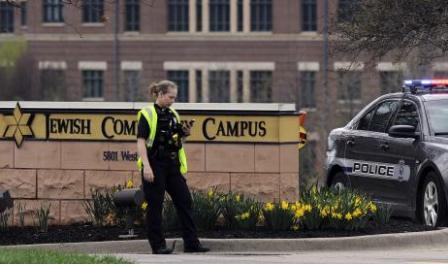
The past week began with the neo-Nazi shooting of the Jewish Community center in Kansas. While this was wrong, a key point is how crime is covered by the U.S. media and that is evident in coverage when leftists commit crimes as the article showed here and here.

Wednesday, April 16, 2014

Jewish Center Shooting is Aberration From Real Threat to Jews, Christians, US: Islam

A very interesting post from www.debbieschlussel.com about a shooting in Kansas. This follows this post about a shooting in about a terrorist who attempted to use drones. This follows this article about American energy independence and preventing money from going to hostile countries. For more about what you can do to get more involved click here and you can read two very interesting books HERE. You can follow me at blogspot here and at twitter here https://twitter.com/brianleesblog. Please consider following both in case one goes down!


Jewish Center Shooting is Aberration From Real Threat to Jews, Christians, US: Islam


By Debbie Schlussel
Yes, yesterday’s hate crime shooting at the Overland Park, Kansas Jewish Community Center and a nearby Jewish senior citizens home was committed by a White supremacist/neo-Nazi and not a Muslim. But it is an aberration. The real threat facing Jews worldwide and here in America is Islam, not a tiny group on the fringe. Although I’ve gotten threatening hate mail from neo-Nazis in America, I’ve gotten death threats–many of them–from Muslims.
jewishcommunitycenterkansas

islamiccrescent

Despite the Non-Muslim Identity of Yesterday’s JCC Shooter, the Real Threat to Us All is Islam, Jihadists
Organized Muslim groups around America, including CAIR, the unindicted co-conspirator in HAMAS terrorism, condemned the shooting (in which all three dead victims were Christian, by the way). But all of these groups openly support HAMAS, Hezbollah, Islamic Jihad, and others which on a daily basis shoot up, bomb, and otherwise murder Jews in ways similar to and/or far more bloody than yesterday’s attack. And they are not on the fringe. This is what the mainstream of 1.8 billion Muslims worldwide, including those in America, believe. This is what they support. And HAMAS CAIR not only won’t condemn it, the group raised money for HAMAS terrorism against Jews, as confirmed in the Holy Land Foundation trial.
There is no difference for Muslims in murdering Jews in America versus murdering Jews in Israel, Buenos Aires, Bulgaria, or elsewhere–all places where Jews were deliberately murdered in cold blood by the groups that CAIR and the other Arab and Muslim groups in America support. None of these groups will condemn those murders. And so it is phony and laughable that they condemn similar deliberate killings here. There are no borders in the Jew-hatred and massacres of Jews for these groups, not even the borders of America. Perhaps you’ve forgotten the shootings at the Jewish Community Center in Seattle in 2006 by a jihadist Muslim, Naveed Afzal Haq. He shouted, “I’m a Muslim American. I’m angry at Israel!” Then he shot six women, one of them fatally. And none of us would have been surprised at all had a Muslim been the shooter yesterday at the Kansas City area Jewish Community Center.


Muslims like Haq are growing to a critical mass in America. Klansman like Frazier Glenn Miller a/k/a Frazier Glenn Cross, the 73-year-old man who perpetrated yesterday’s attack are rare. Their numbers are shrinking, and even the Klan condemned the attack, which is noteworthy, since CAIR’s condemnation rings as true as that of the Klan condemnation: not very sincere, mere lip service.
In any event, there is a reason anti-Semitic acts against Jews in America are on the rise. Muslims all over the world are attacking Jews, and they’ve created this atmosphere where it is okay, including here on American soil. As I’ve noted, there are no real borders in Islam, and the groups that CAIR openly supports and refuses to condemn, attack Jews here. In 1997, Gazi Ibrahim Abu Mezer, who was paroled inside the U.S. border by the INS because the agency ran out of detention space, planned attacks on Jews in New York’s subway system. He nearly carried the attacks out but for the last minute reports to police by his roommate.
HAMAS CAIR never condemned and won’t condemn the planned attacks by Abu Mezer. How are those planned attacks different from those carried out yesterday by the 73-year-old Klansman? Not different at all. And yet CAIR only condemns one and in reality condemns neither.
Make no mistake. The real threat to Jews–and Christians–and anyone else in America who loves life and wants to live it out in peace, isn’t the fringe of the Klan. It’s Muslims and Islam.
Admit it. Face it. Deal with it.


Wednesday, March 26, 2014

Alice in Arabia: ABC Finally Pledges to Show Muslim Threat in TV Show; HAMAS Co-Conspirator Upset

A very interesting post from www.debbieschlussel.com about a U.S. TV show that got canceled. This follows this post about a U.S. magazine pointing out the child brides of Islam. This follows this post about a Muslim in the U.S. House of Representatives addressing an anti-American group. This follows this article about American energy independence and preventing money from going to hostile countries. For more about what you can do to get more involved click here and you can read two very interesting books HERE. You can follow me at blogspot here and at twitter here https://twitter.com/brianleesblog. Please consider following both in case one goes down!


Alice in Arabia: ABC Finally Pledges to Show Muslim Threat in TV Show; HAMAS Co-Conspirator Upset


By Debbie Schlussel
**** SCROLL DOWN FOR UPDATE ****
Is ABC finally seeing the light on the Islamic threat to the West? Probably not, but in a “pigs fly” departure from its usual politically correct programming, the network’s ABC Family channel on cable bought the rights to develop the drama, “Alice in Arabia,” for possible addition to its schedule, next season. Since it apparently shows a true depiction of Islam and what it does to Westerners, the unindicted HAMAS co-conspirator CAIR is up in arms, as is the pro-Hezbollah/HAMAS ADC. Given their whines, don’t hold your breath for the show to ever make it to the air. And, if it does, the truth will be whitewashed and the show entirely changed.
abcfamilyislamiccrescent

brookeeikmeier

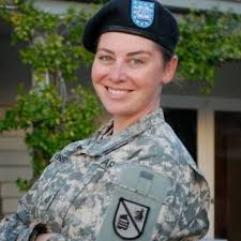
Hooah! US Army NSA Middle East Specialist Brooke Eikmeier, Creator of “Alice in Arabia”
The theme of the show is that Alice, a kidnapped American, is stuck in Saudi Arabia, where her Muslim family members live, and she’s trying to escape. ‘Cuz, hey, that would never ever happen, right? I mean, Muslims have never ever ever ever kidnapped their American kids and held them in captivity in the Middle East. And we can’t have truthful depictions like that reaching the eyes of stupid Americans who normally watch “Pretty Little Liars.”
ABC Family has added three drama pilots to its development slate. . . . Here’s a look at the three dramas:
Alice in Arabia is a high-stakes drama about a rebellious American teenage girl who, after tragedy befalls her parents, is unknowingly kidnapped by her extended family, who are Saudi Arabian.


Alice finds herself a stranger in a new world but is intrigued by its offerings and people, whom she finds surprisingly diverse in their views on the world and her situation. Now a virtual prisoner in her grandfather’s royal compound, Alice must count on her independent spirit and wit to find a way to return home while surviving life behind the veil. The pilot was written by Brooke Eikmeier, who previously served in the U.S. Army as a cryptologic linguist in the Arabic language, trained to support NSA missions in the Middle East. She left service in September 2013 as a rank E-4 specialist.
Wow, that sounds totally made up. That could never happen in real life. Just ask Betty Mahmoody and the tens of thousands of other American mothers who were stupid enough to marry and/or have children with Muslims who kidnapped them back to the “homeland,” too.
And what on earth would an infidel U.S. Army cryptologic linguist in Arabic, who worked for the NSA in the Middle East, actually know about Arabs, Muslims, or the Middle East?
We all know that in the real world, Muslims never kidnap their children, never treat women like dirt, never engage in terrorist acts, and are fine, upstanding cultured, civilized individuals, whose habits and mores are far more advanced and modern than those of the rest of us.
The only terrorists and kidnappers are Russians, Christians, Jews, Zoroastrians, Wiccans, and lacto-ovo lesbian astronauts on “Dancing With the Stars.”
Yeah, that’s the ticket. Or, at least it will be, as long as HAMAS CAIR–which even the Obama Administration Justice Department officials said is a conspirator in HAMAS terrorism–whines the loudest and gets dhimmi dhummi Hollywood executives to bow down to allah.
So, how long ’til ABC Family either shelves “Alice in Arabia” or revamps it entirely to show us what fabulous, peaceful, contemporary people Muslims are?
3-2-1 . . .
**** UPDATE: The thing about this show that does, indeed, bother me is the part where kidnapped Alice of Arabia find the people of Saudia Arabia “surprisingly diverse in their views on the world and her situation.” That’s where this show will be “revamped” to reflect HAMASCAIR’s demands.
Um, there ain’t no diversity there . . . unless you count the varying ideas they have of ways to torture and murder Americans, Jews, Christians, and other infidels. They are pretty much monolithic there in terms of the most important thing: THEY. HATE. US. It’s Islam, stupid. It ain’t diverse.

Wednesday, March 12, 2014

Rep. Keith Ellison addresses chapter of Hamas-linked CAIR

A very interesting post from www.jihadwatch.org about a Muslim in the U.S. House of Representatives addressing an anti-American group. This follows this post about Benjamin Netanyahu and Barack Obama. This follows this post about Katy Perry's video referencing Islam. This follows this article about American energy independence and preventing money from going to hostile countries. For more about what you can do to get more involved click here and you can read two very interesting books HERE. You can follow me at blogspot here and at twitter here https://twitter.com/brianleesblog. Please consider following both in case one goes down!


Rep. Keith Ellison addresses chapter of Hamas-linked CAIR

By            in CAIR with 141 Comments
EllisonCAIRThis is not the first time: Hamas-linked CAIR raised large amounts of for Ellison’s first campaign, and he has spoken at numerous CAIR events.
CAIR is an unindicted co-conspirator in a Hamas terror funding case — so named by the Justice Department. CAIR operatives have repeatedly refused to denounce Hamas and Hizballah as terrorist groups. Several former CAIR officials have been convicted of various crimes related to jihad terror. CAIR’s cofounder and longtime Board chairman (Omar Ahmad), as well as its chief spokesman (Ibrahim Hooper), have made Islamic supremacist statements. Its California chapter distributed the poster above telling Muslims not to talk to the FBI. CAIR has opposed every anti-terror measure that has ever been proposed or implemented.
But all that is apparently fine with Ellison; in fact, to bring it up would be “Islamophobic.” And no one will care about this. But imagine if Ellison were not a Muslim, but a Christian, and had addressed a conference of, say, the American Freedom Defense Initiative. Do you think there would be a furor in the mainstream media, with calls for Ellison’s resignation? So do I. And yet AFDI has no connection to any terror groups. CAIR has plenty. And the world is upside down indeed.


Wednesday, February 12, 2014

Egypt: U.S. Embassy official in contact with Muslim Brotherhood arrested

A very interesting post from www.jihadwatch.org about the U.S. embassy in Egypt. This follows this post about the recent massacre in China. This follows this article about American energy independence and preventing money from going to hostile countries. For more about what you can do to get more involved click here and you can read two very interesting books HERE.


Egypt: U.S. Embassy official in contact with Muslim Brotherhood arrested


1920121495653
Barack Obama has been an indefatigable and unstinting supporter of the Muslim Brotherhood in Egypt, as well as of its proxies in the U.S. Thus it is not surprising that U.S. Embassy employees in Cairo would be Brotherhood allies as well. Obama was the target of vociferous criticism during the anti-Brotherhood demonstrations last summer for his uncritical support of the Brotherhood.
“US Embassy confirms one of its local employees detained,” by Rabab Fathy for Youm7 via the Cairo Post, February 11 (thanks to Joyce):
CAIRO: National Security arrested a local employee on Jan. 25 who works for the U.S. embassy in Cairo, the embassy confirmed Tuesday.
“We confirm that one of our local employees was arrested on Jan. 25. According to our information, there are no charges against him so far,” said Mofid al-Deek, Media Attaché and the spokesperson of the U.S. embassy in Cairo.
Deek said the embassy is communicating with the Egyptian government to understand the reason for the employee’s detention.
A security source reported National Security arrested Ahmed A., a U.S embassy employee in charge of the political Islam file. The source added that the employee was in constant contact with Khairat el-Shater, First Deputy of the General Guide of the Muslim Brotherhood, when the group ruled the country.
The suspect was arrested while participating with others in marches and riots in Giza Governorate. He is being investigated by the National Security Agency to determine the dimensions of his activity.

Wednesday, January 22, 2014

Current Events & Trends: The global war against Christians

An interesting article from http://www.ucg.org/ about persecution of Christians around the world. This follows this post about a gay on straight hate crime. For a free magazine subscription or to get the book shown for free click HERE! or call 1-888-886- 8632.


Current Events & Trends: The global war against Christians


John Allen Jr. recently authored a book titled The Global War on Christians. Subsequently he wrote an article on the topic for The Spectator in which he began with scenarios of correspondents reporting on significant events without pointing out their significance.

He stated: "Most people would say that journalists [in such cases] had failed to provide the proper context to understand the news. Yet that's routinely what media outlets do when it comes to outbreaks of anti-Christian persecution around the world, which is why the global war on Christians remains the greatest story never told of the early 21st century" (Oct. 5, 2013).
During this relatively new century, appalling examples of persecution, murder and forced exile have happened in Egypt, Pakistan, Syria, Iraq, Nigeria, North Korea and even India. Yet even these terrible occurrences should be seen in a much wider context.
Allen continues in The Spectator: "According to the International Society for Human Rights, a secular observatory based in Frankfurt, Germany, 80 per cent of all acts of religious discrimination in the world today are directed at Christians. Statistically speaking, that makes Christians by far the most persecuted religious body on the planet."
Persecution against Christians in countries like Britain and America remains much less dramatic than murder, brutal deprivation and the voluntary or involuntary exile of refugees. But it is still there. For instance, a headline in Britain's Mail Online reads "Christians Lose Out to Atheists for Senior Jobs as Religious People [primarily Christians] Are 'Held Back From Top Positions'" (Aug. 3, 2013).
Further, a blurb beneath the headline of a Telegraph article stated that "Britain's most senior policeman has been urged to issue guidelines to his officers to protect Christians' rights to free speech, amid claims they are suffering intimidation and discrimination from police" ("Christians Demand Free Speech Guidance From Scotland Yard Chief," July 27, 2013).
And then there is the actual brutality and slaughter that Christians face in other parts of the world. Allen stated: "In effect, the world is witnessing the rise of an entire new generation of Christian martyrs. The carnage is occurring on such a vast scale that it represents not only the most dramatic Christian story of our time, but arguably the premier human rights challenge of this era as well."
Paul and the original apostles of Christ were brutally martyred except possibly John, who was exiled to the island of Patmos, where he wrote the book of Revelation. The Bible clearly indicates that persecution and martyrdom will increase and intensify at the time of the end. (Sources: The Spectator, The Telegraph, Mail Online.)