Showing posts with label South Africa. Show all posts

Thursday, June 23, 2016

First the End of an Empire - Now, the End of Britain?

An interesting article from http://www.ucg.org/ about Great Britain. This follows this post about London's Muslim terror. For a free magazine subscription or to get the books recommended for free click HERE! or call 1-888-886- 8632. 

I can still remember when the news came over the radio. It was a Sunday morning in late January 1965. Sir Winston Churchill had died.

His funeral was the following Saturday. He was only the second commoner in the history of Great Britain to be given a state funeral, normally reserved for royalty. The first had been for the duke of Wellington, the military genius who thwarted Napoleon’s plans for world conquest at the Battle of Waterloo in 1815, thereby ushering in a century of Pax Britannica. Sir Winston had defeated an even greater evil, Hitler’s Third Reich. He didn’t do it single-handedly, of course, but without him the outcome could have been entirely different.

I also well remember the silence after the funeral. It was the only time I can remember all the television and radio stations closing down for a period of silence in honor of the great old man to whom Britons owed so much.

People were truly thankful that Winston Churchill had led them to victory in World War II—at a time when everybody else seemed inclined to compromise with Nazi Germany.

Churchill rejected the honor of a dukedom and turned down the opportunity to be buried in Westminster Abbey along with many other famous Britons.

Churchill’s funeral was, for Britain, the end of an age.

Ironically, his death came at the end of a 20-year period that had seen the nation reject just about everything he stood for.

Postwar Britain

It had started 20 years earlier, shortly after VE Day. With the European war ended, Churchill called an election. Almost everyone thought his Conservative Party would win. People the world over were shocked when the results came in: The Labour (socialist) Party won by a landslide. Although grateful for Churchill’s role as a wartime leader, people had decided they wanted change; they longed for a different world. They didn’t want their young men fighting wars in far-off places they had never heard of, nor did they want them coming home to low-paying jobs or unemployment.

After being universally acclaimed as the British lion that roared in defiance of Hitler and the man who had led Great Britain to victory, Churchill appeared to be headed for victory. But, seemingly, it was time for Britain’s rapid decline to begin. The prophet Daniel reminds us that it is God who “removes kings and raises up kings” (Daniel 2:21). The same God who had given Britain its victory took away the empire He had given to them, the multitude of nations promised to Joseph’s son Ephraim (Genesis 48:19).
The next few years saw massive changes, including the nationalization of key industries (steel, railways, coal mines) and the institution of a government-run medical system. To concentrate on these radical reforms, the country turned its back on an empire that had been built up over the course of 400 years. Britain granted India and Pakistan independence in 1947. By the time of Churchill’s death, all the major colonies were gone. Britain had, to quote American statesman Adlai Stevenson, “lost an empire and not yet found a role.”

It might have been different if Churchill had won that pivotal election. He was an empire loyalist. His love of history taught him that Britain’s security lay with the multitude of nations it had built up gradually since the time of Queen Elizabeth I. Later, after he won the 1951 election as prime minister at the time of the accession of Queen Elizabeth II, he talked of a “new Elizabethan age” that might surpass the first in greatness. But it was not to be.

Britain had embarked on a new course that continues to this day. With the British Empire gone, it was Britain’s turn to be dismantled.

The abolition of Britain

A thought-provoking book on this subject by British writer Peter Hitchens, The Abolition of Britain, contrasts the country at the time of Churchill’s funeral with the nation 32 years later at the funeral of Princess Diana. By his own account, it is as if he is looking at two different countries.

Outside the British Isles many people get confused at exactly what constitutes Great Britain and where England, Scotland, Wales and Ireland fit into the equation. At one time all four nations were separate entities. Their eventual union came about over a long period.

England conquered Wales during the time of Edward I in the 13th century. Edward proclaimed his son the prince of Wales, emphasizing that Wales is a separate principality, but was to be administered as a part of England. For 700 years, the heirs to the British throne have been given the title “prince of Wales.”
Scotland and England (with Wales) united later. When Elizabeth I died in 1603, she left no heirs. Historically, Scotland had often allied itself with France against England. It was time for the two countries to unite so this would not happen again. Upon her death her cousin’s son, James VI of Scotland, became King James I of England. James gave the country its new name, Great Britain (and was instrumental in giving the world the King James Version of the Bible). The new flag was nicknamed the Union Jack after him.

The two kingdoms were still administered separately, but they had the same monarch. A century later (1707) they fully united under one parliament, giving Scots a share in the benefits of the growing empire. Another century later the Irish parliament was abolished, and the United Kingdom of Great Britain and Ireland formed (1801).

Reversal of direction

The dismantling of the kingdom actually began 80 years ago when most of Ireland was given its independence as the Irish Free State, theoretically still subject to the crown. In 1949 the Free State became the Irish Republic, severing its tie with the United Kingdom.

The six counties of Northern Ireland that have remained within the United Kingdom have been strife-torn for more than three decades. Although in recent years strenuous efforts have been made to negotiate a permanent peace, the problem remains virtually insoluble. At some point it is likely that another “reform” government in London will force a change on the province, as British governments since Churchill’s time have eventually given in to terrorists in every disputed territory.
With increasing support for Scottish and Welsh nationalists, the present British government, led by Prime Minister Tony Blair, came to power in 1997 promising “devolution.” The two ancient Celtic peoples would acquire their own parliaments and be responsible for their own internal affairs. London would still conduct foreign policy. Both Scotland and Wales now have their own assemblies with increased calls for full independence.

Some of the English, meanwhile, are resentful of the fact that they do not have their own parliament. Scots, Welsh and Northern Irish members still sit in the House of Commons in London and can vote on legislation that affects the English people, while the English people do not have a say in the internal affairs of the Celtic nations around them.
Meanwhile, the European Union (EU) has been fulfilling its dream of an ever-closer union. The Irish Republic has benefited from its membership in the EU, ironically partly subsidized through Brussels by U.K. taxpayers. This has reduced some fears of Irish unity in the North. The South had always been poor, the North far wealthier, so even Catholics had been somewhat apprehensive of unity with the South. Not any more.

Polls show the English to be increasingly weary of the EU. Scottish nationalists, however, see the EU as increasing the likelihood of Scottish independence. No longer would the five million people of an independent Scotland be unable to make it economically on their own. Within the EU they would prosper, just like Ireland and other small countries. Similar feelings are evident in Wales.

In coming years the English could find themselves outside of a politically unified EU, with the Scots, Welsh and Irish inside. Queen Elizabeth I’s worst nightmare would have come true, four centuries later, of an England surrounded by hostile nations in alliance with the continental powers.

Historians such as Norman Davies think that none of this matters. In his recent book The Isles he reminds readers that England at one time was physically a part of the European landmass. At other times it was a part of Europe. It was the westernmost province of the Roman Empire from A.D. 43 to 410, a span of almost four centuries. The English church was a part of the Roman church for almost 1,000 years. The Plantagenets in the Middle Ages ruled England as well as parts of France, spending most of their time in the bigger and warmer part of their territories.

But Paul Johnson, another British historian, sounded a warning in the pivotal year 1972 (between the British Parliament’s vote to join Europe and Britain’s accession the next January): “Disunity has always proved fatal to the offshore islanders.” (The Offshore Islanders was the title of his book dealing with Britain’s relationship with Europe throughout history.) In other words, the disuniting of the United Kingdom has always proved fatal, enabling hostile powers to invade the country. Why should it be different this time?

Biblical wisdom holds true: “Every kingdom divided against itself is brought to desolation, and every city or house divided against itself will not stand” (Matthew 12:25).

New generation, new outlook

A new generation is in power now.

Mr. Blair, British prime minister, prefers to identify with a new age. He is the first British prime minister who does not remember Winston Churchill. In a speech just before the election that brought him to power, he described himself this way: “I am a modern man. I am a part of the rock and roll generation—the Beatles, colour TV, that’s the generation I come from” (The Abolition of Britain, paperback edition, p. xix).
The current generation is a victim of revisionist history. It’s a history with an emphasis on multiculturalism, which downplays Britain’s role in frequently leading its empire into conflict against despotic European powers that wanted to conquer the world. At the same time, the revised version of history emphasizes the mistakes Britain made, negatively presenting the empire as a shameful era.

It’s also a generation that, as in the United States and other Western countries, has grown up with an emphasis on material values, with little concept of morality and often lacking any knowledge of God.

Writing of “the end of Britain” in Newsweek magazine (July 10, 2000), columnist George Will reminded readers of the late English writer George Orwell’s dismissive comment on English intellectuals: “England is perhaps the only great country whose intellectuals are ashamed of their nationality.” (Orwell died in 1950 before this disease spread to the United States.)

Mr. Will added, “Many Europhiles are English intellectuals of the sort George Orwell despised because they despised their nation.” It’s hard to understand the hatred so many people have for the old values Sir Winston Churchill symbolized. “God, king and country” have no place in the minds of many, including many English intellectuals.

Does this matter to Americans and the rest of the world?

Let George Will have the final say: “What is vanishing, and not slowly, is the nation to which the United States traces much of its political and cultural DNA. Unless this disappearance is resisted, and reversed, soon all that will linger… will be a mocking memory of the nationhood that was the political incarnation of a people who (as has been said), relative to their numbers, contributed more to civilization than any other people since the ancient Greeks and Romans” (ibid.).

Recommended reading

What’s behind the remarkably rapid dissolution of the British Empire? How—and why—did the world’s greatest empire disappear in only a few short decades? Does Bible prophecy give us any indication?

Strange as it may sound, this remarkable turnaround was written well before it happened—in the pages of the Bible almost 3,500 years ago.

The publishers of Virtual Christian Magazine have produced an astounding, eye-opening booklet, The United States and Britain in Bible Prophecy. You’ll be amazed to learn the truth about where these nations appear in Bible prophecy—and what Scripture says will happen to them in the end time.
 

You might also be interested in...

Thursday, July 30, 2015

Zimbabwe's Empty Streets

An interesting article from http://www.ucg.org/ aabout the economy of Zimbabwe. This follows this post about Churchill's leadership. This follows this post about Japan and North Korea. For a free magazine subscription or to get the books recommended for free click HERE! or call 1-888-886- 8632.
Please follow me here for continued posts.


Zimbabwe's Empty Streets

Login or Create an Account

With a UCG.org account you will be able to save items to read and study later!
Sign In | Sign Up
×
Zimbabwe was once the economic powerhouse and breadbasket of southern Africa. Its rich lands allowed the nation to be self sufficient in virtually everything during the days when it was the pariah among nations. Today its economy is in shambles, inflation is in triple digits and starvation and AIDS has sapped the strength and will of its people.

In 2000 I spent several days in the country visiting with some of the people and seeing the remains of a once vital country. There was still some hope that life would get better, but in the four years since more have fled and, worse yet, it seems the will to rise up and push for reforms has all but gone. This article in the Christian Science Monitor has one paragraph that explains why the citizens have not yet appeared in the streets of Harare or Bulawayo…
Nor does it have a figure like Archbishop Desmond Tutu, a unifying moral force in the anti-apartheid struggle. Zimbabwe's churches are divided, as is civil society and the political opposition.
New elections are coming on March 31. Will another sham election arouse the indignation of capable people? We'll see.

http://www.ucg.org/search?query=zimbabwe

Friday, August 22, 2014

No Facts, No Peace In Ferguson: “You Don’t Want To End Up Looking Like Rich Lowry…”

An interesting article from www.Vdare.com about Ferguson, Missouri. This follows this post about the Central Park Five
I am leaving TWITTER SOON. Please continue to follow me here.


No Facts, No Peace In Ferguson: “You Don’t Want To End Up Looking Like Rich Lowry…”

Ann CoulterIt’s important to remember that, in police shooting cases like the one in Ferguson, Missouri, the initial facts are often wrong. You don’t want to end up looking like Rich Lowry, National Review editor, whose March 23, 2012, column on the Trayvon Martin shooting was titled, “Al Sharpton is Right.”
Early accounts are especially unreliable when reporters think they have a white racism story. Stirring up racial hatred is how journalists make up for sending their own kids to lily-white private schools.
As detailed in my book Mugged: Racial Demagoguery from the Seventies to Obama, the old media’s standard for any police shooting of a black person is: “Racist until proved innocent.” We got three-alarm racism stories for the shootings of Jose (Kiko) Garcia, Eleanor Bumpurs, Michael Stewart and Edmund Perry.
And then it turned out Garcia was a drugged-up coke dealer who pulled a gun on the cop, Bumpurs was a psychotic who came at the cops with a machete, Stewart fought the cops so violently he gave himself a heart attack, and Perry mugged an undercover cop.
Witness statements aren’t always 100 percent accurate. In Garcia’s case, innumerable neighbors gave the media florid accounts of Officer Michael O’Keefe beating and kicking Garcia, before repeatedly shooting the unarmed man in the back as he lay facedown on the floor. The Garcia family lawyer assured The New York Times that “this kid never was arrested; he wasn’t a drug dealer.”
It later turned out that Garcia was a convicted felon.
He had a gun the night of the shooting.
The autopsy proved he was not shot in the back, nor was he beaten.
The only eyewitnesses against Officer O’Keefe were drug dealers—for whom Garcia worked—who could not possibly have seen anything from their vantage point, as confirmed with a laser pointer used by the Garcia family lawyer.
The first headlines in the Edmund Perry case were:
The New York Post: “COP KILLS HARLEM HONOR STUDENT”
The New York Times: “HONOR STUDENT, 17, IS KILLED BY POLICEMAN ON WEST SIDE.”
The Los Angeles Times: “SAYS VICTIM ATTACKED HIM, MOTHER CHARGES RACISM: OFFICER KILLS TOP STUDENT, SETS OFF FUROR.”
Two dozen witnesses—many of them black—established that Perry had mugged the cop and was stomping on him when the officer shot him. Those witnesses were the heroes, not elite news anchors, who leave their doorman buildings to rail against “racism” from well-guarded studios or brief reporting forays to black neighborhoods.
Follow-up stories admitting that some some sensational racist crime turned out to be false are never a high priority with the press.
After all the media’s hysteria about the Kiko Garcia shooting (New York Newsday: “COP SHOOTING VICTIM: HE WAS SHOT IN THE BACK”) the story just faded away.
That incident provoked riots that resulted in one person dead, 90 injured, 53 policemen hospitalized, 121 vehicles torched, 11 police cars damaged, and dozens of businesses burned or looted. But when the early accounts turned out to be lies, the media whispered the ending and tiptoed out of the room, as if reading a bedtime story to a child.
The old media just love creating huge racist hoaxes—which has done so much to improve the lives of ordinary black people!
Luckily for America, especially African-Americans, the advent of alternative media has reduced the Non-Fox Media’s ability to stir up urban riots. Today, it’s possible to get information that never would have seen the light of day in the 1980s.
In less than two weeks, the original version of the racist police execution of Michael Brown—or “Big Mike”—has already undergone major revisions. We were told:
  • Big Mike was the sweetest kid, he’d never hurt a flea.
Then we got the store surveillance video of him robbing a liquor store and manhandling the clerk. Perhaps Big Mike committed his first-ever crime 11 minutes before his encounter with Officer Darren Wilson, but it doesn’t look good.
  • He was shot in the back.
At least two autopsies now establish Big Mike was not shot in the back.
  • He didn’t touch the police officer.
This week, we saw the X-ray of Officer Wilson’s fractured eye socket.
  • He was holding his arms up surrendering when Officer Wilson shot him.
That’s at least in doubt now that a video of a Big Mike supporter has emerged, capturing the private conversation of an eyewitness confirming the officer’s claim that Big Mike was running at him.
On the tape, one black man tells another:
“Him and the police was both in the truck, then he ran—the police got out and ran after him … Then the next thing I know he comes back toward the truck ’cause—the police had his gun drawn already on him. The police kept dumping on him, and I’m thinking that the police missing … but he kept coming toward him.”
Some would say a private conversation, unintentionally recorded immediately after an event, is more credible than alleged eyewitness accounts by people who know they’re talking to the press.
But if MSNBC can spend six months on a bridge closure in Fort Lee, New Jersey, they can probably do at least a year on a police shooting in Ferguson, Missouri.
Ann Coulter is the legal correspondent for Human Events and writes a popular syndicated column for Universal Press Syndicate. She is the author of TEN New York Times bestsellers—collect them here.
Her most recent book is Never Trust a Liberal Over Three-Especially a Republican.

Tuesday, December 10, 2013

World News and Trends: Rape crisis in South Africa

An interesting article from http://www.ucg.org/ about the rape crisis in post-apartheid South Africa. This follows this post about extraterrestrials.  This follows this post about the commercialization of Thanksgiving and Christmas. For a free magazine subscription or to get the book shown for free click HERE! or call 1-888-886- 8632.

World News and Trends: Rape crisis in South Africa

Printer-friendly version


Reports from Johannesburg say a woman is raped every 17 to 28 seconds in South Africa. According to Interpol, these statistics make South Africa the rape capital of the world.

Said Time magazine: "In 1998 the official South African rate was 104.1 rapes per 100,000 people; in the U.S., the rate was 34.4 per 100,000." However, rape researchers say only one in 35 rapes in South Africa is reported, which if accurate renders the situation far more critical than the official figures indicate.
David Jones, reporting from Johannesburg, closes his Daily Mail feature article with good advice for the government: "For the sake of every South African woman—whatever her colour—the leaders of this nation, in many ways so potent with promise, must address their growing humanitarian scandal with considerable urgency."
The Bible takes an even more serious view. "... For just as when a man rises against his neighbor and kills him, even so is this matter" (Deuteronomy 22:26). The context makes it clear that the subject under discussion is rape (verses 25, 27). To God, rape is as serious a crime as murder because it destroys something that can never be replaced. (Sources: The Daily Mail [London], Time .)

Nelson Mandela Said WHAT?!

A timely post from www.debbieschlussel.com about Nelsen Mandela's views of the U.S. This follows this post about the ACLU trampling religious practices.    In the meantime, you can get more involved if you like here and read an interesting book HERE.

Nelson Mandela Said WHAT?!


By Debbie Schlussel
If there is a country that has committed unspeakable atrocities in the world, it is the United States of America. They don’t care for human beings.
If you look at those matters, you will come to the conclusion that the attitude of the United States of America is a threat to world peace.
–Nelson Mandela
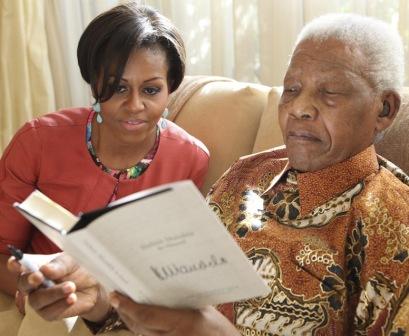
nelsonmichelleobama

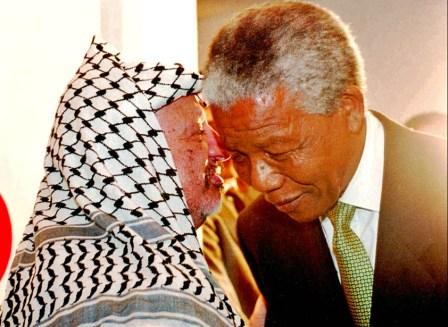
mandelaarafat15

I already told you what a scumbag, anti-White racist, Islamic terrorist lovin’, Jew-hating creature Nelson Mandela was. But to further your education, for all the ignorami gushing over Nelson Mandela–including President George W. Bush (stick with painting, dude), Senator Ted Cruz, Sean Hannity, and his coming replacement Michael Savage (who, last night, called Mandela a “peacemaker” on his nationally syndicated radio show)–apparently they simply cannot do the tiniest bit of homework, which includes checking out this famous quote from Mandela about America (the country without which he’d never have been freed)–yes it bears repeating:
“If there is a country that has committed unspeakable atrocities in the world, it is the United States of America. They don’t care for human beings.”
And here are some other Mandela “gems”:

* There is no doubt that the United States now feels that they are the only superpower in the world and they can do what they like.
* We know too well that our freedom is incomplete without the freedom of the Palestinians.
That one’s interesting since Mandela said this against Israel, but the Palestinians–the few of them who are citizens of Israel–are actually more free under Israel than any other country. They do not have freedom in Gaza, the Palestinian Authority, Jordan, Syria, Lebanon, Egypt, Kuwait, and everywhere else where they live in significant numbers.
* If the United States of America or Britain is having elections, they don’t ask for observers from Africa or from Asia. But when we have elections, they want observers.
Hmmm . . . gee, I wonder why they need “observers” for South African elections. I mean, nothing is ever stolen in that country based on race, right? Like nationalized White farmland and so on.
And here’s a tip: we do want observers at certain election polling places in America because voters are harassed and violently threatened by Mandela’s fans in the New Black Panther Party here. Sadly, Mandela’s superfan, Barack Hussein Obama, refuses to prosecute them.

Monday, December 9, 2013

Unfortunately, Nelson Mandela Signed Law Legalizing Unlimited Abortions

An interesting story from www.lifenews.com  about Nelson Mandela's advancing abortion in South Africa. This follows this post about C.S. Lewis’ views on abortion. For more that you can do to get involved click HERE and you can also get two very interesting books HERE.

Unfortunately, Nelson Mandela Signed Law Legalizing Unlimited Abortions The world is paying its respects to civil rights leader and former South African president Nelson Mandela today, after learning that he passed away at the age of 95. While most people respect the civil rights and racial reconciliation work he did, some have questioned where Mandela stood on abortion.
Unfortunately, Mandela signed into law a bill legalizing abortion on demand.

http://www.lifenews.com/2013/12/06/unfortunately-nelson-mandela-signed-law-legalizing-unlimited-abortions/

Friday, December 6, 2013

How not to talk about Brazilian soccer beheadings

A timely post about from http://isteve.blogspot.com about beheadings in Brazil in the run-up to the World Cup. This follows this post about the GOP & the nuclear option.  In the meantime, you can get more involved if you like here and read an interesting book HERE.


Grantland: How not to talk about Brazilian soccer beheadings
In 1978, my father and I went to a soccer game at Rio de Janeiro's Maracana Stadium, which I knew about from the Guinness Book of World Records because 199,854 paying spectators had crowded in to watch Brazil lose the 1950 World Cup final match to Uruguay. (Maracana has been upgraded at vast expense to host the World Cup final next year.)

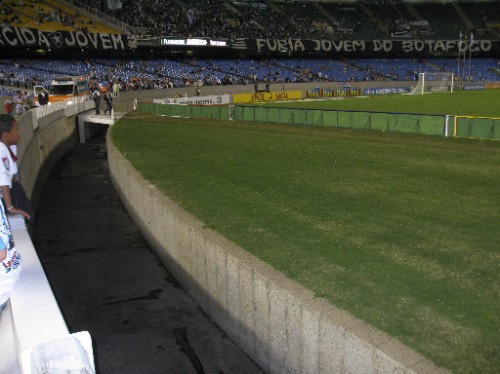
The Maracana Moat, RIP
Neither my father nor I had paid much attention to the threat of crime. We'd been traipsing all over Rio that day, walking through a favela in the early morning, taking city buses all over. When we wound up in the Maracana neighborhood, I suggested seeing if there was a soccer game at the famous stadium. Sure enough, Santos (Pele's old team) was visiting from Sao Paulo and their late afternoon game was just about to start. We paid $0.55 each, which got us below-field standing room next to the deep moat that discouraged spectators from expressing their disenchantment by storming the field and lynching the ref.

The sun went down while we were watching the game, so as a rare gesture toward prudence, we decided to take a cab back to our hotel at the beach. But, when we came out we found that there were no cabs around. Cabbies weren't crazy enough to go to the Maracana neighborhood after dark in 1978.

I was starting to get a little concerned, when a four-foot tall bodybuilder walked up and told us that American tourists shouldn't be wandering around here after dark. The short but extremely muscular Brazilian said he was a tour guide for a large group of Germans and we should ride back to Copacabana Beach on his bus. So, we got on with all his German clients.

On the bus ride, our rescuer asked where we were from and when we said Los Angeles, he said, "You'll probably think me a freak, but I've always wanted to visit Muscle Beach in Venice." This was 1978 when the ideal had been for several years to look like Bruce Dern. I was going to tell him that my impression was that in L.A. weightlifting was becoming big, very big, but I never said it -- maybe I got tripped up trying to remember how to pronounce the name of that guy, you know, the one with all the muscles and all the consonants in his name, S, w, z, n, r, etc. -- and ever since, I've felt bad that I couldn't reassure this very nice fellow that he wasn't a weirdo, he was on the cusp of the Next Big Thing.

A lot of things have changed since 1978, and I'm sure that when Maracana hosts the 2014 World Cup final, Steps Will Have Been Taken to make sure that tourists are perfectly safe. But what about all the other cities in Brazil where matches will be held?

But, don't even think about it. Thinking is bad.

ESPN gave sportswriter Bill Simmons his own magazine, Grantland, because Simmons, as one of my commenters once said, is a master at reproducing in text the feel of what a really good discussion about sports with your college buddies is like.  

But, Grantland publishes a lot of non-Simmons articles that sound like they were written by authors whom nobody would want to be buddies with. For example,
A Yellow Card 
As the 2014 World Cup looms, how should we talk about the problems in Brazil? 
By Brian Phillips 

So far in Brazil in 2013, there have been two soccer-related decapitations, which apparently might remind people that Brazil will host the World Cup next year, and the movie City of God was filmed in Rio, and, oh, yeah, there's a lot of crime in Brazil.

But, remember, Noticing Is Bad.
... How do you feel, hearing these stories? I don't mean how do you think you're supposed to feel; I mean how do you feel, in fact? Are you intrigued? Disturbed? Sad? Curious? Titillated, in the way that horrifying real-life stories can sometimes leave you titillated? You don't have to answer. Just think about it. 
Two points make a trend. Here are two gruesome stories about soccer-related beheadings in Brazil. On the surface, they have little in common. One is — best guess — about gangs sending a message. The other is about a local conflict that warped into mass insanity. But, well, 2014 is a World Cup year, and Brazil, you might have heard, will be hosting. The second decapitation story had barely hit the wire before a portion of the Western media lined up the horrors and drew the only logical conclusion: Tourists must be in danger. 
Of course, they couldn't just come out and say so. There's an art to these things. "Beheadings raise concern of violence in Brazil," USA Today announced in a headline.1 CNN declared that "experts say" (they don't quote any) that the concerns thus raised "might make fans think twice about bringing their families to Brazil." Bleacher Report furthered the mystery experts' speculations on the raised concerns, arguing that the violence "may" affect "the type of tourist that decides to come to Brazil to witness football's greatest tournament, with families unlikely to take young children." "How will this affect the World Cup?" was the golden thematic arch bridging countless articles about a story that's only indirectly tied to the World Cup at all, and after reading enough of them, you could almost appreciate the dead-soul directness of this Buzzfeedy link bait–shriek from PolicyMic, posted after the Pio XII decapitation: "This Horrific Video Will Completely Change Your View of the 2014 World Cup in Brazil."2 
This is all, of course, code language, and it's not especially subtle code language. 
It's a code that pops up again and again when a developing or newly industrialized country hosts the World Cup. The code works on three, possibly four, levels, and it makes me want to throw my desk through a brick wall, so I'll try to be as precise as possible about the various sleights of late-colonialist hand I think I can trace here. 
Take the following sentence; it's from USA Today, because of course it is, but it could be from anywhere. It goes: "The news of a second decapitation this year in Brazil has raised questions about whether such heinous crimes may deter foreign visitors considering a trip for next summer's FIFA World Cup." What is this sentence trying to do, apart from draw the brightest, straightest line between "the news of a second decapitation" and "next summer's FIFA World Cup"? Is it really aiming to tell you that Questions have been Raised about World Cup attendance? 
3 Maybe; but I submit that in this instance, the surface level of the code — "questions raised" — is just slippery journalistic-ethics-ese for "Hey, if you go to the World Cup you might get your head chopped off." That's the second level, the primal fear bit. It's not safe down there. Those people are crazy. And note that we've been led to this level by a turn of phrase insinuating the possibility of a World Cup disaster — ostensibly because of attendance problems ("deter foreign visitors"), but what you're actually imagining at this point is a bloodbath ("heinous crimes"). You're being invited to construct a fantasy in which several hundred thousand tourists less well-advised than USA Today readers like you make the trip down to Brazil and are slaughtered in their replica kits. That's the third level. Blood-spattered Wayne Rooney jerseys strewn throughout the streets.4 
And I'm sorry, but that's not the only fantasy you're being invited to construct.
The top level of the code is the one in which you feel yourself to exist within a protective bubble of law and security, outside which all is madness. Here in this Holiday Inn Express in Lincoln, Nebraska, you are safe; in South America, life is cheap. That is not simply a fleeting implication, my friends, that is a media strategy and a worldview, and it is not one in which you are encouraged to regard all your fellow humans as equals. 
Sidebar here: Murders involving decapitation are vanishingly rare in the United States (they are vanishingly rare everywhere), but they happen. In 2012, a New Jersey woman cut off her son's head and put it in the freezer before stabbing herself to death. In 2013, a 49-year-old school nurse was found headless in a South Florida sugar cane field. Two points make a trend. Concerns have been broached about whether Germans will still come to Disney World.

Of course, foreigners interested in visiting America destinations other than Disney World are concerned about crime Here's the Washington Post's summary of the French government's warnings to their nationals about where to avoid in the U.S.: "16 American cities foreign governments warn their citizens about," including this alert for visitors to Washington DC: "Le quartier Anacostia n’est pas recommandable de jour comme de nuit."

Second, two points do suggest which way the probability distribution might be shifted. The fact that this guy can't find two beheadings in the U.S. in this decade that are tied together thematically the way Brazil's soccer decapitations are suggests that decapitations aren't really a Thing in contemporary America, the way beheadings are a Thing are in, say, contemporary Mexico. (Of course, in Brazil, everything is related to soccer.)

The reality of course is that all these lectures about "How to Talk" aren't going to change the fact that, according to Wikipedia's list of the 50 cities in the world with the worst murder rates, Brazil has 13 of them. To put that in perspective, the U.S. holds down four positions in the Top 50, and if I gave you six or seven guesses, you'd probably get all four right: New Orleans, Detroit, St. Louis, and Baltimore. (Talk about stereotypes ...)

Genocidal Racist Nelson Mandela Dead at 95

A timely post from http://nicholasstixuncensored.blogspot.com about Nelson Mandela's damage to South Africa. This follows this post about Pete King's  plastic gun ban that passed the House. This follows this post about the coverage of the "Knockout Game."  In the meantime, you can get more involved if you like here and read an interesting book HERE.

Blogger's NOTE: See also: http://www.debbieschlussel.com/?s=necklacing


Genocidal Racist Nelson Mandela Dead at 95; He Founded Racial Socialist “Democracy” in South Africa, and Inspired Blacks to Murder Whites by the Thousands; His Favorite Phrase was, “Kill the Boer (White)!”


By Nicholas Stix

Nelson Mandela’s legacy is the thousands of South African whites who have been slaughtered since the end of white-run apartheid in ‘south Africa, and its replacement by black-run racial socialism in 1994.

The phrase repeated by pro-white activists is “Close to 70 000 white South Africans have been murdered in racially motivated hate crimes…”

I have no idea how accurate that number is. No one is sure about the immensity of murder in general in South Africa. It used to be ranked as the world’s murder capital, so the government stopped even trying to keep accurate numbers. (Hmmm. That sounds familiar.)

Mandela died of old age, but that’s not the way the MSM and Mandela’s black supremacist comrades and idolators are telling it. According to them, even at 95 years of age, Mandela was still a victim of the white man.

Nelson Mandela, South Africa's beloved first black president and anti-apartheid hero, has died after suffering recurring lung infections that were the legacy of tuberculosis contracted in prison during his long fight against oppression, President Jacob Zuma said in a televised address late Thursday. He was 95.
Apparently, if not for the white man, Mandela would have lived forever! Where can I get me some of that white man’s oppression?!

After stepping down from the presidency in 1999, Mandela, or “Madiba” as he was affectionately known, Madiba being the name of his murderous clan, spent his dotage exhorting young blacks to murder ever more whites.


Old Nelson Mandela leads his young Xhosa admirers in a hearty rendition of a Xhosa song about killing whites.

“We, the members of Mkhonto, have pledged ourselves to kill them—the “ama bhulu” (whites).

Mandela’s Western apologists insist that the phrase “ama bhulu” means “Boers,” rather than “whites,” a distinction utterly lost on Mandela and his young Xhosa admirers. If such sophistry were true, why would Mandela need to play such different tunes, depending on his audience of the moment, speaking of racial “reconciliation” in English before white audiences, and racial murder before blacks in Xhosa?

Funny, that method reminds me of another terrorist leader.

The Mkhonto was (is?) a terrorist unit that Mandela founded before he was imprisoned by the evil, white apartheid regime, and that would murder whites, er, “Boers,” through bombings and such, on Mandela’s orders.

In the wake of Mandela’s death, whites are in more danger than ever, both in terms of a Kristallnacht-style celebration in the short term, and a full-scale holocaust, in the long-term.

For a white to grieve over Mandela’s death, is like a Jew grieving for Hitler.


Nelson Mandela, South

African crusader for

racial equality, dies at

95


Nelson Mandela
Former South African President Nelson Mandela at a funeral north of Johannesburg in 2010, before illness forced him from the world stage. (Siphiwe Sibeko / AFP/Getty Images /June 17, 2010)

Nelson Mandela | 1918-2013

Photos: Nelson Mandela | 1918-2013


Timeline: The life of Nelson Mandela


Timeline: The life of Nelson Mandela

South African liberation icon Nelson Mandela dies at age 95


Video: South African liberation icon Nelson Mandela dies at age 95

Nelson Mandela's life and legacy

Video: Nelson Mandela's life and legacy

By Robyn Dixon and Carol J. Williams
December 5, 2013,1:54 p.m.
Los Angeles Times
JOHANNESBURG, South Africa--Nelson Mandela, South Africa's beloved first black president and anti-apartheid hero, has died after suffering recurring lung infections that were the legacy of tuberculosis contracted in prison during his long fight against oppression, President Jacob Zuma said in a televised address late Thursday. He was 95.
Although out of the limelight in recent years because of the infirmities of age, Mandela, or Madiba, the clan name by which he was affectionately known to many South Africans, remained a revered symbol of the fight he led against the nation's apartheid regime.
Mandela was admitted to a Pretoria hospital in June for the fifth time in two years. Although he was sent home three months later, family members said he had been living in a sterilized bedroom rigged as an intensive care unit with doctors tending to him around the clock.

PHOTOS: Nelson Mandela through the years

Even on what his daughter, Makaziwe, termed his "deathbed," Mandela remained an inspiration.
"He is teaching us lessons; lessons in patience, in love, lessons of tolerance," she told the state-owned television network SABC this week.
Mandela was born July 18, 1918, the son of a tribal chief. He was named Rolihlahla, or "troublemaker" in his Xhosa language. A teacher gave him the name Nelson on his first day of school, but South Africans called him Madiba throughout his life in a sign of affection and respect for his clan.

PHOTOS: Notable deaths of 2013

Mandela had a history of respiratory illness after contracting tuberculosis in 1988 during his 27-year imprisonment for his activities as a member of the then-banned African National Congress liberation movement.
After his 1990 release, he reached out to a frightened white minority and helped guide tense constitutional talks and political reforms. He became president after the 1994 election, succeeding the man who orchestrated his release, President Frederik W. de Klerk, a year after the two men shared the Nobel Peace Prize for shepherding South Africa out of four decades of racial segregation and repression.
Under Mandela's rule, the economy grew, a constitution guaranteeing equality and press freedom took root, and a Truth and Reconciliation Commission shed light on the dark deeds of apartheid. It granted amnesty to both whites and blacks accused of political violence.


[Under Mandela's rule, the economy collapsed, and South Africa went from being a first-world economy and net exporter of grain, to a failed state and a net importer of grain.]

TIMELINE: The life of Nelson Mandela
During his five years as president, Mandela’s courtly demeanor and commitment to consensus governance set him apart on a continent trying to move away from an era of dictatorship and corruption. His decision in 1999 not to seek another presidential term was a move almost unheard of among African leaders. The ANC held on to the presidency in subsequent elections.
Mandela remained on the world stage as an activist in the fight against AIDS, having lost a son to the disease in 2005. He also traveled widely in support of human rights and efforts to fight poverty. He spoke out forcefully against the U.S.-led invasion of Iraq in 2003, accusing President George W. Bush of trying to "plunge the world into a holocaust."
Mandela formally retired from politics almost a decade ago and lived most of the time since in his ancestral village of Qunu in Eastern Cape province, until illness forced him to take up residence closer to medical facilities near Johannesburg.
His last major public appearance was in 2010, when South Africa hosted the World Cup soccer championship.
ALSO:
Photos: Mandela's life
Nelson Mandela's long, long trip
Review: Douglas Foster pierces the surface in 'After Mandela'

Dixon reported from Johannesburg and Williams from Los Angeles.

Friday, August 23, 2013

Real-Life Butler Behind Oprah Movie Was Active Republican, Despite Portrayal Otherwise

A timely post about from www.DebbieSchlussel.com about the Real Butler. This follows this post about Ronald Reagan, who was smeared in the movie Lee Daniels’ The Butler. This follows this post about Virginia Dare, an interesting historic figure. In the meantime, you can get more involved if you like here and read an interesting book HERE.

EXCLUSIVE: Real-Life Butler Behind Oprah Movie Was Active Republican, Despite Portrayal Otherwise


By Debbie Schlussel

As I told you on Friday, much of the depiction of the “inspired by a true story” Black White House butler in “Lee Daniels’ The Butler,” is complete fiction (read my review). And, now, DebbieSchlussel.com has exclusively learned that Eugene Allen, the butler, on whose life the story was hardly based, was a Republican activist, and NOT the anti-Reagan, anti-Republican man portrayed in this movie. Not even close. As I noted in my review, the movie shows fictional butler “Cecil Gaines” finally quitting the White House in disgust over what he sees as Ronald Reagan’s lack of regard for Blacks’ civil rights, and coming around to his fictional Black Panther son’s radical point of view.

REAL “The Butler” Eugene Allen . . .


FAKE “Lee Daniels’ The Butler” . . .


But that was not the case in reality–a reality that apparently didn’t fit conveniently with the agenda of the filmmakers, so they just lied about it. (Yes, Allen did attend Barack Obama’s Inauguration, but that doesn’t mean he wasn’t a Republican before that.) A reader, whose identity I’ve agreed to keep anonymous,

Ms. Schlussel,

After moving to DC at the end of 2001 with my wife with no connections, we went to a local DC republican committee meeting. A Republican meeting at it’s lowest, neighborhood, grassroots level. Not an RNC [DS: Republican National Committee] meeting, although it was in DC. There we introduced to Eugene Allen and of course I was amazed the fact that he had served during so many administrations, which is why I remember this introduction.


So, if he wasn’t Republican, than why was he there? I can’t easily find anything about this or any party affiliation except that it was expected he voted for the current president. . . . Perhaps its inconvenient that he didn’t fit a storyline. He would have known what is in the hearts of the presidents while choosing his affiliation.

It was a DCGOP meeting where we met him. One of those brushes with history that is hard to forget. (I was in DC until 2007)

I think it’s pretty obvious why Allen was there. You don’t go to boring local Republican meetings, especially in the People’s Republic of Washington, DC, unless you are a hardcore activist Republican (or a mainstream media reporter looking for dirt, which doesn’t fit the Allen profile). To attend local Republican meetings in Washington, DC, you really have to be a staunch GOPer because the District is overwhelmingly Democrat, and the Republicans never win anything. Ever.

As you probably know by now, “Lee Daniels’ The Lecture, er . . . The Butler,” was number one at the box office this past weekend. But that’s because it debuted in August, Hollywood’s pet cemetery for bad movies, where it sends cinematic crap to die a quick death. The movie wouldn’t have fared well against the major summer blockbusters.

And it would have been a whole lot more interesting and less tedious, had they told the truth about Allen–that he didn’t have a Black Panther son, that his son never died in Vietnam, and that he was a Republican activist devoted enough to go to local DC meetings–rather than the self-righteous fairy tales of the Oprah crowd.

But, hey, who needs the truth, when you have Hollywood liberalism, instead? Right?

The Brothers Grimm would be proud.

Thursday, August 9, 2012

Bitter Harvest: Zimbabwe and the Aftermath of its Independence

A very interesting book review from www.Amazon.com about Rhodesia being ruined into Zimbabwe. (Could this happen in the U.S.? )This follows this previous post about it.  This follows this post about how to Report Illegal Immigrants! For more that you can do to get involved click HERE and you can read another very interesting book HERE.


Bitter Harvest: Zimbabwe and the Aftermath of its Independence
Ian Smith (Author)


A wake up call.
By S Smyth

Format:PaperbackThis account of the deliberate destruction of Rhodesia by foreign powers helbent on disastrous political agendas which are also an existential threat to their own states and economies in 2009, is a wake-up-call for people with an interest in such matters. The bulk of Ian Smith's ire is directed towards Great Britain and its determined drive to placate the OAU and maintain the Commonwealth via the policy of No Independence Before African Majority Rule (NIBMAR) irrespective of the reality on the ground that Black-Africans desired any such a thing, or had the slightest ability to administrate it beyond a cadre of Marxiist-Lennist gangsters intent upon looting Rhodesia's capital core, for their own purposes.


As per Henry Kissinger's pragmatic advice and South Africa's disastrous détente policy, as aggressively advocated by John Vorster, Ian Smith accepted the inevitable. Rhodesia became Zimbabwe. And Robert Mugabe in consort with Zanu-PF, rapidly instigated their intended programme to reduce a successful and thriving African state into the catastrophe it now is, whilst pocketing the loot and remaining in power without any possibility of being challenged. Which is the point of Communism, as Ian Smith was reliably informed by a Black-African university graduate when asked why he was an advocate of Communism.


At the heart of this book is the observation that, when those who do not have to suffer the consequences of their actions persist in ignoring principles and sacrifice integrity for political expediency and personal gain, the state cannot survive.

 How liberal guilt leads to more innocent bloodshed!
By Jeffrey S. Ross

Format:Paperback
Amazon Verified PurchasePrime Minister Ian Smith lays out in detail how the Western powers, motivated by an urge to atone for a leftist-inspired guilt complex over the past, have only caused more innocent blood to gush in a land far from them. That, along with South African Prime John Vorster's foolish attempt to appease African Marxist leaders and use Rhodesia as a foil to distract world attention away from his Apartheid regime, has only served to install a brutal thug whose regime has one of the worst human rights records. If Western liberals want a REAL reason to feel guilty, they need only look to Zimbabwe and read Ian Smith's book.

Robert Mugabe, Bloodthirsty Thug
By R. Carpenter

Format:PaperbackIan Douglas Smith was born in 1919, the year after WWI ended. He was a relic of what "British" used to mean before socialism, before the nanny state, and before political correctness. For better or worse, he wanted to bring British rule of law, and the British way of thinking, to the Rhodesian Africans along with the resulting prosperity. He succeeded in bringing prosperity; most historians agree the Rhodesian Africans were more prosperous than any others. Smith immediately recognized Robert Mugabe for the savage thug he has always been. The problem was numbers: 270,000 Europeans compared with five million Africans in Rhodesia. Once the AK-47 arrived from Russia in large numbers it was only a matter of time. Rhodesia was something of an embarrassment for the rest of the white world with the civil rights movement in its early years of promise. It was so easy for distant Americans or Europeans to mouth the words "Black Majority Rule" without any understanding of reality. That reality included two very different peoples that whites feel free to lump together as "black", the Shona and the Matabele. The Shona, other than Mugabe and his thugs, are known as artistic, creative, intelligent and friendly people compared with the Matabeles, who are descended from the same folk as the Zulus. Both groups hated white people much LESS than they hated each other. In that sense, white rule was the Africans' second choice. Not good, but better than rule by the other African group. That fact explains why so few whites were able to rule so many Africans for so long, with the able assistance of African soldiers and police, all of whom were volunteers.

Rhodesia was thrown to to wolves by South Africa in order to buy that country's Apartheid system a few more years. Smith had no choice but to take what he could salvage, which included civil rights for white people and a white quota in the parliament for seven years. To give the devil his due, Mugabe waited the seven years to begin killing white people and taking their large farms. The whites knew how to run large farms but the Africans either did not or had little incentive to do so under new price controls. The predictable results include mass starvation and women forced to South Africa and prostitution in order to feed their children. Today there are fewer than 20,000 whites in the country, few of them in the countryside. Like many savages (see Ben Bernanke) Mugabe believed real wealth comes from printing money. Unlike our own Federal Reserve, Mugabe learned his lesson and no longer bothers to print his own worthless currency.

Here are a few telling comparisons between Smith and Mugabe. When Smith lived in the Prime Minister's residence it was often unguarded; he often answered the door himself. Mugabe has always lived there surrounded by sandbags, barbed wire, and machine guns. Smith often drove accompanied by one police officer. Mugabe drives with at least a company of heavily armed bodyguards. Any ordinary driver who does not stop immediately until the entourage passes risks being beaten to a pulp.

Is there a lesson for the future? Mind our own business; stop trying to "help" people we do not understand. Trade and visit, but no military alliances; no sanctions, no "spreading democracy" at gunpoint.