“The Hunger Games”: Hollywood Markets Sick “Twilight” Killing Spree w/ She-Man Heroine, Girlie-Men
By Debbie Schlussel
Later today, I’ll be attending a critics’ screening of “The Hunger Games,” the much ballyhooed silver screen version of the best-selling “Young Adult” book series. I put “Young Adult” in quotation marks because the books are about a sick, violent vision of the future in which young people are selected to kill each other once a month, with only one survivor. When you teach teens that the future is dark, that fantasy should be dark, they’ll act and think dark in real life. Makes the “Twilight” contest between two girlie-men over a sullen chick sound like child’s play, huh?

Some are saying this is the new “Twilight,” and the movie is expected to garner a $100 million-plus opening when the movie debuts at Midnight Thursday Night/Friday Morning. But, to me, this sounds like just a more violent remix of “Twilight.” I’ve written that the Twilight movies are just about a girl who is the man and two “men” who are the chicks fighting over her with their sensitive sides. This looks like more of the same, with a “valiant” she-man chick as the heroine and the two men, with girlie-sounding names, “Gale” and “Peeta,” as the male chicks fighting over her. Her name is even more manly than theirs: Katniss Everdeen. The actress playing her, Jennifer Lawrence, is, in many ways, far more masculine than the carefully waxed, manicured, moussed, and gelled “guys” who play her romantic suitors, Liam Hemsworth (Miley Cyrus’ boytoy) and Josh Hutcherson. But, hey, they are suitable arm candy, the role women once played in movies like this.
And Hollywood is working overtime to market this to guys. It’s sad. We’ve already conditioned young men and 20-somethings to be slacker boys living at home with the parents. Now, we’re conditioning them in movies, more and more, to assume the role of the gushing, shrieking girls to a woman far more masculine than they are in a violent setting. Awwww. How cute. What ever happened to the movies where the guy is the hero with two hot chicks fighting over him? It’s basically true to call it a passe trend. The roles have been reversed in so many hard-to-believe movies, I’ve lost count.
Check out how the movie is being marketed to lull men-in-development into girlie-mandom and submission:
If you don’t think that Hollywood and pop culture are shaping American males and teaching them how not to be men, you haven’t been paying attention.
And as I always say, not a single matriarchy in history has succeeded. Not one has lasted.
We are fooling ourselves in programming the genders for one.
Stay tuned for my review of the movie on Friday. In the meantime, watch the trailer (which they won’t allow anyone to embed from YouTube).
Later today, I’ll be attending a critics’ screening of “The Hunger Games,” the much ballyhooed silver screen version of the best-selling “Young Adult” book series. I put “Young Adult” in quotation marks because the books are about a sick, violent vision of the future in which young people are selected to kill each other once a month, with only one survivor. When you teach teens that the future is dark, that fantasy should be dark, they’ll act and think dark in real life. Makes the “Twilight” contest between two girlie-men over a sullen chick sound like child’s play, huh?
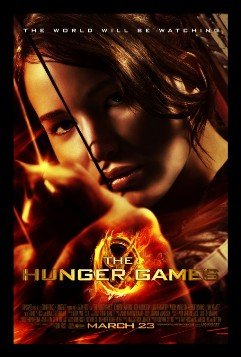
Some are saying this is the new “Twilight,” and the movie is expected to garner a $100 million-plus opening when the movie debuts at Midnight Thursday Night/Friday Morning. But, to me, this sounds like just a more violent remix of “Twilight.” I’ve written that the Twilight movies are just about a girl who is the man and two “men” who are the chicks fighting over her with their sensitive sides. This looks like more of the same, with a “valiant” she-man chick as the heroine and the two men, with girlie-sounding names, “Gale” and “Peeta,” as the male chicks fighting over her. Her name is even more manly than theirs: Katniss Everdeen. The actress playing her, Jennifer Lawrence, is, in many ways, far more masculine than the carefully waxed, manicured, moussed, and gelled “guys” who play her romantic suitors, Liam Hemsworth (Miley Cyrus’ boytoy) and Josh Hutcherson. But, hey, they are suitable arm candy, the role women once played in movies like this.
And Hollywood is working overtime to market this to guys. It’s sad. We’ve already conditioned young men and 20-somethings to be slacker boys living at home with the parents. Now, we’re conditioning them in movies, more and more, to assume the role of the gushing, shrieking girls to a woman far more masculine than they are in a violent setting. Awwww. How cute. What ever happened to the movies where the guy is the hero with two hot chicks fighting over him? It’s basically true to call it a passe trend. The roles have been reversed in so many hard-to-believe movies, I’ve lost count.
Check out how the movie is being marketed to lull men-in-development into girlie-mandom and submission:
For the producers behind “The Hunger Games,” a movie based on a young-adult novel about a teenage girl fighting for survival and struggling with a love triangle, the guys matter.Uh-huh, heroes are no longer male onscreen. They are “gender neutral,” which is code for: they’re women. Far too many guys have already assumed the position of Lois Lane, Veronica, and Betty (not to mention, Jughead). I know: I’m dating myself with these references, as fans of these flicks probably never heard of any of these characters, none of whom is tough and unfeminine enough for them. And this movie won’t help things.
The movie doesn’t open until March 23, but soothsayers are already predicting an opening-weekend gross in excess of $100 million. Barclays Capital estimates that the movie will generate $275 million domestically, on par with the most recent installment of the “Twilight” series. The studio, Lionsgate, is hoping to launch a multibillion-dollar franchise. Expectations have already sent its stock price soaring.
To avoid falling short of such lofty predictions, Lionsgate has been picking its way through a minefield of gender issues: reeling in male moviegoers without alienating core female fans. But male audiences, long the driver of blockbuster openings, have proved increasingly fickle as they divide their attention with videogames and other diversions.
Set in a dystopian future, “The Hunger Games” centers on Katniss Everdeen, a 16-year-old girl who is called upon to fight 23 other teens to the death in a twisted annual survival competition that is televised to the nation of Panem. The quick pace, strong characters and blood sport of author Suzanne Collins’s trilogy helped attract a robust male readership. . . .
From the start, the books were aimed at a crossover audience. The publisher, Scholastic, considered dozens of cover designs, including portraits of Katniss, before settling on a more “iconic” image of a bird pendant that plays a role in the story, said Rachel Coun, Scholastic’s executive director of marketing. When the book was first released, young male readers were targeted with a promotional videogame online. . . .
Some guys could be turned off by the perception that female cult fandom has sprung up around the movie, reinforced by the boisterous crowds—predominately girls—that have gathered at malls where “Hunger Games” cast members have appeared on a promotional tour. The mall strategy is pure “Twilight.” . . .
Says Vincent Bruzzese, president of Ipsos MediaCT’s Motion Picture Group, which does market research for movie studios and filmmakers: “What they are doing is marketing the archetypal themes that are gender-neutral.” Mr. Bruzzese says young men will watch action heroines.
If you don’t think that Hollywood and pop culture are shaping American males and teaching them how not to be men, you haven’t been paying attention.
And as I always say, not a single matriarchy in history has succeeded. Not one has lasted.
We are fooling ourselves in programming the genders for one.
Stay tuned for my review of the movie on Friday. In the meantime, watch the trailer (which they won’t allow anyone to embed from YouTube).


 The Hunger Games, perhaps the most
 Posts
Posts


