Showing posts with label #ff. Show all posts

Friday, April 1, 2016

April Fools? : The Fool has said there is No God ( Psalm 53:1)

An interesting article from http://www.ucg.org/ about evolution. This follows this post about Kosovo. For a free magazine subscription or to get the books recommended for free click HERE! or call 1-888-886- 8632.
 
Can we prove that evolution is false without using the Bible? Certainly we can! Evolution is a scientific theory that stands or falls on the physical evidence. In fact, one can be an atheist, a person who doesn’t believe in God, and still not believe in evolution!
Charles Darwin’s theory of evolution, as taught at school, is a biological explanation of how creatures have supposedly “evolved” or developed progressively through natural selection and variation (now known as mutation) over eons of time from the tiny cell to the largest creatures on earth today. What is taught in classrooms is not mere micro evolution—small changes within a species—but macro evolution, the change from one type of creature to another quite distinct life form.
What many evolutionists are trying to convince you of is that there is no need for a Creator since, as they say, evolution can substitute as the mechanism for creating and transforming life. They teach that life arose from non-life and evolved from simpler creatures to more complex life forms. In other words, the tiny cell eventually became an amoeba, then a lizard, then a monkey, and finally— you !
In order to remember key points that disprove Darwinian evolution—the “molecules to man” theory—we’ll use the acronym FALSE. (A few of these points also disprove the compromise of theistic evolution—the notion that God employed macroevolution over eons in forming the creatures we see on earth today.)

F for Fossils

A fossil is the preserved remains of a living thing. The fossil record around the earth extends an average of one mile deep. Below this level we come up with a blank slate as far as living, complex creatures are concerned.
I collect fossils of what are deemed the earliest type of complex creatures with hard bodies—trilobites. No previous ancestors of these arthropods have been found. Similar to some marine “bugs” we see today on the seashore that disappear into the sand when the waves retreat, trilobites had hard shells, all the basic organs, and complex eyes like those of flies, with hundreds of sophisticated lenses connected to the optic nerve going to the brain. Trilobite fossils are found around the earth, and in all cases the level of rock beneath them does not reveal other creatures with similar features.
As one source states: “The dominant life form was the now-extinct sea creature known as a trilobite, up to a foot long, with a distinctive head and tail, a body made up of several parts, and a complex respiratory system. But although there are many places on earth where 5,000 feet of sedimentary rock stretch unbroken and uniformly beneath the Cambrian [layer], not a single indisputable multi-celled fossil has been found there. It is ‘the enigma of paleontological [fossil studies] enigmas,’ according to Stephen Gould. Darwin himself said he could give ‘no satisfactory answer’ to why no fossils had been discovered. Today’s scientists are none the wiser” (Francis Hitching, The Neck of the Giraffe , 1982, pp. 26-27).
Question: If, after almost two centuries of digging beneath all the world’s continents, no previous ancestor of this first hard-bodied creature has been found, how then did the ubiquitous trilobite evolve? There should be some previous ancestor if evolution were true.
It’s like finding an exquisite watch on the seashore and yet never finding any previous primitive models of the watch on earth. If you reasoned as an evolutionist, you would deny there was a need for a watchmaker at all, maintaining that time, water, sand, minerals and actions of the elements are sufficient to producing a fully functional watch that runs. This is part of the reason it takes more faith to believe in evolution than in a Creator!
Further important evidence from the fossil record is the absence of transitional forms between species. Darwin was concerned that the thousands of intermediate stages between creatures needed to prove his theory were not in evidence, but he expected they would eventually be found. Yet those thousands of missing transitional forms are still missing!
Another reference explains: “If throughout past ages life was actually drifting over in one continual stream from one form to another, it is to be expected that as many samples of the intermediate stages between species should be discovered in fossil condition as of the species themselves … All should be in a state of flux. But these missing links are wanting. There are no fossils of creatures whose scales were changing into feathers or whose feet were changing into wings, no fossils of fish getting legs or of reptiles getting hair. The real task of the geological evolutionist is not to find ‘the’ missing link, as if there were only one. The task is to find those thousands upon thousands of missing links that connect the many fossil species with one another” (Byron Nelson, After Its Kind , 1970, pp. 60-62).
The absence of transitional forms is an insurmountable hurdle for theistic evolutionists as well. It also fits with our next point.

A for Assumption

When there is no real evidence, evolutionary scientists simply make assumptions.
If evolution were true, then where is the evidence of different types of animals now “evolving” into other types? Where is the evidence of cats, dogs and horses gradually turning into something else? We do see changes within species, but we do not see any changes into other species. And, as mentioned, we see no evidence of gradual change in the fossil record either. Yet evolutionists continue to assume that transitional forms must have existed.
In Darwin’s landmark book On the Origin of Species there are some 800 subjective clauses, with uncertainty repeatedly admitted instead of proof. Words such as “could,” “perhaps” and “possibly” plague the entire book.
Evolution is still called a theory—a possible explanation or assumption—because it is not testable according to the scientific method, as this would require thousands or millions of years. Evolutionists will counter that a theory is not a mere hypothesis but is a widely affirmed intellectual construct that generally appears to fit all the facts. Yet evolution in no way fits all the facts available. Evidence does not support it—and in many respects runs counter to it.

L for Life

The law of biogenesis as taught in biology class states that only life can produce life.
You’ve probably heard the famous question: Which came first, the chicken or the egg? It’s a real dilemma for an evolutionist to answer. An egg comes from a chicken, yet the chicken comes from an egg. How can there be one without the other?
To complicate matters even more, the chicken has to come from a fertilized egg that has the mixture of two different genetic strains from both its parents. So the problem of the origin of life and initial reproduction is still a mystery that evolutionary science cannot adequately answer.
Yet for someone who believes in special creation by a Creator, there is no dilemma here. First God made the male and female chickens, which produced the first fertilized egg—and the rest is history.

S for Symbiosis

When one living thing needs another different living thing to survive, it’s called a symbiotic relationship.
A good example of this is the relationship between bees and flowers. The bees need the nectar from some types of flowers to feed while these flowers need bees to pollinate them. Both depend on each other to exist and survive. The question for evolutionists is: How did these plants exist without the bees, and how did the bees exist without these plants?
Again, atheistic scientists are stumped. Theistic evolutionists are perplexed as well. Yet if you believe in a Creator who specially created the various forms of life on earth, the answer is simple—both were created at about the same time.

E for Engineering

All living things are exquisitely engineered or designed. Qualitatively, a bacterium is as majestically built for its purpose as a human body is for its function. Yet evolution says it’s only an illusion of design—that there is no real designer behind it. Reality is not an illusion! Living things are multi-functional, which means they do many complex things at the same time, something evolution with its step-by-step process has never been able to demonstrate.
One example of a living thing with exquisite engineering is the tree. It provides breathable oxygen for us while processing carbon dioxide, which would in high amounts in the air be toxic to us. It supplies wood, housing for birds, roots to limit erosion, fruit and seeds to eat, is biodegradable and gives shade. According to the U.S. Department of Agriculture, “A healthy tree provides a cooling effect that is equivalent to 10 room-size air conditioners operating 20 hours a day.” How could something so complex arise from a random, undirected evolutionary process?
Again, you need more “faith” to believe in blind evolution than in an all-knowing Creator who designed the marvelous tree in the first place.
Now you have five proofs that evolution is F-A-L-S-E and that special creation is true—and we didn’t even use the Bible. Remember the acronym FALSE when you read or hear about evolution—and do take time to read our Creator’s great book of truth! It has much to say regarding origins.

You might also be interested in...


Thursday, March 10, 2016

Today's Toys Child's Play or Something Else?

An interesting article from http://www.ucg.org/ about modern toys. This follows this post about job hunting. For a free magazine subscription or to get the books recommended for free click HERE! or call 1-888-886- 8632.


“Yank out alien organs dripping in glowing alien blood.” This cheery invitation greets children 7 and under from the box of a toy called Dissect-an-Alien. It's part of the popular Mad Scientist line of playthings made by one of the nation's largest toy manufacturers.

Toys aren't what they used to be

Have you noticed what kinds of toys your children have been playing with lately? How are some of the new types of games and toys affecting them?
Toy manufacturing and marketing has boomed into a multibillion-dollar business. Toy makers not only follow the trends; they start them. Electronics and vivid graphics have added a new dimension to our children's toys.
But, with all that is available, are our children better off?

Benefits of playtime

When most of us reminisce about our childhood, we cannot help but think about our play with siblings, friends, pets and toys. I smile when I think about hiking to a waterfall in the woods with my dog or playing catch with my brother. On wintry Sunday afternoons, I remember playing chess for hours with my father.
Whether we had many toys or only a few, we all remember our favorite teddy bears, dolls, model cars or construction sets. Through toys children experiment, explore, express and discover themselves. They give their toys life, character, abilities and talents. With their imagination they project themselves into their play. Through make-believe they build a bridge with adulthood and look forward to growing up.
Play is important for a child's development. It is one way children learn about the world around them. How they relate to and play with toys helps them learn skills such as dexterity and hand-eye coordination.
Playing with other children helps a child with social development. He (or she) learns how to get along with, tolerate and share with other kids. By interacting with others, children learn how to solve problems.

Survival of the funnest

The first toys could well have been natural objects such as sticks, fir cones, seed pods, bones and smooth, round stones. Since then, dolls, balls, spinning tops and pull toys have become the basic playthings of many cultures.
When visiting a toy store in Russia, I was fascinated to see how universally boys and girls are attracted to animal shapes, puppets, dolls, and miniature cars, trucks and tractors.
At ancient burial sites, animal figures have been found that appear to have been made for no purpose other than to play with. For example, Persian wheeled pull or push toys carved from white limestone into the shapes of animals date from the 12th century B.C. Clues to the nature of many old toys have been found on ancient vases and reliefs, which often picture hobbyhorses, carts, hoops, balls, tops and musical instruments.
Toys were almost completely handcrafted until late in the 18th century, after which mass-produced objects for children to play with began to appear for the first time.
The last decade saw some entirely new species of toys. The computer-game craze reflects advances in science and technology. Yet, although the complexity of toys is on the increase, the longevity of games and toys is decreasing with the constantly changing popularity of styles and heroes.
Although exceptional toys exist that bring out the best in our children, there are an increasing number that represent alarming trends that we as parents need to be beware of. Many toys do not help a child develop imagination, or they develop an entirely wrong kind of creativity.

Violence, the occult, repulsion

Toy makers have found models such as GI Joe (a perennial best-seller) or Rambo-or characters from the current space, war and adventure movies-to be hot-selling items. Toy firearms that discharge lasers and fake bullets sell exceptionally well.
Toys that are disturbing to many parents, like The Blaster, casually offer a child a way to blow up the world. With push buttons and a handgrip with vast firepower, this toy is advertised to help its operator relieve tension: “Leave in your wake a flood of totally imaginary destruction and feel good about yourself once again.” The Blaster simulates machine-gun fire, laser beams and nuclear explosions.
Is this a good way to release tension? What are the lessons a child learns from this kind of toy? Are we doing anything other than teaching barbarism with toys like this?
The impact of playing with war toys increases inappropriate behavior such as hitting, kicking, hair-pulling and teasing. War toys can desensitize children toward violence, produce exaggerated fear of others and increase angry and violent behavior. Children may become more hyperactive, fight and quarrel more, and generally demonstrate more belligerence when they play with miniature weapons of destruction.

Sending a deadly message

By buying children war toys, the message parents send them is that it is appropriate to fight and solve problems violently. If we give impressionable children toys that imply that war or hostility is acceptable, then we send them the message that it is all right to act out feelings using weapons.
On the other hand, the prophet Isaiah speaks about a time during which man will no longer learn war and violence. In those days, erstwhile combatants “shall beat their swords into plowshares, and their spears into pruning hooks; nation shall not lift up sword against nation, neither shall they learn war anymore” (Isaiah 2:4).
The huge increase in the popularity of electronic games assaults our children with violence. The National Coalition on Television Violence studied 95 Nintendo video games and found that 83 percent feature violent themes, with 58 percent spotlighting war games. The study discovered that children ages 8 through 10 are 80 percent more likely to fight among themselves after playing with interactive laser weapons.
In addition, video games can produce stress, are inherently frustrating and promote obsessive, even addictive, behavior. They also tend to isolate children from other people. Children scream at a video game because it won't do what they want it to. They may throw down the controls in rage or yell at people who come near them and break their concentration. If playmates are involved, they may yell at each other or end up fighting because of the game.
A mother commented that the family's video-game unit turned her two children, ages 10 and 8, into “animals.” She said her 10-year-old “can't stop playing once he starts.” The 8-year-old becomes frustrated, hostile, angry and violent when he plays. The two fight and argue with their friends over Nintendo.

Toying with the occult

Along with violent toys, children and adolescents experiment with the occult-and plenty of toys and games based on the supernatural are available. I strolled down the aisle of the largest toy chain store near my home. Piled high in one section were Ouija boards and other games that encourage dabbling in the occult.
One particularly hideous game is Nightmare on Elm Street: The Freddie Game, based on a movie about a man who murders teenagers. In this nightmare of a toy, Freddie is depicted wearing a glove equipped with razor-sharp blades for slashing his victims.
Do we really want our children to amuse themselves with such a “game”? What could possibly be redeeming about it? Such games only encourage children to come close to the mysterious world of fear, ugliness and death.
Another toy, Boglins, encourages children to identify with lovable but ugly little creatures that come alive in their hands. Still another, the Brain Blaster, has a head that falls apart, with brain matter falling out in chunks. Drool is a hand puppet that lives up to its name. Airsickness depicts an airline passenger strapped into a seat with a look of nauseated anticipation on his face.
Other toys in the Mad Scientist series include one called Monster Lab, which invites children to “make disgusting, gross monsters . . . then sizzle the flesh off their bones.” On the box, a group of young boys is depicted dipping a creature in a frothing vat of make-believe acid.
Then there is the Glowing Glop kit, with advertising that advises youngsters to “squeeze 'em! Alien blood oozes from their eyes.” The popularity of such dreadful toys has prompted a popular brand of candy that looks like spiders and rats, which children are encouraged to devour.
Some adults are rightly concerned with trends toward repulsiveness in lines of toys such as Garbage Pail Kids, because the ugliness desensitizes children to the point that they are no longer offended by violence, sadism and the grotesque.
In the context of children, Jesus Christ warned those who would take advantage of the impressionable and defenseless: “But whoever causes one of these little ones who believe in Me to sin, it would be better for him if a millstone were hung around his neck, and he were drowned in the depth of the sea” (Matthew 18:6).

You buy the toys

The president of Child World, which owns Children's Palace, the second-largest toy-store chain in the United States, stated that playthings featuring the grotesque “are selling quite well. They seem to be part of what we see as a larger trend aimed at little boys for gross kinds of stuff.”
The Toy Manufacturers Association sees no harm in such toys. “When it comes to grossness, we firmly believe that the decision to buy the toys should be made by the parents.”
Even though it comes from a perspective I strongly disagree with, that's good advice, parents. The TMA couldn't have said it any better. The decision to purchase such toys is up to you. As parents, we should closely monitor and evaluate the kinds of toys our children play with. We should make it clear to our offspring that we, as adults, will help choose their toys.
How is it that children are so knowledgeable about and lust for certain kinds of consumer goods? It is no coincidence that children's television programming is often little more than one long advertisement for toys. Your children are a lucrative market, to say the least.
In one year the average 4- to 8-year-old will see 1,000 or more 30-second and 180 or so 30-minute cartoon commercials selling war toys—the equivalent of 18 days of classroom instruction in exciting, stimulating pro-war entertainment. Advertising like this is effective; war-toy sales increased 700 percent in five years from 1982 to 1987.
Don't let yourself feel guilty if you don't get your children the particular toys they want. Don't allow children to go crazy for every toy with a certain make-believe character's picture on it. Monitor what your children watch, and take control of the toy purchases in your family. Your children should not be preyed upon by toy manufacturers competing for your money with bizarre and grotesque products.

What's good

In the midst of commercialism and chaos, you can make many sensible choices if first you consider the impact of a toy before you buy it.
Toys need not be expensive. For example, a device as simple as a yo-yo will teach a child a memorable lesson about objects in motion he will recall in high school and college when he studies physics.
Question the value of any toy your child asks for. How will he (or she) benefit from a particular toy? Will his imagination be directed toward wholesomeness? What will she learn? Will it help her solve problems? Will it help him use his mind?
Will the toy help him interact with others? Will it help her refine her skills or explore and discover things about herself and the world around her? There are many creative, peaceful toys that will stretch your child's imagination while giving hours of fun.
Classic construction sets such as those made by Tinker Toys, Lego, Lincoln Logs and Erector are excellent choices. They help a child imagine a structure, then build it. A simple microscope-or chemistry or electronic kit-with which you can guide a child in learning about the physical creation is also a good choice.
When shopping for toys, you may find it best to avoid the products of high-visibility companies that promote toys that go well with heavily sugared cereals and Saturday-morning television. You can do a lot better by going to the toy department of a science museum or out-of-the-way shops near college campuses.
Hobby stores are a good source for toys. In them you will find products that force parents to spend time with their children as together they learn how they work.

Keep it simple

The toy industry has made many of their wares too complicated. Simplicity should top the list of things to look for in a toy. Something as basic and durable as a ball could be a child's first toy. Skills learned from throwing, catching and bouncing a ball endure for a lifetime.
Often the simplest toys last while the complicated ones drop dead when their batteries run down. Keeping toys supplied with alkaline sources of power can get expensive.
When planning a purchase, consider how an item could be used by the whole family to help bring parents and children together to play and talk. One problem with many electronic games is that children retire to their own little world and tune out everything and everyone around them.
Parents are often irritated and repulsed by a game's sounds, or they may not have the faintest idea how to play it. If children spend too much time playing with electronic games, they tend to get bored easily and aren't interested in developing relationships with others.
Sports toys are wholesome. Many parlor games promote discussion. Pictionary, for example, teaches children to follow rules, take turns, learn new words and communicate with symbols.

The play's the thing

Children want to play. Toys are perfect for play. In our busy world, we often abdicate our responsibilities as parents by using toys as a crutch to entertain our children while we do something else. Children respond favorably to parents and friends who interact with and pay attention to them. Playtimes can be fun and educational and can nurture familial ties.
Make your precious children's early years an experience they will treasure. In the world of the future, there will be the right kind of play with the right kind of toys, for “the streets of the city shall be full of boys and girls playing in its streets” (Zechariah 8:5). GN

You might also be interested in...

Sunday, January 4, 2015

Three Day Weekend Movie Rentals

Here are some interesting links from http://www.debbieschlussel.com/ about some movies that have been released over the past few years that you might have missed. Go ahead and click each year and make sure that you've seen these. This follows this post about guidelines to choosing good movies to watch!


Movies to Rent!!


Best of 2014.


Best of 2013.


Best of 2012.

Best of 2011.

Best of 2010.

Best of 2009.

Best of 2008.

Best of 2007.

Best of 2006.

Best of 2005.

DebbieSchlussel.com Best Movies of 2014

Here is an interesting post from http://www.debbieschlussel.com/ about some movies that have been released over the past two years that you might have missed. This follows THIS POST about many other movies that you might have missed in the years before that. This follows this post about guidelines to choosing good movies to watch!


DebbieSchlussel.com Best Movies of 2014


By Debbie Schlussel
Took some time off to catch up on rest, other work, and just needed a break. But I didn’t want to let any more time go by before I brought you my list of top movies of 2014. This was a bad year for movies, so I liked very few. All things are relative, and many of these would not make my list in previous years. That said, it was hard to narrow it down to just ten movies. So I picked my top choices and everything that I liked, which numbered 18 movies. You can read my full review of each movie by clicking on the name of the movie.
bestmoviesof14film.jpg

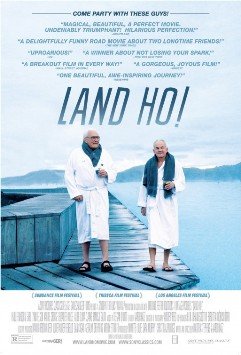
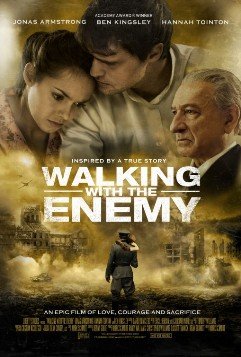
landhowalkingwiththeenemy


You will note that some of the movies I chose for this list didn’t get FOUR or even THREE REAGANS when I reviewed them. But in comparing the movies to the whole lot from this year, they’ve moved up in quality in my opinion (or I initially underrated them–“Land Ho!” is one of those). Others have declined in my view. I had a hard time putting the list in order (and kept switching the list around) because I liked most of these equally, so any of them will do. Also, some smaller movies debuted in other markets in 2013, but I reviewed them in 2014, when they came out here in the Detroit area. Below my Top 15 are also a few bests in particular categories. These also could have made my top movies list and are equally as good.
Here’s the list:
TIE- 1) “Land Ho!“: Nope, the title doesn’t describe Kim Kardashian when she’s not in the air or water. This small-budget movie was shown mostly in art house theaters. But it was fun, very funny, and exactly the kind of escapist movie I like to see. Two American former brothers-in-law go on a trip to Iceland and have a ball. One of them is a very blunt, politically incorrect, retired doctor from the South (fabulous first-time actor Earl Lynn Nelson). The other is a transplanted Aussie who lives in New Orleans.
TIE – 1) “Walking with the Enemy“: The touching, heroic true story of Pinchas Rosenbaum, the Aryan-looking Hungarian Jew, who impersonated a Nazi, and saved thousands of Hungarian Jewish lives during the Holocaust. The ending brought tears to my eyes. This movie got off to a slow start” but is otherwise great.
3) “The Grand Budapest Hotel“: Based on a Stefan Zweig novel, this quirky flick about a fictional hotel in 1932 Europe is very funny and entertaining and moves quickly. Director Wes Anderson at his best.
4) “Whiplash“: A young jazz drummer prodigy is driven by his own ambition and his teacher/guru’s merciless demands. See the caveat in my review about American society demanding too little from most, rather than too much, as in this movie.
5) “Words and Pictures“: Smart movie about feuding teachers at a fancy New England prep school. He used to be a budding literary star, and she was a famous artist and painter. Today, they are afflicted by other demons and have sparked a debate between themselves and their students about which speaks better: literature or art.
6) “Chef“: A chef father and his young son grow close on a summer food truck trip across the country.
7) “Night Crawler“: Obsessed nut becomes a top cameraman and turns his agenda into manufactured local news stories, with tragic consequences.
8) “The Imitation Game“: Unconventional genius Brit Edward Turing creates the first computer and helps break the Nazi Enigma code during World War II, saving many lives and ending the war early.
9) “The Guest“: Very campy movie is a take-off on ’80s-style thrillers, complete with music and other accoutrements. Great newcomer Dan Stevens plays the Iraq War veteran who comes to visit the bereaved family of one of his fallen comrades and ingratiates himself into their lives.
10) “Interstellar“: Very cool sci-fi thriller that includes space travel beyond all imaginable dimensions, including time. Many movies in one with moral and other issues explored.
11) “Birdman“: Interesting movie explores an aging actor’s attempt, at the twilight of his career, to make a comeback in the theater, after playing a superhero for years. Quirky and different, Michael Keaton and his superhero alter ego have conversations throughout the movie, but is it real? A little too raunchy in one part for my taste, but otherwise, this has everything–funniness, despair, and even an expose on the power-hungry “writers” at the New York Times.
12) “And So It Goes“: A light, funny, charming dramedy about an aging real estate man, his songstress neighbor, and how they change each other’s lives. Michael Douglas and Diane Keaton still have a lot left in them.
13) “The Monuments Men“: A group of American soldiers come to Nazi Europe to save and recover stolen art and property, both public and that owned by Jews. Has some very touching moments and is light and entertaining while also impressing upon us another important job well done by the Americans in Europe, whose contributions continue to go unappreciated especially to date. Yes, unfortunately, it stars George Clooney and Matt Damon. But it’s also got Bill Murray in the best scene in the movie. Read my review to find out what that is.
14) “Beyond the Lights“: A Kardashian-esque pop star falls in love with her working-class bodyguard and throws away her sexy, sleazy image (and her sleazy mom/manager who pushed it on her) in favor of a more modest, natural, down-to-earth lifestyle.
15) “The Best Offer“: Cool, psychological thriller about a misanthrope art dealer/appraiser who falls for a phantom recluse who wants him to value her late parents’ estate.
16) “Begin Again“: Keira Knightley plays the more talented half of a musical couple. He (Adam Levine) is a conceited rock star (so he didn’t have to act much) who cheats on her and uses the songs and music she wrote. She “begins again” after being discovered by a recovering alcoholic music executive who is also beginning again in his career after losing everything. Together they make music and try to make hits.
17) “Edge of Tomorrow“: Futuristic movie in which Tom Cruise and Emily Blunt fight aliens to save the world, but must keep repeating previous events to learn more. Funny, cool, filled with action.
18) “Guardians of the Galaxy“: A superhero movie starring Chris Pratt and an ensemble of animated and alien misfits, together they fight evil to save the galaxy.
BEST DOCUMENTARY: “I’ll Be Me“: A touching, sad film about great musical talent Glenn Campbell and his struggle with Alzheimer’s Disease as he embarks on his farewell tour. I will post a more in-depth review of this soon.
BEST FOREIGN FILM: “Like Father, Like Son [Soshite Chichi Ni Naru]“: A wealthy, upper-class Japanese family discovers that their six-year-old son is really someone else’s, as he has been switched at birth. They also find out that their biological son is being raised by a working-class, less cultured, but far more happy family. Do they want to switch their sons back? Is it about biology or the son that you’ve already raised for so long?
BEST ANIMATION: “Big Hero 6“: Terrific movie for people of all ages. A young boy genius uses robots to find out who killed his brother and what happened with his invention. Funny, charming, and cute (thought slightly politically correct).

Tuesday, December 30, 2014

Box Office: Unbroken, The Imitation Game, Big Eyes, Into the Woods, The Gambler The Interview: Juvenile Crap w/ Some Funny Lines

Here is an interesting article from http://www.debbieschlussel.com/ reviewing some of the movies that came out over the past weekend. This follows this post about some of the movies from last week and THIS POST about some movies that have been released over the past few years that you might have missed! This all follows this post about guidelines to choosing good movies to watch yourself!


Christmas Box Office: Unbroken, The Imitation Game, Big Eyes, Into the Woods, The Gambler


And the end of a bad year in new movies goes out with a whimper. The only one of the movies, new in theaters yesterday, that I liked was the gay WWII hero movie. And even that was all relative in a year of really shabby movies. Oh, and by the way, those who claim “patriotism” got snubbed because neither “Unbroken” nor “American Sniper” got nominated for any awards–well, they are dead wrong. I myself did not vote for either of these in any category, as a member of the Detroit Film Critics Society, and–at least with regard to “Unbroken”–here’s why:
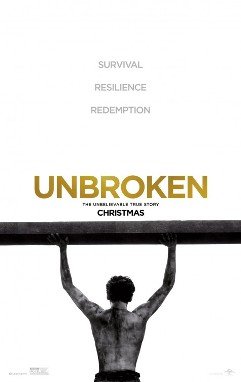
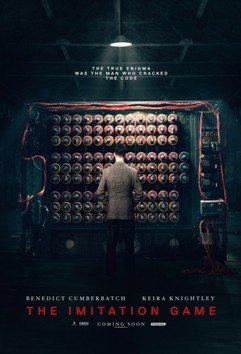
unbrokenimitationgame

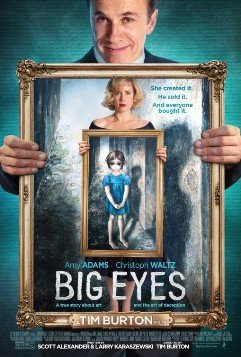
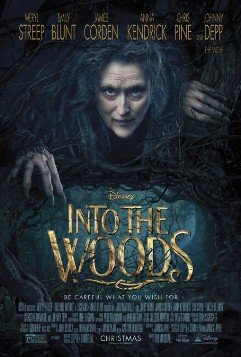
bigeyesintothewoods

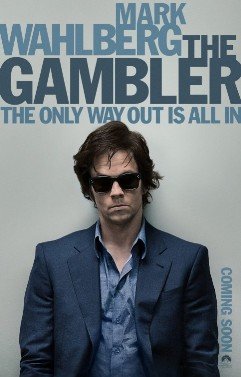
thegambler

* “Unbroken“: You would think that a movie about an American World War II hero and patriot would be right up my alley (you would be right about that) and that I would love this movie, but you would be wrong. It would be very difficult for any director to screw up a movie about the inspiring, incredible life story of Louis Zamperini. But Angelina Jolie managed to bleep it up. Gone is the amazing, uplifting story depicted in the book of the same name. In its place, Jolie produces a long, boring, formulaic, stilted, distracting mess. I received the DVD screener for this movie a month ago. I was excited to watch it, but it was so slow and herky-jerky that I had to watch it in 15 minute installments, since it didn’t keep my attention.


The most noticeable disservice to the late Zamperini is that Palestina Jolie skips what may be the most interesting part of Zamperini’s life: his second (and third) acts. Maybe that is because she is a godless woman who doesn’t seem to like Christianity (or Judaism) much (but oh does she love Islam!). After he returned home from being tortured in a Japanese prison camp during the war, Zamperini retreated into a life of drunken carousing. But he heard Rev. Billy Graham deliver a sermon in person, and it changed his life. He became a devout Christian and started a camp for wayward boys, changing their lives. NONE of that is in the movie. None. Knowing that story and watching this long, drawn out, formulaic movie end, I thought, “Is that all there is?” I felt like I’d watched only half a movie. The only references to his future life are a brief line in the movie when Zamperini tells G-d he will devote his life to him if he is allowed to survive and in a caption at the end of the movie stating that he did devote his life to G-d. That’s it. The story is much bigger than those brief mentions.
And then there’s what I did watch. Jolie employs the device used by the most incompetent so-called directors. She constantly flashes back and forward and back and forward and back again. It’s dizzying, confusing, and just flat-out annoying. It wasn’t necessary and ruins the movie. The most interesting parts of Zamperini’s life are obfuscated and/or poorly told. Zamperini, after being a bad kid, is convinced by his older brother to become a disciplined runner and track star. When he makes Team USA and goes to compete at the “Hitler Olympics” in 1936, director Jolie shows some silly “We Are the World” scene of Zamperini and a Japanese athlete nodding at each other during the opening ceremony. She completely skips Zamperini’s meeting Hitler, because, hey, that’s not at all a big deal, right? The whole set of Olympic scenes, by the way, are in the endlessly distracting flashbacks.
And since she manages to make one of the potentially most interesting scenes into a bore, she then also makes what should have been one of the most boring things into something interesting, in a survival adventure movie kind of way that reminded me of Tom Hanks in “Castaway” or Robert Redford in “All is Lost” (read my review) or the Indian kid in “Life of Pi” (read my review). Zamperini and two other soldiers are shown adrift on two rafts in the middle of the sea for 45 days, struggling to survive. Compared to the lengthy scenes of Zamperini and two other soldiers in the raft, the scenes of Zamperini in the Japanese POW camp seem rote, like the directrix was bored. The movie was cold and lacks spirit, exactly like the personality of its director.
Jolie said she wanted the message of the movie to be that all people suffer in war, and she shows us scenes of the bombings of Hiroshima and Nagasaki. We are morally equivalent to the enemy. I get that’s the message. How sad that she doesn’t seem to get that it’s just not true. And if she feels that way, she should go live amidst the enemy and stop making bad movies.
Some people have pointed out that Zamperini was taken with Jolie. Well, so what? A 90-something old man is taken with a beautiful and very famous movie star? He wouldn’t be the first to be starstruck and happy just to have her make a movie about his life, no matter how boring and uncomprehensive the movie is. The only touching part of Jolie’s film is the part that she had no part in directing: real-life footage of Zamperini running with the Olympic torch down the streets of Japan.
A couple of weeks ago, in the endless hype for this, Tom Brokaw hosted an hour special on NBC about the life of Zamperini, Palestina Jolie, and the making of this movie. The parts about Zamperini combined were far more touching and infinitely more interesting than this multi-million dollar heap of film.
Like I said, it would be very hard to bleep up the Zamperini story as told in the book, “Unbroken.” But in the movie of the same name, Angie Voight managed to do just that. She says it’s an anti-war movie. And I believe her.
ONE REAGAN
reagancowboy

* “The Imitation Game“: While this is, among other things, a gay rights movie clothed in World War II intrigue and mystique, the people who made this know how to make a movie. It’s one of this year’s best. As a conservative, I don’t believe in special rights for gays, but I do believe that what you do in your bedroom is your business (so long as it’s not with kids, incompetents, or animals), and I oppose any form of persecution like the awful kind that is on display at the end of this film.
That said, this is a pretty decent movie, one of this year’s best, in a very bad field of them. And it’s the story of thinking outside the box (though the use of that phrase is now inside the box) and genius. It’s the story of those who think differently not letting the mainstream horde of sheep get them down or cause them to change. And more than all of these, it’s the story of a brilliant British man, Alan Turing (Benedict Cumberbatch), who broke the Nazi Enigma code and helped end World War II early, saving countless lives. He also invented the first computer.
This movie also employs flashbacks to Turing’s childhood as an odd duck who is endlessly mocked by classmates, has only one friend, and so on. You get the point. But unlike in Angelina Jolie’s “Unbroken,” the flashbacks are few and far between, and they are employed to make a point. Despite being a persecuted kid on the outs with others, he didn’t let that stop his different way of thinking or get him down. He persevered and thought great things, did great things.
He is chosen for a position on a squad of code breakers attempting to decipher the Nazi code to pilots and others. The code changes every 24 hours, so if it’s not solved by the end of the day, they have to start all over again. It’s frustrating work, and they aren’t making progress, until Turing convinces Winston Churchill to make him the director of the project, and he fires those who persecuted and attacked him. Turing creates a computer of sorts to break the code, but the computer isn’t making much progress. Soon, though, he hires people who solved a crossword puzzle he put in the newspaper. One of these is Keira Knightley, who inadvertently helps him figure it out.
She also becomes his girlfriend and fiancee until he tells her he is gay and that they can’t be married. This was back in the day when homosexual acts were against the law. Ultimately, none of his World War II heroics or genius matters. And it’s, in the end, a sad film because of the deplorable way Turing was treated.
Still, it’s an important movie about a lesser-known man who helped the West against the forces of evil and was a computer science pioneer. And it’s a great portrayal of the importance of rugged individualism and independent, critical thought–all of which Turing embodies in this movie.
Usually, science and math geniuses aren’t sexy enough for Hollywood, and so their stories aren’t told on the silver screen. I’m glad this was one of the exceptions to that rule.
THREE-AND-A-HALF REAGANS
reagancowboyreagancowboyreagancowboyhalfreagan

* “Big Eyes“: I always dislike reviewing movies about real-life people, as told from the point of view of only one of those people. You never know if the story is true. And this one is very heavy-handed, very over the top. Walter Keane, the villain in this movie, isn’t alive to defend himself. And the movie is told from the point of view of his ex-wife, Margaret Keane. The movie isn’t just heavy-handed. It’s heavy-handed feminism and it’s also anachronistic because even if everything that happens in this movie actually happened in real life, none of it would happen today.
The story: Margaret Keane (Amy Adams) is an artist and single mother. She paints portraits featuring big eyes (think “Bratz” dolls). You’ve probably seen her work, which became popular in the ’60s and ’70s. My late maternal grandmother had a “big eyes” painting, probably a knock-off or lithograph of Keane’s work, hanging in her basement. (I used to think it was soooo ugly and creepy-looking.) Keane meets another artist (or at least a man who pretends to be an artist) and eventually marries him. The man, Walter Keane, soon begins marketing and selling his new wife’s paintings as his own. And after being initially upset, she goes along with it. Walter turns the paintings into a huge marketing hit. They are soon everywhere, and the Keanes are making a mint. But Margaret is upset that she doesn’t get credit for her work and that her husband is abusive and constantly degrades her, plus he’s apparently an alcoholic. Ultimately, she leaves him and fights back with a vengeance (and this movie, told as she sees it). Gloria Steinem and the ghost of Betty Friedan are proud.
But is the story really true? Mainstream liberal media accounts discuss the lawsuit depicted in the movie, so that seems accurate, as does Margaret’s claim that she, not her husband, painted the pics. Still, I saw nothing confirming that Walter Keane was a violent, abusive, harmful person, threatening and attempting to burn Mrs. Keane and her daughter and their house down. Like I said, I hate reviewing these movies that seem over the top in depicting what may (or may not) have occurred in real life.
I don’t want to give away the whole movie, but you get the point. I wonder about the casting of Christoph Waltz as the Nebraska-born and American-raised Walter Keane. Waltz’s Austrian accent comes through crystal clear, and that is never explained in the movie, despite the fact that much of the movie takes place just a decade or two after World War II. It’s curious.
Like I said, the real Walter Keane is long dead and not around to give his side of the story, which–in past press accounts quoting him–was quite different than what you see here. So, if you go see this agenda-laden, ax-grinding movie, keep in mind that it’s propaganda neatly wrapped in Hollywood’s “You go girl!” grrrl-power-narrative bow.
And you’ll never know the whole story. Or the real one.
FOUR BETTY FRIEDANS PLUS FOUR MICHELLE LAVAUGHN ROBINSON HUSSEIN OBAMA IDI AMIN DADAS
michelleobamaangrysmallermichelleobamaangrysmallermichelleobamaangrysmallermichelleobamaangrysmallerplus.jpgbettyfriedanbettyfriedanbettyfriedanbettyfriedan

* “Into the Woods“: While the “first act” of this movie is entertaining and engrossing, the second act is an anti-male bore. Copied from a Broadway musical of the same name, the movie takes several fairy tales–“Little Red Riding Hood,” “Cinderella,” “Jack and the Beanstalk,” etc.–and intertwines them, with the characters involving themselves in each other’s stories. Johnny Depp’s child-molester-like wolf in the “Little Red Riding Hood” story was just more than a little creepy, but I enjoyed the first half of the movie.
It’s all male characters, especially the princes (including the one Cinderella marries), are idiots, fools, and failures, fending off a female giant in the woods, that I got bored and turned off. That part was boring and typical Hollywood crap. And if you don’t like musicals (I do like them), you’ll hate this.
Oh, by the way, Meryl Streep is pretty true to character as a witch. She’s played one several times, and I get the feeling this ain’t just acting.
FOUR BETTY FRIEDANS PLUS FOUR MICHELLE LAVAUGHN ROBINSON HUSSEIN OBAMA IDI AMIN DADAS
michelleobamaangrysmallermichelleobamaangrysmallermichelleobamaangrysmallermichelleobamaangrysmallerplus.jpgbettyfriedanbettyfriedanbettyfriedanbettyfriedan

* “The Gambler“: Mainstream (liberal) movie critics are falling all over this movie in gushing unison. Not me. I don’t know what the point of this slow, boring, pathetic movie was . . . other than to give Mark Wahlberg yet another paycheck and pretend he’s a great arthouse, indie film actor. This is supposedly a remake of the 1974 James Caan star vehicle of the same name.
The story: Wahlberg is a college professor from a very rich family. But he keeps losing everything because he’s addicted to gambling. And even when his wealthy mother and loan sharks give him the money to pay off his gambling debts–and even when he’s hundreds of thousands of dollars ahead at the casino tables–he deliberately keeps making risky bets and gambles it all away. Therefore, a whole bunch of mobster and loan shark thug types are after him.
Oh, I forgot one other reason they musta made this movie: so they could show you a digustingly morbidly obese John Goodman wearing nearly no clothes in a schvitz joint, playing a pseudo-Jewish loan shark, who uses the word “schvartze” (Yiddish word for Black, usually derogatory). We are just 5.2 million people (and shrinking) in America. And they couldn’t resist yet another opportunity to implicate Jews as ugly, fat, racist cretins in a movie. Thanks, Hollywood.
THREE MARXES PLUS THREE OBAMAS
karlmarxmovies.jpgkarlmarxmovies.jpgkarlmarxmovies.jpgplus.jpgobamasmilingsmallerobamasmilingsmallerobamasmilingsmaller

The Interview: Juvenile Crap w/ Some Funny Lines


By Debbie Schlussel
Reader I Am Me warned me it was bad. “It’s AWFUL. It may be the worst movie I have ever seen,” he wrote me. He paid to watch the controversial “The Interview” online, “out of some probably misplaced sense of patriotism.” I went to a theater to see it, last night.
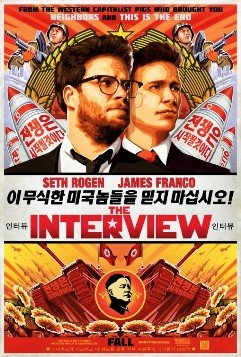
theinterview


It’s not a great movie. In fact, I agree with him that it’s somewhat crappy, although I’ve seen many far worse movies just this year, and I didn’t hate it as much as he did. It’s a low-rent movie with a lot of silliness and juvenile, crass, gross humor–the kind that appeals to teens and 20-somethings raised on a steady diet of MTV’s “Teen Moms” and assorted Kardashian Kartrashian. I’m surprised it actually cost $40 million to make because it looks more like a $4 million (or less) budget movie.
But I thought it was very funny. I will be the first to admit that I went to the movie ready to laugh, and that makes a huge difference. I laughed a lot, especially during the first third or half of the movie, probably more than anyone else in the theater where I saw it.
But the movie isn’t just a crude, low-humor vehicle for Seth Rogen and James Franco. It made a lot of good points about the low taste of America, these days. Rogen plays a serious journalist stuck producing Franco’s celebrity-culture interview show. Rogen longs to do serious stuff and be taken seriously by his colleagues at other journalism outlets. But Franco argues with him that Americans want this kind of low-brow celebrity culture. He says that the American TV-viewing public is constantly saying, “Gimme s–t, gimme s–t!” To me, that’s spot on. If it weren’t, TMZ wouldn’t have soared to become THE influential “news” source in America in just a few years. And if it weren’t true, the Kardashians would be working minimum wage jobs sweeping up hair at a salon, instead of multi-million dollar annual earners, famous for being famous.
The movie makes the point repeatedly about the dumbing down of America’s taste and description of what is journalism and news. And that’s on-target. But after that, it’s downhill. And while it makes other journalists seem more serious than the celebrity “journalists,” that simply isn’t the case anymore and hasn’t been for a long time. All three of the major network nightly news broadcasts are more than peppered with celebrity news, whether it was about Joan Rivers’ death or Bill Cosby’s alleged multiple rapes or NBC News Anchor Brian Williams’ daughter Allison’s starring role in NBC News’ live braodcast of “Peter Pan.” And “60 Minutes”–which is portrayed in the movie as a serious news program–constantly does celebrity profiles and interviews. Just last Sunday, Reese “I Am an American Citizen! [so don’t arrest me for drunk driving]” Witherspoon was profiled and interviewed on “60 Minutes.” And you know what they deliberately didn’t mention in the puff piece? Her drunk driving arrest and outrageous behavior on video. It’s as if it never happened.
Back to “The Interview.” As you probably know, the plot centers on a celebrity-obsessed interview show and its host (played by Franco) and its producer (played by Rogen). As I mentioned, Rogen wants to be taken seriously (which makes you wonder why he agreed to produce a celebrity show with a semi-dim-witted host), and the host wants to make news. Franco reads that North Korean dictator Kim Jong-Un is a fan of his show, and he convinces Rogen to make contact with North Korea to request an interview. Once the interview is on, serious journalists are all angry, afraid that Franco is being played for a patsy (which he essentially is) by Kim. And the CIA manages to convince the duo to assassinate Kim. But when the two of them get to North Korea, Franco buys into the propaganda and is “honeypotted” (I won’t use the phrase here that they actually use in the movie) into liking Kim, and it’s up in the air whether a hard-hitting interview and the assassination will actually happen.
Amidst all the controversy about this movie, I heard many (liberal) commentators whine that Rogen and Franco and Sony shouldn’t have made a movie about killing an actual sitting world leader (which is funny because all of them were dead silent when a movie about killing President Bush, “Death of a President,” was released while he was President–read my review). I thought this movie actually humanized Kim and undersold what a madman and mass-murdering human-rights abuser he is. There were no shots of concentration camps or starving people. No scenes of citizens murdered en masse. None of that. And you have to wonder, “Is this all there is? Is this nothing of a movie really what North Korea was upset about?”
While Sony may still lose a lot of money after initially canceling the movie’s release, North Korea’s strategy over a really stupid movie was even more stupid. Had they done nothing and not released hacked messages (at least until after “The Interview” was long gone from theaters), this movie would have quickly bombed and died a quick death, unnoticed by most. It’s not a good movie, and it would have failed against relatively better Christmas-time fare. But North Korean hackers and terrorist-threat-issuers created controversy and publicity for the movie that made people want to go see it or pay to see it online. North Korea created a demand for crap–crap that isn’t really that negative against North Korea as much as it is negative against America and Americans.
Watching this movie, I didn’t even think it was original, as some claim it is. It reminded me of real-life boob Dennis Rodman traveling to hang out with Kim and singing his praises to all who would give him a forum. And it reminded me of assorted cold war movies in which we Americans are the idiots versus clever Communist dictators, such as “Spies Like Us.” And it has notes from Michael Moore’s totally unwatchable, failed attempt at a fiction movie (though all his documentaries do qualify as fiction movies), “Canadian Bacon.” Both of those movies stank, and this stinker is a doubly smelly derivative of those. There is nothing new under the sun, except for North Korea’s help in making this a questionable “must-see” movie for the masses by making it forbidden fruit. North Korean hackers turned this unworthy target into the most talked about movie of the year.
There’s nothing patriotic about this movie in which Americans are dummies (though, sadly, we often are in real life, today). The bottom line is that this movie isn’t worth the hype, and definitely not worth the ten bucks-plus and two hours of your life you’ll never get back.
Says reader I Am Me, “Not only did the movie stink, but I am now fearing the North Koreans may hack the database containing my credit card information.”
He gave me yet another reason to see it at a movie theater. And to pay for my ticket in cash.
TWO OBAMAS PLUS THREE DENNIS RODMANS