Wknd Box Office: Exodus: Gods and Kings (Moses-cide), Wild, Top Five
By Debbie
Schlussel
Nothing I can recommend at the movies, this weekend. Sorry. The best of the bunch, the Chris Rock flick, ruined a great story with vile, disgusting grossness.


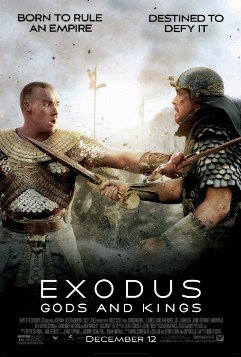
* “Exodus: Gods and Kings“: The ghost of Charlton Heston can rest in peace as the undefeated Moses champion. Christian Bale doesn’t even give him a run for his money. Not even close.
I called the “Noah” movie “Noah-cide” (read my review), and this would be best called, “Moses-cide.” They killed the real, heroic, beautiful Biblical story of Moses and the Exodus and turned it into a long, overly dramatic bore. I struggled to stay awake watching this utter waste of time. In this flick, Moses is an angry, homicidal maniac, who wantonly murders three Jews just for the heck of it. Huh?
Also, how the heck do you make a 3D movie of the Exodus and NOT show the parting of the Red Sea? What? How does this happen? Well, it happens when you have a director, Ridley Scott, who doesn’t believe in G-d, the Bible, or miracles. There’s no parting of the Red Sea here, and instead we are shown Moses leading the Jews wading into the Sea and suddenly you see them walking on sand covered in seaweed, shells, and detritus. Director Scott said he doesn’t believe the Red Sea parted. Instead, he claims, Moses knew when low tide hit, and he led the Jews onto the waterless sea at low tide, timing it just right so that the last Jews crossed over and the Egyptians got there when the tide was high (reminds me of the Blondie song, but no resemblance to the Bible). So we see the Jews walking on the sand and then suddenly a surfer-worthy tidal wave (which Ridley Scott claims was a tsunami) comes a crashin’ on the Pharaoh and the Egyptians.
Oh, and did I mention that there really isn’t G-d in this movie? Nope. Instead, a crazy, moody Moses has hallucinations of a young English boy who tells him what to do. That’s G-d: a young English boy. Yes, there’s a burning bush, but also the English kid standing in front of it.
You know the Exodus story, and so I need not repeat it. This movie is closer to the actual Biblical recounting than the “Noah” movie was. But it’s got nothin’ on Cecil B. DeMille’s “The Ten Commandments.” Again, not even close.
And the movie is comical and silly though unintended. There is so much guyliner on all of the actors, it had to be enough to keep Max Factor or Maybelline in business for a year. The first Pharaoh in the movie, Seti, is played by John Turturro, which is hilarious, and I couldn’t stop laughing. This guy is mostly a comedic actor. He looks funny in eyeliner and an Egyptian costume. Ramses, played by the usually gifted Australian actor Joel Edgerton, is also ridiculously covered in makeup. He’s constantly shown eating and chewing on something, and once he becomes the Pharaoh, he’s still eating and chewing, but also whining about how his magnificent new palace isn’t done yet. He’s more Kardashian than Pharaoh-esque.
There is none of the charm that you see in the Bible or the DeMille film. There are no canes turning into snakes or anything like that. Yes, there is a pit of snakes at the beginning of the movie, with Ramses holding a snake and extracting its venom for some sort of health regime. But where the heck is that in the Bible? Maybe it’s in the Ulta/Sephora Bible–not to be confused with Zipporah/Tzipora, Moses’ wife. She, too, makes an appearance in this movie, as a tattooed (on her face) waif. The love scene between her and Moses is laughable.
The only good part of the movie was the portrayal of the Ten Plagues, except that in this movie there are only eight of them. What happened to the plague of the lice and the one with the wild animals? Skipped in this movie. Ditto for much of the to-do about the golden calf and Moses destroying the first set of tablets from Mount Sinai. That ain’t in this movie, other than a scene showing Moses hammering the words on the tablets and then seeing lots of lights and dancing below. But there is no pronouncement of what’s going on or if it’s bad, and no scene of anything after that. The “story” just moves on.
As for the liberal whining about the movie’s lack of minorities, what are they talking about? This movie is chock full of Blacks and Arabs, many, many more of them than were actually in Egypt at the time.
This movie isn’t the Biblical story of Moses and the Exodus of the Jewish people from slavery in Egypt. It’s sort of that story with a lot of silliness superimposed and dominating the real thing.
The best comment I’ve heard about this movie is from my fellow Detroit movie critic, libertarian Paul Arlon: “The book was much better!”
THREE MARXES

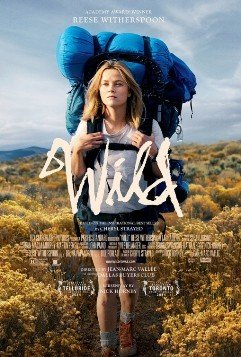
* “Wild“: The mainstream (liberal) movie critics are gushing over this boring, meaningless waste of time and Reese Witherspoon’s performance in it. And I can see why. It embodies everything they like: the hippie wild child lifestyle of the American Northwest, wanton sex and sluttitude, abortion, drug use, divorce, tattoos, cheating, and all-around sleaze.
Witherspoon not only stars in this but she and her production company produced the film. She says she established her production company to make movies about strong women. But Cheryl Strayed, on whose autobiographical book the movie is based, isn’t strong. She’s a weak slutty, drug-using sleaze. And it appears the reason Witherspoon made this movie was to shed her wholesome, innocent image and show us her naked breasts in up close shots (assuming those are hers–a body double might have been used given Witherspoon’s real-life mosquito bite topography). Does an up-close shot of Witherspoon’s nipple constitute Oscar-worthy acting? Really?
The story is that Cheryl Strayed’s mother died of cancer when she was young. Thereafter, she lives an aimless life of heavy drug use (including coke and heroin) and sleeping with any man who wants to have sex. We see a scene of her as a waitress having sex in daylight behind the diner with two different strangers–customers at the diner–with one of the strangers waiting in line and watching while she has sex with the first one. Strangers on the street also watch. She tells her friend she is pregnant and doesn’t know who the father is (shocker!). But she’s gonna take care of that by getting an abortion. There are multiple scenes of her doing all kinds of drugs–some with strangers, others with her husband. She later divorces her husband and they get ugly tattoos together to celebrate.
So, to get over all of this, Strayed hikes the Pacific Crest Trail, which spans from the California-Mexico border to the northern border with Canada. The whole message of the movie is that she went on this hike to redeem herself and toughen up from the life she led, and now she’s magically a great person for it. The movie portrays this as some sort of great accomplishment for a woman to hike this trail and face the wilderness and challenges. But she doesn’t redeem herself and doesn’t actually accomplish anything. She sleeps with more random strangers on the trail and cheats the entire time. She takes a bus ride, skipping a good deal of the trail, and then she constantly hitchhikes for several other long stretches of the trail. Yeah, that’s a great message to “strong women”–hitchhiking! You might turn up raped, dead, or both, but no big deal because, hey, it’s “empowerment!”
Not only is the movie’s message stupid and conflicting, it’s also a poorly made movie. The film is very slow and features constant, distracting flashbacks (to the drug use, sleeping around, and her mother’s cancer), and flash-forwards (to the fake hike). Oh, and did I mention that this movie screams to you at every moment how great this cheating, kinda/sort hiker is because she’s a woman who is hiking? Wow, a woman can hike. Alert the media and give her a Nobel Prize!
The book of the same name was a New York Times best-seller, all because many American women bought the book and read it. That should tell you a lot about the low “taste” and thinking of American women. Like I’ve said on this site many times before, I’d give up my vote immediately, if all other women gave up theirs. A lot of problems would be instantly resolved.
Memo to Reese Witherspoon: strong women don’t use a parent’s death from cancer as an excuse to sleep around, do drugs, and totally waste their lives and then think this all washes away because they kinda sorta hiked a long way but actually took buses and hitchhiked for much of it. Nope, this has nothing to do with strong women or redemption. Not even close.
With few exceptions, when all of the movie intelligentsia love something and tell you how great it is, you know it stinks. This is Exhibit A of that.
Skipworthy to the max.
FOUR MARXES PLUS FOUR OBAMAS PLUS FOUR MICHELLE LAVAUGHN ROBINSON HUSSEIN OBAMA IDI AMIN DADAS PLUS FOUR BETTY FRIEDANS PLUS FOUR ISIS BEHEADINGS


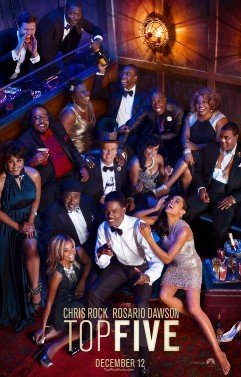
* “Top Five“: This could have been a great movie, and I liked the basic story. But Chris Rock, who wrote, directed, produced, and stars in this, ruined the story with two incredibly disgusting scenes. You don’t need to be a prude to know that anybody who dreams this up and brings it to the tarnished silver screen is a warped lowlife, and I can only conclude from this movie that that describes Chris Rock to a “T.” It definitely describes Jay Z and Kanye West, who produced this movie along with Rock. We already know they’re lowlifes.
Do I really need to watch Chris Rock engage in various sex acts with two hookers at the same time in a hotel room amid feathers from pillows they destroyed? Do I really need to watch Chris Rock watching some sleazy fat Black guy engaging in various sex acts with those two hookers in the hotel room? Do I need to see mattresses filled with various bodily fluids and secretions that were the result in those sex acts? Chris Rock is depraved and sick.
But, wait, there’s more. There are scenes of Rosario Dawson allowing her gay boyfriend to have sex with her while she puts her finger up his rectum. Then, she puts hot sauce on a tampon and puts it up his rear. Yes, this is what passes for a movie these days. Vile.
Yes, there were funny moments and lines. But that’s all washed away by the push-the-envelope raunch. Back in the day, that would get it at least an NC-17 rating.
The story: Rock is a famous comedian who wants to be taken seriously. So he makes a movie about Black revolutionaries in the Caribbean who murder thousands of White people. “Kill the Whites! Kill the Whites!” is part of the movie’s dialogue. The movie is about to come out, but nobody in the press or anywhere else takes him seriously as a serious actor. He is also the fiance of a reality star and their upcoming wedding is scheduled to be on the reality show. Much of the movie is spent with Rock being interviewed by a New York Times reporter (Dawson) who ends up falling for him and telling him about her life as much as he tells her about his. There are many cameos by Rock’s celeb friends, including Jerry Seinfeld, Adam Sandler, etc. The title of the movie comes from Rock’s question to various people about who their top five favorite rappers/hip-hope artists are. Who cares? It’s like asking them who their top five favorite destroyers of American culture are. Same answer.
Like I said, it could have been an entertaining story (I loved the part where nobody goes to see his stupid, “serious,” anti-White movie). But it’s completely dragged into the gutter with those two extremely crude, disgusting scenes I described and isn’t worth seeing. Utter garbage.
FOUR MARXES PLUS FOUR OBAMAS PLUS FOUR ISIS BEHEADINGS
Don’t forget to hear my movie reviews first thing every Friday morning on “The Mike Church Show” on SiriusXM Patriot Channel 125 after 7:05 am Eastern and on “The Pat Campbell Show” on KFAQ 1170 AM Tulsa at 7:35 am Eastern. I do my movie reviews on both, as well as some discussion of current political issues and pop culture topics on both shows.
Nothing I can recommend at the movies, this weekend. Sorry. The best of the bunch, the Chris Rock flick, ruined a great story with vile, disgusting grossness.
* “Exodus: Gods and Kings“: The ghost of Charlton Heston can rest in peace as the undefeated Moses champion. Christian Bale doesn’t even give him a run for his money. Not even close.
I called the “Noah” movie “Noah-cide” (read my review), and this would be best called, “Moses-cide.” They killed the real, heroic, beautiful Biblical story of Moses and the Exodus and turned it into a long, overly dramatic bore. I struggled to stay awake watching this utter waste of time. In this flick, Moses is an angry, homicidal maniac, who wantonly murders three Jews just for the heck of it. Huh?
Also, how the heck do you make a 3D movie of the Exodus and NOT show the parting of the Red Sea? What? How does this happen? Well, it happens when you have a director, Ridley Scott, who doesn’t believe in G-d, the Bible, or miracles. There’s no parting of the Red Sea here, and instead we are shown Moses leading the Jews wading into the Sea and suddenly you see them walking on sand covered in seaweed, shells, and detritus. Director Scott said he doesn’t believe the Red Sea parted. Instead, he claims, Moses knew when low tide hit, and he led the Jews onto the waterless sea at low tide, timing it just right so that the last Jews crossed over and the Egyptians got there when the tide was high (reminds me of the Blondie song, but no resemblance to the Bible). So we see the Jews walking on the sand and then suddenly a surfer-worthy tidal wave (which Ridley Scott claims was a tsunami) comes a crashin’ on the Pharaoh and the Egyptians.
Oh, and did I mention that there really isn’t G-d in this movie? Nope. Instead, a crazy, moody Moses has hallucinations of a young English boy who tells him what to do. That’s G-d: a young English boy. Yes, there’s a burning bush, but also the English kid standing in front of it.
You know the Exodus story, and so I need not repeat it. This movie is closer to the actual Biblical recounting than the “Noah” movie was. But it’s got nothin’ on Cecil B. DeMille’s “The Ten Commandments.” Again, not even close.
And the movie is comical and silly though unintended. There is so much guyliner on all of the actors, it had to be enough to keep Max Factor or Maybelline in business for a year. The first Pharaoh in the movie, Seti, is played by John Turturro, which is hilarious, and I couldn’t stop laughing. This guy is mostly a comedic actor. He looks funny in eyeliner and an Egyptian costume. Ramses, played by the usually gifted Australian actor Joel Edgerton, is also ridiculously covered in makeup. He’s constantly shown eating and chewing on something, and once he becomes the Pharaoh, he’s still eating and chewing, but also whining about how his magnificent new palace isn’t done yet. He’s more Kardashian than Pharaoh-esque.
There is none of the charm that you see in the Bible or the DeMille film. There are no canes turning into snakes or anything like that. Yes, there is a pit of snakes at the beginning of the movie, with Ramses holding a snake and extracting its venom for some sort of health regime. But where the heck is that in the Bible? Maybe it’s in the Ulta/Sephora Bible–not to be confused with Zipporah/Tzipora, Moses’ wife. She, too, makes an appearance in this movie, as a tattooed (on her face) waif. The love scene between her and Moses is laughable.
The only good part of the movie was the portrayal of the Ten Plagues, except that in this movie there are only eight of them. What happened to the plague of the lice and the one with the wild animals? Skipped in this movie. Ditto for much of the to-do about the golden calf and Moses destroying the first set of tablets from Mount Sinai. That ain’t in this movie, other than a scene showing Moses hammering the words on the tablets and then seeing lots of lights and dancing below. But there is no pronouncement of what’s going on or if it’s bad, and no scene of anything after that. The “story” just moves on.
As for the liberal whining about the movie’s lack of minorities, what are they talking about? This movie is chock full of Blacks and Arabs, many, many more of them than were actually in Egypt at the time.
This movie isn’t the Biblical story of Moses and the Exodus of the Jewish people from slavery in Egypt. It’s sort of that story with a lot of silliness superimposed and dominating the real thing.
The best comment I’ve heard about this movie is from my fellow Detroit movie critic, libertarian Paul Arlon: “The book was much better!”
THREE MARXES
* “Wild“: The mainstream (liberal) movie critics are gushing over this boring, meaningless waste of time and Reese Witherspoon’s performance in it. And I can see why. It embodies everything they like: the hippie wild child lifestyle of the American Northwest, wanton sex and sluttitude, abortion, drug use, divorce, tattoos, cheating, and all-around sleaze.
Witherspoon not only stars in this but she and her production company produced the film. She says she established her production company to make movies about strong women. But Cheryl Strayed, on whose autobiographical book the movie is based, isn’t strong. She’s a weak slutty, drug-using sleaze. And it appears the reason Witherspoon made this movie was to shed her wholesome, innocent image and show us her naked breasts in up close shots (assuming those are hers–a body double might have been used given Witherspoon’s real-life mosquito bite topography). Does an up-close shot of Witherspoon’s nipple constitute Oscar-worthy acting? Really?
The story is that Cheryl Strayed’s mother died of cancer when she was young. Thereafter, she lives an aimless life of heavy drug use (including coke and heroin) and sleeping with any man who wants to have sex. We see a scene of her as a waitress having sex in daylight behind the diner with two different strangers–customers at the diner–with one of the strangers waiting in line and watching while she has sex with the first one. Strangers on the street also watch. She tells her friend she is pregnant and doesn’t know who the father is (shocker!). But she’s gonna take care of that by getting an abortion. There are multiple scenes of her doing all kinds of drugs–some with strangers, others with her husband. She later divorces her husband and they get ugly tattoos together to celebrate.
So, to get over all of this, Strayed hikes the Pacific Crest Trail, which spans from the California-Mexico border to the northern border with Canada. The whole message of the movie is that she went on this hike to redeem herself and toughen up from the life she led, and now she’s magically a great person for it. The movie portrays this as some sort of great accomplishment for a woman to hike this trail and face the wilderness and challenges. But she doesn’t redeem herself and doesn’t actually accomplish anything. She sleeps with more random strangers on the trail and cheats the entire time. She takes a bus ride, skipping a good deal of the trail, and then she constantly hitchhikes for several other long stretches of the trail. Yeah, that’s a great message to “strong women”–hitchhiking! You might turn up raped, dead, or both, but no big deal because, hey, it’s “empowerment!”
Not only is the movie’s message stupid and conflicting, it’s also a poorly made movie. The film is very slow and features constant, distracting flashbacks (to the drug use, sleeping around, and her mother’s cancer), and flash-forwards (to the fake hike). Oh, and did I mention that this movie screams to you at every moment how great this cheating, kinda/sort hiker is because she’s a woman who is hiking? Wow, a woman can hike. Alert the media and give her a Nobel Prize!
The book of the same name was a New York Times best-seller, all because many American women bought the book and read it. That should tell you a lot about the low “taste” and thinking of American women. Like I’ve said on this site many times before, I’d give up my vote immediately, if all other women gave up theirs. A lot of problems would be instantly resolved.
Memo to Reese Witherspoon: strong women don’t use a parent’s death from cancer as an excuse to sleep around, do drugs, and totally waste their lives and then think this all washes away because they kinda sorta hiked a long way but actually took buses and hitchhiked for much of it. Nope, this has nothing to do with strong women or redemption. Not even close.
With few exceptions, when all of the movie intelligentsia love something and tell you how great it is, you know it stinks. This is Exhibit A of that.
Skipworthy to the max.
FOUR MARXES PLUS FOUR OBAMAS PLUS FOUR MICHELLE LAVAUGHN ROBINSON HUSSEIN OBAMA IDI AMIN DADAS PLUS FOUR BETTY FRIEDANS PLUS FOUR ISIS BEHEADINGS


* “Top Five“: This could have been a great movie, and I liked the basic story. But Chris Rock, who wrote, directed, produced, and stars in this, ruined the story with two incredibly disgusting scenes. You don’t need to be a prude to know that anybody who dreams this up and brings it to the tarnished silver screen is a warped lowlife, and I can only conclude from this movie that that describes Chris Rock to a “T.” It definitely describes Jay Z and Kanye West, who produced this movie along with Rock. We already know they’re lowlifes.
Do I really need to watch Chris Rock engage in various sex acts with two hookers at the same time in a hotel room amid feathers from pillows they destroyed? Do I really need to watch Chris Rock watching some sleazy fat Black guy engaging in various sex acts with those two hookers in the hotel room? Do I need to see mattresses filled with various bodily fluids and secretions that were the result in those sex acts? Chris Rock is depraved and sick.
But, wait, there’s more. There are scenes of Rosario Dawson allowing her gay boyfriend to have sex with her while she puts her finger up his rectum. Then, she puts hot sauce on a tampon and puts it up his rear. Yes, this is what passes for a movie these days. Vile.
Yes, there were funny moments and lines. But that’s all washed away by the push-the-envelope raunch. Back in the day, that would get it at least an NC-17 rating.
The story: Rock is a famous comedian who wants to be taken seriously. So he makes a movie about Black revolutionaries in the Caribbean who murder thousands of White people. “Kill the Whites! Kill the Whites!” is part of the movie’s dialogue. The movie is about to come out, but nobody in the press or anywhere else takes him seriously as a serious actor. He is also the fiance of a reality star and their upcoming wedding is scheduled to be on the reality show. Much of the movie is spent with Rock being interviewed by a New York Times reporter (Dawson) who ends up falling for him and telling him about her life as much as he tells her about his. There are many cameos by Rock’s celeb friends, including Jerry Seinfeld, Adam Sandler, etc. The title of the movie comes from Rock’s question to various people about who their top five favorite rappers/hip-hope artists are. Who cares? It’s like asking them who their top five favorite destroyers of American culture are. Same answer.
Like I said, it could have been an entertaining story (I loved the part where nobody goes to see his stupid, “serious,” anti-White movie). But it’s completely dragged into the gutter with those two extremely crude, disgusting scenes I described and isn’t worth seeing. Utter garbage.
FOUR MARXES PLUS FOUR OBAMAS PLUS FOUR ISIS BEHEADINGS
Don’t forget to hear my movie reviews first thing every Friday morning on “The Mike Church Show” on SiriusXM Patriot Channel 125 after 7:05 am Eastern and on “The Pat Campbell Show” on KFAQ 1170 AM Tulsa at 7:35 am Eastern. I do my movie reviews on both, as well as some discussion of current political issues and pop culture topics on both shows.


 Posts
Posts


